.svg "edstellar")

ESG Reporting with SASB Standards Corporate Training Program
This training equips sustainability and finance professionals with the skills to prepare industry-specific ESG disclosures using the SASB framework. Participants learn materiality assessment, SASB metrics design, ESG data governance, and integration with GRI, TCFD, and ISSB standards to produce credible, investor-grade sustainability reports.
(Virtual / On-site / Off-site)
.svg)
Drive Team Excellence with ESG Reporting with SASB Standards Corporate Training
ESG reporting has evolved from a voluntary disclosure exercise into a strategic business imperative, driven by growing investor demand for comparable, decision-useful sustainability data. The Sustainability Accounting Standards Board (SASB) Standards provide an industry-specific framework for disclosing material ESG information to investors, making them one of the most widely adopted tools for corporate sustainability reporting worldwide. Organizations that master SASB reporting gain a competitive advantage in capital markets by demonstrating transparency, accountability, and long-term value creation.
Edstellar's ESG Reporting with SASB Standards Instructor-led course offers virtual/onsite training options for sustainability managers, ESG analysts, finance leaders, and investor relations professionals. Through practical case studies, materiality assessment workshops, and multi-framework integration exercises, participants develop the technical expertise to design and publish rigorous, investor-grade ESG disclosures that meet the highest standards of credibility and comparability.
.svg)

Skills Your Employees Will Gain
These are the core, hands-on capabilities your team builds during the program.
- SASB Materiality Assessment
- ESG Disclosure Preparation
- SASB Industry Standard Application
- ESG Data Collection and Management
- Multi-Framework ESG Integration
- Stakeholder Reporting
- ESG Metrics and KPI Design
What Your Team Will Achieve After This Training
- Master the SASB Standards framework, its industry-specific structure, and how it drives decision-useful ESG disclosures for investors and capital market stakeholders.
- Gain the skills to conduct a SASB-aligned materiality assessment and identify the most financially relevant ESG topics for your organization's industry classification.
- Develop the ability to design ESG metrics and KPIs that align with SASB quantitative and qualitative disclosure requirements across industry-specific standards.
- Learn how to build a robust ESG data collection and governance process that supports accurate, consistent, and audit-ready SASB metric reporting.
- Build proficiency in integrating SASB disclosures with GRI, TCFD, and ISSB standards to meet multi-framework reporting expectations of global investors.
- Apply stakeholder communication strategies and assurance readiness practices to deliver credible SASB-aligned ESG reports that strengthen investor confidence.
Topics & Program Outline
The curriculum is organized into focused modules built by industry experts and delivered virtually or on-premise. Interactive sessions reflect the evolving demands of the workplace, keeping the learning both relevant and practical.
-
The ESG Reporting Landscape
- Evolution of ESG reporting from voluntary disclosure to regulatory expectation
- Why investors demand ESG data and how it influences capital allocation decisions
- Key ESG reporting frameworks and their distinct purposes in the market
- The role of ESG disclosures in corporate reputation and long-term value creation
-
Introduction to SASB Standards
- Origins of SASB and the investor-focused mission behind the standards
- How SASB differs from GRI: industry-specificity versus universal applicability
- SASB's transition into the IFRS Foundation and its role in the ISSB baseline
- Overview of the 77 SASB industry standards and the Sustainable Industry Classification System
-
ESG Dimensions: Environmental, Social, and Governance
- Defining the three ESG pillars and how they interact in SASB disclosures
- SASB's five sustainability dimensions: Environment, Social Capital, Human Capital, Business Model and Innovation, Leadership and Governance
- How SASB maps disclosure topics to each sustainability dimension by industry
- Connecting ESG dimensions to financial performance and business risk factors
-
The Business Case for SASB Reporting
- How SASB-aligned disclosures improve ESG ratings and investor engagement quality
- SASB reporting as a tool for managing ESG-related business and financial risks
- Board and executive accountability expectations linked to SASB disclosures
- How leading organizations use SASB to benchmark ESG performance against peers
-
Regulatory Drivers for ESG Disclosure
- SEC climate disclosure rules and their reliance on SASB and TCFD frameworks
- EU Corporate Sustainability Reporting Directive (CSRD) and its SASB alignment areas
- ISSB IFRS S1 and S2 standards and the formal adoption of SASB metrics
- How regulatory convergence is making SASB-based disclosures increasingly mandatory
-
Setting Up an ESG Reporting Program
- Establishing a cross-functional ESG reporting team with defined roles and ownership
- Selecting reporting frameworks and standards appropriate to stakeholder needs
- Defining the reporting boundary, scope, and entity coverage for ESG disclosures
- Building an ESG reporting calendar aligned to annual report publication timelines
-
The Sustainable Industry Classification System (SICS)
- How SICS organizes industries into 11 sectors and 77 industry categories
- Criteria for classifying an organization into its primary SASB industry
- Managing multi-industry organizations and applying multiple SASB standards
- Differences between SICS and traditional financial industry classification systems
-
Anatomy of a SASB Industry Standard
- Structure of a SASB standard: disclosure topics, accounting metrics, and activity metrics
- Quantitative versus qualitative SASB accounting metrics and how to distinguish them
- Units of measure and technical protocols associated with SASB metrics
- How to read and interpret a SASB standard for disclosure planning purposes
-
Disclosure Topics and Their Financial Materiality
- How SASB defines financial materiality in the context of sustainability disclosure
- The evidence base SASB used to designate disclosure topics as likely material by industry
- Relationship between SASB disclosure topics and SEC materiality standards
- How disclosure topics vary across SASB industry standards and why
-
Accounting Metrics and Technical Protocols
- Categories of SASB accounting metrics: quantitative, discussion and analysis, and yes/no
- Technical protocols that define data collection and calculation methodology
- Common data sources and measurement approaches for SASB quantitative metrics
- How to document metric calculation methods for assurance and audit purposes
-
Activity Metrics in SASB Standards
- Purpose of SASB activity metrics in normalizing and contextualizing ESG disclosures
- Common SASB activity metrics: production volume, headcount, floor area, and others
- How to select and apply the correct activity metrics for your industry standard
- Using activity metrics to enable meaningful peer comparison in investor analysis
-
Navigating the SASB Standards Online
- Using the SASB Standards Navigator to access industry-specific disclosure requirements
- Finding and applying SASB implementation guidance and codified standards
- Tracking SASB standard updates and understanding their impact on disclosures
- Using SASB's cross-reference tables to map metrics across multiple frameworks
-
Materiality in ESG Reporting: Concepts and Definitions
- Financial materiality versus impact materiality and when each applies
- How SASB's investor-centric materiality definition differs from GRI's double materiality
- Legal and regulatory context for materiality in public company disclosures
- Why materiality assessment is the foundation of a credible ESG reporting program
-
Conducting a SASB Materiality Assessment
- Step-by-step process for conducting a SASB-aligned materiality assessment
- Identifying starting SASB disclosure topics based on your industry classification
- Gathering evidence to confirm, modify, or expand materiality determinations
- Documenting the rationale for including or excluding SASB disclosure topics
-
Stakeholder Engagement in Materiality Assessment
- Identifying and prioritizing investor and stakeholder groups for materiality input
- Conducting stakeholder surveys, interviews, and workshops to gather materiality perspectives
- Analyzing stakeholder input alongside internal business risk assessments
- Balancing investor-focused and broader stakeholder materiality inputs in SASB reporting
-
Industry Evidence and Peer Benchmarking
- Using SASB's industry evidence base to validate materiality determinations
- Analyzing peer company SASB disclosures to benchmark materiality topic selection
- Reviewing ESG rating agency criteria to identify gaps in materiality coverage
- Using analyst ESG research to understand investor materiality priorities by sector
-
Materiality Matrix Development
- Designing a materiality matrix that maps ESG topics by financial significance and likelihood
- Positioning SASB disclosure topics within the materiality matrix framework
- Presenting materiality assessment findings to board and executive leadership
- Updating the materiality matrix annually to reflect changing business and market conditions
-
Translating Materiality Assessment into Reporting Scope
- Using materiality assessment outputs to define the scope of SASB disclosures
- Prioritizing resources and data collection efforts around high-materiality SASB topics
- Communicating the materiality assessment process and outcomes in the ESG report
- Aligning materiality findings with board-level ESG oversight and governance structures
-
Navigating Sector-Specific SASB Standards
- How SASB disclosure topics and metrics vary significantly across the 11 SICS sectors
- Key ESG issues in the Extractives and Minerals Processing sector under SASB
- SASB disclosure priorities for the Technology and Communications sector
- How Financials sector SASB standards address systemic risk and responsible finance
-
Environmental Disclosure Topics by Industry
- Greenhouse gas emissions metrics and Scope 1, 2, and 3 reporting under SASB
- Water management disclosure requirements in water-intensive SASB industries
- Waste and hazardous materials metrics for manufacturing and chemical industries
- Energy management disclosure topics for energy-intensive operations under SASB
-
Social Capital and Human Capital Topics
- Product safety and quality metrics in consumer goods and healthcare SASB standards
- Data privacy and security disclosure requirements across technology sector SASB standards
- Employee health and safety metrics and SASB incident rate reporting requirements
- Labor practices and supply chain disclosure topics in consumer-facing industries
-
Business Model and Innovation Topics
- Product lifecycle management metrics in consumer goods and electronics SASB standards
- Climate risk and physical asset resilience disclosures in real estate and infrastructure
- Responsible investment metrics and ESG integration disclosures for asset managers
- Innovation and R&D sustainability metrics in pharmaceutical and technology industries
-
Leadership and Governance Topics
- Board diversity and composition metrics across multiple SASB industry standards
- Executive compensation and ESG performance linkage disclosures under SASB
- Business ethics, anti-corruption, and whistleblower program metrics
- Systemic risk management disclosure requirements for financial services SASB standards
-
Applying SASB to Your Organization's Industry
- Workshop: identifying the correct SASB standard for a sample organization
- Mapping existing internal data to SASB disclosure topic and metric requirements
- Identifying gaps between current reporting and SASB industry-specific requirements
- Building an action plan to close disclosure gaps and meet SASB reporting standards
-
ESG Data Types and Sources
- Categories of ESG data: operational, financial, third-party, and survey-based sources
- Primary data sources for SASB environmental metrics: utility bills, EMS systems, IoT sensors
- Social and governance data sources: HR systems, audit reports, board governance records
- Managing data from acquired entities, subsidiaries, and joint ventures in ESG reporting
-
Designing an ESG Data Collection Process
- Mapping required SASB metrics to internal data owners and source systems
- Designing data collection templates aligned to SASB technical protocols
- Building automated data collection workflows to reduce manual reporting errors
- Establishing a data collection schedule aligned to the ESG reporting calendar
-
ESG Data Quality Management
- Defining ESG data quality dimensions: accuracy, completeness, consistency, and timeliness
- Implementing data validation and reconciliation checks in the ESG reporting process
- Managing estimation methodologies for data gaps in SASB metric reporting
- Documenting data quality issues and their impact on disclosure accuracy
-
ESG Data Governance Frameworks
- Establishing an ESG data governance structure with defined roles and accountabilities
- Creating an ESG data dictionary that defines each SASB metric and its calculation rules
- Building data lineage documentation to trace metrics from source to published disclosure
- Implementing access controls and change management for ESG reporting systems
-
ESG Technology and Reporting Platforms
- Overview of ESG data management platforms: capabilities, features, and vendor landscape
- Evaluating ESG software against SASB metric collection and reporting requirements
- Integrating ESG platforms with ERP, HR, and operational data systems
- Using XBRL and digital tagging for machine-readable SASB metric disclosures
-
Supply Chain ESG Data Collection
- Identifying SASB metrics that require supply chain and Scope 3 emissions data
- Supplier engagement strategies for collecting ESG performance data
- Using third-party databases and supplier assessment tools to fill supply chain data gaps
- Building supplier ESG data requirements into procurement contracts and onboarding
-
Designing ESG KPIs Aligned to SASB Metrics
- Translating SASB accounting metrics into internal ESG KPIs with clear targets
- Aligning ESG KPIs with business strategy and long-term value creation objectives
- Establishing SMART ESG targets linked to each SASB metric category
- Cascading ESG KPIs from the corporate level to business unit and operational levels
-
Greenhouse Gas Emissions Measurement
- Scope 1 and Scope 2 emissions calculation methodologies for SASB metric reporting
- Scope 3 emissions categories most commonly required by SASB industry standards
- GHG Protocol alignment with SASB emissions metric technical protocols
- Emissions intensity metrics and normalization approaches for peer benchmarking
-
Social and Human Capital Metrics
- Employee health and safety metric calculations: TRIR, LTIR, and fatality rates
- Workforce diversity metrics: gender, ethnicity, and pay equity measurement approaches
- Employee training investment metrics and how to calculate hours per employee
- Community investment and social impact metrics for stakeholder-facing disclosures
-
Governance and Business Ethics Metrics
- Board composition metrics: independence, diversity, ESG expertise, and tenure
- Anti-corruption and bribery metrics: training completion rates and incident tracking
- Executive compensation ESG linkage metrics and disclosure approaches
- Data privacy metrics: breach counts, regulatory fines, and privacy training completion
-
ESG Performance Benchmarking
- Using SASB-aligned peer data to benchmark ESG metric performance by industry
- ESG rating agency methodologies and how they weight SASB-reported metrics
- Identifying performance gaps and setting improvement targets based on peer benchmarks
- Communicating ESG performance relative to peers in investor-facing disclosures
-
ESG Metrics Dashboard and Reporting
- Designing an internal ESG performance dashboard for executive and board oversight
- Presenting SASB metric trends over time to demonstrate ESG program progress
- Selecting the right data visualization formats for ESG metrics in public reports
- Automating ESG metrics reporting pipelines to reduce reporting cycle time
-
Understanding the ESG Framework Landscape
- Positioning SASB, GRI, TCFD, and ISSB within the global ESG disclosure ecosystem
- Key differences in audience, purpose, and materiality approach across frameworks
- How the ESG framework landscape is consolidating around the ISSB global baseline
- Choosing the right combination of frameworks for your organization's stakeholder needs
-
SASB and GRI Integration
- Comparing SASB financial materiality with GRI double materiality and impact focus
- Using SASB for investor audiences while using GRI for broader stakeholder reporting
- Cross-referencing SASB disclosure topics with GRI topic standards for efficiency
- Building a combined SASB-GRI disclosure index for integrated sustainability reports
-
SASB and TCFD Integration
- How SASB industry metrics complement TCFD's four-pillar climate disclosure framework
- Using SASB sector-specific climate metrics to populate TCFD Metrics and Targets disclosures
- Aligning SASB industry risk topics with TCFD physical and transition risk categories
- Scenario analysis approaches that satisfy both TCFD recommendations and SASB climate metrics
-
SASB and ISSB Standards Alignment
- How IFRS S1 and S2 formally incorporate SASB metrics as industry-specific requirements
- Transitioning from standalone SASB reporting to ISSB-compliant disclosures
- Understanding which SASB metrics are required versus encouraged under IFRS S2
- Preparing for mandatory ISSB-aligned reporting using existing SASB data infrastructure
-
Building a Multi-Framework ESG Report
- Designing a reporting structure that serves SASB, GRI, TCFD, and ISSB audiences simultaneously
- Creating a comprehensive content index mapping disclosures to multiple framework requirements
- Managing conflicting metric definitions and boundary requirements across frameworks
- Efficiency strategies for multi-framework reporting: shared data, aligned processes, single platform
-
Practical Multi-Framework Mapping Exercise
- Workshop: mapping a sample SASB industry standard to GRI, TCFD, and ISSB requirements
- Identifying areas of overlap that reduce data collection burden across frameworks
- Flagging unique requirements in each framework that need dedicated data collection
- Building a multi-framework disclosure matrix for the sample organization
-
Identifying and Prioritizing ESG Stakeholders
- Mapping the full ESG stakeholder landscape: investors, analysts, regulators, and civil society
- Prioritizing stakeholders by influence, interest, and ESG information needs
- Understanding institutional investor ESG stewardship expectations and engagement practices
- Building a stakeholder engagement plan that supports the ESG reporting program
-
Investor Relations and ESG Communication
- Communicating SASB disclosures effectively to institutional investors and ESG analysts
- Responding to investor ESG questionnaires using SASB-aligned data and disclosures
- Engaging with proxy advisors and ESG rating agencies to improve ESG score accuracy
- Integrating ESG performance narratives into earnings calls and investor day presentations
-
ESG Report Narrative and Storytelling
- Structuring the ESG report to lead with strategy before presenting SASB metric data
- Writing clear, concise ESG performance narratives that contextualize metric disclosures
- Using case studies and examples to bring SASB disclosure topics to life for readers
- Avoiding greenwashing: ensuring narrative claims are supported by SASB metric evidence
-
ESG Report Design and Publication
- Choosing the right publication format: standalone ESG report, integrated report, or proxy statement
- Designing ESG report layouts that make SASB data tables accessible and readable
- Digital ESG reporting: interactive data portals and XBRL filing considerations
- Coordinating the ESG report publication process across sustainability, finance, and communications
-
ESG Communication Beyond the Annual Report
- Using ESG data from SASB disclosures in CDP, UNGC, and other platform submissions
- Communicating ESG progress to employees, customers, and community stakeholders
- Responding to media and NGO inquiries with SASB-backed ESG performance data
- Using social media and digital channels to communicate ESG milestones and achievements
-
Managing Stakeholder Feedback and Improving Disclosures
- Collecting and analyzing stakeholder feedback on ESG report quality and completeness
- Incorporating investor and analyst ESG feedback into the next reporting cycle
- Tracking changes in stakeholder ESG expectations and updating disclosures accordingly
- Using feedback loops to drive continuous improvement in SASB reporting quality
-
Why ESG Assurance Matters
- The growing investor and regulatory demand for third-party ESG assurance
- How ESG assurance increases the credibility and reliability of SASB disclosures
- Regulatory requirements for ESG assurance: SEC, CSRD, and stock exchange rules
- Reputational and financial risks of unverified ESG disclosures in capital markets
-
Types of ESG Assurance
- Limited versus reasonable assurance: scope, procedures, and conclusion differences
- ISAE 3000 and ISAE 3410 as the primary standards for ESG assurance engagements
- Selecting the appropriate assurance level for SASB metric categories
- Choosing between accounting firms and specialist sustainability assurance providers
-
Preparing for External ESG Assurance
- Building an audit trail for each SASB metric from source data to published disclosure
- Documenting calculation methodologies, assumptions, and estimation approaches
- Organizing evidence packages for each assured SASB disclosure topic and metric
- Conducting internal pre-assurance readiness reviews to identify and close gaps
-
Internal Controls for ESG Data
- Designing internal controls over ESG reporting comparable to financial reporting controls
- Segregation of duties in the ESG data collection, review, and approval process
- IT controls for ESG reporting systems: access management, change control, and backup
- Testing internal ESG controls for design effectiveness and operating effectiveness
-
Managing the External Assurance Engagement
- Scoping the assurance engagement: which SASB metrics and topics to include
- Coordinating across business units to respond to assurance provider information requests
- Reviewing draft assurance reports and responding to findings before finalization
- Communicating assurance outcomes and limitations transparently in the ESG report
-
Continuous Improvement Post-Assurance
- Using assurance findings to identify and close ESG data quality and process gaps
- Tracking remediation of assurance findings across reporting cycles
- Expanding assurance scope incrementally as ESG data maturity improves
- Building a multi-year ESG assurance roadmap aligned to regulatory requirements
-
The ESG Report Publication Process
- End-to-end ESG report production timeline from data freeze to publication
- Managing review and approval workflows across legal, finance, and sustainability teams
- Quality control checks before finalizing SASB disclosures for publication
- Filing SASB-tagged data with regulators and submitting to ESG data platforms
-
Integrating SASB Data into Financial Filings
- Embedding SASB disclosures into annual reports, 10-K filings, and proxy statements
- SEC guidance on including SASB metrics in financial filing risk factor disclosures
- Consistency requirements: aligning SASB disclosures across all public documents
- Managing legal review of SASB disclosures included in SEC filings
-
ESG Reporting Maturity Assessment
- Assessing current ESG reporting maturity across data, process, governance, and disclosure
- Common ESG reporting maturity models and how to apply them to SASB programs
- Identifying gaps between current maturity and leading practice in SASB reporting
- Building a phased roadmap to advance ESG reporting maturity over three to five years
-
Benchmarking Against Industry Leaders
- Analyzing leading practice SASB disclosures from industry peers and award-winning reporters
- Identifying narrative, data, and presentation techniques that distinguish high-quality reports
- Using external ESG report ratings and evaluations to benchmark disclosure quality
- Setting improvement targets based on peer benchmarking and evaluation findings
-
Building an ESG Reporting Center of Excellence
- Establishing a dedicated ESG reporting function with clear mandate and resources
- Building cross-functional ESG reporting capability across sustainability, finance, and IT
- Investing in ESG training and certification for the reporting team
- Embedding ESG reporting excellence into the organization's sustainability strategy
-
Emerging Trends in ESG Reporting
- The trajectory of mandatory ESG disclosure regulations globally through 2030
- Artificial intelligence and machine learning applications in ESG data collection and reporting
- Nature-related disclosures and the TNFD framework as a complement to SASB reporting
- Preparing for future ESG reporting requirements by building adaptable data infrastructure now
Who Should Attend?
This program suits professionals at many levels across the organization, including:
- Sustainability Managers
- ESG Reporting Analysts
- CFOs and Finance Leaders
- Investor Relations Managers
- Risk and Compliance Officers
- Corporate Strategy Teams
What are the Prerequisites?
Professionals should have a foundational understanding of corporate sustainability concepts and basic familiarity with financial or non-financial reporting processes to take the ESG Reporting with SASB Standards training course.
Choose the Format That Fits Your Team
We design training your teams actually engage with, and deliver it the way that suits you best. Through a vetted global trainer network, Edstellar runs sessions in 10+ languages with consistent quality anywhere.


.webp "Virtual ESG Reporting with SASB Standards Training")
Virtual / online: expert-led live sessions delivered anywhere, with consistency and easy scheduling.
.webp "On-site ESG Reporting with SASB Standards Training")
On-site (in-house): immersive, instructor-led learning at your office.
.webp "Off-site ESG Reporting with SASB Standards Training")
Off-site: focused, instructor-led group learning away from everyday workplace distractions.
Get a Proposal Shaped to Your Needs
Need pricing for onsite, offsite, or virtual delivery? Get a proposal tailored to your team's needs.
64 hours of group training (includes VILT/In-person On-site)
Tailored for SMBs
Tailor-Made Trainee Licenses with Our Exclusive Training Packages!
160 hours of group training (includes VILT/In-person On-site)
Ideal for growing SMBs
Tailor-Made Trainee Licenses with Our Exclusive Training Packages!
400 hours of group training (includes VILT/In-person On-site)
Designed for large corporations
Tailor-Made Trainee Licenses with Our Exclusive Training Packages!
Unlimited duration
Designed for large corporations
What Sets Edstellar Apart
Experienced Trainers
Our trainers are drawn from a vetted global network and bring years of industry expertise, keeping every session practical and impactful.
Proven Quality
With a strong global track record, Edstellar is known for quality and engaging delivery.
Industry-Relevant Curriculum
Our programs are built by experts to match the demands of today's industry.
Fully Customizable
Every program can be tailored to your organization's goals.
Comprehensive Support
We provide pre- and post-session support for a complete learning experience.
Global Multi-Location & Multilingual Training Delivery
We deliver in multiple languages to support diverse global teams.
Recognition That Motivates Your Team
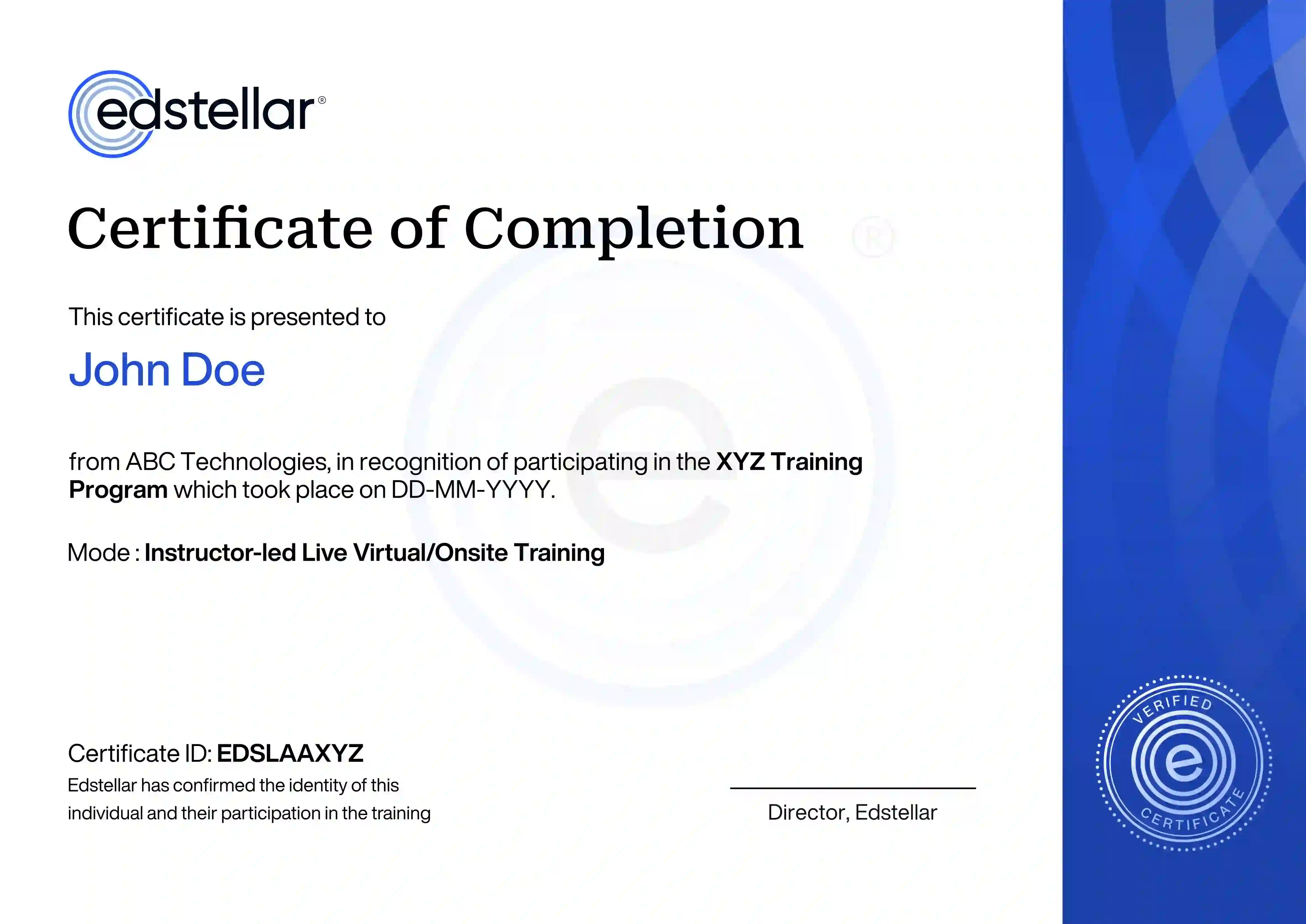
Upon successful completion of the ESG Reporting with SASB Standards training course offered by Edstellar, employees receive a course completion certificate, symbolizing their dedication to ongoing learning and professional development.
This certificate validates the employee's acquired skills and is a powerful motivator, inspiring them to enhance their expertise further and contribute effectively to organizational success.



Edstellar is a one-stop instructor-led corporate training and coaching solution that addresses organizational upskilling and talent transformation needs globally.
.svg)
.svg)
.svg)

.svg)
Learning Technology
Learning Content Design and Development
Learning Governance, Analytics & ROI
Digital Learning Ecosystem
Training Simulations, AR/VR & Case Studies
Employee Performance Support
Leadership Pipeline & Succession PlanningStrategic Workforce Planning for EnterprisesTransformation & Risk Advisory for EnterprisesDEI Consulting for EnterprisesEmployee Engagement Consulting for Enterprises
Cultural Transformation