Drive Team Excellence with Anti-Racism Corporate Training

Empower your teams with expert-led on-site, off-site, and virtual Anti-Racism Training through Edstellar, a premier corporate training provider for organizations globally. Designed to meet your specific training needs, this group training program ensures your team is primed to drive your business goals. Help your employees build lasting capabilities that translate into real performance gains.

Anti-Racism training provides employees and leaders with the knowledge and tools to understand racial inequity, disrupt bias, and take meaningful action in the workplace. This course covers foundational concepts of racism, privilege, microaggressions, allyship, and systemic change - enabling participants to build a more equitable and inclusive organizational culture.

Edstellar's Anti-Racism Instructor-led course offers virtual/onsite training options designed to meet teams where they are. Through interactive exercises, real-world scenarios, and guided discussion, participants develop practical skills and commitments that go beyond awareness to drive lasting, positive change.

Get Customized Expert-led Training for Your Teams
Customized Training Delivery
Scale Your Training: Small to Large Teams
In-person Onsite, Live Virtual or Hybrid Training Modes
Plan from 2000+ Industry-ready Training Programs
Experience Hands-On Learning from Industry Experts
Delivery Capability Across 100+ Countries & 10+ Languages
""""

Key Skills Employees Gain from instructor-led Anti-Racism Training

Anti-Racism skills corporate training will enable teams to effectively apply their learnings at work.

  • Racial Bias Recognition
  • Allyship and Advocacy
  • Inclusive Communication
  • Microaggression Awareness
  • Systemic Racism Analysis
  • Courageous Conversations
  • Anti-Racist Policy Thinking

Key Learning Outcomes of Anti-Racism Training Workshop for Employees

Upon completing Edstellar’s Anti-Racism workshop, employees will gain valuable, job-relevant insights and develop the confidence to apply their learning effectively in the professional environment.

  • Master the definitions of racism, its forms, and how systemic racial inequity operates in organizations.
  • Gain insight into historical roots of racial inequity and how they continue to shape workplace dynamics today.
  • Develop awareness of privilege, power, and positionality to engage more equitably with colleagues and systems.
  • Identify microaggressions and everyday racist behaviors and learn practical strategies to address and prevent them.
  • Build allyship skills and apply active anti-racism practices that create measurable change in your organization.
  • Apply inclusive communication, courageous conversation techniques, and policy-level thinking to sustain anti-racist culture.

Key Benefits of the Anti-Racism Group Training with Instructor-led Face to Face and Virtual Options

Attending our Anti-Racism group training classes provides your team with a powerful opportunity to build skills, boost confidence, and develop a deeper understanding of the concepts that matter most. The collaborative learning environment fosters knowledge sharing and enables employees to translate insights into actionable work outcomes.

  • Beginner-friendly sessions requiring no prior knowledge of anti-racism or diversity concepts.
  • Instructor-led virtual and onsite formats to fit distributed or co-located teams.
  • Real-world case studies illustrating how racism and bias show up in workplace policies and interactions.
  • Interactive exercises that build empathy, self-awareness, and confidence to address racial inequity.
  • Frameworks for recognizing and dismantling structural bias in hiring, promotion, and team culture.
  • Practical allyship tools employees can apply immediately in meetings, feedback, and daily interactions.
  • Guidance on inclusive language and communication that fosters belonging across diverse teams.
  • Policy and systems analysis activities that connect individual behavior to organizational change.
  • Safe, facilitated discussion spaces for courageous conversations about race and equity.
  • Actionable commitment-setting to sustain anti-racist practices beyond the training program.

Topics and Outline of Anti-Racism Training

Our virtual and on-premise Anti-Racism training curriculum is structured into focused modules developed by industry experts. This training for organizations provides an interactive learning experience that addresses the evolving demands of the workplace, making it both relevant and practical.

  1. Understanding Racism as a System
    • Defining racism beyond individual prejudice
    • Distinguishing interpersonal, institutional, and structural racism
    • How racism is maintained through norms and policies
    • Why intent does not negate impact
  2. Forms of Racism in Society
    • Overt versus covert racism
    • Cultural racism and erasure
    • Colorism and intra-community bias
    • Examples from media, hiring, and daily life
  3. Racism in Organizational Contexts
    • Bias in recruitment and performance reviews
    • Racial disparities in pay and promotion
    • The role of informal networks in exclusion
    • Case study: recognizing racism in a workplace scenario
  4. Internalized Racism and Its Effects
    • How internalized racism develops in individuals
    • Impact on self-perception and career confidence
    • Countering internalized narratives with affirming practices
    • Supporting colleagues affected by internalized racism
  5. Race, Ethnicity, and Identity
    • Distinguishing race from ethnicity and nationality
    • Social construction of racial categories
    • Intersectionality and overlapping identities
    • Honoring diverse identities in the workplace
  6. Language Around Race and Racism
    • Evolving and contested terminology
    • How language choices signal inclusion or exclusion
    • Responding when someone uses harmful language
    • Building shared vocabulary on your team
  1. Origins of Racial Classification
    • How racial hierarchies were constructed historically
    • Colonialism and its role in institutionalizing race
    • Legal systems that codified racial discrimination
    • Global variations in racial classification
  2. Slavery and Its Lasting Impact
    • The transatlantic slave trade and economic foundations of racism
    • Psychological and social legacies of enslavement
    • How wealth gaps traced to slavery persist today
    • Reparative justice frameworks and workplace relevance
  3. Segregation, Apartheid, and Systemic Exclusion
    • Jim Crow laws and separate-but-unequal policies
    • Redlining and housing discrimination
    • Education inequity and school segregation
    • Global parallels in racial segregation systems
  4. Civil Rights Movements and Policy Change
    • Key milestones in civil rights activism
    • Legislation resulting from sustained anti-racist organizing
    • Unfinished business of civil rights in the workplace
    • Learning from historical advocates and their strategies
  5. Colonialism and Its Contemporary Effects
    • How colonial structures shape global power imbalances
    • Indigenous peoples and ongoing systemic inequity
    • Decolonizing organizational practices and knowledge
    • Connecting history to present-day workplace diversity gaps
  6. History as a Foundation for Anti-Racist Action
    • Why understanding history is essential for anti-racism work
    • Moving from historical awareness to present accountability
    • Using historical context in DEI strategy development
    • Reflection activity: connecting history to your organization
  1. Understanding White Privilege
    • Defining privilege as unearned social advantage
    • Visible and invisible dimensions of privilege
    • How privilege operates in hiring and daily work
    • Privilege self-audit exercise
  2. Power Dynamics and Race
    • How power is distributed along racial lines in organizations
    • Decision-making gatekeepers and racial representation gaps
    • Using positional power to advance equity
    • Accountability structures for those with power
  3. Positionality and Its Impact
    • Defining positionality and why it matters in equity work
    • How positionality shapes perception and bias
    • Reflecting on your own racial identity and position
    • Communicating your positionality with colleagues
  4. Intersectionality in the Workplace
    • Kimberle Crenshaw's intersectionality framework
    • How race, gender, class, and disability compound disadvantage
    • Designing policies that address intersecting identities
    • Listening to and amplifying intersectional voices
  5. Challenging Meritocracy Myths
    • How meritocracy narratives mask structural advantage
    • Systemic barriers that undermine equal opportunity
    • Reframing success conversations with equity in mind
    • Building fairer evaluation and recognition systems
  6. Leveraging Privilege for Equity
    • Shifting from guilt to responsibility and action
    • Strategies for using privilege to open doors for others
    • Sponsorship versus mentorship in equity contexts
    • Committing to ongoing privilege reflection and accountability
  1. What Are Microaggressions?
    • Defining microaggressions and their three types
    • The difference between microinsults, microinvalidations, and microassaults
    • Why microaggressions cause real harm despite seeming minor
    • Research on the cumulative impact of microaggressions
  2. Common Microaggressions in the Workplace
    • Examples in meetings, feedback, and social settings
    • Microaggressions related to names, appearance, and accent
    • Tokenism and being asked to represent your entire race
    • Recognizing subtle exclusion in team dynamics
  3. Impact on Employees of Color
    • Psychological toll of repeated microaggressions
    • Effects on belonging, engagement, and retention
    • The emotional labor of navigating a biased environment
    • Testimonials and first-person perspectives
  4. Responding When You Witness a Microaggression
    • A practical framework for bystander response
    • Choosing between direct and indirect intervention
    • How to support the person who was targeted
    • Role-play exercise: responding in the moment
  5. Addressing Your Own Microaggressions
    • How to recognize when you have committed a microaggression
    • Apologizing and repairing harm effectively
    • Building habits to reduce unintentional bias
    • Creating a personal accountability practice
  6. Creating a Microaggression-Free Team Culture
    • Establishing team norms around respectful behavior
    • Reporting channels that are safe and trusted
    • Manager responsibilities in addressing microaggressions
    • Measuring psychological safety and inclusion on your team
  1. What Is Allyship?
    • Defining allyship versus performative solidarity
    • The continuum from bystander to accomplice
    • Key qualities of an effective ally
    • Common allyship pitfalls to avoid
  2. Active Anti-Racism versus Passive Non-Racism
    • Why not being racist is insufficient
    • The responsibility to act when witnessing inequity
    • Moving from awareness to sustained behavioral change
    • Examples of active anti-racism in daily work life
  3. Amplifying Marginalized Voices
    • Techniques for elevating ideas from underrepresented colleagues
    • Credit attribution and preventing idea theft
    • Creating space in meetings for quieter voices
    • Avoiding the savior dynamic in allyship
  4. Difficult Conversations as an Ally
    • How to call in versus call out problematic behavior
    • Framing challenges without triggering defensiveness
    • When to involve HR and when to handle directly
    • Self-care and resilience for sustained allyship
  5. Building an Allyship Practice
    • Setting personal anti-racism goals and milestones
    • Resources for continued learning on race and equity
    • Forming ally networks and accountability partnerships
    • Reviewing and reflecting on allyship actions monthly
  6. Allyship Across Levels of the Organization
    • Allyship expectations for individual contributors
    • How managers demonstrate allyship through decisions
    • Executive sponsorship of anti-racism initiatives
    • Building a culture where allyship is the norm, not the exception
  1. Assessing Racial Equity in Your Organization
    • Tools and frameworks for conducting a racial equity audit
    • Key HR metrics to review for racial disparities
    • Gathering employee feedback on inclusion and belonging
    • Interpreting data to identify priorities for action
  2. Bias in Hiring and Recruitment
    • How affinity bias and name bias affect candidate selection
    • Structured interviewing and diverse hiring panels
    • Removing identifying information from applications
    • Expanding sourcing to reach underrepresented talent pools
  3. Equitable Performance Management
    • Bias patterns in performance ratings and feedback
    • Calibration processes to reduce subjective bias
    • Setting equitable goals and success criteria
    • Documenting and tracking equity in promotion decisions
  4. Pay Equity and Compensation Fairness
    • Understanding racial pay gaps and their causes
    • Conducting a pay equity analysis
    • Transparent compensation bands and grading structures
    • Communicating pay equity commitments to employees
  5. Retention and Belonging for Employees of Color
    • Why employees of color leave organizations at higher rates
    • Creating sponsorship and career development pathways
    • Employee resource groups as retention and support tools
    • Exit interview analysis for racial equity insights
  6. Accountability and Reporting Structures
    • Establishing clear anti-racism reporting channels
    • Manager training on responding to racism complaints
    • Consequences and restorative approaches for racist behavior
    • Publishing diversity metrics and holding leaders accountable
  1. Foundations of Inclusive Language
    • Why language choice matters in anti-racism work
    • The evolution of preferred terminology around race
    • Staying current with language norms in diverse communities
    • Responding gracefully when corrected on language
  2. Avoiding Racially Coded Language
    • Common phrases with racial bias embedded in history
    • Dog whistles and coded communication in professional settings
    • Replacing exclusionary phrases with inclusive alternatives
    • Reviewing company materials for coded language
  3. Active Listening Across Racial Difference
    • Listening to understand rather than to respond
    • Suspending judgment when hearing unfamiliar experiences
    • Validating the experiences of colleagues of color
    • Avoiding dismissive or minimizing responses
  4. Asking Questions With Respect
    • How curiosity can become intrusive or offensive
    • Questions that are appropriate versus inappropriate to ask
    • Self-educating rather than burdening colleagues of color
    • Creating curiosity norms that respect boundaries
  5. Written Communication and Inclusive Tone
    • Inclusive language in job postings, emails, and policies
    • Gender-neutral and culturally aware phrasing
    • Proofreading for unintended racial bias in content
    • Style guides that support inclusive organizational voice
  6. Facilitating Inclusive Meetings
    • Designing agendas that create space for all voices
    • Addressing interruptions and speaking-over dynamics
    • Rotating facilitation to distribute influence
    • Closing meetings with equity check-ins
  1. Understanding Systemic Racism in Organizations
    • How systems produce racially disparate outcomes without intent
    • Identifying racialized patterns in organizational data
    • The difference between fixing systems and fixing individuals
    • Case study: a systemic racism audit in a corporate environment
  2. Anti-Racist Policy Design Principles
    • Centering equity in policy drafting and review processes
    • Disaggregating data by race to assess policy impact
    • Consulting affected communities in policy development
    • Building sunset reviews and equity checkpoints into policies
  3. DEI Strategy and Organizational Commitment
    • Key components of a credible DEI strategy
    • Linking DEI goals to business performance metrics
    • Leadership accountability for DEI commitments
    • Avoiding performative DEI and focusing on measurable outcomes
  4. Supply Chain and Vendor Equity
    • Diverse supplier programs and procurement equity
    • Evaluating vendor DEI practices in sourcing decisions
    • Supporting minority-owned business partners
    • Incorporating equity criteria into RFP and contract processes
  5. Technology, Algorithms, and Racial Bias
    • How algorithmic bias reproduces racial inequity
    • Auditing AI tools used in hiring and performance
    • Data governance practices that protect against bias
    • Advocating for responsible AI in your organization
  6. Measuring Systemic Change
    • Defining success metrics for anti-racism policy initiatives
    • Leading and lagging indicators of systemic equity progress
    • Communicating progress transparently to all stakeholders
    • Iterating on policies based on outcome data and employee feedback
  1. What Makes Race Conversations Difficult
    • Fear of saying the wrong thing and social consequences
    • Discomfort rooted in socialization and avoidance norms
    • Power imbalances that inhibit honest dialogue
    • Why silence on race perpetuates harm
  2. Creating Psychological Safety for Race Dialogue
    • Establishing shared agreements before difficult conversations
    • Ground rules that protect vulnerability and encourage honesty
    • The role of trust and confidentiality in courageous dialogue
    • Facilitator skills for holding space during tense moments
  3. Conversation Frameworks and Structures
    • The Courageous Conversation protocol and its four agreements
    • Nonviolent communication applied to race conversations
    • The DESC framework for addressing specific incidents
    • Knowing when to pause and resume a conversation
  4. Listening and Responding Across Difference
    • Empathic listening techniques for emotionally charged topics
    • Responding without defensiveness when challenged
    • Acknowledging discomfort as part of the growth process
    • Following up after a difficult conversation to reinforce progress
  5. Facilitating Team Conversations on Race
    • Preparing the team before launching a race dialogue series
    • Structuring a 60-minute team conversation on race and inclusion
    • Addressing participant disengagement or resistance
    • Documenting commitments and next steps from team dialogues
  6. Sustaining Dialogue Beyond a Single Conversation
    • Building race equity conversations into regular team rhythms
    • Book clubs, film screenings, and learning circles as dialogue tools
    • Peer accountability for following through on conversation outcomes
    • Escalating systemic issues surfaced through team dialogue
  1. From Training to Transformation
    • Why one-time training is insufficient for lasting change
    • Embedding anti-racism into organizational culture and rituals
    • The role of continuous learning in sustaining commitment
    • Celebrating and recognizing anti-racist behaviors publicly
  2. Personal Anti-Racism Action Plans
    • Drafting a personal commitment to anti-racist behavior
    • Setting SMART goals tied to specific equity behaviors
    • Identifying accountability partners and check-in cadences
    • Reviewing and refreshing your action plan quarterly
  3. Team and Departmental Anti-Racism Goals
    • Translating individual commitments into team-level objectives
    • Incorporating equity goals into team charters and OKRs
    • Team retrospectives focused on inclusion and belonging
    • Reporting anti-racism progress in team reviews
  4. Organizational Accountability Mechanisms
    • Board and executive scorecards with racial equity metrics
    • Annual DEI reports with transparent disaggregated data
    • Third-party equity audits and stakeholder feedback loops
    • Linking leadership compensation to equity outcomes
  5. Handling Setbacks and Resistance
    • Common forms of backlash to anti-racism initiatives
    • Strategies for re-engaging resistant employees
    • Protecting psychological safety of employees of color during pushback
    • Learning from failed initiatives to improve future efforts
  6. Continuous Learning and Community
    • Curated reading lists, podcasts, and courses for ongoing education
    • Joining professional networks focused on racial equity
    • Bringing external speakers and lived-experience voices into the organization
    • Creating an internal anti-racism community of practice

Who Can Take the Anti-Racism Training Course

The Anti-Racism training program can also be taken by professionals at various levels in the organization.

  • HR and People Operations Professionals
  • DEI and Culture Champions
  • Team Leads and People Managers
  • Corporate Trainers and Facilitators
  • Senior Leaders and Executives
  • All Employees Seeking Inclusive Workplace Skills

Prerequisites for Anti-Racism Training

Professionals should have a basic understanding of workplace dynamics and an openness to engage with topics of race and equity to take the Anti-Racism training course.

Request a Quote for your Corporate Training Requirements

Valid number

Delivering Training for Organizations across 100 Countries and 10+ Languages

Corporate Group Training Delivery Modes
for Anti-Racism Training

At Edstellar, we understand the importance of impactful and engaging training for employees. As a leading Anti-Racism training provider, we ensure the training is more interactive by offering Face-to-Face onsite/in-house or virtual/online sessions for companies. This approach has proven to be effective, outcome-oriented, and produces a well-rounded training experience for your teams.

Virtual Anti-Racism Training

Edstellar's Anti-Racism virtual/online training sessions bring expert-led, high-quality training to your teams anywhere, ensuring consistency and seamless integration into their schedules.

With global reach, your employees can get trained from various locations
The consistent training quality ensures uniform learning outcomes
Participants can attend training in their own space without the need for traveling
Organizations can scale learning by accommodating large groups of participants
Interactive tools can be used to enhance learning engagement
On-site Anti-Racism Training

Edstellar's Anti-Racism inhouse face to face instructor-led training delivers immersive and insightful learning experiences right in the comfort of your office.

Higher engagement and better learning experience through face-to-face interaction
Workplace environment can be tailored to learning requirements
Team collaboration and knowledge sharing improves training effectiveness
Demonstration of processes for hands-on learning and better understanding
Participants can get their doubts clarified and gain valuable insights through direct interaction
Off-site Anti-Racism Training

Edstellar's Anti-Racism offsite face-to-face instructor-led group training offer a unique opportunity for teams to immerse themselves in focused and dynamic learning environments away from their usual workplace distractions.

Distraction-free environment improves learning engagement
Team bonding can be improved through activities
Dedicated schedule for training away from office set up can improve learning effectiveness
Boosts employee morale and reflects organization's commitment to employee development

Explore Our Customized Pricing Package
for
Anti-Racism Corporate Training

Looking for pricing details for onsite, offsite, or virtual instructor-led Anti-Racism training? Get a customized proposal tailored to your team’s specific needs.

Request a Group Training Quote
""
How Many Team Members Need Training?
Please select an option or fill in the custom field.
"'

Is Your Corporate Training Requirement Only for Anti-Racism?

Please select at least one course.
""
Add the List of Training Workshops
search icon

      Please select the course

      No. of Courses selected: 0

      Clear

      Upload a CSV

      Send us your Training Requirements in 3 Easy steps

      1. 1
      2. 2
        Add the required training workshops
      3. 3
        Upload to get a quick quote or email it to contact@edstellar.com

      ""

      Looking for a Complete Package?

      Looking for a one-time pricing option for all your annual training requirements?

      View Corporate Training Packages
      ""
      Select the Option that Best Describes Your Corporate Training Requirement

      Please select an option or choose from the recurring options.
      ""
      Verify and Submit Your Request

      Review Your Corporate Training Selection Summary

      Training Program: Anti-Racism Training

      1. No of Team Members

      2. Selected Training Preference

      3. Selected Recurring Sessions

      1

      Review your Requirements

      Training Workshops Selected :


        Excel
        File has been
        successfully uploaded.
        Fill the form to submit
 your details
        Submit Your Professional Contact Information
        Valid number
        We've received your enquiry. Our team will be in touch soon.
        Oops! Something went wrong while submitting the form.
        Starter
        120 licences

        Tailor-Made Trainee Licenses with Our Exclusive Training Packages!

        View Package

        64 hours of group training (includes VILT/In-person On-site)

        Tailored for SMBs

        Growth
        320 licences

        Tailor-Made Trainee Licenses with Our Exclusive Training Packages!

        View Package

        160 hours of group training (includes VILT/In-person On-site)

        Ideal for growing SMBs

        Enterprise
        800 licences

        Tailor-Made Trainee Licenses with Our Exclusive Training Packages!

        View Package

        400 hours of group training (includes VILT/In-person On-site)

        Designed for large corporations

        Custom
        Unlimited licenses

        Tailor-Made Trainee Licenses with Our Exclusive Training Packages!

        View Package

        Unlimited duration

        Designed for large corporations

        Edstellar: Your Go-to Anti-Racism Training Company

        Experienced Trainers

        Our trainers bring years of industry expertise to ensure the training is practical and impactful.

        Quality Training

        With a strong track record of delivering training worldwide, Edstellar maintains its reputation for its quality and training engagement.

        Industry-Relevant Curriculum

        Our course is designed by experts and is tailored to meet the demands of the current industry.

        Customizable Training

        Our course can be customized to meet the unique needs and goals of your organization.

        Comprehensive Support

        We provide pre and post training support to your organization to ensure a complete learning experience.

        Multilingual Training Capabilities

        We offer training in multiple languages to cater to diverse and global teams.

        Testimonials

        What Our Clients Say

        We pride ourselves on delivering exceptional training solutions. Here's what our clients have to say about their experiences with Edstellar.

        "Edstellar's virtual Anti-Racism training gave our globally distributed team a shared language and framework for equity. Within 3 months, we saw a 40% increase in DEI-related survey scores and a measurable reduction in microaggression reports across departments."

        Priya Nair

        Chief People Officer,

        A Global Technology Firm

        "The onsite Anti-Racism sessions Edstellar facilitated for our leadership team were transformative. Our managers left with practical allyship tools and concrete action plans. We've since reduced attrition among employees of color by 25% year over year."

        James Okonkwo

        Head of Diversity and Inclusion,

        A Global Financial Services Group

        "Edstellar's intensive off-site Anti-Racism workshop helped our senior team confront systemic gaps we had long overlooked. We redesigned 3 core HR policies as a direct result, and employee belonging scores climbed 35% in the following engagement survey."

        Sandra Ferreira

        VP of Human Resources,

        A Global Consumer Goods Company

        "Edstellar's Social Impact training programs have helped our organization strengthen its commitment to responsible practices, sustainability, and community well-being. The sessions offer actionable insights, structured sustainability frameworks, and real-world case studies that empower teams to embed ethical practices, create measurable social value, and drive meaningful, long-term impact across business operations."

        Leena Thomas

        Head of Sustainability & CSR,

        A Global Industrial Group

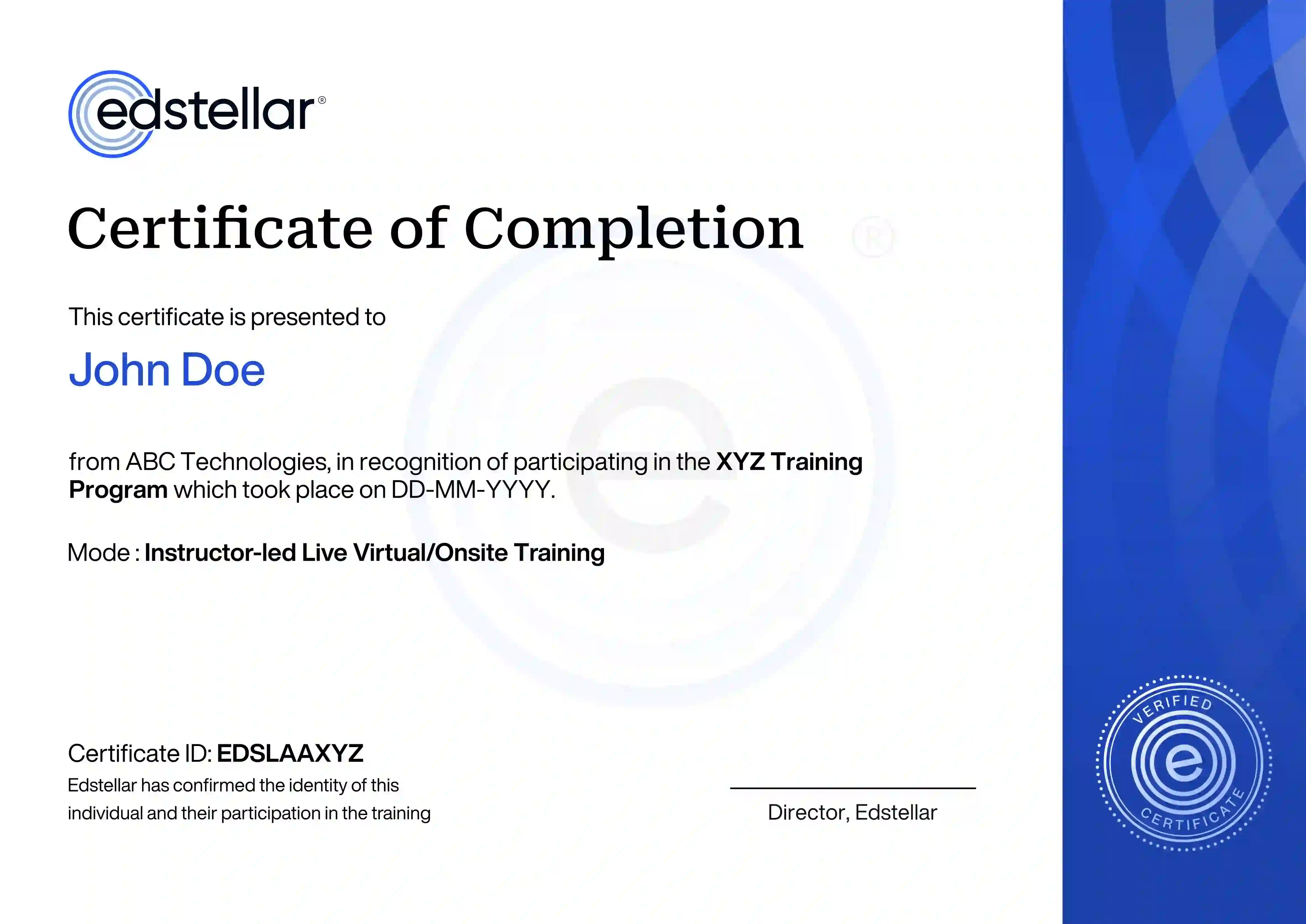
        Get Your Team Members Recognized with Edstellar’s Course Certificate

        Upon successful completion of the training course offered by Edstellar, employees receive a course completion certificate, symbolizing their dedication to ongoing learning and professional development.

        This certificate validates the employee's acquired skills and is a powerful motivator, inspiring them to enhance their expertise further and contribute effectively to organizational success.

        Certificate of Excellence