.svg "edstellar")

Crisis Communication for Data Breaches Corporate Training Program
This training equips professionals with the skills to communicate effectively during and after data breach incidents. Participants learn to craft clear stakeholder messages, manage media inquiries, coordinate internal communication, and protect organizational trust under crisis conditions.
(Virtual / On-site / Off-site)
.svg)
Drive Team Excellence with Crisis Communication for Data Breaches Corporate Training
Crisis communication during a data breach is one of the most critical and time-sensitive challenges organizations face. How a company communicates a breach can determine the extent of reputational damage, regulatory scrutiny, and customer trust loss. This training covers the full spectrum of breach communication, from initial notification and stakeholder messaging to media handling, regulatory compliance, and post-incident reputation recovery.
Edstellar's Crisis Communication for Data Breaches Instructor-led course offers virtual/onsite training options designed for communication, legal, compliance, and security professionals. With scenario-based exercises, message drafting workshops, and real-world case studies, participants build practical skills to lead confident, coordinated communication responses that protect their organization and its stakeholders.
.svg)

Skills Your Employees Will Gain
These are the core, hands-on capabilities your team builds during the program.
- Crisis communication planning
- Stakeholder message development
- Media and press handling
- Internal communication coordination
- Regulatory breach notification
- Reputation management
- Post-breach communication review
What Your Team Will Achieve After This Training
- Master crisis communication frameworks for responding to data breach incidents across internal and external stakeholder groups.
- Develop structured communication plans that align with regulatory breach notification timelines and legal requirements.
- Craft clear, consistent, and legally vetted messaging for regulators, customers, employees, and media during a breach.
- Build confidence in managing media inquiries, press releases, and public statements that protect organizational reputation.
- Apply post-breach communication strategies that restore stakeholder trust and reinforce organizational accountability.
- Gain skills to coordinate cross-functional communication between legal, IT, PR, and HR teams during breach response.
Topics & Program Outline
The curriculum is organized into focused modules built by industry experts and delivered virtually or on-premise. Interactive sessions reflect the evolving demands of the workplace, keeping the learning both relevant and practical.
- What is Crisis Communication
- Definition and scope of crisis communication in organizational contexts
- Key characteristics of a crisis and how it differs from routine incidents
- Consequences of poor communication during a data breach crisis
- Overview of crisis communication as a strategic business function
- Types of Crises and Communication Challenges
- Categorizing organizational crises: operational, reputational, and regulatory
- Unique challenges posed by data breach crises compared to other incidents
- Factors that escalate communication complexity during a breach
- Case studies of crisis communication successes and failures
- Principles of Effective Crisis Communication
- Speed, accuracy, consistency, and empathy as core communication principles
- Balancing transparency with legal and regulatory constraints
- Communicating uncertainty without increasing stakeholder panic
- Building credibility through consistent and honest messaging
- The Communication-Reputation Link
- How communication decisions shape organizational reputation during a breach
- The role of trust in effective breach communication
- Long-term reputational impact of breach communication quality
- Measuring communication effectiveness during and after a crisis
- Stakeholders in a Data Breach Crisis
- Identifying primary and secondary stakeholders in a breach scenario
- Different information needs of customers, regulators, employees, and media
- Prioritizing stakeholder communication under time and resource pressure
- Managing conflicting stakeholder communication demands effectively
- Crisis Communication vs. Risk Communication
- Differences between proactive risk communication and reactive crisis communication
- When to shift from risk communication to crisis communication mode
- Integrating risk communication into crisis preparedness planning
- Examples of risk-to-crisis communication transitions in real-world breaches
- Overview of Data Breach Incidents and Trends
- Common causes and categories of data breach incidents
- Recent trends in breach frequency, scale, and industry impact
- Why communication failures compound breach damage
- Key lessons from high-profile breach communication case studies
- Legal Obligations to Notify Stakeholders
- Overview of breach notification laws across major jurisdictions
- Mandatory notification timelines under GDPR, CCPA, and DPDP Act
- Determining who must be notified and when
- Penalties for failure to notify stakeholders within required timelines
- Internal vs. External Communication Requirements
- Distinguishing internal and external communication objectives during a breach
- When internal communication must precede external disclosure
- Coordinating internal teams before making public announcements
- Risks of misaligned internal and external messaging
- Roles and Responsibilities in Breach Communication
- Building a breach communication response team
- Roles of legal, PR, IT, HR, and executive leadership in communication
- Designating a spokesperson and communication lead
- Escalation paths and decision-making authority in communication response
- Timeline and Urgency in Breach Notification
- Mapping notification timelines from breach discovery to public disclosure
- Balancing speed with accuracy in early breach communications
- Managing communication in the first 24 to 72 hours of a breach
- Using holding statements to buy time for full information gathering
- Common Communication Mistakes Organizations Make
- Delayed notification that damages trust and invites regulatory scrutiny
- Vague or legalistic language that fails to reassure stakeholders
- Inconsistent messaging across communication channels
- Failure to acknowledge responsibility and outline corrective actions
- Building a Crisis Communication Plan
- Core components of an effective crisis communication plan
- Aligning the plan with incident response and business continuity plans
- Defining communication objectives, audiences, and channels in the plan
- Documenting roles, responsibilities, and escalation procedures
- Identifying Communication Triggers and Thresholds
- Defining what constitutes a notifiable breach requiring communication
- Setting thresholds for escalating communication to senior leadership
- Criteria for activating the crisis communication plan
- Distinguishing minor incidents from major breach communication events
- Pre-Breach Communication Preparation
- Developing notification templates and holding statements in advance
- Building a pre-approved stakeholder contact list for rapid response
- Preparing FAQ documents for common breach scenarios
- Establishing communication channels and backup methods ahead of a breach
- Approval and Escalation Protocols
- Defining approval chains for external communications during a breach
- Fast-tracking legal review for time-sensitive notification messages
- Escalating communication decisions to the executive and board level
- Managing approval bottlenecks without compromising notification speed
- Communication Channels and Tools Selection
- Selecting appropriate channels for different stakeholder groups
- Using secure communication platforms during a breach response
- Ensuring channel redundancy if primary systems are compromised
- Managing digital and physical communication methods during an incident
- Testing and Maintaining the Plan
- Running tabletop exercises to test crisis communication plans
- Identifying gaps through simulation and post-exercise debriefs
- Updating the plan after regulatory changes or internal restructuring
- Establishing a review cycle to keep the communication plan current
- Mapping Stakeholders and Their Communication Needs
- Techniques for identifying all relevant stakeholders in a breach event
- Assessing the communication expectations and sensitivity of each group
- Prioritizing stakeholders based on impact and regulatory obligation
- Creating a stakeholder communication matrix for breach scenarios
- Communicating with Affected Data Subjects
- Legal requirements for notifying individuals whose data was breached
- Crafting empathetic, clear, and actionable notification messages
- Offering remediation support such as credit monitoring or identity protection
- Managing high volumes of customer inquiries following a breach
- Communicating with Regulatory Authorities
- Structuring formal breach notification submissions to regulators
- Meeting mandatory information requirements in regulatory notifications
- Maintaining ongoing communication with regulators during an investigation
- Responding to regulator requests for additional information and updates
- Executive and Board Communication
- Briefing executives and board members on breach scope and communication strategy
- Preparing concise executive briefing templates for breach scenarios
- Aligning leadership on key messages before external communications
- Managing leadership visibility and spokesperson selection during a breach
- Employee Communication During a Breach
- Informing employees about the breach without compromising the investigation
- Managing employee anxiety and preventing misinformation from spreading
- Briefing front-line staff on how to handle customer inquiries
- Reinforcing employee responsibilities for confidentiality during response
- Communicating with Business Partners and Third Parties
- Contractual obligations to notify third parties affected by the breach
- Managing vendor and supplier communication with appropriate discretion
- Coordinating messaging with partner organizations in a shared breach
- Maintaining partner confidence through transparent and timely updates
- Elements of an Effective Breach Notification
- What information must be included in a breach notification message
- Structuring notifications for clarity, empathy, and regulatory compliance
- Using plain language to communicate technical breach details
- Balancing legal precision with accessible, human communication
- Legal and Compliance Review of Notifications
- Coordinating legal review without compromising notification timeliness
- Common legal objections to breach notification language and how to resolve them
- Ensuring notifications meet jurisdictional requirements simultaneously
- Documenting the legal review and approval process for notifications
- Customer-Facing Notification Templates
- Designing email and letter templates for customer breach notifications
- Adapting templates for different breach severity levels
- Including actionable steps customers can take to protect themselves
- Testing templates for accessibility, readability, and deliverability
- Regulatory Notification Letters and Formats
- Formatting breach reports to meet GDPR, CCPA, and DPDP Act requirements
- Required data elements in regulatory breach notification submissions
- Strategies for submitting notifications within mandatory time windows
- Updating regulators with follow-up reports as investigations progress
- Adapting Tone and Language for Different Audiences
- Adjusting technical detail level for customers, regulators, and media
- Using empathetic language without admitting undue liability
- Adapting notification tone for different cultural and regional contexts
- Avoiding jargon that confuses non-technical stakeholders
- Common Pitfalls in Notification Drafting
- Overly legalistic language that alienates and confuses recipients
- Omitting required information that triggers regulatory penalties
- Delayed drafting that pushes notifications past mandatory deadlines
- Inconsistencies between notifications sent to different stakeholder groups
- Understanding the Media's Role in Data Breach Coverage
- How media covers data breach incidents and the impact on public perception
- Factors that determine whether a breach becomes a major news story
- Understanding journalist needs and how to engage proactively
- The risk of media speculation when organizations stay silent
- Preparing Spokespersons for Media Interactions
- Selecting and training spokespersons for breach media interactions
- Key messages spokespersons must communicate with clarity and confidence
- Handling hostile or repetitive questions from journalists
- Rehearsing media scenarios through mock interview exercises
- Writing Press Releases and Holding Statements
- Structure and purpose of a holding statement in a breach scenario
- Elements of an effective breach press release
- When to issue a holding statement versus a full press release
- Coordinating press release timing with regulatory notification
- Managing Press Conferences and Q&A Sessions
- Planning and structuring a breach press conference
- Preparing for anticipated journalist questions about the breach
- Managing difficult or adversarial questioning during a press conference
- Following up with reporters after a press conference to manage coverage
- Social Media Communication During a Crisis
- Role of social media in breach communication and reputation management
- Crafting timely and accurate social media updates during a breach
- Monitoring social media for misinformation and responding appropriately
- Managing negative comments and viral criticism on social platforms
- Handling Negative Media Coverage
- Strategies for responding to inaccurate or unfair media reporting
- When and how to request corrections or clarifications from media outlets
- Leveraging positive organizational actions to counter negative coverage
- Long-term media relationship strategies to support reputation recovery
- Keeping Employees Informed Without Causing Panic
- Principles of transparent and calm internal breach communication
- Determining what information to share with employees and at what stage
- Addressing employee fear and uncertainty through clear messaging
- Avoiding over-communication that creates confusion or panic
- Coordinating Communication Across Departments
- Establishing a single source of truth for internal breach information
- Coordinating messaging between IT, legal, PR, HR, and operations teams
- Preventing siloed communication that leads to contradictory messages
- Using cross-functional communication leads to streamline information flow
- Role of HR in Employee Communication
- HR responsibilities in supporting employee communication during a breach
- Addressing employee concerns related to job security and personal data
- Coordinating HR communication with legal guidance on internal disclosure
- Supporting employee wellbeing through transparent and compassionate messaging
- Legal Constraints on Internal Disclosure
- Understanding what cannot be disclosed internally for legal reasons
- Balancing employee transparency with investigation confidentiality needs
- Managing need-to-know access within the breach response team
- Documenting internal communication decisions for legal defensibility
- Using Internal Channels Effectively
- Selecting internal communication channels appropriate for breach urgency
- Using secure channels when primary communication tools are compromised
- Scheduling regular internal update cadences throughout the breach response
- Ensuring messages reach remote and field employees during a breach
- Preventing Unauthorized Information Leaks
- Educating employees on confidentiality obligations during a breach
- Identifying and mitigating sources of unauthorized information disclosure
- Managing insider threats to breach communication integrity
- Establishing clear consequences for unauthorized breach information sharing
- GDPR Breach Notification Requirements
- The 72-hour rule and how to manage communication within the window
- What information supervisory authorities require in a GDPR notification
- Notifying data subjects under GDPR and determining risk thresholds
- Documenting GDPR notification decisions and justifications
- CCPA and State-Level Notification Laws
- CCPA breach notification obligations for California residents
- Overview of varying breach notification laws across US states
- Managing multi-state notification obligations in a single breach event
- Coordination strategies for consistent messaging across jurisdictions
- DPDP Act Notification Obligations
- DPDP Act requirements for notifying the Data Protection Board of India
- Obligations to inform affected data principals under the DPDP Act
- Scope and content requirements for DPDP Act breach notifications
- Aligning DPDP Act notification processes with organizational response plans
- Working with Legal Teams on Regulatory Communication
- Structuring effective legal and communication team collaboration
- Managing tension between legal caution and communication transparency
- Fast-tracking legal sign-off for time-critical regulatory notifications
- Maintaining a legal communication log throughout the notification process
- Documenting Breach Notification for Compliance Purposes
- Creating a notification audit trail for regulatory and legal defense
- Recording notification dates, recipients, and message content accurately
- Maintaining records of regulator communications during an investigation
- Storing notification documentation securely for future reference
- Responding to Regulatory Inquiries and Investigations
- Preparing for regulatory follow-up inquiries after initial notification
- Communicating progress updates to regulators during breach investigations
- Managing multiple simultaneous regulatory inquiries across jurisdictions
- Presenting remediation plans to regulators to demonstrate accountability
- Transitioning from Crisis to Recovery Communication
- Signals that indicate the shift from crisis response to recovery phase
- Adjusting communication tone and frequency in the recovery period
- Updating stakeholders on breach containment and investigation closure
- Managing the transition of communication ownership from crisis to normal teams
- Rebuilding Customer and Stakeholder Trust
- Strategies for restoring confidence in the organization after a breach
- Communicating concrete actions taken to prevent recurrence
- Using transparency and accountability messaging to rebuild trust
- Long-term engagement strategies to retain customers affected by the breach
- Communicating Remediation and Security Improvements
- How to communicate technical remediation efforts to non-technical stakeholders
- Announcing security improvements without revealing sensitive system details
- Demonstrating organizational commitment to improved data protection
- Using third-party audits and certifications to reinforce security improvements
- Long-Term Reputation Management Strategies
- Developing a sustained reputation recovery communication plan
- Tracking reputation indicators to measure recovery progress
- Leveraging positive stories and milestones to shift public perception
- Working with PR partners to rebuild brand trust over time
- Conducting a Post-Breach Communication Audit
- Evaluating the effectiveness of breach communication response activities
- Identifying gaps and failures in stakeholder and media communication
- Gathering feedback from internal teams on communication coordination
- Documenting lessons learned to strengthen future communication plans
- Learning and Updating the Communication Plan
- Incorporating audit findings into revised crisis communication plans
- Updating templates and playbooks based on real breach communication experience
- Training teams on updated communication procedures after a breach
- Building a culture of continuous communication improvement in breach response
- Tabletop Exercise: Simulating a Data Breach Scenario
- Setting up a realistic data breach tabletop exercise for communication teams
- Assigning roles and responsibilities in the simulated breach scenario
- Walking through communication decisions and escalations in real time
- Identifying communication breakdowns and areas for improvement
- Message Drafting Workshop for Breach Notifications
- Drafting customer, regulator, and media notifications under time pressure
- Peer review of drafts for clarity, legal accuracy, and tone
- Revising notifications based on facilitator and legal feedback
- Building a personal library of draft templates for future breach scenarios
- Media Interview Simulation and Feedback
- Conducting mock media interviews with trained facilitators as journalists
- Practicing key message delivery under hostile and repeated questioning
- Receiving structured feedback on spokesperson performance and messaging
- Refining communication delivery based on simulation outcomes
- Stakeholder Communication Role-Play
- Role-playing stakeholder conversations including regulators and affected customers
- Practicing empathetic and compliant communication in difficult conversations
- Adapting communication style to different stakeholder expectations in real time
- Debriefing on role-play performance with actionable coaching feedback
- Multi-Channel Communication Strategy Exercise
- Designing a coordinated breach communication strategy across multiple channels
- Ensuring message consistency across email, social media, press, and intranet
- Sequencing channel-specific communications for maximum stakeholder clarity
- Evaluating the effectiveness of the multi-channel strategy in the exercise
- Debrief and Communication Plan Improvement
- Structured debrief of simulation and exercise outcomes with the full group
- Identifying top communication strengths and priority improvement areas
- Translating exercise lessons into actionable updates to the communication plan
- Setting personal and team communication improvement goals post-training
Who Should Attend?
This program suits professionals at many levels across the organization, including:
- Corporate Communications Managers
- Public Relations Officers
- Legal and Compliance Officers
- Chief Information Security Officers
- HR and People Managers
- Data Protection Officers
What are the Prerequisites?
Professionals should have basic familiarity with organizational communication processes and a general understanding of data privacy concepts to take the Crisis Communication for Data Breaches training course.
Choose the Format That Fits Your Team
We design training your teams actually engage with, and deliver it the way that suits you best. Through a vetted global trainer network, Edstellar runs sessions in 10+ languages with consistent quality anywhere.


.webp "Virtual Crisis Communication for Data Breaches Training")
Virtual / online: expert-led live sessions delivered anywhere, with consistency and easy scheduling.
.webp "On-site Crisis Communication for Data Breaches Training")
On-site (in-house): immersive, instructor-led learning at your office.
.webp "Off-site Crisis Communication for Data Breaches Training")
Off-site: focused, instructor-led group learning away from everyday workplace distractions.
Get a Proposal Shaped to Your Needs
Need pricing for onsite, offsite, or virtual delivery? Get a proposal tailored to your team's needs.
64 hours of group training (includes VILT/In-person On-site)
Tailored for SMBs
Tailor-Made Trainee Licenses with Our Exclusive Training Packages!
160 hours of group training (includes VILT/In-person On-site)
Ideal for growing SMBs
Tailor-Made Trainee Licenses with Our Exclusive Training Packages!
400 hours of group training (includes VILT/In-person On-site)
Designed for large corporations
Tailor-Made Trainee Licenses with Our Exclusive Training Packages!
Unlimited duration
Designed for large corporations
What Sets Edstellar Apart
Experienced Trainers
Our trainers are drawn from a vetted global network and bring years of industry expertise, keeping every session practical and impactful.
Proven Quality
With a strong global track record, Edstellar is known for quality and engaging delivery.
Industry-Relevant Curriculum
Our programs are built by experts to match the demands of today's industry.
Fully Customizable
Every program can be tailored to your organization's goals.
Comprehensive Support
We provide pre- and post-session support for a complete learning experience.
Global Multi-Location & Multilingual Training Delivery
We deliver in multiple languages to support diverse global teams.
Recognition That Motivates Your Team
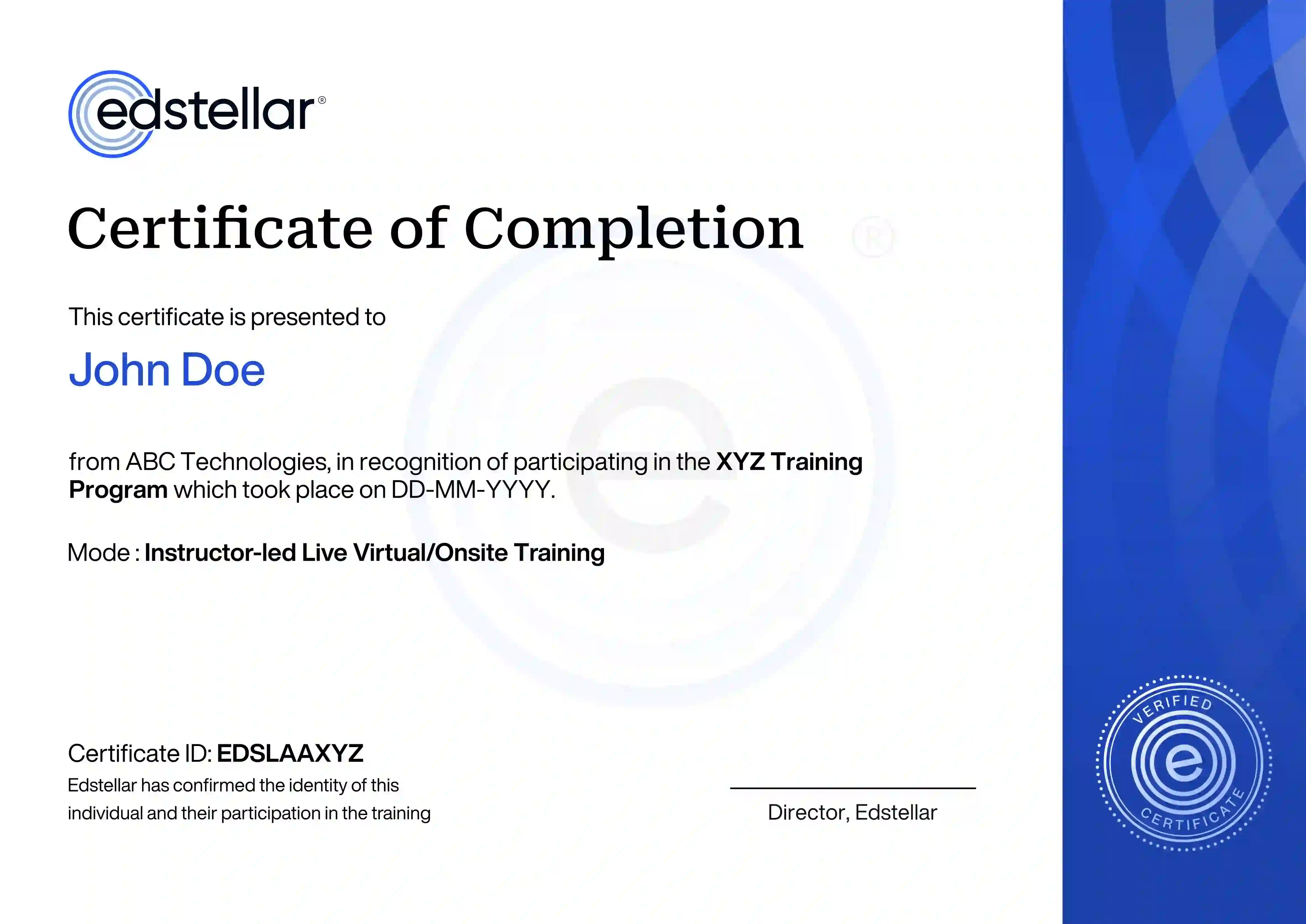
Upon successful completion of the Crisis Communication for Data Breaches training course offered by Edstellar, employees receive a course completion certificate, symbolizing their dedication to ongoing learning and professional development.
This certificate validates the employee's acquired skills and is a powerful motivator, inspiring them to enhance their expertise further and contribute effectively to organizational success.

Explore More Courses


Edstellar is a one-stop instructor-led corporate training and coaching solution that addresses organizational upskilling and talent transformation needs globally.
.svg)
.svg)
.svg)

.svg)
Learning Technology
Learning Content Design and Development
Learning Governance, Analytics & ROI
Digital Learning Ecosystem
Training Simulations, AR/VR & Case Studies
Employee Performance Support
Leadership Pipeline & Succession PlanningStrategic Workforce Planning for EnterprisesTransformation & Risk Advisory for EnterprisesDEI Consulting for EnterprisesEmployee Engagement Consulting for Enterprises
Cultural Transformation