.svg "edstellar")

DPDP Act Compliance Corporate Training Program
This training equips professionals with comprehensive knowledge of India's Digital Personal Data Protection Act, covering data principal rights, consent frameworks, data fiduciary obligations, and compliance program implementation.
(Virtual / On-site / Off-site)
.svg)
Drive Team Excellence with DPDP Act Compliance Corporate Training
India's Digital Personal Data Protection Act 2023 (DPDP Act) marks a landmark shift in how organizations operating in India must handle personal data. Establishing a comprehensive framework of data principal rights, fiduciary obligations, consent requirements, cross-border transfer restrictions, and a powerful enforcement body in the Data Protection Board of India, the DPDP Act creates significant new compliance obligations for businesses of all sizes. This training covers every dimension of DPDP Act compliance, from foundational principles and consent design to rights management, enforcement risk, and program-building.
Edstellar's DPDP Act Compliance Instructor-led course offers virtual/onsite training options so teams can learn in the format that suits them best. The curriculum combines regulatory analysis with practical compliance exercises, real-world case studies, and actionable templates, enabling privacy, legal, IT, and operational teams to confidently understand, implement, and sustain a DPDP Act-compliant privacy program.
.svg)

Skills Your Employees Will Gain
These are the core, hands-on capabilities your team builds during the program.
- DPDP Act Compliance Assessment
- Consent Framework Implementation
- Data Principal Rights Handling
- Data Fiduciary Obligation Management
- Cross-Border Data Transfer Compliance
- DPDP Privacy Notice Drafting
- Grievance Officer Program Management
What Your Team Will Achieve After This Training
- Master the scope, applicability, and key principles of India's DPDP Act to determine organizational compliance obligations.
- Gain hands-on skills to design and implement DPDP-compliant consent frameworks and notice management systems.
- Develop data principal rights response programs covering access, correction, erasure, grievance, and nomination requests.
- Learn to fulfill data fiduciary obligations including security safeguards, breach notification, and children's data handling.
- Build cross-border data transfer compliance capabilities aligned with Section 16 restrictions and Central Government whitelist guidance.
- Apply a DPDP Act compliance program framework to assess, remediate, and maintain organizational privacy program readiness.
Topics & Program Outline
The curriculum is organized into focused modules built by industry experts and delivered virtually or on-premise. Interactive sessions reflect the evolving demands of the workplace, keeping the learning both relevant and practical.
-
India's Data Privacy Journey to the DPDP Act 2023
- How the absence of comprehensive data privacy law in India drove the demand for the DPDP Act
- Justice BN Srikrishna Committee report 2018 and its foundational role in Indian privacy law development
- The Personal Data Protection Bill journey: 2018, 2019 drafts, the Joint Parliamentary Committee, and the 2021 withdrawal
- The Digital Personal Data Protection Act 2023: key changes from earlier drafts and its legislative passage
-
Structure and Architecture of the DPDP Act
- The DPDP Act's chapter structure and the main regulatory mechanisms it establishes
- The rule-making power vested in the Central Government and the DPDP Rules development timeline
- Relationship between the DPDP Act and the IT Act 2000 and Information Technology (Reasonable Security Practices) Rules 2011
- How the DPDP Act fits within India's broader digital economy regulatory framework
-
Territorial and Material Scope of the DPDP Act
- Material scope: the DPDP Act applies to processing of digital personal data within India
- Extraterritorial application: when processing outside India falls within DPDP Act scope
- Exemptions from the Act's scope: personal or domestic use, publicly available data, and state security
- How organizations operating internationally must determine when the DPDP Act applies to their processing
-
Key Principles Underpinning the DPDP Act
- Lawful purpose: personal data must be processed only for specified, clear, and lawful purposes
- Data minimization: collection limited to what is necessary for the stated processing purpose
- Data accuracy: ensuring personal data is accurate and kept up to date
- Storage limitation: erasing personal data when the purpose for which it was collected is fulfilled
-
Timeline, Commencement, and Transition
- Commencement provisions: how the DPDP Act comes into force and the rule-making timeline
- Transition period planning: what organizations must do before the DPDP Act becomes enforceable
- Expected DPDP Rules notification timeline and key implementation milestones
- Building a transition roadmap: prioritizing compliance initiatives during the pre-enforcement period
-
Relationship With Global Privacy Frameworks
- How the DPDP Act compares to GDPR: similarities, differences, and compliance synergies
- DPDP Act and CCPA: key conceptual differences in consent, rights, and enforcement approach
- Leveraging existing GDPR or CCPA compliance programs as a foundation for DPDP Act compliance
- Multi-framework compliance: managing DPDP Act obligations alongside global privacy program requirements
-
Personal Data: Definition and Scope
- DPDP Act definition of personal data and how it differs from GDPR's personal data concept
- What constitutes digital personal data: online data, digitized offline data, and data digitized for processing
- Non-personal data: what falls outside the scope of personal data under the DPDP Act
- Sensitive categories of personal data and whether the DPDP Act treats them differently from general personal data
-
Data Principal, Data Fiduciary, and Data Processor
- Data principal: the individual whose personal data is processed and their centrality to the DPDP Act
- Data fiduciary: the entity that determines the purpose and means of processing personal data
- Data processor: the entity that processes personal data on behalf of and under the authority of the data fiduciary
- How the data fiduciary-processor relationship creates compliance obligations for both parties
-
Consent Manager Definition and Role
- What a consent manager is: a body through which data principals manage and withdraw consent
- Consent manager registration requirements and obligations under the DPDP Act
- How data fiduciaries interact with consent managers for consent collection and management
- The consent manager's role in the data principal rights request and consent withdrawal ecosystem
-
Children's Data and Age Verification
- How the DPDP Act defines children and the threshold age for special data protection requirements
- Verifiable parental consent requirements for processing children's personal data
- Prohibition on processing children's data in ways that are likely to cause harm to their wellbeing
- Age verification requirements and the technical challenges of implementing parental consent at scale
-
Exemptions from DPDP Act Applicability
- Exemptions for personal or domestic processing: home use and non-commercial processing activities
- Publicly available personal data exemption and its conditions under the DPDP Act
- State security, sovereignty, and public order exemptions from DPDP Act obligations
- Research, archiving, and statistical purposes exemptions and the conditions that govern them
-
Applicability to Non-Indian Organizations
- When non-Indian data fiduciaries are subject to the DPDP Act: the offering-goods-or-services trigger
- Practical examples of overseas organizations that fall within DPDP Act scope
- Compliance obligations for non-Indian organizations: the same duties as Indian fiduciaries apply
- Engaging with the Data Protection Board of India as a non-Indian data fiduciary
-
Consent as the Primary Lawful Ground
- The consent requirement: valid consent must be given before processing personal data under the DPDP Act
- DPDP Act consent standards: free, specific, informed, and unconditional consent requirements
- Bundling prohibition: why consent cannot be bundled with terms and conditions acceptance
- Managing consent at scale: technical implementation for high-volume consumer-facing businesses
-
Legitimate Uses as an Alternative to Consent
- Categories of legitimate use under the DPDP Act that do not require consent from the data principal
- State functions and related processing that qualify as legitimate use under the Act
- Compliance with law, court orders, and legal processes as a legitimate use basis
- Employment-related processing: when processing of employee data qualifies as legitimate use
-
Medical and Emergency Processing Grounds
- Medical emergencies and life-threatening situations as a legitimate use basis under the DPDP Act
- Public health and epidemic control as a ground for processing without data principal consent
- Disaster management and natural calamity response as legitimate use categories
- How healthcare organizations should approach processing under emergency and public health grounds
-
Research, Archiving, and Statistical Processing
- Research, archiving, and statistical processing as a legitimate use basis under the DPDP Act
- Conditions that must be met for research processing to qualify as a legitimate use
- Anonymization and pseudonymization requirements for research-purpose personal data processing
- How academic, government, and commercial research organizations should document their lawful basis
-
Processing by State and Government Bodies
- How the Central Government may exempt certain state data processing from DPDP Act obligations
- The public interest justification for state data processing and its limits
- Accountability for state bodies processing personal data under legitimate use grounds
- How data principals can exercise rights against state fiduciaries processing their personal data
-
Documenting Lawful Processing Grounds
- Record-keeping obligations for data fiduciaries regarding their lawful processing grounds
- How to document consent and legitimate use decisions for regulatory accountability purposes
- Aligning lawful basis documentation with the DPDP Act's notice and transparency requirements
- Audit trails for lawful processing decisions: what the Data Protection Board may require
-
Notice Requirements: What Must Be Disclosed
- Timing of notice: the requirement to provide notice before or at the time of the consent request
- Required notice content: purposes, types of personal data, data fiduciary identity, and rights information
- Language requirements: notices must be provided in English or Eighth Schedule languages as chosen by the data principal
- Making notices accessible: plain language, readability, and format requirements under DPDP guidance
-
Consent Standards: Free, Specific, Informed, and Unconditional
- Free consent: ensuring consent is not conditional on accepting services or terms unrelated to the data use
- Specific consent: linking consent to defined purposes rather than obtaining blanket consent
- Informed consent: ensuring data principals have sufficient information to make meaningful choices
- Unconditional consent: prohibiting consent mechanisms that impose conditions on data principals
-
Consent Records and Evidence Management
- What constitutes evidence of valid consent under the DPDP Act
- Technical systems for storing and retrieving consent records at scale
- Managing consent versioning: what to do when purposes change or new processing is added
- Consent audit trails: what data fiduciaries must be able to demonstrate in a regulatory inquiry
-
Consent Managers: Registration, Obligations, and Role
- Who can register as a consent manager and the registration requirements with the Data Protection Board
- Consent manager obligations: neutrality, data principal service, and technical standards compliance
- How data fiduciaries integrate with consent managers for DPDP Act compliance
- Evaluating consent manager platforms: compliance, security, and interoperability considerations
-
Withdrawing Consent: Rights and Fiduciary Obligations
- The data principal's right to withdraw consent at any time
- Ease of withdrawal: the requirement that withdrawal be as easy as giving consent
- Consequences of withdrawal: what the data fiduciary must do when consent is withdrawn
- Handling partial withdrawal: when a data principal withdraws consent for some but not all processing
-
Managing Consent Across Multiple Touchpoints and Channels
- Consent management across digital and physical data collection channels
- Managing consent for third-party data sharing and downstream processing by processors
- Consent renewal and re-consent scenarios: when existing consent requires refreshing
- Building a consent management platform that meets DPDP Act technical and governance requirements
-
The Right to Information About Personal Data Processing
- What data principals can request: categories of personal data being processed and processing activities
- Response timelines and format requirements for information access requests under the DPDP Act
- What the data fiduciary must disclose and what it may withhold in response to access requests
- Building a technical and operational capability to respond to information requests at scale
-
The Right to Correction and Erasure
- The right to correction: updating inaccurate, incomplete, or outdated personal data held by the fiduciary
- The right to erasure: deleting personal data when the processing purpose is fulfilled or consent is withdrawn
- Exceptions to the erasure right: legal retention obligations and legitimate use grounds
- Notifying downstream processors and third parties of correction and erasure decisions
-
The Right of Grievance Redressal
- The grievance redressal mechanism: what data principals can complain about and to whom
- Grievance officer appointment requirements for data fiduciaries and consent managers
- Response timelines for grievance resolution and escalation to the Data Protection Board
- Building an effective grievance management system that meets DPDP Act requirements
-
The Right of Nomination
- The nomination right: a data principal's ability to nominate another person to exercise rights posthumously
- Practical implementation of the nomination mechanism for consumer-facing organizations
- How nominated persons exercise rights and what documentation data fiduciaries may require
- Managing nomination records and ensuring they are accessible for rights exercise after a data principal's death
-
Implementing a Data Principal Rights Response Program
- Designing a rights response workflow from request intake to resolution and documentation
- Identity verification for rights requests: balancing access security with ease of exercise
- Multi-channel rights request intake: web forms, email, and in-person submission options
- Tracking and reporting rights request volumes, response times, and resolution outcomes
-
Timelines and Documentation Requirements for Rights Responses
- Response timelines for data principal rights requests under the DPDP Act and anticipated Rules
- Documentation required for rights responses: request records, decisions, and actions taken
- Handling complex or overlapping rights requests and their documentation requirements
- Annual reporting and regulatory disclosure obligations related to data principal rights management
-
Accuracy, Completeness, and Data Quality Obligations
- The DPDP Act obligation to ensure personal data is accurate, complete, and consistent
- Implementing data quality processes: validation, cleansing, and correction workflows
- How data quality failures create regulatory exposure for data fiduciaries under the DPDP Act
- Documenting data quality procedures for accountability and Data Protection Board purposes
-
Storage Limitation and Data Erasure Obligations
- The obligation to erase personal data when the purpose for which it was collected is fulfilled
- How to determine when a processing purpose has been fulfilled and erasure is triggered
- Automated erasure systems: implementing retention schedules and deletion triggers at scale
- Retention obligations under other laws and how to manage conflicts with DPDP erasure requirements
-
Reasonable Security Safeguards
- The DPDP Act obligation to implement reasonable security safeguards to prevent data breach
- What constitutes reasonable security: technical, organizational, and process controls
- Aligning DPDP security safeguard requirements with existing IT security standards and frameworks
- Documenting security safeguards for Data Protection Board accountability purposes
-
Data Breach Notification Obligations Under the DPDP Act
- The obligation to notify the Data Protection Board of India of personal data breaches
- Notification content requirements and the timeline for filing breach notifications
- Notifying affected data principals of breaches affecting their personal data
- Building a breach notification workflow that meets DPDP Act requirements
-
Grievance Officer Appointment and Obligations
- The requirement to appoint a grievance officer to handle data principal complaints
- Grievance officer qualifications, authority, and independence requirements
- Response obligations: timeline for responding to data principal grievances
- Escalation from grievance officer to Data Protection Board: process and implications
-
Children's Data Handling Obligations
- The prohibition on processing children's personal data without verifiable parental consent
- Age verification implementation: methods, accuracy requirements, and documentation
- Content and services restricted for children under the DPDP Act
- Special safeguards required when children's personal data is processed under legitimate use grounds
-
Definition and Criteria for Significant Data Fiduciary Designation
- How the Central Government designates significant data fiduciaries under the DPDP Act
- Criteria for designation: volume of data processed, sensitivity, national security risk, and electoral impact
- Which categories of organizations are likely to be designated as significant data fiduciaries
- Monitoring regulatory notifications for significant data fiduciary designation criteria and updates
-
Additional Obligations for Significant Data Fiduciaries
- The elevated compliance obligations that apply exclusively to significant data fiduciaries
- Data protection officer appointment: role, responsibilities, and reporting line requirements
- Data protection impact assessment obligations for significant data fiduciaries
- Audit requirements: independent audit of compliance with DPDP Act and Data Protection Board regulations
-
Data Protection Officer for Significant Fiduciaries
- DPO appointment requirements: who qualifies, what authority they must have, and how they are accountable
- DPO responsibilities: advising on compliance, monitoring processing, and liaising with the Data Protection Board
- DPO independence: ensuring the DPO can operate without conflicts of interest
- DPO registration and contact information publication requirements for the Data Protection Board
-
Data Protection Impact Assessment Requirements
- When a DPIA is required for significant data fiduciaries under the DPDP Act
- DPIA scope and content requirements under anticipated DPDP Rules and Board regulations
- Who must conduct the DPIA and what qualifications are expected
- Submitting DPIA findings to the Data Protection Board and acting on high-risk assessment outcomes
-
Algorithmic Accountability and Audit Requirements
- Restrictions on algorithmic systems that profile data principals by significant data fiduciaries
- Audit requirements: scope, frequency, and independence of compliance audits under DPDP rules
- Reporting audit findings to the Data Protection Board and managing remediation obligations
- Transparency obligations for significant data fiduciaries regarding their data processing activities
-
Compliance Timelines and Regulatory Expectations
- Implementation timelines for significant data fiduciary obligations after formal designation
- Ongoing regulatory engagement: how significant data fiduciaries interact with the Data Protection Board
- Voluntary compliance before designation: why organizations should prepare for potential SDF status
- Managing stakeholder expectations about significant data fiduciary status and obligations
-
Section 16 Restrictions on Cross-Border Data Transfer
- The DPDP Act's approach to cross-border data transfer: restriction with Central Government whitelist exceptions
- How Section 16 operates: the Central Government's power to restrict or permit cross-border transfers
- The whitelist model: permitted destination countries and the criteria for whitelist inclusion
- How organizations currently transferring data must reassess their arrangements under Section 16
-
Whitelist Countries and Permitted Transfer Mechanisms
- The process for countries to be included in the Central Government's permitted transfer whitelist
- What transfer mechanisms apply for whitelisted countries and how to document compliant transfers
- Contractual arrangements and safeguards required for transfers to whitelisted countries
- Monitoring whitelist updates: how to track which countries are added or removed from the permitted list
-
Sector-Specific Data Localization Requirements
- Existing data localization requirements for financial data under RBI and SEBI regulations
- Health and sensitive data storage requirements under sector regulators in India
- How sector-specific localization requirements interact with DPDP Act transfer restrictions
- Building a multi-regulation transfer compliance framework for organizations in regulated sectors
-
Practical Compliance for Multinational Organizations
- How multinational organizations should assess their existing cross-border data flows under DPDP
- Mapping data flows involving Indian personal data for DPDP Act transfer compliance purposes
- Renegotiating vendor and partner contracts to reflect DPDP Act transfer restrictions
- Building a cross-border data transfer policy compliant with DPDP and aligned with global frameworks
-
Relationship With IT Act Data Protection Requirements
- How the IT Act 2000 and the SPDI Rules currently regulate sensitive personal data transfers
- Transition from IT Act compliance to DPDP Act compliance for cross-border data transfers
- Conflicts between the IT Act's transfer framework and the DPDP Act transfer restrictions
- Guidance from the Ministry of Electronics and Information Technology on managing the transition
-
Transfer Compliance Documentation and Governance
- Records to maintain for cross-border data transfers to demonstrate DPDP Act compliance
- Transfer impact assessments: evaluating the data protection standard in destination countries
- Governance structures for approving and monitoring cross-border data transfer arrangements
- Responding to Data Protection Board inquiries about cross-border transfer compliance
-
The Data Protection Board of India: Structure and Powers
- The Board's composition, appointment process, and independence from government direction
- The Board's jurisdiction: complaints, investigations, and penalty determination
- Regulatory powers: inquiry, summons, evidence gathering, and interim protective orders
- The Board's rulemaking advisory role and its relationship with the Central Government
-
Complaint Filing and Investigation Process
- Who can file a complaint with the Data Protection Board and the process for doing so
- How the Board processes complaints: notice, response, hearing, and determination
- The Board's powers to conduct suo motu investigations without a formal complaint
- Timelines for Board investigation and determination under the DPDP Act
-
Penalty Structure: Tiered Fines Under the DPDP Act
- Schedule of penalties: the financial consequences for each category of DPDP violation
- Maximum penalty of INR 250 crore for the most serious violations under the Act
- Penalties for breach notification failures: amounts and conditions
- Factors the Board must consider in determining penalty quantum: intent, harm, and cooperation
-
Penalties for Specific Violations
- Children's data violation penalties: the enhanced fines applicable to breaches of children's protections
- Breach of significant data fiduciary obligations and the associated penalty consequences
- Penalties for data fiduciaries and processors that fail to implement adequate security safeguards
- Obstruction of Board proceedings and false information penalties under the DPDP Act
-
Appeals Process and Data Principal Remedies
- Appealing Board decisions: the Telecom Disputes Settlement and Appellate Tribunal appeal process
- Supreme Court jurisdiction over constitutional questions arising from DPDP enforcement
- Data principal remedies: compensation and other relief available from the Data Protection Board
- Enforcement against non-Indian data fiduciaries: extraterritorial enforcement mechanisms
-
Regulatory Investigation Readiness
- How to prepare for a Data Protection Board investigation: documentation, processes, and legal support
- Engaging legal counsel for DPDP regulatory investigations and enforcement proceedings
- Voluntary disclosure: when and how to proactively engage the Board on compliance issues
- Managing regulatory investigation timelines alongside ongoing compliance program activities
-
DPDP Act Gap Assessment and Priority Setting
- Conducting a DPDP Act gap assessment against current organizational data processing practices
- Mapping existing privacy program elements to DPDP requirements: what transfers and what needs rebuilding
- Prioritizing remediation workstreams based on enforcement risk, processing volume, and data sensitivity
- Building a DPDP compliance implementation roadmap with owners, milestones, and metrics
-
Consent Framework Design and Implementation
- Technical architecture for DPDP-compliant consent capture, storage, and withdrawal management
- Designing consent notices in required languages and at required readability levels
- Integrating consent management with customer-facing digital platforms, apps, and offline channels
- Consent record governance: retention, retrieval, and audit trail management for regulatory purposes
-
Data Principal Rights Response Program Design
- Designing a rights request workflow: intake channels, identity verification, and processing steps
- Technology options for data principal rights management: DSAR automation and manual workflow tools
- Response timeline governance: ensuring requests are processed within required timeframes
- Training staff who handle rights requests: legal requirements, process steps, and escalation protocols
-
Grievance Officer Appointment and Program Design
- Selecting and empowering a grievance officer: role, authority, and independence requirements
- Designing the grievance response process: intake, investigation, resolution, and documentation
- Publishing grievance officer contact information and making the process accessible to data principals
- Monitoring grievance resolution quality and regulatory compliance through metrics and audit
-
Data Inventory and Mapping for DPDP Act Compliance
- Conducting a data inventory to identify all personal data processing activities subject to DPDP
- Mapping consent and lawful basis to each processing activity in the data inventory
- Identifying cross-border data flows for DPDP transfer compliance assessment
- Maintaining a living data map that reflects ongoing changes in processing activities
-
Ongoing Compliance Monitoring and Program Maturity
- Establishing a DPDP compliance monitoring program with regular review cycles
- Tracking regulatory developments: DPDP Rules, Board guidance, and enforcement decisions
- Annual DPDP compliance assessment methodology and leadership reporting framework
- Building DPDP compliance maturity: from reactive gap-filling to proactive governance excellence
Who Should Attend?
This program suits professionals at many levels across the organization, including:
- Privacy and Data Protection Officers
- Legal Counsel and Compliance Teams
- IT and Product Managers
- HR and Business Operations Leaders
- Data Fiduciary Leadership
- Digital Business Transformation Teams
What are the Prerequisites?
Professionals should have a basic understanding of data protection principles and familiarity with Indian business operations to take the DPDP Act Compliance training course.
Choose the Format That Fits Your Team
We design training your teams actually engage with, and deliver it the way that suits you best. Through a vetted global trainer network, Edstellar runs sessions in 10+ languages with consistent quality anywhere.


.webp "Virtual DPDP Act Compliance Training")
Virtual / online: expert-led live sessions delivered anywhere, with consistency and easy scheduling.
.webp "On-site DPDP Act Compliance Training")
On-site (in-house): immersive, instructor-led learning at your office.
.webp "Off-site DPDP Act Compliance Training")
Off-site: focused, instructor-led group learning away from everyday workplace distractions.
Get a Proposal Shaped to Your Needs
Need pricing for onsite, offsite, or virtual delivery? Get a proposal tailored to your team's needs.
64 hours of group training (includes VILT/In-person On-site)
Tailored for SMBs
Tailor-Made Trainee Licenses with Our Exclusive Training Packages!
160 hours of group training (includes VILT/In-person On-site)
Ideal for growing SMBs
Tailor-Made Trainee Licenses with Our Exclusive Training Packages!
400 hours of group training (includes VILT/In-person On-site)
Designed for large corporations
Tailor-Made Trainee Licenses with Our Exclusive Training Packages!
Unlimited duration
Designed for large corporations
What Sets Edstellar Apart
Experienced Trainers
Our trainers are drawn from a vetted global network and bring years of industry expertise, keeping every session practical and impactful.
Proven Quality
With a strong global track record, Edstellar is known for quality and engaging delivery.
Industry-Relevant Curriculum
Our programs are built by experts to match the demands of today's industry.
Fully Customizable
Every program can be tailored to your organization's goals.
Comprehensive Support
We provide pre- and post-session support for a complete learning experience.
Global Multi-Location & Multilingual Training Delivery
We deliver in multiple languages to support diverse global teams.
Recognition That Motivates Your Team
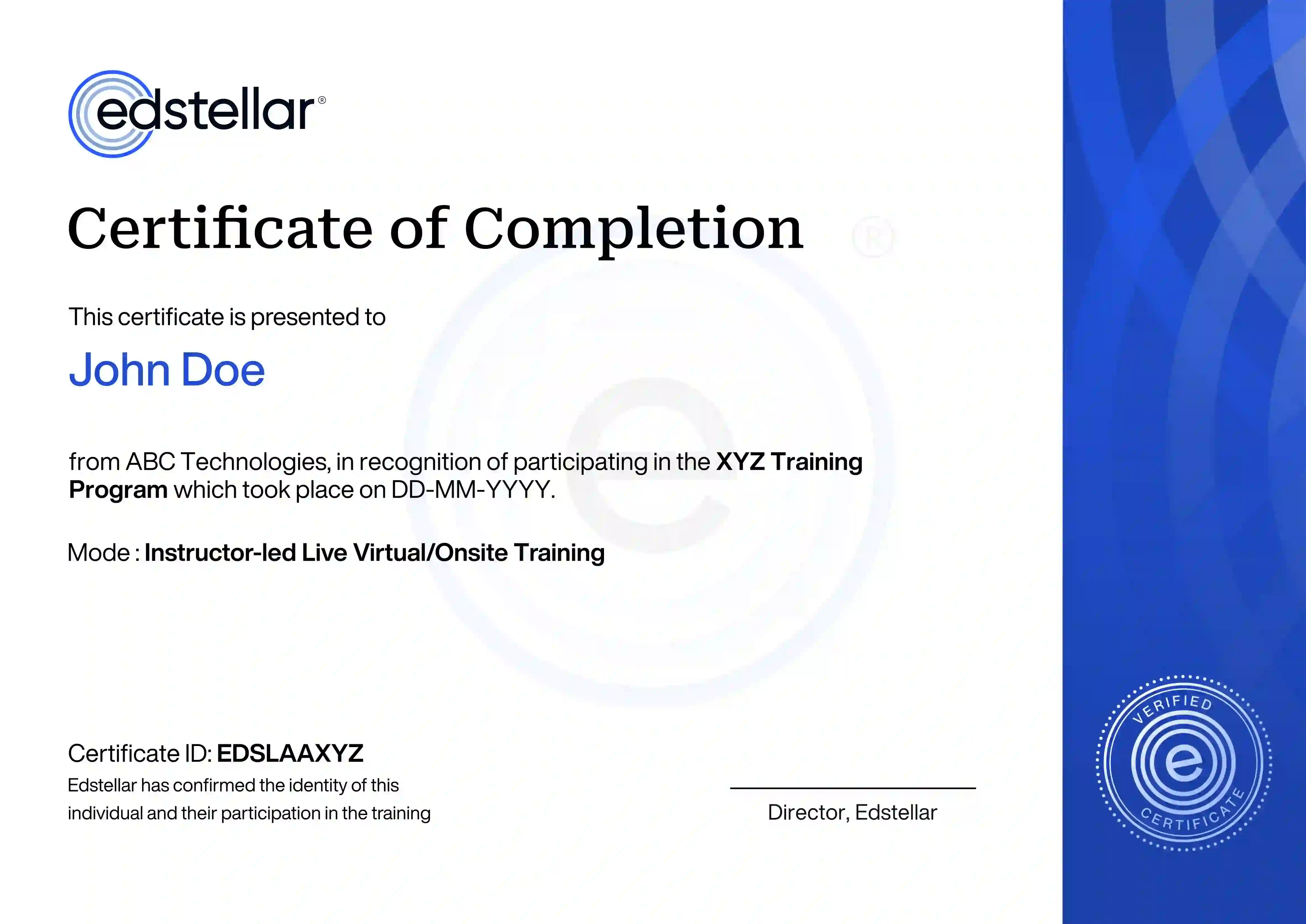
Upon successful completion of the DPDP Act Compliance training course offered by Edstellar, employees receive a course completion certificate, symbolizing their dedication to ongoing learning and professional development.
This certificate validates the employee's acquired skills and is a powerful motivator, inspiring them to enhance their expertise further and contribute effectively to organizational success.

Explore More Courses


Edstellar is a one-stop instructor-led corporate training and coaching solution that addresses organizational upskilling and talent transformation needs globally.
.svg)
.svg)
.svg)

.svg)
Learning Technology
Learning Content Design and Development
Learning Governance, Analytics & ROI
Digital Learning Ecosystem
Training Simulations, AR/VR & Case Studies
Employee Performance Support
Leadership Pipeline & Succession PlanningStrategic Workforce Planning for EnterprisesTransformation & Risk Advisory for EnterprisesDEI Consulting for EnterprisesEmployee Engagement Consulting for Enterprises
Cultural Transformation