.svg "edstellar")

Drone Safety Inspections Corporate Training Program
This training equips professionals with the skills to plan, conduct, and manage UAV-based safety inspections across industrial, construction, infrastructure, and energy environments, covering drone regulations, risk assessment, sensor payloads, data collection, emergency procedures, and inspection program design.
(Virtual / On-site / Off-site)
.svg)
Drive Team Excellence with Drone Safety Inspections Corporate Training
Drone safety inspections are transforming how industrial, construction, infrastructure, and energy organizations identify hazards, monitor assets, and conduct compliance reviews. This training covers the complete UAV safety inspection lifecycle, from understanding applicable regulations and conducting pre-flight risk assessments to operating inspection-grade sensor payloads, processing captured data, managing airspace, executing emergency procedures, and building a sustainable organizational drone inspection program that meets regulatory and safety standards.
Edstellar's Drone Safety Inspections Instructor-led course offers virtual/onsite training options so teams can develop UAV inspection competencies in the format that fits their field operations and scheduling needs. The curriculum blends regulatory knowledge with operational skills, enabling HSE managers, drone operators, and inspection professionals to deploy drone-based inspection programs that improve safety outcomes, reduce inspection costs, and minimize risk exposure across their sites and operations.
.svg)

Skills Your Employees Will Gain
These are the core, hands-on capabilities your team builds during the program.
- Drone Regulatory Compliance
- Pre-Flight Safety Planning
- Risk Assessment for Drone Operations
- Drone Inspection Data Collection
- Airspace Management
- Emergency Procedures for UAVs
- Drone Inspection Program Design
What Your Team Will Achieve After This Training
- Master drone regulatory frameworks including FAA Part 107 and EASA rules to ensure compliant UAV operations in industrial settings.
- Gain proficiency in pre-flight safety planning, site risk assessment, and operational risk mitigation for drone inspection missions.
- Develop skills in airspace management, NOTAM coordination, and restricted zone deconfliction for safe drone operations.
- Learn to operate thermal, LiDAR, and RGB sensor payloads and collect high-quality inspection data for safety analysis.
- Build capability in drone emergency procedures, incident response, and post-incident documentation for regulatory compliance.
- Apply a structured approach to designing, implementing, and governing an organizational drone safety inspection program.
Topics & Program Outline
The curriculum is organized into focused modules built by industry experts and delivered virtually or on-premise. Interactive sessions reflect the evolving demands of the workplace, keeping the learning both relevant and practical.
-
What Are Drone Safety Inspections
- Definition of drone safety inspections and their role in modern industrial and infrastructure safety programs
- How UAVs compare to traditional inspection methods in terms of safety, cost, and data quality
- Overview of industries using drone inspections: energy, construction, utilities, oil and gas, and telecoms
- Key benefits of UAV-based inspection for reducing worker exposure to hazardous or hard-to-reach environments
-
Types of Drone Inspections
- Visual inspection of structures: bridges, towers, rooftops, wind turbines, and industrial facilities
- Thermal inspections for electrical systems, solar panels, pipeline leaks, and building energy assessments
- LiDAR-based topographic and volumetric surveys for construction sites and earthwork monitoring
- Gas detection and environmental monitoring inspections using specialized UAV sensor payloads
-
UAV Technology Overview for Inspections
- Fixed-wing, multi-rotor, and hybrid UAV platforms and their suitability for different inspection missions
- Drone endurance, payload capacity, and operational range factors relevant to inspection mission planning
- Autonomous vs manually piloted inspection missions and when each approach is appropriate
- Key UAV hardware components: flight controllers, GPS systems, communication links, and gimbal mounts
-
The Business Case for Drone Inspections
- Cost comparison analysis of drone inspections versus scaffolding, rope access, and manned aircraft methods
- Safety incident rate reductions achieved by organizations that replaced manual with drone inspection workflows
- Inspection frequency and data quality improvements enabled by UAV-based inspection programs
- Building the business case and ROI model for implementing a drone inspection program in an organization
-
Roles and Responsibilities in Drone Inspections
- Key roles in a drone inspection operation: remote pilot in command, visual observer, and safety officer
- Organizational responsibilities for drone program ownership, oversight, and regulatory accountability
- Coordination between drone operators, HSE teams, site managers, and inspection engineers
- Contractor and third-party drone operator management within organizational safety and compliance frameworks
-
Introduction to Regulatory and Safety Obligations
- Overview of global UAV regulatory frameworks and national aviation authority oversight structures
- The distinction between recreational, commercial, and safety inspection drone operations for regulatory purposes
- Organizational duty of care obligations when operating drones near workers, the public, and infrastructure
- Introduction to the key safety documents required before commencing a drone inspection operation
-
FAA Part 107 Regulations
- FAA Part 107 eligibility, certification requirements, and knowledge test preparation for commercial UAV pilots
- Operating limitations under Part 107: altitude ceilings, speed limits, daylight restrictions, and line-of-sight rules
- Part 107 waiver categories and the application process for operating beyond standard rule limitations
- FAA registration requirements for commercial drones and record-keeping obligations for Part 107 operators
-
EASA and International UAV Regulations
- EASA regulatory categories: open, specific, and certified categories and their applicability to inspection operations
- EASA UAS operator registration, remote pilot competency requirements, and declaration procedures
- Specific Operations Risk Assessment (SORA) methodology for obtaining authorization for higher-risk drone missions
- Navigating multi-country regulatory compliance for drone inspections conducted across international jurisdictions
-
Restricted and Controlled Airspace
- Airspace classification system and how different airspace classes affect drone inspection mission planning
- Identifying restricted zones: airports, helipads, military areas, critical infrastructure, and temporary flight restrictions
- Digital airspace management tools: AirMap, Aloft, and LAANC for automated airspace authorization requests
- Procedures for obtaining airspace authorizations for drone inspections near controlled and restricted zones
-
Industry-Specific Regulatory Requirements
- Oil and gas sector UAV safety requirements from API standards and site safety management systems
- Construction site drone regulations under OSHA guidelines and site-specific safety management plans
- Utility and power infrastructure drone inspection compliance with NERC, network operator, and facility rules
- Privacy regulations affecting drone inspections in populated areas under GDPR and equivalent national laws
-
Documentation and Record-Keeping
- Mandatory records for commercial drone operations: pilot logbooks, aircraft maintenance logs, and flight records
- Inspection report documentation standards for demonstrating regulatory compliance to authorities and clients
- Incident and accident reporting obligations to aviation authorities under national UAV regulatory frameworks
- Document retention periods and audit readiness practices for commercial drone inspection organizations
-
Staying Current with Regulatory Changes
- Monitoring FAA, EASA, and national aviation authority channels for regulatory updates affecting drone operations
- Industry association resources: AUVSI, ARPAS-UK, and national drone associations for regulatory guidance
- Integrating regulatory change management into organizational drone safety program governance processes
- Training and competency update requirements when significant regulatory changes affect operational procedures
-
Site Survey and Hazard Identification
- Conducting desktop site surveys using satellite imagery, maps, and site drawings before drone inspection missions
- Physical site reconnaissance procedures for identifying ground hazards, obstructions, and take-off landing zones
- Identifying overhead hazards: power lines, cranes, cables, and other aerial obstacles at inspection sites
- Documenting site-specific hazards and translating findings into mission risk controls and briefing materials
-
Weather Assessment for Drone Inspections
- Key weather parameters affecting drone safety: wind speed, gusts, rain, fog, temperature, and icing conditions
- Using aviation weather services and UAV-specific weather apps for accurate pre-mission weather briefings
- Setting go/no-go weather thresholds appropriate to the drone platform and inspection mission risk level
- Managing in-flight weather changes and the decision-making process for mission abort or continuation
-
Risk Assessment Methodology
- Applying structured risk assessment frameworks such as Bow-Tie and SORA to drone inspection operations
- Identifying and scoring drone inspection risks: probability, severity, and residual risk after controls applied
- Ground risk and air risk assessment for operations over people, populated areas, and critical infrastructure
- Documenting risk assessments in an Operations Risk Assessment (ORA) or mission-specific safety case
-
Mission Planning and Flight Path Design
- Defining inspection objectives and translating them into structured UAV flight path and coverage plans
- Mission planning software: DJI Pilot, Litchi, and UgCS for automated waypoint and survey mission design
- Buffer zone and contingency area design for maintaining safe separation from workers and third parties
- Battery endurance planning and mission segmentation for complex inspection areas requiring multiple flights
-
Pre-Flight Checklist Execution
- Systematic pre-flight inspection procedures for drone airframe, propellers, battery, and gimbal systems
- Controller calibration, GPS lock verification, and return-to-home configuration before each inspection flight
- Communication checks between remote pilot, visual observer, and site safety officer before mission commencement
- Site exclusion zone setup and bystander management procedures to secure the drone operating area
-
Operations Manual and Standard Operating Procedures
- Structure and required content of a drone operations manual for commercial inspection organizations
- Writing mission-specific standard operating procedures (SOPs) aligned to different inspection environment types
- Change management procedures for updating SOPs following incidents, near-misses, or regulatory changes
- Communicating SOPs and pre-mission briefings to all team members before each drone inspection operation
-
Safe Drone Operation Fundamentals
- Situational awareness principles for maintaining safe operational control during inspection flights
- Visual line of sight (VLOS) requirements and how to maintain effective visual contact throughout a mission
- Manual override skills for safely resuming pilot control during autonomous or partially automated missions
- Crew resource management for multi-person drone inspection teams operating in complex environments
-
Take-Off and Landing Procedures
- Selecting and preparing safe launch and recovery zones at complex industrial and construction inspection sites
- Take-off procedures in confined or cluttered environments including hover checks and ascent path clearance
- Landing under degraded conditions: low battery, reduced visibility, and confined landing zone approaches
- Vertical take-off and landing (VTOL) safety procedures for hybrid UAV platforms used in long-range inspections
-
In-Flight Safety Decision Making
- Go/no-go decision criteria during flight for continued operations versus mission abort based on real-time conditions
- Recognizing early warning signs of drone system degradation requiring immediate corrective pilot action
- Managing unexpected obstacles encountered during autonomous inspection flight path execution
- Communication protocols for reporting real-time safety concerns to site management during active inspection flights
-
Battery Management and Energy Safety
- Lithium polymer (LiPo) battery safety: storage, charging, handling, and transport requirements for drone operations
- Battery state-of-health monitoring and identifying batteries that should be removed from operational service
- In-flight battery depletion management and return-to-home trigger thresholds for safe mission completion
- Battery thermal management in extreme hot and cold operating environments for inspection mission reliability
-
Drone Maintenance and Airworthiness
- Pre- and post-flight maintenance inspection procedures to maintain drone airworthiness between missions
- Propeller inspection, motor health checks, and frame integrity assessment as routine maintenance tasks
- Scheduled maintenance intervals, manufacturer service requirements, and maintenance log documentation
- Identifying when a drone requires grounding for repair or inspection after an abnormal flight event
-
Safe Operations Near People and Infrastructure
- Minimum separation distances from people, vehicles, and structures during operational drone inspection flights
- Exclusion zone size and shape determination based on drone ground risk class and operational scenario
- Communication with site personnel and public bystanders about active drone operations in shared spaces
- Special precautions for inspections near high-voltage power lines, confined spaces, and explosive atmospheres
-
Understanding Airspace Structure
- ICAO airspace classification system and how each class defines rules for manned and unmanned aircraft
- Controlled vs uncontrolled airspace and the implications for drone inspection mission authorization requirements
- Special use airspace categories: prohibited, restricted, warning, and military operations areas for drone pilots
- Reading aeronautical charts and using digital mapping tools to identify airspace classes around inspection sites
-
NOTAM Management
- What NOTAMs are and how to search, interpret, and apply relevant NOTAMs to drone inspection mission planning
- Filing drone-related NOTAMs to notify other airspace users of planned inspection operations in shared airspace
- Temporary flight restriction (TFR) identification and the process for obtaining operational deconfliction approvals
- Monitoring active NOTAMs and airspace changes on the day of operation before commencing inspection flights
-
Digital Airspace Management Systems
- U-Space and UTM (UAS Traffic Management) framework concepts and their implications for inspection operators
- LAANC system usage for automated near-real-time airspace authorization for FAA-controlled airspace entry
- AirMap, Aloft, and Airshare platforms for checking airspace status and submitting flight authorization requests
- Remote ID compliance requirements and how broadcast remote identification integrates with UTM systems
-
Coordination with Manned Aviation
- Protocols for communicating with ATC when operating drone inspections near or within controlled airspace
- Visual and electronic detect-and-avoid obligations for drone inspection operations in shared airspace environments
- Radio communication procedures for drone operators coordinating with manned aircraft crews in flight zones
- Managing simultaneous manned and unmanned operations during complex infrastructure inspection campaigns
-
Site-Specific Airspace Coordination
- Coordinating with facility management for airspace deconfliction during internal site drone inspection campaigns
- Multi-drone operation airspace management on large construction and industrial sites with concurrent flights
- Establishing communication protocols between multiple drone pilots operating concurrently at the same site
- Creating site-specific airspace management plans for long-duration infrastructure inspection programs
-
International Airspace Compliance
- Navigating airspace authorization differences across national jurisdictions for cross-border inspection projects
- Bilateral agreements and reciprocal authorization frameworks between countries for UAV inspection operations
- Working with local aviation authorities and handling local airspace application processes in unfamiliar jurisdictions
- Risk management considerations for international drone inspection deployments with complex regulatory environments
-
RGB Camera Payloads for Visual Inspection
- Selecting RGB camera resolution, sensor size, and lens specifications for high-quality visual inspection imagery
- Gimbal stabilization and vibration isolation requirements for capturing sharp imagery during active UAV flight
- Overlap and sidelap settings for photogrammetric survey missions producing inspection-grade image datasets
- Image quality verification in the field to confirm inspection data is usable before leaving the site
-
Thermal Infrared Payloads
- Thermal camera principles: detecting temperature differentials for identifying heat loss, faults, and leaks
- Thermal payload selection criteria: resolution, sensitivity, and spectral range for different inspection applications
- Optimal environmental conditions for thermal drone inspections including sun angle, wind, and temperature delta
- Interpreting thermal imagery for electrical faults in solar panels, pipelines, buildings, and mechanical systems
-
LiDAR Payloads
- LiDAR operating principles: point cloud generation, pulse rate, and range specifications for inspection missions
- LiDAR payload integration with UAV inertial navigation for accurate georeferenced point cloud generation
- LiDAR inspection applications: structural deformation monitoring, stockpile measurement, and corridor mapping
- Point cloud density requirements and flight parameter settings for producing inspection-quality LiDAR data
-
Specialized Inspection Sensors
- Gas detection sensors for methane, CO2, and VOC leak detection in oil and gas infrastructure inspections
- Multispectral cameras for vegetation health assessment, crop monitoring, and environmental inspection surveys
- Ultrasonic and eddy current sensors for close-range non-destructive testing of metal structures and welds
- Radiation detection payloads for nuclear facility and contaminated site safety inspection applications
-
Data Capture Planning and Execution
- Designing data capture flight plans to achieve complete coverage of the inspection target with sufficient overlap
- Ground control point (GCP) placement and surveying for georeferencing inspection imagery and LiDAR data
- In-field data verification procedures for confirming capture completeness before leaving the inspection site
- Data storage and file management protocols for organizing, labeling, and securing inspection data in the field
-
Payload Safety and Handling
- Safe payload mounting, balancing, and centre-of-gravity adjustment for maintaining drone flight stability
- Payload compatibility checks with drone platform weight, power, and data interface specifications before deployment
- Environmental protection for sensor payloads operating in dust, humidity, rain, and high-temperature conditions
- Payload inspection and calibration verification procedures before each inspection mission commencement
-
Photogrammetry and 3D Reconstruction
- Photogrammetry principles for generating orthomosaic maps and 3D models from drone inspection imagery
- Software tools for photogrammetric processing: Agisoft Metashape, Pix4D, and DJI Terra workflows
- Accuracy assessment of photogrammetric outputs using GCPs and independent check point verification
- Applying photogrammetric models for structural deformation analysis, volume calculations, and defect mapping
-
Thermal Data Analysis
- Thermal image analysis software tools and workflows for interpreting temperature anomalies in inspection data
- Classifying thermal anomaly severity levels for prioritizing maintenance actions and reporting findings
- Creating thermal inspection reports with annotated imagery, temperature data, and recommended corrective actions
- Benchmarking thermal inspection findings against baseline data to track asset condition trends over time
-
LiDAR Point Cloud Processing
- LiDAR point cloud processing workflow using CloudCompare, LAStools, and ArcGIS Pro for inspection analysis
- Ground classification, noise filtering, and feature extraction from raw LiDAR inspection point cloud datasets
- Structural clearance analysis, encroachment detection, and change detection using LiDAR inspection data
- Integrating LiDAR inspection outputs with BIM and CAD systems for infrastructure management workflows
-
AI and Computer Vision for Inspection Analysis
- Object detection models for automatically identifying defects, cracks, and anomalies in drone inspection imagery
- AI-assisted thermal anomaly detection for accelerating analysis of large-scale drone inspection datasets
- Training custom inspection defect detection models using annotated drone imagery from site-specific datasets
- Validating AI inspection analysis outputs against human expert review for quality assurance and accuracy
-
Inspection Data Management
- Cloud storage and data management platforms for organizing and sharing drone inspection datasets across teams
- Naming conventions, folder structures, and metadata tagging standards for drone inspection data archives
- Version control and audit trail for inspection datasets supporting regulatory compliance and legal defensibility
- Data retention policies and secure deletion procedures for sensitive drone inspection imagery and reports
-
Defect Classification and Prioritization
- Standardized defect classification frameworks for grading inspection findings by severity and urgency
- Risk-based prioritization of inspection defects to focus maintenance resources on the highest-risk findings
- Integrating drone inspection defect data with asset management and computerized maintenance management systems
- Trend analysis using repeated drone inspection data to identify deteriorating assets before failure occurs
-
Types of Drone Emergencies
- Common drone in-flight emergencies: power failure, flyaway, GPS loss, communication link failure, and motor failure
- Environmental emergencies: sudden weather deterioration, bird strikes, and unexpected airspace incursions
- Ground emergencies triggered by drone operations: fire, collision, and bystander injury scenarios
- Distinguishing between recoverable emergencies requiring corrective action and unrecoverable scenarios requiring abort
-
Emergency Response Decision Making
- Decision frameworks for selecting the correct emergency response: land immediately, return to home, or manual control
- Time-critical decision making under stress and the importance of pre-planned emergency action checklists
- Protecting people on the ground as the primary priority in all drone emergency response decision making
- Crew coordination during emergencies: assigning tasks between remote pilot, visual observer, and safety officer
-
Flyaway and Loss of Control Procedures
- Understanding flyaway causes: GPS interference, geofencing failure, and software or firmware malfunction
- Actions to take when control link is lost including return-to-home activation and manual tracking procedures
- Alerting the public and site personnel when a drone flyaway creates a risk of uncontrolled landing
- Post-flyaway recovery and investigation procedures to identify the root cause and prevent recurrence
-
Crash and Collision Response
- Immediate actions following a drone crash: securing the area, fire risk assessment, and battery safety checks
- Casualty response procedures if a drone collision results in injury to a person on the ground or in a vehicle
- LiPo battery fire response: correct extinguisher type, safe handling of damaged batteries, and disposal
- Preserving crash scene evidence for regulatory investigation and insurance claim documentation purposes
-
Incident Reporting Obligations
- Mandatory aviation authority incident reporting thresholds and timelines for commercial UAV operations
- Internal incident reporting procedures and the roles responsible for escalating drone safety events
- Completing drone accident and incident report forms with accurate factual data for regulatory submissions
- Communicating incident information to insurers, clients, and site management in a timely and compliant manner
-
Post-Incident Review and Corrective Action
- Root cause analysis methodology applied to drone incidents to identify contributing and causal safety factors
- Distinguishing between human factors, technical factors, and environmental factors in drone incident causation
- Developing corrective action plans and tracking implementation to close identified drone safety gaps
- Sharing anonymized incident learnings across the organization to prevent recurrence and build safety culture
-
Inspection Report Structure and Standards
- Core sections of a professional drone inspection report: executive summary, methodology, findings, and recommendations
- Inspection report standards and templates aligned to industry frameworks such as ASTM and ISO inspection norms
- Tailoring drone inspection report content and format to the needs of engineering, safety, and management audiences
- Version control and approval workflows for drone inspection reports before submission to clients or regulators
-
Evidence Documentation and Annotation
- Annotating drone inspection imagery with defect markers, measurements, and GPS coordinates for clear reporting
- Standards for evidence quality: resolution, lighting, angle, and coverage requirements for defensible reports
- Embedding geotagged imagery and data into inspection reports for spatial context and navigation
- Creating before-and-after inspection comparisons to demonstrate asset condition changes over time
-
Findings Classification and Recommendations
- Applying standardized defect severity classification scales to findings documented in drone inspection reports
- Formulating clear, actionable maintenance recommendations based on drone inspection findings and risk ratings
- Distinguishing between immediate safety-critical findings requiring urgent action and monitored lower-priority defects
- Quantifying inspection findings to support maintenance budget justification and capital expenditure planning
-
Regulatory and Client Submission
- Formatting drone inspection reports for regulatory submission meeting specific authority documentation requirements
- Client deliverable standards for drone inspection reports including data formats, resolution, and metadata fields
- Secure report submission and data handover procedures for protecting sensitive inspection data during transfer
- Post-submission communication procedures for addressing client or regulator queries on inspection report findings
-
Inspection Records Management
- Establishing an organized inspection records archive linking reports, imagery, and flight data for each asset
- Integration of drone inspection records with asset management and CMMS platforms for maintenance workflows
- Retention schedules for drone inspection records aligned to regulatory requirements and client contract terms
- Audit readiness of inspection records to support client audits, regulatory reviews, and insurance assessments
-
Continuous Improvement from Inspection Data
- Trend analysis across multiple inspection cycles to identify asset deterioration patterns and predict failures
- Using inspection data insights to refine inspection frequency, coverage, and sensor payload selection over time
- Feeding inspection findings back into engineering design and maintenance planning to address systemic asset issues
- Reporting on drone inspection program performance metrics to leadership to demonstrate safety and value outcomes
-
Program Design and Business Case
- Scoping the drone inspection program: defining assets, inspection types, frequency, and geographic coverage
- Developing the business case for a drone inspection program with quantified safety and cost benefits
- Stakeholder engagement strategy for securing leadership sponsorship and operational team buy-in
- Phased program rollout plan starting with pilot inspections and scaling based on validated operational learnings
-
Equipment Selection and Procurement
- Drone platform selection criteria matched to inspection requirements: endurance, payload, range, and environment
- Sensor payload procurement aligned to inspection objectives with vendor evaluation and demonstration processes
- Ground support equipment requirements: charging stations, transport cases, calibration targets, and spares
- Build-vs-buy analysis for drone inspection data processing software and platform tool selection
-
Pilot Certification and Competency Development
- Identifying and developing internal drone pilot candidates through structured certification and training pathways
- FAA Part 107 and EASA remote pilot qualification requirements for commercial inspection operations
- Hands-on training and flight proficiency assessment standards for new drone inspection pilots
- Ongoing competency assurance through regular recurrency training, assessments, and refresher programs
-
Safety Management System Integration
- Integrating drone inspection operations into the organization's existing safety management system framework
- Developing drone-specific safety policies, standard operating procedures, and operational risk assessments
- Safety performance indicators for the drone inspection program: incident rates, near-misses, and compliance metrics
- Conducting regular drone safety audits and management reviews to drive continuous safety improvement
-
Technology and Data Governance
- Establishing a data governance framework for drone inspection data covering ownership, access, and retention
- Cybersecurity controls for protecting drone systems, flight controllers, and inspection data from unauthorized access
- Technology refresh planning for drone platforms and payloads to maintain operational capability over time
- Vendor management for drone service providers including SLA requirements and quality assurance processes
-
Measuring Program Success
- Key performance indicators for a drone inspection program: coverage rates, defect detection rates, and cost savings
- Safety outcome measurement: reduction in at-height incidents and manual inspection-related injuries over time
- Benchmarking drone inspection program performance against industry peers and best practice standards
- Executive reporting on drone inspection program value and presenting the case for program expansion
Who Should Attend?
This program suits professionals at many levels across the organization, including:
- HSE Managers and Safety Officers
- Drone Operators and Pilots
- Facilities and Infrastructure Managers
- Quality and Inspection Teams
- Operations and Maintenance Managers
- Risk and Compliance Officers
What are the Prerequisites?
Professionals should have a basic understanding of workplace safety principles, familiarity with industrial or field operations environments, and ideally some prior exposure to UAV or inspection workflows to take the Drone Safety Inspections training course.
Choose the Format That Fits Your Team
We design training your teams actually engage with, and deliver it the way that suits you best. Through a vetted global trainer network, Edstellar runs sessions in 10+ languages with consistent quality anywhere.


.webp "Virtual Drone Safety Inspections Training")
Virtual / online: expert-led live sessions delivered anywhere, with consistency and easy scheduling.
.webp "On-site Drone Safety Inspections Training")
On-site (in-house): immersive, instructor-led learning at your office.
.webp "Off-site Drone Safety Inspections Training")
Off-site: focused, instructor-led group learning away from everyday workplace distractions.
Get a Proposal Shaped to Your Needs
Need pricing for onsite, offsite, or virtual delivery? Get a proposal tailored to your team's needs.
64 hours of group training (includes VILT/In-person On-site)
Tailored for SMBs
Tailor-Made Trainee Licenses with Our Exclusive Training Packages!
160 hours of group training (includes VILT/In-person On-site)
Ideal for growing SMBs
Tailor-Made Trainee Licenses with Our Exclusive Training Packages!
400 hours of group training (includes VILT/In-person On-site)
Designed for large corporations
Tailor-Made Trainee Licenses with Our Exclusive Training Packages!
Unlimited duration
Designed for large corporations
What Sets Edstellar Apart
Experienced Trainers
Our trainers are drawn from a vetted global network and bring years of industry expertise, keeping every session practical and impactful.
Proven Quality
With a strong global track record, Edstellar is known for quality and engaging delivery.
Industry-Relevant Curriculum
Our programs are built by experts to match the demands of today's industry.
Fully Customizable
Every program can be tailored to your organization's goals.
Comprehensive Support
We provide pre- and post-session support for a complete learning experience.
Global Multi-Location & Multilingual Training Delivery
We deliver in multiple languages to support diverse global teams.
Recognition That Motivates Your Team
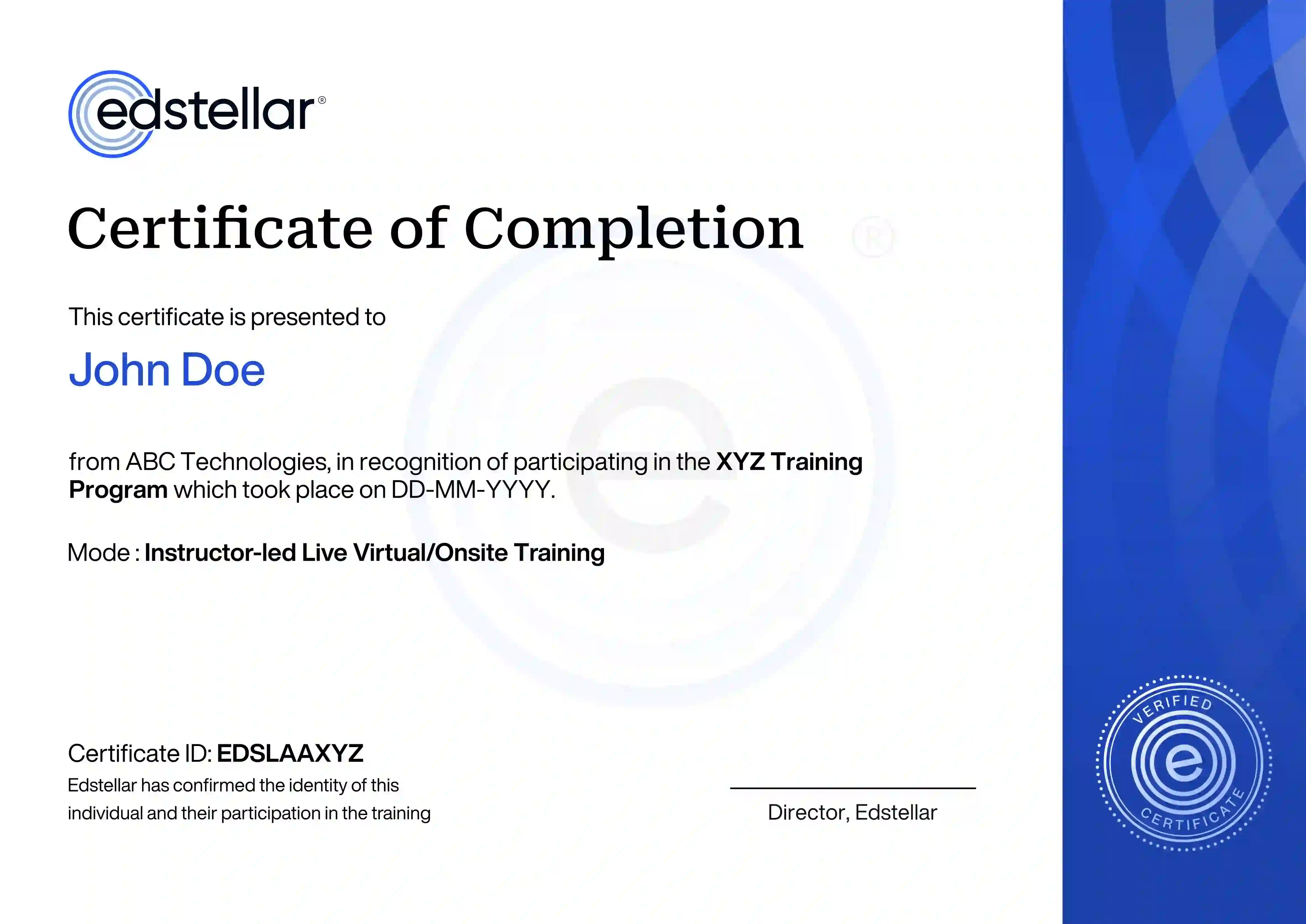
Upon successful completion of the Drone Safety Inspections training course offered by Edstellar, employees receive a course completion certificate, symbolizing their dedication to ongoing learning and professional development.
This certificate validates the employee's acquired skills and is a powerful motivator, inspiring them to enhance their expertise further and contribute effectively to organizational success.



Edstellar is a one-stop instructor-led corporate training and coaching solution that addresses organizational upskilling and talent transformation needs globally.
.svg)
.svg)
.svg)

.svg)
Learning Technology
Learning Content Design and Development
Learning Governance, Analytics & ROI
Digital Learning Ecosystem
Training Simulations, AR/VR & Case Studies
Employee Performance Support
Leadership Pipeline & Succession PlanningStrategic Workforce Planning for EnterprisesTransformation & Risk Advisory for EnterprisesDEI Consulting for EnterprisesEmployee Engagement Consulting for Enterprises
Cultural Transformation