Workplace Safety Program
Builds a site-wide safety capability from orientation to hazard-specific controls
3 ProgramsFrontline workers, site supervisors, and EHS teams, split by role


Fewer incidents, stronger evidence, safer sites.
We build health, safety and environment capability inside enterprises: the people, the practices and the evidence that keep workers safe and satisfy regulators. Instructor-led programs across occupational safety, high-risk work, fire response, process safety and environmental compliance are how we do it, scoped to your sites and delivered wherever your teams are.
Instructor-led workshops and programsIn-house, virtual or blended10+ languagesDelivered in English, Spanish, Mandarin, German, Arabic, Portuguese, Hindi, French, Japanese, Italian, and more100+ countriesWe have delivered in United States, United Kingdom, India, Canada, Germany, France, Netherlands, UAE, Saudi Arabia, Singapore, Australia, Japan, Brazil, South Africa and 90+ more countries

Trusted as a Leading Corporate Training Provider by
















Health, safety and environment training is instructor-led group training that builds an organization's ability to keep people safe, meet its statutory duties, and evidence that it does. It spans occupational health and safety, high-risk work controls, fire and emergency response, process and functional safety, and environmental and product compliance. Programs are scoped to the jurisdictions and sites an employer operates and delivered to a closed cohort rather than sold as individual seats.
The commercial distinction is between certificates on a wall and incidents that do not happen. Generic e-learning tells people the rules; group training builds shared practice: the same permit-to-work discipline, the same hazard reporting habits, and the same understanding of what a regulator or inspector expects to see. For employers with site-based operations, that shared practice is what keeps people alive and stands up in an investigation.
Programs split across the major risk areas. Occupational health and safety, from orientation to country-specific compliance across 20+ jurisdictions. High-risk work: confined space, working at height, energy isolation, and machinery safety. Fire and emergency response: warden duties, first aid, and evacuation. Process and functional safety for oil, gas, chemicals, and automotive. And environmental compliance: REACH, RoHS, and permitting.
Every engagement starts with discovery: which sites, which hazards, which regulations, and which teams carry the risk. Trainers are then matched from a vetted bench of EHS practitioners, former inspectors, and safety engineers, and the program is tailored before delivery. Cohorts are closed to your organization, run in your timezone, and measured with pre- and post-assessments so L&D can show what changed.
Six areas carry most of the catalog. Start where your risks are greatest.
Health, Safety & Environment (HSE) programs to start with.

Apply Brazil's NR standards, from risk management programs to machinery and electrical rules.

Apply Indonesia's K3 occupational safety requirements and SMK3 management system duties at your sites.

Observe work, give feedback and reinforce safe behaviors with a structured BBS program.
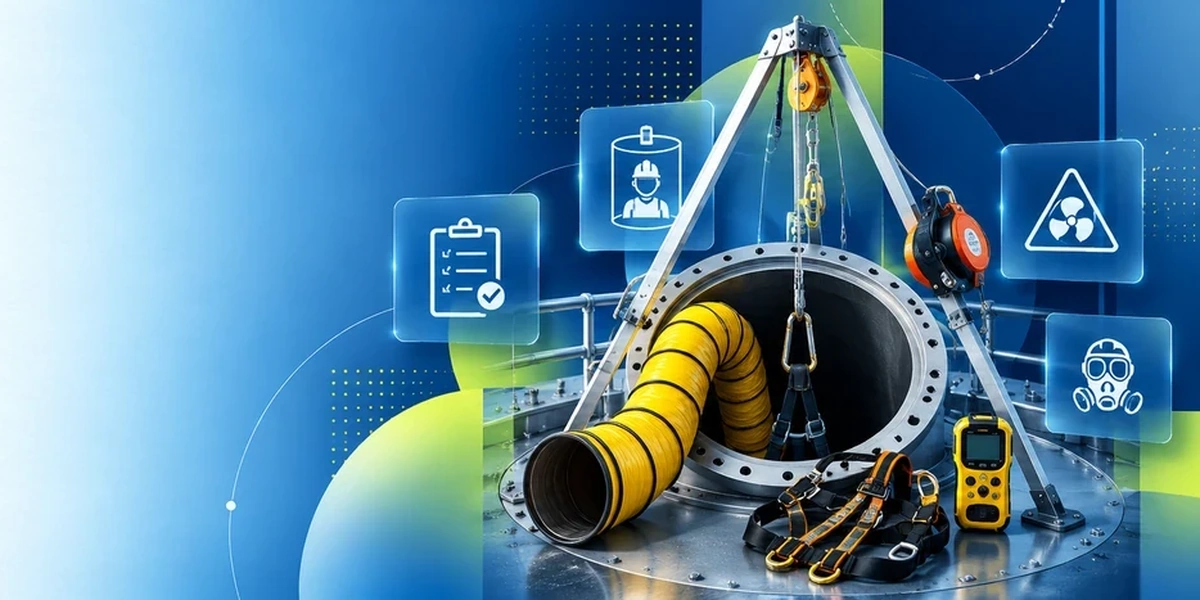
Test atmospheres, enter confined spaces safely and plan rescues before work starts.
Browse all 57 health, safety & environment (HSE) programs across 9 topics, from occupational safety and high-risk work to fire response, process safety, and environmental compliance. Filter by topic and delivery format, then request a tailored proposal.
SHOWING 1–15 OF 57 · 57 IN THE LIVE CATALOG
Observe work, give feedback and reinforce safe behaviors with a structured BBS program.
Apply Brazil's NR standards, from risk management programs to machinery and electrical rules.
Meet federal and provincial OHS duties, including WHMIS, joint committees and the right to refuse.
Read GHS labels and safety data sheets, and store, handle and dispose of chemicals safely.
Set up and run SG-SST as Colombian law requires, from policy and roles to evaluation.
Test atmospheres, enter confined spaces safely and plan rescues before work starts.
Plan and run construction sites safely, from induction and inspection to traffic and plant.
Select, induct, supervise and review contractors and third parties against your safety standards.
Drive defensively, manage fatigue and distraction, and reduce road risk for work driving.
Apply NFPA 70E practices, arc flash boundaries and PPE for work near energised equipment.
Plan, drill and lead evacuations and crisis response across the site.
Meet environmental duties for permits, emissions, waste, water and record keeping.
Meet Factories Act and related Indian duties for safety, health, welfare and records.
Prevent fires, use extinguishers correctly and lead evacuations as a trained fire warden.
Recognize emergencies, give basic first aid and CPR, and support people until help arrives.
Build your team’s capabilities in health, safety & environment (HSE) with curated training programs arranged in a clear learning sequence. Each pathway builds skills progressively, helping your workforce achieve defined milestones and apply their learning to business goals.
Builds a site-wide safety capability from orientation to hazard-specific controls
Classify hazardous chemicals, write GHS-compliant safety data sheets and run hazard communication programs.
Apply ISO 10218 and ISO/TS 15066 to assess collaborative robot risks and set safe operating limits.
Plan safe work at height: select fall protection systems, inspect equipment and manage rescue procedures.

Covers environmental permits and product substance rules in one program
Meet environmental permit conditions, manage emissions and waste, and prepare for regulatory inspections.
Navigate REACH, RoHS and EU Digital Product Passport requirements for products entering European markets.
Register, evaluate and authorise chemicals under REACH and maintain compliant safety data documentation.
Test, document and declare RoHS compliance for electrical and electronic equipment across supply chains.
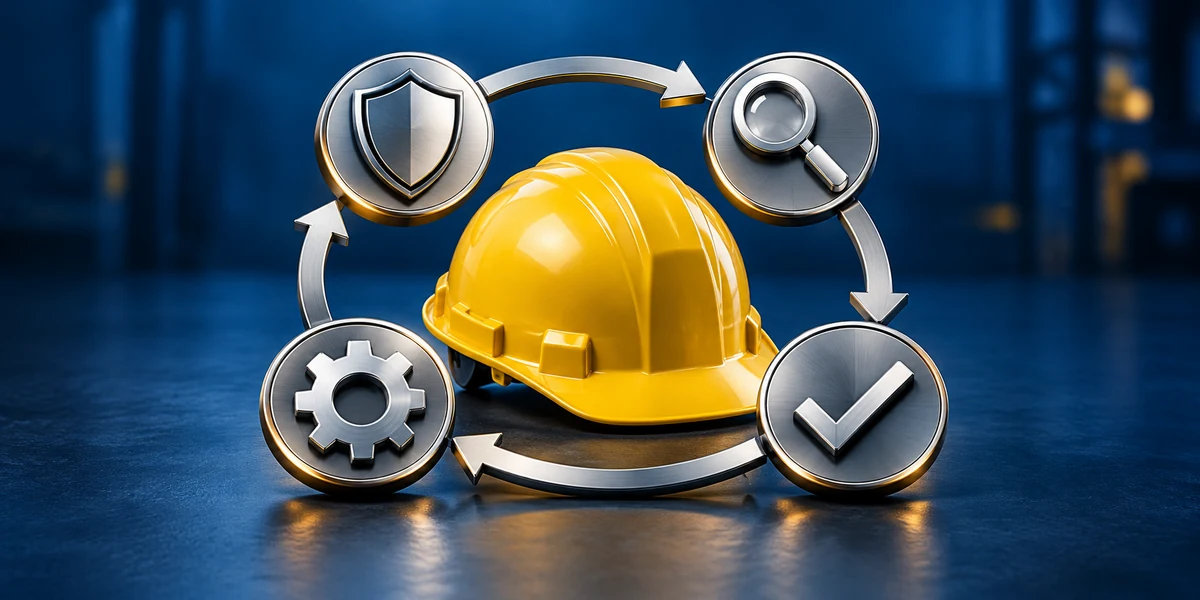
Builds and runs an ISO 45001 safety management system
Build and operate an ISO 45001 occupational health and safety management system from planning to certification.
Investigate workplace incidents using root cause analysis and build near-miss reporting systems that prevent recurrence.
Set safety requirements for contractors, run permit and induction processes, and audit third-party compliance.
Develop visible safety leadership behaviours and build a reporting culture that reduces workplace incidents.

Controls the tasks behind most serious injuries and fatalities
Operate permit-to-work systems and apply lockout/tagout procedures for safe energy isolation.
Assess confined space hazards, manage safe entry procedures and plan emergency rescue operations.
Conduct machinery risk assessments to ISO 12100, specify safeguards and document residual risk acceptably.
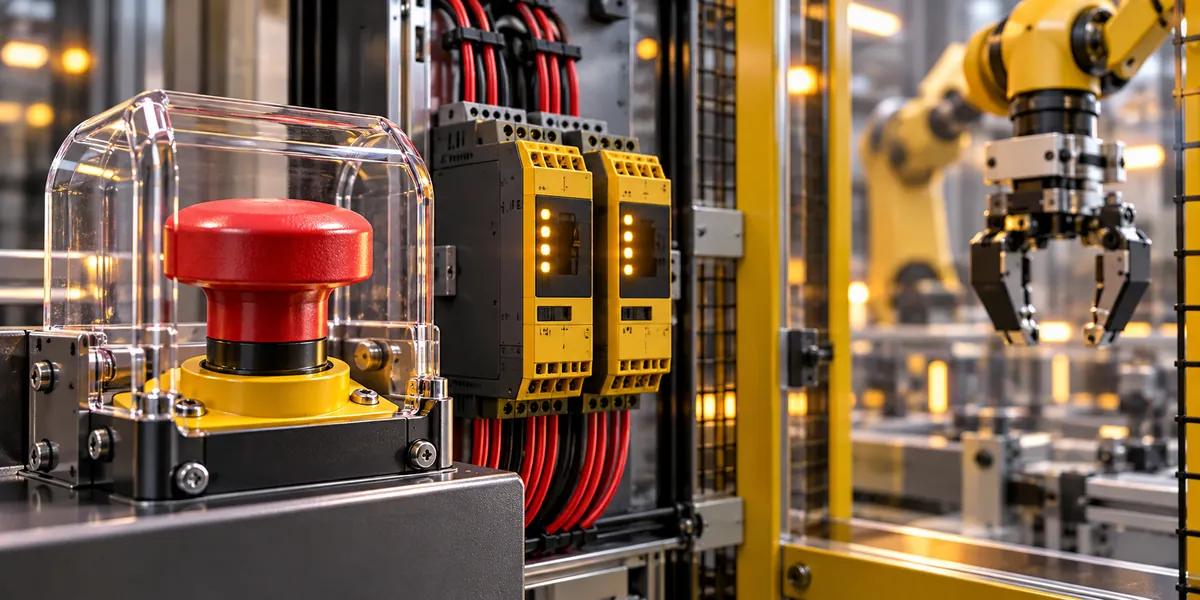
Engineers safe control systems for process, automotive, and machinery
Design, validate and maintain safety instrumented systems (SIS) to IEC 61511 for process industry applications.
Apply IEC 61508 and ISO 26262 functional safety lifecycle requirements to automotive and industrial systems.
Conduct machinery risk assessments to ISO 12100, specify safeguards and document residual risk acceptably.
Explore health, safety & environment (HSE) training aligned with your teams’ functions, job roles, industry and tools. Help your teams build the knowledge and practical skills to develop capabilities in health, safety and environment (HSE) across your organization, supporting your business priorities and evolving needs.
Build practical systems for identifying hazards and preventing workplace incidents. Strengthen risk assessments, inspections and corrective-action follow-through around the work your teams perform.
Understand workplace exposures and select proportionate prevention measures. Develop a structured approach to exposure assessment, control selection and evaluating whether protections remain effective.
Turn environmental priorities into practical operating controls. Explore impact assessment, objectives and monitoring that help teams improve environmental performance over time.
Manage the risks that arise from hazardous processes and operational changes. Develop skills in process hazard analysis, operating discipline and learning from abnormal events.
Prepare people to recognize emergencies and follow coordinated response plans. Practice scenario planning, drills and clear escalation so responsibilities are understood before an incident occurs.
Make safe working practices part of routine team supervision. Practice hazard conversations, responding to concerns and checking that agreed controls are understood on the job.
Connect health, safety and environmental priorities with management decisions. Strengthen governance, resource planning and performance reviews that support sustained prevention.
Recognize the hazards created by changing sites, temporary work and multiple contractors. Build practical understanding of fall prevention, equipment interfaces and electrical safety in construction scenarios.
Address safety risks around production equipment, maintenance and changing work conditions. Explore hazardous-energy controls, machine-related exposures and safe coordination between operations and maintenance.
Connect workforce protection with a stronger culture of safe care. Explore infection-related exposures, reporting and staff participation in improvements across healthcare settings.
Training a role that is not listed, or a mix of them? Tell us who you are training and what they need to do, and we build the shortlist
Where HSE teams most often cross-train, based on how these courses are classified.
Domain-level outcomes, not course objectives. These are the capabilities enterprises usually buy this training to build.
Meet OSHA, IOSH, and 20+ other national safety regimes with documented, auditable training records.
Build hazard spotting, reporting, and investigation habits that drive incident rates down.
Apply permit-to-work, energy isolation, and task-specific controls for confined space, height, and machinery.
Staff trained wardens and first aiders, with evacuation plans everyone has practiced.
Keep operations and products within REACH, RoHS, and permitting rules across your markets.
Move from box-ticking to ownership, where every team understands its part in keeping people safe.
Show regulators and investigators the training, assessments, and records that prove due diligence.
Onsite, live virtual, or hybrid, every program is instructor-led and built around your teams.
A trainer comes to your office and works face to face with your team, using your policies and your examples.
For small teams or enterprise-wide training, across one site or multiple global locations, in one language or multiple languages.
Get a QuoteExpert-led live online sessions delivered anywhere, with consistency and easy scheduling. Training tools such as Zoom or Microsoft Teams are selected subject to your organization's approval and compliance requirements.
For small teams or enterprise-wide training, across one site or multiple global locations, in one language or multiple languages.
Get a QuoteCombine in-person sessions with live online training in a coordinated instructor-led program, with the mix planned around your team's needs.
For small teams or enterprise-wide training, across one site or multiple global locations, in one language or multiple languages.
Get a QuoteEffective HSE learning connects workplace responsibilities with the conditions people encounter on site. Edstellar customizes role-based, instructor-led training for frontline teams, supervisors, HSE professionals and operational leaders around relevant hazards and environmental responsibilities. Practical scenarios support hazard recognition, incident learning and escalation, while adaptable programs help teams consider changing processes, equipment and operating conditions in their day-to-day work decisions.
Explore hazard recognition and control choices in relevant operational scenarios
Connect frontline, supervisor and HSE responsibilities through practical learning
Practice escalation, incident analysis and responses to environmental concerns
Reassess learning needs as equipment, processes and site conditions evolve
Experience across industries brings business context to HSE learning
Company-wide training experience informing practical learning for HSE teams
Company-wide trainer network supporting HSE learning and complementary business skills
Edstellar's certified quality and information-security management systems support HSE training delivery
Every engagement runs the same five stages, from capability baseline through delivery to sustained measurement.
We meet your stakeholders and L&D team to baseline what your people can do today against the HSE capability you need.
Weeks 1–2
Programs are assembled against your policies, obligations, and team levels, then trainers are shortlisted from the vetted bench.
Weeks 2–4
Closed-cohort instructor-led sessions in your language and timezone, with labs, exercises, and materials shipped alongside.
Scheduled to your calendar
Pre- and post-assessments establish a measurable change in capability, benchmarked against role frameworks.
Immediately after delivery
Retrospectives, refresher modules and skill-refresh tracking keep the investment from decaying, and the measured gaps feed the next cycle.
Quarterly
Stage 05 feeds the next cycle: the gaps it measures become the next Discover.
Also from Edstellar
Psychometric, behavioral, leadership and 360-degree assessment.
Needs analysis, gap identification, and a training roadmap.
Learning strategy, content, technology and ROI measurement.
Org design, succession planning and cultural change.
Training outsourcing, vendor management, logistics and administration.
Executive and manager coaching that keeps skills in use.
EHS managers, site supervisors, frontline workers, fire wardens, first aiders, and process engineers. Country-specific tracks cover local compliance leads.
Instructor-led and live, as a closed cohort for your team, onsite, virtual, or hybrid. There are no self-paced modules. You choose the format, location, language, and schedule.
Yes. We cover country-specific safety law across 20+ jurisdictions, from OSHA and IOSH to NR, SG-SST, and WSH. Tell us your footprint in the discovery call.
Yes. Programs adapt to manufacturing, construction, oil and gas, logistics, and healthcare, using your hazards and your incident history.
Most programs run 8 to 30 hours across several sessions. Multi-program bundles and site-wide rollouts are scheduled around your shifts.
Cohorts run from a single small team up to multi-site rollouts of hundreds, with one trainer per cohort for discussion quality.
Yes. Exercises use permit-to-work scenarios, hazard spotting, evacuation drills, and equipment-specific controls for your site.
Pre- and post-assessments benchmark each participant, with a completion report showing measured change per cohort for your records.
Yes. Your procedures, permits, and incident cases are built into the materials, so teams train on the risks they actually face.
Yes. Programs cover high-risk work controls, from energy isolation and confined space to machinery safety and working at height.
Yes. Fire warden, first aid, and evacuation programs meet statutory duties for nominated persons in most jurisdictions.
A room or outdoor area for drills, a participant list, and your procedures where relevant. We ship exercise materials and completion evidence.
Discovery to delivery typically takes two to four weeks, depending on customization depth and trainer matching for your sites.
Pick the scale that matches your rollout. Every quote is tailored to your teams and timeline.
Team size
1–25 PARTICIPANTS
One or two programs for a single team, delivered as a closed cohort. The usual entry point for a first HSE engagement.
26–150 PARTICIPANTS
Multiple cohorts or programs for larger teams, with delivery structured around your workforce and training requirements.
151–1,000 PARTICIPANTS
A coordinated rollout across business units, with role-based tracks and central reporting for L&D.
1,000+ PARTICIPANTS
HSE capability at organizational scale, with dedicated management and measurement from pilot to rollout.
Tell us which teams you are training and what they need to be able to do. Anything you filtered in the catalog comes through with your message.