.svg "edstellar")

Executive Storytelling for Strategic Leadership Corporate Training Program
This training equips senior leaders with advanced storytelling frameworks for strategic narratives, board communication, organizational alignment, change leadership, and compelling executive delivery.
(Virtual / On-site / Off-site)
.svg)
Drive Team Excellence with Executive Storytelling for Strategic Leadership Corporate Training
The most effective strategic leaders are not just architects of great strategy - they are master storytellers who translate vision into meaning, connect data to emotion, and move entire organizations to act with conviction. This advanced training covers the complete executive storytelling discipline: from story architecture and strategic narrative design to board-level delivery, change communication, and building a storytelling culture that sustains organizational momentum.
Edstellar's Executive Storytelling for Strategic Leadership Instructor-led course offers virtual/onsite training options so teams can learn in the format that suits them best. The curriculum combines advanced storytelling theory with intensive live practice, peer critique, and real-world application, enabling senior leaders to command narrative authority in every strategic communication context they encounter.
.svg)

Skills Your Employees Will Gain
These are the core, hands-on capabilities your team builds during the program.
- Strategic Narrative Design
- Executive Story Architecture
- Board and Investor Storytelling
- Data-Driven Narrative
- Change Story Communication
- Executive Story Delivery
- Organizational Storytelling Culture
What Your Team Will Achieve After This Training
- Master executive storytelling frameworks to design compelling strategic narratives that drive organizational alignment.
- Gain advanced skills to craft and deliver vision, mission, and strategy stories for diverse executive audiences.
- Develop board and investor storytelling techniques that build confidence, trust, and strategic commitment.
- Learn to integrate data and evidence into narrative frameworks that make complex insights emotionally resonant.
- Build mastery in change story communication to lead organizations through transformation with clarity and conviction.
- Apply executive delivery skills to perform stories with authenticity, presence, and lasting audience impact.
Topics & Program Outline
The curriculum is organized into focused modules built by industry experts and delivered virtually or on-premise. Interactive sessions reflect the evolving demands of the workplace, keeping the learning both relevant and practical.
-
Why Stories Are the Language of Strategic Leadership
- How narrative shaped human decision-making long before data or logic entered the equation
- Why the most influential leaders in history were first and foremost master storytellers
- The cost of poor executive storytelling: good strategy killed by weak narrative
- Self-assessment: identifying your current storytelling strengths and most urgent gaps
-
The Neuroscience of Story
- How narrative activates neural coupling and aligns the audience's brain with the speaker
- Oxytocin, dopamine, and the neurochemistry of compelling storytelling for leaders
- Why stories bypass defensive reasoning and create conditions for genuine persuasion
- Applying neuroscience insights to structure stories that resonate deeply with executives
-
What Makes an Executive Storyteller Distinctive
- The difference between storytelling for general communication and for strategic leadership
- The four qualities that separate elite executive storytellers from competent communicators
- How authority, vulnerability, specificity, and purpose elevate executive narrative
- Case study analysis: deconstructing a great executive story for its structural secrets
-
The Executive Story Portfolio
- Six story types every senior leader must develop and maintain in their narrative repertoire
- The vision story, the origin story, the strategy story, and the values story explained
- Personal leadership stories that establish credibility, humanity, and connection with audiences
- Mapping your current story portfolio and identifying what is missing or underdeveloped
-
Storytelling Ethics and Responsibility
- The ethical obligations of leaders who use story to shape organizational belief and behavior
- The boundary between inspiring narrative and manipulative or misleading communication
- Accuracy and authenticity requirements for executive stories built on real organizational events
- When not to use story: situations where directness and data must take precedence
-
The Executive Storytelling Mindset
- Shifting from information-transfer to meaning-making as the primary goal of leadership communication
- Developing a storytelling habit: seeing narrative opportunities in everyday leadership moments
- Overcoming executive resistance to storytelling as soft or insufficiently rigorous
- Committing to a personal storytelling development practice that compounds over a career
-
The Core Architecture of a Compelling Story
- The five essential elements every strong executive story must contain
- Character, conflict, stakes, turning point, and resolution defined for leadership contexts
- Why omitting any element weakens the story's emotional and persuasive power
- Story architecture diagnostic: analyzing your existing stories for structural weaknesses
-
The Three-Act Structure for Executive Narratives
- Act one: establishing context, character, and the strategic challenge or opportunity
- Act two: the journey, obstacles, decisions, and tensions that sustain narrative tension
- Act three: resolution, outcome, and the forward-looking call to action for the audience
- Adapting three-act structure for short (2-minute) and long-form (20-minute) executive stories
-
The Pyramid Principle and SCQA Framework
- Barbara Minto's pyramid: leading with the conclusion for executive and board audiences
- Situation, Complication, Question, Answer as a story scaffold for analytical narratives
- When to use inductive vs deductive story structure for different leadership contexts
- Combining pyramid logic with emotional narrative for maximum persuasive and analytical impact
-
Tension and Resolution in Leadership Stories
- Why tension is the engine of every compelling story and how to deliberately create it
- Types of productive tension: problem, paradox, threat, and aspiration tension in leadership
- Sustaining tension without losing the audience: pacing and release for executive storytellers
- The satisfying resolution: how to close a story in a way that drives clarity and action
-
The Single Controlling Idea
- Why every great executive story distills to one clear, defensible, memorable idea
- Techniques for identifying the single controlling idea in your leadership narrative
- Subordinating all story elements to serve and reinforce the controlling idea
- Testing your controlling idea: can your audience state it back in one sentence?
-
Diagnosing and Fixing Weak Story Architecture
- Common executive storytelling structural failures and their root causes
- The story X-ray: a diagnostic tool for identifying where a story breaks down
- Rapid story repair techniques for improving weak narratives before delivery
- Peer critique frameworks for giving and receiving story architecture feedback
-
What the Strategic Narrative Is and Why It Matters
- Defining the organizational strategic narrative as the story of why the organization exists and where it is going
- The strategic narrative as the foundation from which all organizational communication flows
- What happens when the strategic narrative is weak, inconsistent, or absent in an organization
- Diagnosing the current strength and consistency of your organization's strategic narrative
-
The Vision Story
- Crafting a vision story that is vivid, specific, emotionally compelling, and credible
- The difference between a vision statement and a vision story that people actually believe
- Making the future tangible: concrete detail techniques for inspiring organizational vision
- Testing the vision story: does it move people and answer the question of why it matters?
-
The Mission and Purpose Story
- How the mission story connects organizational purpose to individual meaning and motivation
- Finding the human stories that make abstract organizational purpose emotionally real
- The origin story as a mission anchor: using founding narrative to reinforce current purpose
- Refreshing the mission story for new generations of employees and evolving organizational contexts
-
The Strategy Story
- Translating complex strategy into a simple, memorable story that leaders at every level can retell
- The "where to play and how to win" story structure for communicating competitive strategy
- Making strategic choices feel inevitable and correct through the logic of the strategy story
- The strategy story stress test: can a frontline employee retell it accurately after one hearing?
-
Cascading the Strategic Narrative
- How to design a strategic narrative that can be consistently cascaded through every leadership layer
- Equipping managers and team leaders to retell the narrative authentically in their own voice
- Measuring narrative consistency across the organization and correcting drift over time
- The cascading narrative workshop: building shared story ownership across the leadership team
-
Refreshing the Strategic Narrative
- Recognizing when the strategic narrative needs updating without losing organizational continuity
- The narrative transition story: connecting the old story to the new one with coherent logic
- Managing the organizational anxiety that arises when the strategic narrative changes
- Communicating narrative evolution vs narrative discontinuity to different stakeholder groups
-
Why Data Alone Rarely Persuades
- The evidence paradox: why more data often creates less persuasion for executive audiences
- How narrative context transforms raw data from information into compelling strategic insight
- The leader's responsibility to help audiences make meaning from complex evidence
- When to lead with data and when to lead with story for maximum executive persuasion
-
The Data Story Framework
- The data point, insight, implication, and action story framework for evidence-based narrative
- Moving the audience from "here is what happened" to "here is what it means for us"
- The so-what test: eliminating data that does not serve the story's strategic purpose
- Building narrative bridges between data clusters in complex analytical presentations
-
Choosing the Right Evidence
- Selecting the one or two data points that make the story's argument undeniable
- Types of evidence: statistics, case studies, analogies, and expert authority in leadership stories
- Matching evidence type to audience: what boards, investors, and employees respond to differently
- Presenting evidence with appropriate confidence and acknowledging legitimate uncertainty
-
Data Visualization as Storytelling
- Choosing chart and graph types that tell the right story rather than display all available data
- The single story principle for data visualization: one chart, one insight, one clear message
- Color, contrast, and annotation as narrative tools in executive data visualization
- Avoiding chart types and visual complexity that obscure rather than reveal strategic insight
-
Making Financial Data Narrative
- Translating financial performance metrics into the language of organizational story and progress
- The financial narrative arc: connecting historical results to present position to future trajectory
- Managing difficult financial stories: framing underperformance with honesty and forward confidence
- The investor narrative for financial data: combining rigor with an inspiring organizational story
-
The Analogy and Metaphor as Evidence
- How analogy and metaphor make complex strategic ideas immediately accessible and memorable
- Selecting analogies that resonate with a specific executive or board audience
- The limits of analogy: when metaphors mislead or oversimplify strategic complexity
- Building a personal repertoire of powerful analogies for recurring leadership communication themes
-
Stories That Build Culture
- How leaders use story to define, reinforce, and protect organizational culture over time
- Values in action: finding and telling stories that make organizational values concrete and credible
- The counter-culture story: using narrative to challenge and change unhealthy organizational norms
- Identifying and retiring legacy stories that no longer serve the organization's strategic direction
-
Employee Alignment Through Leadership Narrative
- Why employees align to stories before they align to strategy documents or organizational charts
- Designing town hall narratives that create genuine strategic clarity for diverse employee audiences
- The cascade story: equipping managers to carry the leadership narrative into their teams
- Measuring narrative alignment: pulse surveys and listening sessions as story effectiveness tools
-
Stories of Progress and Momentum
- How milestone stories sustain energy and commitment through extended organizational journeys
- Celebrating progress through specific, vivid, credible stories of individual and team achievement
- The small win story: using incremental progress narratives to build organizational confidence
- Avoiding hollow celebration: why only authentic progress stories build lasting motivation
-
Stories of Organizational Identity and Heritage
- Using the founding story to anchor organizational identity through periods of change and uncertainty
- Hero stories: celebrating the individuals who embody organizational values and strategic priorities
- Failure and resilience stories that build organizational character and psychological safety
- Preserving and curating organizational story heritage as a strategic leadership resource
-
Communicating Difficult Truths Through Story
- When difficult organizational realities demand honest, courageous, and compassionate narrative
- The accountability story: taking responsibility through narrative without losing leadership authority
- Delivering bad news in a story structure that preserves trust and organizational confidence
- The recovery story: using narrative to lead organizations through failure toward renewal
-
Enabling Managers as Organizational Storytellers
- Why manager storytelling capability is the critical multiplier of executive narrative reach
- Designing storytelling toolkits that help managers adapt the organizational narrative authentically
- Storytelling coaching for frontline managers: structured feedback and practice frameworks
- Measuring manager storytelling effectiveness as part of leadership development evaluation
-
What Board and Investor Audiences Need From Stories
- The unique communication expectations of board directors and institutional investors
- Balancing analytical rigor with compelling narrative for sophisticated financial audiences
- The credibility paradox: why overconfident storytelling undermines trust with board audiences
- Designing the opening of a board story to secure attention and establish strategic framing
-
The Strategic Review Story
- Structuring the annual strategy review as a compelling narrative of where we stand and where we go
- The three-horizon story structure for communicating short-term results and long-term ambition
- Connecting strategic milestones to the original strategic narrative the board approved
- Using competitive landscape narrative to frame strategic choices in external context
-
The Performance Narrative
- Translating financial results into a coherent story of organizational progress and positioning
- The performance story arc: results, drivers, context, and strategic implications for the board
- Managing the underperformance narrative: accountability, cause, and corrective action story
- Leading indicators vs lagging indicators in the performance story for forward-looking boards
-
The Risk and Uncertainty Story
- Communicating organizational risk to boards without catastrophizing or minimizing the picture
- The risk narrative structure: identification, probability, impact, mitigation, and monitoring
- Strategic uncertainty story: how leaders communicate when the right path is genuinely unclear
- Building board confidence through transparent, disciplined, and forward-looking risk communication
-
The Investor Day Narrative
- Designing the investor day as a multi-chapter story with a coherent and compelling arc
- The market opportunity story: sizing, dynamics, and the organization's right to win
- Management credibility storytelling: how the team narrative builds investor confidence
- Closing the investor day with a clear, confident, and memorable call to investment
-
Handling Board Questions Through Narrative
- Treating board questions as story continuations rather than interruptions or challenges
- Responding to detailed financial questions without abandoning the narrative frame
- The bridge technique: connecting specific questions back to the overarching strategic story
- When to acknowledge a knowledge gap with honesty rather than improvising an unreliable answer
-
The Change Story Formula
- Why organizational change fails when the change story is absent, weak, or inconsistent
- The three-part change story: the case for change, the destination, and the journey ahead
- Emotional sequencing in change narratives: urgency first, vision second, path third
- Change story timing: when to tell the full story and when to reveal it in strategic stages
-
The Burning Platform Narrative
- Creating a sense of urgency through honest, evidence-based organizational crisis storytelling
- The burning platform vs the burning ambition: when urgency vs aspiration is the better change driver
- Calibrating the intensity of crisis narrative without triggering fear or organizational paralysis
- Sustaining urgency narrative across months and years without it becoming white noise
-
The Destination Story
- Making the post-change future vivid, specific, and inspiring for skeptical organizational audiences
- Connecting the destination story to individual team members' roles, growth, and opportunities
- The "day in the life" technique: narrating what the future state looks like in concrete human terms
- Testing the destination story: does it generate genuine excitement or just passive compliance?
-
The Journey Story
- Narrating the transformation pathway in a way that feels achievable without minimizing the challenge
- Milestone storytelling: using progress narratives to sustain momentum through long transformation
- The protagonist role: positioning employees as heroes of the transformation story, not passengers
- Adapting the journey story as progress is made and obstacles are encountered along the way
-
Handling Setback Stories During Transformation
- How to communicate transformation setbacks honestly without derailing organizational confidence
- The setback as a story beat: integrating failure into the transformation narrative authentically
- Using failure stories to demonstrate leadership integrity, learning, and organizational resilience
- Rebuilding narrative momentum after a significant transformation failure or missed milestone
-
Sustaining the Change Story
- Why change stories must be refreshed, not repeated, to maintain organizational engagement over time
- Layering new evidence and new stories into the change narrative as the transformation progresses
- The transformation closing story: celebrating completion and transitioning to the new organizational normal
- The retrospective story: capturing transformation lessons in narrative for organizational memory
-
The Voice as Storytelling Instrument
- Pace, pitch, volume, and resonance as deliberate executive storytelling delivery tools
- The strategic slow-down: using reduced pace to signal importance and create narrative weight
- Vocal variety exercises for building a more dynamic and engaging executive storytelling voice
- Eliminating vocal fillers that undermine authority and interrupt narrative flow in delivery
-
Physical Presence in Executive Storytelling
- How posture, stance, and stillness project authority and narrative confidence on stage
- Purposeful movement vs nervous movement: using space to reinforce story structure
- Gesture as a storytelling amplifier: illustrating key moments with deliberate physical expression
- Eliminating distracting physical habits that pull audience attention away from the story
-
The Power of the Pause
- Why the pause is the single most underused storytelling tool in executive communication
- Pre-story pauses that create anticipation and signal that something important is coming
- Mid-story pauses that allow key moments to land and resonate before moving forward
- The post-story pause that holds the emotional impact before transitioning to analysis
-
Eye Contact and Audience Connection
- How sustained, intentional eye contact creates the intimacy that makes stories unforgettable
- The one-person, one-thought technique for commanding group attention in story delivery
- Reading audience response in real time and adjusting story pace and depth accordingly
- Eye contact in virtual storytelling: camera connection techniques that replicate in-person presence
-
Authenticity and Emotional Truth in Delivery
- The difference between a performed story and an authentically felt and delivered one
- Accessing genuine emotion in leadership stories without losing executive composure and authority
- The role of vulnerability in executive storytelling and when it builds vs undermines credibility
- Matching emotional register to story content and audience context for authentic resonance
-
Rehearsal Discipline for Executive Storytellers
- How elite executive storytellers approach rehearsal differently from average presenters
- The out-loud rehearsal principle: why silent reading never prepares you for live story delivery
- Video self-review as the most accelerated executive storytelling improvement practice
- Rehearsal techniques for making stories feel natural and spontaneous under formal delivery conditions
-
Executive Storytelling in the Digital Age
- How digital platforms have expanded the reach and format of executive leadership narrative
- The principles of effective storytelling that remain constant across all digital channels
- Selecting the right digital storytelling format for different strategic communication goals
- Building a coherent multi-channel storytelling presence as a senior organizational leader
-
Video Storytelling for Senior Leaders
- Internal video messaging as a leadership storytelling tool for scale and organizational reach
- Production quality decisions that balance accessibility with executive credibility
- Scripted vs unscripted video storytelling: the trade-offs for authenticity and message control
- Measuring video story effectiveness through engagement, reach, and organizational response
-
Written Storytelling for Executive Leaders
- LinkedIn narrative strategy for senior leaders: building influence through consistent written story
- The op-ed and thought leadership article as long-form executive storytelling vehicles
- Internal written narratives: strategy letters, all-staff updates, and leadership blogs
- Writing with a distinct, consistent leadership voice across different written storytelling formats
-
Presentation Storytelling and Slide Design
- Slides as visual story support rather than the story itself in executive communication
- The slide-free storytelling approach and when removing slides amplifies executive narrative impact
- Designing slides that serve the story: minimal text, maximum visual narrative power
- The presenter-slide relationship: staying the narrator while slides play a supporting role
-
Social Media Executive Storytelling
- Platform selection for executive storytelling: LinkedIn, X, and emerging professional platforms
- Short-form storytelling discipline: making a complete narrative arc work in a single post
- Consistency, cadence, and authenticity as the three pillars of executive social storytelling
- Managing executive social media reputation risk through disciplined and considered storytelling
-
Building an Integrated Executive Story Platform
- Designing a coherent multi-channel narrative strategy that reinforces the same core messages
- Content repurposing: extracting multiple storytelling formats from a single core narrative
- Working with communications teams to scale and amplify executive storytelling across channels
- Measuring the cumulative impact of an integrated executive storytelling platform over time
-
The Executive Story Audit
- Conducting a systematic audit of your current personal and organizational story portfolio
- Identifying gaps, outdated stories, and underperforming narratives in your leadership repertoire
- Prioritizing story development based on strategic communication priorities and leadership context
- Building a living story inventory that evolves with your leadership role and organizational needs
-
Building Your Personal Story Library
- Identifying and documenting the personal leadership experiences that deserve to become stories
- Story mining techniques: extracting narrative gold from ordinary leadership moments and observations
- Crafting and refining 10 signature stories that represent your leadership values and strategic vision
- Organizing and retrieving personal stories efficiently for deployment in different leadership contexts
-
Coaching Your Team in Storytelling
- How developing storytelling capability in your direct reports multiplies organizational narrative power
- Storytelling coaching techniques: observation, structured feedback, and deliberate practice
- Creating safe storytelling practice environments within the leadership team
- Recognizing and celebrating strong storytelling in the team to reinforce the culture
-
Creating a Storytelling Organization
- What a storytelling culture looks like and how senior leaders model and sustain it
- Structural interventions: story libraries, narrative rituals, and storytelling forums
- Recruiting and promoting leaders who demonstrate storytelling capability and narrative intelligence
- Measuring organizational storytelling culture through communication quality and alignment indicators
-
The Executive Storytelling Development Plan
- Designing a personal 12-month storytelling development plan with specific measurable objectives
- Identifying the three stories that will have the highest impact on your leadership effectiveness now
- Building rehearsal, feedback, and reflection habits that sustain storytelling growth over a career
- Peer accountability partnership for ongoing executive storytelling development and refinement
-
The Storytelling Leadership Legacy
- How the stories a leader tells become the organizational culture and memory they leave behind
- The legacy audit: what stories are you currently telling that will outlast your tenure as a leader
- Conscious legacy storytelling: crafting the narrative contributions that define your leadership impact
- Passing on the storytelling tradition: how great leaders build storytelling capability in their successors
Who Should Attend?
This program suits professionals at many levels across the organization, including:
- C-Suite Executives
- Vice Presidents
- Directors
- Senior Managers
- Board Members
- Chief Communications Officers
What are the Prerequisites?
Professionals should have experience in a senior leadership role and confidence with public speaking and executive communication to take the Executive Storytelling for Strategic Leadership training course.
Choose the Format That Fits Your Team
We design training your teams actually engage with, and deliver it the way that suits you best. Through a vetted global trainer network, Edstellar runs sessions in 10+ languages with consistent quality anywhere.


.webp "Virtual Executive Storytelling for Strategic Leadership Training")
Virtual / online: expert-led live sessions delivered anywhere, with consistency and easy scheduling.
.webp "On-site Executive Storytelling for Strategic Leadership Training")
On-site (in-house): immersive, instructor-led learning at your office.
.webp "Off-site Executive Storytelling for Strategic Leadership Training")
Off-site: focused, instructor-led group learning away from everyday workplace distractions.
Get a Proposal Shaped to Your Needs
Need pricing for onsite, offsite, or virtual delivery? Get a proposal tailored to your team's needs.
64 hours of group training (includes VILT/In-person On-site)
Tailored for SMBs
Tailor-Made Trainee Licenses with Our Exclusive Training Packages!
160 hours of group training (includes VILT/In-person On-site)
Ideal for growing SMBs
Tailor-Made Trainee Licenses with Our Exclusive Training Packages!
400 hours of group training (includes VILT/In-person On-site)
Designed for large corporations
Tailor-Made Trainee Licenses with Our Exclusive Training Packages!
Unlimited duration
Designed for large corporations
What Sets Edstellar Apart
Experienced Trainers
Our trainers are drawn from a vetted global network and bring years of industry expertise, keeping every session practical and impactful.
Proven Quality
With a strong global track record, Edstellar is known for quality and engaging delivery.
Industry-Relevant Curriculum
Our programs are built by experts to match the demands of today's industry.
Fully Customizable
Every program can be tailored to your organization's goals.
Comprehensive Support
We provide pre- and post-session support for a complete learning experience.
Global Multi-Location & Multilingual Training Delivery
We deliver in multiple languages to support diverse global teams.
Recognition That Motivates Your Team
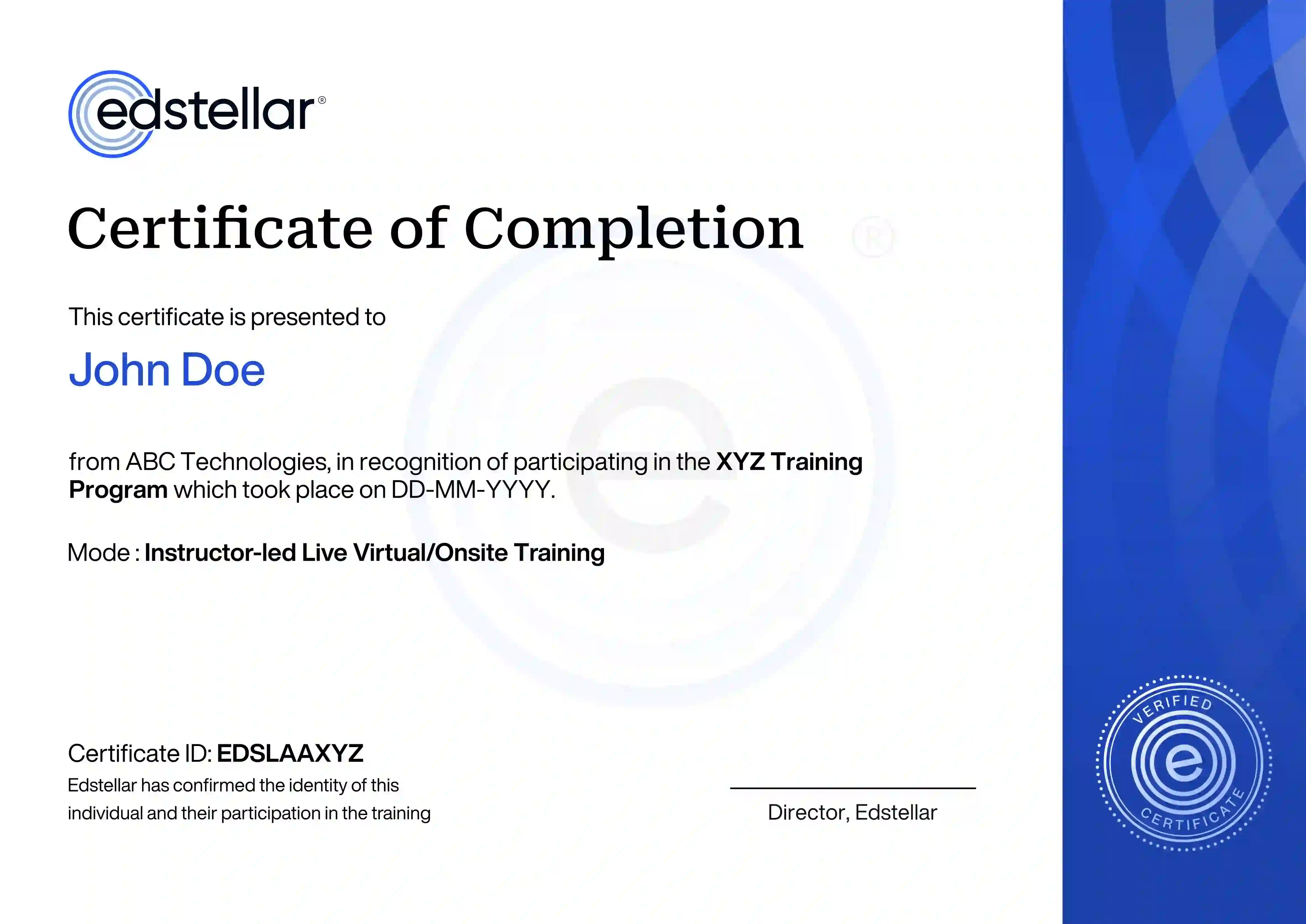
Upon successful completion of the Executive Storytelling for Strategic Leadership training course offered by Edstellar, employees receive a course completion certificate, symbolizing their dedication to ongoing learning and professional development.
This certificate validates the employee's acquired skills and is a powerful motivator, inspiring them to enhance their expertise further and contribute effectively to organizational success.

Explore More Courses


Edstellar is a one-stop instructor-led corporate training and coaching solution that addresses organizational upskilling and talent transformation needs globally.
.svg)
.svg)
.svg)

.svg)
Learning Technology
Learning Content Design and Development
Learning Governance, Analytics & ROI
Digital Learning Ecosystem
Training Simulations, AR/VR & Case Studies
Employee Performance Support
Leadership Pipeline & Succession PlanningStrategic Workforce Planning for EnterprisesTransformation & Risk Advisory for EnterprisesDEI Consulting for EnterprisesEmployee Engagement Consulting for Enterprises
Cultural Transformation