.svg "edstellar")

Inclusive Product Development Corporate Training Program
This training equips product teams with principles, frameworks, and practices to design and build products that are accessible, equitable, and inclusive for users of all abilities, backgrounds, and identities.
(Virtual / On-site / Off-site)
.svg)
Drive Team Excellence with Inclusive Product Development Corporate Training
Inclusive Product Development is the practice of building products that work equitably for users of all abilities, backgrounds, identities, and circumstances. This training covers the full spectrum of inclusive product work - from understanding diverse user needs and applying universal design principles to embedding accessibility standards, mitigating product bias, and measuring inclusion across the product lifecycle.
Edstellar's Inclusive Product Development Instructor-led course offers virtual/onsite training options so participants can learn in the format that fits their team's schedule and culture. The curriculum combines inclusive design theory with practical exercises and case studies, enabling product managers, designers, engineers, and leaders to build products that reflect the full diversity of the people they serve.
.svg)

Skills Your Employees Will Gain
These are the core, hands-on capabilities your team builds during the program.
- Inclusive Design Principles
- Accessibility Standards and Compliance
- Diverse User Research Methods
- Bias Recognition in Product Decisions
- Equitable Feature Design
- Inclusive Product Strategy
- Measuring Inclusion in Products
What Your Team Will Achieve After This Training
- Master inclusive design principles and apply them to create product experiences accessible to users of all abilities and backgrounds.
- Gain proficiency in conducting inclusive user research that centers diverse, underrepresented, and marginalized user perspectives.
- Develop skills to recognize and mitigate bias in product decisions, feature design, and data-driven product workflows.
- Learn WCAG accessibility standards and practical methods for embedding accessibility into product development processes.
- Build inclusive product strategy frameworks that connect diversity and inclusion goals to roadmap and business outcomes.
- Apply inclusion measurement practices to evaluate product equity and track progress toward inclusive product goals.
Topics & Program Outline
The curriculum is organized into focused modules built by industry experts and delivered virtually or on-premise. Interactive sessions reflect the evolving demands of the workplace, keeping the learning both relevant and practical.
-
What is Inclusive Product Development
- Defining inclusive product development: equity, accessibility, and representation in product design
- The difference between universal design, inclusive design, and accessible design in product context
- Why inclusion matters for business: market reach, trust, innovation, and legal compliance benefits
- Real-world examples of products that succeeded and failed by including or excluding user groups
-
The Spectrum of Human Diversity in Product
- Dimensions of diversity relevant to product design: ability, age, gender, race, language, and culture
- Temporary, situational, and permanent disabilities and their product design implications
- Intersectionality in product: how multiple identity dimensions interact to shape user experience
- Understanding the curb-cut effect: how designing for the margin improves products for everyone
-
Inclusive Design Principles
- Microsoft's inclusive design principles: recognizing exclusion, learning from diversity, solving for one
- Universal design principles: equitable use, flexibility, simple operation, and perceptible information
- Applying the POUR principles (Perceivable, Operable, Understandable, Robust) beyond accessibility
- Using inclusion as a design constraint that drives creative product problem solving
-
The Cost of Exclusion in Products
- Quantifying the market size of users with disabilities, limited English proficiency, and low literacy
- Legal and regulatory risks of inaccessible and discriminatory product experiences
- Reputational and brand damage from exclusionary product decisions and backlash case studies
- The innovation opportunity: how designing for excluded users creates breakthrough product features
-
Inclusion in the Product Development Lifecycle
- Where to embed inclusion practices across discovery, design, build, test, and release stages
- Shifting from retrofitting accessibility to proactive inclusive design from the earliest product stages
- Aligning inclusion practices with agile and scrum development workflows in product teams
- Building an inclusion checklist that product teams use at each stage of the development process
-
Building the Business Case for Inclusive Product Development
- ROI frameworks for inclusive product investment: TAM expansion, reduced support costs, and brand value
- Presenting inclusion as a product quality standard rather than a compliance or charity initiative
- Metrics for measuring the business impact of inclusive product decisions over time
- Gaining executive sponsorship for inclusive product development as a strategic business priority
-
Recognizing Bias in Traditional User Research
- How traditional user research methods systematically underrepresent diverse and marginalized users
- Researcher bias: how identity, assumptions, and framing affect who we recruit and what we hear
- Survivorship bias in product research: learning from current users and missing excluded populations
- Common user research blind spots: language barriers, digital access, and trust with institutions
-
Recruiting Diverse Research Participants
- Developing inclusive participant recruitment criteria that reflect the full diversity of intended users
- Partnering with community organizations and disability advocates to reach underrepresented users
- Designing informed consent and participation processes that are accessible and culturally safe
- Compensating diverse research participants equitably to reduce access barriers to research
-
Accessible User Research Methods
- Adapting interview, usability testing, and survey methods for participants with different abilities
- Remote user research accessibility: screen reader compatibility, captions, and interpreter access
- Designing research tasks that do not inadvertently exclude participants with disabilities
- Using plain language and low-literacy-friendly materials in user research instruments
-
Empathy and Perspective-Taking Techniques
- Immersive empathy exercises: experiencing products through the lens of users with different needs
- Using personas and user journey maps that authentically represent diverse user experiences
- Co-design and participatory design: involving marginalized users as active partners in the process
- Avoiding extractive research practices that benefit the team but provide no value to participants
-
Synthesizing Inclusive Research Findings
- Analyzing user research data for patterns of exclusion, barriers, and unmet diverse user needs
- Balancing majority user needs with minority user needs in product decision synthesis
- Documenting and communicating research findings in ways that center marginalized user voices
- Turning inclusive research insights into actionable product requirements and design criteria
-
Continuous Inclusive Research Practices
- Building ongoing diverse user feedback channels into the product development operating model
- Accessibility user testing as a recurring practice integrated into sprint and release workflows
- Creating a diverse user advisory panel for ongoing product feedback and co-design partnership
- Tracking the diversity of research participants over time to ensure consistent representation
-
WCAG Standards and Their Application
- WCAG 2.1 and 2.2 success criteria: understanding levels A, AA, and AAA for product compliance
- The four POUR principles: Perceivable, Operable, Understandable, and Robust in practice
- Mapping WCAG criteria to specific product features: forms, navigation, media, and interactive elements
- Achieving WCAG AA compliance as the baseline accessibility standard for most digital products
-
Accessibility for Visual Impairment
- Screen reader compatibility: semantic HTML, ARIA labels, and focus management best practices
- Color contrast requirements and designing for color blindness across product interfaces
- Text resizing, zoom support, and avoiding fixed-size layouts that break accessibility
- Alternative text for images, charts, and visual content in products and documentation
-
Accessibility for Motor and Cognitive Disabilities
- Keyboard navigation design: ensuring all product functionality is operable without a mouse
- Focus indicators, skip navigation, and logical tab order for motor accessibility
- Designing for cognitive accessibility: plain language, consistent layouts, and error prevention
- Time limits, animations, and motion: designing controls that support users with cognitive needs
-
Accessibility for Hearing Impairment and Language Diversity
- Captions, transcripts, and audio descriptions for video and audio content in products
- Designing visual indicators for audio alerts and notifications for deaf and hard-of-hearing users
- Plain language design for users with limited English proficiency or low literacy levels
- Multilingual product design: language selection, RTL support, and cultural content adaptation
-
Accessibility Testing and Audit Methods
- Automated accessibility testing tools: axe, Lighthouse, Wave, and their limitations in coverage
- Manual accessibility testing: keyboard testing, screen reader testing, and accessibility checklist reviews
- Conducting an accessibility audit: prioritizing findings by severity and user impact
- Involving users with disabilities in accessibility testing for real-world validation of product experiences
-
Embedding Accessibility in Development Workflow
- Shifting accessibility left: embedding checks in design, code review, and QA stages
- Accessibility definition of done: adding accessibility acceptance criteria to every user story
- CI/CD accessibility testing gates: integrating automated checks into the deployment pipeline
- Tracking accessibility debt and prioritizing remediation alongside feature development work
-
Types of Bias in Product Development
- Confirmation bias: how product teams seek data that validates existing assumptions about users
- Homogeneity bias: how team composition influences who is designed for and who is excluded
- Default user bias: the assumption that the default user is a young, able-bodied, majority-culture person
- Automation bias: over-trusting algorithmic product decisions without examining their equity impact
-
Algorithmic Bias in AI-Powered Products
- How training data bias produces discriminatory outcomes in AI features and recommendations
- Audit frameworks for detecting bias in AI product features across demographic groups
- Fairness metrics for AI products: demographic parity, equalized odds, and calibration
- Responsible AI product development practices that prevent bias from entering AI-driven features
-
Language and Communication Bias
- Gendered, culturally exclusive, and ableist language patterns in product copy and messaging
- Designing product language that is inclusive, neutral, and accessible to diverse users
- Form field and identity data collection design: moving beyond binary gender and other exclusionary inputs
- Inclusive error messages and onboarding copy that does not assume cultural or contextual knowledge
-
Visual and Design Bias
- Image and illustration diversity in products: representing users of all appearances, abilities, and cultures
- Default avatar and representation bias: how product defaults signal who belongs and who does not
- Icon and symbol cultural assumptions that create confusion or offense for diverse global users
- Conducting a visual inclusion audit of product interfaces, marketing, and documentation
-
Bias in Product Data and Metrics
- How aggregate product metrics hide inequitable experiences for minority user groups
- Segmenting product analytics by demographic dimensions to surface equity gaps
- Simpson's paradox and other statistical traps that mask bias in product performance data
- Setting equity-specific product success metrics alongside standard engagement and growth metrics
-
Building Bias Mitigation Practices into Product Teams
- Structured decision-making tools that prompt product teams to consider diverse user impacts
- Pre-mortem and inclusion audit exercises for identifying bias risks before shipping product changes
- Establishing a product bias review process with diverse stakeholder input before major releases
- Creating psychological safety for team members to raise inclusion concerns during product reviews
-
Inclusive Vision and Product Mission
- Articulating a product vision that explicitly includes diverse user populations and equity goals
- Connecting product mission to the organization's broader DEI commitments and social impact goals
- How inclusive product vision shapes hiring, design decisions, and partnership strategy
- Communicating the inclusive product vision to internal teams, investors, and the public
-
Inclusive User Segmentation and ICP Design
- Redefining ideal customer profiles (ICP) to explicitly include underrepresented user segments
- Designing personas that represent the full diversity of intended users beyond the majority archetype
- Using intersectional persona design to capture compounding identity and access barriers
- Balancing mainstream market focus with investment in serving underrepresented user groups
-
Embedding Inclusion in Product OKRs
- Defining inclusion-specific OKRs that sit alongside growth, retention, and engagement product goals
- Measuring accessibility compliance, diverse user satisfaction, and representation metrics as KPIs
- Avoiding tokenistic inclusion OKRs in favor of metrics tied to measurable user outcome equity
- Reporting on inclusion OKR progress to leadership and connecting results to broader DEI accountability
-
Inclusive Product Roadmapping
- Prioritization frameworks that explicitly weight the needs of underserved and marginalized user groups
- Adding inclusion criteria to product scoring models: accessibility impact, equity, and representation
- Balancing feature velocity with inclusion debt: allocating roadmap capacity to inclusion improvement
- Communicating inclusion priorities in product roadmaps to engineering, design, and leadership teams
-
Inclusive Go-to-Market Strategy
- Designing marketing and launch communications that represent and speak to diverse user audiences
- Distribution channel strategy for reaching underrepresented user groups at scale
- Pricing and access strategy: removing economic barriers for users in underserved markets
- Partnerships with community organizations to reach and serve marginalized user populations
-
Sustaining Inclusive Product Strategy Long-Term
- Institutionalizing inclusion practices so they persist through team and leadership changes
- Building inclusion commitments into product charters, team norms, and hiring criteria
- Regular inclusion strategy reviews: assessing progress, gaps, and evolving user community needs
- Benchmarking product inclusion maturity against industry standards and best-practice frameworks
-
Designing for Users with Disabilities
- Designing digital products for users with visual, motor, hearing, and cognitive disabilities
- Assistive technology compatibility: screen readers, switch access, voice control, and braille displays
- Customization and user preference controls that allow individuals to adapt products to their needs
- Testing product designs with assistive technology users for real-world accessibility validation
-
Designing for Older Adults
- Age-related changes in vision, hearing, dexterity, and cognition and their product design implications
- Font size, touch target size, and interaction simplicity for older adult users
- Avoiding ageist assumptions in product onboarding, language, and feature complexity design
- Recruiting and including older adult users in usability testing and product research programs
-
Designing for Low-Income and Low-Connectivity Users
- Designing for low-bandwidth environments: performance optimization and offline mode capabilities
- Low-cost device compatibility: supporting older hardware and diverse screen resolutions
- Data usage considerations: designing low-data-consumption experiences for cost-constrained users
- Reducing premium feature gatekeeping that excludes users who cannot afford higher-tier pricing
-
Cultural Inclusivity in Product Design
- Cultural dimensions of product design: individualism vs collectivism, directness, and trust patterns
- Date, time, number, and currency format design for global and multicultural user populations
- Avoiding culture-specific idioms, metaphors, and references in product interfaces and copy
- Localization vs cultural adaptation: understanding the difference and when each is needed
-
Designing for Gender and Identity Inclusivity
- Gender-inclusive form design: moving beyond binary options for gender, title, and pronoun fields
- Designing LGBTQ+ inclusive product experiences: representation, safety, and privacy considerations
- Pronoun and name handling in product identity systems for inclusive and respectful user experiences
- Avoiding gendered defaults in product UX: color choices, imagery, and language pattern assumptions
-
Neurodiversity and Cognitive Inclusivity
- Designing for neurodivergent users: ADHD, autism spectrum, dyslexia, and processing differences
- Consistent layout, predictable navigation, and reduced cognitive load for neurodiverse users
- Sensory-friendly design: managing animation, sound, and visual complexity in product interfaces
- Flexible interaction modes that accommodate different cognitive styles and processing preferences
-
Diversity in Product Team Composition
- Why team diversity improves product quality: perspectives, problem-solving, and blind spot reduction
- Inclusive hiring practices for product teams: job descriptions, sourcing, and interview design
- Retaining diverse product talent through equitable advancement and inclusive team culture
- Addressing underrepresentation in product management, design, and engineering roles
-
Psychological Safety in Product Teams
- Defining psychological safety and its role in enabling honest inclusion conversations in teams
- Team practices that build safety: active listening, blameless postmortems, and inclusive meeting norms
- Responding effectively when team members raise inclusion concerns about product decisions
- Measuring psychological safety in product teams using survey instruments and behavioral indicators
-
Inclusive Meeting and Collaboration Practices
- Meeting design for inclusion: agendas shared in advance, turn-taking, and participation equity
- Accessible meeting practices: captions, ASL interpretation, and remote participation support
- Facilitating design critiques and product reviews that elicit diverse perspectives equally
- Digital collaboration tools and practices that accommodate diverse working styles and access needs
-
Inclusive Decision-Making in Product Teams
- Structured decision-making frameworks that prevent dominant voices from overriding minority perspectives
- DACI and RACI decision frameworks adapted for inclusive product team decision accountability
- Challenging HiPPO (highest-paid person's opinion) culture through data-driven inclusive decisions
- Documenting product decisions with inclusion rationale to create accountability and learning
-
Allyship and Advocacy in Product Teams
- What active allyship looks like in product team settings: amplifying, sponsoring, and intervening
- Bystander intervention skills for responding to exclusionary comments in product reviews
- How senior product leaders model inclusive behavior and set the cultural tone for the team
- Building a product team inclusion charter that sets expectations for inclusive collaboration
-
Cross-Functional Inclusion Collaboration
- Partnering with DEI teams to align product inclusion work with organizational inclusion strategy
- Collaborating with legal, compliance, and risk teams on accessibility and anti-discrimination requirements
- Engaging customer success and support teams as sources of insight into user exclusion patterns
- Building a product inclusion working group across design, engineering, research, and PM functions
-
Inclusive Feature Ideation
- Structured ideation techniques that surface needs of underrepresented users in product brainstorming
- How-might-we exercises framed around diverse user barriers and unmet accessibility needs
- Including users from marginalized groups as co-creators in feature ideation workshops
- Evaluating feature ideas against inclusion criteria before committing to design and development
-
Inclusive Feature Specification
- Writing user stories that explicitly represent diverse user populations and accessibility requirements
- Adding inclusion and accessibility acceptance criteria to feature specifications and ticket templates
- Specifying edge cases for diverse user contexts: screen readers, low bandwidth, and assistive devices
- Feature design reviews with inclusion checklist to catch exclusionary design decisions early
-
Accessible UI and UX Design
- Designing accessible forms: labels, error messages, field grouping, and required field indication
- Navigation design for inclusion: logical hierarchy, skip links, and consistent interaction patterns
- Accessible data visualization: chart alternatives, text descriptions, and screen reader-compatible charts
- Touch and pointer target design: minimum touch area sizes for users with motor impairments
-
Inclusive Feature Development Practices
- Semantic HTML and ARIA implementation for accessible web application components
- Accessible component library design: building reusable accessible UI components for product teams
- Handling dynamic content updates accessibly: live regions, focus management, and announcements
- Mobile accessibility implementation: iOS and Android platform-specific accessibility API best practices
-
Inclusive Feature Testing Methods
- Accessibility testing matrix: covering automated, manual, and assistive technology testing approaches
- Usability testing protocols adapted for participants with different abilities and access needs
- Inclusive beta testing recruitment: ensuring diverse user representation in early feature feedback cohorts
- Feature regression testing for accessibility: preventing new releases from breaking existing accessibility
-
Inclusive Feature Launch and Rollout
- Accessibility release notes: communicating new accessible features to users with disabilities
- Phased rollout inclusion considerations: ensuring accessibility is maintained across release segments
- Post-launch inclusion monitoring: tracking how diverse user groups engage with new features
- Feedback channels for users to report accessibility issues and inclusion barriers after launch
-
Inclusion Metrics Fundamentals
- Why standard product metrics are insufficient for measuring equity and inclusion outcomes
- Types of inclusion metrics: representation, experience equity, accessibility compliance, and outcome parity
- Designing an inclusion metrics framework that connects to user, product, and business outcomes
- Avoiding performative inclusion metrics: choosing measures tied to real user experience improvement
-
Accessibility Compliance Measurement
- Tracking WCAG compliance levels across product surfaces using automated and manual audit methods
- Accessibility issue severity classification and prioritization for inclusion measurement and reporting
- Setting accessibility compliance baselines and improvement targets for product teams
- Reporting accessibility progress to leadership and legal teams for accountability and compliance
-
Diverse User Experience Measurement
- Segmenting user satisfaction, NPS, and CSAT scores by demographic dimensions to detect experience gaps
- Measuring task completion and error rates for users with disabilities vs non-disabled users
- Inclusion-focused usability benchmarking across diverse user segments and ability groups
- Longitudinal inclusion tracking: measuring improvement in diverse user experience over time
-
Representation Metrics in Product Data
- Measuring the demographic representation of active product users vs the general population
- Identifying and reporting on underrepresentation of specific user groups in product engagement data
- Tracking representation in research participant pools, beta users, and early access communities
- Privacy-compliant demographic data collection strategies for inclusion measurement purposes
-
Inclusion Audit and Review Processes
- Conducting a product inclusion audit: scope, methodology, stakeholders, and output format
- Third-party inclusion and accessibility audit frameworks for independent product review
- Using community and user group feedback to supplement formal inclusion audit findings
- Translating inclusion audit findings into prioritized remediation roadmap items
-
Reporting and Communicating Inclusion Progress
- Building an inclusion dashboard for product teams: metrics, trends, and improvement tracking
- Quarterly inclusion progress reports for leadership and DEI stakeholders
- Communicating inclusion improvements to users through product changelog and accessibility statements
- Using inclusion metric data to make the business case for continued investment in inclusive product work
-
Building an Inclusive Product Development Program
- Designing a structured inclusion program for product teams with clear goals, roles, and governance
- Phased inclusion maturity model: from ad-hoc inclusion efforts to systematic inclusive product practice
- Securing executive and product leadership commitment for an inclusive product development program
- Quick wins for demonstrating inclusion program value within the first 90 days
-
Inclusion Tools and Frameworks for Product Teams
- Curating an inclusive design toolkit: checklists, templates, guides, and testing tools for teams
- Accessibility component libraries and design systems that encode inclusion at the component level
- Inclusive content style guides for consistent language and representation across product surfaces
- Decision support tools: inclusion impact assessment templates for major product decisions
-
Training and Upskilling for Inclusion
- Designing role-specific inclusion training for product managers, designers, engineers, and researchers
- Building internal inclusion expertise: accessibility champions, inclusion leads, and community of practice
- Ongoing inclusion learning programs: workshops, lunch-and-learns, and user panel listening sessions
- Embedding inclusion competencies into product team performance goals and career development frameworks
-
Legal and Regulatory Compliance for Product Inclusion
- ADA, Section 508, and European Accessibility Act requirements for digital product accessibility
- Anti-discrimination regulations and their product implications for AI features and data use
- Documenting accessibility conformance: Voluntary Product Accessibility Templates (VPATs) and reports
- Managing accessibility litigation risk through proactive compliance and user feedback programs
-
Vendor and Partner Inclusion Requirements
- Setting accessibility and inclusion requirements for third-party tools and platform integrations
- Evaluating vendor accessibility conformance before procurement using standardized criteria
- Including accessibility commitments in partner and vendor contracts for ongoing compliance
- Managing third-party content and widget accessibility within your product ecosystem
-
Future of Inclusive Product Development
- AI-powered accessibility tools and their potential to accelerate inclusive product development
- Emerging assistive technologies and their implications for future product design requirements
- Global accessibility standards evolution and how product teams can stay ahead of regulatory changes
- Building a lasting inclusive product culture that evolves with user needs and social progress
Who Should Attend?
This program suits professionals at many levels across the organization, including:
- Product Managers
- UX Designers
- Software Engineers
- Product Leaders
- DEI and Inclusion Managers
- Product Researchers
What are the Prerequisites?
Professionals should have a foundational understanding of product development or design processes and an interest in building products that serve diverse user populations to take the Inclusive Product Development training course.
Choose the Format That Fits Your Team
We design training your teams actually engage with, and deliver it the way that suits you best. Through a vetted global trainer network, Edstellar runs sessions in 10+ languages with consistent quality anywhere.


.webp "Virtual Inclusive Product Development Training")
Virtual / online: expert-led live sessions delivered anywhere, with consistency and easy scheduling.
.webp "On-site Inclusive Product Development Training")
On-site (in-house): immersive, instructor-led learning at your office.
.webp "Off-site Inclusive Product Development Training")
Off-site: focused, instructor-led group learning away from everyday workplace distractions.
Get a Proposal Shaped to Your Needs
Need pricing for onsite, offsite, or virtual delivery? Get a proposal tailored to your team's needs.
64 hours of group training (includes VILT/In-person On-site)
Tailored for SMBs
Tailor-Made Trainee Licenses with Our Exclusive Training Packages!
160 hours of group training (includes VILT/In-person On-site)
Ideal for growing SMBs
Tailor-Made Trainee Licenses with Our Exclusive Training Packages!
400 hours of group training (includes VILT/In-person On-site)
Designed for large corporations
Tailor-Made Trainee Licenses with Our Exclusive Training Packages!
Unlimited duration
Designed for large corporations
What Sets Edstellar Apart
Experienced Trainers
Our trainers are drawn from a vetted global network and bring years of industry expertise, keeping every session practical and impactful.
Proven Quality
With a strong global track record, Edstellar is known for quality and engaging delivery.
Industry-Relevant Curriculum
Our programs are built by experts to match the demands of today's industry.
Fully Customizable
Every program can be tailored to your organization's goals.
Comprehensive Support
We provide pre- and post-session support for a complete learning experience.
Global Multi-Location & Multilingual Training Delivery
We deliver in multiple languages to support diverse global teams.
Recognition That Motivates Your Team
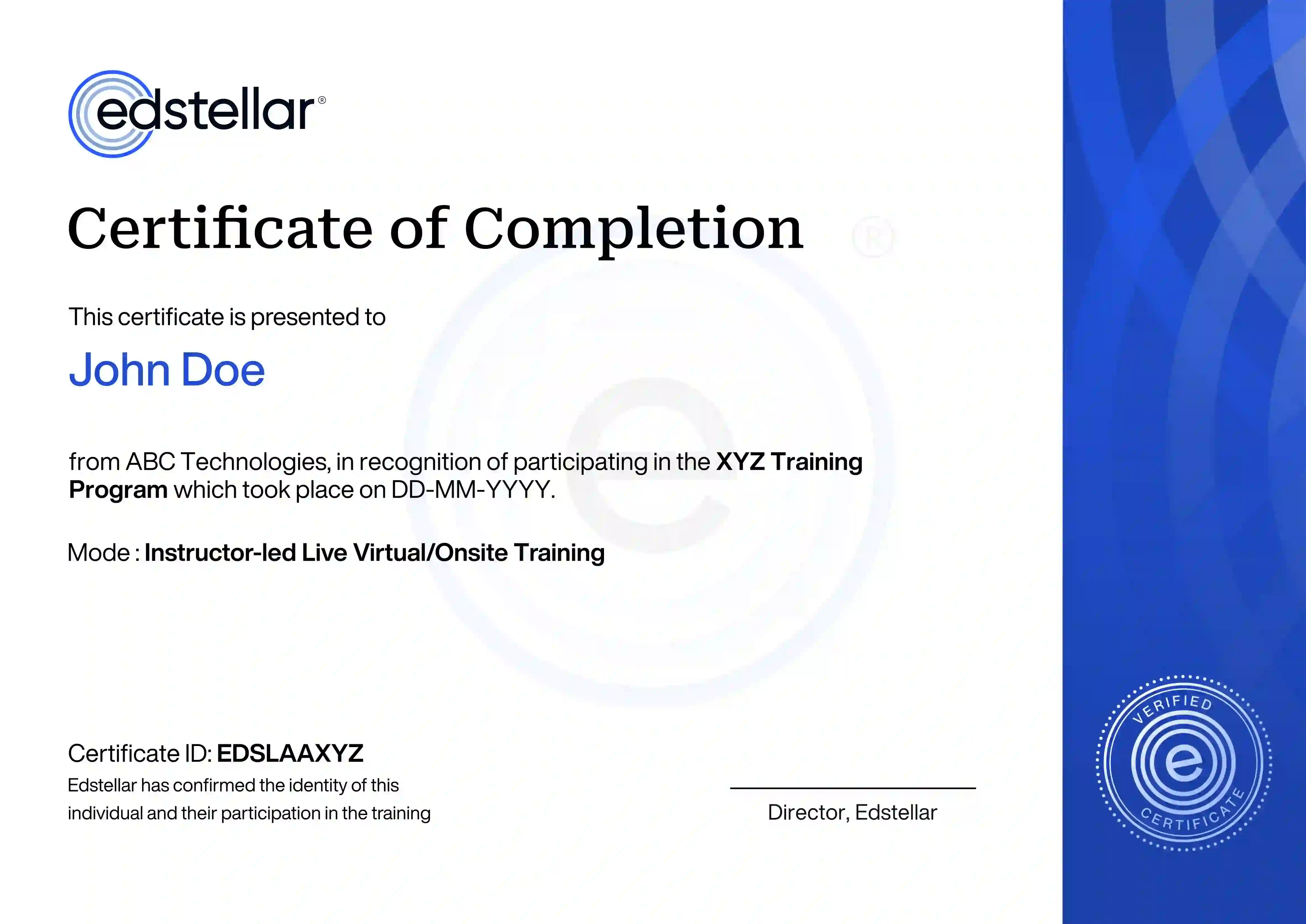
Upon successful completion of the Inclusive Product Development training course offered by Edstellar, employees receive a course completion certificate, symbolizing their dedication to ongoing learning and professional development.
This certificate validates the employee's acquired skills and is a powerful motivator, inspiring them to enhance their expertise further and contribute effectively to organizational success.



Edstellar is a one-stop instructor-led corporate training and coaching solution that addresses organizational upskilling and talent transformation needs globally.
.svg)
.svg)
.svg)

.svg)
Learning Technology
Learning Content Design and Development
Learning Governance, Analytics & ROI
Digital Learning Ecosystem
Training Simulations, AR/VR & Case Studies
Employee Performance Support
Leadership Pipeline & Succession PlanningStrategic Workforce Planning for EnterprisesTransformation & Risk Advisory for EnterprisesDEI Consulting for EnterprisesEmployee Engagement Consulting for Enterprises
Cultural Transformation