.svg "edstellar")

ISO 42001 Lead Auditor Corporate Training Program
Edstellar's ISO 42001 Lead Auditor training prepares professionals to plan, conduct, and report AIMS audits using ISO 19011 methodology, collect objective evidence, identify nonconformities, and fulfil lead auditor certification requirements.
(Virtual / On-site / Off-site)
.svg)
Drive Team Excellence with ISO 42001 Lead Auditor Corporate Training
ISO 42001 Lead Auditor training prepares professionals to conduct rigorous audits of AI Management Systems (AIMS) against the requirements of ISO/IEC 42001:2023. The program covers the full audit lifecycle - from program planning and audit preparation through evidence collection, nonconformity identification, report writing, and corrective action follow-up - grounded in ISO 19011 audit methodology. Participants develop the technical knowledge to interpret each ISO 42001 clause as audit criteria and the professional competencies to lead audit teams, engage auditees effectively, and produce findings that meet certification body standards.
Edstellar's ISO 42001 Lead Auditor Instructor-led course offers virtual/onsite training options to meet professionals' diverse needs. This flexibility ensures that professionals and teams can engage in learning experiences that best suit their logistical and learning preferences. What sets the Edstellar course apart is its emphasis on practical experience, with simulated audit exercises, document review workshops, nonconformity writing practice, and role-play interviews that build the real-world auditor competencies required for lead auditor qualification and certification preparation.
.svg)

Skills Your Employees Will Gain
These are the core, hands-on capabilities your team builds during the program.
- ISO 42001 Audit Planning and Execution
- Audit Evidence Collection and Analysis
- Nonconformity Identification and Reporting
- AI Management System Clause Interpretation
- Lead Auditor Competency Assessment
- Corrective Action Verification
- ISO 19011 Audit Methodology Application
What Your Team Will Achieve After This Training
- Master ISO 42001 clause-by-clause requirements and apply them as audit criteria to evaluate AI management system conformance across organizational contexts.
- Gain proficiency in ISO 19011 audit principles and methodology to design rigorous, risk-based audit programs for first-, second-, and third-party AIMS audits.
- Develop skills to plan and prepare comprehensive ISO 42001 audits including scope definition, checklist development, and sampling strategy design.
- Learn to collect, evaluate, and document objective audit evidence through interviews, document review, and observation to support defensible audit conclusions.
- Build expertise in identifying, classifying, and reporting nonconformities with precision, and in drafting audit reports suitable for certification body submission.
- Apply corrective action verification techniques and surveillance audit management practices to sustain ongoing ISO 42001 AIMS conformance.
Topics & Program Outline
The curriculum is organized into focused modules built by industry experts and delivered virtually or on-premise. Interactive sessions reflect the evolving demands of the workplace, keeping the learning both relevant and practical.
-
Overview of ISO/IEC 42001:2023
- Origins, scope, and purpose of the standard
- Relationship to ISO 9001, ISO 27001, and ISO 31000
- Key definitions and AI-specific terminology
- The AI Management System concept and objectives
-
The Lead Auditor Role and Responsibilities
- Distinguishing lead auditor from auditor and technical expert roles
- Lead auditor accountability in the audit team
- Managing audit team dynamics and performance
- Ethical obligations and professional conduct standards
-
Types of Audits and Audit Parties
- First-, second-, and third-party audit distinctions
- Internal vs. certification audit requirements
- Surveillance and recertification audit characteristics
- Combined and integrated audit considerations
-
AI Governance Context for Auditors
- Understanding organizational AI risk landscapes
- AI lifecycle stages relevant to audit evidence
- Key AI stakeholder roles and their audit significance
- Regulatory landscape informing AIMS audits
-
Certification and Accreditation Bodies
- How ISO 42001 certification schemes operate
- IAF and accreditation body roles
- Certification body audit expectations and requirements
- Maintaining lead auditor registration and CPD
-
Lead Auditor Competency Framework
- Knowledge competencies: standard, sector, and audit methodology
- Skill competencies: interviewing, observation, and reporting
- Personal attributes: integrity, analytical thinking, and diplomacy
- Competency assessment methods and development plans
-
Context of the Organization (Clause 4)
- Understanding the organization and its AI context
- Identifying interested parties and their requirements
- Determining AIMS scope and boundaries
- Audit evidence for context establishment
-
Leadership and Commitment (Clause 5)
- Top management AI governance accountability
- AI policy content requirements and auditability
- Organizational roles, responsibilities, and authorities
- Auditing leadership commitment through evidence
-
Planning (Clause 6)
- AI risk and opportunity assessment requirements
- AI objectives and plans to achieve them
- Managing change within the AIMS
- Audit criteria for planning clause conformance
-
Support (Clause 7)
- Resources, competence, and awareness requirements
- Communication obligations for AI management
- Documented information control requirements
- Evidence collection for support clause auditing
-
Operation (Clause 8)
- Operational planning and control for AI systems
- AI risk assessment and treatment in operations
- AI system impact assessment requirements
- Auditing operational controls and documented outputs
-
Performance Evaluation and Improvement (Clauses 9-10)
- Monitoring, measurement, analysis, and evaluation
- Internal audit program requirements
- Management review inputs, outputs, and records
- Nonconformity, corrective action, and continual improvement
-
ISO 19011 Audit Principles
- Integrity as the foundation of auditing
- Fair presentation of findings and conclusions
- Due professional care in audit execution
- Confidentiality, independence, and evidence-based approach
-
Risk-Based Audit Approach
- Applying risk thinking to audit planning decisions
- Identifying high-risk AIMS processes for focus
- Adjusting audit depth based on risk significance
- Documenting the rationale for risk-based decisions
-
Audit Program Management
- Establishing audit program objectives and scope
- Scheduling audits across the AIMS coverage area
- Allocating resources and assigning audit teams
- Monitoring and reviewing audit program performance
-
Audit Criteria, Scope, and Objectives
- Defining audit criteria from ISO 42001 requirements
- Setting meaningful and measurable audit objectives
- Determining appropriate audit scope boundaries
- Communicating criteria and scope to auditees
-
Auditor Competence and Evaluation
- Knowledge, skills, and personal attributes for AIMS auditing
- Evaluating auditor competence before assignment
- Continuing professional development requirements
- Peer review and observer evaluation methods
-
Managing Audit Confidentiality and Conflicts of Interest
- Handling sensitive AI data encountered during audits
- Declaring and resolving conflicts of interest
- Information security during and after the audit
- Non-disclosure obligations and data handling protocols
-
Initiating the Audit
- Establishing initial contact with the auditee
- Confirming audit feasibility and resource availability
- Reviewing previous audit findings and corrective actions
- Agreeing on audit scope, objectives, and criteria
-
Document Review and Pre-Audit Analysis
- Reviewing AIMS documentation for completeness
- Identifying gaps before on-site audit activities
- Analyzing AI system inventories and risk registers
- Preparing pre-audit findings summary
-
Developing the Audit Plan
- Audit plan structure and required content
- Scheduling audit activities and location coverage
- Assigning clauses and processes to audit team members
- Communicating and approving the audit plan
-
Preparing Audit Checklists and Work Documents
- Clause-by-clause checklist development for ISO 42001
- Process-based question design for AIMS auditing
- Work document templates for evidence recording
- Customizing checklists for specific AI system contexts
-
Sampling Strategy Design
- Statistical vs. judgement sampling approaches
- Selecting representative samples from AI records
- Determining sample sizes for audit confidence
- Documenting sampling decisions and rationale
-
Logistics and Pre-Audit Communication
- Coordinating access to facilities, systems, and personnel
- Confirming availability of key auditee contacts
- Setting up remote audit technology requirements
- Pre-audit briefing for the audit team
-
Opening Meeting Structure and Objectives
- Required elements of the opening meeting agenda
- Confirming audit scope, criteria, and schedule
- Introducing audit team roles and auditee guides
- Establishing communication protocols for the audit
-
Leading the Opening Meeting Effectively
- Setting a professional and constructive tone
- Managing auditee concerns and objections
- Confirming resource availability and access
- Documenting opening meeting minutes and attendees
-
Document Review Methodology
- Evaluating AIMS policy, procedures, and records
- Assessing documented information control practices
- Identifying document gaps and version control issues
- Recording document review observations in work papers
-
Reviewing AI-Specific Documentation
- AI system inventory and impact assessment records
- AI risk assessment and treatment plan documents
- Training records and competency evidence for AI roles
- Management review minutes and performance data
-
Process Walkthroughs and Initial Observations
- Conducting process walkthroughs with AI system owners
- Observing AI operations and control environments
- Noting initial observations without premature conclusions
- Identifying areas requiring deeper evidence collection
-
Adjusting the Audit Plan During Execution
- Responding to unexpected findings or access issues
- Communicating audit plan changes to team and auditee
- Expanding or contracting audit scope with justification
- Maintaining audit objectives despite plan adjustments
-
Types of Audit Evidence
- Physical evidence: system outputs, logs, and records
- Testimonial evidence from interviews and statements
- Documentary evidence: policies, procedures, and reports
- Analytical evidence from data analysis and metrics
-
Interview Techniques for AIMS Auditing
- Open, probing, and closed questioning strategies
- Interviewing technical AI staff and management separately
- Managing difficult or uncooperative interviewees
- Recording interview notes accurately and objectively
-
Observation Techniques
- Observing AI system operation and monitoring practices
- Watching process execution against documented procedures
- Identifying deviations between stated and actual practice
- Documenting observation evidence without interpretation bias
-
Evaluating Objective Evidence
- Applying sufficiency and appropriateness criteria
- Corroborating evidence across multiple sources
- Distinguishing evidence from inference
- Managing conflicting evidence and resolving inconsistencies
-
Sampling Methods in Practice
- Random, systematic, and stratified sampling techniques
- Judgement sampling for high-risk areas
- Documenting sampling methodology in audit work papers
- Recognizing sampling limitations and their effect on conclusions
-
Evidence Recording and Work Paper Management
- Structured work paper formats for AIMS auditing
- Linking evidence to specific ISO 42001 clause requirements
- Maintaining a clear evidence chain for findings
- Work paper retention and confidentiality practices
-
Defining Nonconformity in ISO 42001 Context
- What constitutes a nonconformity vs. an observation
- Distinguishing major from minor nonconformities
- Opportunities for improvement and their status
- Sensitivity in communicating potential nonconformities
-
Major Nonconformity Criteria
- Conditions requiring major nonconformity classification
- Systemic vs. isolated failures in the AIMS
- Impact of major nonconformities on certification decisions
- Examples of major nonconformities in ISO 42001 audits
-
Minor Nonconformity Criteria
- Conditions warranting minor nonconformity classification
- Patterns of minor issues that may indicate systemic problems
- Timelines and expectations for minor NC closure
- Examples of minor nonconformities in AIMS audits
-
Writing Nonconformity Statements
- Structure: requirement, evidence, and statement of nonconformity
- Linking findings precisely to ISO 42001 clause references
- Using objective, factual language in NC statements
- Common errors in nonconformity writing and how to avoid them
-
Agreeing Findings with the Auditee
- Presenting draft findings during the audit
- Handling auditee disagreement with nonconformity classification
- Escalation procedures for unresolved disputes
- Documenting the auditee response to findings
-
Nonconformity Register Management
- Maintaining a complete and traceable nonconformity log
- Tracking NC status from identification to closure
- Linking NCs to corrective action records
- Using NC data for audit program improvement
-
Audit Report Structure and Content Requirements
- Mandatory elements of the ISO 42001 audit report
- Describing audit objectives, scope, and criteria
- Summarizing audit findings and their evidence basis
- Stating audit conclusions and certification recommendations
-
Writing Effective Audit Findings
- Factual, objective, and traceable finding descriptions
- Distinguishing conformity statements from nonconformities
- Referencing specific ISO 42001 clauses in each finding
- Avoiding subjective language and unsupported conclusions
-
Formulating Audit Conclusions
- Synthesizing findings into an overall audit conclusion
- Determining AIMS conformance with certification criteria
- Recommending certification, conditional approval, or rejection
- Communicating uncertainty and limitations in conclusions
-
Closing Meeting Preparation and Conduct
- Preparing a clear and structured closing presentation
- Presenting all findings, NCs, and observations
- Managing auditee questions and emotional responses
- Documenting closing meeting minutes and agreements
-
Audit Report Distribution and Confidentiality
- Authorized report recipients and distribution controls
- Protecting sensitive AI information in audit reports
- Report retention periods and archiving requirements
- Handling requests for report amendments or corrections
-
Post-Audit Review and Lessons Learned
- Evaluating audit team performance after completion
- Identifying improvements to audit planning and execution
- Updating audit program based on lessons learned
- Sharing audit insights across the organization
-
Root Cause Analysis for AIMS Nonconformities
- Why root cause analysis is required for corrective actions
- 5 Whys and fishbone diagram application in AIMS context
- Distinguishing symptom from systemic root cause
- Documenting root cause analysis outputs
-
Evaluating Corrective Action Plans
- Criteria for an adequate corrective action plan
- Assessing whether proposed actions address root causes
- Timelines and milestones in corrective action plans
- Accepting or rejecting corrective action submissions
-
Verifying Corrective Action Implementation
- Evidence requirements for CA closure
- Remote vs. on-site verification approaches
- Verifying effectiveness beyond implementation confirmation
- Documenting CA verification and closure decisions
-
Follow-Up Audit Planning and Execution
- When follow-up audits are required vs. optional
- Planning focused follow-up audits on NC areas
- Evidence collection during follow-up audit visits
- Reporting follow-up audit outcomes and closure status
-
Surveillance Audit Design and Scheduling
- Surveillance audit frequency and certification cycle
- Selecting AIMS areas for surveillance coverage
- Risk-based surveillance planning approaches
- Adjusting surveillance scope based on previous findings
-
Recertification Audit Preparation
- Differences between initial certification and recertification
- Full AIMS review requirements at recertification
- Reviewing continual improvement evidence over the certificate period
- Managing recertification timelines and lapses
-
Lead Auditor Knowledge Requirements
- ISO 42001 clause depth required for lead auditor role
- ISO 19011 methodology knowledge assessment
- AI systems and governance knowledge for technical credibility
- Understanding sector-specific AI audit requirements
-
Lead Auditor Skill Demonstration
- Demonstrating audit planning and preparation skills
- Showing proficiency in evidence collection and evaluation
- Writing defensible nonconformity statements under assessment
- Leading simulated audit team exercises
-
Personal Attribute Development
- Integrity and objectivity in challenging audit situations
- Diplomatic communication with resistant auditees
- Analytical thinking and pattern recognition during audits
- Resilience and composure under audit time pressure
-
Certification Examination Preparation
- Certification body examination formats and topics
- Practice questions covering ISO 42001 and ISO 19011
- Case study analysis and audit scenario exercises
- Time management strategies for examination success
-
Building and Logging Audit Experience
- Required audit days and scope for lead auditor registration
- Logging audit experience with supporting evidence
- Progressing from observer to auditor to lead auditor
- Mentorship and peer review in audit experience building
-
Maintaining Lead Auditor Registration
- Continuing professional development requirements
- Annual audit activity minimums for registration maintenance
- Keeping knowledge current with ISO 42001 amendments
- Engaging with auditor professional bodies and communities
Who Should Attend?
This program suits professionals at many levels across the organization, including:
- Internal Auditors
- AI Governance Managers
- Compliance Officers
- Quality Assurance Managers
- Risk Managers
- AI Program Leads
What are the Prerequisites?
Professionals should have a working knowledge of ISO 42001 AIMS requirements, fundamental audit principles, and organizational AI governance practices to take the ISO 42001 Lead Auditor training course.
Choose the Format That Fits Your Team
We design training your teams actually engage with, and deliver it the way that suits you best. Through a vetted global trainer network, Edstellar runs sessions in 10+ languages with consistent quality anywhere.


.webp "Virtual ISO 42001 Lead Auditor Training")
Virtual / online: expert-led live sessions delivered anywhere, with consistency and easy scheduling.
.webp "On-site ISO 42001 Lead Auditor Training")
On-site (in-house): immersive, instructor-led learning at your office.
.webp "Off-site ISO 42001 Lead Auditor Training")
Off-site: focused, instructor-led group learning away from everyday workplace distractions.
Get a Proposal Shaped to Your Needs
Need pricing for onsite, offsite, or virtual delivery? Get a proposal tailored to your team's needs.
64 hours of group training (includes VILT/In-person On-site)
Tailored for SMBs
Tailor-Made Trainee Licenses with Our Exclusive Training Packages!
160 hours of group training (includes VILT/In-person On-site)
Ideal for growing SMBs
Tailor-Made Trainee Licenses with Our Exclusive Training Packages!
400 hours of group training (includes VILT/In-person On-site)
Designed for large corporations
Tailor-Made Trainee Licenses with Our Exclusive Training Packages!
Unlimited duration
Designed for large corporations
What Sets Edstellar Apart
Experienced Trainers
Our trainers are drawn from a vetted global network and bring years of industry expertise, keeping every session practical and impactful.
Proven Quality
With a strong global track record, Edstellar is known for quality and engaging delivery.
Industry-Relevant Curriculum
Our programs are built by experts to match the demands of today's industry.
Fully Customizable
Every program can be tailored to your organization's goals.
Comprehensive Support
We provide pre- and post-session support for a complete learning experience.
Global Multi-Location & Multilingual Training Delivery
We deliver in multiple languages to support diverse global teams.
Recognition That Motivates Your Team
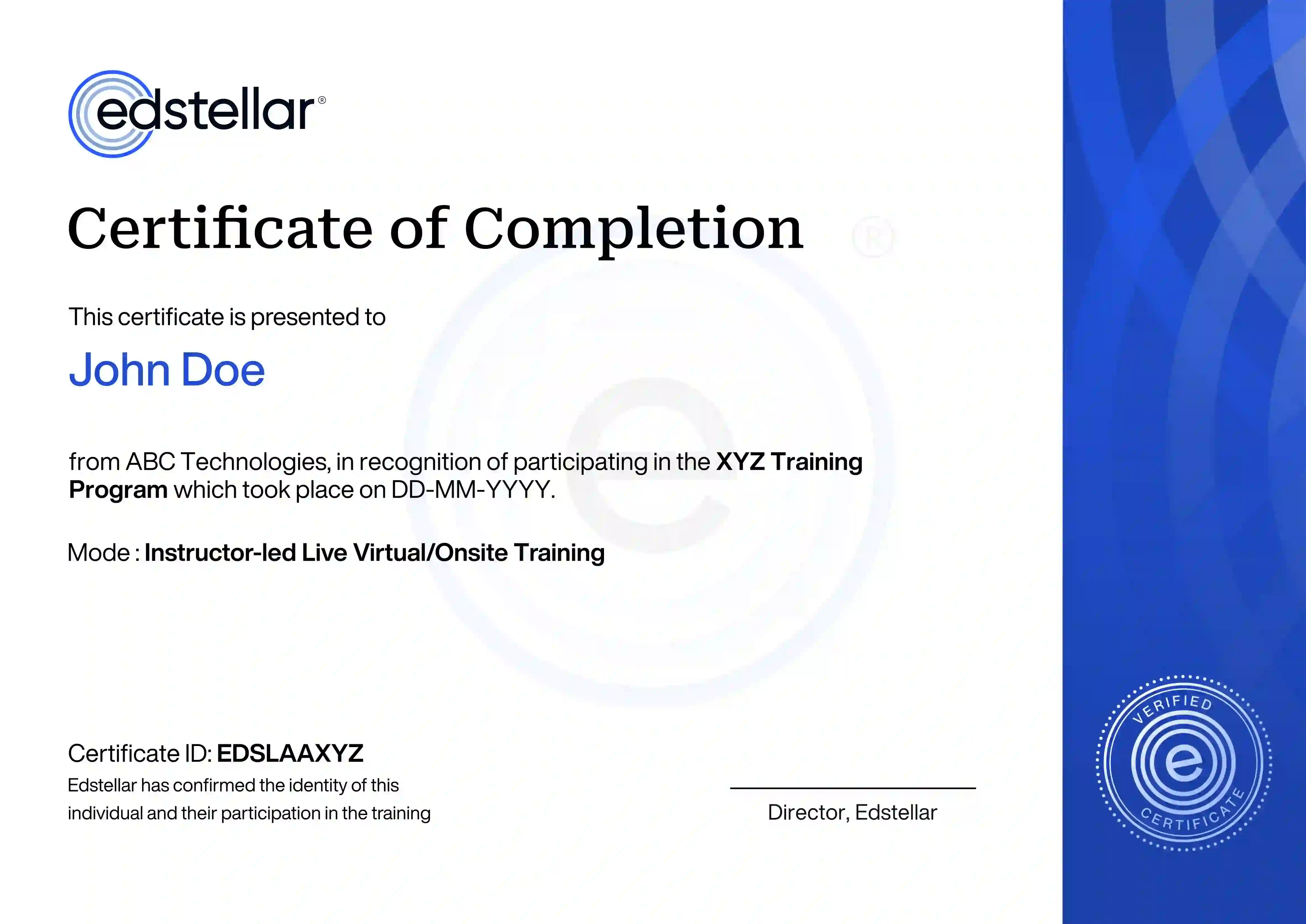
Upon successful completion of the ISO 42001 Lead Auditor training course offered by Edstellar, employees receive a course completion certificate, symbolizing their dedication to ongoing learning and professional development.
This certificate validates the employee's acquired skills and is a powerful motivator, inspiring them to enhance their expertise further and contribute effectively to organizational success.



Edstellar is a one-stop instructor-led corporate training and coaching solution that addresses organizational upskilling and talent transformation needs globally.
.svg)
.svg)
.svg)

.svg)
Learning Technology
Learning Content Design and Development
Learning Governance, Analytics & ROI
Digital Learning Ecosystem
Training Simulations, AR/VR & Case Studies
Employee Performance Support
Leadership Pipeline & Succession PlanningStrategic Workforce Planning for EnterprisesTransformation & Risk Advisory for EnterprisesDEI Consulting for EnterprisesEmployee Engagement Consulting for Enterprises
Cultural Transformation