.svg "edstellar")

Neurodiversity Inclusion Strategy Corporate Training Program
Equip your organization to recognize, support, and leverage neurodiversity in the workplace. This training builds inclusive management skills, accommodation design capabilities, and strategic frameworks to create environments where neurodivergent employees thrive.
(Virtual / On-site / Off-site)
.svg)
Drive Team Excellence with Neurodiversity Inclusion Strategy Corporate Training
Neurodiversity Inclusion Strategy training equips HR professionals, managers, and organizational leaders with the knowledge, tools, and frameworks needed to build genuinely inclusive workplaces for neurodivergent employees. The course covers foundational neurodiversity concepts, inclusive recruitment, accommodation design, neuro-inclusive management, legal frameworks, and data-driven inclusion measurement to drive lasting organizational change.
Edstellar's Neurodiversity Inclusion Strategy Instructor-led course offers virtual/onsite training options designed to meet the needs of diverse organizational contexts. Participants engage in practical exercises, real-world case studies, and structured planning activities that translate knowledge into concrete inclusion strategies and programs.
.svg)

Skills Your Employees Will Gain
These are the core, hands-on capabilities your team builds during the program.
- Neurodiversity Awareness and Education
- Inclusive Recruitment for Neurodivergent Talent
- Workplace Accommodation Design
- Neuro-Inclusive Management Practices
- Neurodiversity Policy Development
- Inclusive Communication Strategies
- Neurodiversity Metrics and Reporting
What Your Team Will Achieve After This Training
- Master the core concepts of neurodiversity and apply them to build more inclusive and equitable workplace cultures
- Gain practical skills to design and implement effective workplace accommodations for neurodivergent employees
- Develop neuro-inclusive management and communication practices that unlock the potential of diverse cognitive talent
- Build evidence-based neurodiversity policies and governance frameworks aligned with organizational DEI strategy
- Learn to measure, report, and continuously improve neurodiversity inclusion outcomes using data-driven methods
- Apply strategic planning tools to embed neurodiversity inclusion as a sustainable organizational capability
Topics & Program Outline
The curriculum is organized into focused modules built by industry experts and delivered virtually or on-premise. Interactive sessions reflect the evolving demands of the workplace, keeping the learning both relevant and practical.
-
Defining Neurodiversity and Key Concepts
- Explain the neurodiversity paradigm and its origins in disability rights and advocacy
- Distinguish neurodiversity from deficit-based models of neurological difference
- Introduce key terminology including neurodivergent, neurotypical, and cognitive diversity
- Explore the spectrum of neurodivergent conditions covered in this training
-
Understanding Autism Spectrum Conditions
- Describe the characteristics of autism spectrum conditions in professional settings
- Identify common strengths associated with autistic employees in organizational roles
- Recognize sensory and social communication differences relevant to workplace design
- Dispel common myths and stereotypes about autism that persist in workplaces
-
ADHD in the Workplace
- Explain the core features of ADHD and how they manifest in professional environments
- Identify the strengths ADHD employees often bring to dynamic and creative roles
- Recognize workplace triggers that amplify ADHD challenges in organizational settings
- Differentiate between inattentive, hyperactive, and combined presentations of ADHD
-
Dyslexia, Dyspraxia, and Other Neurotypes
- Define dyslexia and its impact on reading, writing, and information processing at work
- Describe dyspraxia and how it affects coordination, planning, and task execution
- Introduce dyscalculia, Tourette syndrome, and other less commonly recognized neurotypes
- Highlight the cognitive strengths that accompany each of these neurological profiles
-
The Science Behind Neurodiversity
- Summarize current neuroscience research on brain variation and cognitive diversity
- Explain how neurological differences arise from genetic, developmental, and environmental factors
- Explore the relationship between neurodiversity, creativity, and problem-solving innovation
- Connect scientific evidence to the business value of embracing cognitive diversity
-
Building a Shared Vocabulary for Inclusion
- Introduce preferred terminology and person-first versus identity-first language conventions
- Establish respectful language norms for discussing neurodiversity in organizational settings
- Address outdated or harmful language that persists in workplace conversations
- Create a shared vocabulary foundation for the rest of the course and organization
-
The Prevalence of Neurodiversity in the Workforce
- Review current estimates of neurodivergent representation in the global workforce
- Analyze employment gap data for neurodivergent adults compared with neurotypical peers
- Understand why neurodivergent talent remains underutilized in most organizations
- Explore which industries and sectors are leading in neurodiversity employment
-
The Business Case for Neurodiversity Inclusion
- Articulate the organizational benefits of hiring and retaining neurodivergent employees
- Review case studies from companies that have implemented neurodiversity employment programs
- Connect cognitive diversity to measurable improvements in innovation and problem-solving
- Quantify the cost of neurodivergent employee attrition driven by unsupportive environments
-
Barriers Neurodivergent Employees Face
- Identify common structural and cultural barriers in recruitment, onboarding, and daily work
- Examine how traditional performance expectations disadvantage neurodivergent employees
- Explore how sensory environments, open-plan offices, and meeting norms create challenges
- Recognize how stigma and disclosure fears compound barriers for neurodivergent staff
-
Disclosure, Confidentiality, and Psychological Safety
- Explain employees' rights around neurodivergent condition disclosure in the workplace
- Describe how to create psychologically safe environments that support voluntary disclosure
- Outline manager responsibilities for handling disclosure conversations with care and respect
- Establish confidentiality protocols that protect neurodivergent employees' personal information
-
Neurodivergent Employee Experiences
- Examine qualitative research and lived experience accounts from neurodivergent workers
- Identify the moments in the employee lifecycle where neurodivergent challenges peak
- Explore how remote and hybrid work has both helped and hindered neurodivergent employees
- Use employee journey mapping to surface pain points and opportunities for inclusion
-
Shifting Organizational Mindsets on Neurodiversity
- Identify deficit mindsets and medical model thinking that undermine neurodiversity inclusion
- Build organizational readiness for a strengths-based approach to cognitive difference
- Develop internal communication strategies to shift team mindsets on neurodiversity
- Engage senior leaders as champions of neurodiversity culture change
-
Redesigning Job Descriptions for Neurodivergent Applicants
- Audit job descriptions for exclusionary language, vague requirements, and unnecessary criteria
- Replace ambiguous social or communication requirements with specific role-relevant competencies
- Use plain, direct language that conveys role expectations clearly to all applicants
- Signal neurodiversity inclusion explicitly in job postings to attract diverse cognitive talent
-
Inclusive Application and Screening Processes
- Remove timed cognitive assessments and verbal reasoning tests that disadvantage neurodivergent applicants
- Offer application format alternatives such as written, video, or portfolio submissions
- Provide clear instructions and advance notice of each recruitment stage to reduce anxiety
- Train recruiters to screen for relevant skills rather than surface-level presentation style
-
Neuro-Inclusive Interview Practices
- Replace unstructured panel interviews with structured, question-by-question formats
- Share interview questions in advance to reduce in-the-moment processing demands
- Offer alternatives to traditional interviews including work trials and task-based assessments
- Adjust sensory and environmental conditions in interview settings to reduce overload
-
Onboarding Neurodivergent Employees Successfully
- Design structured onboarding programs with clear timelines, expectations, and checkpoints
- Assign a dedicated buddy or mentor to support neurodivergent employees during onboarding
- Provide written summaries of verbal instructions and key organizational processes
- Schedule early accommodation conversations before the employee begins formal duties
-
Training Hiring Managers on Neurodivergent Talent
- Build hiring manager awareness of common neurodivergent traits and their workplace value
- Teach interviewers to evaluate candidates on relevant outputs rather than neurotypical norms
- Develop calibration tools to reduce bias in candidate evaluation and selection decisions
- Create feedback mechanisms to improve inclusivity in each successive hiring cycle
-
Sourcing and Attracting Neurodivergent Talent
- Partner with neurodiversity employment programs, advocacy groups, and specialist recruiters
- Engage with universities and colleges that support neurodivergent students entering the workforce
- Showcase organizational neurodiversity inclusion commitments across employer brand channels
- Measure neurodivergent representation in your applicant pipeline and adjust sourcing accordingly
-
Understanding Reasonable Accommodations
- Define reasonable accommodations and distinguish them from special treatment or unfair advantage
- Review legal obligations for providing accommodations to neurodivergent employees
- Identify the most commonly requested accommodations by neurotype and role type
- Develop a streamlined process for requesting, reviewing, and implementing accommodations
-
Sensory Environment Design
- Assess how open-plan offices, lighting, noise levels, and temperature affect neurodivergent employees
- Introduce sensory-friendly workspace design principles for physical and hybrid environments
- Provide guidance on quiet zones, adjustable lighting, and reduced-distraction workstations
- Develop sensory environment checklists for office redesign and facilities planning
-
Flexible Working Arrangements
- Explore how flexible hours and remote working options benefit neurodivergent employees
- Design flexible working policies that are accessible and equitably available to all staff
- Address concerns about fairness and consistency when implementing flexible accommodations
- Evaluate the impact of flexible arrangements on neurodivergent employee performance and retention
-
Technology and Assistive Tools
- Introduce assistive technology tools that support dyslexic, ADHD, and autistic employees
- Review text-to-speech, speech-to-text, and focus management software available for workplace use
- Develop a process for funding and deploying assistive technology across the organization
- Train IT and HR teams to support employees in accessing and using assistive tools effectively
-
Communication and Task Management Accommodations
- Provide written agendas and summaries for meetings attended by neurodivergent employees
- Use task management tools that offer visual workflows and clear deadline structures
- Offer extended deadlines and chunked task delivery where appropriate for the role
- Establish preferred communication channels that reduce cognitive overload for neurodivergent staff
-
Building an Accommodation Culture
- Normalize accommodation requests by embedding them into standard HR and onboarding processes
- Train all managers to respond to accommodation requests with empathy and efficiency
- Develop confidential accommodation tracking systems to monitor implementation and effectiveness
- Communicate organizational accommodation commitments to all employees to reduce stigma
-
Principles of Neuro-Inclusive Management
- Define neuro-inclusive management and distinguish it from one-size-fits-all people management
- Identify management behaviors that inadvertently disadvantage neurodivergent employees
- Build a strengths-based management approach that recognizes diverse cognitive profiles
- Develop self-awareness as a manager to identify neurotypical assumptions in your style
-
Setting Clear Expectations and Giving Feedback
- Deliver expectations in explicit, unambiguous language that reduces interpretive guesswork
- Provide feedback in structured formats that are consistent, timely, and specific
- Avoid indirect or socially coded feedback styles that may be misinterpreted by neurodivergent staff
- Create written records of verbal instructions to support employees who process information differently
-
Managing Performance Inclusively
- Adapt performance criteria to focus on outcomes and deliverables rather than neurotypical work style
- Identify when performance concerns may be accommodation needs rather than capability issues
- Develop performance improvement plans that are inclusive and neurodivergent-aware
- Ensure appraisal processes are free from bias related to neurological difference
-
Building Psychological Safety in Teams
- Create team norms that welcome different communication and working styles without judgment
- Model vulnerability and openness as a leader to encourage honest team communication
- Address team dynamics and interpersonal friction that may disadvantage neurodivergent members
- Use structured check-ins and feedback loops to monitor team inclusion in real time
-
Strengths-Based Role Design
- Identify the cognitive strengths each neurodivergent employee brings to the team
- Design or adjust roles to align tasks with individual neurological strengths where feasible
- Involve neurodivergent employees in co-designing their own role structure and priorities
- Communicate the value of cognitive diversity in team role composition to all team members
-
Coaching and Supporting Neurodivergent Employees
- Apply neurodiversity-aware coaching techniques to support employee growth and confidence
- Connect neurodivergent employees with mentors who understand their neurological profile
- Develop career progression pathways that are equitable for neurodivergent talent
- Track career development outcomes for neurodivergent employees and address equity gaps
-
Understanding Neurological Communication Differences
- Explore how different neurotypes process and express verbal and written communication
- Identify common communication mismatches between neurotypical and neurodivergent colleagues
- Develop empathy for different communication styles rather than labeling them as deficits
- Review research on autistic communication styles and their strengths in professional contexts
-
Inclusive Meeting Design
- Share meeting agendas in advance to reduce anxiety and support preparation for all participants
- Limit meeting length and frequency to reduce cognitive overload for neurodivergent attendees
- Offer multiple participation modes including written input, chat, and asynchronous contribution
- Assign clear roles and structured turn-taking to prevent dominant voices from silencing others
-
Written Communication Best Practices
- Use plain language, short sentences, and clear formatting in all organizational communications
- Provide written summaries of verbal decisions to support employees who rely on written records
- Offer accessible document formats including dyslexia-friendly fonts and high-contrast designs
- Avoid jargon, idioms, and ambiguous phrases that may confuse neurodivergent colleagues
-
Navigating Social Dynamics Across Neurotypes
- Build awareness of social communication norms that neurotypical colleagues take for granted
- Address social exclusion patterns that arise from neurotypical-centric team culture
- Develop team agreements that make implicit social rules explicit and fair for everyone
- Create space for neurodivergent employees to participate in team bonding on their own terms
-
Conflict Resolution Across Neurotypes
- Identify how neurological differences can contribute to interpersonal misunderstandings and conflict
- Develop conflict resolution protocols that account for diverse communication and processing styles
- Train managers to mediate neurotype-related conflict with sensitivity and without blame
- Use structured dialogue tools to facilitate resolution conversations that work for all parties
-
Building Cross-Neurotype Collaboration Skills
- Design team collaboration frameworks that play to the strengths of diverse neurotypes
- Introduce asynchronous collaboration tools that reduce real-time processing pressures
- Run team exercises that build appreciation for cognitive diversity and different working styles
- Measure team collaboration quality and identify improvements driven by neurotype inclusion
-
Legal Protections for Neurodivergent Employees
- Review disability discrimination legislation applicable to neurodivergent conditions globally
- Understand how the Equality Act, ADA, and equivalent laws apply to neurodivergent employees
- Identify employer obligations around reasonable adjustments and non-discrimination
- Explore how legal frameworks are evolving to better recognize neurodivergent conditions
-
Developing a Neurodiversity Inclusion Policy
- Identify the core components of an effective organizational neurodiversity inclusion policy
- Align the policy with existing equality, diversity, and inclusion frameworks
- Involve neurodivergent employees and ERG representatives in the policy co-design process
- Establish policy review cycles and governance accountability for sustained compliance
-
Accommodation Request Policies and Procedures
- Design a clear, confidential, and user-friendly accommodation request process
- Define decision-making criteria, timelines, and escalation pathways for accommodation requests
- Train HR and managers on their responsibilities within the accommodation process
- Document accommodation decisions consistently to support legal compliance and audit readiness
-
Anti-Discrimination and Anti-Bullying Policies
- Update anti-discrimination policies to explicitly address neurodivergent-related discrimination
- Define neurotype-based bullying and harassment and include it in organizational conduct policies
- Establish reporting mechanisms that are safe and accessible for neurodivergent employees
- Communicate zero-tolerance positions on neurodivergent discrimination across all organizational levels
-
Neurodiversity and Data Privacy
- Classify neurodivergent condition information as sensitive personal data under privacy regulations
- Establish consent, access, and retention protocols for neurodivergent employee data
- Train HR teams on lawful processing of health and disability information in employment contexts
- Review data sharing practices to ensure neurodivergent employees' information is protected
-
Communicating Policies to All Employees
- Develop accessible formats for neurodiversity policies including plain language and visual summaries
- Deliver policy communication through multiple channels to reach all employee groups
- Train all people managers on their responsibilities under neurodiversity inclusion policies
- Embed policy awareness into new employee onboarding and annual compliance programs
-
What a Neuro-Inclusive Culture Looks Like
- Define the characteristics of an organizationally neuro-inclusive culture
- Identify the cultural values and behaviors that signal genuine neurodiversity inclusion
- Distinguish between performative neurodiversity awareness and deep cultural integration
- Benchmark your organization's current culture against neuro-inclusive best practices
-
Leadership Commitment and Role Modeling
- Build senior leadership understanding of neurodiversity and its value to the organization
- Encourage leaders to openly champion neurodiversity inclusion through visible actions
- Train executives to avoid stigmatizing language and behaviors in public communications
- Assign C-suite sponsorship for the neurodiversity inclusion strategy and its outcomes
-
Employee Resource Groups for Neurodivergent Staff
- Establish or strengthen employee resource groups focused on neurodiversity and cognitive difference
- Provide ERGs with resources, executive sponsorship, and meaningful influence on HR policy
- Engage ERG members in co-designing accommodations, programs, and culture initiatives
- Use ERGs as a safe space for neurodivergent employees to share experiences and build community
-
Neurodiversity Awareness Campaigns
- Develop internal awareness campaigns for Neurodiversity Celebration Week and related observances
- Share neurodivergent employee stories and perspectives through internal communication channels
- Run lunch-and-learn sessions and workshops to build organization-wide neurodiversity literacy
- Engage external neurodiversity advocates as speakers and cultural change catalysts
-
Reducing Stigma and Building Psychological Safety
- Identify stigma drivers including misconceptions, fear, and inadequate neurodiversity education
- Develop organizational norms that normalize cognitive difference and discourage stigmatizing behavior
- Create safe reporting channels for stigma-related incidents and neurodivergent employee concerns
- Measure psychological safety scores specifically for neurodivergent employee groups
-
Embedding Neurodiversity in Talent and Culture Strategy
- Integrate neurodiversity inclusion into the broader talent management and DEI strategy
- Align neurodiversity commitments with organizational purpose, values, and employer brand
- Develop multi-year culture change plans with phased neurodiversity inclusion milestones
- Report neurodiversity culture progress to leadership and key organizational stakeholders
-
Why Measurement Matters for Neurodiversity Inclusion
- Explain the role of data in building an evidence-based neurodiversity inclusion strategy
- Distinguish between activity-based metrics and meaningful inclusion outcome metrics
- Understand the unique data collection challenges related to neurodivergent identity
- Build organizational readiness for voluntary, anonymous neurodiversity data collection
-
Setting Neurodiversity Inclusion Baselines
- Conduct an initial diagnostic assessment of neurodiversity representation and inclusion
- Collect baseline data on accommodation usage, disclosure rates, and employee experience scores
- Analyze hiring, retention, and promotion data through a neurodiversity equity lens
- Set realistic short-term and long-term neurodiversity inclusion targets for the organization
-
Key Metrics for Neurodiversity Inclusion
- Track neurodivergent employee retention rates and benchmark against organizational averages
- Measure accommodation request processing times and employee satisfaction with the process
- Monitor promotion and career progression rates for neurodivergent employees over time
- Assess belonging and psychological safety scores disaggregated by neurodivergent status
-
Collecting Neurodiversity Data Ethically
- Design voluntary, anonymous surveys that capture neurodivergent employee experiences safely
- Establish transparent data use policies that build trust and encourage disclosure
- Apply data minimization principles to limit collection to what is necessary for inclusion improvement
- Engage neurodivergent employees in designing data collection methods to ensure relevance
-
Reporting Neurodiversity Inclusion Progress
- Develop internal neurodiversity dashboards for HR and leadership to monitor inclusion trends
- Include neurodiversity progress data in broader DEI and sustainability reporting
- Communicate findings honestly, including gaps and setbacks, to maintain stakeholder trust
- Use data storytelling to bring neurodiversity metrics to life for non-specialist audiences
-
Using Data to Drive Continuous Improvement
- Review neurodiversity metrics in regular HR leadership and DEI committee meetings
- Use data insights to prioritize accommodation improvements and policy refinements
- Benchmark neurodiversity inclusion performance against industry peers and leading employers
- Build feedback loops that connect data insights to rapid, visible organizational action
-
Designing a Multi-Year Neurodiversity Inclusion Roadmap
- Define the strategic pillars of a sustainable neurodiversity inclusion program
- Develop phased implementation milestones across recruitment, retention, culture, and policy
- Assign ownership, budgets, and governance structures for each program pillar
- Integrate the neurodiversity roadmap into broader DEI and business strategy planning cycles
-
Securing Leadership Buy-In and Funding
- Build the business case for sustained investment in neurodiversity inclusion programs
- Present neurodiversity ROI data including retention savings and innovation outcomes to senior leaders
- Develop executive briefings that translate neurodiversity strategy into business impact language
- Secure dedicated budget lines for accommodation, training, and neurodiversity program delivery
-
Building Internal Neurodiversity Expertise
- Develop internal neurodiversity champions across HR, management, and ERG networks
- Create a neurodiversity center of excellence or specialist function within the HR team
- Invest in ongoing neurodiversity education for people managers at all organizational levels
- Build a library of neurodiversity resources accessible to all employees on demand
-
External Partnerships and Community Engagement
- Partner with neurodiversity advocacy organizations to strengthen program credibility and reach
- Collaborate with specialist employment programs to expand neurodivergent talent pipelines
- Engage in industry neurodiversity inclusion coalitions and share organizational learnings
- Align supplier diversity and procurement practices with neurodiversity inclusion values
-
Navigating Resistance and Sustaining Momentum
- Identify common sources of resistance to neurodiversity inclusion programs within organizations
- Develop evidence-based communication strategies to address skepticism from stakeholders
- Celebrate and publicize neurodiversity inclusion wins to maintain organizational momentum
- Build resilience into program design to sustain progress through leadership changes and budget pressures
-
Evaluating and Evolving the Program
- Conduct annual program reviews using inclusion metrics, employee feedback, and manager input
- Identify gaps and emerging needs as the neurodiversity landscape and workforce evolve
- Refine program components based on evidence, best practices, and lived experience feedback
- Publish program evaluation findings to demonstrate transparency and accountability to stakeholders
Who Should Attend?
This program suits professionals at many levels across the organization, including:
- HR Managers
- Diversity and Inclusion Leaders
- Team Managers
- Organizational Development Specialists
- Talent Acquisition Teams
- Senior Leaders
What are the Prerequisites?
Professionals should have a foundational understanding of workplace inclusion principles and HR practices to take the Neurodiversity Inclusion Strategy training course.
Choose the Format That Fits Your Team
We design training your teams actually engage with, and deliver it the way that suits you best. Through a vetted global trainer network, Edstellar runs sessions in 10+ languages with consistent quality anywhere.


.webp "Virtual Neurodiversity Inclusion Strategy Training")
Virtual / online: expert-led live sessions delivered anywhere, with consistency and easy scheduling.
.webp "On-site Neurodiversity Inclusion Strategy Training")
On-site (in-house): immersive, instructor-led learning at your office.
.webp "Off-site Neurodiversity Inclusion Strategy Training")
Off-site: focused, instructor-led group learning away from everyday workplace distractions.
Get a Proposal Shaped to Your Needs
Need pricing for onsite, offsite, or virtual delivery? Get a proposal tailored to your team's needs.
64 hours of group training (includes VILT/In-person On-site)
Tailored for SMBs
Tailor-Made Trainee Licenses with Our Exclusive Training Packages!
160 hours of group training (includes VILT/In-person On-site)
Ideal for growing SMBs
Tailor-Made Trainee Licenses with Our Exclusive Training Packages!
400 hours of group training (includes VILT/In-person On-site)
Designed for large corporations
Tailor-Made Trainee Licenses with Our Exclusive Training Packages!
Unlimited duration
Designed for large corporations
What Sets Edstellar Apart
Experienced Trainers
Our trainers are drawn from a vetted global network and bring years of industry expertise, keeping every session practical and impactful.
Proven Quality
With a strong global track record, Edstellar is known for quality and engaging delivery.
Industry-Relevant Curriculum
Our programs are built by experts to match the demands of today's industry.
Fully Customizable
Every program can be tailored to your organization's goals.
Comprehensive Support
We provide pre- and post-session support for a complete learning experience.
Global Multi-Location & Multilingual Training Delivery
We deliver in multiple languages to support diverse global teams.
Recognition That Motivates Your Team
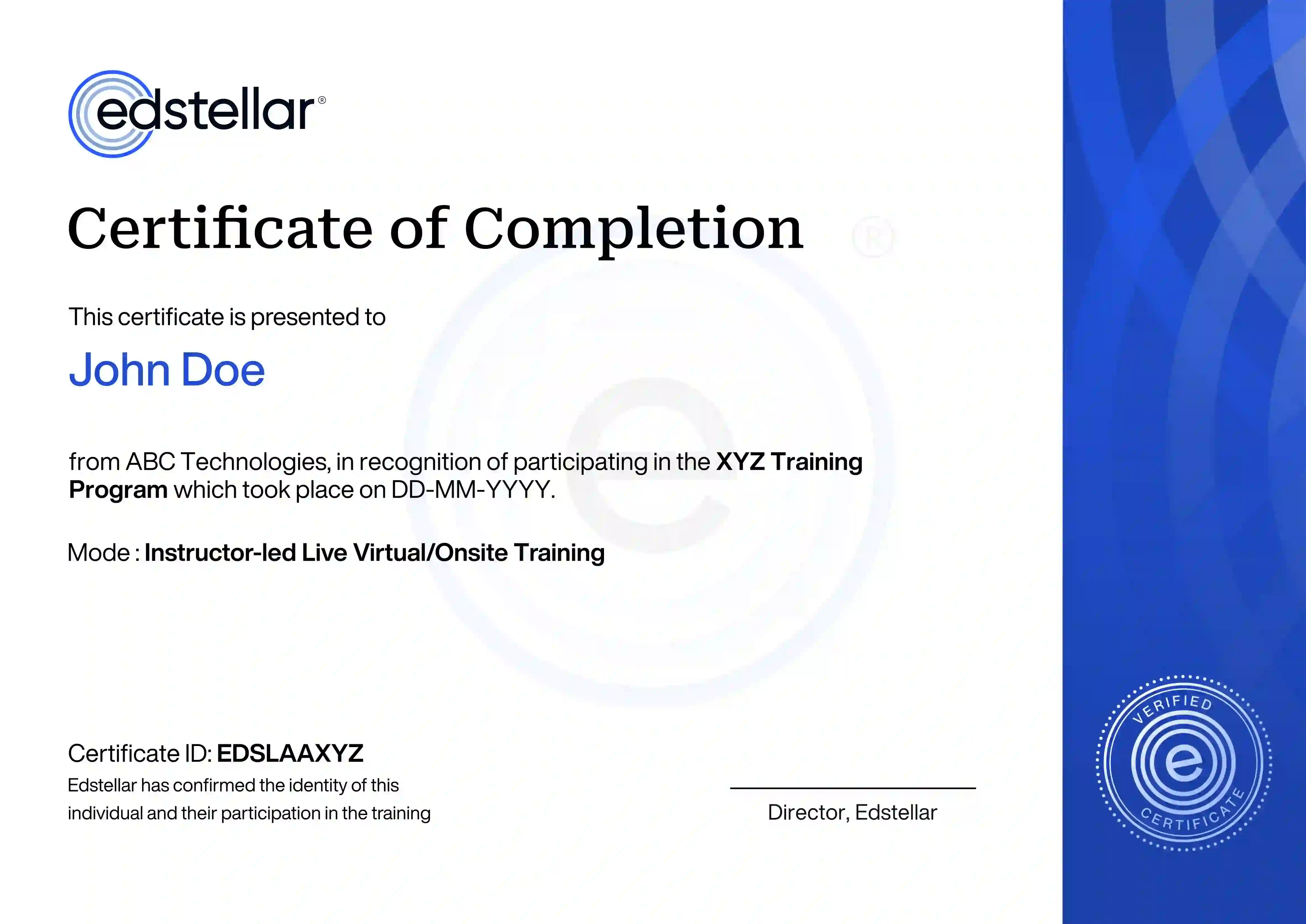
Upon successful completion of the Neurodiversity Inclusion Strategy training course offered by Edstellar, employees receive a course completion certificate, symbolizing their dedication to ongoing learning and professional development.
This certificate validates the employee's acquired skills and is a powerful motivator, inspiring them to enhance their expertise further and contribute effectively to organizational success.



Edstellar is a one-stop instructor-led corporate training and coaching solution that addresses organizational upskilling and talent transformation needs globally.
.svg)
.svg)
.svg)

.svg)
Learning Technology
Learning Content Design and Development
Learning Governance, Analytics & ROI
Digital Learning Ecosystem
Training Simulations, AR/VR & Case Studies
Employee Performance Support
Leadership Pipeline & Succession PlanningStrategic Workforce Planning for EnterprisesTransformation & Risk Advisory for EnterprisesDEI Consulting for EnterprisesEmployee Engagement Consulting for Enterprises
Cultural Transformation