.svg "edstellar")
%20Training%20Course.webp)
Hazard Communication (HazCom) Corporate Training Program for Employees
Edstellar's instructor-led Hazard Communication (HazCom) training equips employees to work safely with hazardous chemicals in accordance with OSHA 29 CFR 1910.1200 and the Globally Harmonized System (GHS). Participants master label interpretation, Safety Data Sheets, pictograms, exposure controls, and workplace right-to-know practices.
(Virtual / On-site / Off-site)
.svg)
Drive Team Excellence with Hazard Communication (HazCom) Corporate Training
Hazard Communication, commonly called HazCom or the Right-to-Know Standard, is a foundational workplace safety program that ensures employees understand the chemical hazards they may be exposed to and the protective measures required to work safely. Codified by OSHA in 29 CFR 1910.1200 and aligned with the Globally Harmonized System (GHS), HazCom covers chemical inventories, container labeling, Safety Data Sheets, employee training, and written programs. The training provides comprehensive knowledge of OSHA requirements, GHS classification, label and SDS interpretation, exposure controls, PPE, safe handling, and emergency response to protect workers across manufacturing, laboratory, warehouse, healthcare, and facility environments.
Edstellar's Hazard Communication (HazCom) Instructor-led course offers virtual/onsite training options to meet professionals' diverse needs. This flexibility ensures that professionals and teams can engage in learning experiences that best suit their logistical and learning preferences. What sets the Edstellar course apart is its emphasis on practical experience, with hands-on label and SDS exercises, workplace walkthroughs, and realistic emergency scenarios that bring HazCom concepts to life. Edstellar equips employees with the skills and confidence to work safely around hazardous chemicals and support a compliant, incident-free workplace.
.svg)

- OSHA HazCom Standard Compliance
- GHS Label Interpretation
- Safety Data Sheet (SDS) Navigation
- Pictogram and Signal Word Recognition
- Chemical Hazard Identification
- Exposure Control Practices
- Emergency Response Readiness
- Master the OSHA Hazard Communication Standard and the Globally Harmonized System by understanding their purpose, history, and legal requirements, enabling employees to recognize their right-to-know protections and their responsibilities in hazardous workplaces.
- Gain expertise in interpreting GHS-compliant labels, pictograms, and signal words, emphasizing how to quickly identify physical, health, and environmental hazards associated with chemicals in any work setting.
- Develop proficiency in navigating the 16-section Safety Data Sheet (SDS), ensuring employees can locate hazard information, first-aid guidance, exposure limits, storage requirements, and disposal instructions during routine work and emergencies.
- Learn comprehensive strategies for chemical handling, storage, transportation, and disposal that comply with OSHA, DOT, and EPA regulations while minimizing exposure risks and environmental impact.
- Build practical skills in hazard control using the hierarchy of controls, selection and use of personal protective equipment, and routine workplace practices that prevent incidents and support a strong safety culture.
- Master emergency preparedness and response, including spill handling, first-aid measures, eyewash and safety shower use, incident reporting, and participation in workplace HazCom programs and drills.
- HazCom History and Purpose
- Origins of the Right-to-Know movement
- OSHA standard adoption
- 2012 GHS alignment
- Global workplace impact
- Why HazCom Matters
- Injury and illness statistics
- Long-term health consequences
- Business and legal implications
- Culture of safety benefits
- Scope and Applicability
- Covered industries and workplaces
- Exempt categories
- Imported vs domestic chemicals
- Multi-employer worksites
- Employer and Employee Responsibilities
- Written program requirements
- Training obligations
- Employee rights
- Contractor coordination
- HazCom Program Components
- Hazardous chemical inventory
- Container labeling
- Safety Data Sheets
- Employee training and information
- Regulatory Agencies Overview
- OSHA and state plans
- EPA environmental rules
- DOT transportation rules
- NIOSH recommendations
- GHS Background
- UN Purple Book origin
- Global harmonization goals
- Country adoption status
- Revision cycles
- GHS Classification Principles
- Hazard vs risk distinction
- Physical, health, environmental categories
- Hazard classes and categories
- Building block approach
- Physical Hazard Classes
- Explosives and flammables
- Oxidizers and self-reactives
- Gases under pressure
- Corrosive to metals
- Health Hazard Classes
- Acute toxicity
- Skin and eye effects
- Respiratory and skin sensitization
- Carcinogens, mutagens, reproductive toxicity
- Environmental Hazard Classes
- Aquatic toxicity
- Ozone layer hazards
- Bioaccumulation
- Long-term effects
- Category Severity and Thresholds
- Category numbering systems
- Cutoff and threshold values
- Hazard statement assignment
- Regional variations
- Six Required Label Elements
- Product identifier
- Signal word
- Hazard statements
- Precautionary statements
- Signal Words
- Danger for severe hazards
- Warning for less severe
- No signal word situations
- Interpretation in context
- Hazard and Precautionary Statements
- H-codes and P-codes
- Combining multiple statements
- Prevention, response, storage, disposal
- Plain language interpretation
- Supplier Information
- Manufacturer identification
- Emergency contact numbers
- Address and website
- Import and distribution chain
- Workplace vs Shipped Container Labels
- Primary and secondary containers
- Portable container exemptions
- Alternative workplace labeling
- NFPA and HMIS supplements
- Label Reading Exercises
- Common chemical examples
- Multi-hazard labels
- Abbreviated labels
- Real-workplace case studies
- Pictogram Overview
- Nine GHS pictograms
- Red diamond framing
- Visual hazard communication
- Cross-language understanding
- Flame and Flame Over Circle
- Flammable materials
- Self-heating substances
- Pyrophoric hazards
- Oxidizers
- Exploding Bomb and Gas Cylinder
- Explosives and unstable
- Organic peroxides
- Compressed gases
- Dissolved and liquefied gases
- Skull and Crossbones and Exclamation Mark
- Acute toxicity (fatal or toxic)
- Irritants and sensitizers
- Narcotic effects
- Harmful vs severe distinction
- Corrosion and Health Hazard
- Skin and eye corrosion
- Metal corrosion
- Carcinogens and mutagens
- Respiratory sensitization
- Environment Pictogram and Label Design
- Aquatic toxicity symbol
- When the pictogram applies
- Combined pictogram use
- Quick recognition drills
- SDS Purpose and Availability
- Employee access requirements
- Physical vs electronic SDS
- Language and readability
- SDS management systems
- Sections 1 to 4
- Identification
- Hazard identification
- Composition and ingredients
- First-aid measures
- Sections 5 to 8
- Fire-fighting measures
- Accidental release measures
- Handling and storage
- Exposure controls and PPE
- Sections 9 to 12
- Physical and chemical properties
- Stability and reactivity
- Toxicological information
- Ecological information
- Sections 13 to 16
- Disposal considerations
- Transport information
- Regulatory information
- Other information and revisions
- Using SDSs in Real Scenarios
- Pre-task hazard review
- Emergency first-aid reference
- Spill response lookup
- PPE and exposure limit verification
- Common Workplace Chemicals
- Solvents and cleaning agents
- Acids and bases
- Flammable liquids
- Compressed and reactive gases
- Physical Hazards
- Flammability and flashpoints
- Reactivity and instability
- Explosive and oxidizing
- Pressure hazards
- Health Effects
- Acute vs chronic exposure
- Local vs systemic effects
- Carcinogens and reproductive toxins
- Target organ impacts
- Routes of Exposure
- Inhalation
- Skin absorption and contact
- Ingestion
- Injection and puncture
- Dose-Response Basics
- Exposure limits (PEL, TLV, STEL)
- Time-weighted averages
- Individual susceptibility
- Cumulative effects
- Recognizing Symptoms
- Common exposure signs
- Near-miss recognition
- When to report
- Medical surveillance programs
- Hierarchy of Controls Overview
- Elimination and substitution
- Engineering controls
- Administrative controls
- PPE as last line
- Engineering Controls
- Ventilation systems
- Fume hoods and enclosures
- Process isolation
- Automated handling
- Administrative Controls
- SOPs and safe work practices
- Work rotation and scheduling
- Training and signage
- Access restrictions
- PPE Types and Selection
- Respiratory protection
- Gloves and hand protection
- Eye and face protection
- Body and foot protection
- Using and Caring for PPE
- Donning and doffing
- Inspection and fit testing
- Cleaning and storage
- Replacement criteria
- Limitations and Compatibility
- Chemical compatibility charts
- Breakthrough times
- Heat stress considerations
- Combining PPE with other controls
- Handling Best Practices
- Pre-task inspection
- Safe pouring and transfer
- Minimizing dust and vapor
- Hygiene and decontamination
- Storage Requirements
- Chemical compatibility grouping
- Flammable cabinets
- Temperature and ventilation
- Secondary containment
- Container Management
- Label maintenance
- Transfer and decanting rules
- Date marking and FIFO
- Damaged container handling
- Transportation Basics (DOT)
- DOT hazard classes
- Shipping papers
- Placards and labels
- Small-quantity exceptions
- Waste and Disposal
- EPA RCRA overview
- Satellite accumulation areas
- Universal waste rules
- Manifest and record-keeping
- Environmental Protection
- Spill prevention (SPCC)
- Stormwater protection
- Air emissions awareness
- Community right-to-know (EPCRA)
- Emergency Preparedness
- Emergency Action Plans
- Evacuation routes and assembly
- Alarm systems
- Drills and practice
- Chemical Spill Response
- Incidental vs emergency spills
- Containment and cleanup
- Spill kits and materials
- Reporting requirements
- First Aid for Chemical Exposure
- Eye and skin contact
- Inhalation response
- Ingestion response
- Seeking medical attention
- Eyewash and Safety Showers
- Location and accessibility
- Proper use techniques
- Maintenance and testing
- ANSI Z358.1 standard
- Fire and Reactive Emergencies
- Fire extinguisher use (PASS)
- Class-specific response
- Reactive release response
- Evacuation triggers
- Incident Reporting
- Near-miss and injury reporting
- OSHA recordkeeping
- Root cause analysis
- Corrective action tracking
- Written HazCom Program
- Required elements
- Roles and responsibilities
- Program maintenance
- Sample program templates
- Chemical Inventory Management
- Inventory creation and updates
- SDS collection and matching
- Digital inventory systems
- Purchase approval workflows
- Training Programs
- Initial and refresher training
- New chemical introduction
- Language accessibility
- Training records
- Multi-Employer Worksites
- Host and contractor coordination
- Shared SDS access
- Communication protocols
- Joint training considerations
- Audits and Inspections
- Internal HazCom audits
- OSHA inspection readiness
- Common citations
- Corrective action management
- Continuous Improvement
- Near-miss analysis
- Employee feedback loops
- Safety culture metrics
- Regulatory update tracking
- Manufacturing and Production Employees
- Laboratory Technicians
- Warehouse and Logistics Staff
- Facilities and Maintenance Workers
- EHS Coordinators and Safety Officers
- Supervisors and Team Leaders
Professionals do not require any prior technical or safety background, and only need a basic workplace role involving or potentially involving hazardous chemicals along with reading comprehension in the training language, to take the Hazard Communication (HazCom) training course.


.webp "Virtual Hazard Communication (HazCom) Training")
.webp "On-site Hazard Communication (HazCom) Training")
.webp "Off-site Hazard Communication (HazCom) Training")
64 hours of group training (includes VILT/In-person On-site)
Tailored for SMBs
160 hours of group training (includes VILT/In-person On-site)
Ideal for growing SMBs
Tailor-Made Trainee Licenses with Our Exclusive Training Packages!
400 hours of group training (includes VILT/In-person On-site)
Designed for large corporations
Tailor-Made Trainee Licenses with Our Exclusive Training Packages!
Unlimited duration
Designed for large corporations
Experienced Trainers
Our trainers are drawn from a vetted global network and bring years of industry expertise, keeping every session practical and impactful.
Proven Quality
With a strong global track record, Edstellar is known for quality and engaging delivery.
Industry-Relevant Curriculum
Our programs are built by experts to match the demands of today's industry.
Fully Customizable
Every program can be tailored to your organization's goals.
Comprehensive Support
We provide pre- and post-session support for a complete learning experience.
Global Multi-Location & Multilingual Training Delivery
We deliver in multiple languages to support diverse global teams.
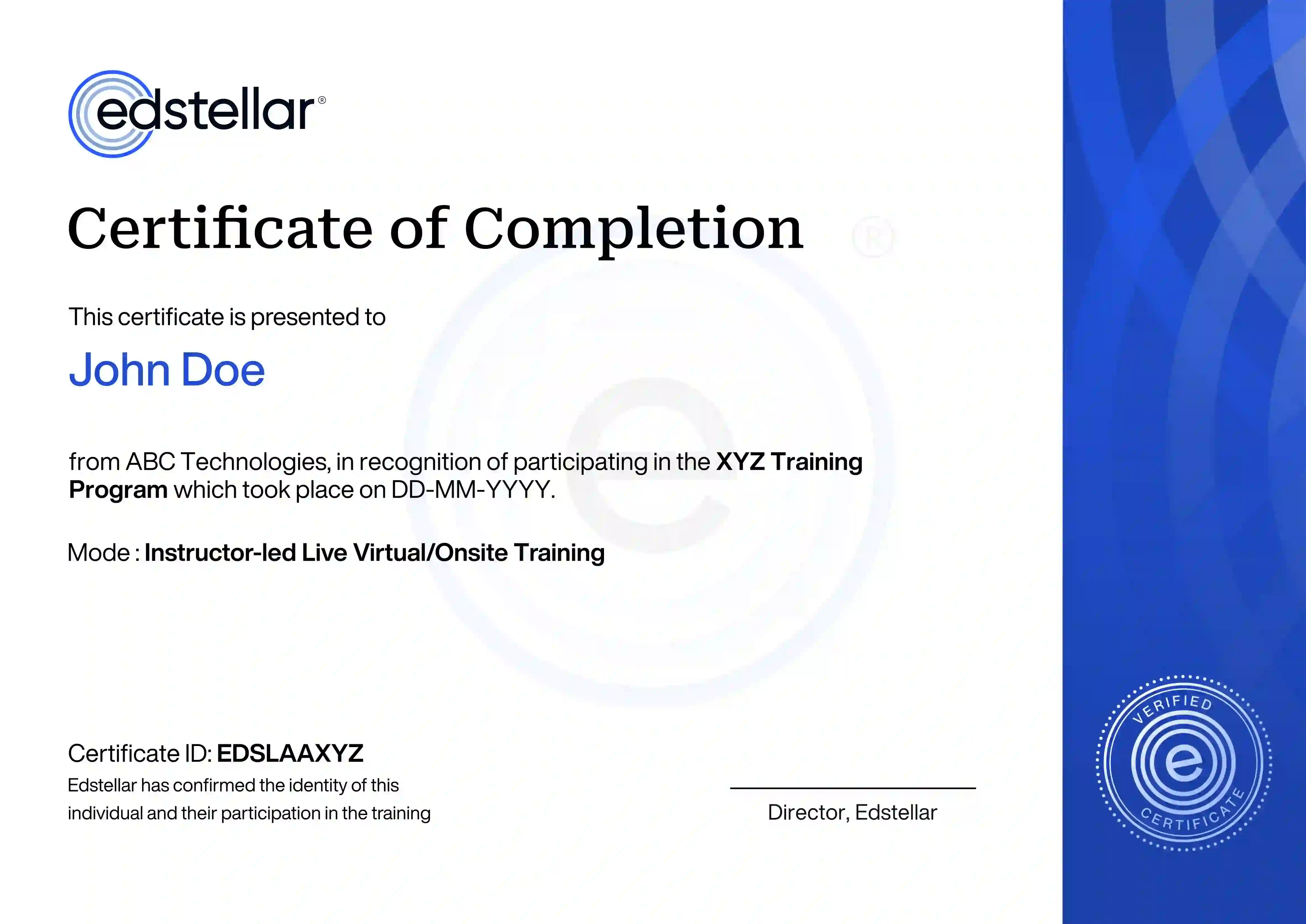
Recognition That Motivates Your Team

Explore More Courses


.svg)
.svg)
.svg)

.svg)