

Multi-Agent Systems and Orchestration Patterns Corporate Training
Turn single-agent pilots into your team's coordinated advantage with hands-on multi-agent orchestration training.
Give your enterprise teams the multi-agent skills that turn AI pilots into coordinated production systems. Edstellar's Multi-Agent Systems & Orchestration Patterns corporate training helps your AI engineers design orchestrator-worker teams, route tasks, share context and memory, and evaluate agent behavior. We deliver this hybrid program with hands-on labs, tailored to your use cases, with assessments that track real capability across your employees.
Instructor-led group trainingVirtual / on-site / off-site10 languagesDelivered inEnglish, Spanish, Mandarin, German, Arabic, Portuguese, Hindi, French, Japanese, Italian100+ countriesWe have delivered inUnited States, United Kingdom, India, Canada, Germany, France, Netherlands, UAE, Saudi Arabia, Singapore, Australia, Japan, Brazil, South Africa and 90+ more countries
How we build an agent-ready engineering team
THE EDSTELLAR MULTI-AGENT AI CAPABILITY MODEL
Map agent readiness
Skill checks reveal how your teams build single-agent tools today, before module one begins.
One agent-team standard
Align everyone on shared patterns: route tasks, hand off work, share context, and review agent output.
Practice in hands-on labs
Build orchestrator-worker teams in guided labs, with instructor coaching on routing and handoffs.
Prove the lift
Re-run skill checks and capstone reviews so leadership sees multi-agent capability rise.
Scale across teams
Roll out one orchestration standard across AI engineering, platform, and product teams.





Need more than one program?Get a group quote
Trusted as a Leading Corporate Training Provider by
















Program Overview: What is Multi-Agent Systems and Orchestration Patterns Corporate Training?
Multi-Agent Systems & Orchestration Patterns is Edstellar's instructor-led technical program for AI engineers and architects designing systems where multiple agents coordinate. Participants work through multi-agent foundations, orchestration patterns, routing and delegation, and shared memory and state. The focus stays on production concerns: evaluation, guardrails, and the failure modes that decide whether a multi-agent system survives contact with users.
Training is hands-on from the first module. Participants build agent teams with distinct roles in guided labs, then wire routing, handoffs, and delegation between them against realistic task scenarios. Instructors coach your team through shared memory design and the guardrails that keep autonomous behavior inside bounds, reviewing every exercise with direct feedback. The program closes with a capstone: a multi-agent production build.
Single-agent demos scale badly: one prompt doing everything collapses under real task complexity, and multi-agent prototypes fail silently when handoffs drop context. This program teaches your engineers the orchestration patterns that distribute work without losing coherence, and the evaluation discipline that catches failure early. Every technique is practiced in labs, so the learning transfers directly to your AI roadmap.
The capstone is a multi-agent production build your team can reason about: defined agent roles, explicit orchestration, shared state, evaluated handoffs, and guardrails with logged failure modes. Your architects return designing agent systems as engineered infrastructure, not as prompt experiments.
Engineering teams face rising AI demand, brittle single-agent prototypes, and pressure to ship agents that coordinate reliably, while deadlines shrink. This program shows where orchestration patterns turn fragile agent chains into reliable systems, and where disciplined evaluation keeps agent behavior predictable.
The result: teams that design, coordinate, and evaluate multi-agent systems with confidence, supporting dependable AI delivery across your organization.
What's Included in this Workshop for Your Enterprise Teams
- 1
Multi-agent design foundations
Orchestrator-worker patterns your team applies.
- 2
Hands-on orchestration labs
Build and coordinate agent teams live in every module.
- 3
Routing and handoff playbooks
Reusable task-routing patterns for agents.
- 4
Expert AI practitioners
Learn from engineers who ship agent systems.
- 5
Capstone agent build
Ship a coordinated multi-agent system for your use case.
- Training delivered at any of your offices globally
- 10+ languages
- Schedule around your calendar
- Group size set along with you
- Run as one cohort or split into batches
- Instructor-led (virtual/onsite/hybrid)
- Recurring and annual options
- Trainer sourcing, matching and logistics
Build your team's skills. Anywhere in the world.
Real-world use cases
from day one
Instructor-led training
for your teams
Delivered globally
in 100+ countries


Enterprise Training Solutions Customized for Your Company
One partner for instructor-led corporate training, delivered the way your teams work.
Request a Training Quote- Customized Training Delivery
- Scale Your Training: Small to Large Teams
- In-person Onsite, Live Virtual or Hybrid Training Modes
- Plan from 2000+ Industry-ready Training Programs
- Hands-On Labs on Live Infrastructure, Led by Industry Experts
Multi-Agent Systems Course Topics and Program Outline
A six-module technical program on agent foundations, orchestration patterns, routing, shared memory, and evaluation. Participants practice in hands-on labs and finish with a capstone multi-agent build for a real use case.
Built by Edstellar with AI-agent trainers
Built by practitioners who ship agent systems, with lab feedback on every exercise your team completes.
Baseline each participant's multi-agent systems readiness before module 01 begins
Build strong multi-agent orchestration foundations in instructor-led sessions for your team
Reinforce skills through guided hands-on labs on agent builds, routing, and shared memory
Apply multi-agent skills to real-world scenarios and a capstone multi-agent build project
A short pre-training assessment sets each participant's entry level, so the program starts where your team actually is. The rest is weighted toward hands-on practice: agent builds, routing logic, shared memory exercises, and realistic scenarios drawn from your team's work, not slides.
Delivered as
Entry level set by the assessment. Depth and schedule customized to your team.

a)How agents reason, act, and use tools
b)When single agents hit their limits
c)Anatomy of an orchestrated team
d)Baseline skills check
a)Orchestrator-worker topologies
b)Sequential, parallel, and hierarchical flows
c)Supervisor and router patterns
d)Choosing patterns for your use case
a)Intent routing and task decomposition
b)Agent handoffs and context passing
c)Delegation policies and escalation
d)Lab: route tasks across agents
a)Short-term vs long-term agent memory
b)Shared state and context design
c)Avoiding context loss in handoffs
d)Lab: build shared team memory
a)Testing agent teams before release
b)Guardrails for agent behavior
c)Diagnosing loops, conflicts, and drift
d)Lab: break and fix an agent team
a)Scope a production agent system
b)Design the orchestration and guardrails
c)Build, test, and harden the team
d)Present results and rollout plan
Customize this program tailored to your team?
Tell us your training needs: what your team already works with, the level they’re at, and the topics you want them to focus on. We’ll adjust the modules, duration and hands-on labs, and send you a customized outline for your group.
Key Skills and Outcomes Your Team Will Gain
By the end of this program, your team will design, coordinate, and evaluate multi-agent systems with confidence. Each competency is practiced in guided labs with instructor feedback.
Design agent team architectures
Choose orchestrator-worker patterns that fit the task, the data, and your production constraints.
Route tasks across agents
Decompose work, assign it to the right agent, and keep ownership clear from start to finish.
Manage handoffs and delegation
Pass context between agents without loss, and escalate to humans when agents reach their limits.
Build shared agent memory
Design short-term and long-term memory so agent teams stay consistent across long, multi-step workflows.
Wire tools into agent teams
Give agents reliable tool access for search, data, and actions, with safe failure handling.
Evaluate agent behavior
Test multi-agent systems with realistic scenarios and measure quality before release.
Ship agents to production
Add guardrails, monitoring, and recovery so agent teams run reliably in live systems.
Teams that Benefit from this Multi-Agent Systems Group Training
This program is built for AI engineering, software, data science, and product teams moving agents from pilots to production. Solid Python and LLM fundamentals help: content adapts to role and experience, so each cohort practices orchestration on the workflows they actually own.
Agent pilots that become production systems.
AI engineering teams learn to orchestrate agent teams that route work, share context, and recover from failure. They practice the patterns production agent systems depend on.
Workflow friction
- Agent prototypes fail in production
- Handoffs lose critical context
- Debugging agent teams is painful
How the program helps
- Design dependable agent teams
- Pass context without loss
- Diagnose agent failures fast
Practice use cases
- Routing labs
- Handoff drills
- Guardrail exercises
Agents wired into real software.
Software engineers learn to connect agents to tools, APIs, and data with safe failure handling. They practice building agent components that fit existing codebases.
Workflow friction
- Tool calls break agent flows
- Agent code is hard to test
- Integrations grow unmanageable
How the program helps
- Wire tools safely to agents
- Test agent components well
- Keep integrations maintainable
Practice use cases
- Tool wiring labs
- Integration builds
- Failure drills
Evaluated agents, not lucky demos.
Data science teams learn to evaluate multi-agent behavior with realistic scenarios and metrics. They practice measuring quality so agent releases are earned, not hoped for.
Workflow friction
- Agent quality is inconsistent
- No shared evaluation method
- Regressions slip in quietly
How the program helps
- Evaluate agents rigorously
- Adopt one evaluation method
- Catch regressions early
Practice use cases
- Evaluation labs
- Metric design drills
- Regression tests
Agent roadmaps grounded in reality.
Product and platform teams learn what multi-agent systems can and cannot do today. They practice scoping agent features that engineering can actually ship.
Workflow friction
- Agent scope keeps expanding
- Demos set wrong expectations
- Ship dates keep slipping
How the program helps
- Scope agent features realistically
- Set honest expectations
- Plan shippable agent work
Practice use cases
- Scoping workshops
- Roadmap labs
- Prioritization drills
Each cohort works through role-relevant orchestration labs, then leaves with reusable patterns for day-to-day AI work.
Prerequisites: This program benefits network engineers, RF designers, planners, and wireless researchers most. Familiarity with basic wireless communications concepts helps, but is not required: foundations are taught from the ground up. No prior radar or 6G experience is needed, and labs adapt to each cohort's tools, whether teams work in simulation or on lab hardware.
From single agents to production multi-agent systems
Learners start with multi-agent foundations and a deep dive into orchestration patterns, then practice routing with handoffs and delegation, shared memory and state management, and evaluation with guardrails against failure modes. The arc closes with a capstone that builds a production multi-agent system with observability.
Teams grow from understanding agent fundamentals to designing, orchestrating, and hardening multi-agent systems for production.
Mixed cohort, or several teams at once?
We can tailor the training to different teams, roles, and experience levels within the same program.
Certificate of Training Completion.
On successful completion, employees receive an Edstellar course completion certificate, recognizing their commitment to ongoing learning and professional development. It validates the skills they have built and motivates them to keep growing and contribute to organizational success.
Earned, not attended. Awarded on completion of all hands-on labs and the capstone project.

Training Delivery Modes: Virtual, Onsite and Hybrid
Every mode is instructor-led and tailored to your agent use cases before delivery. The curriculum, hands-on labs, assessments, and capstone stay the same across hybrid, onsite, and live virtual formats, so capability is consistent however you run it.
Hybrid Training
Live instruction plus supervised hands-on labs, across onsite and virtual sessions. Your team designs and coordinates multi-agent systems with instructor coaching. Best for technical practice with scheduling flexibility.
- Live instruction across onsite and virtual sessions
- Guided agent labs with instructor coaching on your roles
- Build orchestrated agent teams in real time
- Best for flexible schedules with real hands-on practice

Onsite Training
Your instructor delivers at your facility with labs set up for your team. Every participant builds orchestrated agent teams with coaching. Best for co-located teams wanting maximum interaction.
- Instructor delivers at your facility
- Labs built around your agent use cases
- Build agent teams together with coaching
- Best for co-located teams wanting maximum interaction

Live Virtual Training
Live virtual sessions run instructor-led on your preferred platform. Your team joins guided agent labs, breakout exercises, and real-time reviews with the instructor. Ideal for distributed teams needing hands-on practice without travel.
- Live instructor-led sessions on your platform
- Guided labs with breakout troubleshooting
- Screen-shared design reviews in real time
- Ideal for distributed teams across locations

Need a training format that works for your team?
Full days, half days across weeks, or split by module. Tell us the delivery window and we schedule the cohort around it.
Frequently Asked Questions
Share your team size, preferred dates, and delivery mode in the lead form, or book a short discovery call first. We reply with a tailored proposal covering scope, schedule, and pricing for your group.
Yes. Book a short discovery call and we will map your training needs, audience, and timelines before sharing a plan.
Yes. Live virtual sessions run instructor-led on your preferred platform, with breakout lab exercises and real-time feedback from the instructor.
Yes. We deliver onsite at your offices, with the agenda and lab exercises adapted to your team's agent workflows and priorities.
The standard program runs six modules over 20 hours, typically two full days or spread across weeks. Duration can be adjusted to fit your schedule.
Question not answered here?
Put it in the request. A training specialist answers it directly, within one business day.
Where this Training Fits in Your Team's learning path.
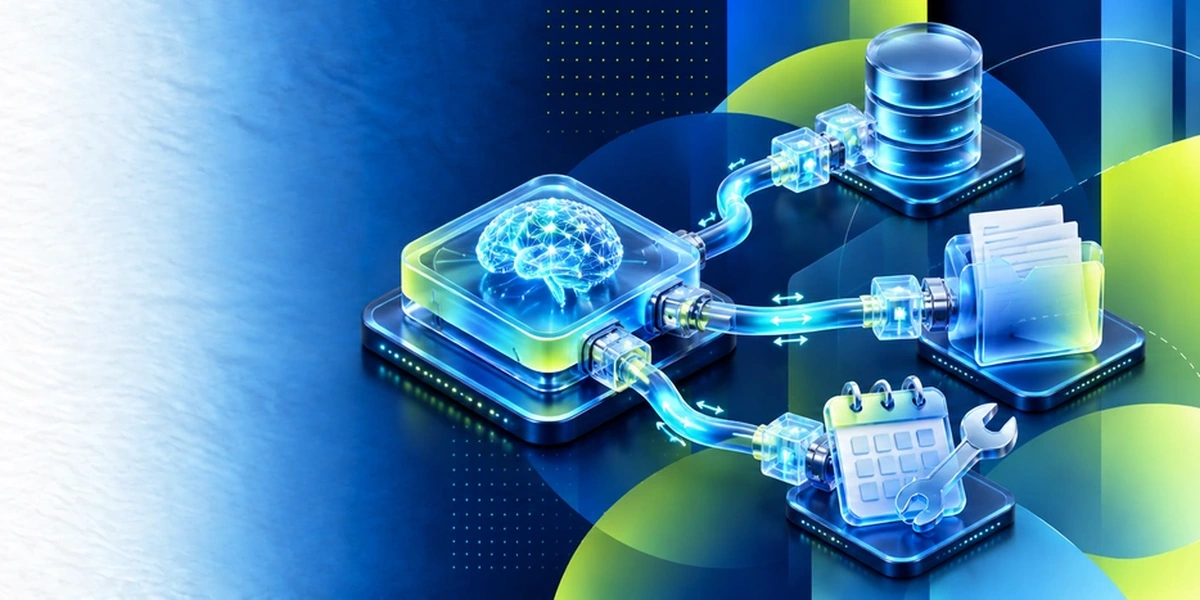
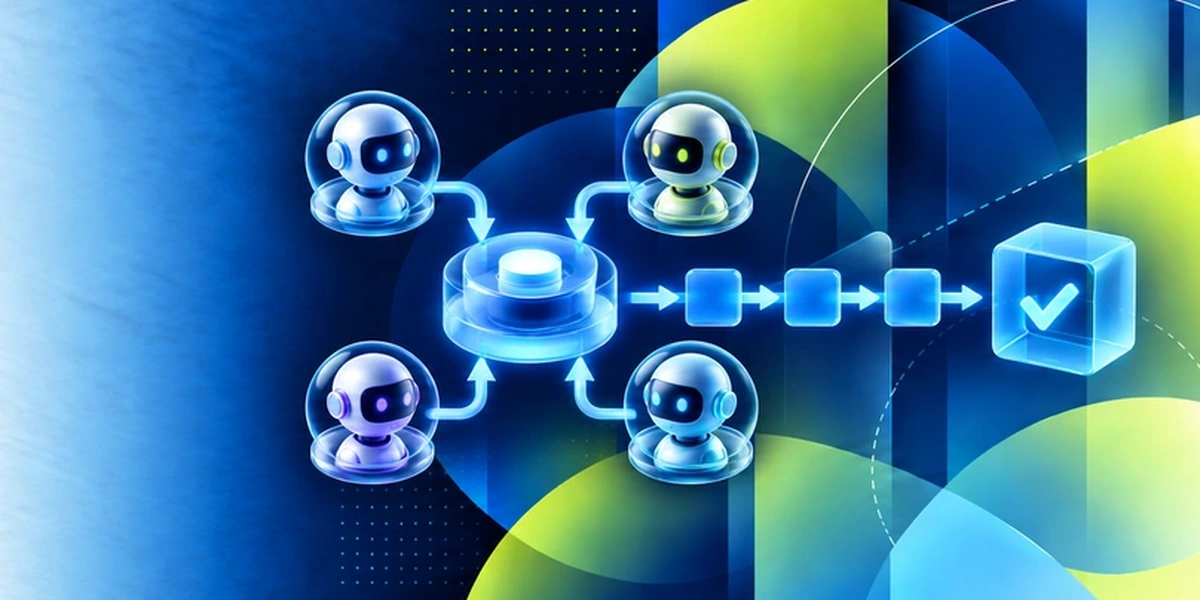
Multi-agent orchestration comes once your team can build single agents and connect them to tools through MCP. After orchestration, the final step adds evaluation and guardrails so systems of several cooperating agents stay reliable in production.


Why Choose Edstellar as Your Multi-Agent Systems and Orchestration Patterns Corporate Training Provider
As your training partner, we make comparing providers simple: share your training needs and we shape a multi-agent program around your agent use cases, timelines and delivery mode. You get a matched trainer profile, deep expertise, and a plan your leaders can approve with confidence.

EXPERT TRAINERS
YEARS DELIVERING
ORGANIZATIONS TRAINED
CERTIFIED
Tailored
Content shaped around your multi-agent orchestration use cases, so every session maps to your real multi-agent AI needs.
Proven Methodology
5+ years delivering corporate training to AI engineering and software teams across industries and regions.
Practice-Based Learning
5 hands-on labs across 6 modules. Your team builds orchestrated multi-agent AI systems with instructor guidance.
Expert Trainers
5,000+ certified trainers matched to your AI platform stack, with a full trainer profile shared before your program is booked.
Global Scale
One multi-agent AI program across your offices worldwide, in hybrid, onsite, or live virtual formats.
Measurable Outcomes
Baseline-to-capstone measurement and Skills Matrix reporting keep your multi-agent orchestration capability lift visible.
Build Agent Teams With Tested Routing, Shared State, and Controlled Handoffs
Edstellar develops multi-agent design skills through practical orchestration and failure analysis. Participants compare team patterns, route tasks, and preserve shared context before testing loops, conflicts, and drift. The integrated build is reviewed for justified delegation, explicit state handling, and guardrails supported by behavioral evidence rather than agent count or complexity.
- Step 01
Consult
We assess Python, LLM, and tool-calling experience to identify gaps in orchestration patterns, task decomposition, context transfer, state management, and evaluation of agent teams.
- Step 02
Plan
We establish agent-team foundations before comparing orchestration patterns, then develop routing, delegation, and shared memory ahead of failure testing and the integrated build.
- Step 03
Align
We align agent orchestration expertise with participants' API, state-management, and testing readiness, ensuring guided practice addresses both normal handoffs and failures between cooperating agents.
- Step 04
Customize
Sample tasks and shared-state scenarios reflect relevant workflows, enabling tailored supervisor and routing exercises without exposing confidential context or granting agents unrestricted tool access.
- Step 05
Execute
Participants route tasks, preserve handoff context, and diagnose loops or conflicting behavior, receiving feedback on delegation policies, shared-memory design, escalation, and behavioral guardrails.
- Step 06
Evaluate
We assess the agent system for justified orchestration choices, consistent shared state, controlled handoffs, and test evidence that explains failure handling and rollout limitations.
Also from Edstellar
Talent assessments
Psychometric, behavioral, leadership and 360-degree assessment.
→Training needs analysis
Needs analysis, gap identification, and a training roadmap.
→L&D consulting
Learning strategy, content, technology and ROI measurement.
→OD consulting
Org design, succession planning and cultural change.
→Managed training services
Training outsourcing, vendor management, logistics and administration.
→Coaching solutions
Executive and manager coaching that keeps skills in use.
Start an RFP shaped to your needs.
Answer three quick questions about team size, scope, and how often you need the program run, then send the request from the last step. Everything you choose travels with it, so you only fill this in once.
How many team members need training?
Multi-Agent Systems & Orchestration Patterns Training Training Packages & Pricing
Where L&D holds an annual budget, license packages price the whole year at once instead of raising a purchase order per workshop. Hours and licenses are pooled across teams, programs and locations, so unused capacity is not stranded in one department.
Starter
120
trainee licenses64 hours of group training
Tailored for SMBs
Growth
320
trainee licenses160 hours of group training
Ideal for growing SMBs
Enterprise
800
trainee licenses400 hours of group training
Designed for large corporations
Custom
Unlimited
trainee licensesDuration set by the rollout
Multi-region and multi-year
Training Packages & Pricing
Choose the training format that works for your team. Pricing is customized based on your requirements, cohort size, and delivery needs.
Request Multi-Agent Systems Training for Your Team
Tell us your team size, engineering roles, and preferred delivery mode. We will confirm availability and respond with a tailored training plan covering scope, schedule, and pricing.