

Cyber Risk Quantification and Management (FAIR) Corporate Training
Quantify cyber risk in financial terms with FAIR: model loss, simulate scenarios, and brief executives in guided labs.
Edstellar, a corporate training company, delivers corporate training that replaces risk guesswork with defensible numbers. Employees learn the FAIR taxonomy, model loss event frequency and magnitude, run Monte Carlo simulations, and report risk to executives through guided labs led by practitioners. Each session is tuned to your risk scenarios, data, and workflows.
Instructor-led group trainingVirtual / on-site / off-site10 languagesDelivered inEnglish, Spanish, Mandarin, German, Arabic, Portuguese, Hindi, French, Japanese, Italian100+ countriesWe have delivered inUnited States, United Kingdom, India, Canada, Germany, France, Netherlands, UAE, Saudi Arabia, Singapore, Australia, Japan, Brazil, South Africa and 90+ more countries
How we build a risk-quantified team
THE EDSTELLAR CYBERSECURITY CAPABILITY MODEL
Assess quantification maturity
Skill checks map your team's risk analysis and estimation baseline.
Set shared risk standards
One shared playbook for FAIR scenarios, ranges, and reporting.
Practice in guided labs
Labs cover loss modeling, Monte Carlo simulation, and executive reporting.
Measure the lift
Lab reviews benchmark each employee's quantification capability.
Scale across teams
One standard rolls out across security, risk, and finance teams.





Need more than one program?Get a group quote
Trusted as a Leading Corporate Training Provider by
















Program Overview: What is Cyber Risk Quantification and Management (FAIR)?
Cyber Risk Quantification & Management (FAIR) is a 24-hour instructor-led program for security, risk, and finance teams that need cyber risk expressed in financial terms. Participants work through the FAIR taxonomy, loss event frequency and threat capability, loss magnitude modeling, Monte Carlo risk simulation, and risk aggregation and reporting. It is built for teams that must defend risk decisions with numbers, not narratives.
Training runs as live sessions built around quantitative labs. Teams model loss frequency and magnitude for real scenarios, run Monte Carlo simulations, and build executive-ready risk reports in guided exercises. Instructors with risk quantification experience coach each lab, challenging assumptions and calibration so the models hold up to scrutiny. The program closes with a capstone: an enterprise risk quantification program for the team's own organization.
Security teams lose budget battles because they speak in red, amber, green while finance speaks in dollars. This program bridges that gap, teaching teams to quantify cyber risk in financial terms that executives and boards can act on. The result is risk conversations grounded in defensible analysis: expected loss, credible ranges, and the economics of every control.
The capstone is an enterprise risk quantification program: participants select real risk scenarios from their own organization, model them with FAIR, run Monte Carlo simulations, and produce an executive risk report with quantified recommendations. Reviewers test the calibration and the business logic. Teams return with a working quantification capability and their first board-ready risk analysis, ready to change how the organization decides on security spend.
Six modules and 24 hours: FAIR taxonomy, loss event frequency, loss magnitude, Monte Carlo simulation, and risk reporting. Every module pairs concepts with a guided lab, so each technique is practiced. It closes with a capstone quantification program the team scopes, models, and presents.
Delivery is hybrid across virtual and onsite sessions, scheduled around your calendar. Cohorts train as one group or split into batches, with session materials and lab guides included for every participant.
What's Included in this Workshop for Your Enterprise Teams
- 1
FAIR taxonomy briefings
Learn the language of quantified risk.
- 2
Loss modeling labs
Estimate frequency and magnitude with calibration.
- 3
Monte Carlo simulations
Turn ranges into risk distributions.
- 4
Executive reporting practice
Brief decisions in financial terms.
- Instructor-led delivery across virtual, onsite, and hybrid
- Guided labs in every module with instructor coaching
- Capstone risk analysis, reviewed with your team
- Flexible scheduling around your calendar
- Lab guides and FAIR templates included
- Group size and batches set along with you
Build your team's skills. Anywhere in the world.
Real-world use cases
from day one
Instructor-led training
for your teams
Delivered globally
in 100+ countries


Enterprise Training Solutions Customized for Your Company
One partner for instructor-led corporate training, delivered the way your teams work.
Request a Training Quote- Customized Training Delivery
- Scale Your Training: Small to Large Teams
- In-person Onsite, Live Virtual or Hybrid Training Modes
- Plan from 2000+ Industry-ready Training Programs
- Hands-On Labs on Live Infrastructure, Led by Industry Experts
Cyber Risk Quantification and Management (FAIR) Course Topics and Program Outline
A tailored 24-hour, 6-module workshop: one learning journey from FAIR foundations to a capstone risk quantification program. Sessions pair concepts with labs on real-world use cases. Materials include lab guides and FAIR templates for every participant.
Built by Edstellar with risk quantification practitioners
Built by practitioners who run FAIR analyses in production, shaped around your stack and use cases.
Skill checks baseline your team's risk analysis and estimation maturity before training begins.
Live instruction covers the FAIR taxonomy and loss frequency modeling across 6.5 focused hours.
Guided labs build loss modeling and Monte Carlo simulation skill across 8.5 hours of supervised practice.
Your team delivers a full risk analysis in 9 hours, reviewed against FAIR quality standards.
From FAIR foundations to a capstone risk program, every technique is practiced in guided labs.
Delivered as
Delivered as a hybrid program of live instruction and guided labs, scheduled around your team's calendar in flexible batches.

Deconstruct real risk statements in a guided session, rewriting qualitative ratings as quantified FAIR scenarios.
learna)Limits of qualitative risk ratings
b)The FAIR taxonomy and ontology
c)Risk as loss frequency and magnitude
d)Where quantification fits in a risk program
Build frequency estimates for realistic scenarios using calibration exercises and structured expert judgment.
learna)Threat event frequency modeling
b)Vulnerability and resistance strength
c)Threat capability assessment
d)Calibrated estimation techniques
Model the full loss magnitude of a breach scenario, separating primary costs from secondary impacts.
practicea)Primary vs secondary loss
b)Response, replacement, and productivity costs
c)Fines, legal, and reputation loss
d)Building defensible loss ranges
Run Monte Carlo simulations on your FAIR models in a guided lab and interpret the resulting risk distributions.
practicea)Monte Carlo simulation mechanics
b)Running simulations on FAIR inputs
c)Loss exceedance curves
d)Communicating distributions clearly
Assemble a portfolio risk view and draft an executive report recommending control investments.
applya)Aggregating scenario analyses
b)Executive risk reporting
c)Cost-benefit of control investments
d)Risk appetite and decision records
Deliver a complete quantified risk analysis for a simulated enterprise, from scoping to the executive briefing.
applya)Scoping enterprise risk scenarios
b)Full FAIR analysis workflow
c)Executive recommendation briefing
d)Program rollout planning
Customize this program tailored to your team?
Tell us your training needs: what your team already works with, the level they’re at, and the topics you want them to focus on. We’ll adjust the modules, duration and hands-on labs, and send you a customized outline for your group.
Key Skills and Outcomes Your Team Will Gain
Seven job-ready outcomes your team will demonstrate by the end of the program. Each competency is practiced in guided labs and reviewed in the capstone analysis.
Apply the FAIR taxonomy
Decompose risk scenarios using the FAIR ontology so every analysis speaks the same precise language.
Estimate loss event frequency
Model threat event frequency and vulnerability with calibrated estimation instead of guesswork.
Model loss magnitude
Break losses into primary and secondary forms and build defensible cost ranges for each scenario.
Run Monte Carlo simulations
Convert FAIR inputs into loss exceedance curves and interpret distributions for decision makers.
Aggregate portfolio risk
Combine scenario analyses into an enterprise view that shows where risk concentrates.
Report risk to executives
Present quantified risk, options, and recommendations in clear financial terms executives trust.
Justify control investments
Compare control costs against modeled risk reduction to support budget decisions with numbers.
Teams that Benefit from this Cyber Risk Quantification and Management (FAIR) Group Training
This group training is built for security, risk, and finance teams who need cyber risk expressed in financial terms for real decisions. Content adapts to each cohort's roles, data, and experience, so every batch practices the workflows it owns, from estimation to executive reporting.
Quantify the risk you are asked to own.
Risk teams learn to run FAIR analyses end to end, producing defensible numbers for the risks on their register.
Workflow friction
- Risk described in vague ratings
- Inconsistent analysis methods
- Slow, ad-hoc quantification
How the program helps
- Defensible quantified risk figures
- Consistent FAIR methodology
- Faster analysis turnaround
Practice use cases
- FAIR scenario labs
- Estimation calibration drills
- Risk register quantification
Fund security with numbers executives trust.
Security leaders learn to translate technical risk into financial terms that win budget and board support.
Workflow friction
- Security spend hard to justify
- Board reports lacking numbers
- Priorities set by loudest voice
How the program helps
- Budget cases backed by numbers
- Board-ready risk reporting
- Clearer prioritization logic
Practice use cases
- Business case workshops
- Board reporting labs
- Investment comparison exercises
Ground assurance in quantified evidence.
GRC and audit teams learn to evaluate risk analyses critically and align quantification with control frameworks.
Workflow friction
- Analyses taken at face value
- Qualitative ratings in audits
- Weak challenge of assumptions
How the program helps
- Critical review of risk analyses
- Framework-aligned quantification
- Stronger audit evidence
Practice use cases
- Analysis review labs
- Framework mapping workshops
- Assumption testing drills
Price and plan for cyber risk accurately.
Finance teams learn to use quantified cyber risk in budgeting, reserves, and insurance conversations.
Workflow friction
- Cyber risk absent from budgets
- Insurance priced on guesswork
- No shared risk language
How the program helps
- Risk-informed budgeting
- Better insurance discussions
- Clearer reserve planning
Practice use cases
- Budget modeling labs
- Insurance briefing practice
- Loss scenario workshops
Cohorts train as a cross-functional workforce, with each small group aligned on shared risk language.
Prerequisites: This program benefits security analysts, risk managers, and finance staff involved in cyber risk decisions. Basic security concepts help but are not required, and no prior statistics or FAIR experience is needed. Content adapts to each cohort's scenarios, data, and experience.
Security Analyst to Quantified Risk Lead
Tracks how practitioners progress from risk awareness to leading quantified analysis across the program's learn, practice, and apply phases.
A program that grows with risk careers, from first FAIR scenario to confident quantified risk leadership.
Mixed cohort, or several teams at once?
We can tailor the training to different teams, roles, and experience levels within the same program.
Certificate of Training Completion.
On successful completion, employees receive an Edstellar course completion certificate, recognizing their commitment to ongoing learning and professional development. It validates the skills they have built and motivates them to keep growing and contribute to organizational success.
Earned, not attended. Awarded on completion of all hands-on labs and the capstone project.

Training Delivery Modes: Virtual, Onsite and Hybrid
Live instruction with guided labs in every session, delivered in the format that fits your team's schedule and locations.
Hybrid Training
Instructor-led sessions mix onsite and virtual delivery with guided labs throughout. Teams model loss, run simulations, and draft executive reports while the instructor coaches and reviews work. Hybrid keeps scheduling flexible without losing live interaction.
- Live instruction across onsite and virtual sessions
- Guided labs with instructor coaching and reviews
- Real risk scenarios adapted to your business
- Flexible scheduling without losing live interaction

Onsite Training
Instructor-led training at your offices, with labs using your risk scenarios and data. The instructor pairs with the team in person, reviews models and reports together, and tunes exercises to your context.
- Instructor-led training at your offices
- Labs using your risk scenarios and data
- In-person pairing and model reviews
- Exercises tuned to your context

Live Virtual Training
Live virtual sessions on Zoom or Teams with screen-shared modeling labs, breakout estimation exercises, and real-time instructor review. Your team gets the same guided labs and coaching as onsite, from anywhere.
- Live virtual sessions on Zoom or Teams
- Screen-shared labs and breakout exercises
- Real-time review with the instructor
- Same guided labs as onsite, from anywhere

Need a training format that works for your team?
Full days, half days across weeks, or split by module. Tell us the delivery window and we schedule the cohort around it.
Learn from industry experts.
Every session is led by a practitioner who has run monitoring for models in production, not a generalist working from slides.

Asjad
Risk Management Trainer in New Delhi
14+ years of Experience
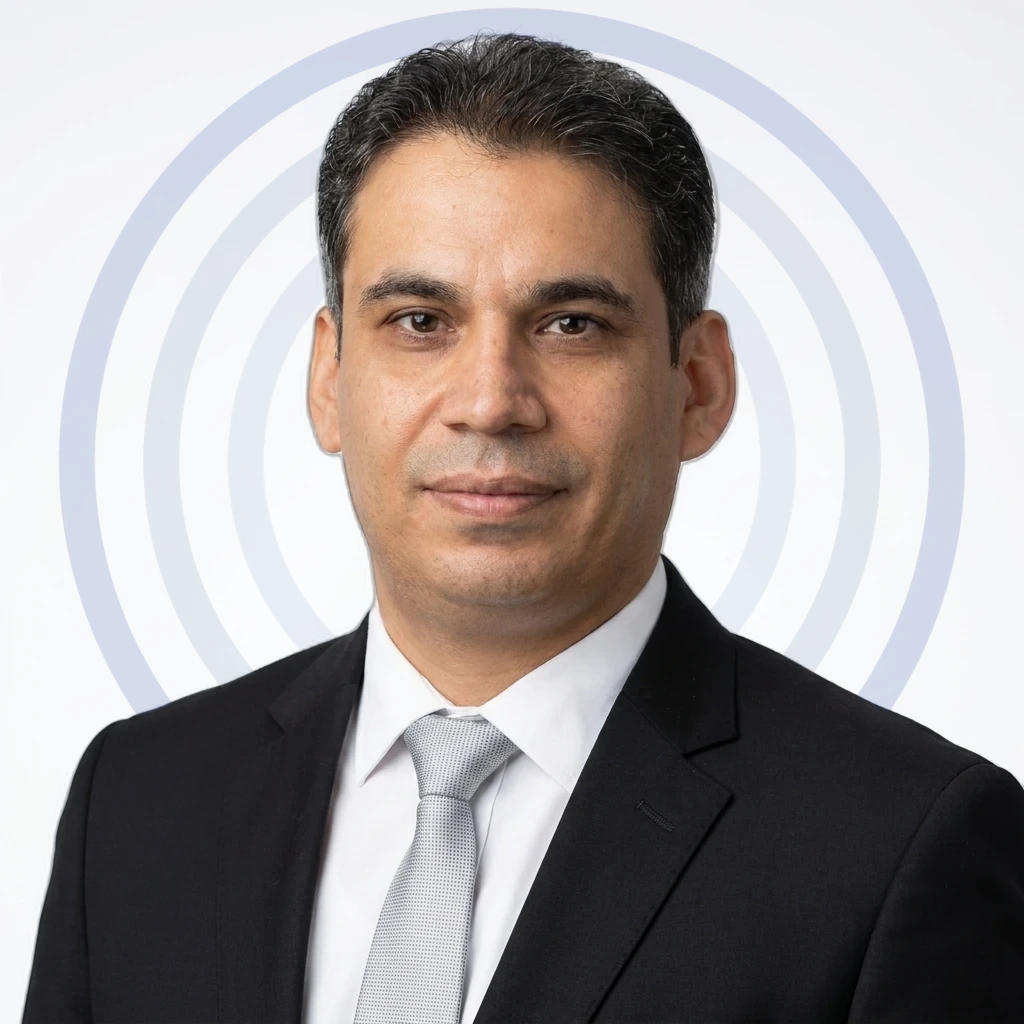
Rohat
Risk Management Trainer in Erbil
11+ years of Experience
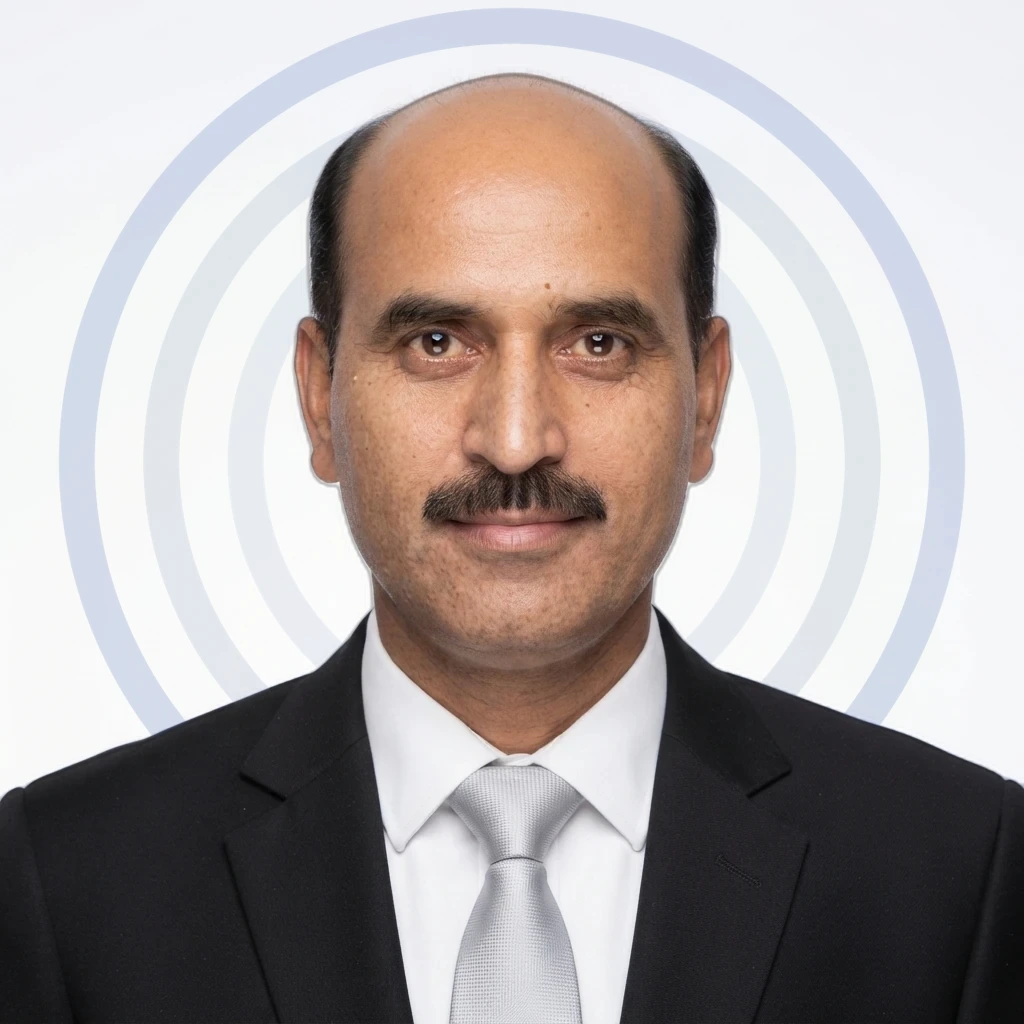
Muhammad
Risk Management Trainer in Rawalpindi
12+ years of Experience

Ivan
Cyber Security Trainer in Bengaluru
9+ years of Experience

Asif
Advanced Excel Trainer in Ranchi
22+ years of Experience

Satyanarayana
Cybersecurity Fundamentals Trainer in Hyderabad
7+ years of Experience

Madhumetha
CompTIA Security+ Trainer in Chennai
9+ years of Experience
Trainers are matched to your stack and delivery window at scheduling. We confirm your assigned trainer, with a full profile, before the program is booked.
Frequently Asked Questions
Share your team size, timelines, and delivery preference, and we will send a detailed per-group quote with batch options.
Yes. Book a discovery call and we will map your risk scenarios, data, and goals to a tailored training plan before you commit.
Yes. Live virtual sessions run on Zoom or Teams with the same guided labs and instructor coaching as onsite delivery.
Yes. The instructor runs the full program at your offices, with labs built on your risk scenarios for a realistic practice environment.
The program runs 24 hours of instructor-led training, usually across three to six days or weekly sessions on a flexible, mutually agreed schedule.
Question not answered here?
Put it in the request. A training specialist answers it directly, within one business day.
Where this Training Fits in Your Team's learning path.
FAIR quantification sits after risk management and CRISC, because your team needs a working risk process before putting numbers on it. Quantified risk then gives the board something concrete to weigh, which is the final step in this path.




Why Choose Edstellar as Your Cyber Risk Quantification and Management (FAIR) Corporate Training Provider
When comparing providers, Edstellar is the training partner teams choose for risk expertise and 5+ years of corporate training experience. Our methodology blends concise instruction with guided labs that mirror real risk decisions.

EXPERT TRAINERS
YEARS DELIVERING
ORGANIZATIONS TRAINED
CERTIFIED
Tailored
Every cohort's labs, scenarios, and models are tuned to your risk register, industry, and reporting needs.
Proven Methodology
A learn, practice, apply arc moves your team from FAIR theory to a reviewed enterprise risk analysis.
Practice-Based Learning
Guided labs in every module: calibrated estimation, loss modeling, and Monte Carlo simulation practice.
Expert Trainers
Practitioners who run FAIR analyses coach your team through every lab and review.
Global Scale
One consistent risk quantification standard delivered across offices, regions, and time zones.
Measurable Outcomes
Lab checkpoints and the capstone analysis benchmark each team's quantification capability.
Also from Edstellar
Talent assessments
Psychometric, behavioral, leadership and 360-degree assessment.
→Training needs analysis
Needs analysis, gap identification, and a training roadmap.
→L&D consulting
Learning strategy, content, technology and ROI measurement.
→OD consulting
Org design, succession planning and cultural change.
→Managed training services
Training outsourcing, vendor management, logistics and administration.
→Coaching solutions
Executive and manager coaching that keeps skills in use.
Start an RFP shaped to your needs.
Answer three quick questions about team size, scope, and how often you need the program run, then send the request from the last step. Everything you choose travels with it, so you only fill this in once.
How many team members need training?
Cyber Risk Quantification & Management (FAIR) Training Packages & Pricing
Where L&D holds an annual budget, license packages price the whole year at once instead of raising a purchase order per workshop. Hours and licenses are pooled across teams, programs and locations, so unused capacity is not stranded in one department.
Starter
120
trainee licenses64 hours of group training
Tailored for SMBs
Growth
320
trainee licenses160 hours of group training
Ideal for growing SMBs
Enterprise
800
trainee licenses400 hours of group training
Designed for large corporations
Custom
Unlimited
trainee licensesDuration set by the rollout
Multi-region and multi-year
Training Packages & Pricing
Choose the training format that works for your team. Pricing is customized based on your requirements, cohort size, and delivery needs.
Request Cyber Risk Quantification and Management (FAIR) Training for Your Team
Share your team size, risk scenarios, reporting needs, and timelines to receive a tailored training plan and quote. Book a discovery call to discuss your goals; we confirm availability and respond with a proposal.