

Machine Vision for Automated Quality Inspection Corporate Training
Give your quality engineering team the machine vision skills to catch every defect, every time.
Build the machine vision capability your quality teams need. Edstellar's Machine Vision for Automated Quality Inspection corporate training helps your employees master camera and lighting selection, image processing, defect detection algorithms, and deep learning based inspection through instructor-led sessions with hands-on vision labs on real defect samples. As the corporate training company enterprises trust for emerging-technology programs, we tailor every workshop to your products, inspection lines, and quality goals.
Instructor-led group trainingVirtual / on-site / off-site10 languagesDelivered inEnglish, Spanish, Mandarin, German, Arabic, Portuguese, Hindi, French, Japanese, Italian100+ countriesWe have delivered inUnited States, United Kingdom, India, Canada, Germany, France, Netherlands, UAE, Saudi Arabia, Singapore, Australia, Japan, Brazil, South Africa and 90+ more countries
How we build defect-free inspection teams
THE EDSTELLAR MACHINE VISION CAPABILITY MODEL
Baseline vision gaps
Skills Matrix assessment plus Stellar AI analysis shows exactly where your team's inspection capability breaks down.
Set one vision standard
One shared language for imaging hardware, defect criteria, and inspection performance across quality and engineering.
Practice on real defects
Hands-on vision labs run on your defect types and inspection images, not generic stock pictures.
Prove the detection lift
Before-and-after inspection benchmarks measure each participant's defect detection accuracy and consistency.
Scale across lines
One vision playbook rolls out across plants and lines as your automated inspection program grows.





Need more than one program?Get a group quote
Trusted as a Leading Corporate Training Provider by
















Program Overview: What is Machine Vision for Automated Quality Inspection Corporate Training?
Machine Vision for Automated Quality Inspection is an instructor-led program for quality engineers, automation specialists, and manufacturing teams replacing manual inspection with reliable machine vision. It covers camera, lens, and lighting selection, image processing for defect detection, classical techniques like measurement and pattern matching, deep learning for visual inspection, and vision system deployment on production lines.
Training alternates concise expert briefings with hands-on vision labs built around real defect samples. Teams set up imaging, tune detection algorithms, validate system accuracy, and troubleshoot lighting and optics, with instructors coaching through each lab and correcting approach in real time. The program closes with the Inspection System Capstone, a 3.5-hour lab where each team builds and validates a complete vision inspection system end to end.
Manufacturers lose money when manual inspection misses defects, when inspection speed cannot keep up with the line, and when vision systems fail because of poor lighting or untuned algorithms. This program gives teams a repeatable method: select the right optics, design the lighting, process the image, detect the defect, and prove the system works. The result is inspection that is faster, more consistent, and auditable.
The capstone delivers a working inspection system tailored to the team's own defect samples: documented imaging setup, a tuned detection pipeline, and validation results the team can show to quality leadership. Because every lab uses real defect imagery rather than toy datasets, learners walk away with judgment they can apply the next morning: how to light a part, which algorithm to reach for, and when a model is genuinely ready for the line.
Across six modules, your team moves from imaging fundamentals to a full inspection system capstone. Sessions use real-world use cases, defect image sets, and vision station hardware, so every technique transfers directly to your quality lines.
Delivered as a hybrid instructor-led program, it fits around your production calendar, with scheduling set along with you, and content tailored to your products and inspection requirements.
What's Included in this Workshop for Your Enterprise Teams
- 1
Imaging hardware selection
Cameras, lenses, and lighting matched to your defect types.
- 2
Image processing for inspection
Preprocessing and analysis pipelines tuned for defect detection.
- 3
Deep learning inspection models
Train and validate CNN and anomaly models on your image sets.
- 4
Line integration
Triggering, PLC handshakes, and deployment on the production line.
- 5
Inspection capstone
Build and present a complete vision inspection station.
- Training delivered at any of your offices globally
- 10+ languages
- Schedule around your calendar
- Group size set along with you
- Run as one cohort or split into batches
- Instructor-led (virtual/onsite/hybrid)
- Recurring and annual options
- Trainer sourcing, matching and logistics
Build your team's skills. Anywhere in the world.
Real-world use cases
from day one
Instructor-led training
for your teams
Delivered globally
in 100+ countries


Enterprise Training Solutions Customized for Your Company
One partner for instructor-led corporate training, delivered the way your teams work.
Request a Training Quote- Customized Training Delivery
- Scale Your Training: Small to Large Teams
- In-person Onsite, Live Virtual or Hybrid Training Modes
- Plan from 2000+ Industry-ready Training Programs
- Hands-On Labs on Live Infrastructure, Led by Industry Experts
Machine Vision for Automated Quality Inspection Course Topics and Program Outline
Six modules follow a clear learning path from imaging fundamentals to a working inspection station capstone. Each session builds on the last, with hands-on vision labs that turn vision concepts into production-ready inspection capability.
Built by Edstellar with machine vision and automated inspection practitioners
Built by practitioners who deploy machine vision inspection systems across manufacturing industries in production, shaped around your stack and use cases.
Baseline each participant's machine vision readiness before module 01 begins
Build strong machine vision foundations in instructor-led sessions for your team
Reinforce skills through guided hands-on labs with cameras, lighting, and inspection setups
Apply machine vision skills to real-world scenarios and a capstone inspection project
A short pre-training assessment sets each participant's entry level, so the program starts where your team actually is. The rest is weighted toward hands-on practice: camera calibration, lighting design, and image processing workflows and realistic scenarios drawn from your team's work, not slides.
Delivered as
Entry level set by the assessment. Depth and schedule customized to your team.

Set up a basic vision station and run a baseline inspection test to see how lighting and optics change what the camera catches.
learna)How machine vision inspection works on a production line
b)Camera types: area scan, line scan, 3D, and smart cameras
c)Lenses, optics, and field of view calculations
d)Lighting techniques for defect contrast: bright field, dark field, backlight
e)Resolution, frame rate, and image quality trade-offs
Build a preprocessing pipeline in OpenCV that cleans noisy production images and isolates surface defects for measurement.
practicea)Image enhancement: histograms, contrast, and noise reduction
b)Filtering and morphology for defect isolation
c)Thresholding, edge detection, and contour analysis
d)Color and texture analysis for surface defects
e)Tools covered: OpenCV, Halcon-style workflows, GigE camera SDKs
Implement template matching and precision gauging routines that verify dimensions, alignment, and presence of parts on real samples.
practicea)Template matching and pattern recognition for presence checks
b)Blob analysis: counting, sorting, and shape classification
c)Precision measurement and gauging with sub-pixel accuracy
d)Optical character recognition and verification (OCR/OCV)
e)Setting pass/fail thresholds and reducing false rejects
Train a defect classifier on your defect image set, then compare its accuracy against the classical pipeline from earlier modules.
practicea)CNNs for defect classification: when deep learning beats rules
b)Semantic and instance segmentation for defect localization
c)Unsupervised anomaly detection for rare and novel defects
d)Dataset curation, annotation, and augmentation for inspection
e)Model validation, drift, and maintaining inspection accuracy
Wire a vision station end to end: sensor triggering, PLC handshake signals, and pass/fail communication to the line controller.
practicea)System architecture: cameras, controllers, and line interfaces
b)Triggering, encoders, and part tracking on moving lines
c)PLC and MES communication: Profinet, EtherNet/IP, OPC UA
d)Calibration, validation, and GAMP-style qualification basics
Design, build, and validate a complete machine vision inspection station for one of your defect types, then present results to the cohort.
applya)Designing the full station: hardware, software, and acceptance criteria
b)Building and tuning the inspection pipeline on real defect samples
c)Measuring detection accuracy, false reject rate, and cycle time
d)Capstone review: presenting the business case for your station
Customize this program tailored to your team?
Tell us your training needs: what your team already works with, the level they’re at, and the topics you want them to focus on. We’ll adjust the modules, duration and hands-on labs, and send you a customized outline for your group.
Key Skills and Outcomes Your Team Will Gain
Your quality engineering team will leave able to specify, build, and validate machine vision inspection stations. Each outcome is practiced in hands-on labs and shown in the capstone.
Select imaging hardware for inspection
Match cameras, lenses, and lighting to your defect types and line conditions for maximum defect contrast.
Build image processing pipelines
Apply filtering, thresholding, and morphology to isolate defects in noisy production images.
Implement measurement and gauging
Verify dimensions, alignment, and part presence with sub-pixel precision and template matching.
Train deep learning inspection models
Curate datasets, train defect classifiers, and deploy anomaly detection for novel defects.
Tune detection and cut false rejects
Set pass/fail thresholds that catch real defects while keeping false rejects and line stoppages low.
Integrate vision with the line
Connect vision stations to PLCs and MES with triggering, part tracking, and reject signaling.
Validate and qualify inspection systems
Measure detection accuracy and build the qualification evidence quality audits require.
Teams that Benefit from this Machine Vision for Automated Quality Inspection Group Training
This program is built for quality, automation, and operations teams deploying or upgrading automated inspection. No prior machine vision expertise is needed; content adapts to each cohort, so every participant practices the tasks their role actually owns.
Own automated inspection end to end.
Quality engineers master imaging setup, defect detection algorithms, and system validation, so inspection performance becomes a capability they control, not a vendor black box.
Workflow friction
- Manual inspection misses subtle defects
- Vision vendor claims are hard to evaluate
- False rejects stop the line too often
How the program helps
- Specify and validate vision stations confidently
- Cut escaped defects and warranty costs
- Reduce false rejects with tuned thresholds
Practice use cases
- Inspection station design
- Algorithm tuning
- System qualification
Integrate vision into the line.
Automation engineers learn camera interfacing, triggering, and PLC and MES communication, so vision stations plug cleanly into existing line controls.
Workflow friction
- Vision systems do not talk to the PLCs
- Triggering and timing issues cause missed parts
- Line integration stalls on communication protocols
How the program helps
- Integrate cameras with PLCs and MES
- Solve triggering and timing reliably
- Commission vision stations without rework
Practice use cases
- Line integration
- Triggering design
- Commissioning
Scale inspection across your plants.
Operations leaders understand what machine vision can and cannot do, so they sponsor inspection projects with realistic expectations and clear acceptance criteria.
Workflow friction
- Inspection automation projects stall at pilot
- No shared standard for vision across plants
- Hard to judge vision investment proposals
How the program helps
- Sponsor vision projects with clear acceptance criteria
- Scale proven stations across lines and plants
- Judge vision proposals from knowledge
Practice use cases
- Project sponsorship
- Rollout planning
- Vendor evaluation
Each cohort works through role-relevant vision labs, then leaves with an inspection playbook for day-to-day quality work.
Prerequisites: No prior machine vision experience is required; the program starts from imaging fundamentals and builds up. What helps most is day-to-day involvement with quality, automation, or production work where inspection accuracy matters. Participants with basic engineering or programming exposure will move fastest through the lab sessions, and the instructor adapts lab depth to each cohort's starting point.
Quality Engineer to Inspection System Owner
The program takes engineers from imaging fundamentals to production-ready inspection: foundation imaging, intermediate processing and algorithms, then advanced deep learning, integration, and a capstone station build.
Participants grow from imaging basics to owning full inspection systems as the modules progress.
Mixed cohort, or several teams at once?
We can tailor the training to different teams, roles, and experience levels within the same program.
Certificate of Training Completion.
On successful completion, employees receive an Edstellar course completion certificate, recognizing their commitment to ongoing learning and professional development. It validates the skills they have built and motivates them to keep growing and contribute to organizational success.
Earned, not attended. Awarded on completion of all hands-on labs and the capstone project.

Training Delivery Modes: Virtual, Onsite and Hybrid
Every mode is shaped around your products and inspection lines before delivery. The curriculum, vision labs, and capstone stay the same in each format, so what your team can do after training never depends on how you run it.
Hybrid Training
Live instruction across office and remote sessions, with hands-on vision labs coached throughout. Your teams set up imaging hardware, tune detection algorithms, and validate inspection stations with instructor guidance. Best for multi-site teams.
- Live instruction across office and remote sessions
- Hands-on vision labs with instructor coaching
- Real defect samples and inspection workstations
- Best for teams across sites and time zones

Onsite Training
Your instructor delivers at your facility, with vision labs set up on your inspection hardware where possible. Participants image real parts, tune algorithms, and validate stations with direct coaching. Best for teams working on your own lines.
- Instructor delivers at your facility
- Vision labs run on your inspection hardware
- Direct coaching during lab exercises
- Best for teams working on your own lines

Live Virtual Training
Live virtual sessions on Zoom or Microsoft Teams, with remote access to the vision lab environment and screen-shared guidance through every task. Your teams collaborate on imaging setups and defect detection in real time. Best for distributed quality teams.
- Live sessions on Zoom or Microsoft Teams
- Remote access to the vision lab environment
- Screen-shared guidance through every task
- Best for distributed quality teams

Need a training format that works for your team?
Full days, half days across weeks, or split by module. Tell us the delivery window and we schedule the cohort around it.
Frequently Asked Questions
Share your team size, preferred dates, and delivery mode in the lead form. We reply with a tailored proposal covering scope, schedule, and pricing for your group.
Both. Choose live virtual sessions on Zoom or Teams, onsite delivery at your facility, or a hybrid mix across sites and time zones.
The standard program runs 20 hours of instructor-led sessions, typically over three days. We can reshape the schedule around your production calendar.
We recommend 12 to 20 participants per batch so every team member gets hands-on time with the vision lab equipment. Larger groups can run as parallel batches.
Yes. We shape the imaging setups, defect examples, and the capstone around your products, inspection lines, and quality standards before delivery.
Question not answered here?
Put it in the request. A training specialist answers it directly, within one business day.
Where this Training Fits in Your Team's learning path.
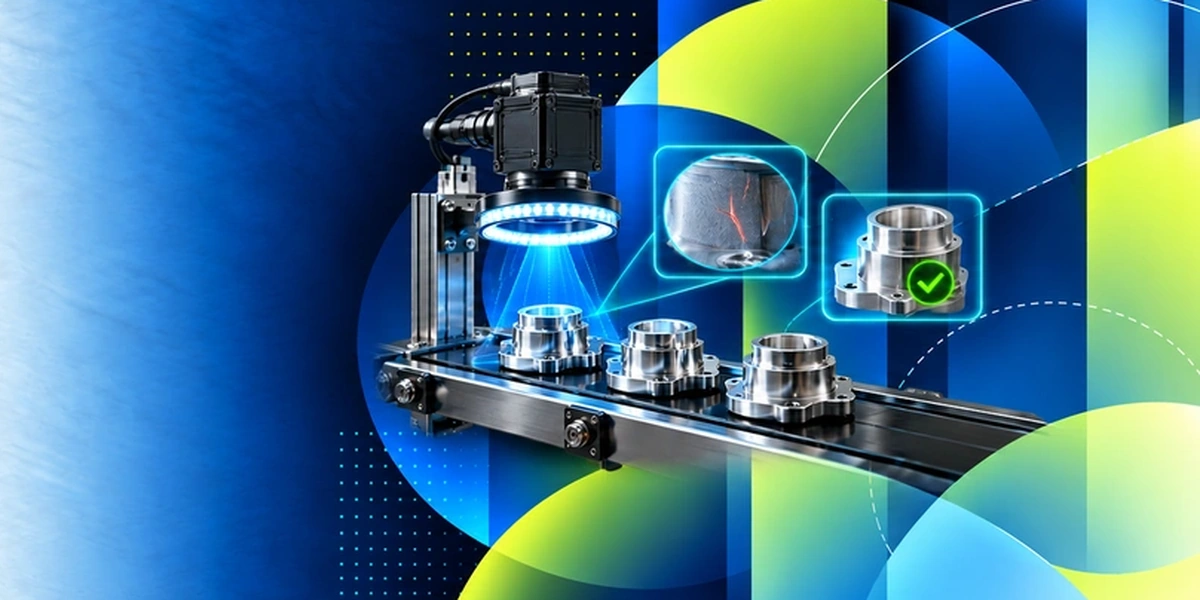
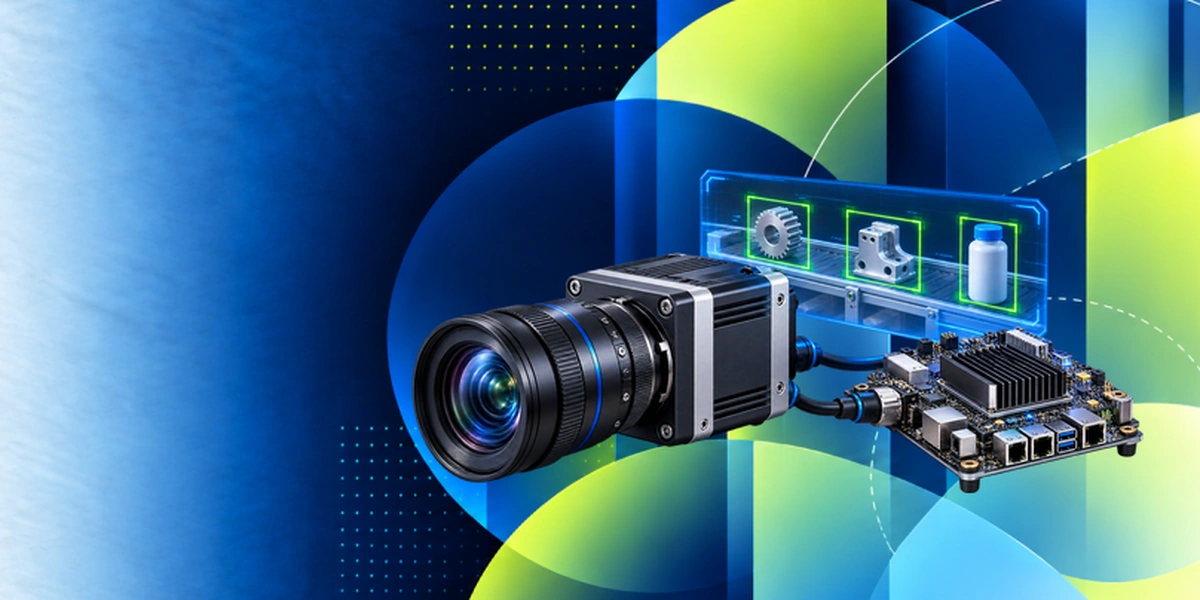
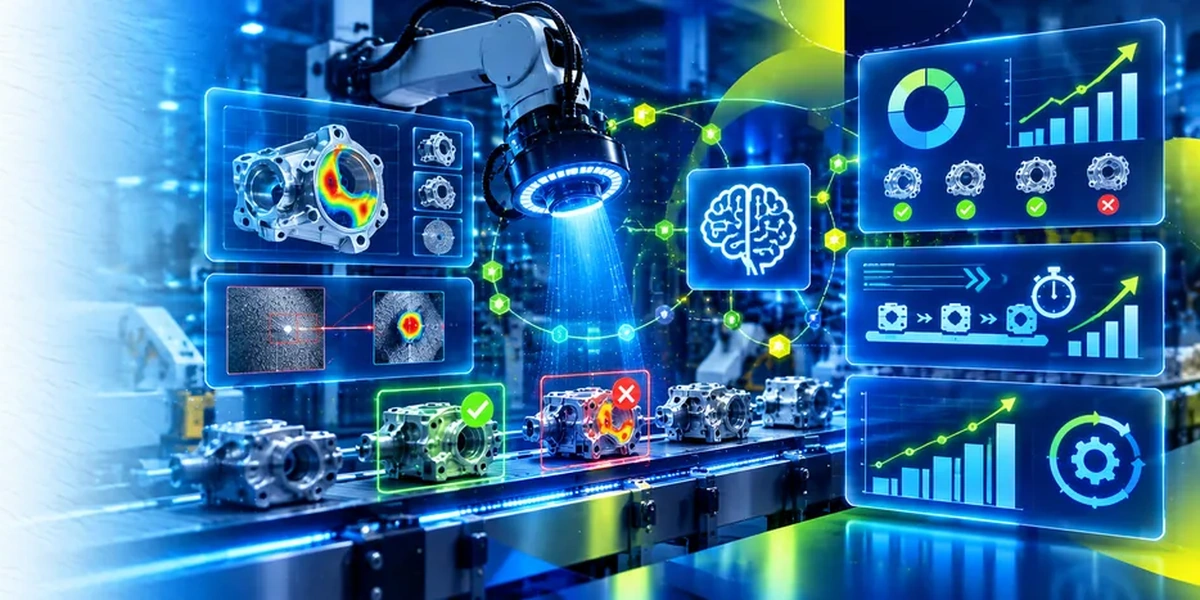
Machine vision for inspection builds on general computer vision skills. Your team learns image processing with OpenCV, applies it to automated quality inspection, deploys models on edge devices beside the line, and uses inspection data to improve quality and yield.

Why Choose Edstellar as Your Machine Vision for Automated Quality Inspection Enterprise Training Provider
If your quality team needs to make automated inspection work on your lines, start here. Tell us about your products, defect types, and preferred delivery mode, and we will shape a program around them.

EXPERT TRAINERS
YEARS DELIVERING
ORGANIZATIONS TRAINED
CERTIFIED
Tailored
Content shaped around your machine vision and defect-detection use cases, so every session maps to your real inspection needs.
Proven Methodology
5+ years delivering corporate training to quality and manufacturing engineers across industries and regions.
Practice-Based Learning
6 hands-on labs across 6 modules. Your team builds working vision inspection pipelines with instructor guidance.
Expert Trainers
5,000+ certified trainers matched to your machine vision stack, with a full trainer profile shared before your program is booked.
Global Scale
One machine vision program across your offices worldwide, in hybrid, onsite, or live virtual.
Measurable Outcomes
Baseline-to-capstone measurement and Skills Matrix reporting keep your machine vision capability lift visible.
Validate Machine Vision Inspection Through Imaging, Algorithms, and Line Integration
Edstellar develops automated inspection capability by connecting image quality with detection and control decisions. Participants tune lighting and optics, build classical vision routines, and compare a defect classifier before integrating pass/fail signals. The final inspection station is reviewed for validation evidence, measurement behavior, false-reject trade-offs, and dependable communication in the learning setup.
- Step 01
Consult
We explore quality and automation responsibilities, defect types, and imaging or programming experience to identify the cohort's needs in inspection setup, detection, and validation.
- Step 02
Plan
We establish cameras, lenses, and lighting before OpenCV preprocessing and gauging, then connect deep-learning comparisons and PLC handshakes in the complete inspection system.
- Step 03
Align
We align machine vision engineering expertise with quality, controls, and production teams, confirming appropriate sample defects, imaging equipment, and controlled integration resources for practical work.
- Step 04
Customize
We adapt image sets and part-inspection cases to familiar defect patterns, varying lighting and sample conditions so participants can distinguish imaging problems from algorithm limitations.
- Step 05
Execute
Participants tune imaging, implement gauging and classifiers, and test trigger and pass/fail signals, receiving feedback on detection evidence, false rejects, and integration behavior.
- Step 06
Evaluate
We assess the inspection station for validated performance on the sample defects, justified imaging and algorithm choices, correct signal handling, and clearly documented inspection limitations.
Also from Edstellar
Talent assessments
Psychometric, behavioral, leadership and 360-degree assessment.
→Training needs analysis
Needs analysis, gap identification, and a training roadmap.
→L&D consulting
Learning strategy, content, technology and ROI measurement.
→OD consulting
Org design, succession planning and cultural change.
→Managed training services
Training outsourcing, vendor management, logistics and administration.
→Coaching solutions
Executive and manager coaching that keeps skills in use.
Start an RFP shaped to your needs.
Answer three quick questions about team size, scope, and how often you need the program run, then send the request from the last step. Everything you choose travels with it, so you only fill this in once.
How many team members need training?
Machine Vision for Automated Quality Inspection Training Packages & Pricing
Where L&D holds an annual budget, license packages price the whole year at once instead of raising a purchase order per workshop. Hours and licenses are pooled across teams, programs and locations, so unused capacity is not stranded in one department.
Starter
120
trainee licenses64 hours of group training
Tailored for SMBs
Growth
320
trainee licenses160 hours of group training
Ideal for growing SMBs
Enterprise
800
trainee licenses400 hours of group training
Designed for large corporations
Custom
Unlimited
trainee licensesDuration set by the rollout
Multi-region and multi-year
Training Packages & Pricing
Choose the training format that works for your team. Pricing is customized based on your requirements, cohort size, and delivery needs.
Request Machine Vision for Automated Quality Inspection Training for Your Team
Share your team size, inspection goals, defect types, preferred delivery mode, and timelines. We will respond with a tailored training plan covering scope, schedule, and pricing, and confirm trainer availability.