
AI in Medical Imaging Corporate Training
Instructor-led corporate training that helps healthcare teams Learn, Develop, and Build production-ready imaging AI.
Edstellar is a corporate training company that delivers instructor-led AI in Medical Imaging programs for hospital and diagnostic teams. Your team works through guided labs on real imaging workflows, from DICOM ingestion to validated clinical deployment, so new skills transfer straight to daily practice.
Instructor-led group trainingVirtual / on-site / off-site10 languagesDelivered inEnglish, Spanish, Mandarin, German, Arabic, Portuguese, Hindi, French, Japanese, Italian100+ countriesWe have delivered inUnited States, United Kingdom, India, Canada, Germany, France, Netherlands, UAE, Saudi Arabia, Singapore, Australia, Japan, Brazil, South Africa and 90+ more countries
How we build a confident imaging AI team
The Edstellar MEDICAL IMAGING AI Capability Model
Diagnose
We assess your imaging data maturity, annotation workflows, and current AI readiness across radiology and clinical teams.
Standardize
We align DICOM handling, preprocessing, and validation practices so every cohort trains on consistent, audit-ready pipelines.
Practice in labs
Teams run guided labs on de-identified imaging datasets, building preprocessing, training, and evaluation skills step by step.
Measure
We track model quality, safety checks, and learner progress with clear metrics tied to clinical workflow outcomes.
Scale
Graduates extend the approach to new modalities and sites, with reusable pipelines your enterprise teams can run independently.





Need more than one program?Get a group quote
Trusted as a Leading Corporate Training Provider by
















Program Overview: What is AI in Medical Imaging?
AI in Medical Imaging is Edstellar's instructor-led technical program for clinical and technical teams working with medical imaging. Participants learn imaging foundations and data pipelines, deep learning for image analysis, preprocessing and quality pipelines, and segmentation and detection models. The program also covers clinical integration and safety assurance for live imaging workflows.
Training is hands-on from the first module. Participants preprocess DICOM series, train segmentation and detection models, and assemble an ingestion-to-inference pipeline in guided labs across five practice sessions. Instructors coach them through transfer learning, augmentation for small datasets, and human-in-the-loop review queues, reviewing every exercise with direct feedback. The program closes with a five-hour capstone where each team validates a medical imaging AI pilot and writes its safety case.
Imaging teams sit on growing scan archives they cannot analyze fast enough, while manual reads miss subtle findings. This program teaches them to build quality pipelines, train detection models clinicians trust, and integrate AI safely into PACS workflows. Every technique is practiced in labs, so it transfers to clinical environments.
They deliver a complete imaging AI pilot, validated model, safety case, handoff documentation. Clinical safety isn't a slide in the deck; it's in the deliverable.
Designed around your training needs, the program helps teams Upskill in deep learning for imaging while strengthening Collaboration between clinicians, imaging technologists, and healthcare IT. Cohorts practice annotation QA, model validation, and deployment guardrails, then connect their learning to Performance goals such as faster turnaround, consistent reads, and audit-ready documentation. Content adapts to your modalities and tools, so each team practices the workflows it owns.
What's Included in this Workshop for Your Enterprise Teams
- 1
Imaging data foundations
DICOM, modalities, and anonymized data handling.
- 2
Deep learning essentials
CNNs, transfer learning, and evaluation metrics.
- 3
Preprocessing pipelines
Quality gates, augmentation, and artifact control.
- 4
Segmentation and detection
Hands-on model building for clinical targets.
- 5
Clinical deployment
Integration, review queues, and safety assurance.
- 6
Capstone pilot
End-to-end imaging AI pilot with validation report.
- Instructor-led sessions delivered live
- Dedicated cohort schedule and calendar
- De-identified imaging datasets for labs
- Lab guides, checklists, and templates
- Pre-program readiness assessment
- Completion summary for your records
Build your team's skills. Anywhere in the world.
Real-world use cases
from day one
Instructor-led training
for your teams
Delivered globally
in 100+ countries


Enterprise Training Solutions Customized for Your Company
One partner for instructor-led corporate training, delivered the way your teams work.
Request a Training Quote- Customized Training Delivery
- Scale Your Training: Small to Large Teams
- In-person Onsite, Live Virtual or Hybrid Training Modes
- Plan from 2000+ Industry-ready Training Programs
- Hands-On Labs on Live Infrastructure, Led by Industry Experts
AI in Medical Imaging Course Topics and Program Outline
A tailored, hands-on learning path that takes your team from imaging data foundations to a validated clinical AI pilot. Each session blends guided instruction with practical labs, real-world use cases, and the tools covered in your imaging stack, so learning maps directly to daily clinical and engineering work.
Built by Edstellar with clinical imaging AI engineers
Built by practitioners who design and validate imaging AI for hospitals and diagnostic labs, shaped around your stack and use cases.
We review your imaging data, annotation workflows, and team readiness to set clear, measurable learning goals.
Instructor-led sessions cover DICOM, deep learning basics, and evaluation methods with live demonstrations.
Guided labs on test imaging datasets build preprocessing, training, and troubleshooting skills in a safe sandbox.
Teams integrate models into clinical-style workflows and complete a capstone pilot with a full validation report.
Move from imaging data basics to a validated clinical pilot in 24 instructor-led hours.
Delivered as
Sessions run in a live, instructor-led format with a dedicated sandbox for imaging labs. Your cohort follows one learning journey from assessment to capstone, with support between sessions.

Load a sample DICOM study in a test viewer and inspect its metadata tags.
learna)Imaging modalities: CT, MRI, X-ray, and ultrasound
b)DICOM structure, metadata, and series organization
c)PACS and image archive basics for engineers
d)De-identification and anonymization workflows
e)Building a local imaging data workspace
Train a small triage classifier on sample chest images in a sandbox environment.
learna)How CNNs read medical images, layer by layer
b)Transfer learning from pretrained vision models
c)Train, validation, and test splits for imaging data
d)Metrics clinicians care about: sensitivity and specificity
e)Common failure modes in medical image models
Build a preprocessing pipeline that flags low-quality scans before training.
practicea)Normalization, windowing, and intensity scaling
b)Augmentation strategies for small imaging datasets
c)Artifact detection and scan quality scoring
d)Pipeline design with reusable preprocessing blocks
e)Logging preprocessing decisions for audit trails
Fine-tune a segmentation model on annotated organ masks and review its errors.
practicea)U-Net and modern segmentation architectures
b)Lesion and nodule detection approaches
c)Working with annotated masks and bounding boxes
d)Dice, IoU, and agreement metrics in practice
e)Error analysis with clinician feedback loops
Wire a model behind an approval queue with full audit logging.
applya)PACS and RIS integration patterns for AI services
b)Designing human-in-the-loop review queues
c)Monitoring model drift in live imaging workflows
d)Safety cases and documentation for clinical use
e)Regulatory basics: validation expectations and records
Build and demo a complete imaging AI pilot with a written validation report.
applya)Scoping a pilot: target, data, and success criteria
b)Assembling the full ingestion to inference pipeline
c)Validation study design and results reporting
d)Writing the safety case and limitation statement
e)Handoff: documentation your team can maintain
Customize this program tailored to your team?
Tell us your training needs: what your team already works with, the level they’re at, and the topics you want them to focus on. We’ll adjust the modules, duration and hands-on labs, and send you a customized outline for your group.
Key Skills and Outcomes Your Team Will Gain
Graduates leave with the competency to take imaging AI from raw scans to validated clinical use, with safety and documentation built in.
DICOM and imaging data handling
Read, organize, and anonymize DICOM studies while keeping full traceability for audits.
Deep learning model training
Train and evaluate CNN classifiers for triage using transfer learning best practices.
Preprocessing pipeline design
Build reusable pipelines with quality gates, augmentation, and logged decisions.
Segmentation and detection
Fine-tune segmentation models and judge them with Dice, IoU, and clinician review.
Clinical workflow integration
Connect models to PACS-style workflows with review queues and monitoring.
Safety assurance and documentation
Write safety cases, limitation statements, and validation reports for clinical use.
Pilot delivery and handoff
Scope, build, and hand over an imaging AI pilot your team can maintain.
Teams that Benefit from this AI in Medical Imaging Group Training
This program serves cross-functional groups across radiology, clinical operations, and healthcare IT. Content adapts to each cohort's roles, modalities, and experience, so every team practices the imaging AI workflows it actually owns.
Sharpen diagnostic support with validated imaging AI
For radiologists and imaging technologists who want reliable AI assistance in daily reads.
Workflow friction
- Inconsistent reads across shifts and sites
- Limited time to evaluate new tools
- Annotation backlogs slowing model work
How the program helps
- Validate models against annotated references
- Run structured error reviews with peers
- Document findings for clinical records
Practice use cases
- Triage queues
- Lesion detection
- Report drafting
- Peer review
Improve throughput with safer imaging workflows
For operations leads responsible for turnaround, quality, and patient flow.
Workflow friction
- Backlogs in high-volume imaging centers
- Change fatigue from new tooling
- Proving ROI to hospital leadership
How the program helps
- Map AI touchpoints to existing workflows
- Set quality gates for live imaging AI
- Track turnaround and safety metrics
Practice use cases
- Workflow mapping
- Quality gates
- Turnaround tracking
Integrate imaging AI into PACS and data stacks
For PACS administrators and data engineers who own imaging infrastructure.
Workflow friction
- Legacy PACS integration constraints
- Data access and privacy controls
- Keeping models updated and stable
How the program helps
- Design DICOM ingestion pipelines
- Stand up inference services securely
- Monitor model drift in production
Practice use cases
- DICOM pipelines
- Inference APIs
- Drift monitoring
Assure safety, quality, and audit readiness
For quality, safety, and compliance officers overseeing clinical AI use.
Workflow friction
- Evolving regulatory expectations
- Documenting model limitations clearly
- Coordinating across clinical teams
How the program helps
- Build safety cases for imaging AI
- Define validation and audit records
- Align deployments with regulations
Practice use cases
- Safety cases
- Audit trails
- Validation records
Cohorts can mix departments or train as a single function; labs and use cases adjust to the group's imaging stack.
Prerequisites: This program suits clinical and technical teams working with medical imaging. Familiarity with basic image handling or Python helps but is not required, and no prior AI experience is assumed. Each cohort's labs adapt to the group's tools, modalities, and experience level.
Imaging Analyst to Clinical AI Practitioner
Learners progress from imaging data basics through model building to validated clinical deployment, with each level tied to the program's modules.
One program that grows with imaging careers, from first DICOM handling to confident pilot delivery.
Mixed cohort, or several teams at once?
We can tailor the training to different teams, roles, and experience levels within the same program.
Certificate of Training Completion.
On successful completion, employees receive an Edstellar course completion certificate, recognizing their commitment to ongoing learning and professional development. It validates the skills they have built and motivates them to keep growing and contribute to organizational success.
Earned, not attended. Awarded on completion of all hands-on labs and the capstone project.

Training Delivery Modes: Virtual, Onsite and Hybrid
Choose the format that fits your teams and sites. Every mode is instructor-led, with the same labs, materials, and capstone.
Hybrid Training
Blend live virtual sessions with onsite lab days. Teams learn together online, then practice side by side with the instructor for the capstone.
- Instructor-led sessions across virtual and onsite
- Shared sandbox for imaging labs in both modes
- Flexible scheduling across time zones
- One cohort, one learning journey end to end

Onsite Training
The instructor delivers the full program at your facility, using your imaging context for labs and discussions.
- Instructor-led training at your location
- Labs tuned to your modalities and stack
- Direct collaboration within your team
- Minimal travel for large cohorts

Live Virtual Training
Live virtual training over Zoom or Teams with the same hands-on labs, delivered through a cloud sandbox.
- Live virtual instructor-led sessions
- Cloud sandbox for every imaging lab
- Virtual breakout rooms for team exercises
- Session recordings and lab guides included

Need a training format that works for your team?
Full days, half days across weeks, or split by module. Tell us the delivery window and we schedule the cohort around it.
Frequently Asked Questions
Share your team size and goals through the form above and we will send a tailored proposal with schedule options.
Yes. A short discovery call helps us map your imaging workflows and shape the labs to your stack.
Yes. Live virtual sessions run on Zoom or Teams with a cloud sandbox for every hands-on lab.
Yes. Instructors deliver the full program at your site, with labs tuned to your modalities.
The program runs 24 instructor-led hours, typically over four to six days depending on your schedule.
Question not answered here?
Put it in the request. A training specialist answers it directly, within one business day.
Where this Training Fits in Your Team's learning path.
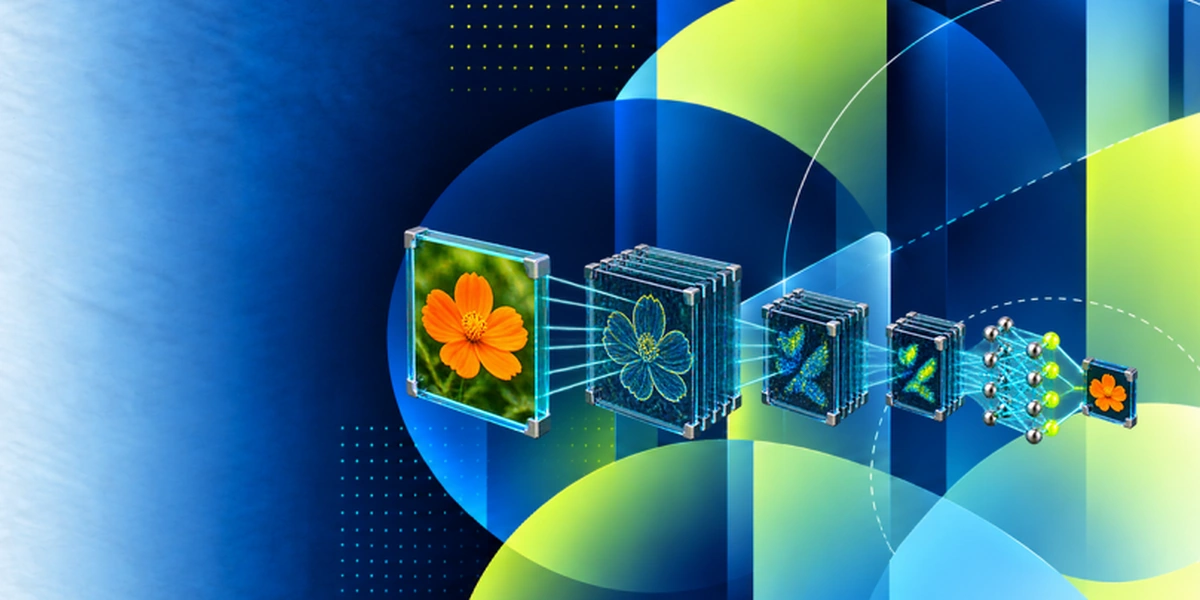
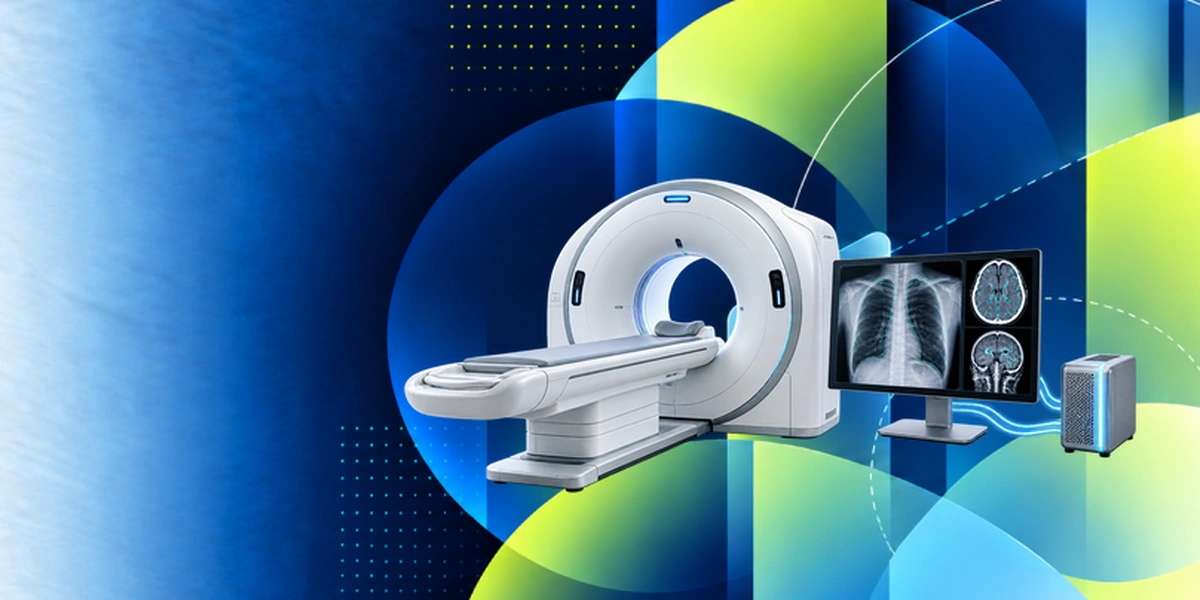
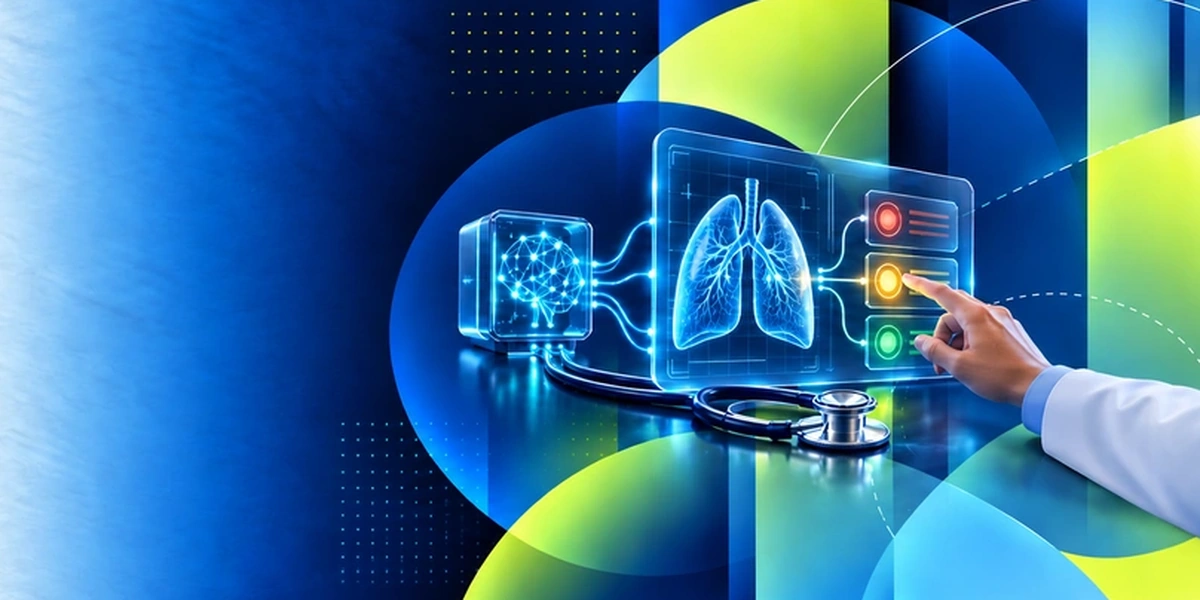
AI in medical imaging builds on CNNs, the core architecture behind most image models. Your team then connects imaging AI to clinical decision support, and finally to the device regulations that apply when imaging software is used in patient care.
Why Choose Edstellar as Your AI in Medical Imaging Training Provider
Edstellar is the training provider healthcare teams choose when imaging AI must work in real clinical settings. Compare providers on depth of labs, clinical relevance, and post-program support, and you will see why teams stay with us as their learning partner.

EXPERT TRAINERS
YEARS DELIVERING
ORGANIZATIONS TRAINED
CERTIFIED
Tailored
Every cohort's labs, datasets, and use cases adapt to your modalities, PACS setup, and team roles.
Proven Methodology
Our assess, learn, practice, and apply methodology moves teams from concepts to validated pilots reliably.
Practice-Based Learning
Guided hands-on labs on safe test datasets build real skill, not just familiarity with imaging AI ideas.
Expert Trainers
Trainer profiles show practitioners with production imaging AI experience, matched to your delivery window.
Global Scale
We deliver consistent quality across sites and time zones, from single cohorts to enterprise-wide rollouts.
Measurable Outcomes
Clear metrics track model quality, safety checks, and learner progress against your clinical workflow goals.
Develop Medical Imaging AI Pilots With Validation and Human Approval
Edstellar helps imaging teams connect data handling and model development with the safeguards required around clinical workflows. Participants inspect DICOM studies, build preprocessing checks, train classifiers, and review segmentation errors. A pilot demonstration brings the pipeline together with an approval queue, audit logs, and a written validation report.
- Step 01
Consult
We review imaging and technical experience to identify needs in DICOM metadata, preprocessing, model training, segmentation evaluation, and safety-oriented workflow integration.
- Step 02
Plan
We connect imaging-data foundations with deep learning, quality pipelines, segmentation, and approval controls before building and documenting an end-to-end pilot.
- Step 03
Align
We align instruction across clinical and technical roles, using sample studies and sandboxes while keeping clinical interpretation and care decisions with qualified professionals.
- Step 04
Customize
We tailor image-quality problems, annotated-mask examples, and approval scenarios to familiar imaging workflows, retaining explicit checks on model errors and auditability.
- Step 05
Execute
Participants inspect metadata, test preprocessing, and review classifier and segmentation results, receiving feedback on error patterns, validation choices, and the behavior of approval controls.
- Step 06
Evaluate
We assess the pilot and validation report for reliable data handling, clearly characterized model errors, functioning human approval, and traceable documentation of limitations.
Also from Edstellar
Talent assessments
Psychometric, behavioral, leadership and 360-degree assessment.
→Training needs analysis
Needs analysis, gap identification, and a training roadmap.
→L&D consulting
Learning strategy, content, technology and ROI measurement.
→OD consulting
Org design, succession planning and cultural change.
→Managed training services
Training outsourcing, vendor management, logistics and administration.
→Coaching solutions
Executive and manager coaching that keeps skills in use.
Start an RFP shaped to your needs.
Answer three quick questions about team size, scope, and how often you need the program run, then send the request from the last step. Everything you choose travels with it, so you only fill this in once.
How many team members need training?
AI in Medical Imaging Training Packages & Pricing
Where L&D holds an annual budget, license packages price the whole year at once instead of raising a purchase order per workshop. Hours and licenses are pooled across teams, programs and locations, so unused capacity is not stranded in one department.
Starter
120
trainee licenses64 hours of group training
Tailored for SMBs
Growth
320
trainee licenses160 hours of group training
Ideal for growing SMBs
Enterprise
800
trainee licenses400 hours of group training
Designed for large corporations
Custom
Unlimited
trainee licensesDuration set by the rollout
Multi-region and multi-year
Training Packages & Pricing
Choose the training format that works for your team. Pricing is customized based on your requirements, cohort size, and delivery needs.
Request AI in Medical Imaging Training for Your Team
Tell us about your team and imaging goals. We will respond with availability and next steps for your cohort.