

Autonomous Operations and Closed-Loop Control Corporate Training
Give your operations and control engineers the skills to design, deploy, and govern self-optimising industrial systems.
Build the autonomous operations skills your team needs to run self-optimising industrial systems. Edstellar's Autonomous Operations & Closed-Loop Control corporate training program helps your engineers design feedback-driven control architectures, validate them with simulation, and deploy them safely into production. As the corporate training company enterprises trust for emerging-technology programs, we tailor every hands-on lab to your assets, control platforms, and operational goals.
Instructor-led group trainingVirtual / on-site / off-site10 languagesDelivered inEnglish, Spanish, Mandarin, German, Arabic, Portuguese, Hindi, French, Japanese, Italian100+ countriesWe have delivered inUnited States, United Kingdom, India, Canada, Germany, France, Netherlands, UAE, Saudi Arabia, Singapore, Australia, Japan, Brazil, South Africa and 90+ more countries
How we build autonomous operations engineering teams
THE EDSTELLAR AUTONOMOUS OPERATIONS CAPABILITY MODEL
Baseline control maturity
Assess how your engineers rate feedback control, automation architectures, and the processes they already run.
Set one autonomy standard
One shared language for closed-loop design, autonomy levels, and safety constraints across the engineering team.
Practice real control problems
Hands-on labs apply PID tuning, MPC, and ML-based control to real-world industrial scenarios.
Prove the capability lift
Before-and-after lab assessments measure each engineer's closed-loop design and deployment skill.
Scale across the operation
One autonomous-operations playbook rolls out across lines, sites, and cohorts as your automation footprint grows.





Need more than one program?Get a group quote
Trusted as a Leading Corporate Training Provider by
















Program Overview: What is Autonomous Operations and Closed-Loop Control Corporate Training?
Autonomous Operations & Closed-Loop Control is Edstellar's instructor-led technical program for operations engineers, control engineers, and OT teams moving plants toward autonomous operation. Participants master sensing and data pipelines, closed-loop control fundamentals, model predictive control, and AI for autonomous control. The program covers digital twins, simulation-based validation, and deployment safety.
Training is hands-on from the first module. Participants build control loops in guided labs: wiring OT data pipelines, tuning closed-loop controllers, then applying model predictive control and machine learning to realistic processes. Instructors coach validation through digital twins and simulation with direct feedback on every exercise. The program closes with a capstone where each team authors an autonomous operations playbook for a real process.
Autonomy projects fail the same way: models that never meet the plant floor, control loops nobody trusts enough to close, safety cases built after deployment. This program teaches closed-loop discipline, validated models, simulation-proven control, and safety engineered in from the start. Everything is practiced on realistic operations scenarios, so autonomy earns trust before it takes control.
The capstone produces an autonomous operations playbook: the sensing architecture, control strategy, validation evidence, and safety case for taking a real process toward closed-loop operation, written, defended, and ready to execute. Your engineers return with a plan their operations team can actually approve, not a slide deck about autonomy.
Across eight modules, your engineering team moves from autonomy foundations to a validated closed-loop deployment capstone. Sessions use real-world use cases, control simulation tools, and digital twin scenarios, so every technique transfers directly to your operations.
Delivered as a hybrid instructor-led program, it fits around your calendar, with scheduling set along with you, and content tailored to your control platforms and assets.
What's Included in this Workshop for Your Enterprise Teams
- 1
Autonomy foundations
Control architectures and autonomy levels in plain engineering terms.
- 2
Sensing and data pipelines
Turn raw plant data into reliable inputs for closed loops.
- 3
Closed-loop controller design
Design, tune, and validate feedback controllers in labs.
- 4
MPC and ML-based control
Optimise constrained systems with predictive and learning controllers.
- 5
Deployment capstone
Validate a full closed-loop design in simulation and present it.
- Training delivered at any of your offices globally
- 10+ languages
- Schedule around your calendar
- Group size set along with you
- Run as one cohort or split into batches
- Instructor-led (virtual/onsite/hybrid)
- Recurring and annual options
- Trainer sourcing, matching and logistics
Build your team's skills. Anywhere in the world.
Real-world use cases
from day one
Instructor-led training
for your teams
Delivered globally
in 100+ countries


Enterprise Training Solutions Customized for Your Company
One partner for instructor-led corporate training, delivered the way your teams work.
Request a Training Quote- Customized Training Delivery
- Scale Your Training: Small to Large Teams
- In-person Onsite, Live Virtual or Hybrid Training Modes
- Plan from 2000+ Industry-ready Training Programs
- Hands-On Labs on Live Infrastructure, Led by Industry Experts
Autonomous Operations and Closed-Loop Control Course Topics and Program Outline
Eight modules follow a clear learning path from autonomy foundations to a validated deployment capstone. Each session builds on the last, with hands-on labs that turn control theory into production-ready autonomous operations skills.
Built by Edstellar with control engineering practitioners
Built by practitioners who design and run autonomous control systems in production, shaped around your stack and use cases.
Baseline each participant's autonomous operations readiness before module 01 begins
Build strong closed-loop control foundations in instructor-led sessions for your team
Reinforce skills through guided hands-on labs on control loops and plant models
Apply autonomous operations skills to live scenarios and a capstone integration project
A short pre-training assessment sets each participant's entry level, so the program starts where your team actually is. The rest is weighted toward hands-on practice: control loop labs and plant simulations and realistic scenarios drawn from your team's work, not slides.
Delivered as
Entry level set by the assessment. Depth and schedule customized to your team.

Establish your baseline autonomy maturity and map the manual interventions your operation still depends on.
learna)Autonomy levels: from assisted to fully autonomous
b)Open loop vs closed loop: feedback fundamentals
c)Autonomous operations reference architectures
d)Where autonomous systems create industrial value
e)Assessing your operation's autonomy readiness
Build a sensor-to-controller data pipeline and harden it against the noise and dropouts of real plant data.
practicea)Sensor selection, sampling, and signal conditioning
b)Industrial protocols: OPC UA, MQTT, and fieldbus basics
c)Building reliable OT-to-cloud data pipelines
d)Data quality, latency, and time sync for control loops
e)Lab: stream live sensor data into a control-ready pipeline
Tune PID controllers on simulated plants and diagnose instability, overshoot, and oscillation in practice.
learna)Feedback control theory essentials for practitioners
b)PID design, tuning methods, and anti-windup
c)Stability, robustness, and disturbance rejection
d)Cascade, feedforward, and ratio control structures
e)Lab: tune and stress-test PID loops on a process simulator
Design a model predictive controller that tracks targets while respecting real process constraints.
practicea)MPC concepts: models, horizons, and receding control
b)Handling constraints and multivariable interactions
c)Linear vs nonlinear MPC: choosing the right fit
d)Lab: implement MPC on a constrained multi-input process
Train a learning-based controller and compare it against classical baselines on the same plant model.
practicea)Where ML adds value in control loops
b)Reinforcement learning for setpoint and policy optimisation
c)Anomaly detection and predictive health for control assets
d)Guardrails: safe exploration and human oversight
e)Lab: train and validate an ML controller in simulation
Validate a closed-loop design against a digital twin before it ever touches production equipment.
practicea)Digital twin models for control validation
b)Software-in-the-loop and hardware-in-the-loop testing
c)What-if scenarios and failure-mode injection
d)Lab: prove controller safety in a twin before deployment
Write the safety case and monitoring plan that earns a closed loop the right to run unattended.
applya)Functional safety standards for autonomous systems
b)Fallback, interlock, and safe-state design
c)Monitoring, alerting, and drift detection in production
d)Change management for self-optimising systems
Present a complete autonomous-operations design for one of your own processes and defend it to the cohort.
applya)Selecting your capstone process and success metrics
b)End-to-end design: sensing, control, validation, governance
c)Capstone presentation and structured feedback
Customize this program tailored to your team?
Tell us your training needs: what your team already works with, the level they’re at, and the topics you want them to focus on. We’ll adjust the modules, duration and hands-on labs, and send you a customized outline for your group.
Key Skills and Outcomes Your Team Will Gain
Your engineering team will leave able to design, tune, and deploy closed-loop autonomous systems with confidence. Each outcome is practiced in hands-on labs and proven in the capstone.
Design closed-loop architectures
Map sensing, control, and actuation into feedback architectures that run processes with minimal human intervention.
Tune and validate controllers
Tune PID and advanced controllers for stability, speed, and disturbance rejection on real process models.
Apply MPC to constrained processes
Design model predictive controllers that optimise multivariable processes while respecting safety and quality limits.
Build learning-based controllers
Train ML and reinforcement-learning controllers with guardrails, and benchmark them against classical designs.
Validate with digital twins
Prove controller safety and performance in simulation and hardware-in-the-loop tests before production rollout.
Engineer safe autonomous deployment
Write safety cases, interlocks, and monitoring plans that keep self-optimising systems reliable in production.
Govern self-optimising operations
Run change management, drift detection, and human oversight for autonomous systems at scale.
Teams that Benefit from this Autonomous Operations and Closed-Loop Control Group Training
This program is built for engineering teams that design, run, and govern industrial automation, from control engineers to operations leaders. Prior exposure to control basics helps, but content adapts to each cohort, so every team member practices the work their role actually owns.
Design the feedback loops your plant runs on.
Control engineers deepen their command of PID, MPC, and learning-based control, then validate designs in simulation before deployment.
Workflow friction
- Manual interventions slow down the line
- Controllers drift and no one owns the retune
- New automation projects stall at pilot stage
How the program helps
- Design stable, self-correcting control loops
- Tune controllers with proven methods, not guesswork
- Ship autonomous features with simulation proof
Practice use cases
- Controller tuning
- MPC design
- HIL validation
Run self-optimising operations with confidence.
Operations leaders learn what autonomous systems can safely own, how to govern them, and how to sequence pilots that prove value fast.
Workflow friction
- Operator shortages strain shift coverage
- Pilot projects never reach full autonomy
- Hard to prove autonomous ROI on the floor
How the program helps
- Pick autonomy pilots with the fastest payback
- Govern self-optimising systems with clear oversight
- Cut downtime with closed-loop response
Practice use cases
- Autonomy roadmaps
- Pilot design
- Safety governance
Feed control loops with data they can trust.
Data and OT engineers build the sensing pipelines, time sync, and data quality that closed loops depend on, and monitor them in production.
Workflow friction
- Plant data is noisy and poorly timed
- OT and IT systems do not share a language
- Drift in models goes unnoticed until failure
How the program helps
- Build control-ready data pipelines
- Unify OT and IT around one data model
- Catch drift before it hits production
Practice use cases
- Sensor integration
- Data pipelines
- Drift monitoring
Each cohort works through role-relevant labs, then leaves with an autonomous-operations playbook for day-to-day decisions.
Prerequisites: This program is built for engineers and technical leaders working with industrial automation: basic familiarity with control concepts or plant operations helps, but deep expertise is not required. What helps most is ownership of processes, equipment, or data pipelines where autonomy could remove manual intervention. Content adapts to each cohort's platforms and experience, so control engineers, OT/IT engineers, and operations leaders learn side by side.
Junior Controls Engineer to Autonomy Owner
The program takes engineers from feedback-control basics to production autonomy: foundation concepts, intermediate controller design and optimisation, then advanced validation, deployment, and governance with a capstone playbook.
Engineers grow from understanding feedback control to owning autonomous operations as the modules progress.
Mixed cohort, or several teams at once?
We can tailor the training to different teams, roles, and experience levels within the same program.
Certificate of Training Completion.
On successful completion, employees receive an Edstellar course completion certificate, recognizing their commitment to ongoing learning and professional development. It validates the skills they have built and motivates them to keep growing and contribute to organizational success.
Earned, not attended. Awarded on completion of all hands-on labs and the capstone project.

Training Delivery Modes: Virtual, Onsite and Hybrid
Every mode is tailored around your control platforms and assets before delivery. The curriculum, hands-on labs, and capstone stay the same in each format, so what your engineers can do after training never depends on how you run it.
Hybrid Training
Live instruction across office and remote sessions, with hands-on labs and control simulations coached throughout. Your engineers design controllers, validate them in digital twins, and build a deployment playbook with instructor guidance. Best for multi-site teams.
- Live instruction across office and remote sessions
- Hands-on labs with instructor coaching
- Real-world use cases and control simulations
- Best for engineers across sites and time zones

Onsite Training
Your instructor delivers at your facility, with labs set up for your control platforms. Participants tune controllers, run validation simulations, and draft playbooks with direct coaching. Best for co-located teams.
- Instructor delivers at your facility
- Labs set up for your control platforms and assets
- Direct coaching during controller design work
- Best for co-located teams wanting maximum interaction

Live Virtual Training
Live virtual sessions on Zoom or Microsoft Teams, with remote hands-on labs and screen-shared guidance through every task. Your engineers collaborate on controller design and twin validation in real time. Best for distributed engineering teams.
- Live sessions on Zoom or Microsoft Teams
- Remote access to the lab environment
- Screen-shared guidance through every task
- Best for distributed engineering teams

Need a training format that works for your team?
Full days, half days across weeks, or split by module. Tell us the delivery window and we schedule the cohort around it.
Frequently Asked Questions
Share your team size, preferred dates, and delivery mode in the lead form. We reply with a tailored proposal covering scope, schedule, and pricing for your group.
Both. Choose live virtual sessions on Zoom or Teams, onsite delivery at your office, or a hybrid mix across sites and time zones.
The standard program runs 20 hours of instructor-led sessions, typically over three days. We can reshape the schedule around your calendar.
We recommend 12 to 20 engineers per cohort for strong lab coaching. Larger engineering teams can run as parallel batches.
Yes. We shape labs, simulations, and the capstone around your control platforms, assets, and operating constraints before delivery.
Question not answered here?
Put it in the request. A training specialist answers it directly, within one business day.
Where this Training Fits in Your Team's learning path.
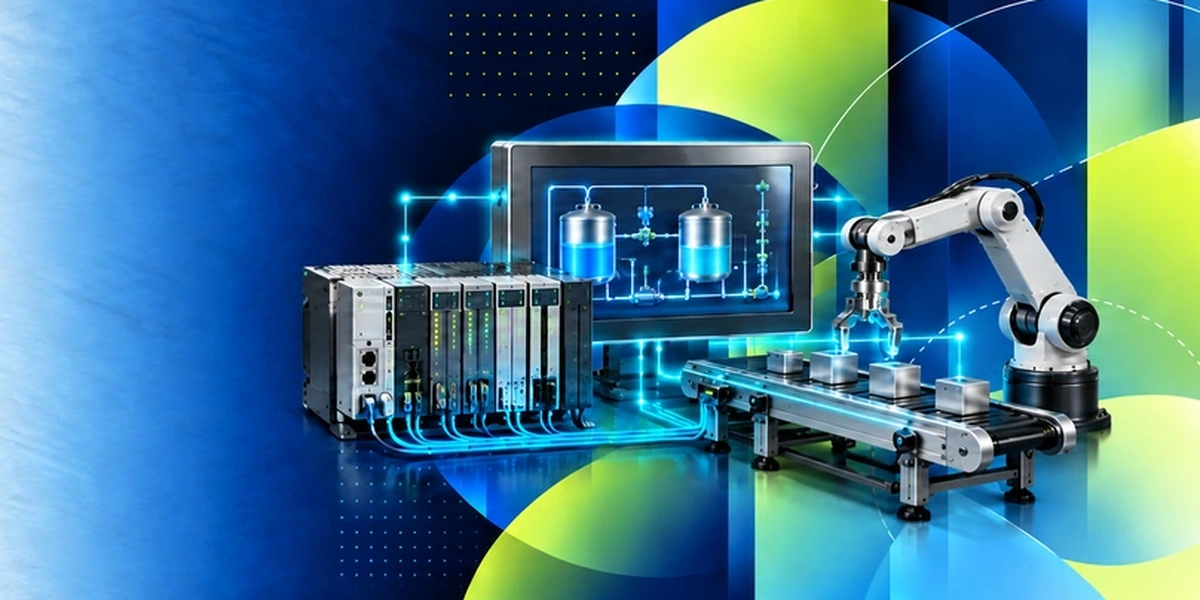
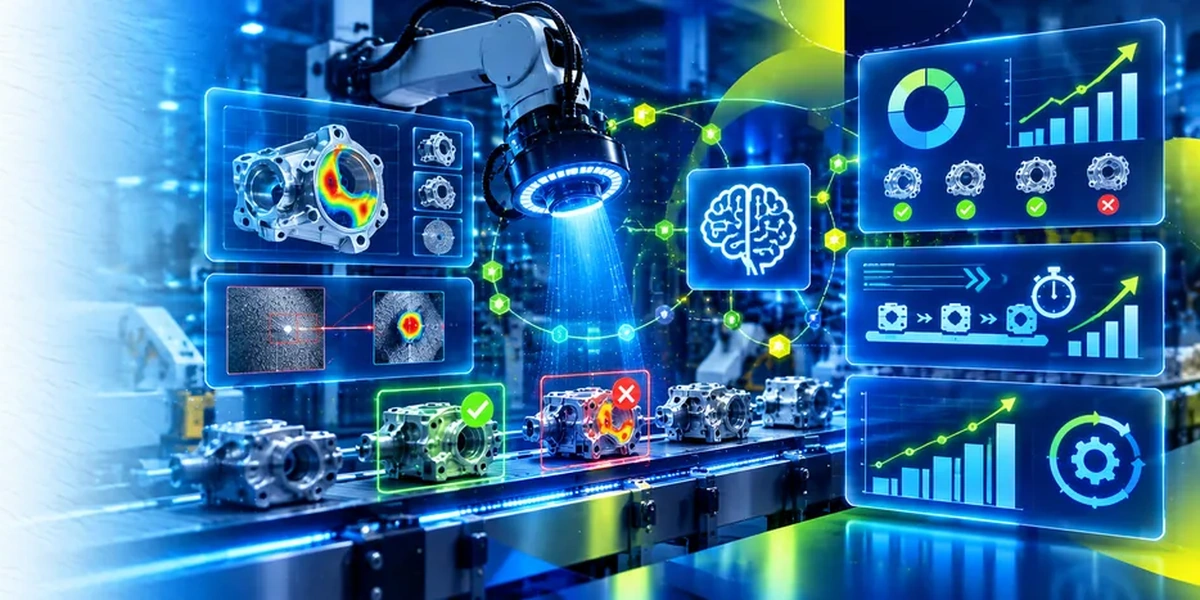
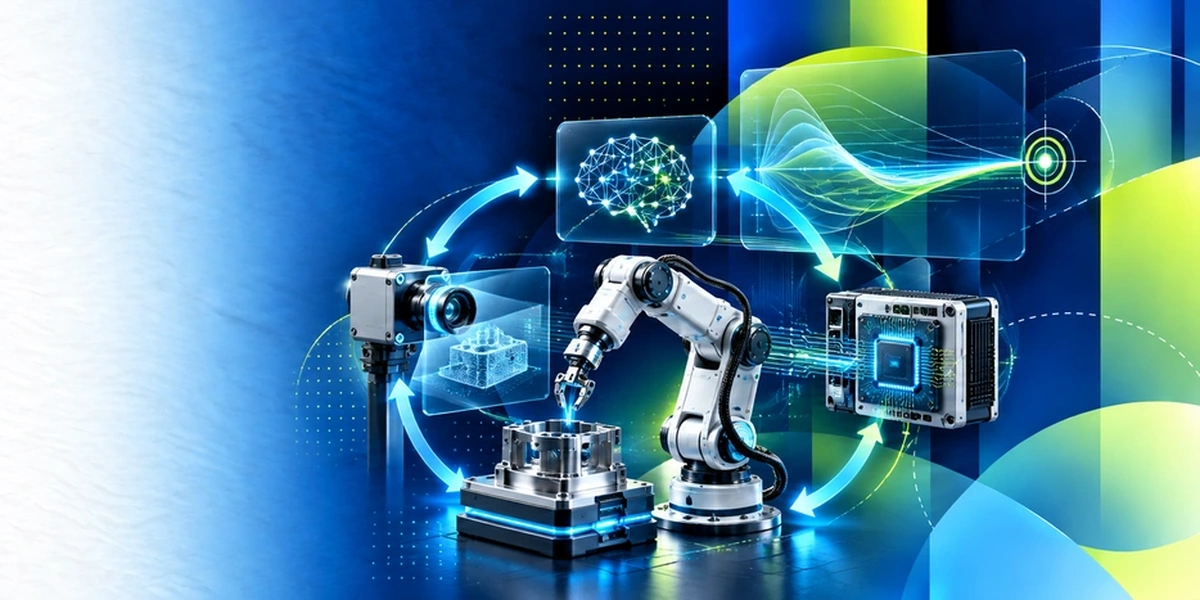
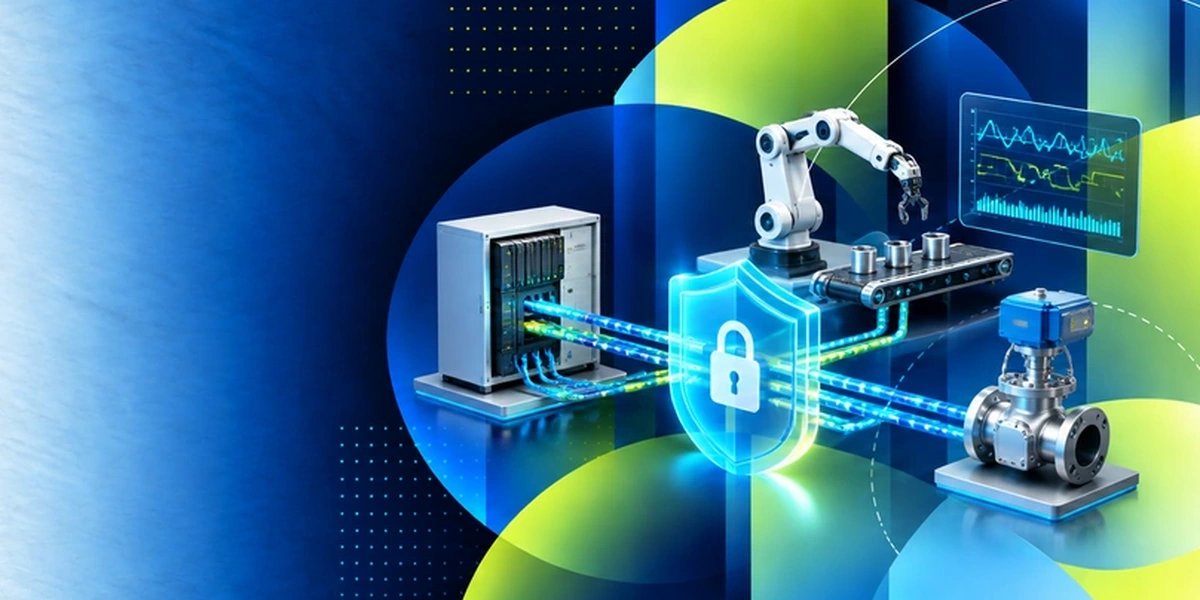
Autonomous operations combine control engineering with industrial AI, so both come first. Your team learns PLC and SCADA control, applies AI to quality and throughput, then lets those models adjust processes automatically, and secures the OT systems that now act on their own.
Why Choose Edstellar as Your Autonomous Operations and Closed-Loop Control Enterprise Training Provider
If your engineering team needs to design and deploy self-optimising industrial systems, start here. Tell us about your assets, control platforms, and preferred delivery mode, and we will shape a program around them.

EXPERT TRAINERS
YEARS DELIVERING
ORGANIZATIONS TRAINED
CERTIFIED
Tailored
Content tailored to your autonomous operations needs and closed-loop control use cases, mapped to your real autonomous operations work.
Proven Methodology
5+ years delivering corporate training to control and automation engineers across industries and regions.
Practice-Based Learning
8 hands-on labs across 8 modules. Your team builds closed-loop control systems with instructor guidance.
Expert Trainers
5,000+ certified trainers matched to your autonomous operations, with a full trainer profile shared before your program is booked.
Global Scale
One autonomous operations program across your offices worldwide, in hybrid, onsite, or live virtual.
Measurable Outcomes
Baseline-to-capstone measurement and Skills Matrix reporting keep your autonomous operations capability lift visible.
Design Closed-Loop Operations with Simulation-Based Validation and Safety Oversight
Our autonomous operations training connects sensing, control design, and operational safeguards in a controlled learning environment. Participants tune classical controllers, examine constrained and learning-based approaches, and validate behavior using simulated plants and digital twins. The final playbook explains what the proposed loop can do, how it was tested, and where human oversight remains necessary.
- Step 01
Consult
We examine the process and manual interventions your team wants to understand, identifying learning needs in sensing, control stability, optimization, validation, and safety governance.
- Step 02
Plan
We progress from autonomy assessment and data pipelines to PID, model predictive and learning-based control, then twin-based validation and the operational playbook.
- Step 03
Align
We align control, plant, and technical-leadership perspectives, adjusting mathematical depth and using simulation to keep controller experiments separate from live equipment decisions.
- Step 04
Customize
We adapt plant models, sensor dropouts, operating constraints, and disturbance scenarios to representative processes so controller comparisons reflect meaningful engineering questions.
- Step 05
Execute
Participants tune controllers, investigate overshoot, compare approaches against a common model, and test disturbance cases with feedback on stability, constraints, and validation evidence.
- Step 06
Evaluate
We assess the playbook for justified control choices, reproducible simulation results, explicit operating limits, monitoring and intervention plans, and a documented safety rationale.
Also from Edstellar
Talent assessments
Psychometric, behavioral, leadership and 360-degree assessment.
→Training needs analysis
Needs analysis, gap identification, and a training roadmap.
→L&D consulting
Learning strategy, content, technology and ROI measurement.
→OD consulting
Org design, succession planning and cultural change.
→Managed training services
Training outsourcing, vendor management, logistics and administration.
→Coaching solutions
Executive and manager coaching that keeps skills in use.
Start an RFP shaped to your needs.
Answer three quick questions about team size, scope, and how often you need the program run, then send the request from the last step. Everything you choose travels with it, so you only fill this in once.
How many team members need training?
Autonomous Operations & Closed-Loop Control Training Packages & Pricing
Where L&D holds an annual budget, license packages price the whole year at once instead of raising a purchase order per workshop. Hours and licenses are pooled across teams, programs and locations, so unused capacity is not stranded in one department.
Starter
120
trainee licenses64 hours of group training
Tailored for SMBs
Growth
320
trainee licenses160 hours of group training
Ideal for growing SMBs
Enterprise
800
trainee licenses400 hours of group training
Designed for large corporations
Custom
Unlimited
trainee licensesDuration set by the rollout
Multi-region and multi-year
Training Packages & Pricing
Choose the training format that works for your team. Pricing is customized based on your requirements, cohort size, and delivery needs.
Request Autonomous Operations and Closed-Loop Control Training for Your Team
Share your team size, control platforms, preferred delivery mode, and timelines. We will respond with a tailored training plan covering scope, schedule, and pricing, and confirm trainer availability.