

PLC, SCADA and Industrial Automation Corporate Training
Give your engineering teams hands-on command of PLCs, SCADA, and industrial automation.
Build the automation programming skills your controls engineers need. Edstellar's PLC, SCADA & Industrial Automation corporate training program helps your team master PLC programming, SCADA system design, and industrial networking through instructor-led sessions with hands-on labs. As the corporate training company enterprises trust for emerging-technology programs, we tailor every workshop to your industry, equipment, and goals.
Instructor-led group trainingVirtual / on-site / off-site10 languagesDelivered inEnglish, Spanish, Mandarin, German, Arabic, Portuguese, Hindi, French, Japanese, Italian100+ countriesWe have delivered inUnited States, United Kingdom, India, Canada, Germany, France, Netherlands, UAE, Saudi Arabia, Singapore, Australia, Japan, Brazil, South Africa and 90+ more countries
How we build automation-ready engineering teams
THE EDSTELLAR INDUSTRIAL AUTOMATION CAPABILITY MODEL
Baseline automation skills
Stellar AI and the Skills Matrix map your team's PLC, SCADA, and troubleshooting gaps before training starts.
Set one automation standard
One shared way to program, document, and commission control systems across your plants and teams.
Practice on real hardware
Hands-on labs on PLCs, HMIs, and SCADA stations, wired and programmed to mirror your plant.
Prove the capability lift
Post-training labs and Skills Matrix re-benchmarks show measurable growth in automation programming skills.
Scale across sites
One program, consistent content, and 5,000+ verified trainers wherever your facilities operate.





Need more than one program?Get a group quote
Trusted as a Leading Corporate Training Provider by
















Program Overview: What is PLC, SCADA and Industrial Automation Corporate Training?
PLC, SCADA & Industrial Automation is Edstellar's instructor-led technical program for controls engineers, automation technicians, and plant teams running production lines. Participants work through PLC hardware and I/O wiring, ladder logic and IEC 61131-3 programming, HMI design, SCADA architectures, and industrial networks. Every concept ties back to the plant floor: the automation skills that keep processes running reliably.
Training is hands-on from the first session. Learners wire I/O, write ladder logic, and build HMI screens in guided labs that mirror real control panels, then test every build against simulated plant conditions, including the fault scenarios that cause most unplanned downtime. Instructors coach the team through SCADA configuration, alarming, and network protocols, reviewing each exercise with direct feedback on reliability. The program closes with a capstone where participants integrate a full PLC-SCADA control cell end to end.
Untrained teams patch automation problems with guesswork: brittle logic, blind spots in the SCADA, and alarms nobody trusts. This program teaches your engineers to diagnose control faults systematically and design logic they can defend. The result is less downtime and automation your plant can rely on.
The capstone earns its name: each team commissions an integrated PLC-SCADA control cell, wiring the I/O, programming the ladder logic, and building the SCADA screens that supervise it. When the cell runs its cycle cleanly, your engineers have proof they can spec, build, and troubleshoot a real automation loop back at the plant.
Across seven modules, your engineers move from automation foundations to a commissioned control cell capstone. Labs use leading PLC and SCADA platforms, with the exact hardware and versions confirmed with your team before delivery, so every skill transfers directly to your plant.
Delivered as a hybrid instructor-led program, it fits around your calendar, with scheduling set along with you, and content tailored to your industry and equipment.
What's Included in this Workshop for Your Enterprise Teams
- 1
PLC hardware and wiring
Racks, I/O modules, and field wiring verified point by point.
- 2
Ladder logic and structured text
Programs written, downloaded, and debugged in hands-on labs.
- 3
HMI and alarm design
Screens and alarm lists operators can actually trust.
- 4
SCADA configuration labs
Tags, historians, and redundancy on live lab data.
- 5
Capstone control cell
A fully commissioned PLC-SCADA cell as your proof of skill.
- Training delivered at any of your offices globally
- 10+ languages
- Schedule around your calendar
- Group size set along with you
- Run as one cohort or split into batches
- Instructor-led (virtual/onsite/hybrid)
- Recurring and annual options
- Trainer sourcing, matching and logistics
Build your team's skills. Anywhere in the world.
Real-world use cases
from day one
Instructor-led training
for your teams
Delivered globally
in 100+ countries


Enterprise Training Solutions Customized for Your Company
One partner for instructor-led corporate training, delivered the way your teams work.
Request a Training Quote- Customized Training Delivery
- Scale Your Training: Small to Large Teams
- In-person Onsite, Live Virtual or Hybrid Training Modes
- Plan from 2000+ Industry-ready Training Programs
- Hands-On Labs on Live Infrastructure, Led by Industry Experts
PLC, SCADA and Industrial Automation Course Topics and Program Outline
Seven modules follow a clear learning path from automation foundations to a commissioned control cell capstone. Each session builds on the last, with hands-on labs on real PLCs, HMIs, and SCADA stations that turn programming concepts into plant-ready skill.
Built by Edstellar with controls and automation engineers
Built by controls and automation engineers who deploy PLC and SCADA systems in production, shaped around your stack and use cases.
Baseline each participant's PLC and SCADA readiness before module 01 begins
Build strong PLC programming and SCADA foundations in instructor-led sessions for your team
Reinforce skills through guided hands-on labs on PLC rigs and SCADA setups
Apply PLC and SCADA skills to real-world scenarios and a capstone control-cell project
A short pre-training assessment sets each participant's entry level, so the program starts where your team actually is. The rest is weighted toward hands-on practice: guided PLC and SCADA labs and realistic scenarios drawn from your team's work, not slides.
Delivered as
Entry level set by the assessment. Depth and schedule customized to your team.

Map the automation layers of your own plant and identify which systems this program will cover.
learna)The automation pyramid: field, control, supervisory, enterprise
b)PLC, SCADA, DCS, and HMI: roles and differences
c)Discrete vs process control basics
d)Safety and reliability expectations in industry
e)Where automation pays: downtime, quality, throughput
Wire a PLC rack to pushbuttons, sensors, and actuators, then verify every I/O point with forced values.
learna)PLC architecture: CPU, memory, power supply, backplane
b)Digital and analog I/O modules
c)Wiring diagrams and field device connections
d)Sinking vs sourcing and grounding practice
e)Selecting hardware for a control task
Write, download, and debug a ladder program that sequences a conveyor and sorting station.
practicea)Ladder logic fundamentals: contacts, coils, timers
b)Counters, comparators, and math instructions
c)Structured text and function block basics
d)Program structure and documentation standards
e)Simulation and online monitoring
f)Common programming mistakes and how to avoid them
Build an HMI application with navigation, trends, and a prioritized alarm list for the lab cell.
practicea)HMI design standards and high-performance graphics
b)Screens, navigation, and operator workflow
c)Tags, animations, and trending
d)Alarm rationalization and prioritization
e)HMI to PLC communication setup
Configure a SCADA project with tag database, historian, and redundant servers reading live lab data.
practicea)SCADA architecture: servers, clients, and communication
b)Tag databases and data acquisition
c)Historians and trending for process insight
d)Redundancy and failover design
e)SCADA security basics for control networks
f)Integration with MES and enterprise systems
Commission a Modbus TCP link and an OPC UA server, then capture and diagnose live protocol traffic.
learna)Industrial Ethernet: topologies, switches, cabling
b)Modbus RTU and Modbus TCP in practice
c)OPC UA: information models and secure communication
d)PROFINET and EtherNet/IP overview
e)Troubleshooting networks with protocol diagnostics
Commission an end-to-end control cell: PLC program, HMI, SCADA, and network, then troubleshoot injected faults.
applya)Capstone brief: the automated cell specification
b)System design: PLC program, HMI, SCADA, network
c)Commissioning the full control cell
d)Fault injection and structured troubleshooting
e)Capstone review and handover documentation
Customize this program tailored to your team?
Tell us your training needs: what your team already works with, the level they’re at, and the topics you want them to focus on. We’ll adjust the modules, duration and hands-on labs, and send you a customized outline for your group.
Key Skills and Outcomes Your Team Will Gain
Your engineers will leave able to program PLCs, configure SCADA systems, and commission industrial networks. Each outcome is practiced in hands-on labs and proven in the capstone.
Program PLCs in ladder logic
Write, download, and debug ladder logic programs for discrete control tasks, from timers and counters to sequenced machine cycles.
Wire and verify PLC I/O
Read wiring diagrams, connect field devices, and verify digital and analog I/O points before startup.
Design operator HMI screens
Build high-performance HMI screens with navigation, trends, and alarm lists operators can trust.
Configure SCADA systems
Set up SCADA servers, tag databases, historians, and redundancy for reliable plant supervision.
Commission industrial networks
Bring up Modbus and OPC UA communication between PLCs, SCADA, and enterprise systems.
Troubleshoot control systems
Diagnose faults systematically using program monitoring, protocol diagnostics, and structured troubleshooting.
Commission a control cell
Integrate PLC, HMI, SCADA, and networking into a working control cell and hand it over with documentation.
Teams that Benefit from this PLC, SCADA and Industrial Automation Group Training
This program is built for engineering and maintenance teams that own control systems, from controls engineers to plant managers. Content adapts to each cohort's equipment and industry, so every team practices the automation work their roles actually demand.
Program and commission the controls your plant runs on.
Controls engineers master ladder logic, SCADA configuration, and industrial networking, so every control system they ship is reliable and well documented.
Workflow friction
- Inconsistent programming standards across plants
- SCADA projects stall on configuration details
- Network issues slow commissioning
How the program helps
- Program PLCs with documented standards
- Configure SCADA without rework
- Commission networks faster
Practice use cases
- PLC programming
- SCADA configuration
- Network commissioning
Cut downtime with faster, sharper troubleshooting.
Maintenance technicians learn to read programs, trace faults, and verify I/O, so production lines recover in minutes, not shifts.
Workflow friction
- Fault diagnosis takes too long
- Program changes are risky and undocumented
- Alarm floods hide real problems
How the program helps
- Diagnose faults in minutes
- Make safe, documented program changes
- Read alarms that matter
Practice use cases
- Fault troubleshooting
- I/O verification
- Alarm management
Own automation decisions with technical confidence.
Engineering managers understand what good controls work looks like, so they scope projects, judge vendor work, and plan upgrades with confidence.
Workflow friction
- Hard to judge automation vendor quality
- Upgrade projects run over budget
- No plant-wide controls standard
How the program helps
- Scope automation projects accurately
- Judge vendor proposals on merit
- Set one controls standard
Practice use cases
- Project scoping
- Vendor evaluation
- Upgrade planning
Each cohort works through role-relevant hands-on labs, then leaves with a commissioned control cell as proof of skill.
Prerequisites: This program is built for working engineers and technicians: familiarity with basic electrical concepts and any prior exposure to plant equipment helps, but no prior PLC programming experience is needed. What helps most is a role that touches controls, maintenance, or plant operations. Content adapts to each cohort's equipment and industry, so controls engineers and maintenance technicians learn side by side.
Graduate Engineer to Controls Architect
The program takes engineers from automation fundamentals to commissioning-ready skill: foundation concepts, intermediate PLC and HMI work, then advanced SCADA, networking, and an integrated capstone.
Engineers grow from automation foundations to owning integrated control systems as the modules progress.
Mixed cohort, or several teams at once?
We can tailor the training to different teams, roles, and experience levels within the same program.
Certificate of Training Completion.
On successful completion, employees receive an Edstellar course completion certificate, recognizing their commitment to ongoing learning and professional development. It validates the skills they have built and motivates them to keep growing and contribute to organizational success.
Earned, not attended. Awarded on completion of all hands-on labs and the capstone project.

Training Delivery Modes: Virtual, Onsite and Hybrid
Every mode is shaped around your industry and equipment before delivery. The curriculum, hands-on labs, and capstone stay the same in each format, so what your engineers can do after training never depends on how you run it.
Hybrid Training
Live instruction across office and remote sessions, with hands-on labs coached throughout. Your engineers wire PLCs, program controllers, and configure SCADA with instructor guidance. Best for multi-site teams.
- Live instruction across office and remote sessions
- Hands-on labs with instructor coaching
- Real PLCs, HMIs, and SCADA stations for every team
- Best for engineers across sites and time zones

Onsite Training
Your instructor delivers at your facility, with lab hardware set up for your engineering team. Participants wire, program, and commission with direct coaching. Best for teams wanting maximum hands-on time.
- Instructor delivers at your facility
- Labs set up with your hardware where possible
- Direct coaching during programming work
- Best for teams wanting maximum lab time

Live Virtual Training
Live virtual sessions on Zoom or Microsoft Teams, with remote access to the PLC and SCADA lab environment and screen-shared guidance through every task. Your engineers program and troubleshoot in real time. Best for distributed engineering teams.
- Live sessions on Zoom or Microsoft Teams
- Remote access to the PLC and SCADA lab environment
- Screen-shared guidance through every lab
- Best for distributed engineering teams

Need a training format that works for your team?
Full days, half days across weeks, or split by module. Tell us the delivery window and we schedule the cohort around it.
Frequently Asked Questions
Share your team size, preferred dates, and delivery mode in the lead form. We reply with a tailored proposal covering scope, schedule, and pricing for your group.
Both, plus hybrid. Choose live virtual sessions on Zoom or Teams, onsite delivery at your facility, or a hybrid mix across sites and time zones.
The standard program runs 24 hours of instructor-led sessions, typically over three days. We can reshape the schedule around your calendar.
We recommend 12 to 16 engineers per cohort so every participant gets full lab time. Larger teams can run as parallel batches.
Yes. We shape programming examples, lab hardware, and the capstone around your industry, platforms, and plant equipment before delivery.
Question not answered here?
Put it in the request. A training specialist answers it directly, within one business day.
Where this Training Fits in Your Team's learning path.
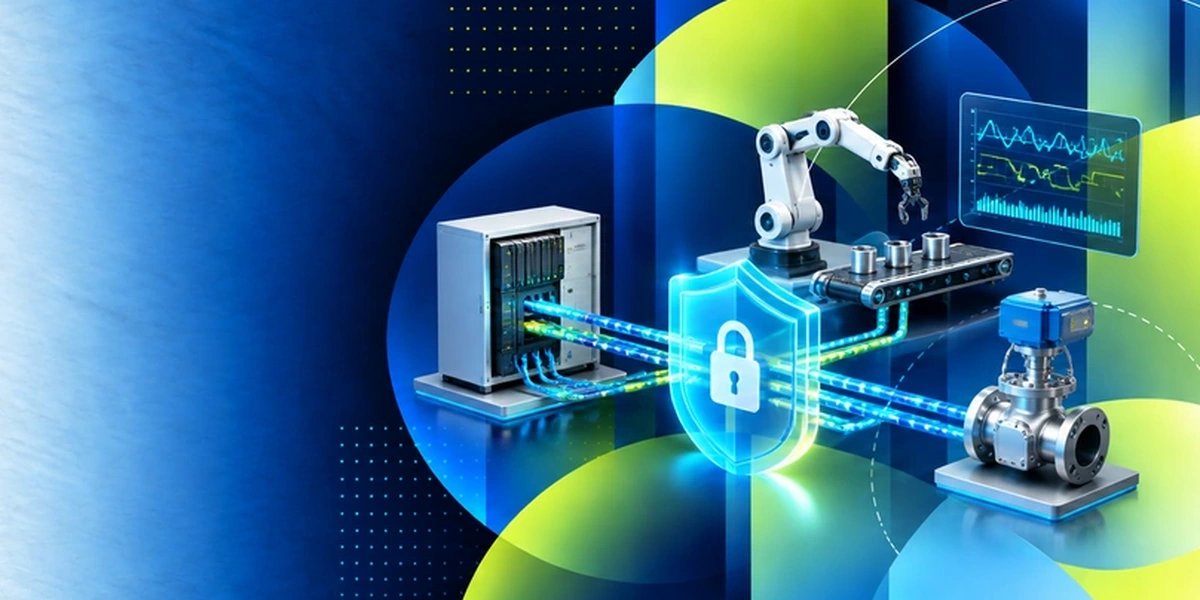
PLC, SCADA and industrial automation are the foundation for every smart factory skill. Your team starts here with control logic and supervision, then connects these systems with OPC UA and MQTT, secures the OT environment, and moves on to closed-loop autonomous operations.



Why Choose Edstellar as Your PLC, SCADA and Industrial Automation Enterprise Training Provider
From a single engineering workshop to an enterprise-wide rollout, Edstellar is your one-stop partner for corporate training. Tell us your goals. Our learning consultants will design a PLC, SCADA & Industrial Automation program that closes skill gaps, engages your engineers and delivers results you can measure.

EXPERT TRAINERS
YEARS DELIVERING
ORGANIZATIONS TRAINED
CERTIFIED
Tailored
Content shaped around your PLC, SCADA, and automation use cases, so every session maps to your real plant needs.
Proven Methodology
5+ years delivering corporate training to controls and automation engineers across industries and regions.
Practice-Based Learning
6 hands-on labs across 7 modules. Your team builds PLC-SCADA control cells with instructor guidance.
Expert Trainers
5,000+ certified trainers matched to your PLC and SCADA stack, with a full trainer profile shared before your program is booked.
Global Scale
One industrial automation program across your offices worldwide, in hybrid, onsite, or live virtual.
Measurable Outcomes
Baseline-to-capstone measurement and Skills Matrix reporting keep your industrial automation capability lift visible.
Integrate PLC Logic, Operator Interfaces, and SCADA Into Testable Control Workflows
Edstellar develops industrial automation skills across the connected layers of a control cell. Participants relate I/O behavior to ladder logic, HMI design, SCADA configuration, and industrial communications. Guided exercises culminate in an integrated training cell, with feedback on sequencing, operator visibility, connectivity, and systematic diagnosis of injected faults.
- Step 01
Consult
We assess electrical foundations, plant responsibilities, and exposure to controls equipment to identify gaps in PLC programming, operator interfaces, or industrial network troubleshooting.
- Step 02
Plan
We map automation layers before progressing through PLC I/O, ladder sequencing, HMI alarms, SCADA historians, and communications, then integrate the control-cell exercise.
- Step 03
Align
We align controls and automation expertise with engineers' and technicians' experience, confirming suitable training equipment or simulation and supervised boundaries for I/O verification.
- Step 04
Customize
We adapt conveyor and sorting scenarios to familiar process sequences, using training-cell tags, alarm priorities, and controlled communication faults rather than live production changes.
- Step 05
Execute
Participants develop ladder sequences, configure operator screens and SCADA tags, and diagnose lab communications, receiving feedback on interconnections, alarm usability, and troubleshooting evidence.
- Step 06
Evaluate
We assess the integrated control cell for correct sequencing, consistent tags and displays, functioning communications, and a documented explanation of fault isolation and recovery.
Also from Edstellar
Talent assessments
Psychometric, behavioral, leadership and 360-degree assessment.
→Training needs analysis
Needs analysis, gap identification, and a training roadmap.
→L&D consulting
Learning strategy, content, technology and ROI measurement.
→OD consulting
Org design, succession planning and cultural change.
→Managed training services
Training outsourcing, vendor management, logistics and administration.
→Coaching solutions
Executive and manager coaching that keeps skills in use.
Start an RFP shaped to your needs.
Answer three quick questions about team size, scope, and how often you need the program run, then send the request from the last step. Everything you choose travels with it, so you only fill this in once.
How many team members need training?
PLC, SCADA & Industrial Automation Training Packages & Pricing
Where L&D holds an annual budget, license packages price the whole year at once instead of raising a purchase order per workshop. Hours and licenses are pooled across teams, programs and locations, so unused capacity is not stranded in one department.
Starter
120
trainee licenses64 hours of group training
Tailored for SMBs
Growth
320
trainee licenses160 hours of group training
Ideal for growing SMBs
Enterprise
800
trainee licenses400 hours of group training
Designed for large corporations
Custom
Unlimited
trainee licensesDuration set by the rollout
Multi-region and multi-year
Training Packages & Pricing
Choose the training format that works for your team. Pricing is customized based on your requirements, cohort size, and delivery needs.
Request PLC, SCADA and Industrial Automation Training for Your Team
Share your team size, automation goals, preferred delivery mode, and timelines. We will respond with a tailored training plan covering scope, schedule, and pricing, and confirm trainer availability.