

Machinery Safety and Risk Assessment (ISO 12100) Corporate Training
Master ISO 12100 machine risk assessment with hands-on hazard identification and safeguarding labs.
Edstellar, a corporate training company, delivers corporate training that helps your team assess machinery risk the ISO 12100 way, from hazard identification and risk estimation to safeguarding selection and validation. Employees practice on real machine scenarios, apply the three-step risk reduction hierarchy, and document assessments that stand up to audits, through guided labs led by practitioners. Each session is tuned to your machines, processes, and workflows.
Instructor-led group trainingVirtual / on-site / off-site10 languagesDelivered inEnglish, Spanish, Mandarin, German, Arabic, Portuguese, Hindi, French, Japanese, Italian100+ countriesWe have delivered inUnited States, United Kingdom, India, Canada, Germany, France, Netherlands, UAE, Saudi Arabia, Singapore, Australia, Japan, Brazil, South Africa and 90+ more countries
How we build a machine-risk-ready team
The Edstellar MACHINERY SAFETY Capability Model
Diagnose machine risk
Assess your team's hazard recognition, ISO 12100 knowledge, and current safeguarding baseline.
Standardize the method
One shared playbook for hazard logs, risk scoring, and safeguarding selection across sites.
Practice in guided labs
Labs cover hazard identification, risk matrices, guard design, and safety function validation.
Measure the lift
Lab reviews benchmark each employee's risk assessment and mitigation planning skill.
Scale across plants
One standard rolls out across lines, cells, and sites for consistent machine safety.





Need more than one program?Get a group quote
Trusted as a Leading Corporate Training Provider by
















Program Overview: What is Machinery Safety and Risk Assessment (ISO 12100)?
Machinery Safety & Risk Assessment (ISO 12100) is an instructor-led program for EHS, maintenance, and engineering teams responsible for keeping people safe around industrial machines. It teaches the complete ISO 12100 risk assessment process: identifying mechanical, electrical, thermal, and ergonomic hazards, estimating and evaluating risk, and applying the three-step hierarchy of inherently safe design, safeguarding, and information for use.
Sessions combine expert briefings with guided practical exercises on realistic machine scenarios. Teams practice hazard identification walkthroughs, apply risk estimation matrices, select safeguarding devices, and validate safety functions against performance levels, with instructors reviewing every assessment and challenging assumptions. The program culminates in a five-hour capstone where each team conducts a full machine risk assessment and produces a documented mitigation plan.
Factories face serious incidents when risk assessments are paperwork exercises instead of working tools: hazards get missed, safeguarding is bolted on late, and validation never happens. This program trains teams to assess risk the way the standard intends, systematically and before incidents occur, so safeguards are designed in rather than added after an injury.
The capstone leaves each team with a complete, audit-ready machine risk assessment: a hazard register, risk evaluations per ISO 12100, chosen risk reduction measures with their rationale, and a validation plan for safety functions. It is a template they can repeat across the fleet, turning a one-off training exercise into a standing site capability.
Six modules and 24 hours: ISO 12100 foundations, hazard identification, risk estimation, risk reduction measures, safeguarding devices and validation, and a capstone full machine risk assessment. Every module pairs concepts with a guided lab, so each technique is practiced on realistic machine scenarios. It closes with a capstone the team plans, assesses, mitigates, and presents for sign-off.
Delivery is hybrid across virtual and onsite sessions, scheduled around your calendar. Cohorts train as one group or split into batches, with session materials and lab guides included for every participant.
What's Included in this Workshop for Your Enterprise Teams
- 1
ISO 12100 risk assessment workflow
Run the full process: identify, estimate, evaluate, reduce.
- 2
Hazard identification labs
Log mechanical, electrical, and thermal hazards.
- 3
Safeguarding design practice
Select guards, interlocks, and safety functions.
- 4
Validation and documentation
Test safeguards and document residual risk.
- Instructor-led delivery across virtual, onsite, and hybrid
- Guided labs in every module with instructor coaching
- Capstone machine risk assessment, reviewed with your team
- Flexible scheduling around your calendar
- Lab guides and risk assessment templates included
- Group size and batches set along with you
Build your team's skills. Anywhere in the world.
Real-world use cases
from day one
Instructor-led training
for your teams
Delivered globally
in 100+ countries


Enterprise Training Solutions Customized for Your Company
One partner for instructor-led corporate training, delivered the way your teams work.
Request a Training Quote- Customized Training Delivery
- Scale Your Training: Small to Large Teams
- In-person Onsite, Live Virtual or Hybrid Training Modes
- Plan from 2000+ Industry-ready Training Programs
- Hands-On Labs on Live Infrastructure, Led by Industry Experts
Machinery Safety and Risk Assessment (ISO 12100) Course Topics and Program Outline
A 24-hour instructor-led journey from ISO 12100 foundations and hazard identification to risk scoring, safeguarding design, validation, and a capstone full machine risk assessment.
Built by Edstellar with machinery safety specialists
Built by safety engineers who conduct machine risk assessments in production plants, shaped around your machines and use cases.
Skill checks baseline your team's machinery safety knowledge, hazard recognition, and ISO 12100 familiarity before training begins.
Concise briefings teach the ISO 12100 framework, hazard families, and the three-step risk reduction hierarchy with live demos.
Guided labs put risk scoring, safeguard selection, and safety function validation into practice on realistic machine scenarios.
The capstone applies the full risk assessment process to a case machine, producing a sign-off-ready mitigation plan.
From hazard identification to a capstone machine risk assessment, every technique is practiced in guided labs.
Delivered as
Delivered as a hybrid program of live instruction and guided labs, scheduled around your team's calendar in flexible batches.

Walk a sample machine through the ISO 12100 risk assessment steps and record initial findings in a hazard log.
learna)Machinery accident causes and injury types in industry
b)ISO 12100 structure: terminology, methodology, and risk assessment process
c)Regulatory context: machinery safety duties of employers and designers
d)Roles in machine safety: design, integration, operation, and EHS
Identify and log mechanical, electrical, thermal, and ergonomic hazards on a case-study machine using a structured checklist.
learna)Mechanical hazards: crushing, shearing, cutting, entanglement, impact
b)Electrical, thermal, noise, vibration, and radiation hazards
c)Ergonomic and human-behavior factors in machine interaction
d)Hazard identification methods: walkthroughs, task analysis, checklists
e)Documenting hazards across a machine's full lifecycle
Estimate and evaluate risk for identified hazards using a severity and probability scoring matrix.
practicea)Risk elements: severity, probability, and avoidability
b)Scoring matrices and risk estimation techniques
c)Evaluating risk against tolerable risk criteria
d)Prioritizing risks and documenting the evaluation
Select and justify guards, interlocks, and complementary measures for high-risk machine scenarios.
practicea)The three-step hierarchy: inherently safe design, safeguarding, information for use
b)Fixed and movable guards: selection and application
c)Protective devices: interlocks, light curtains, presence sensing
d)Emergency stop and safety function principles
e)Warnings, markings, and instructions for residual risk
Validate a safeguarding setup on a simulated machine cell, checking safety distances and safety function behavior.
practicea)Interlock types and safety-rated monitoring
b)Safety distances: reach, speed, and stopping performance
c)Safety functions: safe stop, E-stop categories, restart prevention
d)Validation and periodic testing of safeguarding measures
Complete a full ISO 12100 risk assessment and mitigation plan for a case machine, then present it for stakeholder sign-off.
applya)Scoping a machine and its lifecycle phases
b)Running the full ISO 12100 risk assessment end to end
c)Designing the risk reduction plan and communicating residual risk
d)Presenting findings and getting stakeholder sign-off
Customize this program tailored to your team?
Tell us your training needs: what your team already works with, the level they’re at, and the topics you want them to focus on. We’ll adjust the modules, duration and hands-on labs, and send you a customized outline for your group.
Key Skills and Outcomes Your Team Will Gain
Your team leaves able to run a complete ISO 12100 machine risk assessment, select and validate safeguards, and document decisions that satisfy audits and regulators.
Apply the ISO 12100 process
Run the full risk assessment workflow from machine scoping through evaluation and documentation.
Identify machine hazards systematically
Spot mechanical, electrical, thermal, and ergonomic hazards across a machine's lifecycle.
Estimate and evaluate risk
Score severity, exposure, and avoidability, then judge risk against tolerable criteria.
Select risk reduction measures
Apply the three-step hierarchy: inherently safe design, safeguarding, information for use.
Design safeguarding solutions
Choose guards, interlocks, and protective devices sized to the risk and the task.
Validate safety functions
Test E-stop systems, interlocks, and safety distances, then confirm they perform as intended.
Document and communicate risk
Produce assessment records and residual risk communications that stand up to review.
Teams that Benefit from this Machinery Safety and Risk Assessment (ISO 12100) Group Training
This group training is built for teams that own, operate, or maintain industrial machinery and must demonstrate ISO 12100 risk assessments. Content adapts to each cohort's roles, machines, and experience, so every batch practices the workflows it owns, from hazard logging to safeguard validation.
Own defensible machine risk assessments at every site.
EHS professionals learn to run, review, and sign off ISO 12100 assessments that satisfy auditors, insurers, and regulators.
Workflow friction
- Inconsistent assessment quality across sites
- Audit findings on undocumented risk
- Residual risk poorly communicated
How the program helps
- One repeatable assessment standard
- Audit-ready documentation habits
- Clear residual risk communication
Practice use cases
- Hazard log reviews
- Risk register drills
- Assessment audits
Keep production running with safer machines.
Operations teams learn how safeguarding decisions affect uptime, so safety measures get adopted rather than bypassed.
Workflow friction
- Guards bypassed to save time
- Downtime blamed on safety devices
- Operators unsure of new procedures
How the program helps
- Safeguards designed for real workflows
- Fewer stoppages from poor design
- Operator buy-in for safety rules
Practice use cases
- Guard usability labs
- Bypass prevention drills
- Procedure walkthroughs
Service machines without becoming the hazard.
Maintenance teams learn to assess risk during lockout, adjustment, and troubleshooting tasks where standard guards must be opened.
Workflow friction
- High risk during servicing tasks
- Lockout steps skipped under pressure
- Temporary guards poorly planned
How the program helps
- Task-based risk assessments
- Safer maintenance procedures
- Validated temporary measures
Practice use cases
- Lockout risk labs
- Servicing task analysis
- Temporary guard drills
Design machines that are safe from the first sketch.
Design engineers learn to apply inherently safe design principles and specify safeguards before a machine is built.
Workflow friction
- Safety added late in design
- Safeguard specs missing details
- Design changes invalidate assessments
How the program helps
- Safety designed in, not bolted on
- Complete safeguard specifications
- Assessments that survive design change
Practice use cases
- Design review labs
- Guard specification drills
- Change impact analysis
Cohorts train as a cross-functional workforce, with each small group aligned on shared assessment and safeguarding standards.
Prerequisites: This program benefits EHS professionals, operations and maintenance teams, and design engineers who work with industrial machinery. Basic familiarity with plant equipment helps but is not required, and no prior risk assessment experience is needed. Content adapts to each cohort's machines, processes, and experience level.
Machine operator to machinery safety lead
A structured path from foundational machine safety awareness to leading ISO 12100 assessments: hazard identification and the assessment process first, then risk scoring and safeguarding design, then validation and sign-off authority through the capstone.
One program that grows with machinery safety careers, from hazard basics to confident assessment leadership.
Mixed cohort, or several teams at once?
We can tailor the training to different teams, roles, and experience levels within the same program.
Certificate of Training Completion.
On successful completion, employees receive an Edstellar course completion certificate, recognizing their commitment to ongoing learning and professional development. It validates the skills they have built and motivates them to keep growing and contribute to organizational success.
Earned, not attended. Awarded on completion of all hands-on labs and the capstone project.

Training Delivery Modes: Virtual, Onsite and Hybrid
Choose the delivery mode that fits your plants and schedules. Every mode includes the same guided labs, instructor coaching, and capstone review.
Hybrid Training
Blend live virtual sessions with onsite lab days at your plant, so theory happens online and machine practice happens where the equipment is.
- Virtual briefings plus onsite guided labs
- Lab days scheduled around production windows
- Same instructor across both modes
- Capstone reviewed with your safety team

Onsite Training
Bring the instructor to your plant for immersive sessions built around your machines, with walkthrough labs on your own equipment.
- Sessions built around your machines
- On-floor hazard identification walkthroughs
- Flexible batches across shifts
- Materials and templates left with your team

Live Virtual Training
Live instructor-led sessions with interactive labs using simulated machine scenarios, ideal for distributed teams across sites.
- Live interaction, not recorded videos
- Simulated machine lab scenarios
- Breakout groups per site or role
- Digital lab guides and templates

Need a training format that works for your team?
Full days, half days across weeks, or split by module. Tell us the delivery window and we schedule the cohort around it.
Frequently Asked Questions
Share your team size and delivery mode to receive a tailored group quote with batch options. Pricing is per cohort, not per seat, so larger groups get better value.
Yes. A short discovery call aligns the program with your machines, sites, and safety goals before we finalize the plan and quote.
Yes. Live virtual sessions run the full program with simulated machine lab scenarios and instructor coaching in breakout groups.
Yes. Onsite delivery builds labs around your own machines, including on-floor hazard walkthroughs scheduled around production.
The program is 24 hours, typically delivered over three to four days or split into weekly sessions to fit shift schedules.
Question not answered here?
Put it in the request. A training specialist answers it directly, within one business day.
Where this Training Fits in Your Team's learning path.
Machinery safety under ISO 12100 comes second, after hazard assessment. Your team applies general risk assessment skills to machine hazards and safeguarding. The path then covers lockout during maintenance and ends with robot safety under ISO 10218 and ISO/TS 15066.


Why Choose Edstellar as Your Machinery Safety and Risk Assessment (ISO 12100) Corporate Training Provider
When comparing providers, Edstellar is the training partner safety teams choose for machinery risk expertise and 5+ years of corporate training experience. Our methodology blends concise instruction with guided labs, and we share each trainer profile before booking. The result is measurable capability your auditors can see.

EXPERT TRAINERS
YEARS DELIVERING
ORGANIZATIONS TRAINED
CERTIFIED
Tailored
Every cohort's labs, checklists, and machine scenarios are tuned to your equipment, processes, and safety standards.
Proven Methodology
Concise instruction followed by guided labs and reviews, a repeatable method that turns ISO 12100 into daily practice.
Practice-Based Learning
Six modules of guided labs and a capstone assessment keep your team assessing real machines, not just listening.
Expert Trainers
Practitioners who conduct machine risk assessments in production plants lead every session and review your team's work.
Global Scale
One consistent program delivered across your plants worldwide, adapted to local machinery and regulations.
Measurable Outcomes
Lab checkpoints and a capstone review prove skill gains you can report to safety leadership.
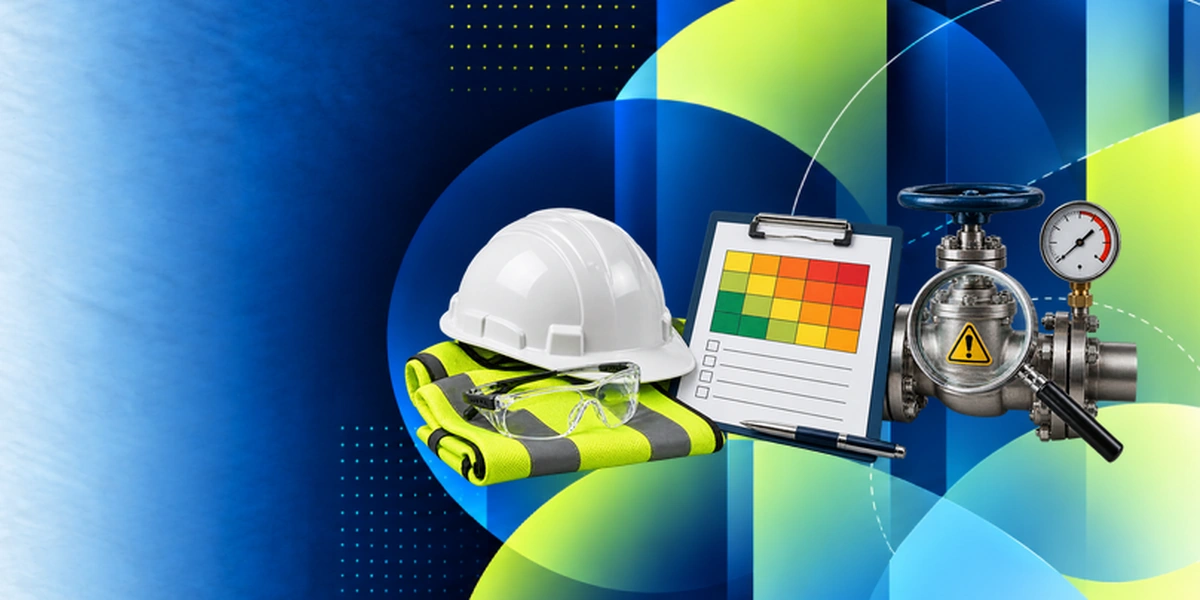
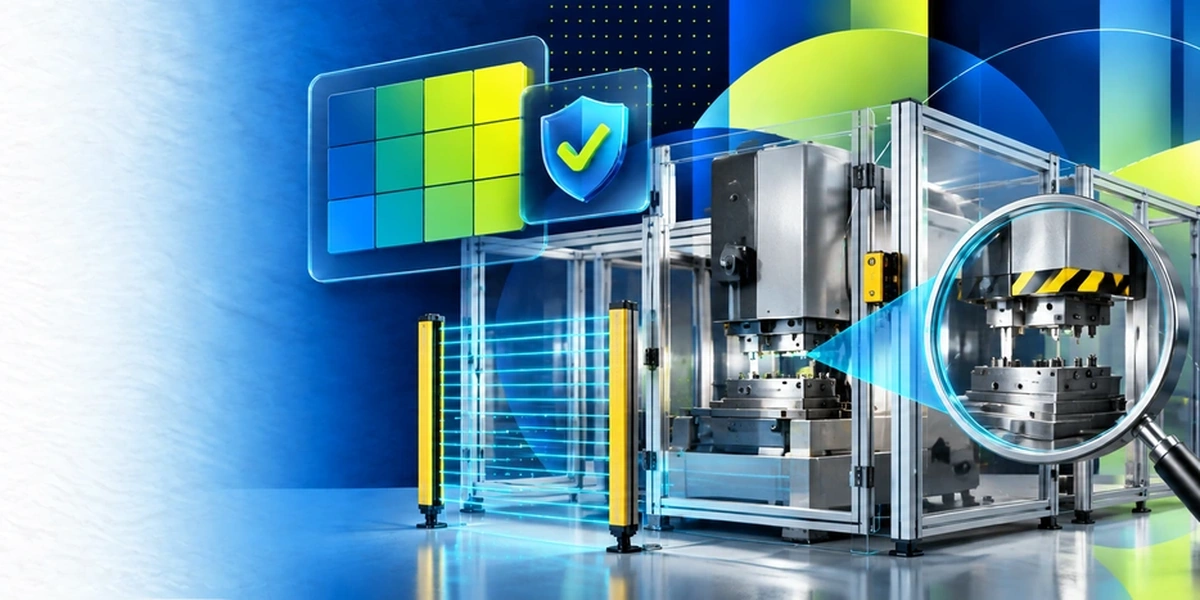
Document Machine Risk Decisions Through Hazard Analysis and Safeguarding Validation
Edstellar develops machinery risk-assessment capability through a realistic case machine. Participants identify hazards, estimate risk, and compare design and safeguarding measures before checking simulated safety functions. The final mitigation plan connects each decision to evidence, reviewed for systematic coverage, justified controls, validation findings, and clear communication of remaining risks and actions.
- Step 01
Consult
We explore equipment familiarity, safety responsibilities, and gaps in hazard identification, risk scoring, or safeguard selection to identify the cohort's ISO 12100 practice needs.
- Step 02
Plan
We establish the assessment framework before structured hazard identification and risk evaluation, then connect inherent design, safeguarding, and validation in the complete machine mitigation plan.
- Step 03
Align
We align machinery safety expertise with EHS, operations, maintenance, and design teams, confirming appropriate case machines and simulated setups for supervised safeguarding checks.
- Step 04
Customize
We adapt mechanical, electrical, thermal, and ergonomic scenarios to familiar equipment, retaining operating conditions that participants need to explain when selecting and evaluating protective measures.
- Step 05
Execute
Participants log hazards, justify risk estimates, and validate simulated safeguards, receiving feedback on design alternatives, interlocks, safety distances, and evidence of safety-function behavior.
- Step 06
Evaluate
We assess the risk and mitigation package for systematic hazard coverage, supported risk estimates, justified reduction measures, documented validation, and explicit remaining actions and responsibilities.
Also from Edstellar
Talent assessments
Psychometric, behavioral, leadership and 360-degree assessment.
→Training needs analysis
Needs analysis, gap identification, and a training roadmap.
→L&D consulting
Learning strategy, content, technology and ROI measurement.
→OD consulting
Org design, succession planning and cultural change.
→Managed training services
Training outsourcing, vendor management, logistics and administration.
→Coaching solutions
Executive and manager coaching that keeps skills in use.
Start an RFP shaped to your needs.
Answer three quick questions about team size, scope, and how often you need the program run, then send the request from the last step. Everything you choose travels with it, so you only fill this in once.
How many team members need training?
Machinery Safety & Risk Assessment (ISO 12100) Training Training Packages & Pricing
Where L&D holds an annual budget, license packages price the whole year at once instead of raising a purchase order per workshop. Hours and licenses are pooled across teams, programs and locations, so unused capacity is not stranded in one department.
Starter
120
trainee licenses64 hours of group training
Tailored for SMBs
Growth
320
trainee licenses160 hours of group training
Ideal for growing SMBs
Enterprise
800
trainee licenses400 hours of group training
Designed for large corporations
Custom
Unlimited
trainee licensesDuration set by the rollout
Multi-region and multi-year
Training Packages & Pricing
Choose the training format that works for your team. Pricing is customized based on your requirements, cohort size, and delivery needs.
Request Machinery Safety and Risk Assessment (ISO 12100) Training for Your Team
Share your team size, plant locations, machine types, and timelines to receive a tailored training plan and quote. Book a discovery call to discuss your goals; we confirm availability and respond with a proposal.