
Additive Manufacturing and Industrial 3D Printing Corporate Training
Turn industrial 3D printing into your team's production advantage with practical, instructor-led training.
Give your enterprise teams the additive manufacturing skills that turn designs into production parts. Edstellar's corporate Additive Manufacturing & Industrial 3D Printing training equips your employees to design for AM, select materials, run industrial printers and finish parts to spec. Delivered live by experienced practitioners through hybrid training, each session is tailored to your machines, materials and goals, with measurable outcomes.
Instructor-led group trainingVirtual / on-site / off-site10 languagesDelivered inEnglish, Spanish, Mandarin, German, Arabic, Portuguese, Hindi, French, Japanese, Italian100+ countriesWe have delivered inUnited States, United Kingdom, India, Canada, Germany, France, Netherlands, UAE, Saudi Arabia, Singapore, Australia, Japan, Brazil, South Africa and 90+ more countries
How we build an industrial 3D printing team
THE EDSTELLAR 3D PRINTING CAPABILITY MODEL
Pinpoint AM readiness
Skills Matrix assessment maps your team's design, materials and process baseline before the first session.
Set one AM standard
Agree the design rules, material choices and workflow steps every team will follow.
Practice hands-on labs
Run guided labs on real printers: slicing, builds, troubleshooting and post-processing, with expert coaching.
Measure the skill lift
Re-benchmark builds and assessments so leaders see capability growth as a number.
Scale across plants
Roll one standard out to every site with 5,000+ certified trainers and delivery in multiple languages.





Need more than one program?Get a group quote
Trusted as a Leading Corporate Training Provider by
















Program Overview: What is Additive Manufacturing and Industrial 3D Printing Corporate Training?
Additive Manufacturing & Industrial 3D Printing is Edstellar's instructor-led technical program for manufacturing and engineering teams adopting industrial 3D printing. Participants master the seven AM process families, materials science for polymers, metals and composites, and design-for-AM rules. The focus stays on production reality: slicing, machine operation, post-processing, and quality inspection for real end-use parts.
Training is hands-on from the first module. Participants work through FDM, SLA, SLS, and DMLS fundamentals, then practice design-for-AM with lattices, topology optimization, and support structures in guided labs. Instructors coach your team through slicer settings, build calibration, and live print monitoring, reviewing every exercise with direct feedback. The program closes with a capstone taking a part from CAD to finished part, including costing and the business case.
Teams often limit 3D printing to rapid prototyping, leaving production gains on the table: failed builds, wasted material, parts that fail inspection. This program teaches your engineers to run additive manufacturing as a disciplined production process, from design rules to post-processing and inspection. Every technique is practiced in labs, so learning transfers directly to your shop floor.
They take a part from design through printed production, working within real AM constraints. The team returns designing for production, not just prototyping.
Shifting production to additive methods changes how teams design, plan and validate parts. Participants learn the seven AM process families, how to pick the right material and process for each part, and how to design geometries that print reliably and post-process cleanly.
The result: engineers who can move a part from CAD to printed, finished component, with the quality checks and cost logic that production decisions need.
What's Included in this Workshop for Your Enterprise Teams
- 1
AM Process Families Explained
FDM, SLS, SLA, DMLS and more, mapped to uses.
- 2
Design for AM (DfAM) Practice
Design parts that print reliably and finish clean.
- 3
Hands-On Printer Labs
Slice, build, troubleshoot and finish real parts.
- 4
Materials & Quality
Pick materials and validate parts to production specs.
- 5
AM Business Case
Cost, speed and fit: when additive manufacturing wins.
- Training delivered at any of your offices globally
- 10+ languages
- Schedule around your releases
- Group size set along with you
- Run as one cohort or split into batches
- Instructor-led (virtual/onsite/hybrid)
- Recurring and annual options
- Trainer sourcing, matching and logistics
Build your team's skills. Anywhere in the world.
Real-world use cases
from day one
Instructor-led training
for your teams
Delivered globally
in 100+ countries


Enterprise Training Solutions Customized for Your Company
One partner for instructor-led corporate training, delivered the way your teams work.
Request a Training Quote- Customized Training Delivery
- Scale Your Training: Small to Large Teams
- In-person Onsite, Live Virtual or Hybrid Training Modes
- Plan from 2000+ Industry-ready Training Programs
- Hands-On Labs on Live Infrastructure, Led by Industry Experts
Additive Manufacturing and Industrial 3D Printing Course Topics and Program Outline
Every module is customized to your industry, materials and production goals. Take the full 24-hour program or standalone modules, delivered onsite or live online for teams of any size.
Built by Edstellar with industrial 3D printing trainers
Built by practitioners with 5+ years of corporate training experience in industrial 3D printing and manufacturing.
Baseline each participant's additive manufacturing readiness before module 01 begins.
Build strong additive manufacturing foundations in instructor-led sessions for your team.
Reinforce skills through guided hands-on labs on real 3D printers with your team.
Apply additive manufacturing skills to real-world scenarios and a capstone print project.
A short pre-training assessment sets each participant's entry level, so the program starts where your team actually is. The rest is weighted toward hands-on practice: live printer time, material trials, and realistic scenarios drawn from your team's work, not slides.
Delivered as
Entry level set by the assessment. Depth and schedule customized to your team.

Tour the AM landscape: compare vat photopolymerization, powder bed fusion, material extrusion and other families. Exercises map each process to real parts so teams see which method fits which job.
learna)The seven AM process families
b)FDM vs SLA vs SLS vs DMLS basics
c)Where AM fits in production
d)AM terminology and standards
Redesign a machined part for AM: apply DfAM rules, add lattices and generative features, and choose build orientation. Review prints against the original for weight, strength and cost.
learna)Design rules for reliable printing
b)Lattice and topology optimization
c)Support structures and orientation
d)Designing for post-processing
Compare material datasheets and printed samples to select the right feedstock for strength, heat and cost targets. Exercises cover storage, handling and recycling of powders and resins.
learna)Polymer powders and resins
b)Metal powders: steel, titanium, aluminum
c)Composite and specialty materials
d)Material selection by application
Set up a real build end to end: import the model, tune layer height and infill, calibrate the machine and launch the print. Practice diagnosing warping, stringing and delamination on live machines.
practicea)Slicer settings that matter
b)Build plate setup and calibration
c)Running and monitoring a print
d)Troubleshooting failed builds
Finish printed parts: remove supports, apply curing and surface treatments, then inspect with calipers and gauges. Record results against tolerance and surface-finish specs.
practicea)Support removal and finishing
b)Heat treatment and curing
c)Dimensional inspection methods
d)Quality standards for AM parts
Produce a real part from CAD file to finished, inspected component: design, slice, print, post-process and cost it. Each team presents build time, cost and quality data as an AM business case.
applya)From CAD to finished part
b)Costing and production planning
c)Presenting the business case
Customize this program tailored to your team?
Tell us your training needs: what your team already works with, the level they’re at, and the topics you want them to focus on. We’ll adjust the modules, duration and hands-on labs, and send you a customized outline for your group.
Key Skills and Outcomes Your Team Will Gain
By the end of this program, every participant will be able to take a part from CAD to a finished, inspected 3D printed component and justify when additive manufacturing fits production.
Operate industrial 3D printers
Set up builds, calibrate machines and run prints reliably across FDM, resin and powder processes.
Design parts for AM
Apply DfAM rules to redesign components with lattices and topology features that print cleanly and cut weight.
Select AM materials with intent
Match polymers, metals and composites to part requirements for strength, heat, finish and cost.
Slice and prepare build files
Configure slicer settings, orientation and supports to balance print speed, strength and surface quality.
Troubleshoot failed builds
Diagnose warping, delamination and adhesion issues, then adjust settings to recover the build.
Finish and inspect AM parts
Post-process printed parts and verify dimensions and surface finish against production specifications.
Cost AM production runs
Estimate material, machine time and labor to build a defensible business case for additive manufacturing.
Which Employees Should Attend this Additive Manufacturing and Industrial 3D Printing Group Training?
This program is built for design engineers, manufacturing teams and R&D staff moving from prototypes to production-grade 3D printing. Content adapts to each cohort's machines, materials and experience, so every group practices on the workflows they actually own.
Parts designed right for additive from the first sketch.
Designers stop retrofitting machined parts and start designing for AM, cutting weight, part count and assembly time on real projects.
Workflow friction
- Redesign requests late in the project cycle
- Heavy assemblies that could be consolidated
- Uncertainty about what prints reliably
How the program helps
- Apply DfAM rules on live projects
- Consolidate assemblies into single prints
- Validate designs before committing to tooling
Practice use cases
- DfAM redesign lab
- Lattice design drills
- Orientation practice
- Support planning
Shorter lead times with in-house printed parts.
Production teams learn to run printers on the shop floor, printing jigs, fixtures and spares that cut downtime and supplier lead times.
Workflow friction
- Long waits for outsourced prototypes
- Expensive low-volume tooling runs
- Spare parts stuck in supply chains
How the program helps
- Print jigs and fixtures in-house
- Cut prototype turnaround to days
- Produce spares on demand locally
Practice use cases
- Build setup lab
- Print monitoring drills
- Troubleshooting clinic
- Fixture builds
Consistent, inspected parts from every build.
Quality teams learn AM-specific inspection: dimensional checks, surface finish and process controls that keep printed parts within spec.
Workflow friction
- No standard checks for printed parts
- Inconsistent surface finish across builds
- Failed builds caught too late
How the program helps
- Define AM inspection checklists
- Control process parameters per build
- Catch failures early with monitoring
Practice use cases
- Inspection practice
- Finish quality checks
- Parameter control lab
- Failure analysis
Each cohort works through role-relevant scenarios, then leaves with reusable patterns for day-to-day work.
Prerequisites: The program welcomes engineers, technicians and managers from design, manufacturing and quality functions. Basic CAD familiarity and shop-floor awareness help participants get more from the labs, but neither is required. Instructors calibrate depth to each cohort, so beginners build solid foundations while experienced staff tackle advanced DfAM and process control.
Design Engineer to Additive Manufacturing Specialist
Design engineers build the DfAM, slicing and materials foundations they need to move parts from CAD to reliable prints. With practice on real builds, they grow into specialists who own printer operations, quality checks and the business case for additive production.
One program that grows with careers, from first prints to production-grade AM ownership.
Mixed cohort, or several teams at once?
We can tailor the training to different teams, roles, and experience levels within the same program.
Certificate of Training Completion.
On successful completion, employees receive an Edstellar course completion certificate, recognizing their commitment to ongoing learning and professional development. It validates the skills they have built and motivates them to keep growing and contribute to organizational success.
Earned, not attended. Awarded on completion of all hands-on labs and the capstone project.

Training Delivery Modes: Hybrid, Onsite and Virtual
Not sure which format fits? Our learning consultants recommend the right mix of virtual sessions and onsite lab time based on your machines, team locations and production goals.
Onsite Instructor-Led Training
We deliver at your offices or plants with printers on site. Instructors lead concept sessions and supervise hands-on labs on your machines, materials and real part files.
- Live sessions at your workplace
- Hands-on labs on real printers
- Content tailored to your parts
- Trainer travel and logistics handled

Live Virtual Training
Join instructor-led sessions from anywhere with live demos and guided exercises. Lab workflows are taught through shared builds, slicer walkthroughs and remote print monitoring.
- Live sessions across time zones
- Slicer and build demos in real time
- Breakout exercises with feedback
- Works on your preferred platform

Hybrid Training (Recommended)
The recommended format for this technical program: instructor-led concepts plus supervised hands-on labs. Virtual sessions cover theory and DfAM; onsite blocks run printer labs, builds and post-processing practice.
- Theory live online, labs onsite
- Supervised practice on real machines
- Best fit for technical skill building
- Schedule split around your calendar

Need a training format that works for your team?
Full days, half days across weeks, or split by module. Tell us the delivery window and we schedule the cohort around it.
Frequently Asked Questions
Share team size, preferred dates, and delivery mode in the lead form. We reply with a tailored proposal covering scope, schedule, and pricing.
Yes. Book a short discovery call and we will map your training needs, materials, machines, and timelines before sharing a plan.
The standard program runs 24 hours, delivered as intensive multi-day sessions or spread across weeks. Modules can also be taken standalone to fit your schedule.
Groups of 12 to 20 keep hands-on lab time productive. Larger teams are split into batches so every participant practices on the printers.
Yes. We tailor DfAM examples, materials, and lab exercises to your printers, software, and production parts before delivery.
Question not answered here?
Put it in the request. A training specialist answers it directly, within one business day.
Where this Training Fits in Your Team's learning path.
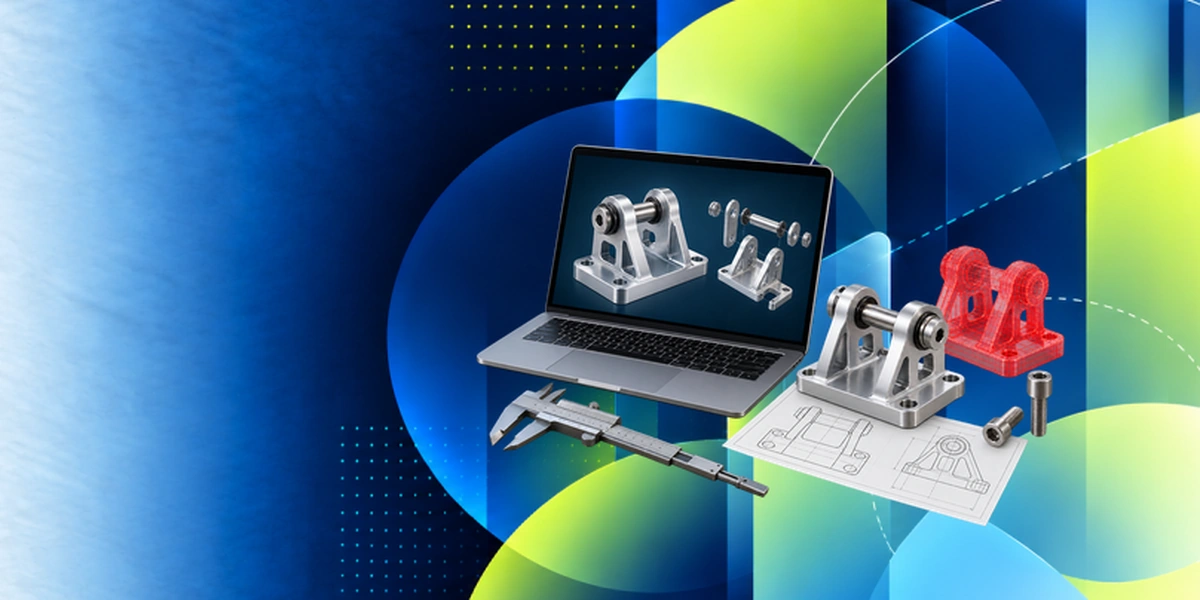
Additive manufacturing starts with a good 3D model and leads into materials and digital thread work. Your engineers model parts in CAD, design and produce them with industrial 3D printing, choose advanced materials for performance, then connect the data across design and production.


Why Choose Edstellar as Your Additive Manufacturing and Industrial 3D Printing Training Provider
From a single team workshop to an enterprise-wide rollout, Edstellar is your one-stop partner for corporate training. Tell us your goals. Our learning consultants will design an additive manufacturing program that closes skill gaps, engages your people and delivers results you can measure.

EXPERT TRAINERS
YEARS DELIVERING
ORGANIZATIONS TRAINED
CERTIFIED
Tailored
Content shaped around your additive manufacturing use cases: design and slicing, so every session maps to your real needs.
Proven Methodology
5+ years delivering corporate training to design and manufacturing engineers across industries and regions.
Practice-Based Learning
4 hands-on labs across 6 modules. Your team builds end-to-end AM production parts with instructor guidance.
Expert Trainers
5,000+ certified trainers matched to your 3D printing stack, with a full trainer profile shared before your program is booked.
Global Scale
One additive manufacturing program across your offices worldwide, in onsite, live virtual, or hybrid.
Measurable Outcomes
Baseline-to-capstone measurement and Skills Matrix reporting keep your additive manufacturing capability lift visible.
Build Additive Manufacturing Skills From Part Design to Inspection
Edstellar connects industrial 3D printing decisions across process selection, design, materials, build preparation, and quality. Participants redesign parts, prepare builds, investigate printing defects, and inspect finished components. An end-to-end production exercise brings these stages together, with instructor review of the part, inspection evidence, and the reasoning behind time and cost estimates.
- Step 01
Consult
We review manufacturing experience, candidate parts, and current printing challenges to focus learning on process fit, design constraints, materials, and quality expectations.
- Step 02
Plan
We connect AM process families with design and material selection before practicing slicing, machine operation, troubleshooting, post-processing, and a complete part-production exercise.
- Step 03
Align
We align instruction with engineering, technician, and quality responsibilities, confirming the equipment context and adapting technical depth to the cohort’s CAD and shop-floor experience.
- Step 04
Customize
We tailor part briefs, material comparisons, and build settings to familiar strength, heat, tolerance, and cost requirements while retaining the full design-to-inspection sequence.
- Step 05
Execute
Participants redesign components, prepare builds, diagnose printing defects, and inspect finished parts, receiving feedback on orientation, material choices, dimensional results, and process reasoning.
- Step 06
Evaluate
We review the completed part, inspection records, and production estimate for consistency with requirements, including participants’ explanations of build time, quality, and material decisions.
Also from Edstellar
Talent assessments
Psychometric, behavioral, leadership and 360-degree assessment.
→Training needs analysis
Needs analysis, gap identification, and a training roadmap.
→L&D consulting
Learning strategy, content, technology and ROI measurement.
→OD consulting
Org design, succession planning and cultural change.
→Managed training services
Training outsourcing, vendor management, logistics and administration.
→Coaching solutions
Executive and manager coaching that keeps skills in use.
Start an RFP shaped to your needs.
Answer three quick questions about team size, scope, and how often you need the program run, then send the request from the last step. Everything you choose travels with it, so you only fill this in once.
How many team members need training?
Additive Manufacturing & Industrial 3D Printing Training Training Packages & Pricing
Where L&D holds an annual budget, license packages price the whole year at once instead of raising a purchase order per workshop. Hours and licenses are pooled across teams, programs and locations, so unused capacity is not stranded in one department.
Starter
120
trainee licenses64 hours of group training
Tailored for SMBs
Growth
320
trainee licenses160 hours of group training
Ideal for growing SMBs
Enterprise
800
trainee licenses400 hours of group training
Designed for large corporations
Custom
Unlimited
trainee licensesDuration set by the rollout
Multi-region and multi-year
Training Packages & Pricing
Choose the training format that works for your team. Pricing is customized based on your requirements, cohort size, and delivery needs.
Request Additive Manufacturing and Industrial 3D Printing Training for Your Team
Tell us about your team, machines and production goals. An Edstellar learning consultant will respond with a customized training plan, trainer profiles and transparent pricing, usually within one business day.