18 Critical Thinking Activities, Games & Exercises for Employees in 2026
An expert-curated guide to critical thinking games for the workplace, reviewed by an L&D leader with 24+ years of experience in training design and building analytical capabilities across organizations.
18 Critical Thinking Activities, Games & Exercises for Employees in 2026
Content
Table of Content
Quick Overview
Critical thinking activities sharpen analytical capability across every team level.
Collaboration improves dramatically when problem-solving is structured, not abstract.
Hands-on games surface decision-making patterns coaching alone cannot reveal.
Run a mix of build, dialogue, and puzzle formats for balanced skill growth.
Always debrief - the lesson lives in the reflection, not the activity.
Critical thinking is a high-leverage skill that can make all the difference in an employee's long-term success. It enables individuals to analyze information rigorously, evaluate the quality of evidence, weigh competing perspectives, and form sound judgments under pressure. As Harvard Business Review research highlights, the workers who consistently outperform are not the ones with the most information but the ones who pause, question assumptions, and reason structurally before committing to a decision.
Furthermore, it is a foundational skill an employee needs to perform excellently in the modern workplace. For a company to grow and develop, employees at every level must be able to diagnose the real problem before acting, anticipate second-order effects, and choose solutions that hold up under scrutiny. Teams that build this discipline together waste less time revisiting flawed decisions, escalate fewer judgment calls upward, and shorten the path from analysis to confident execution. Pairing critical thinking practice with structured problem-solving activities compounds the effect, turning isolated reasoning skills into a shared team operating system that improves with every project.
In his 1910 book How We Think, John Dewey described reflective thinking as an active, persistent, and careful consideration of beliefs or supposed forms of knowledge in light of the grounds that support them and the further conclusions to which they tend. This is closely related to what we now call critical thinking, and the definition still holds more than a century later: the skill is less about being clever and more about being deliberate. The activities in this guide are built around that same principle, giving teams structured ways to slow down at the moments that matter most, surface hidden assumptions, and rebuild the habit of careful, evidence-led judgment in everyday work.
"Critical thinking is not something you do once with an issue and then drop it. It requires that we update our knowledge as new information comes in. Time spent evaluating claims is not just time well spent, it should be considered part of an implicit bargain we've all made."
Dr. Daniel J. Levitin
Founding Dean, Minerva University · California, USA
✔ Cognitive scientist, educator, and bestselling author known for advancing critical thinking, decision-making, and evidence-based reasoning skills.
Why Critical Thinking Matters in 2026?
Organizations worldwide grapple with an intricate web of challenges requiring sophisticated responses, and structured critical thinking activities have become essential to building that capability. Companies face overwhelming data streams, rapid AI integration, and volatile global markets while managing remote workforce dynamics and combating misinformation. These accelerated decision-making pressures create a complex environment where traditional reactive methods prove inadequate.
Critical thinking for adults in leadership positions becomes the cornerstone for navigating this complexity. According to the WEF Future of Jobs 2025 report, analytical thinking ranks as the top core skill employers expect to grow in importance through 2030. Edstellar's critical thinking training programs are designed specifically to close this gap at the team level. This cognitive framework enables systematic risk evaluation, evidence-based strategic planning, and innovative problem-solving methodologies. Teams that build this capability through structured critical thinking activities can differentiate between correlation and causation, uncover underlying assumptions, and craft resilient strategies that drive breakthrough innovations.
The measurable impact is undeniable. Organizations fostering strong analytical cultures consistently outperform competitors across essential performance indicators. They demonstrate superior decision-making capabilities, streamlined resource optimization, and enhanced resilience against market turbulence. Research underlying the World Economic Forum's 2025 skills outlook confirms that companies investing in structured reasoning and problem-solving skills see measurable gains in decision quality within one to two quarters. The stark reality of 2026 reveals a clear divide: companies that embrace sophisticated analytical approaches achieve informed decision-making, strategic market positioning, and proactive planning that fuels long-term success and workforce engagement.
Meanwhile, organizations that neglect these capabilities find themselves trapped in cycles of poor judgments, resource misallocation, and missed market opportunities, ultimately relegating them to reactive crisis management rather than strategic leadership.
Author Insight
"Critical thinking cannot be taught through lectures. It develops when people are challenged to question assumptions, evaluate evidence, and defend their reasoning in front of peers. The most effective activities create moments of intellectual friction where participants learn to think more clearly.
"
Subbaiah M U
✓ 24+ years of experience designing training programs that develop analytical thinking, structured reasoning, and strategic capability across diverse teams and organizations.
18 Critical Thinking Games & Activities
Explore our curated selection of 18 critical thinking games and activities below. Each of these critical thinking activities includes a guided interactive demo, rules, learning outcomes, and expert facilitator tips.
👤 Age 18+👥 3–5 Players⏱ 15–30 min
1. Six Thinking Hats
De Bono's hats framework applied to a real workplace decision: each hat forces the group to examine the problem from a single, deliberate angle (facts, feelings, risks, benefits, creativity, process) before synthesizing. Sharpens decisions and shortens meetings.
FrameworkPerspectivesAnalysis
1 Interactive Guided Demo
1
2
3
4
5
6
7
8
9
Step 1 of 9
👆
🎩
🧠💡🎯
🤍❤️🖤💛💚
🤍❤️🖤💛
🤍❤️🖤💛
🎩
🖤💛⚠️✅
✨✨
🎩
💚💙🌱🗂️
✨✨
🎩
💙🎯🧠🏆
✨✨
💛💚🤍❤️
🎩
🎉🌟✨🎊💫
Welcome to Six Thinking Hats
Apply six perspectives to one problem: facts, feelings, risks, benefits, creativity, and process.
👆 Click anywhere to continue
2 Activity Details
🎩
Teams use De Bono's framework to examine a real workplace decision from six deliberate angles. Each participant wears one hat at a time, forcing parallel thinking that sharpens decisions and shortens meeting time.
Players
👥 3–5
Recommended
Time
⏱ 15–30 min
Activity + debrief
Format
Group Discussion
Facilitated
Skill
Critical Thinking
Primary outcome
What You'll Need
Prepare these items before the activity begins so the session runs smoothly.
🃏
Colored Cards (6 colors)
1 set per person
🎩
Printed Hat Sheets
1 per participant
⏱️
Timer
1 per session
📋
Flip Chart
1 per group
🪑
Seating for All
Arranged in a circle
✏️
Pens
1 per participant
Step-by-Step Walkthrough
1
Pick a Real Decision
Choose a current workplace decision the team genuinely needs to resolve. Write it on the flip chart so everyone can see it clearly throughout the session.
5 min
2
Assign the Hats
Distribute the six hat roles (White, Red, Black, Yellow, Green, Blue) to participants or assign them in rotation. Explain each hat's perspective briefly.
3 min
3
White Hat: Facts Only
The White Hat speaker shares only data and known information about the decision. No opinions or judgements allowed during this phase.
5 min
4
Red & Black Hats: Feelings and Risks
Red Hat shares gut feelings and emotional reactions without justification. Black Hat then identifies risks, cautions, and reasons why it might not work.
5 min
5
Yellow & Green Hats: Benefits and Ideas
Yellow Hat highlights the value and benefits of the decision. Green Hat then generates creative alternatives, new angles, and possibilities.
5 min
6
Blue Hat: Process Summary
The Blue Hat facilitator summarises what was heard across all five hats and frames the key question the group must now answer.
5 min
7
Synthesize and Decide
The group uses all six perspectives to reach a sharper, more balanced decision. Capture the agreed outcome and any action steps on the flip chart.
7 min
Ground Rules
✓ Do
Explain the goal and constraints before starting.
Give every participant a clear role or opportunity to contribute.
Keep the timer visible and the rules consistent.
Encourage teams to explain their reasoning.
Close with a structured debrief.
✕ Don't
Do not let one person dominate the activity.
Do not change the rules midway unless it is a planned variation.
Do not skip reflection after the activity.
Do not make the activity personal or uncomfortable.
Do not focus only on winning; focus on learning.
What Your Team Will Learn
These outcomes should be reinforced during the debrief.
🧠
Outcome
Critical Analysis
Participants practice this capability through the activity and reinforce it through discussion.
🛠️
Outcome
Iterative Design
Participants practice this capability through the activity and reinforce it through discussion.
🤝
Outcome
Team Collaboration
Participants practice this capability through the activity and reinforce it through discussion.
⏱
Outcome
Time Management
Participants practice this capability through the activity and reinforce it through discussion.
💡
Outcome
Creative Problem-Solving
Participants practice this capability through the activity and reinforce it through discussion.
📊
Outcome
Risk Assessment
Participants practice this capability through the activity and reinforce it through discussion.
Ways to Mix It Up
🔁
Repeat Round
Run a second round after debrief to test improved thinking and redesigned prototypes.
🤐
Silent Mode
Add a no-speaking phase to test non-verbal coordination and planning.
💰
Budget Mode
Assign costs to materials so teams must prioritise within a spending limit.
🌐
Virtual Edition
Adapt using breakout rooms; teams present blueprints instead of building.
🏆
Scored Challenge
Award points for creativity, teamwork, drop height, and debrief quality.
Debrief Questions
Use these prompts to convert the activity into workplace learning.
What did your team do first during Six Thinking Hats?
Which assumption about your design turned out to be wrong?
How did communication affect the final result?
Where did the team lose time or clarity during building?
What workplace situation feels similar to this activity?
What would you change if you ran the activity again?
3 Tips for Facilitators
⏱
Time Box Clearly
Use a visible timer so teams feel the constraint and pace their decisions.
🧑🏫
Facilitate, Don't Solve
Guide with questions instead of giving answers during the build phase.
📌
Capture Observations
Note communication patterns, decision points, and bottlenecks for debrief.
💬
Debrief Deeply
Reserve at least 10 minutes to connect the activity to real workplace behaviour.
4 Real-World Applications
🚀
Project Execution
Apply structured thinking when deadlines and real constraints are in play.
🛡️
Risk Management
Identify weak assumptions before they become expensive mistakes.
🤝
Team Collaboration
Improve how people share information and make decisions under pressure.
📈
Performance Improvement
Turn post-activity reflection into better workplace habits.
👤 Age 18+👥 3–5 Players⏱ 15–30 min
2. Five Whys Analysis
Teams iteratively ask 'why?' five times against a real workplace problem to peel back symptoms and reach the underlying root cause. The discipline of asking one more 'why' beats stopping at the first plausible explanation and reliably moves teams from blame to systems thinking.
Root CauseAnalysisInquiry
1 Interactive Guided Demo
1
2
3
4
5
6
7
8
9
Step 1 of 9
👆
❓
🔍💡🧠
🔍💡🧠✅📝
🔍💡🧠✅
📝🔍💡🧠
❓
🎯💭🔬🏆
✨✨
❓
🛠️📋✅🎯
✨✨
❓
🎯💭🔬🏆
✨✨
✅📝🔍💡
❓
🎉🌟✨🎊💫
Welcome to Five Whys Analysis
Ask 'why?' five times to find the real root cause of any workplace problem.
👆 Click anywhere to continue
2 Activity Details
🔍
Teams iteratively ask 'why?' five times against a real workplace problem to peel back symptoms and reach the underlying root cause. Moves teams from blame to systems thinking.
Players
👥 3–5
Recommended
Time
⏱ 15–30 min
Activity + debrief
Format
Group Analysis
Facilitated
Skill
Root-Cause Analysis
Primary outcome
What You'll Need
Prepare these items before the activity begins so the session runs smoothly.
📋
Whiteboard or Flip Chart
1 per group
🖊️
Markers
2–3 per group
⏱️
Timer
1 per session
🗒️
Sticky Notes
1 pad per person
🪑
Seating
Arranged in a circle
🃏
Problem Statement Card
1 per group
Step-by-Step Walkthrough
1
Pick a Real Problem
State a specific, observable workplace problem clearly on the flip chart. Avoid vague descriptions; the more specific the starting problem, the sharper the root cause.
5 min
2
Ask Why #1: Record the First Answer
The group asks "Why does this problem occur?" and records the answer. This first answer is usually a symptom rather than the true cause.
3 min
3
Ask Whys 2–3: Keep Drilling
Take the answer from Why #1 and ask "Why?" again. Repeat for Why #3. Each iteration moves further from the surface and closer to systemic causes.
6 min
4
Ask Why #4: Getting Deeper
Continue drilling. Teams often find that people, processes, or systems start to emerge as underlying contributors at this stage.
3 min
5
Ask Why #5: The Root Cause
By the fifth why, the team should reach a cause they can actually address through a process, policy, or system change, not just a quick patch.
3 min
6
Plan a Fix That Targets the Root
Design a corrective action aimed at the root cause identified in Why #5. Assign an owner and a deadline for the action.
5 min
7
Debrief: Compare Surface vs. Root
Review the full chain from the original symptom to the root cause. Discuss how the team's initial instinct compared to what the five whys revealed.
5 min
Ground Rules
✓ Do
Explain the goal and constraints before starting.
Give every participant a clear role or opportunity to contribute.
Keep the timer visible and the rules consistent.
Encourage teams to explain their reasoning.
Close with a structured debrief.
✕ Don't
Do not let one person dominate the activity.
Do not change the rules midway unless it is a planned variation.
Do not skip reflection after the activity.
Do not make the activity personal or uncomfortable.
Do not focus only on winning; focus on learning.
What Your Team Will Learn
These outcomes should be reinforced during the debrief.
🧠
Outcome
Critical Analysis
Participants practice this capability through the activity and reinforce it through discussion.
🛠️
Outcome
Iterative Design
Participants practice this capability through the activity and reinforce it through discussion.
🤝
Outcome
Team Collaboration
Participants practice this capability through the activity and reinforce it through discussion.
⏱
Outcome
Time Management
Participants practice this capability through the activity and reinforce it through discussion.
💡
Outcome
Creative Problem-Solving
Participants practice this capability through the activity and reinforce it through discussion.
📊
Outcome
Risk Assessment
Participants practice this capability through the activity and reinforce it through discussion.
Ways to Mix It Up
🔁
Repeat Round
Run a second round after debrief to test improved thinking and redesigned prototypes.
🤐
Silent Mode
Add a no-speaking phase to test non-verbal coordination and planning.
💰
Budget Mode
Assign costs to materials so teams must prioritise within a spending limit.
🌐
Virtual Edition
Adapt using breakout rooms; teams present blueprints instead of building.
🏆
Scored Challenge
Award points for creativity, teamwork, drop height, and debrief quality.
Debrief Questions
Use these prompts to convert the activity into workplace learning.
What did your team do first during Five Whys Analysis?
Which assumption about your design turned out to be wrong?
How did communication affect the final result?
Where did the team lose time or clarity during building?
What workplace situation feels similar to this activity?
What would you change if you ran the activity again?
3 Tips for Facilitators
⏱
Time Box Clearly
Use a visible timer so teams feel the constraint and pace their decisions.
🧑🏫
Facilitate, Don't Solve
Guide with questions instead of giving answers during the build phase.
📌
Capture Observations
Note communication patterns, decision points, and bottlenecks for debrief.
💬
Debrief Deeply
Reserve at least 10 minutes to connect the activity to real workplace behaviour.
4 Real-World Applications
🚀
Project Execution
Apply structured thinking when deadlines and real constraints are in play.
🛡️
Risk Management
Identify weak assumptions before they become expensive mistakes.
🤝
Team Collaboration
Improve how people share information and make decisions under pressure.
📈
Performance Improvement
Turn post-activity reflection into better workplace habits.
👤 Age 18+👥 4–6 Players⏱ 18–30 min
3. The Marshmallow Challenge
Teams build the tallest freestanding structure they can with spaghetti, tape, string, and one marshmallow that must sit on top.
Rapid PrototypingIterative DesignTeamwork
1 Interactive Guided Demo
1
2
3
4
5
Step 1 of 5
👆
🍡
🏗️🗼⏱️
🧠🍝📏✂️🧶
💡
🍝📏✂️🧶
✨✨
📏
🍡🏆✅💬
✨✨
🏆
🎉🌟✨🎊💫
Welcome to The Marshmallow Challenge
Race to build the tallest freestanding structure in just 18 minutes.
👆 Click anywhere to continue
2 Activity Details
🍡
Teams build the tallest freestanding structure they can with spaghetti, tape, string, and one marshmallow that must sit on top.
Players
👥 4–6 Players
Recommended
Time
⏱ 18–30 min
Activity + debrief
Format
Team Game
Facilitated
Skill
Rapid Prototyping
Primary outcome
What You'll Need
Prepare these items before the activity begins so the session runs smoothly.
🍡
Spaghetti Sticks
Required for activity
🍝
String
Required for activity
🧵
Masking Tape
Required for activity
🧻
Marshmallow
Required for activity
📏
Measuring Tape
Required for activity
Step-by-Step Walkthrough
1
Distribute Materials
Provide each team with a set of materials (e.g., spaghetti, tape, string, and a marshmallow). Ensure all teams have the same resources.
5 min
2
Build the Structure
Challenge teams to build the tallest freestanding structure they can using the materials provided, with the marshmallow placed on top. Set a time limit (typically 18–30 minutes).
5 min
3
Evaluate and Reflect
Measure the height of each structure and check if the marshmallow is on top. Discuss the design approaches, teamwork, and problem-solving strategies used during the challenge.
5 min
Ground Rules
✓ Do
Explain the goal and constraints before starting.
Give every participant a clear role or opportunity to contribute.
Keep the timer visible and the rules consistent.
Encourage teams to explain their reasoning.
Close with a structured debrief.
✕ Don't
Do not let one person dominate the activity.
Do not change the rules midway unless it is a planned variation.
Do not skip reflection after the activity.
Do not make the activity personal or uncomfortable.
Do not focus only on winning; focus on learning.
What Your Team Will Learn
These outcomes should be reinforced during the debrief.
🧠
Outcome
Rapid Prototyping
Participants practice this capability through the activity and reinforce it through discussion.
🛠️
Outcome
Iterative Design
Participants practice this capability through the activity and reinforce it through discussion.
🤝
Outcome
Team Collaboration
Participants practice this capability through the activity and reinforce it through discussion.
⏱
Outcome
Structural Thinking
Participants practice this capability through the activity and reinforce it through discussion.
💡
Outcome
Working Under Constraint
Participants practice this capability through the activity and reinforce it through discussion.
📊
Outcome
Assumption-Checking
Participants practice this capability through the activity and reinforce it through discussion.
Ways to Mix It Up
🔁
Repeat Round
Run a second round after debrief to test improved thinking.
🤐
Silent Mode
Add a short no-speaking phase to test non-verbal coordination.
💰
Budget Mode
Assign costs or limits to resources to force prioritization.
🌐
Virtual Edition
Adapt the activity using breakout rooms and shared documents.
🏆
Scored Challenge
Award points for creativity, teamwork, and quality of reasoning.
Debrief Questions
Use these prompts to convert the activity into workplace learning.
What did your team do first during The Marshmallow Challenge?
Which assumption turned out to be wrong?
How did communication affect the result?
Where did the team lose time or clarity?
What workplace situation feels similar to this activity?
What would you change if you ran the activity again?
3 Tips for Facilitators
⏱
Time Box Clearly
Use a visible timer so teams feel the constraint and pace their decisions.
🧑🏫
Facilitate, Don't Solve
Guide with questions instead of giving answers.
📌
Capture Observations
Note communication patterns, decision points, and bottlenecks.
💬
Debrief Deeply
Reserve enough time to connect the activity to workplace behavior.
4 Real-World Applications
🚀
Project Execution
Apply structured thinking when deadlines and constraints are real.
🛡️
Risk Management
Identify weak assumptions before they become expensive mistakes.
🤝
Team Collaboration
Improve how people share information and make group decisions.
📈
Performance Improvement
Turn reflection into better workplace habits.
👤 Age 18+👥 4–6 Players⏱ 45–60 min
4. Escape Room
Employees solve clues, riddles, locks, and puzzles within a fixed time to complete a themed mission. It builds communication, prioritization, and pressure management.
TeamworkPressure HandlingProblem-Solving
1 Interactive Guided Demo
1
2
3
4
5
6
7
8
9
10
11
Step 1 of 11
👆
🔐
🔐🗝️⏰
🗝️⏰🧩🔍💡
🗝️⏰🧩🔍💡
🗝️⏰🧩🔍
💡🗝️⏰🧩
🔍💡🗝️⏰
🔐
🤝🎯⭐🏆
✨✨
🧩🔍💡🗝️
💬
🤔📝💡🔄
✨✨
🏆📋🎯⭐
🔐
🎉🌟✨🎊💫
Welcome to Escape Room
Solve puzzles together and race the clock to break free.
👆 Click anywhere to continue
2 Activity Details
🔐
Employees solve clues, riddles, locks, and puzzles within a fixed time to complete a themed mission. It builds communication, prioritization, and pressure management.
Players
👥 4–6 Players
Recommended
Time
⏱ 45–60 min
Activity + debrief
Format
Team Game
Facilitated
Skill
Teamwork
Primary outcome
What You'll Need
Prepare these items before the activity begins so the session runs smoothly.
🗝️
Locks
Required for activity
⏰
Keys
Required for activity
🧩
Clue Cards
Required for activity
🔍
Puzzle Sets
Required for activity
💡
Timer
Required for activity
Step-by-Step Walkthrough
1
Preparation
Create or select a themed room with a series of puzzles, riddles, and challenges. Ensure the setup is safe, and the puzzles are varied to engage different skill sets.
5 min
2
Gather Materials
Collect necessary items such as locks, keys, clues, and props related to the theme.
5 min
3
Form Teams
Divide participants into small teams of 4–6 people to encourage collaboration and maximize participation.
5 min
4
Set the Scene
Explain the objective: Brief the teams on the scenario, the backstory, and their goal to solve all the puzzles within a set time (usually 60 minutes) to "escape" the room.
5 min
5
Review the Rules
Outline any specific rules, such as not forcing open locks or damaging props, and explain how they can ask for hints if needed.
5 min
6
Gameplay
Start the timer. Begin the activity and let the teams work together to find clues, solve puzzles, and unlock the final solution.
5 min
7
Monitor Progress
Observe the teams as they play, providing hints if requested, and ensuring the game flows smoothly.
5 min
8
Debrief and Reflect
After the time is up, gather everyone to discuss what worked, what didn't, and the strategies used. Highlight the importance of teamwork, communication, and creative problem-solving.
5 min
9
Celebrate Success
Recognize each team's standout decisions, the moments the group changed strategy, and the specific reasoning moves that broke the puzzle. Close with a clear winner and one single takeaway each team will carry into upcoming work.
5 min
Ground Rules
✓ Do
Explain the goal and constraints before starting.
Give every participant a clear role or opportunity to contribute.
Keep the timer visible and the rules consistent.
Encourage teams to explain their reasoning.
Close with a structured debrief.
✕ Don't
Do not let one person dominate the activity.
Do not change the rules midway unless it is a planned variation.
Do not skip reflection after the activity.
Do not make the activity personal or uncomfortable.
Do not focus only on winning; focus on learning.
What Your Team Will Learn
These outcomes should be reinforced during the debrief.
🧠
Outcome
Puzzle Solving
Participants practice this capability through the activity and reinforce it through discussion.
🛠️
Outcome
Time Management
Participants practice this capability through the activity and reinforce it through discussion.
🤝
Outcome
Coordination
Participants practice this capability through the activity and reinforce it through discussion.
⏱
Outcome
Evidence Review
Participants practice this capability through the activity and reinforce it through discussion.
💡
Outcome
Information Sharing
Participants practice this capability through the activity and reinforce it through discussion.
📊
Outcome
Decision-Making
Participants practice this capability through the activity and reinforce it through discussion.
Ways to Mix It Up
🔁
Repeat Round
Run a second round after debrief to test improved thinking.
🤐
Silent Mode
Add a short no-speaking phase to test non-verbal coordination.
💰
Budget Mode
Assign costs or limits to resources to force prioritization.
🌐
Virtual Edition
Adapt the activity using breakout rooms and shared documents.
🏆
Scored Challenge
Award points for creativity, teamwork, and quality of reasoning.
Debrief Questions
Use these prompts to convert the activity into workplace learning.
What did your team do first during Escape Room?
Which assumption turned out to be wrong?
How did communication affect the result?
Where did the team lose time or clarity?
What workplace situation feels similar to this activity?
What would you change if you ran the activity again?
3 Tips for Facilitators
⏱
Time Box Clearly
Use a visible timer so teams feel the constraint and pace their decisions.
🧑🏫
Facilitate, Don't Solve
Guide with questions instead of giving answers.
📌
Capture Observations
Note communication patterns, decision points, and bottlenecks.
💬
Debrief Deeply
Reserve enough time to connect the activity to workplace behavior.
4 Real-World Applications
🚀
Project Execution
Apply structured thinking when deadlines and constraints are real.
🛡️
Risk Management
Identify weak assumptions before they become expensive mistakes.
🤝
Team Collaboration
Improve how people share information and make group decisions.
📈
Performance Improvement
Turn reflection into better workplace habits.
👤 Age 18+👥 6+ Players⏱ 45–60 min
5. Murder Mystery
A fictional investigation where employees analyze clues, question characters, and identify the culprit using evidence and logical reasoning.
DeductionEvidence AnalysisCommunication
1 Interactive Guided Demo
1
2
3
4
5
Step 1 of 5
👆
🔎
🕵️🔍💭
🕵️📜💭🎯🧩
🕵️📜💭🎯
🔎
🔍💡✨🏆
✨✨
🔎
🎉🌟✨🎊💫
Welcome to Murder Mystery
Uncover clues and reason your way to the truth.
👆 Click anywhere to continue
2 Activity Details
🔎
A fictional investigation where employees analyze clues, question characters, and identify the culprit using evidence and logical reasoning.
Players
👥 6+ Players
Recommended
Time
⏱ 45–60 min
Activity + debrief
Format
Team Game
Facilitated
Skill
Deduction
Primary outcome
What You'll Need
Prepare these items before the activity begins so the session runs smoothly.
🕵️
Mystery Script
Required for activity
📜
Role Cards
Required for activity
💭
Clue Cards
Required for activity
🎯
Notebook
Required for activity
🧩
Evidence Board
Required for activity
Step-by-Step Walkthrough
1
Preparation
Choose or create a murder mystery scenario, assign roles to participants, and distribute character information.
5 min
2
Gameplay
Set the scene and rules, then let participants interact, gather clues, and work together to solve the mystery.
5 min
3
Debrief and Reveal
Reveal the solution, discuss how clues led to the conclusion, and acknowledge participants' efforts and teamwork.
5 min
Ground Rules
✓ Do
Explain the goal and constraints before starting.
Give every participant a clear role or opportunity to contribute.
Keep the timer visible and the rules consistent.
Encourage teams to explain their reasoning.
Close with a structured debrief.
✕ Don't
Do not let one person dominate the activity.
Do not change the rules midway unless it is a planned variation.
Do not skip reflection after the activity.
Do not make the activity personal or uncomfortable.
Do not focus only on winning; focus on learning.
What Your Team Will Learn
These outcomes should be reinforced during the debrief.
🧠
Outcome
Evidence Evaluation
Participants practice this capability through the activity and reinforce it through discussion.
🛠️
Outcome
Deductive Thinking
Participants practice this capability through the activity and reinforce it through discussion.
🤝
Outcome
Questioning Skills
Participants practice this capability through the activity and reinforce it through discussion.
⏱
Outcome
Role Awareness
Participants practice this capability through the activity and reinforce it through discussion.
💡
Outcome
Collaboration
Participants practice this capability through the activity and reinforce it through discussion.
📊
Outcome
Bias Control
Participants practice this capability through the activity and reinforce it through discussion.
Ways to Mix It Up
🔁
Repeat Round
Run a second round after debrief to test improved thinking.
🤐
Silent Mode
Add a short no-speaking phase to test non-verbal coordination.
💰
Budget Mode
Assign costs or limits to resources to force prioritization.
🌐
Virtual Edition
Adapt the activity using breakout rooms and shared documents.
🏆
Scored Challenge
Award points for creativity, teamwork, and quality of reasoning.
Debrief Questions
Use these prompts to convert the activity into workplace learning.
What did your team do first during Murder Mystery?
Which assumption turned out to be wrong?
How did communication affect the result?
Where did the team lose time or clarity?
What workplace situation feels similar to this activity?
What would you change if you ran the activity again?
3 Tips for Facilitators
⏱
Time Box Clearly
Use a visible timer so teams feel the constraint and pace their decisions.
🧑🏫
Facilitate, Don't Solve
Guide with questions instead of giving answers.
📌
Capture Observations
Note communication patterns, decision points, and bottlenecks.
💬
Debrief Deeply
Reserve enough time to connect the activity to workplace behavior.
4 Real-World Applications
🚀
Project Execution
Apply structured thinking when deadlines and constraints are real.
🛡️
Risk Management
Identify weak assumptions before they become expensive mistakes.
🤝
Team Collaboration
Improve how people share information and make group decisions.
📈
Performance Improvement
Turn reflection into better workplace habits.
👤 Age 18+👥 3–5 Players⏱ 15–30 min
6. Egg Drop
Teams design protective structures to shield eggs from drops using workplace materials such as newspapers, straws, tape, cotton balls, and balloons. A hands-on lesson in planning, iteration, creativity, and learning from failure.
Problem-SolvingTeam CollaborationInnovation
1 Interactive Guided Demo
1
2
3
4
5
6
7
8
9
Step 1 of 9
👆
🥚
🥚⬇️🛡️
🧠📰🎈🧻✂️
🤝👫👭👬
📋🥚✂️📰
💡
📰🎈🧻✂️
✨✨
🥚
🏆
🥚📰🎈✂️
✨✨
🎉💡🤝🌟
🎯
🎉🌟✨🎊💫
Welcome to Egg Drop
Build a protective capsule and drop-test it from height.
👆 Click anywhere to continue
2 Activity Details
🥚
Teams design protective structures to shield eggs from drops using workplace materials. A hands-on lesson in planning, iteration, creativity, and learning from failure.
Players
👥 3–5
Recommended
Time
⏱ 15–30 min
Activity + debrief
Format
Team Game
Facilitated
Skill
Problem-Solving
Primary outcome
What You'll Need
Prepare these items before the activity begins so the session runs smoothly.
🥚
Raw Eggs
1 per team
📰
Newspapers
5–10 sheets
📏
Straws
10–20 per team
🧻
Tape
1 roll per team
🎈
Balloons
3–5 per team
🪢
Rubber Bands
10+ per team
Step-by-Step Walkthrough
1
Preparation
Gather materials: eggs, straws, tape, rubber bands, paper, and plastic bags. Set a time limit of 30–60 minutes depending on complexity.
5 min
2
Group Formation
Divide employees into small teams of 3–5 members so everyone can participate and contribute to the design process.
5 min
3
Explanation of Rules
Each team must design and build a structure to protect an egg from breaking when dropped from a predetermined height. Set constraints such as limiting materials or dimensions.
5 min
4
The Building Process
Teams brainstorm, design, and construct their egg-protection devices within the allotted time. Encourage creativity and teamwork throughout.
15 min
5
Drop Test
Gather all teams and conduct the drop test from the designated height using a ladder, balcony, or raised platform. Observe the result together.
5 min
6
Evaluation
Assess which designs protected the egg and discuss what worked and what didn't. Award points for creativity, durability, and teamwork. Run a debrief on design thinking.
5 min
7
Conclude
Have each team commit to one critical thinking habit they will bring into the next real project, then award the winning team and close with that public commitment captured on the whiteboard.
5 min
Ground Rules
✓ Do
Explain the goal and constraints before starting.
Give every participant a clear role or opportunity to contribute.
Keep the timer visible and the rules consistent.
Encourage teams to explain their reasoning.
Close with a structured debrief.
✕ Don't
Do not let one person dominate the activity.
Do not change the rules midway unless it is a planned variation.
Do not skip reflection after the activity.
Do not make the activity personal or uncomfortable.
Do not focus only on winning; focus on learning.
What Your Team Will Learn
These outcomes should be reinforced during the debrief.
🧠
Outcome
Critical Analysis
Participants practice this capability through the activity and reinforce it through discussion.
🛠️
Outcome
Iterative Design
Participants practice this capability through the activity and reinforce it through discussion.
🤝
Outcome
Team Collaboration
Participants practice this capability through the activity and reinforce it through discussion.
⏱
Outcome
Time Management
Participants practice this capability through the activity and reinforce it through discussion.
💡
Outcome
Creative Problem-Solving
Participants practice this capability through the activity and reinforce it through discussion.
📊
Outcome
Risk Assessment
Participants practice this capability through the activity and reinforce it through discussion.
Ways to Mix It Up
🔁
Repeat Round
Run a second round after debrief to test improved thinking and redesigned prototypes.
🤐
Silent Mode
Add a no-speaking phase to test non-verbal coordination and planning.
💰
Budget Mode
Assign costs to materials so teams must prioritise within a spending limit.
🌐
Virtual Edition
Adapt using breakout rooms; teams present blueprints instead of building.
🏆
Scored Challenge
Award points for creativity, teamwork, drop height, and debrief quality.
Debrief Questions
Use these prompts to convert the activity into workplace learning.
What did your team do first during the Egg Drop?
Which assumption about your design turned out to be wrong?
How did communication affect the final result?
Where did the team lose time or clarity during building?
What workplace situation feels similar to this activity?
What would you change if you ran the activity again?
3 Tips for Facilitators
⏱
Time Box Clearly
Use a visible timer so teams feel the constraint and pace their decisions.
🧑🏫
Facilitate, Don't Solve
Guide with questions instead of giving answers during the build phase.
📌
Capture Observations
Note communication patterns, decision points, and bottlenecks for debrief.
💬
Debrief Deeply
Reserve at least 10 minutes to connect the activity to real workplace behaviour.
4 Real-World Applications
🚀
Project Execution
Apply structured thinking when deadlines and real constraints are in play.
🛡️
Risk Management
Identify weak assumptions before they become expensive mistakes.
🤝
Team Collaboration
Improve how people share information and make decisions under pressure.
📈
Performance Improvement
Turn post-activity reflection into better workplace habits.
👤 Age 18+👥 4+ Players⏱ 25–40 min
7. Reverse Brainstorming
Teams first brainstorm ways to make a problem worse, then reverse those ideas into practical solutions. This challenges assumptions and unlocks unconventional thinking.
CreativityProblem ReframingInnovation
1 Interactive Guided Demo
1
2
3
4
5
Step 1 of 5
👆
🔄
🔄🌀💡
❓
💡🔄💬✅
✨✨
🤔💭❓🔄
💡
❓🔄💬✅
✨✨
🏆
🎉🌟✨🎊💫
Welcome to Reverse Brainstorming
Flip problems upside-down to discover unexpected solutions.
👆 Click anywhere to continue
2 Activity Details
🔄
Teams first brainstorm ways to make a problem worse, then reverse those ideas into practical solutions. This challenges assumptions and unlocks unconventional thinking.
Players
👥 4+ Players
Recommended
Time
⏱ 25–40 min
Activity + debrief
Format
Team Game
Facilitated
Skill
Creativity
Primary outcome
What You'll Need
Prepare these items before the activity begins so the session runs smoothly.
🗒️
Sticky Notes
Required for activity
🖊️
Markers
Required for activity
📋
Problem Statement
Required for activity
📌
Board
Required for activity
🟢
Voting Dots
Required for activity
Step-by-Step Walkthrough
1
Define the Problem
Clearly state the problem or challenge you want to address. Make sure everyone understands the issue before starting.
5 min
2
Reverse Brainstorming
Ask participants to brainstorm ways to make the problem worse rather than solving it. Encourage them to think creatively about actions or strategies that would exacerbate the issue.
5 min
3
Generate Solutions
Reverse the negative ideas into positive solutions. Discuss how the actions that would worsen the problem can be flipped to create effective solutions. Reflect on the insights gained from this approach.
5 min
Ground Rules
✓ Do
Explain the goal and constraints before starting.
Give every participant a clear role or opportunity to contribute.
Keep the timer visible and the rules consistent.
Encourage teams to explain their reasoning.
Close with a structured debrief.
✕ Don't
Do not let one person dominate the activity.
Do not change the rules midway unless it is a planned variation.
Do not skip reflection after the activity.
Do not make the activity personal or uncomfortable.
Do not focus only on winning; focus on learning.
What Your Team Will Learn
These outcomes should be reinforced during the debrief.
🧠
Outcome
Problem Reframing
Participants practice this capability through the activity and reinforce it through discussion.
🛠️
Outcome
Unconventional Ideas
Participants practice this capability through the activity and reinforce it through discussion.
🤝
Outcome
Risk Awareness
Participants practice this capability through the activity and reinforce it through discussion.
⏱
Outcome
Prioritization
Participants practice this capability through the activity and reinforce it through discussion.
💡
Outcome
Assumption Testing
Participants practice this capability through the activity and reinforce it through discussion.
📊
Outcome
Open Discussion
Participants practice this capability through the activity and reinforce it through discussion.
Ways to Mix It Up
🔁
Repeat Round
Run a second round after debrief to test improved thinking.
🤐
Silent Mode
Add a short no-speaking phase to test non-verbal coordination.
💰
Budget Mode
Assign costs or limits to resources to force prioritization.
🌐
Virtual Edition
Adapt the activity using breakout rooms and shared documents.
🏆
Scored Challenge
Award points for creativity, teamwork, and quality of reasoning.
Debrief Questions
Use these prompts to convert the activity into workplace learning.
What did your team do first during Reverse Brainstorming?
Which assumption turned out to be wrong?
How did communication affect the result?
Where did the team lose time or clarity?
What workplace situation feels similar to this activity?
What would you change if you ran the activity again?
3 Tips for Facilitators
⏱
Time Box Clearly
Use a visible timer so teams feel the constraint and pace their decisions.
🧑🏫
Facilitate, Don't Solve
Guide with questions instead of giving answers.
📌
Capture Observations
Note communication patterns, decision points, and bottlenecks.
💬
Debrief Deeply
Reserve enough time to connect the activity to workplace behavior.
4 Real-World Applications
🚀
Project Execution
Apply structured thinking when deadlines and constraints are real.
🛡️
Risk Management
Identify weak assumptions before they become expensive mistakes.
🤝
Team Collaboration
Improve how people share information and make group decisions.
📈
Performance Improvement
Turn reflection into better workplace habits.
👤 Age 18+👥 5+ Players⏱ 10–15 min
8. Improv
Teams respond to a scenario and build on each other’s ideas one sentence at a time. It improves listening, adaptability, confidence, and collaborative thinking.
AdaptabilityCommunicationCreativity
1 Interactive Guided Demo
1
2
3
4
5
6
Step 1 of 6
👆
🎭
🎭⚡💡
🎯
💬🎭❓💡
✨✨
🗣️👆💬🎭
💡
🎨🌈✨🎭
✨✨
🏆💬🤝✅
🎭
🎉🌟✨🎊💫
Welcome to Improv
Sharpen quick thinking through spontaneous collaborative roleplay.
👆 Click anywhere to continue
2 Activity Details
🎭
Teams respond to a scenario and build on each other's ideas one sentence at a time. It improves listening, adaptability, confidence, and collaborative thinking.
Players
👥 5+ Players
Recommended
Time
⏱ 10–15 min
Activity + debrief
Format
Team Game
Facilitated
Skill
Adaptability
Primary outcome
What You'll Need
Prepare these items before the activity begins so the session runs smoothly.
🃏
Scenario Cards
Required for activity
⏱️
Timer
Required for activity
🏟️
Open Space
Required for activity
📋
Prompt Board
Required for activity
📝
Debrief Sheet
Required for activity
Step-by-Step Walkthrough
1
Set the scenario
Provide the team with a question or scenario to resolve together.
5 min
2
Take Turns
Participants take turns adding one sentence to build on the previous response, evolving the scenario.
5 min
3
Encourage Creativity
Each new sentence should creatively change the situation, challenging the team to adapt quickly.
5 min
4
Conclude
The activity ends when the team completes the story or reaches a solution.
5 min
Ground Rules
✓ Do
Explain the goal and constraints before starting.
Give every participant a clear role or opportunity to contribute.
Keep the timer visible and the rules consistent.
Encourage teams to explain their reasoning.
Close with a structured debrief.
✕ Don't
Do not let one person dominate the activity.
Do not change the rules midway unless it is a planned variation.
Do not skip reflection after the activity.
Do not make the activity personal or uncomfortable.
Do not focus only on winning; focus on learning.
What Your Team Will Learn
These outcomes should be reinforced during the debrief.
🧠
Outcome
Active Listening
Participants practice this capability through the activity and reinforce it through discussion.
🛠️
Outcome
Quick Thinking
Participants practice this capability through the activity and reinforce it through discussion.
🤝
Outcome
Collaborative Flow
Participants practice this capability through the activity and reinforce it through discussion.
⏱
Outcome
Idea Generation
Participants practice this capability through the activity and reinforce it through discussion.
💡
Outcome
Adaptive Problem-Solving
Participants practice this capability through the activity and reinforce it through discussion.
📊
Outcome
Speaking Confidence
Participants practice this capability through the activity and reinforce it through discussion.
Ways to Mix It Up
🔁
Repeat Round
Run a second round after debrief to test improved thinking.
🤐
Silent Mode
Add a short no-speaking phase to test non-verbal coordination.
💰
Budget Mode
Assign costs or limits to resources to force prioritization.
🌐
Virtual Edition
Adapt the activity using breakout rooms and shared documents.
🏆
Scored Challenge
Award points for creativity, teamwork, and quality of reasoning.
Debrief Questions
Use these prompts to convert the activity into workplace learning.
What did your team do first during Improv?
Which assumption turned out to be wrong?
How did communication affect the result?
Where did the team lose time or clarity?
What workplace situation feels similar to this activity?
What would you change if you ran the activity again?
3 Tips for Facilitators
⏱
Time Box Clearly
Use a visible timer so teams feel the constraint and pace their decisions.
🧑🏫
Facilitate, Don't Solve
Guide with questions instead of giving answers.
📌
Capture Observations
Note communication patterns, decision points, and bottlenecks.
💬
Debrief Deeply
Reserve enough time to connect the activity to workplace behavior.
4 Real-World Applications
🚀
Project Execution
Apply structured thinking when deadlines and constraints are real.
🛡️
Risk Management
Identify weak assumptions before they become expensive mistakes.
🤝
Team Collaboration
Improve how people share information and make group decisions.
📈
Performance Improvement
Turn reflection into better workplace habits.
👤 Age 18+👥 2+ Players⏱ 30–45 min
9. Role-Playing Activities
Scenario-based role plays help employees practice hands-on learning. Participants explore workplace situations, make decisions from assigned perspectives, and connect the experience to real-life interactions.
CommunicationPerspectiveDecision-Making
1 Interactive Guided Demo
1
2
3
4
5
Step 1 of 5
👆
🎬
🎭💬👀
📋🎭👔💼📝
🎭💼👔💬
💡
🎭💼💬✅
✨✨
🏆
🎉🌟✨🎊💫
Welcome to Role-Playing Activities
Step into real workplace scenarios and practise tough conversations.
👆 Click anywhere to continue
2 Activity Details
🎬
Scenario-based role plays help employees practice hands-on learning. Participants explore workplace situations, make decisions from assigned perspectives, and connect the experience to real-life interactions.
Players
👥 2+ Players
Recommended
Time
⏱ 30–45 min
Activity + debrief
Format
Team Game
Facilitated
Skill
Communication
Primary outcome
What You'll Need
Prepare these items before the activity begins so the session runs smoothly.
🎭
Scenario Brief
Required for activity
💼
Role Cards
Required for activity
💬
Observer Sheet
Required for activity
🧠
Timer
Required for activity
🤝
Debrief Prompts
Required for activity
Step-by-Step Walkthrough
1
Define the Scenario
Choose or create a relevant workplace scenario or issue for participants to role-play. Clearly explain the context, objectives, and roles each participant will assume.
5 min
2
Conduct the Role Play
Have participants act out their roles and interact according to the scenario. Allow them time to address the situation and make decisions based on their characters' perspectives.
5 min
3
Debrief and Discuss
After the role play, gather everyone to discuss the experience. Reflect on the strategies used, the effectiveness of communication, and how the scenario relates to real workplace situations.
5 min
Ground Rules
✓ Do
Explain the goal and constraints before starting.
Give every participant a clear role or opportunity to contribute.
Keep the timer visible and the rules consistent.
Encourage teams to explain their reasoning.
Close with a structured debrief.
✕ Don't
Do not let one person dominate the activity.
Do not change the rules midway unless it is a planned variation.
Do not skip reflection after the activity.
Do not make the activity personal or uncomfortable.
Do not focus only on winning; focus on learning.
What Your Team Will Learn
These outcomes should be reinforced during the debrief.
🧠
Outcome
Role Awareness
Participants practice this capability through the activity and reinforce it through discussion.
🛠️
Outcome
Difficult Conversations
Participants practice this capability through the activity and reinforce it through discussion.
🤝
Outcome
Problem-Solving
Participants practice this capability through the activity and reinforce it through discussion.
⏱
Outcome
Empathy
Participants practice this capability through the activity and reinforce it through discussion.
💡
Outcome
Decision Quality
Participants practice this capability through the activity and reinforce it through discussion.
📊
Outcome
Confidence
Participants practice this capability through the activity and reinforce it through discussion.
Ways to Mix It Up
🔁
Repeat Round
Run a second round after debrief to test improved thinking.
🤐
Silent Mode
Add a short no-speaking phase to test non-verbal coordination.
💰
Budget Mode
Assign costs or limits to resources to force prioritization.
🌐
Virtual Edition
Adapt the activity using breakout rooms and shared documents.
🏆
Scored Challenge
Award points for creativity, teamwork, and quality of reasoning.
Debrief Questions
Use these prompts to convert the activity into workplace learning.
What did your team do first during Role-Playing Activities?
Which assumption turned out to be wrong?
How did communication affect the result?
Where did the team lose time or clarity?
What workplace situation feels similar to this activity?
What would you change if you ran the activity again?
3 Tips for Facilitators
⏱
Time Box Clearly
Use a visible timer so teams feel the constraint and pace their decisions.
🧑🏫
Facilitate, Don't Solve
Guide with questions instead of giving answers.
📌
Capture Observations
Note communication patterns, decision points, and bottlenecks.
💬
Debrief Deeply
Reserve enough time to connect the activity to workplace behavior.
4 Real-World Applications
🚀
Project Execution
Apply structured thinking when deadlines and constraints are real.
🛡️
Risk Management
Identify weak assumptions before they become expensive mistakes.
🤝
Team Collaboration
Improve how people share information and make group decisions.
📈
Performance Improvement
Turn reflection into better workplace habits.
Ready to run critical thinking workshops for your team?
Edstellar facilitators deliver all 18 activities live, on-site or virtually, fully tailored to your team's roles, decision-making challenges, and analytical skill gaps.
Teams solve a paradoxical scenario using only yes/no questions, learning to ask disciplined, hypothesis-driven questions and think beyond the obvious linear path. Builds patience with ambiguity and demonstrates how the right question is worth more than ten quick guesses.
DivergentInquiryLogic
1 Interactive Guided Demo
1
2
3
4
5
6
7
8
9
Step 1 of 9
👆
🕵️
🔍💭❓
🔍💭❓💡🧩
🔍💭❓💡
🧩🔍💭❓
🕵️
🎯📖💡🏆
✨✨
🕵️
💡🔍✅🏆
✨✨
🕵️
🎯📖💡🏆
✨✨
💡🧩🔍💭
🕵️
🎉🌟✨🎊💫
Welcome to Lateral Thinking Mystery
Solve a paradoxical scenario using only yes/no questions and disciplined inquiry.
👆 Click anywhere to continue
2 Activity Details
🕵️
Teams solve a paradoxical scenario using only yes/no questions, learning to ask disciplined, hypothesis-driven questions and think beyond the obvious linear path. Builds patience with ambiguity.
Players
👥 3–5
Recommended
Time
⏱ 15–30 min
Activity + debrief
Format
Group Inquiry
Facilitated
Skill
Lateral Thinking
Primary outcome
What You'll Need
Prepare these items before the activity begins so the session runs smoothly.
🃏
Mystery Scenario Cards
1–2 per session
📋
Answer Guide (facilitator)
1 per facilitator
⏱️
Timer
1 per session
🗒️
Sticky Notes
1 pad per team
✏️
Pens
1 per participant
🪑
Seating
Arranged in a circle
Step-by-Step Walkthrough
1
Present the Mystery
Read the paradoxical scenario aloud. For example: "A man walks into a restaurant, orders albatross soup, and goes home and kills himself." The team's job is to figure out why.
3 min
2
Explain the Yes/No Rule
The facilitator can only answer yes, no, or irrelevant. Teams cannot ask open questions; only yes/no questions. This forces hypothesis-driven inquiry rather than guessing.
2 min
3
Begin Questioning
Teams start asking questions to map the edges of the scenario. Encourage them to test assumptions early rather than building on unverified premises.
10 min
4
Form and Test Hypotheses
As answers accumulate, teams should explicitly state their current theory and then ask questions to prove or disprove it systematically.
8 min
5
Reveal the Full Solution
Once solved (or time is up), the facilitator reveals the complete story. Trace which questions were pivotal and which were red herrings.
5 min
6
Debrief the Inquiry Process
Discuss which assumptions the team held longest and how they were eventually discarded. Connect to real workplace situations where linear thinking fails.
7 min
7
Conclude
Have each participant commit to one specific inquiry technique they will use in their next team meeting or decision review, and capture those commitments publicly so the room can hold each other accountable.
5 min
Ground Rules
✓ Do
Explain the goal and constraints before starting.
Give every participant a clear role or opportunity to contribute.
Keep the timer visible and the rules consistent.
Encourage teams to explain their reasoning.
Close with a structured debrief.
✕ Don't
Do not let one person dominate the activity.
Do not change the rules midway unless it is a planned variation.
Do not skip reflection after the activity.
Do not make the activity personal or uncomfortable.
Do not focus only on winning; focus on learning.
What Your Team Will Learn
These outcomes should be reinforced during the debrief.
🧠
Outcome
Lateral Thinking
Participants practice thinking beyond obvious linear paths to find non-obvious solutions.
❓
Outcome
Hypothesis-Driven Inquiry
Participants learn to form and test theories systematically rather than guessing randomly.
🤝
Outcome
Team Collaboration
Participants practice building on each other's questions rather than working in isolation.
⏱
Outcome
Patience with Ambiguity
Participants develop comfort sitting with uncertainty while evidence accumulates.
💡
Outcome
Assumption Awareness
Participants identify the unstated assumptions that block clear thinking in real work situations.
🔍
Outcome
Disciplined Questioning
Participants learn that the right question is worth more than ten quick guesses.
Ways to Mix It Up
🔁
Second Mystery
Run a second, harder scenario immediately after; teams apply their improved questioning strategy.
🏁
Race Format
Multiple teams solve the same mystery simultaneously; fastest correct solution wins.
✍️
Written Questions
Teams submit written questions only, which forces more deliberate, precise phrasing.
🌐
Virtual Edition
Run via video call using the chat box for questions; works equally well remotely.
🏆
Scored Challenge
Award points for fewest questions needed to reach the correct solution.
Debrief Questions
Use these prompts to convert the activity into workplace learning.
What assumption did your team hold longest before letting it go?
Which question turned out to be the most valuable, and why?
How did the team's questioning strategy change as answers accumulated?
Where do you make assumptions at work that you never explicitly test?
What workplace situation feels similar to solving this mystery?
What would you do differently if you ran the activity again?
3 Tips for Facilitators
⏱
Time Box Clearly
Use a visible timer so teams feel the constraint and pace their decisions.
🧑🏫
Facilitate, Don't Solve
Guide with questions instead of giving answers during the build phase.
📌
Capture Observations
Note communication patterns, decision points, and bottlenecks for debrief.
💬
Debrief Deeply
Reserve at least 10 minutes to connect the activity to real workplace behaviour.
4 Real-World Applications
🚀
Project Execution
Apply structured thinking when deadlines and real constraints are in play.
🛡️
Risk Management
Identify weak assumptions before they become expensive mistakes.
🤝
Team Collaboration
Improve how people share information and make decisions under pressure.
📈
Performance Improvement
Turn post-activity reflection into better workplace habits.
👤 Age 18+👥 3–5 Players⏱ 15–30 min
11. Logical Fallacies Workshop
Teams identify and debate common logical fallacies in real everyday arguments, sharpening their reasoning under pressure. The workshop builds a shared vocabulary for calling out weak arguments politely and makes meetings noticeably more productive within a week.
ReasoningDebateRigor
1 Interactive Guided Demo
1
2
3
4
5
6
7
8
9
Step 1 of 9
👆
🧠
⚖️💭📚
⚖️💭📚✅❌
⚖️💭📚✅
❌⚖️💭📚
🧠
⚖️🔍💡✅
✨✨
🧠
🎯🔍💡🏆
✨✨
🧠
🎯🔍💡🏆
✨✨
✅❌⚖️💭
🧠
🎉🌟✨🎊💫
Welcome to Logical Fallacies Workshop
Identify flawed reasoning in real arguments and build a sharper, more rigorous team mindset.
👆 Click anywhere to continue
2 Activity Details
🧠
Teams identify and debate common logical fallacies in real everyday arguments, sharpening their reasoning under pressure. Builds a shared vocabulary for calling out weak arguments politely and makes meetings more productive.
Players
👥 3–5
Recommended
Time
⏱ 15–30 min
Activity + debrief
Format
Workshop
Facilitated
Skill
Logical Reasoning
Primary outcome
What You'll Need
Prepare these items before the activity begins so the session runs smoothly.
🃏
Fallacy Reference Cards
1 set per participant
📋
Argument Examples Sheet
1 per group
⏱️
Timer
1 per session
🖊️
Markers
2–3 per group
📄
Whiteboard or Flip Chart
1 per group
✏️
Pens
1 per participant
Step-by-Step Walkthrough
1
Introduce the Fallacies
Brief the team on 5–8 common logical fallacies: ad hominem, straw man, false dichotomy, slippery slope, appeal to authority, and hasty generalisation. Give each participant a reference card.
5 min
2
Spot Them in the Wild
Read 4–6 real-world argument examples aloud, drawn from news, business decisions, or meeting transcripts. Teams race to identify which fallacy is present and name it.
8 min
3
Debate a Live Argument
Present a genuine workplace dilemma (e.g., "We should change this process because we've always done it the old way"). Teams debate it while opponents call out fallacies in real time as they occur.
8 min
4
Rebuild the Reasoning
Take a fallacy-laden argument from step 3 and rewrite it as a logically sound, evidence-based argument. Teams share their rebuilt versions with the group.
5 min
5
Reflect on Bias
Discuss which fallacies the team uses most in real meetings and why those patterns persist. Focus on systems and habits rather than blaming individuals.
5 min
6
Apply to Real Decisions
Each participant identifies one recent workplace decision that may have been influenced by a logical fallacy and shares it briefly with the group.
4 min
7
Conclude
Agree on a shared, polite vocabulary for calling out weak reasoning in future meetings; for example, "I think that might be a false dichotomy; are there other options?" Capture the agreed phrases on the flip chart.
5 min
Ground Rules
✓ Do
Explain the goal and constraints before starting.
Give every participant a clear role or opportunity to contribute.
Keep the timer visible and the rules consistent.
Encourage teams to explain their reasoning.
Close with a structured debrief.
✕ Don't
Do not let one person dominate the activity.
Do not change the rules midway unless it is a planned variation.
Do not skip reflection after the activity.
Do not make the activity personal or uncomfortable.
Do not focus only on winning; focus on learning.
What Your Team Will Learn
These outcomes should be reinforced during the debrief.
🧠
Outcome
Critical Analysis
Participants practice this capability through the activity and reinforce it through discussion.
🛠️
Outcome
Iterative Design
Participants practice this capability through the activity and reinforce it through discussion.
🤝
Outcome
Team Collaboration
Participants practice this capability through the activity and reinforce it through discussion.
⏱
Outcome
Time Management
Participants practice this capability through the activity and reinforce it through discussion.
💡
Outcome
Creative Problem-Solving
Participants practice this capability through the activity and reinforce it through discussion.
📊
Outcome
Risk Assessment
Participants practice this capability through the activity and reinforce it through discussion.
Ways to Mix It Up
🔁
Repeat Round
Run a second round after debrief to test improved thinking and redesigned prototypes.
🤐
Silent Mode
Add a no-speaking phase to test non-verbal coordination and planning.
💰
Budget Mode
Assign costs to materials so teams must prioritise within a spending limit.
🌐
Virtual Edition
Adapt using breakout rooms; teams present blueprints instead of building.
🏆
Scored Challenge
Award points for creativity, teamwork, drop height, and debrief quality.
Debrief Questions
Use these prompts to convert the activity into workplace learning.
What did your team do first during Logical Fallacies Workshop?
Which assumption about your design turned out to be wrong?
How did communication affect the final result?
Where did the team lose time or clarity during building?
What workplace situation feels similar to this activity?
What would you change if you ran the activity again?
3 Tips for Facilitators
⏱
Time Box Clearly
Use a visible timer so teams feel the constraint and pace their decisions.
🧑🏫
Facilitate, Don't Solve
Guide with questions instead of giving answers during the build phase.
📌
Capture Observations
Note communication patterns, decision points, and bottlenecks for debrief.
💬
Debrief Deeply
Reserve at least 10 minutes to connect the activity to real workplace behaviour.
4 Real-World Applications
🚀
Project Execution
Apply structured thinking when deadlines and real constraints are in play.
🛡️
Risk Management
Identify weak assumptions before they become expensive mistakes.
🤝
Team Collaboration
Improve how people share information and make decisions under pressure.
📈
Performance Improvement
Turn post-activity reflection into better workplace habits.
👤 Age 18+👥 4–8 Players⏱ 20–30 min
12. Puzzle-Solving Relay
Teams solve puzzles in relay format. Each member solves one challenge before passing progress to the next teammate.
Speed ThinkingTeam SupportLogic
1 Interactive Guided Demo
1
2
3
4
Step 1 of 4
👆
🧩
🧩🔗💡
🧠📦✏️⏱️📋
💡👆➡️✅
🏆
🎉🌟✨🎊💫
Welcome to Puzzle-Solving Relay
Race through puzzles relay-style, every second counts.
👆 Click anywhere to continue
2 Activity Details
🧩
Teams solve puzzles in relay format. Each member solves one challenge before passing progress to the next teammate.
Players
👥 4–8 Players
Recommended
Time
⏱ 20–30 min
Activity + debrief
Format
Team Game
Facilitated
Skill
Speed Thinking
Primary outcome
What You'll Need
Prepare these items before the activity begins so the session runs smoothly.
🧩
Puzzle Pack
Required for activity
🏃
Answer Sheets
Required for activity
📝
Timer
Required for activity
🔢
Pens
Required for activity
⏱
Score Sheet
Required for activity
Step-by-Step Walkthrough
1
Setup
Prepare a series of puzzles (e.g., logic puzzles, crosswords, riddles) and divide participants into teams. Each team will work on the puzzles in a relay format.
5 min
2
Relay Play
Each team member solves one puzzle before passing it to the next person. Teams continue this process until all puzzles are completed.
5 min
Ground Rules
✓ Do
Explain the goal and constraints before starting.
Give every participant a clear role or opportunity to contribute.
Keep the timer visible and the rules consistent.
Encourage teams to explain their reasoning.
Close with a structured debrief.
✕ Don't
Do not let one person dominate the activity.
Do not change the rules midway unless it is a planned variation.
Do not skip reflection after the activity.
Do not make the activity personal or uncomfortable.
Do not focus only on winning; focus on learning.
What Your Team Will Learn
These outcomes should be reinforced during the debrief.
🧠
Outcome
Logical Thinking
Participants practice this capability through the activity and reinforce it through discussion.
🛠️
Outcome
Fast Handoffs
Participants practice this capability through the activity and reinforce it through discussion.
🤝
Outcome
Mutual Support
Participants practice this capability through the activity and reinforce it through discussion.
⏱
Outcome
Information Transfer
Participants practice this capability through the activity and reinforce it through discussion.
💡
Outcome
Speed and Accuracy
Participants practice this capability through the activity and reinforce it through discussion.
📊
Outcome
Pattern Recognition
Participants practice this capability through the activity and reinforce it through discussion.
Ways to Mix It Up
🔁
Repeat Round
Run a second round after debrief to test improved thinking.
🤐
Silent Mode
Add a short no-speaking phase to test non-verbal coordination.
💰
Budget Mode
Assign costs or limits to resources to force prioritization.
🌐
Virtual Edition
Adapt the activity using breakout rooms and shared documents.
🏆
Scored Challenge
Award points for creativity, teamwork, and quality of reasoning.
Debrief Questions
Use these prompts to convert the activity into workplace learning.
What did your team do first during Puzzle-Solving Relay?
Which assumption turned out to be wrong?
How did communication affect the result?
Where did the team lose time or clarity?
What workplace situation feels similar to this activity?
What would you change if you ran the activity again?
3 Tips for Facilitators
⏱
Time Box Clearly
Use a visible timer so teams feel the constraint and pace their decisions.
🧑🏫
Facilitate, Don't Solve
Guide with questions instead of giving answers.
📌
Capture Observations
Note communication patterns, decision points, and bottlenecks.
💬
Debrief Deeply
Reserve enough time to connect the activity to workplace behavior.
4 Real-World Applications
🚀
Project Execution
Apply structured thinking when deadlines and constraints are real.
🛡️
Risk Management
Identify weak assumptions before they become expensive mistakes.
🤝
Team Collaboration
Improve how people share information and make group decisions.
📈
Performance Improvement
Turn reflection into better workplace habits.
👤 Age 18+👥 6–12 Players⏱ 30–45 min
13. Socrates Circle
A structured discussion where employees explore a topic through questions, reasoning, reflection, and active listening.
Deep AnalysisQuestioningReflection
1 Interactive Guided Demo
1
2
3
4
5
6
Step 1 of 6
👆
🏛️
💭❓🏛️
💬
💭❓🤔💡
✨✨
🗣️💬🤝🏛️
❓🤔💭💡
📝
💬❓💭💡
✨✨
🏆
🎉🌟✨🎊💫
Welcome to Socrates Circle
Engage in structured dialogue that challenges assumptions.
👆 Click anywhere to continue
2 Activity Details
🏛️
A structured discussion where employees explore a topic through questions, reasoning, reflection, and active listening.
Players
👥 6–12 Players
Recommended
Time
⏱ 30–45 min
Activity + debrief
Format
Team Game
Facilitated
Skill
Deep Analysis
Primary outcome
What You'll Need
Prepare these items before the activity begins so the session runs smoothly.
⭕
Discussion Topic
Required for activity
❓
Question Cards
Required for activity
💬
Circle Seating
Required for activity
🧠
Timer
Required for activity
👥
Notes Sheet
Required for activity
Step-by-Step Walkthrough
1
Define the Topic
Select a topic or question for discussion that is relevant to the workplace or team dynamics. Ensure it is open-ended and thought-provoking.
5 min
2
Facilitate the Discussion
Arrange Participants: Set up a circle or virtual meeting where everyone can see each other. Start the Discussion: Ask the chosen question and encourage participants to share their thoughts and perspectives.
5 min
3
Use Socratic Questioning Techniques
Ask probing questions that challenge assumptions and encourage deeper thinking. For example, "What is the underlying reason for this issue?" or "How might this perspective change our approach?"
5 min
4
Summarize and Reflect
Conclude the discussion by summarizing the key points and insights gained. Reflect on the different viewpoints shared and how they might influence future actions or decisions. Encourage participants to consider how the discussion can impact their work and interactions.
5 min
Ground Rules
✓ Do
Explain the goal and constraints before starting.
Give every participant a clear role or opportunity to contribute.
Keep the timer visible and the rules consistent.
Encourage teams to explain their reasoning.
Close with a structured debrief.
✕ Don't
Do not let one person dominate the activity.
Do not change the rules midway unless it is a planned variation.
Do not skip reflection after the activity.
Do not make the activity personal or uncomfortable.
Do not focus only on winning; focus on learning.
What Your Team Will Learn
These outcomes should be reinforced during the debrief.
🧠
Outcome
Questioning Skills
Participants practice this capability through the activity and reinforce it through discussion.
🛠️
Outcome
Critical Reasoning
Participants practice this capability through the activity and reinforce it through discussion.
🤝
Outcome
Active Listening
Participants practice this capability through the activity and reinforce it through discussion.
⏱
Outcome
Perspective Taking
Participants practice this capability through the activity and reinforce it through discussion.
💡
Outcome
Dialogue Quality
Participants practice this capability through the activity and reinforce it through discussion.
📊
Outcome
Assumption Testing
Participants practice this capability through the activity and reinforce it through discussion.
Ways to Mix It Up
🔁
Repeat Round
Run a second round after debrief to test improved thinking.
🤐
Silent Mode
Add a short no-speaking phase to test non-verbal coordination.
💰
Budget Mode
Assign costs or limits to resources to force prioritization.
🌐
Virtual Edition
Adapt the activity using breakout rooms and shared documents.
🏆
Scored Challenge
Award points for creativity, teamwork, and quality of reasoning.
Debrief Questions
Use these prompts to convert the activity into workplace learning.
What did your team do first during Socrates Circle?
Which assumption turned out to be wrong?
How did communication affect the result?
Where did the team lose time or clarity?
What workplace situation feels similar to this activity?
What would you change if you ran the activity again?
3 Tips for Facilitators
⏱
Time Box Clearly
Use a visible timer so teams feel the constraint and pace their decisions.
🧑🏫
Facilitate, Don't Solve
Guide with questions instead of giving answers.
📌
Capture Observations
Note communication patterns, decision points, and bottlenecks.
💬
Debrief Deeply
Reserve enough time to connect the activity to workplace behavior.
4 Real-World Applications
🚀
Project Execution
Apply structured thinking when deadlines and constraints are real.
🛡️
Risk Management
Identify weak assumptions before they become expensive mistakes.
🤝
Team Collaboration
Improve how people share information and make group decisions.
📈
Performance Improvement
Turn reflection into better workplace habits.
👤 Age 18+👥 3+ Players⏱ 10–15 min
14. Two Truths and a Lie
Each participant shares three statements: two true and one false. The group guesses the lie, creating discussion and team connection.
Team BondingListeningObservation
1 Interactive Guided Demo
1
2
3
4
5
Step 1 of 5
👆
🤥
🎲🤔💬
📖✅❌🤔
🗣️✋💬👀
💡
✅❌🤔🎭
✨✨
🏆
🎉🌟✨🎊💫
Welcome to Two Truths and a Lie
Spot the lie, and reveal surprising truths about your teammates.
👆 Click anywhere to continue
2 Activity Details
🤥
Each participant shares three statements: two true and one false. The group guesses the lie, creating discussion and team connection.
Players
👥 3+ Players
Recommended
Time
⏱ 10–15 min
Activity + debrief
Format
Team Game
Facilitated
Skill
Team Bonding
Primary outcome
What You'll Need
Prepare these items before the activity begins so the session runs smoothly.
🃏
Statement Cards
Required for activity
✏️
Pens
Required for activity
⏱️
Timer
Required for activity
🗳️
Voting Slips
Required for activity
📊
Score Sheet
Required for activity
Step-by-Step Walkthrough
1
Explain the Rules
Each participant takes turns sharing three statements about themselves: two that are true and one that is a lie. The rest of the team must guess which statement is a lie.
5 min
2
Take Turns
Allow each participant to present their three statements. After each person shares, the team discusses and votes on which statement they think is false.
5 min
3
Reveal and Discuss
After guesses are made, the participant reveals which statement was the lie. Discuss the truths behind the statements, fostering conversation and helping team members learn more about each other.
5 min
Ground Rules
✓ Do
Explain the goal and constraints before starting.
Give every participant a clear role or opportunity to contribute.
Keep the timer visible and the rules consistent.
Encourage teams to explain their reasoning.
Close with a structured debrief.
✕ Don't
Do not let one person dominate the activity.
Do not change the rules midway unless it is a planned variation.
Do not skip reflection after the activity.
Do not make the activity personal or uncomfortable.
Do not focus only on winning; focus on learning.
What Your Team Will Learn
These outcomes should be reinforced during the debrief.
🧠
Outcome
Observation
Participants practice this capability through the activity and reinforce it through discussion.
🛠️
Outcome
Active Listening
Participants practice this capability through the activity and reinforce it through discussion.
🤝
Outcome
Trust Building
Participants practice this capability through the activity and reinforce it through discussion.
⏱
Outcome
Communication
Participants practice this capability through the activity and reinforce it through discussion.
💡
Outcome
Memory Recall
Participants practice this capability through the activity and reinforce it through discussion.
📊
Outcome
Confidence
Participants practice this capability through the activity and reinforce it through discussion.
Ways to Mix It Up
🔁
Repeat Round
Run a second round after debrief to test improved thinking.
🤐
Silent Mode
Add a short no-speaking phase to test non-verbal coordination.
💰
Budget Mode
Assign costs or limits to resources to force prioritization.
🌐
Virtual Edition
Adapt the activity using breakout rooms and shared documents.
🏆
Scored Challenge
Award points for creativity, teamwork, and quality of reasoning.
Debrief Questions
Use these prompts to convert the activity into workplace learning.
What did your team do first during Two Truths and a Lie?
Which assumption turned out to be wrong?
How did communication affect the result?
Where did the team lose time or clarity?
What workplace situation feels similar to this activity?
What would you change if you ran the activity again?
3 Tips for Facilitators
⏱
Time Box Clearly
Use a visible timer so teams feel the constraint and pace their decisions.
🧑🏫
Facilitate, Don't Solve
Guide with questions instead of giving answers.
📌
Capture Observations
Note communication patterns, decision points, and bottlenecks.
💬
Debrief Deeply
Reserve enough time to connect the activity to workplace behavior.
4 Real-World Applications
🚀
Project Execution
Apply structured thinking when deadlines and constraints are real.
🛡️
Risk Management
Identify weak assumptions before they become expensive mistakes.
🤝
Team Collaboration
Improve how people share information and make group decisions.
📈
Performance Improvement
Turn reflection into better workplace habits.
👤 Age 18+👥 1–4 Players⏱ 15–25 min
15. Tower of Hanoi
Participants move disks from one peg to another while following strict rules. It develops planning, sequencing, patience, and strategic thinking.
StrategyPlanningLogic
1 Interactive Guided Demo
1
2
3
4
5
Step 1 of 5
👆
🗼
🗼🔢🧠
🧠
🔵🟡🔴⭕
✨✨
📋⚠️💡✅
💡
🔵🟡🔴⭕
✨✨
🏆
🎉🌟✨🎊💫
Welcome to Tower of Hanoi
Move all disks to the target peg, only one rule applies.
👆 Click anywhere to continue
2 Activity Details
🗼
Participants move disks from one peg to another while following strict rules. It develops planning, sequencing, patience, and strategic thinking.
Players
👥 1–4 Players
Recommended
Time
⏱ 15–25 min
Activity + debrief
Format
Team Game
Facilitated
Skill
Strategy
Primary outcome
What You'll Need
Prepare these items before the activity begins so the session runs smoothly.
🪀
Disk Set
Required for activity
📌
Three Pegs
Required for activity
⏱️
Timer
Required for activity
🃏
Rules Card
Required for activity
📊
Score Sheet
Required for activity
Step-by-Step Walkthrough
1
Objective
Move all disks from the starting peg to the target peg, following the rules.
5 min
2
Rules
Only one disk can be moved at a time. A disk can only be placed on a larger disk or an empty peg.
5 min
3
Steps
Move the top (n−1) disks to the auxiliary peg. Move the largest disk to the target peg. Move the (n−1) disks from the auxiliary peg to the target peg.
5 min
Ground Rules
✓ Do
Explain the goal and constraints before starting.
Give every participant a clear role or opportunity to contribute.
Keep the timer visible and the rules consistent.
Encourage teams to explain their reasoning.
Close with a structured debrief.
✕ Don't
Do not let one person dominate the activity.
Do not change the rules midway unless it is a planned variation.
Do not skip reflection after the activity.
Do not make the activity personal or uncomfortable.
Do not focus only on winning; focus on learning.
What Your Team Will Learn
These outcomes should be reinforced during the debrief.
🧠
Outcome
Strategic Planning
Participants practice this capability through the activity and reinforce it through discussion.
🛠️
Outcome
Sequencing
Participants practice this capability through the activity and reinforce it through discussion.
🤝
Outcome
Patience
Participants practice this capability through the activity and reinforce it through discussion.
⏱
Outcome
Constraint Handling
Participants practice this capability through the activity and reinforce it through discussion.
💡
Outcome
Foresight
Participants practice this capability through the activity and reinforce it through discussion.
📊
Outcome
Process Discipline
Participants practice this capability through the activity and reinforce it through discussion.
Ways to Mix It Up
🔁
Repeat Round
Run a second round after debrief to test improved thinking.
🤐
Silent Mode
Add a short no-speaking phase to test non-verbal coordination.
💰
Budget Mode
Assign costs or limits to resources to force prioritization.
🌐
Virtual Edition
Adapt the activity using breakout rooms and shared documents.
🏆
Scored Challenge
Award points for creativity, teamwork, and quality of reasoning.
Debrief Questions
Use these prompts to convert the activity into workplace learning.
What did your team do first during Tower of Hanoi?
Which assumption turned out to be wrong?
How did communication affect the result?
Where did the team lose time or clarity?
What workplace situation feels similar to this activity?
What would you change if you ran the activity again?
3 Tips for Facilitators
⏱
Time Box Clearly
Use a visible timer so teams feel the constraint and pace their decisions.
🧑🏫
Facilitate, Don't Solve
Guide with questions instead of giving answers.
📌
Capture Observations
Note communication patterns, decision points, and bottlenecks.
💬
Debrief Deeply
Reserve enough time to connect the activity to workplace behavior.
4 Real-World Applications
🚀
Project Execution
Apply structured thinking when deadlines and constraints are real.
🛡️
Risk Management
Identify weak assumptions before they become expensive mistakes.
🤝
Team Collaboration
Improve how people share information and make group decisions.
📈
Performance Improvement
Turn reflection into better workplace habits.
👤 Age 18+👥 5+ Players⏱ 5–10 min
16. Silent Line-Up
Participants arrange themselves in a specific order without speaking, using only gestures and non-verbal cues.
Non-Verbal CommunicationCoordinationTeamwork
1 Interactive Guided Demo
1
2
3
4
Step 1 of 4
👆
🤐
🤐📏👥
🧠🎯📋👀
👋🙌🤲🖐️
🏆
🎉🌟✨🎊💫
Welcome to Silent Line-Up
Organise the team in order without speaking a single word.
👆 Click anywhere to continue
2 Activity Details
🤐
Participants arrange themselves in a specific order without speaking, using only gestures and non-verbal cues.
Players
👥 5+ Players
Recommended
Time
⏱ 5–10 min
Activity + debrief
Format
Team Game
Facilitated
Skill
Non-Verbal Communication
Primary outcome
What You'll Need
Prepare these items before the activity begins so the session runs smoothly.
🏟️
Open Space
Required for activity
🃏
Ordering Prompt
Required for activity
⏱️
Timer
Required for activity
🧑🏫
Facilitator
Required for activity
📝
Debrief Questions
Required for activity
Step-by-Step Walkthrough
1
Explain the Objective
Inform participants that the goal is to line up in a specific order (e.g., by birthdate, height, or years of experience) without speaking. Clearly state the criteria for the lineup.
5 min
2
Initiate the Activity
Start the activity and let participants begin organizing themselves according to the specified criteria. Ensure they understand they must use non-verbal communication and gestures to coordinate.
5 min
Ground Rules
✓ Do
Explain the goal and constraints before starting.
Give every participant a clear role or opportunity to contribute.
Keep the timer visible and the rules consistent.
Encourage teams to explain their reasoning.
Close with a structured debrief.
✕ Don't
Do not let one person dominate the activity.
Do not change the rules midway unless it is a planned variation.
Do not skip reflection after the activity.
Do not make the activity personal or uncomfortable.
Do not focus only on winning; focus on learning.
What Your Team Will Learn
These outcomes should be reinforced during the debrief.
🧠
Outcome
Non-Verbal Communication
Participants practice this capability through the activity and reinforce it through discussion.
🛠️
Outcome
Coordination
Participants practice this capability through the activity and reinforce it through discussion.
🤝
Outcome
Patience
Participants practice this capability through the activity and reinforce it through discussion.
⏱
Outcome
Shared Problem-Solving
Participants practice this capability through the activity and reinforce it through discussion.
💡
Outcome
Observation
Participants practice this capability through the activity and reinforce it through discussion.
📊
Outcome
Team Awareness
Participants practice this capability through the activity and reinforce it through discussion.
Ways to Mix It Up
🔁
Repeat Round
Run a second round after debrief to test improved thinking.
🤐
Silent Mode
Add a short no-speaking phase to test non-verbal coordination.
💰
Budget Mode
Assign costs or limits to resources to force prioritization.
🌐
Virtual Edition
Adapt the activity using breakout rooms and shared documents.
🏆
Scored Challenge
Award points for creativity, teamwork, and quality of reasoning.
Debrief Questions
Use these prompts to convert the activity into workplace learning.
What did your team do first during Silent Line-Up?
Which assumption turned out to be wrong?
How did communication affect the result?
Where did the team lose time or clarity?
What workplace situation feels similar to this activity?
What would you change if you ran the activity again?
3 Tips for Facilitators
⏱
Time Box Clearly
Use a visible timer so teams feel the constraint and pace their decisions.
🧑🏫
Facilitate, Don't Solve
Guide with questions instead of giving answers.
📌
Capture Observations
Note communication patterns, decision points, and bottlenecks.
💬
Debrief Deeply
Reserve enough time to connect the activity to workplace behavior.
4 Real-World Applications
🚀
Project Execution
Apply structured thinking when deadlines and constraints are real.
🛡️
Risk Management
Identify weak assumptions before they become expensive mistakes.
🤝
Team Collaboration
Improve how people share information and make group decisions.
📈
Performance Improvement
Turn reflection into better workplace habits.
👤 Age 18+👥 2+ Players⏱ 15–20 min
17. Rebus Puzzle
Teams decode visual clues, symbols, letters, and word arrangements to solve hidden phrases.
Lateral ThinkingPattern RecognitionCreativity
1 Interactive Guided Demo
1
2
3
4
5
6
7
Step 1 of 7
👆
🖼️
🖼️🔤💭
🧠🔤🔢🎵📩
🔍👁️🖼️🧩
🔤💭🤔💡
💡
🔤🔢🎵💡
✨✨
✅💡🏆🎯
🏆
🎉🌟✨🎊💫
Welcome to Rebus Puzzle
Decode picture-based clues and think way outside the box.
👆 Click anywhere to continue
2 Activity Details
🖼️
Teams decode visual clues, symbols, letters, and word arrangements to solve hidden phrases.
Players
👥 2+ Players
Recommended
Time
⏱ 15–20 min
Activity + debrief
Format
Team Game
Facilitated
Skill
Lateral Thinking
Primary outcome
What You'll Need
Prepare these items before the activity begins so the session runs smoothly.
🧩
Puzzle Sheets
Required for activity
👁️
Pens
Required for activity
🐝
Timer
Required for activity
🔤
Answer Sheet
Required for activity
💡
Display Screen
Required for activity
Step-by-Step Walkthrough
1
Receive the Puzzle
Obtain the visual representation of words or phrases. This could be a printed sheet, a digital image, or a projected slide.
5 min
2
Analyze the Clues
Examine the pictures, symbols, or letters presented in the puzzle. Look for familiar shapes, objects, or patterns that might hint at a word or phrase.
5 min
3
Interpret the Symbols
Break down the visual elements into parts that could represent sounds, words, or phrases. For example, a picture of an eye might represent the word "I," and a picture of a bee might represent the sound "B."
5 min
4
Combine Interpretations
Piece together the individual interpretations to form a coherent phrase or solution. This step often requires creative thinking and the ability to see connections between different elements.
5 min
5
Verify the Answer
Check if your solution makes sense and matches the intended message. If the phrase or word seems logical and fits the clues provided, you have likely solved the puzzle correctly.
5 min
Ground Rules
✓ Do
Explain the goal and constraints before starting.
Give every participant a clear role or opportunity to contribute.
Keep the timer visible and the rules consistent.
Encourage teams to explain their reasoning.
Close with a structured debrief.
✕ Don't
Do not let one person dominate the activity.
Do not change the rules midway unless it is a planned variation.
Do not skip reflection after the activity.
Do not make the activity personal or uncomfortable.
Do not focus only on winning; focus on learning.
What Your Team Will Learn
These outcomes should be reinforced during the debrief.
🧠
Outcome
Lateral Thinking
Participants practice this capability through the activity and reinforce it through discussion.
🛠️
Outcome
Pattern Recognition
Participants practice this capability through the activity and reinforce it through discussion.
🤝
Outcome
Creative Interpretation
Participants practice this capability through the activity and reinforce it through discussion.
⏱
Outcome
Collaboration
Participants practice this capability through the activity and reinforce it through discussion.
💡
Outcome
Attention to Detail
Participants practice this capability through the activity and reinforce it through discussion.
📊
Outcome
Reasoning
Participants practice this capability through the activity and reinforce it through discussion.
Ways to Mix It Up
🔁
Repeat Round
Run a second round after debrief to test improved thinking.
🤐
Silent Mode
Add a short no-speaking phase to test non-verbal coordination.
💰
Budget Mode
Assign costs or limits to resources to force prioritization.
🌐
Virtual Edition
Adapt the activity using breakout rooms and shared documents.
🏆
Scored Challenge
Award points for creativity, teamwork, and quality of reasoning.
Debrief Questions
Use these prompts to convert the activity into workplace learning.
What did your team do first during Rebus Puzzle?
Which assumption turned out to be wrong?
How did communication affect the result?
Where did the team lose time or clarity?
What workplace situation feels similar to this activity?
What would you change if you ran the activity again?
3 Tips for Facilitators
⏱
Time Box Clearly
Use a visible timer so teams feel the constraint and pace their decisions.
🧑🏫
Facilitate, Don't Solve
Guide with questions instead of giving answers.
📌
Capture Observations
Note communication patterns, decision points, and bottlenecks.
💬
Debrief Deeply
Reserve enough time to connect the activity to workplace behavior.
4 Real-World Applications
🚀
Project Execution
Apply structured thinking when deadlines and constraints are real.
🛡️
Risk Management
Identify weak assumptions before they become expensive mistakes.
🤝
Team Collaboration
Improve how people share information and make group decisions.
📈
Performance Improvement
Turn reflection into better workplace habits.
👤 Age 18+👥 3–5 Players⏱ 20–30 min
18. Paper Tower Challenge
Teams use paper and simple tools to build a tower, town, or structure under constraints. It builds resourcefulness, creativity, and teamwork.
ResourcefulnessDesign ThinkingTeamwork
1 Interactive Guided Demo
1
2
3
4
5
6
Step 1 of 6
👆
📄
📄🗼🏗️
🧠✂️📏🖊️📌
📋🎯💡📝
💡
✂️📏🖊️📌
✨✨
🏗️💬✅🏆
🏆
🎉🌟✨🎊💫
Welcome to Paper Tower Challenge
Build the tallest tower using only paper, no tape, no glue.
👆 Click anywhere to continue
2 Activity Details
📄
Teams use paper and simple tools to build a tower, town, or structure under constraints. It builds resourcefulness, creativity, and teamwork.
Players
👥 3–5 Players
Recommended
Time
⏱ 20–30 min
Activity + debrief
Format
Team Game
Facilitated
Skill
Resourcefulness
Primary outcome
What You'll Need
Prepare these items before the activity begins so the session runs smoothly.
🗞️
Paper Sheets
Required for activity
✂️
Scissors
Required for activity
🖊️
Tape
Required for activity
📏
Ruler
Required for activity
⏱️
Timer
Required for activity
Step-by-Step Walkthrough
1
Distribute Materials
Provide paper and basic tools.
5 min
2
Define Objectives
Set guidelines for what to build (e.g., a town or structure).
5 min
3
Design and Build
Teams plan and construct their models using only paper.
5 min
4
Present and Review
Share and evaluate each model based on creativity and adherence to guidelines.
5 min
Ground Rules
✓ Do
Explain the goal and constraints before starting.
Give every participant a clear role or opportunity to contribute.
Keep the timer visible and the rules consistent.
Encourage teams to explain their reasoning.
Close with a structured debrief.
✕ Don't
Do not let one person dominate the activity.
Do not change the rules midway unless it is a planned variation.
Do not skip reflection after the activity.
Do not make the activity personal or uncomfortable.
Do not focus only on winning; focus on learning.
What Your Team Will Learn
These outcomes should be reinforced during the debrief.
🧠
Outcome
Resource Management
Participants practice this capability through the activity and reinforce it through discussion.
🛠️
Outcome
Design Thinking
Participants practice this capability through the activity and reinforce it through discussion.
🤝
Outcome
Creativity
Participants practice this capability through the activity and reinforce it through discussion.
⏱
Outcome
Collaboration
Participants practice this capability through the activity and reinforce it through discussion.
💡
Outcome
Execution
Participants practice this capability through the activity and reinforce it through discussion.
📊
Outcome
Constraint-Based Thinking
Participants practice this capability through the activity and reinforce it through discussion.
Ways to Mix It Up
🔁
Repeat Round
Run a second round after debrief to test improved thinking.
🤐
Silent Mode
Add a short no-speaking phase to test non-verbal coordination.
💰
Budget Mode
Assign costs or limits to resources to force prioritization.
🌐
Virtual Edition
Adapt the activity using breakout rooms and shared documents.
🏆
Scored Challenge
Award points for creativity, teamwork, and quality of reasoning.
Debrief Questions
Use these prompts to convert the activity into workplace learning.
What did your team do first during Paper Tower Challenge?
Which assumption turned out to be wrong?
How did communication affect the result?
Where did the team lose time or clarity?
What workplace situation feels similar to this activity?
What would you change if you ran the activity again?
3 Tips for Facilitators
⏱
Time Box Clearly
Use a visible timer so teams feel the constraint and pace their decisions.
🧑🏫
Facilitate, Don't Solve
Guide with questions instead of giving answers.
📌
Capture Observations
Note communication patterns, decision points, and bottlenecks.
💬
Debrief Deeply
Reserve enough time to connect the activity to workplace behavior.
4 Real-World Applications
🚀
Project Execution
Apply structured thinking when deadlines and constraints are real.
🛡️
Risk Management
Identify weak assumptions before they become expensive mistakes.
🤝
Team Collaboration
Improve how people share information and make group decisions.
📈
Performance Improvement
Turn reflection into better workplace habits.
"Nothing affects your life more than the way you think. The ability to diagnose and solve problems through critical thinking is more important to team leaders and business success than ever. Critical thinking is among the top three skills most in demand in the workforce."
Michael R
Director Emeritus, Michigan State University · East Lansing, USA
✔ Leadership educator and academic expert advocating critical thinking, problem-solving, and decision-making as essential workforce skills.
Which Critical Thinking Skill Does Your Team Actually Need?
Not all critical thinking gaps look the same. A team that generates creative ideas but cannot evaluate them has a different problem from a team that analyses thoroughly but always frames the wrong question. Use the matrix below to identify your team's primary gap, then run the matched activities first before expanding to the full list.
Skill Gap
Signs Your Team Has This Gap
Best Activities to Build It
Works Best For
Root Cause Analysis
The same problems recur every quarter; fixes address symptoms, not the underlying cause
Five Whys Analysis, Logical Fallacies Workshop, Murder Mystery
Operations, Customer Service, Engineering
Perspective Taking
Decisions consistently reflect one viewpoint; customer or stakeholder impact is an afterthought
Six Thinking Hats, Role-Playing Activities, Improv
Product, Sales, Leadership teams
Logical Reasoning
Arguments go unchallenged in meetings; correlation is mistaken for causation; authority overrides evidence
Logical Fallacies Workshop, Two Truths and a Lie, Murder Mystery
Strategy, Finance, Data & Analytics
Lateral Thinking
The first idea always wins; the team never stress-tests alternatives or explores non-obvious solutions
Reverse Brainstorming, Lateral Thinking Mystery, Rebus Puzzle
Innovation, Product, Marketing
Problem Framing
Projects pivot late because the wrong problem was solved; scope creep is chronic; work is redone frequently
Five Whys Analysis, Egg Drop, Reverse Brainstorming, Paper Tower Challenge
Project Management, Consulting, HR
Structured Group Analysis
Dominant voices shape every outcome; quieter members disengage or withhold dissenting views
Six Thinking Hats, Socrates Circle, Silent Line-Up
Cross-functional teams, Executive offsites
Decision Quality Under Pressure
Rushed decisions get revisited within weeks; the team avoids committing or escalates decisions upward unnecessarily
Tower of Hanoi, Escape Room, Six Thinking Hats
Senior Leaders, Project Managers, Operations
Collaborative Inquiry
Teams discuss rather than examine; no shared method for testing assumptions; meetings produce agreement, not insight
Most teams have one or two primary gaps that surface consistently across projects. Start with the two activities that map directly to your highest-priority gap, run each twice with the same team, and debrief against the skill explicitly rather than the activity itself. For a programme built around your organisation's specific gap profile, explore Edstellar's critical thinking training or request a facilitated session with one of our specialists.
Conclusion
Critical thinking is no longer a soft skill; it is a core business performance driver. Organizations that build structured analytical cultures make faster, higher-quality decisions; navigate uncertainty with greater resilience; and consistently outperform competitors in execution. The 18 activities in this guide give L&D teams a practical toolkit to begin building that culture at every level of the workforce.
The most effective rollout starts small: pilot two or three low-friction activities with a single team, measure decision quality and engagement, then expand. Pair critical thinking development with complementary disciplines. For example, stress management activities reduce the cognitive load that impairs clear reasoning under pressure. Iterate based on data, not intuition, and embed the best-performing formats into onboarding and leadership programs.
Ready to move from activity list to measurable capability program? Edstellar partners with L&D and HR teams globally to design, facilitate, and track structured critical thinking programs. Explore our decision-making training courses or speak with a facilitator to build a program tailored to your team's specific analytical skill gaps.
Frequently Asked Questions
Why is critical thinking important in the workplace in 2026?
The World Economic Forum ranks analytical thinking as the top core skill employers expect to grow in importance through 2030. In practice, teams with stronger critical thinking make faster decisions, escalate fewer problems, and adapt more quickly to market shifts. For L&D and HR leaders, building this capability is no longer a soft-skills investment; it directly reduces costly decision reversals, improves cross-functional collaboration, and strengthens the organisation's ability to compete in data-heavy, fast-moving environments.
How do you measure whether critical thinking has actually improved?
Track four signals before and after the programme: decision reversal rate (how often decisions get revisited within 30 days), time-to-resolution on complex problems, escalation frequency (how often frontline staff escalate decisions that should be made at their level), and peer review scores from structured debriefs. Engagement and pulse survey data gives you early signals within four to six weeks; decision quality metrics typically surface after one to two quarters of consistent practice.
Which activities work best for remote and hybrid teams?
Six Thinking Hats, Five Whys, Logical Fallacies Workshop, Lateral Thinking Mystery, and Rebus Puzzle all adapt cleanly to distributed setups using shared documents or virtual whiteboards. For hybrid sessions, run a short synchronous warm-up (Two Truths and a Lie or Silent Line-Up via breakout rooms) before the main analysis activity. Check the Variations tab inside each card for the specific virtual format. Avoid build-based activities like Egg Drop and Marshmallow Challenge for remote-only teams as they require physical materials.
How often should teams practice critical thinking activities?
One structured 30-to-45-minute session every two to three weeks is enough to build visible habits within a quarter, provided each session includes a proper debrief. The debrief is where the skill transfer happens; running activities without reflection time produces engagement but not lasting capability. For leadership teams, embedding a short analytical warm-up at the start of monthly strategy sessions is one of the highest-leverage habits you can build.
What is the difference between critical thinking and problem-solving?
Critical thinking is the discipline of examining how you are thinking: questioning assumptions, evaluating evidence quality, and identifying logical flaws before committing to a conclusion. Problem-solving is the process of finding a solution once the problem is correctly framed. In practice, most problem-solving fails not because people lack solutions but because they rush to solutions before properly framing the problem. Critical thinking activities like Five Whys and Six Thinking Hats build the slower, more rigorous thinking that makes problem-solving more reliable and less prone to reversal.
How do you get manager buy-in to run critical thinking sessions?
Start with a single low-friction activity (Six Thinking Hats or Five Whys) in an existing meeting rather than asking for dedicated time. Debrief with one metric: how many distinct perspectives surfaced in 20 minutes that would not have appeared in a standard discussion. Then connect the output directly to a live business decision the manager cares about. Managers who see a structured session resolve a real problem in 30 minutes almost universally approve follow-on sessions. Cost and time objections dissolve when the value is demonstrated in context rather than pitched in abstract.
Can these activities be customised for specific industries or roles?
Yes. The scenario and problem statement used in analytical activities like Five Whys, Logical Fallacies Workshop, and Lateral Thinking Mystery can be replaced with industry-specific case studies at no structural cost to the session. For example, a sales team might run Five Whys on a lost deal; an ops team might apply Six Thinking Hats to a recurring process failure; a product team might use Lateral Thinking Mystery with a customer complaint as the scenario. Facilitators customise all materials as part of a managed delivery.
How long does it take to see measurable improvement in team decision-making?
Behavioural signals such as more structured debate in meetings, fewer assumptions going unchallenged, and faster consensus on ambiguous problems typically emerge within four to six weeks of consistent practice. Quantifiable metrics like reduced decision reversal rates and lower escalation frequency usually become visible after eight to twelve weeks. The 90-day phased rollout in this guide is designed specifically to align your measurement window with the natural lag in each signal category so you can present evidence to leadership before the first budget review.
Download the Critical Thinking Activity Playbook
Get all 18 activities with facilitator scripts, debrief prompts, and decision-quality trackers in one ready-to-run guide for L&D teams.
Subbaiah M.U. is the Learning and Development Head at Edstellar, bringing over 24 years of experience in driving organizational learning strategy and workforce transformation.
Explore High-impact instructor-led training for your teams.
Unlock premium resources, tools, and frameworks designed for HR and learning professionals. Our L&D Hub gives you everything needed to elevate your organization's training approach.
.svg "edstellar")

.webp)














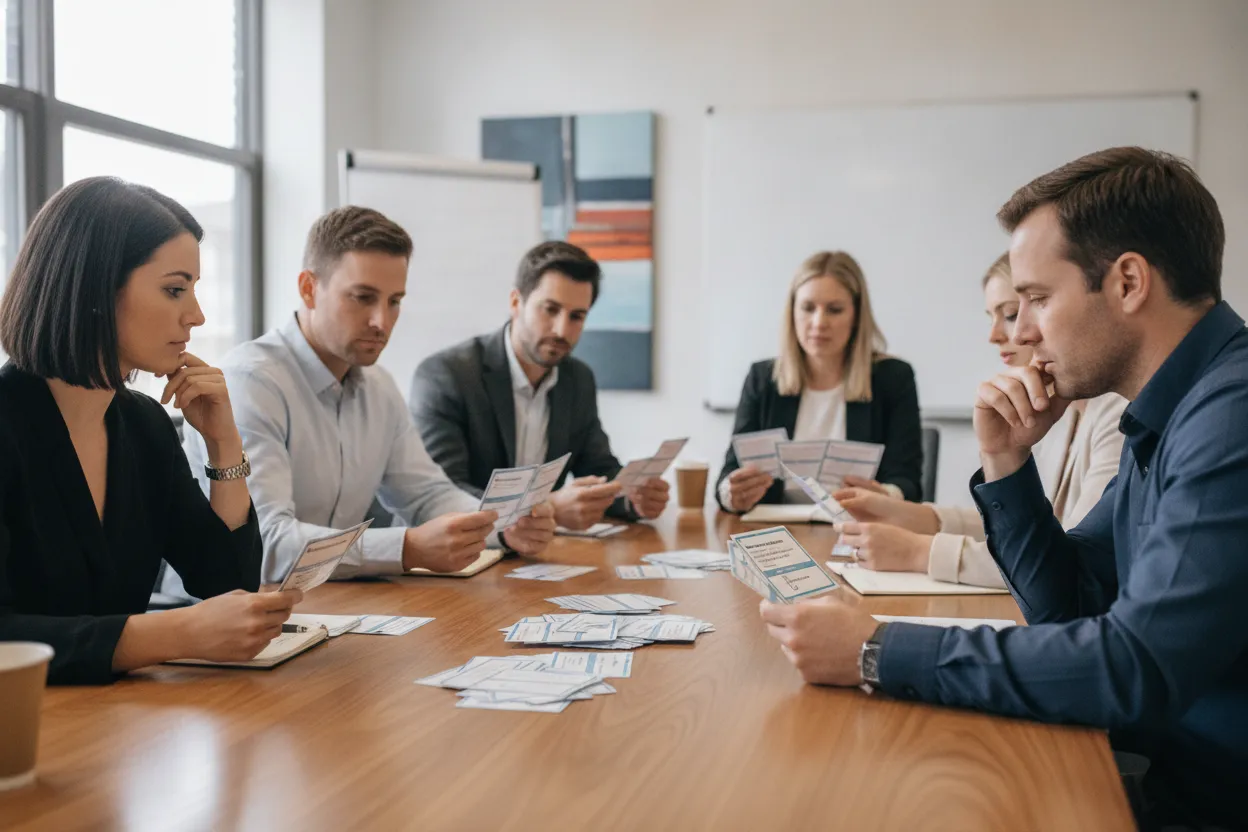










.svg "Click Here to Follow on Medium")
.svg)



.svg)


.svg)
.svg)
.svg)

.svg)