10 Must-have Skills for a Frontend Developer in 2026
.webp)
.svg "edstellar")

Frontend development in 2026 is no longer a narrow “UI implementation” function. In modern enterprises, the frontend layer is where brand trust is won or lost, where product adoption is accelerated or stalled, and where security, accessibility, and performance decisions become visible to customers in milliseconds.
And in practice, performance is often the first thing that silently breaks the experience.
“Poor performance is one of the most common ways we break a good user experience today."


At the same time, the talent landscape is shifting quickly. LinkedIn’s analysis indicates that from 2015 to 2030, 70% of the skills used in most jobs will change. For hiring managers, this volatility is not abstract; it shows up as sourcing friction, shifting role definitions, and longer ramp-up times for digital product teams.
What follows is a corporate-ready, capability-driven view of the ten skills that will define strong frontend developers in 2026. Instead of treating skills as a checklist, this article frames them as operational competencies that reduce delivery risk, improve customer experience, and create measurable engineering leverage.

JavaScript remains the runtime of the web, but “knowing JavaScript” in 2026 means being able to make deliberate trade-offs in correctness, performance, maintainability, and developer experience.
In enterprise contexts, JavaScript fluency shows up as the ability to:
The business reason this matters is simple: frontend teams increasingly serve multiple internal stakeholders, product, design, marketing, legal/compliance, security, and analytics. Developers who can translate requirements into robust JavaScript architecture reduce rework and release risk.
For organizations standardizing foundational capability building across teams, structured programs such as Web Development Training can support consistent engineering practices without forcing a one-framework mandate.
In 2026, TypeScript is not a “nice-to-have” in enterprise frontends. It is the practical foundation for safer refactoring, cleaner API integration, faster onboarding, and scalable component libraries.
Type-driven development is a working style: you use types to design contracts before complexity accumulates. That contract-first approach matters when multiple squads contribute to the same UI surface, share a component system, or ship features behind flags with parallel releases. It reduces accidental coupling and prevents silent behavioral changes that only appear in production.
At the leadership level, TypeScript maturity lowers total cost of ownership by improving change confidence and reducing defect escape, especially in monorepos, shared packages, and multi-tenant frontends.
In 2026, the highest-leverage frontend developers think in platforms. They build reusable capabilities, not just pages.
A mature component architecture includes:
The key shift is that design systems are no longer “design-owned.” They are cross-functional products with roadmap trade-offs, adoption metrics, and compatibility constraints.
To strengthen the designer–developer handshake that makes design systems successful, teams often align technical training with UI/UX Design Training so developers implement intent precisely and designers understand operational constraints earlier.
Performance is now a product feature, especially for mobile-first audiences and globally distributed users. In 2026, performance engineering requires competence in measurement and causality.
Strong frontend developers can:
Performance often fails in enterprises because ownership is diffuse. Developers who can profile issues, isolate root causes, and implement repeatable guardrails create predictable outcomes, not one-time optimizations.
From a labor-market perspective, the U.S. Bureau of Labor Statistics projects 7% employment growth from 2024 to 2034 for web developers and digital designers. As demand remains steady, performance competence increasingly differentiates developers who can support revenue-critical digital experiences.
Accessibility is frequently misunderstood as a checklist of ARIA labels. In enterprise environments, accessibility is compliance, market access, and brand trust.
A 2026-ready frontend developer should be able to:
The corporate value is risk control. Accessibility issues can create legal exposure, procurement barriers (especially in public sector and regulated industries), and costly late-stage remediation. Developers who treat accessibility as an engineering requirement reduce the probability of expensive rework and reputational damage.
Frontend developers in 2026 need practical security literacy. They are not expected to replace security specialists, but they must prevent common failure modes that originate in the UI layer.
Security-minded frontend developers understand and mitigate:
Security is also a UX discipline. Clear consent flows, safe error messaging, and robust session handling are part of protecting customers while maintaining usable journeys.
In 2026, “I tested it manually” does not align with the enterprise release velocity. Frontend quality requires an intentional strategy that aligns with the system’s risk profile.
A mature approach includes:
The core skill is not maximizing the number of tests. It is designing a strategy that provides confidence where failure is expensive, while keeping pipelines fast enough for product delivery.
This matters even more as teams adopt AI-assisted coding, where speed can increase but defect risk can rise without guardrails.
In multi-squad organizations, version control is not “just Git.” It is how engineering culture becomes operational. Developers must collaborate cleanly, preserve traceability, and support release hygiene.
Key 2026 expectations include:
To standardize collaboration practices across distributed teams, many organizations formalize this capability through Version Control Training.
Frontend teams have historically lagged behind backend teams in observability maturity. In 2026, that gap closes because digital experience is a revenue and trust driver.
Frontend observability includes:
Gartner predicts that by 2027, 50% of software engineering organizations will use software engineering intelligence platforms to measure and increase developer productivity. For frontend developers, this elevates the value of being able to instrument systems, interpret signals, and improve delivery outcomes, not just ship UI.
AI tools are now part of modern development environments. In 2026, the differentiator is not whether a developer uses AI, but whether they use it responsibly and consistently with team standards.
AI-augmented development literacy means:
For leaders, AI literacy becomes governance. Teams that adopt AI without standards risk inconsistent architecture and higher long-term maintenance costs. Teams that adopt AI with discipline gain throughput while protecting quality.
To build this capability strategically, many organizations start by diagnosing gaps at the team level, not just the individual level, using frameworks like How to Identify Skill Gaps in the Workplace (2026 Edition).
These ten skills group into four enterprise outcomes that executives and engineering leaders can measure:
This is where hiring and training strategies meet reality. SHRM Research reports that 50% of organizations had difficulty recruiting for full-time regular positions in 2024. For many enterprises, the answer isn’t only “hire better.” It is also “build capability faster,” using standardized skill frameworks and repeatable practices.
If your organization is formalizing a learning pathway to operationalize these competencies across squads, you can also explore Front End Development Training to structure progression from fundamentals to advanced delivery readiness.
Frontend developers in 2026 are evaluated less on isolated tool knowledge and more on their ability to deliver reliable, secure, accessible, high-performing experiences at enterprise scale. The ten skills in this article reflect that shift: JavaScript fluency and TypeScript for maintainability; component systems for reuse; performance and accessibility for experience quality; security and testing for risk control; version control and observability for operational maturity; and AI-augmented development literacy for responsible acceleration.
For organizations, the strategic takeaway is to treat frontend skills as business capabilities, measurable, teachable, and governed, rather than individual preferences. This improves delivery predictability and reduces dependence on scarce “hero developers,” especially as skill requirements continue to evolve.
To build these competencies systematically across teams, explore training pathways and workforce enablement options with Edstellar.
#On-site #Virtual #GroupTraining #Customized
Explore 2000+ industry ready instructor-led training programs.

Create dynamic leaders and cohesive teams. Learn more now!

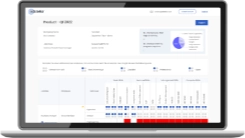
Do a quick Skill gap analysis with Edstellar’s Free Skill Matrix tool

Unlock premium resources, tools, and frameworks designed for HR and learning professionals. Our L&D Hub gives you everything needed to elevate your organization's training approach.
Access L&D Hub Resources.svg)
.svg)
.svg)
.svg)

.svg)


.svg "Click Here to Follow on Medium")
.svg)


