x
Edstellar

ETL Testing Corporate Training

Learn to catch bad data before the business does, on every single load.

A hands-on program for data and engineering leaders whose data engineering, quality assurance (QA) and BI teams cannot yet prove that reports match the source or that a migration is safe to go live.

ETL Testing Corporate Training is an instructor-led program from Edstellar that teaches your team how to plan, reconcile and automate tests for the extract, transform, load (ETL) pipelines and data warehouses behind its reports, with every lab built on the team's own pipeline scenarios.

  • Onsite
  • Virtual
  • Hybrid
40
approxhours
10modules
DeliveryInstructor-led(Onsite / Virtual / Hybrid)
Expert ETL Testing trainersExpert trainers
4.8/547 reviews

Need more than one program?Get a group quote

Where Data Pipeline Testing Breaks Down, and What Your Team Learns in ETL Testing Corporate Training

ETL Testing Corporate Training is for data and engineering leaders who need the pipelines behind their reports, AI work and migrations to be trusted. Without disciplined testing, the business spots wrong numbers first, month-end reports disagree with the source and a cloud migration cannot be signed off. The training builds that testing capability across data engineering, QA and BI teams.

  • 57%

    of data leaders say data reliability is a top barrier to moving AI into production

    Source: Informatica 2026
  • 75%

    of data leaders say employees need serious upskilling in data literacy

    Source: Informatica 2026
  • 31 of 31

    global systemically important banks assessed still needed work to fully comply with the BCBS 239 risk data principles

    Source: Basel Committee 2023
  • 2026

    Informatica PowerCenter 10.5 left standard support on 31 March, putting PowerCenter teams on a migration path to IDMC

    Source: Informatica 2026
  • 86%

    of companies plan to increase data management investment in 2026

    Source: Informatica 2026

Sources: Informatica, CDO Insights 2026, a survey of 600 data leaders (57%, 75%, 86%). Basel Committee on Banking Supervision, progress report on the BCBS 239 principles, November 2023 (31 of 31 banks). Informatica, PowerCenter 10.5 end of support notice, 2026 (31 March 2026).

Close the Data Pipeline Testing Gaps in Your Teams With Edstellar's ETL Testing Corporate Training

Tell Edstellar where wrong numbers reach the business, which reports must reconcile for an audit or which migration has to go live, and the instructor builds the labs around those cases.

Map our testing gaps

Practise the Data Pipeline Testing Decisions Your Data Teams Face

Explore sample exercises from ETL Testing Corporate Training. Participants practise decisions, compare approaches and receive instructor feedback.

Sample learning experience

Choose a practice scenario

Exercises can be tailored to your industry and data team roles.

Instructor-led scenario lab

Learn to Reconcile Source and Target Data

What participants do

Participants work a sample month-end gap and choose where the reconciliation starts.

Small-group exercise
Fictional sample
This month's risk report total is lower than the billing system. Close is on Friday, and the auditors will ask which number is right.
Month-end ticket from a bank's finance team (fictional sample)

Select a choice to see the question to practise.

Select a choice to reveal the question to practise.
Capability participants build

Reconcile each load against its source and show exactly where and why the totals differ.

Explore Module 03 ↗
  1. LearnNew concepts in context
  2. PracticeApply to realistic scenarios
  3. CompareDiscuss different approaches
  4. ReflectCapture key takeaways

Build Your ETL Testing Corporate Training Around Scenarios From Your Business

Tell Edstellar the data pipeline testing decisions your data teams are facing this year. The practice scenarios are adapted to your industry, functions and tools, so participants rehearse situations they will recognize back at work.

Customize the practice scenarios

ETL Testing Training for Employees: Program Overview

ETL Testing Corporate Training is instructor-led training on testing ETL pipelines behind business reports, in which data engineering, QA and BI teams learn to plan tests from the source-to-target mapping, reconcile source and target data, test transformations, incremental loads and history, and automate data quality and regression checks in CI, practiced in hands-on labs on the team's own pipeline scenarios.

This instructor-led ETL Testing Corporate Training turns test planning, source-to-target reconciliation, transformation and history testing, and automated checks in CI into practice on the work your team already has.

Edstellar starts with a needs analysis of the team's pipelines, warehouse, ETL tools and testing maturity. That way the program fits the ETL validation, ELT testing, data pipeline testing and data warehouse (DWH) testing the team does today.

An instructor then takes each skill through labs on masked copies of the team's own pipeline scenarios:

  • A source-to-target mapping turned into a traced test plan
  • A month-end gap closed between a billing system and the warehouse report
  • A delta load and a type 2 customer dimension tested for duplicate rows and lost history
  • A SQL assertion library turned into a regression suite that runs in CI

Participants get feedback on every lab. They finish with a capstone: a tested pipeline, its regression suite and the test completion report, presented for instructor review.


  1. 01 - Plan

    Learn to Plan Tests From the Source-to-Target Mapping

    Participants write the test plan for a pipeline and trace every target column in the mapping document to test cases in the ETL test case template, with the instructor checking the traceability before the next lab.

  2. 02 - Reconcile

    Learn to Reconcile Source and Target Data

    Data teams compare row counts, checksums and totals between a billing system and the warehouse report, then complete the reconciliation checklist the instructor reviews.

  3. 03 - Test

    Learn to Test Transformations, Incremental Loads and History

    A guided lab runs a delta load into a type 2 customer dimension, and participants record each duplicate row and lost history record as test cases for instructor review.

  4. 04 - Automate

    Learn to Automate Data Quality and Regression Checks in CI

    Participants run their SQL assertions as dbt tests, gate a breaking change in CI with the regression suite, and write the CI runbook with instructor feedback.

Enterprise Training Solutions Customized for Your Company

One partner for instructor-led corporate training, delivered the way your teams work.

Request a Training Quote
  • Customized Training Delivery
  • Scale Your Training: Small to Large Teams
  • In-person Onsite, Live Virtual or Hybrid Training Modes
  • Plan from 2000+ Industry-ready Training Programs
  • Hands-On Labs on Live Infrastructure, Led by Industry Experts

What Your Team Can Do After ETL Testing Corporate Training

1 / 7
Your team tests each pipeline release to a plan, so wrong numbers are caught before the business emails about them.

Turn ETL Testing Corporate Training Into Reports the Business Can Trust With Edstellar

Edstellar maps each skill to your team's goals, such as month-end totals that match the source system or fewer data errors found by the business first, tracks progress after the program and shows the results.

Plan your learning outcomes
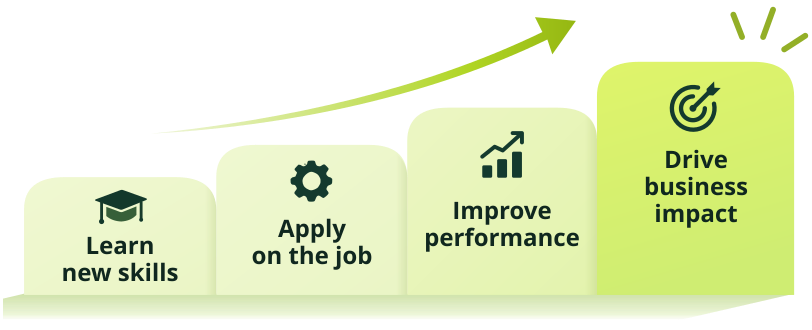
Learn new skills, apply on the job, improve performance and drive business impact

ETL Testing Corporate Training Program Outline

~40 hours across 10 modules, about 70% hands-on practice. Edstellar customizes the duration, module mix and schedule to your scope.

~40 h approx total10 modules9 labs + capstone~70% practice

01Introduction to ETL testing and the data warehouse~3 hours - Lab: Trace a sample pipeline from source to warehouse report and mark where each check belongs
  • The extract, transform, load stages, and how ELT moves the transformation into the warehouse
  • Where data goes wrong: the Kimball ETL architecture (34 subsystems) and its structures that track data quality errors
  • Staging, star schemas, fact and dimension tables: what testers check at each layer
  • SQL for testers: counts, joins and GROUP BY queries against the source and the target

LabTrace a sample pipeline from source to warehouse report and mark where each check belongs

Learn ~1.5 h - Practice ~1.5 h

Tools your team practices with
  • SQL
  • Oracle Database
  • Microsoft SQL Server
  • PostgreSQL
  • Snowflake
Frameworks your team practices applying
  • Extract, transform, load stages (ETL and ELT)
  • Kimball ETL architecture (34 subsystems)

In your team's weekA load finishes successfully, but the numbers on the dashboard look wrong.

Before
  • A sales director spots the figure and emails the data team, who had no idea anything was wrong.
  • The pipelines are watched for jobs that fail, not for data that is wrong.
  • Nobody knows which stage to check first, so the hunt starts from the report.
After
  1. Trace the figure back through the extract, transform and load stages.
  2. Query the source with counts, joins and GROUP BY.
  3. Compare the staging, fact and dimension tables in the target.
  4. Mark the check point that would have caught it on the pipeline map.

Produces: a pipeline map with its check points

02How to plan ETL testing from the mapping document~4 hours - Lab: Turn a source-to-target mapping into a test plan and traced test cases, written in the ETL test case template
  • The test process for a pipeline (ISTQB): plan, analyze, design, implement, execute and complete
  • Test planning, traceability and the test pyramid, applied to data (ISTQB practices)
  • Shift-left testing: reviewing the mapping spec from a tester's view before the logic is built
  • Writing the ETL test strategy and test plan: scope, entry and exit criteria, risks
  • Tracing every target column in the source-to-target mapping document to its test cases

LabTurn a source-to-target mapping into a test plan and traced test cases, written in the ETL test case template

Learn ~1.5 h - Practice ~2.5 h

Tools your team practices with
  • Informatica PowerCenter
  • Microsoft SSIS (SQL Server Integration Services)
  • Azure Data Factory
  • OpenText ALM / Quality Center
Frameworks your team practices applying
  • Test process for a pipeline (ISTQB)
  • Shift-left testing (ISTQB, Microsoft)
  • ETL test strategy and test plan
  • Source-to-target mapping document traced to test cases
  • ETL test case template

In your team's weekA pipeline release is due, with a new source-to-target mapping.

Before
  • Testing is a few manual spot checks on small samples.
  • Logic that passes on sample data breaks on the full load.
  • Wrong numbers reach the business before the data team sees them.
After
  1. Review the mapping document from a tester's view before the logic is built.
  2. Write the test plan with scope, entry and exit criteria and risks.
  3. Trace every target column to test cases in the ETL test case template.
  4. Run the tests and close the release against the exit criteria.

Produces: a test plan and a mapping document traced to test cases

03How to reconcile source and target data~5 hours - Lab: Close a month-end gap between a billing system and the warehouse report, working through the reconciliation checklist
  • Reconcile after every load: row counts, checksums, totals and key figures between source and target
  • Finding dropped and rejected records, and joins that quietly lose rows
  • How nulls, rounding and data type conversions change values on the way
  • Checking Power BI report totals against the warehouse
  • BCBS 239 risk data principles: why banks need reconciled, documented risk data

LabClose a month-end gap between a billing system and the warehouse report, working through the reconciliation checklist

Learn ~1.5 h - Practice ~3.5 h

Tools your team practices with
  • SQL
  • Oracle Database
  • Microsoft SQL Server
  • Teradata
  • Power BI
Frameworks your team practices applying
  • Reconcile after every load
  • Reconciliation checklist
  • BCBS 239 risk data principles (Basel Committee, BIS)

In your team's weekAt month end, finance compares the warehouse report with the billing system.

Before
  • The two totals do not match, and nobody can say which one is right.
  • Records are dropped or rejected during the load, and joins quietly lose rows.
  • Analysts spend days reconciling by hand before every close.
After
  1. Compare row counts, checksums and totals between source and target after the load.
  2. Find the dropped and rejected records and the joins that lose rows.
  3. Check where nulls, rounding and type conversions changed values.
  4. Check the Power BI report totals against the warehouse.

Produces: a completed reconciliation checklist

04How to test transformations, incremental loads and history~5 hours - Lab: Test a delta load and a type 2 customer dimension, catching duplicate rows and lost history
  • Testing transformation rules: filters, joins, aggregations, cleaning and deduplication
  • Incremental (delta) loads and change data capture (CDC): no gaps, no overlaps, reconciled against a full load (SSIS 2025 removed the Attunity CDC components, so the labs use supported CDC)
  • Unique keys and empty key values: how duplicates get in and how to test for them
  • Slowly changing dimensions, types 1 and 2 (Kimball Group): effective dates, expiration dates and the current row flag
  • Recording each check in the ETL test case template

LabTest a delta load and a type 2 customer dimension, catching duplicate rows and lost history

Learn ~1.5 h - Practice ~3.5 h

Tools your team practices with
  • SQL
  • dbt
  • Informatica PowerCenter
  • Microsoft SSIS (SQL Server Integration Services)
  • Snowflake
Frameworks your team practices applying
  • Slowly changing dimensions, types 1 and 2 (Kimball Group)
  • Reconcile after every load
  • ETL test case template

In your team's weekA rerun of last night's load counts the same orders twice.

Before
  • The customer count jumps overnight and revenue totals are inflated.
  • Records are added again without a reliable unique key, or the key is empty.
  • Last quarter's report gives a different answer when it is rerun.
After
  1. Test the unique key and empty key values before the delta load.
  2. Reconcile the incremental load against a full load: no gaps, no overlaps.
  3. Check the type 2 dimension's effective dates, expiration dates and current row flag.
  4. Record each check in the ETL test case template.

Produces: tested SCD and incremental-load test cases

05Learning data quality checks with SQL assertions~4 hours - Lab: Build a SQL assertion library for a customer and orders model and run it as dbt tests and a Great Expectations suite
  • The six data quality dimensions (UK Government Data Quality Framework, from DAMA UK): completeness, uniqueness, consistency, timeliness, validity, accuracy
  • Building the SQL assertion library: queries that return the failing rows, where zero rows means the check passes
  • Unique, not null, accepted values and relationships checks as dbt tests
  • Expectation suites and data quality scans with Great Expectations and Soda
  • Checking the data that feeds analytics and AI before it is used

LabBuild a SQL assertion library for a customer and orders model and run it as dbt tests and a Great Expectations suite

Learn ~1.5 h - Practice ~2.5 h

Tools your team practices with
  • SQL
  • dbt tests
  • Great Expectations (GX Core)
  • Soda (Soda Core)
  • Databricks
Frameworks your team practices applying
  • Six data quality dimensions (UK Government Data Quality Framework, from DAMA UK)
  • SQL assertion library

In your team's weekCustomer and orders data feeds the Monday dashboard and the analytics behind it.

Before
  • Nothing checks the data itself, only whether the jobs ran.
  • Missing values and duplicate keys reach the reports.
  • The business finds the error before the data team does.
After
  1. Decide which data quality dimension each check measures.
  2. Write SQL assertions that return the failing rows.
  3. Run unique, not null, accepted values and relationships checks as dbt tests.
  4. Check the data that feeds analytics and AI before anyone uses it.

Produces: a reusable SQL assertion library

06How to catch source changes and late data before the business does~3 hours - Lab: Write a data contract for a CRM feed, then add schema and freshness checks that stop the load and alert the team
  • Schema drift: added, renamed and retyped columns, and tests that catch them before the reports
  • The Open Data Contract Standard (Bitol): schema, data quality rules and service levels agreed between producer and consumers
  • Freshness checks against the agreed service level
  • Stopping later steps and alerting the team with Airflow 3 SQL check operators

LabWrite a data contract for a CRM feed, then add schema and freshness checks that stop the load and alert the team

Learn ~1 h - Practice ~2 h

Tools your team practices with
  • Apache Airflow
  • dbt
  • Azure Data Factory
  • SQL
Frameworks your team practices applying
  • Open Data Contract Standard (Bitol, Linux Foundation AI & Data)
  • Freshness checks against the agreed service level

In your team's weekAnother team renames a CRM column, or the extract arrives late.

Before
  • The next morning a dashboard is blank or still shows yesterday's numbers.
  • The pipelines are tied to the old column names, and nothing checks freshness.
  • The data team learns about it from frustrated users.
After
  1. Agree the schema, data quality rules and service levels in a data contract.
  2. Check for added, renamed and retyped columns before the load.
  3. Check freshness against the agreed service level.
  4. Stop later steps and alert the team when a check fails.

Produces: a data contract with schema and freshness checks

07How to log, triage and report data defects~3 hours - Lab: Log three data defects in Jira with the failing rows as evidence, triage them, and report test progress against the plan
  • The defect lifecycle (ISTQB defect management): log, analyze, classify, decide, close
  • Writing the defect report with data evidence and a severity scale: expected and actual results, failing rows, environment
  • A shared defect taxonomy across data engineering, QA and BI teams
  • Test monitoring and test control (ISTQB): defect detection and reconciliation pass rates, and adjusting the testing where they show gaps

LabLog three data defects in Jira with the failing rows as evidence, triage them, and report test progress against the plan

Learn ~1 h - Practice ~2 h

Tools your team practices with
  • Jira
  • OpenText ALM / Quality Center
  • SQL
Frameworks your team practices applying
  • Defect lifecycle (ISTQB defect management)
  • Defect report with data evidence and a severity scale
  • Test monitoring and test control (ISTQB)

In your team's weekA test run finds wrong rows in the nightly load.

Before
  • The defect is passed on without the failing rows or the environment.
  • Data engineering, QA and BI teams describe the same defect in different ways.
  • The team spends days tracing it while new requests wait.
After
  1. Log the defect with expected and actual results and the failing rows.
  2. Analyze and classify it with the shared defect taxonomy and severity scale.
  3. Decide to fix or keep it, then close it.
  4. Report defect detection and reconciliation pass rates against the plan.

Produces: defect reports with data evidence and a test progress summary

08How to run regression tests on every pipeline change~4 hours - Lab: Turn the assertion library into a regression suite that runs in CI and blocks a breaking change, then write the CI runbook
  • Regression on every change, gated in CI: build and test the changed models and everything downstream in a separate schema (dbt v1.12 or v2.0)
  • Shift-left in the release pipeline: tests written before the logic, most testing done before the merge
  • Running the regression suite on full loads, not only on samples, and on tool upgrades such as SSIS 2025 or Airflow 3
  • Version control for test scripts and SQL, and CI runs in Jenkins, GitHub Actions or Azure DevOps
  • Writing the regression suite and CI runbook: what runs, when, and what to do when a run fails

LabTurn the assertion library into a regression suite that runs in CI and blocks a breaking change, then write the CI runbook

Learn ~1 h - Practice ~3 h

Tools your team practices with
  • dbt tests
  • Git
  • GitHub Actions
  • Jenkins
  • Azure DevOps
  • Apache Airflow
Frameworks your team practices applying
  • Regression on every change, gated in CI
  • Shift-left testing (ISTQB, Microsoft)
  • Regression suite and CI runbook

In your team's weekA change to one transformation is ready to go live.

Before
  • It passes on sample data, then breaks a report elsewhere on the full load.
  • The team spends days tracing the break back to the change.
  • New requests from the business wait in the queue.
After
  1. Write the tests before the logic changes.
  2. Build and test the changed models and everything downstream in a separate schema.
  3. Run the regression suite on the full load in CI.
  4. Merge only when the checks pass, and follow the runbook when a run fails.

Produces: a regression suite and CI runbook

09How to validate a migration to a cloud data warehouse~4 hours - Lab: Compare an Oracle source and a Snowflake target row by row, check a PowerCenter mapping migrated to IDMC against its original, explain each difference and write the migration parity report for sign-off
  • Migration parity validation: baselines, side-by-side runs, row-by-row and value-by-value comparison, repeated at each stage
  • Why matching row counts are not proof: nulls, rounding, type casting and query logic on the new system
  • Oracle to Snowflake, Informatica PowerCenter to IDMC Cloud Data Integration (CDI-PC), Informatica to dbt, and Azure Data Factory to Fabric Data Factory upgrades
  • Writing the migration parity report: what differs, why, and progress until sign-off

LabCompare an Oracle source and a Snowflake target row by row, check a PowerCenter mapping migrated to IDMC against its original, explain each difference and write the migration parity report for sign-off

Learn ~1 h - Practice ~3 h

Tools your team practices with
  • Oracle Database
  • Snowflake
  • Databricks
  • dbt
  • Informatica PowerCenter
  • Informatica IDMC Cloud Data Integration (CDI, CDI-PC)
  • Fabric Data Factory
  • SQL
Frameworks your team practices applying
  • Migration parity validation
  • Migration parity report

In your team's weekThe move from Oracle to Snowflake is waiting for sign-off.

Before
  • Old and new reports run side by side show small differences.
  • Matching row counts are taken as proof, and the comparison is done by hand.
  • Sign-off stalls and the go-live date slips.
After
  1. Set baseline counts, totals and key figures before the move.
  2. Run the old and new warehouse side by side.
  3. Compare them row by row and value by value at each stage.
  4. Explain each difference and report parity before cutover.

Produces: a migration parity report

10Capstone project: testing a data pipeline end to end for a business scenario~5 hours - Lab: Present the tested pipeline, its regression suite and the test completion report for instructor review
  • A business scenario from the team's industry: a nightly finance and customer load into the warehouse
  • Running the test process end to end, from the test plan to test completion
  • Reconciling the load and running the assertion library and regression suite in CI
  • Handover: defect reports, the reconciliation checklist and the CI runbook

LabPresent the tested pipeline, its regression suite and the test completion report for instructor review

Learn ~0.5 h - Practice ~4.5 h

Tools your team practices with
  • SQL
  • dbt tests
  • GitHub Actions
  • Jira
Frameworks your team practices applying
  • Test process for a pipeline (ISTQB)
  • ETL test strategy and test plan
  • Reconcile after every load
  • Regression on every change, gated in CI
  • Test monitoring and test control (ISTQB)

Get an ETL Testing Corporate Training Outline Tailored to Your Pipelines and Warehouse

Share your pipelines, warehouse, ETL tools and testing maturity, and Edstellar adapts the modules, labs and hours to your teams.

Get a tailored outline

The Tools and Techniques Your Team Learns to Put Into Practice in ETL Testing Corporate Training

Explore the tools and techniques participants learn, practise in guided labs and carry into their own pipeline testing.

Interactive toolkit preview

Explore a framework

Lifecycles - Modules 2 and 9

Control cycles - Modules 3, 7 and 8

Learning tool

Framework overviews and practice tools used during training.

Framework snapshotModule 02

Test Process for a Pipeline (ISTQB)

Learn to test every pipeline release the same planned way, from plan to completion.

Select a part of the framework to see what it covers.

Test Process for a Pipeline (ISTQB)

Framework view

Select a part of the framework to see what it covers.

What participants practise

Participants turn a source-to-target mapping into a test plan and traced test cases in the ETL test case template.

Capability they build

Plan, run and close the testing of a pipeline release instead of relying on spot checks.

View Module 02 ↗

Tailor the ETL Testing Corporate Training Labs to Your Own Mapping Documents and Test Plans

Share the mapping documents, test plans or defect workflows your organization already uses. Edstellar builds them into the labs, so participants learn to apply them alongside the ISTQB test process, reconciliation after every load and regression gated in CI.

Add your frameworks to the training

The Tools Your Team Works in Hands-On

These are the ETL tools, databases, warehouses and test tools the labs work in, with SQL at the center. Edstellar swaps in your own tools where they differ.

Your data pipeline

Plan - Reconcile - Check - Gate

Modules 1 to 10: the pipelines, warehouses and test tools the labs work in, with SQL at the center.

Frameworks, tools and logos are shown for teaching purposes; Edstellar is not affiliated with their publishers, and the tool mix is tailored to each client.

Where ETL Testing Corporate Training Fits Your Team

Edstellar tailors ETL Testing Corporate Training to each participant's part in testing the data pipelines behind the company's reports. Explore how examples, instructor-led labs and discussions are adapted to different levels of data quality ownership.

Select a Level of Data Quality Ownership

Selected cohort

ETL Testing Corporate Training for Data Engineers, ETL Developers and Analytics Engineers

Learn to build data quality checks, history tests and regression tests into the pipelines and models you own.

Practice Deciding Where Tests Go First

Participants place fictional warehouse tables by business impact and how often they change, then choose the checks for each.

HigherBusiness impact of a bad loadLowerLowerChange rateHigher
Sample exercise - fictional case - instructor-guided debrief
Capability participants build

Participants build a SQL assertion library and incremental-load and SCD tests, and run them as a regression suite in CI.

Sample learning content - fictional cases
  • Shared foundations.One pipeline test process and vocabulary for every role
  • Role-relevant practice.Labs matched to each level of data quality ownership
  • Individual contributions to the team's ETL testing playbook.A personal learning output from training

Discuss Your ETL Testing Corporate Training Cohort With Edstellar

Tell Edstellar which roles and levels will attend, and get a cohort plan with labs matched to each one.

Discuss your cohort's training needs

Who This ETL Testing Corporate Training Program Is For

This program is for data engineering, QA and testing, BI and analytics and data governance teams that build or test the pipelines behind the company's reports, across industries, departments and roles. Edstellar adapts the cases and labs to your sector and functions, and the program is often commissioned by data engineering and QA managers with L&D and HR. Participants should know relational database, core data and software testing basics; SQL and basic data pipeline concepts help but are not required.

industry

ETL Testing Corporate Training for Banking, Payments and Financial Services Teams

Learn to prove that risk, finance and payments data in the warehouse matches the systems it came from.

Tasks They Learn to Handle

  • Reconciling risk and finance data loads against the core banking source
  • Documenting test coverage and reconciliation evidence for risk data reviews
  • Testing daily payment feeds for dropped, duplicate and rejected records

Sample Cases Practised in the Labs

  • A bank's risk exposure report is short by a few hundred loan accountsReconciliation
  • Card payments appear twice after a nightly load is rerunDuplicates
  • A risk data review asks for evidence of last quarter's checksAudit evidence

Fictional training examples

Modules With Most Emphasis

  • Module 03 - How to reconcile source and target data
  • Module 07 - How to log, triage and report data defects

How Skills Grow Through ETL Testing Corporate Training: From SQL and Database Basics to Testing Data Pipelines End to End

Where participants typically start and finish on each skill. A short assessment sets each participant's starting point, and the capstone shows the progress made.

  • ETL test planning from the mapping document

    FoundationDevelopingProficientAdvanced
    Typical starting level: FoundationLevel reached by the end: Proficient
  • Source-to-target reconciliation

    FoundationDevelopingProficientAdvanced
    Typical starting level: FoundationLevel reached by the end: Advanced
  • Testing transformations, incremental loads and history

    FoundationDevelopingProficientAdvanced
    Typical starting level: FoundationLevel reached by the end: Proficient
  • Data quality checks with SQL assertions

    FoundationDevelopingProficientAdvanced
    Typical starting level: FoundationLevel reached by the end: Proficient
  • Schema and freshness checks

    FoundationDevelopingProficientAdvanced
    Typical starting level: FoundationLevel reached by the end: Developing
  • Regression testing in CI

    FoundationDevelopingProficientAdvanced
    Typical starting level: FoundationLevel reached by the end: Proficient
  • Migration parity validation

    FoundationDevelopingProficientAdvanced
    Typical starting level: FoundationLevel reached by the end: Developing
SkillFoundationDevelopingProficientAdvancedTypical starting levelLevel reached by the end
ETL test planning from the mapping documentFoundationProficient
Source-to-target reconciliationFoundationAdvanced
Testing transformations, incremental loads and historyFoundationProficient
Data quality checks with SQL assertionsFoundationProficient
Schema and freshness checksFoundationDeveloping
Regression testing in CIFoundationProficient
Migration parity validationFoundationDeveloping

Typical startLevel reached

Plan ETL Testing Corporate Training for Your Sector and Teams

Edstellar adapts the cases, labs and module mix to your industry, departments and roles.

Plan for our sector

ETL Testing in the Real World

These public examples show the same ETL testing ideas your team practices: data quality rules, regression tests on every change and parity checks in a migration. They are not affiliated with Edstellar.

  • Quality rules agreed with the data producer

    Grab

    Grab's engineering team checks its Kafka data streams against data contracts with schema and field-level rules (string patterns, number ranges, constant values), runs queries that find the records breaking those rules, and alerts the stream owners named in the contract so invalid data stops spreading downstream.

    Source: engineering.grab.com

  • Regression tests on every pipeline change

    GitLab

    GitLab's data team handbook describes the CI jobs on every dbt merge request: a job clones production, then runs and tests all new and changed models plus the models between them in the lineage, so each change is tested before it reaches production.

    Source: handbook.gitlab.com

  • Proving parity in a warehouse migration

    FanDuel

    Moving from Amazon Redshift to Databricks, FanDuel kept the old and new pipelines running in parallel and ran more than 15,000 data comparisons across 1,100+ dbt models and 25 regulatory reports to confirm both systems gave the same results.

    Source: datafold.com (a data tool vendor's case study; figures as it states them)

How Edstellar Delivers ETL Testing Corporate Training: Methodology, Modes and Customization

Edstellar runs ETL Testing Corporate Training as instructor-led training for your teams: onsite, live virtual or hybrid, customized to your data pipelines, warehouse and test tools, and delivered in six clear stages from training needs analysis to skill assessment.

Team scale
Delivery format

Onsite Training

Instructor-led - at your offices

Your team in one room, with labs run on your sample sources, staging area and target warehouse.

Live Virtual Training

Instructor-led - remote

Real-time sessions with breakout labs and instructor feedback for teams across locations.

Hybrid Training

Instructor-led - onsite and remote

Onsite and virtual participants learn together in one cohort, with the same labs.

Customized to Your Pipelines and Warehouse

Edstellar tailors cases, labs and the module mix to your sector, your ETL and warehouse tools, mapping documents and release process and your internal policies, in 10+ languages.

Find the Right Delivery Format for Your ETL Testing Corporate Training

Tell Edstellar where your teams sit and how they work, and get a delivery recommendation with a draft schedule.

Get a delivery recommendation

Learn From Instructors Who Connect ETL Testing With Live Data Pipelines

An instructor at a desk with screens

Practitioners From ETL Testing and Data Quality

Edstellar matches an instructor to your cohort's roles, industry and ETL and warehouse tools. Each brings hands-on experience in ETL testing and data quality and in facilitating corporate training, and you review their profile before booking.

Participants testing source-to-target data in a lab

Sessions Run Like Real Release and Reconciliation Reviews

The instructor explains each test process, reconciliation or data quality method with a real example, then coaches your team through the reconciliation, incremental load and migration labs on sources and warehouses like your own. Every debrief adds a tested check to the team's SQL assertion library.

Match an Instructor to Your ETL Testing Corporate Training Cohort

Discuss instructor fit for your cohort

Tell Edstellar your sector and ETL and warehouse tools and get a matched instructor proposal, with a profile shared before booking.

Why Edstellar as Your ETL Testing Corporate Training Provider

Edstellar is a capability-building partner for organizations building their ETL testing skills for the data pipelines and data warehouses behind their reports. Edstellar shapes every ETL Testing Corporate Training program around your industry and your warehouse, ETL tools and mapping documents, matches a practitioner instructor to your cohort and delivers onsite, live virtual or hybrid, so your teams leave with hands-on skills and a tested data pipeline with its regression suite and test completion report.

  • Tailored, Under NDA. Edstellar signs an NDA or data privacy agreement before the needs analysis, then shapes the program around your warehouse, ETL tools, mapping documents and release process.
  • Trainers You Approve. You see and approve the practitioner trainer's profile before contracting, and a backup trainer from Edstellar's network keeps sessions on schedule.
  • Outcomes Your Sponsor Agrees. Edstellar agrees the outcomes with your sponsor before the first session and tracks them from the baseline check to the capstone, so the skill lift is reported, not assumed.
  • One Standard at Scale. One Edstellar coordinator runs every cohort, so teams across locations and time zones learn the same ETL testing standard, in onsite, virtual or hybrid formats.
5000+

Expert trainers

5+

Years delivering

200+

Organizations trained

ISO 9001&27001

Certified

  • ISO 9001 certified
  • ISO 27001 certified
Training Delivered Across the Globe
  • North America
  • Latin America
  • Europe
  • Middle East
  • Africa
  • India
  • Southeast Asia
  • East Asia
  • Australia and New Zealand

Trusted by teams at

  • ABB
  • Aditya Birla Group
  • Adobe
  • Amazon
  • Autodesk
  • Emerson
  • Godrej
  • Intel
  • Johnson & Johnson
  • MediaTek
  • Microsoft
  • NRSC
  • Sportskeeda
  • Tata Chemicals
  • TotalEnergies
  • Visa

Edstellar Products That Extend Your Training

ETL Testing Corporate Training can sit inside a wider capability plan. Alongside its instructor-led programs, Edstellar offers seven products that find skill gaps, run learning, assess leaders and keep teams improving after the training ends.

Diagnose Needs

Training needs analysis
TNA/TNI Engine

“Training needs analysis software, backed by evidence.”

Runs the full training needs analysis and identification cycle, from raw employee data to a prioritized training roadmap and calendar.

  • Self, manager, assessment, interview and focus-group evidence behind every need
  • Needs ranked by gap, criticality and headcount
  • A TNA report, roadmap, calendar and individual development plans at the end of one cycle
Explore TNA/TNI Engine
Capability analytics
Capability OS

“One verified picture of what your organization can do.”

AI drafts skills and competency frameworks, people approve them, and evidence from several sources validates each skill, level by level.

  • A skill counts as validated only when at least two independent sources agree
  • Three-tier human approval, with every edit logged
  • 41 indices across nine capability domains, plus an employee Skill Passport
Explore Capability OS

Run the Learning

Learning management
Spectra LMS

“The AI-powered LMS built for engagement on the go.”

Brings programs, live training, surveys and community into one mobile-first learning management system.

  • ILT, VILT and eLearningInstructor-led, virtual and eLearning sessions in one calendar and one learning record.
  • AI InsightsFlags learners who are falling behind before deadlines slip, with next actions.
  • SCORM 1.2 and 2004Upload existing training content and play it inside Spectra LMS.
Explore Spectra LMS

Assess and Give Feedback

Leadership assessment
Zenith

“The Leadership Intelligence Lab.”

A leadership assessment and development center for high-potential identification, led end to end by Edstellar consultants.

  • Psychometrics, 360-degree feedback and live exercises in one leadership view
  • Succession readiness, high-potentials and capability gaps, on evidence
  • Pathways from diagnostics to curriculum, coaching, mentoring and job shadowing
Explore Zenith
360-degree feedback
Orbit

“Build self-awareness and turn feedback into focused development.”

Collects anonymous feedback from several rater groups; AI drafts each report and an Edstellar consultant reviews it before release.

  • 45, 90, 180, 270 and 360-degree feedback formats
  • Up to six rater groups, with anonymity built in
  • Development tracked from one feedback round to the next
Explore Orbit

Coach and Align

Team effectiveness
Polaris

“Where hard conversations happen.”

A facilitator-led, structured session that surfaces what a team has been avoiding and turns it into a commitment the team owns.

  • Intact teams of 6 to 12 people, in one 3 to 4 hour virtual session
  • Private written responses before anyone speaks
  • A 30-day check-in booked before the session ends
Explore Polaris
Virtual coaching
Meridian

“One coach, one leader, one conversation at a time.”

One-on-one leadership coaching: each leader gets a certified coach, a structured track and 10 to 12 virtual sessions.

  • Coaches recommended against the leader's objective, focus areas and style
  • A free 30-minute chemistry session before committing to a coach
  • The leader decides what the organization sees
Explore Meridian

Certificate of Training Completion.

On successful completion, employees receive an Edstellar training completion certificate, recognizing their commitment to ongoing learning and professional development. It validates the skills they have built and motivates them to keep growing and contribute to organizational success.

Earned, not attended. Awarded on completion of all hands-on labs and the capstone project.

Edstellar Certificate of Completion

ETL Testing Corporate Training FAQs

Fit and relevance

What kind of training is ETL Testing corporate training?

It is technical training in software development and testing, focused on testing the ETL and ELT pipelines that load your data warehouse. Edstellar runs it as hands-on, instructor-led labs for ETL testers, QA engineers, data engineers and BI developers, delivered onsite, virtually or in a hybrid format.

What business problems does this training solve for our data teams?

It targets the problems data teams meet: business users who spot wrong numbers before the data team, reports that differ from the source system, dashboards that break when a source changes, duplicate records and stale data. In a 2023 survey, 74% of data professionals said business stakeholders find data issues first. Edstellar trains your team to catch them before release.

Who should attend: is this ETL Testing training for QA teams, data engineers or other employees?

It is built for ETL and data warehouse testers, QA engineers moving from application to data testing, data engineers and ETL developers, and analytics engineers and BI developers. Edstellar groups employees by responsibility, from testers to ETL QA leads and data engineering managers, or runs one mixed cohort so data engineering, QA and BI teams practice together.

What do participants need to know before the training starts?

Participants need relational database basics (tables, rows, columns and keys), core data concepts and software testing basics such as test cases, expected results and defects. SQL queries, basic ETL concepts, star schemas and an ETL tool such as SSIS or Azure Data Factory help but are not required, because the opening module teaches them from the tester's view.

Does the program cover ELT, data pipeline testing and data warehouse (DWH) testing?

Yes. ETL validation, ELT testing and data warehouse (DWH) testing share one method: reconcile source and target, test the transformation rules, check keys and history, and verify the reports built on the warehouse. In ELT (extract, load, transform) the checks run inside the warehouse, so the labs use SQL assertions and dbt tests on models in Snowflake or Databricks.

Why train the whole team with Edstellar instead of sending people to individual programs?

Individual programs teach the topic; team training builds one shared method. Edstellar runs the labs on masked or synthetic copies of your own pipelines, mappings and warehouse, so testers, data engineers and BI analysts learn the same test plan, reconciliation checklist and defect format, and apply them across locations from the first release after the program.

Outcomes and impact

How do we make the business case for ETL testing training to our leadership?

Tie it to a problem leaders already track: 57% of data leaders call data reliability a top barrier to moving AI into production. The program targets defects that reach reports, month-end reconciliation gaps and rework, and Edstellar agrees measurable outcomes with your sponsor before the first session, such as reconciliation pass rates and defect detection rates.

What will our team be able to do after the program?

Your team will be able to plan ETL testing from the mapping document, reconcile source and target data, test transformations, incremental loads and history, build a SQL assertion library, catch schema changes and late data, report data defects with evidence, gate pipeline changes with regression tests in CI and validate a cloud warehouse migration.

How is the impact measured and reported to our managers?

Edstellar agrees the outcomes with your sponsor before the first session. Progress is tracked through an opening review of SQL and pipeline familiarity, reviewed labs in every module and the capstone, where the team presents a tested pipeline, its regression suite and a test completion report. Reconciliation pass rates and defect detection rates show what improved.

How does ETL testing help us trust data for AI and meet rules such as BCBS 239?

57% of data leaders say data reliability is a top barrier to moving AI into production. The program teaches the checks that make data trustworthy: reconciliation, the six data quality dimensions and documented test evidence. Banks practice reconciling risk data under BCBS 239, and European teams apply the GDPR accuracy principle and EU AI Act data rules.

What is covered and how it is taught

What does the ETL Testing program cover, and what are the key modules?

Ten modules: ETL testing and the data warehouse, test planning from the mapping document, source-to-target reconciliation, transformations with incremental loads and history, data quality checks with SQL assertions, source changes and late data, data defects, regression testing on every change, cloud warehouse migration validation, and a capstone. Each concept is taught live, then practiced in a lab.

Does the training cover source-to-target reconciliation testing for QA teams?

Yes. A full module of about 5 hours teaches QA teams to reconcile after every load: row counts, checksums, totals and key figures, dropped and rejected records, joins that quietly lose rows, and values changed by nulls, rounding and type conversions. In the lab, participants close a month-end gap between a billing system and the warehouse report.

How does the program teach testing of incremental loads and slowly changing dimensions (SCD)?

One module covers incremental (delta) loads and change data capture (CDC), unique keys that let duplicates in, and slowly changing dimensions types 1 and 2, with effective dates, expiration dates and the current row flag. In the lab, participants test a delta load and a type 2 customer dimension, catching duplicate rows and lost history before reports use them.

Can our team learn ETL regression testing that runs on every pipeline change?

Yes. The regression module turns the team's SQL assertion library into a regression suite that runs in CI on every change, tests the changed models and everything downstream in a separate schema, and blocks a breaking change before the merge. Participants practice with Git and Jenkins, GitHub Actions or Azure DevOps, and write the CI runbook for failed runs.

Does the program cover cloud data warehouse migration testing, such as Oracle to Snowflake?

Yes. A dedicated module teaches migration parity validation: baselines before the move, side-by-side runs, and row-by-row and value-by-value comparison, because matching row counts are not proof when nulls, rounding and type casting behave differently. Participants compare an Oracle source with a Snowflake target, explain each difference and write the migration parity report for sign-off.

How does the training help a team moving off Informatica PowerCenter or Azure Data Factory?

Informatica PowerCenter 10.5 left standard support on 31 March 2026, and Microsoft documents an upgrade path from Azure Data Factory to Fabric Data Factory. In the migration module, the team checks a PowerCenter mapping moved to Informatica IDMC and an upgraded pipeline against their originals, explains every difference and writes the parity report for sign-off.

Which tool versions does the program use in its labs?

The labs use supported versions: dbt v1.12 or v2.0, Apache Airflow 3, SSIS 2022 or 2025 and Jira Cloud. Informatica PowerCenter 10.5 is still covered because teams test it before and during migration, and the migration module checks PowerCenter mappings moved to Informatica IDMC and pipelines upgraded from Azure Data Factory to Fabric Data Factory.

How hands-on is the training, and where do the labs run?

About 70% of the time is hands-on practice, with a lab in every module and a capstone. Labs run in a ready environment with sample source databases, a staging area, a target warehouse and a SQL client, or in your own ETL and warehouse tools in a non-production environment, never on raw production data, so participants can break loads safely.

Which frameworks and methods does the team learn to follow?

The team follows the ISTQB test process and defect lifecycle applied to data, shift-left testing, the six data quality dimensions from the UK Government Data Quality Framework, Kimball slowly changing dimensions and ETL architecture, the Open Data Contract Standard, and BCBS 239 for banks. Each comes with a template: test plan, reconciliation checklist, defect report and parity report.

Customization

Can Edstellar deliver customized ETL Testing training on our own warehouse and ETL tools?

Yes. Edstellar tailors the labs to the tools your team uses, such as Informatica, SSIS, Azure Data Factory, dbt, Snowflake or Databricks, and builds test scenarios on masked or synthetic copies of your own pipeline examples, cleared with your data owner. Sample extracts, expected aggregates, duplicates and incremental changes mirror your data flows, never raw production data.

Can the program follow our test standards, mapping documents and release process?

Yes. Edstellar maps the modules to your test strategy, mapping document format, defect severity scale and release pipeline. Share them before delivery and participants build test cases, reconciliation checklists and the CI runbook in your formats, so the team playbook they draft during the program is ready to use on your next pipeline release.

Delivery and logistics

Is the ETL Testing training available onsite, virtual or hybrid?

Yes, all three, each instructor-led by Edstellar: onsite at your office with whiteboard test planning and paired lab work, live virtual on Microsoft Teams or Zoom with breakout lab rooms and cloud labs, or hybrid with in-room and remote participants on the same shared lab environments. Every format follows the same curriculum and capstone.

How long is the ETL Testing training, and what does the schedule look like?

The program runs approx ~40 hours across ten modules, about 5 days onsite or a series of shorter virtual sessions across time zones. Edstellar customizes the duration, module mix and schedule to your pipelines, warehouse and testing maturity, with full days, half days or sessions spread across weeks, so testing work keeps moving.

What do we need to provide for in-house training onsite or virtually?

For onsite delivery, a training room with a large screen and a whiteboard, and laptops that can reach the cloud lab, with any firewall rule cleared by your IT team before day one. For virtual delivery, your conferencing tool and a browser. If labs run in your own ETL tools, your team arranges a non-production or trial environment.

Can Edstellar train enterprise data teams in the US, India, the UK, Canada, Asia Pacific and the UAE?

Yes. Edstellar has delivered training in 100+ countries, including the United States, India, the United Kingdom, Canada, Singapore, Australia and the UAE, in 10+ languages. Enterprise teams across locations follow one curriculum and capstone, larger groups split into cohorts so labs stay interactive, and one coordinator keeps every region on the same plan.

Assessment and certification

How is learning assessed during the program?

Through an opening review of SQL and pipeline familiarity, an instructor-reviewed lab in every module and the capstone, where the team tests a pipeline end to end and presents it with its regression suite and test completion report. The final review checks traceable requirements, correct expected results, dependable regression runs and defects backed by evidence.

Do employees get a certificate after the ETL Testing training?

Yes. Each employee earns an Edstellar program completion certificate after completing all hands-on labs and the capstone project. It recognizes the skills built in the program; it is not a vendor or ISTQB exam. The instructor reviews every lab and the capstone, so the certificate reflects work the team has done.

Trainers and quality

Why choose Edstellar as our ETL testing training provider?

Edstellar, a corporate training company, starts by assessing your team's SQL and pipeline familiarity, then delivers instructor-led ETL testing training tailored to your stack, with hands-on labs in every module and a reviewed capstone. Instructors are practitioners who test ETL pipelines, and one curriculum runs across regions and time zones, onsite, virtually or hybrid.

Who are the instructors, and what experience do they have?

Instructors are practitioners who test ETL pipelines and run data quality programs for live data platforms. Edstellar draws on 5,000+ expert trainers and aligns the trainer's expertise with your ETL developers, data engineers and QA staff, matching the exercises to your warehouse and pipeline tools so the examples look like your own work.

Can we review and approve the trainer before we sign?

Yes. Before you sign, Edstellar shares the profile of the trainer matched to your stack, warehouse and testing maturity, and you can approve that trainer or ask for another. If the approved trainer becomes unavailable, a backup trainer from Edstellar's network keeps the sessions on the scheduled timeline.

What materials and support does the team get after the program?

Participants keep the test case templates, SQL assertion libraries, reconciliation checklists and all lab guides used in the program, plus the team playbook sections they drafted in class. Edstellar also provides follow-up support materials and guidance for applying the test frameworks to your own pipelines after the last session ends.

Pricing and how to engage

How are our data and pipelines kept confidential during the labs?

Edstellar signs a non-disclosure or data privacy agreement before the needs analysis begins. Labs never use raw production data: the test scenarios run on masked or synthetic copies of your own pipeline examples, cleared with your data owner, or in a non-production environment your team provides. Share any further security requirements with the quote request.

How much does ETL Testing training cost for a team, and how do we get a proposal?

Pricing depends on cohort size, duration, customization and delivery format. Share your team size, preferred dates, delivery format and the tools your team works with through the quote form, and Edstellar replies with a tailored proposal covering scope, schedule, lab setup and pricing, so you compare a plan built for your team.

How do we engage Edstellar as our ETL Testing training vendor, from first inquiry to delivery?

Share your goals through the quote form or book a short discovery call. An Edstellar training specialist replies within one business day, maps your pipeline landscape to the right lab scenarios, agrees scope and outcomes, aligns the trainer, prepares the lab environment and confirms the schedule and customization before the first session.

Still Have Questions About ETL Testing Corporate Training for Your Team?

Have a question about scope, schedules, assessments or pricing for your cohort? An Edstellar training specialist replies within one business day.

Ask a training specialist

Start an RFP shaped to your needs.

Answer three quick questions about team size, scope, and how often you need the program run, then send the request from the last step. Everything you choose travels with it, so you only fill this in once.

How many team members need training?

ETL Testing Training Packages & Pricing

Where L&D holds an annual budget, license packages price the whole year at once instead of raising a purchase order per workshop. Hours and licenses are pooled across teams, programs and locations, so unused capacity is not stranded in one department.

Starter

120

trainee licenses

64 hours of group training

Tailored for SMBs

Most chosen

Growth

320

trainee licenses

160 hours of group training

Ideal for growing SMBs

Enterprise

800

trainee licenses

400 hours of group training

Designed for large corporations

Custom

Unlimited

trainee licenses

Duration set by the rollout

Multi-region and multi-year

Training Packages & Pricing

Choose the training format that works for your team. Pricing is customized based on your requirements, cohort size, and delivery needs.

See the Full Package Table

Request an ETL Testing Corporate Training Quote for Your Team

Tell us your team size, roles and preferred delivery mode. An Edstellar training specialist replies within one business day with a tailored plan covering scope, schedule and pricing.

Phone

We respond to training requests within one business day.

ETL Testing training for data engineering teamsRequest a custom training plan