

Phased - Array Radar Systems Engineering Corporate Training
Engineer phased-array radar systems with guided beamforming, waveform, and signal-processing labs.
Edstellar, a corporate training company, delivers instructor-led phased-array radar training that helps defense, aerospace, and systems engineering teams master antenna theory, T/R module architecture, digital beamforming, radar waveforms, adaptive signal processing, calibration, and system-level integration and test.
Instructor-led group trainingVirtual / on-site / off-site10 languagesDelivered inEnglish, Spanish, Mandarin, German, Arabic, Portuguese, Hindi, French, Japanese, Italian100+ countriesWe have delivered inUnited States, United Kingdom, India, Canada, Germany, France, Netherlands, UAE, Saudi Arabia, Singapore, Australia, Japan, Brazil, South Africa and 90+ more countries
How we build a mission-ready radar engineering team
The Edstellar PHASED-ARRAY RADAR SYSTEMS Capability Model
Diagnose radar engineering maturity
Assess current antenna, RF, and signal processing capability against phased-array program requirements.
Standardize array design practices
Align beamforming, calibration, and waveform conventions so every team designs to one system baseline.
Practice in guided labs
Synthesize patterns, design waveforms, and process radar returns in simulation-based engineering labs.
Measure system performance
Verify beam quality, detection range, and tracking accuracy against requirements and test data.
Scale across programs
Extend validated array design and integration patterns to new radar programs and mission profiles.





Need more than one program?Get a group quote
Trusted as a Leading Corporate Training Provider by
















Program Overview: What is Phased - Array Radar Systems Engineering?
Phased - Array Radar Systems Engineering is Edstellar's instructor-led program for engineers designing radar systems with phased array technology. Participants cover antenna theory and array fundamentals, T/R modules and AESA architecture, beamforming and beam steering, radar waveforms and pulse compression, detection and tracking, and system integration. The focus stays on radar systems that meet requirements.
Across 28 hours, participants work real radar design problems: beamforming calculations, waveform selection, and detection trade studies with instructor review. Calibration and array architecture are explored through guided exercises, and adaptive signal processing is practiced on representative datasets. System integration modules run requirement trade studies, and the program closes with a phased-array radar system design review.
Radar programs overrun when architecture trades are deferred: beamforming choices made late, waveforms that do not meet detection needs, integration surprises. This program teaches engineers to run the design trades up front, from array architecture to signal processing, so the system design holds together at integration.
The closing design review is the capstone: each team presents their phased-array radar system architecture, defending beamforming, waveform, and detection choices against instructor challenge the way a real program review does. Surviving that critique is what makes the architecture real, and participants carry that rigor into their actual programs.
Phased-array programs fail when array physics, signal processing, and system integration are treated as separate disciplines. This program gives RF, antenna, signal processing, and systems engineers a working command of array factor synthesis, grating lobe and sidelobe control, AESA architectures, waveform trade-offs, CFAR detection, STAP, calibration methods, and requirements-driven design. Labs use realistic array configurations so teams return able to design, analyze, and test phased-array radar systems with confidence.
What's Included in this Workshop for Your Enterprise Teams
- 1
Array theory and RF foundations
Antenna theory, array factor, T/R modules, and AESA architecture.
- 2
Beamforming labs
Beam steering, pattern synthesis, and sidelobe control exercises.
- 3
Waveform and processing workshops
Pulse compression, Doppler, CFAR, and adaptive processing.
- 4
Calibration and integration
Array calibration methods and system integration practices.
- 5
System design and test drills
Requirements trades, performance analysis, and test planning.
- Instructor-led sessions across virtual, onsite, or hybrid formats
- Guided radar simulation labs with array modeling tools
- Course materials with design formulas and test templates
- Hands-on exercises using realistic array configurations
- Assessment of beamforming and signal processing workflows
- Post-training support for implementation questions
Build your team's skills. Anywhere in the world.
Real-world use cases
from day one
Instructor-led training
for your teams
Delivered globally
in 100+ countries


Enterprise Training Solutions Customized for Your Company
One partner for instructor-led corporate training, delivered the way your teams work.
Request a Training Quote- Customized Training Delivery
- Scale Your Training: Small to Large Teams
- In-person Onsite, Live Virtual or Hybrid Training Modes
- Plan from 2000+ Industry-ready Training Programs
- Hands-On Labs on Live Infrastructure, Led by Industry Experts
Phased - Array Radar Systems Engineering Course Topics and Program Outline
A 28-hour instructor-led program covering phased-array theory, T/R module architecture, beamforming, radar waveforms, signal processing, calibration, and system integration, with guided simulation labs in every module.
Built by Edstellar with radar systems engineers
Built by radar systems engineers and RF practitioners who develop phased-array systems in production, shaped around your stack and use cases.
We map your team's RF, antenna, and processing background against the program's design challenges.
Master antenna theory, T/R modules, and AESA architecture with instructor demos and worked examples.
Synthesize beams, design waveforms, and process radar returns in simulation labs mirroring development work.
Close with a capstone radar system design for a mission scenario, reviewed by the instructor.
Leave with a reviewed radar system design and reusable analysis templates for your programs.
Delivered as
Delivery is instructor-led and hybrid-ready. Lab scenarios adapt to your mission profiles, frequency bands, and program constraints.

Compute array factors and plot patterns for varied spacings and tapers.
learna)Antenna parameters: gain, directivity, and polarization
b)Array factor for linear and planar arrays
c)Element spacing, grating lobes, and scan blindness
d)Sidelobe levels and tapering strategies
e)Mutual coupling effects and mitigation basics
Model T/R module error budgets and simulate calibration corrections.
learna)AESA vs PESA: architecture trade-offs
b)T/R module functions: amplification, phase shifting, switching
c)Feed and distribution networks
d)Array calibration: near-field, far-field, and mutual coupling methods
e)Thermal and power considerations in array design
Synthesize tapered patterns and steer beams in a simulation lab.
practicea)Phase-shifter and true-time-delay steering
b)Digital beamforming architectures
c)Pattern synthesis: Dolph-Chebyshev and Taylor tapers
d)Multi-beam and adaptive nulling concepts
e)Beam squint and wideband steering challenges
Design chirp waveforms and analyze compression and ambiguity outputs.
practicea)Pulse radar fundamentals and the radar range equation
b)LFM chirp, phase codes, and pulse compression
c)Ambiguity functions and waveform selection
d)Doppler processing and MTI basics
e)Waveform trade-offs: range, Doppler, and sidelobes
Implement CFAR detection and track targets in simulated clutter.
practicea)CFAR detection: cell-averaging and ordered-statistic variants
b)Target tracking: Kalman filtering fundamentals
c)Clutter models and Doppler filtering
d)STAP concepts for airborne and spaceborne radar
e)Electronic protection and interference mitigation
Build a requirements trace and performance budget for a notional radar.
applya)Requirements flow-down for radar programs
b)Subsystem integration: RF, digital, and software
c)Test planning: pattern, sensitivity, and track testing
d)Performance analysis: coverage, accuracy, and timeline budgets
e)Trade studies: aperture, power, and cost decisions
Present a full radar design with performance analysis for instructor review.
applya)Mission analysis and requirements derivation
b)Aperture, waveform, and processing architecture selection
c)Beamforming and calibration approach
d)Detection and tracking performance prediction
e)Design review presentation and instructor critique
Customize this program tailored to your team?
Tell us your training needs: what your team already works with, the level they’re at, and the topics you want them to focus on. We’ll adjust the modules, duration and hands-on labs, and send you a customized outline for your group.
Key Skills and Outcomes Your Team Will Gain
By the end of this program, your team will design, analyze, and integrate phased-array radar systems from requirements to test.
Apply phased-array antenna theory
Compute array factors, control grating lobes and sidelobes, and select element spacing for scan requirements.
Architect AESA subsystems
Specify T/R modules, distribution networks, and calibration approaches for active arrays.
Design beamforming solutions
Implement digital and analog beam steering with pattern synthesis and tapering for mission needs.
Design radar waveforms
Select and analyze pulse compression waveforms using ambiguity functions and trade-off studies.
Build detection and tracking chains
Apply CFAR detection, Doppler processing, and Kalman tracking in cluttered environments.
Apply adaptive processing
Use STAP concepts and interference mitigation to protect radar performance in contested environments.
Integrate and test radar systems
Flow down requirements, plan integration and test, and defend design trades in formal reviews.
Teams that Benefit from this Phased - Array Radar Systems Engineering Group Training
This program is built for RF, antenna, signal processing, and systems engineers working on defense and aerospace radar programs. Content adapts to each cohort's mission profiles and frequency bands so every team practices the workflows it owns.
Design arrays that meet pattern requirements
RF engineers learn array synthesis, T/R module specification, and calibration so apertures deliver required beam quality.
Workflow friction
- Grating lobes at wide scan
- Calibration drift over temperature
- Mutual coupling surprises
How the program helps
- Synthesize patterns to specification
- Specify T/R modules correctly
- Calibrate arrays efficiently
Practice use cases
- pattern synthesis labs
- calibration exercises
- module trade studies
Extract targets from noise and clutter
Processing engineers learn waveform design, Doppler chains, CFAR, and adaptive methods so detection meets range and accuracy goals.
Workflow friction
- Weak targets in heavy clutter
- False alarm rate control
- Real-time processing budgets
How the program helps
- Design effective waveforms
- Tune CFAR for low false alarms
- Track targets in clutter
Practice use cases
- waveform design labs
- CFAR tuning exercises
- tracking simulations
Own requirements, trades, and integration
Systems engineers learn requirements flow-down, performance budgeting, and integration planning so programs stay on schedule and spec.
Workflow friction
- Conflicting subsystem demands
- Unrealistic performance claims
- Late integration surprises
How the program helps
- Flow down requirements cleanly
- Budget performance margins
- Plan integration and test
Practice use cases
- trade study workshops
- budgeting exercises
- test planning labs
Prove the radar performs as designed
Test engineers learn pattern, sensitivity, and track testing so verification evidence stands up to program reviews.
Workflow friction
- Expensive range time
- Ambiguous pass criteria
- Data analysis bottlenecks
How the program helps
- Plan rigorous test campaigns
- Measure pattern and sensitivity
- Analyze track accuracy
Practice use cases
- test planning labs
- data analysis drills
- verification reviews
Cohorts can mix functions or focus on one; labs adapt to your frequency bands, mission profiles, and program constraints.
Prerequisites: Participants benefit most from an engineering background in RF, electrical engineering, physics, or mathematics. No prior radar experience is required; the program builds from antenna fundamentals up to system design. Content adapts to each cohort's mission profiles, frequency bands, and program constraints.
RF Engineer to Radar Systems Lead
The program moves from array theory and hardware through beamforming and processing to integration, test, and design leadership.
One program that grows with radar engineering careers, from array basics to system design leadership.
Mixed cohort, or several teams at once?
We can tailor the training to different teams, roles, and experience levels within the same program.
Certificate of Training Completion.
On successful completion, employees receive an Edstellar course completion certificate, recognizing their commitment to ongoing learning and professional development. It validates the skills they have built and motivates them to keep growing and contribute to organizational success.
Earned, not attended. Awarded on completion of all hands-on labs and the capstone project.

Training Delivery Modes: Virtual, Onsite and Hybrid
Choose the format that fits your engineering teams: fully virtual simulation labs, onsite sessions at your facility, or a hybrid blend.
Hybrid Training
Blend virtual theory with onsite workshop days, so teams learn array fundamentals remotely and design together in person.
- Virtual sessions for theory and waveforms
- Onsite labs for design workshops
- One cohort, one consistent curriculum
- Recorded sessions for reference

Onsite Training
Run the full program at your engineering facility, with labs mapped to your mission profiles and program constraints.
- Training at your engineering site
- Labs using your mission scenarios
- Cross-discipline participation
- Direct coaching on your designs

Live Virtual Training
Join live from any site with instructor-led sessions and simulation labs for beamforming and signal processing.
- Live instructor-led virtual sessions
- Simulation labs for array design
- Breakout rooms for team exercises
- Digital materials and templates

Need a training format that works for your team?
Full days, half days across weeks, or split by module. Tell us the delivery window and we schedule the cohort around it.
Frequently Asked Questions
Share your team size, mission focus, and timelines through the request form and we will send a tailored proposal with schedule options.
Yes. A discovery call maps your team's background and program needs so the training targets the right depth.
Yes. Live virtual sessions include simulation labs for beamforming, waveform design, and signal processing.
Yes. Onsite delivery maps labs to your mission profiles, frequency bands, and program constraints.
The program runs 28 instructor-led hours, typically over four days, with guided labs in every module.
Question not answered here?
Put it in the request. A training specialist answers it directly, within one business day.
Where this Training Fits in Your Team's learning path.
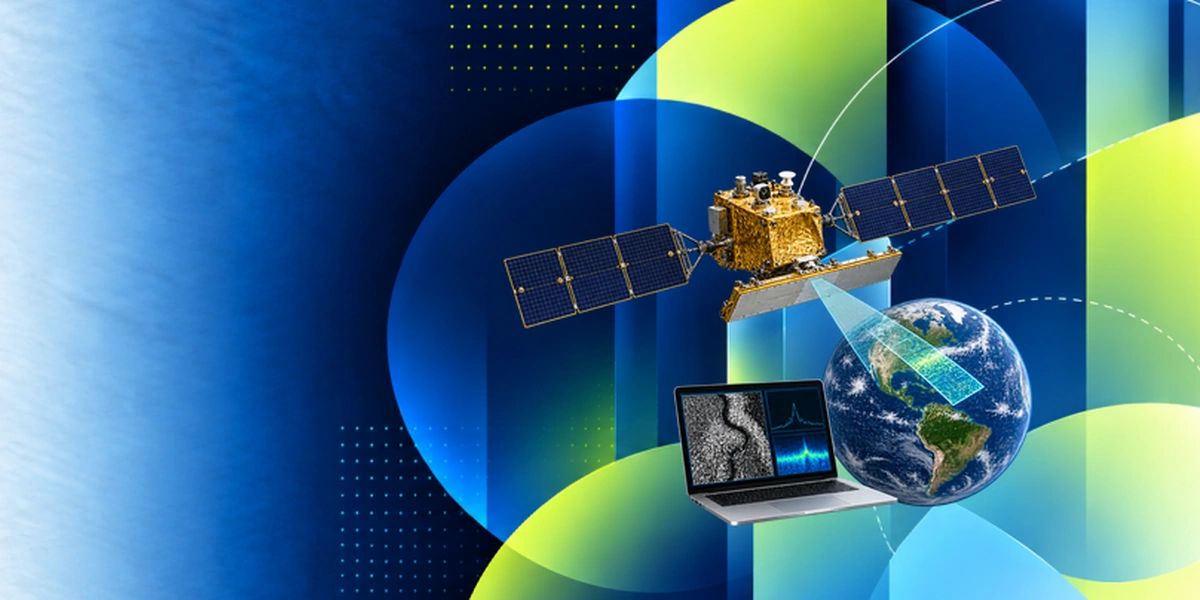
Phased-array radar engineering brings RF engineering and antenna design together into one system. Your team engineers RF systems, designs the antenna arrays, then builds full phased-array radar in this course, and finally applies the same skills to radar carried on satellites.



Why Choose Edstellar as Your Phased - Array Radar Systems Engineering Training Provider
Edstellar delivers radar engineering training shaped around your missions, frequency bands, and programs, with labs that mirror real development work.

EXPERT TRAINERS
YEARS DELIVERING
ORGANIZATIONS TRAINED
CERTIFIED
Tailored
Curriculum adapts to your mission profiles, frequency bands, team background, and program constraints.
Proven Methodology
A learn-practice-apply arc moves teams from array theory to a reviewed radar system design.
Practice-Based Learning
Guided simulation labs build design judgment before engineers commit to hardware decisions.
Expert Trainers
Radar systems engineers with production phased-array experience lead every session and lab.
Global Scale
We train engineering teams across sites, programs, and defense organizations worldwide.
Measurable Outcomes
Design checks on beam quality, detection budgets, and requirements traceability show progress.
Also from Edstellar
Talent assessments
Psychometric, behavioral, leadership and 360-degree assessment.
→Training needs analysis
Needs analysis, gap identification, and a training roadmap.
→L&D consulting
Learning strategy, content, technology and ROI measurement.
→OD consulting
Org design, succession planning and cultural change.
→Managed training services
Training outsourcing, vendor management, logistics and administration.
→Coaching solutions
Executive and manager coaching that keeps skills in use.
Start an RFP shaped to your needs.
Answer three quick questions about team size, scope, and how often you need the program run, then send the request from the last step. Everything you choose travels with it, so you only fill this in once.
How many team members need training?
Phased-Array Radar Systems Engineering Training Packages & Pricing
Where L&D holds an annual budget, license packages price the whole year at once instead of raising a purchase order per workshop. Hours and licenses are pooled across teams, programs and locations, so unused capacity is not stranded in one department.
Starter
120
trainee licenses64 hours of group training
Tailored for SMBs
Growth
320
trainee licenses160 hours of group training
Ideal for growing SMBs
Enterprise
800
trainee licenses400 hours of group training
Designed for large corporations
Custom
Unlimited
trainee licensesDuration set by the rollout
Multi-region and multi-year
Training Packages & Pricing
Choose the training format that works for your team. Pricing is customized based on your requirements, cohort size, and delivery needs.
Request Phased - Array Radar Systems Engineering Training for Your Team
Share your team size, mission focus, frequency bands, and timelines to receive a tailored training proposal with schedule options.