

Design of Experiments (DOE) Corporate Training
Plan, execute, and analyze structured experiments that lift quality and reduce variation.
This instructor-led program teaches your teams to design efficient experiments, separate real effects from noise, and turn data into decisions that improve processes.
Instructor-led group trainingVirtual / on-site / off-site10 languagesDelivered inEnglish, Spanish, Mandarin, German, Arabic, Portuguese, Hindi, French, Japanese, Italian100+ countriesWe have delivered inUnited States, United Kingdom, India, Canada, Germany, France, Netherlands, UAE, Saudi Arabia, Singapore, Australia, Japan, Brazil, South Africa and 90+ more countries
How we build a data-driven experimentation team
The Edstellar OPERATIONAL EXCELLENCE Capability Model
Diagnose
Map current trial-and-error practices and identify where structured experimentation can cut defects, rework, and cycle time.
Standardize
Adopt a repeatable DOE workflow, from objective setting and factor selection to randomized run plans and confirmation testing.
Practice
Run guided hands-on labs on factorial, screening, and response surface designs using real process data and statistical software.
Measure
Track effect sizes, confidence in conclusions, and improvements in yield, waste, and process capability after each experiment.
Scale
Embed DOE into design reviews, quality gates, and continuous improvement routines so every team experiments with rigor.





Need more than one program?Get a group quote
Trusted as a Leading Corporate Training Provider by
















Program Overview: What is Design of Experiments (DOE)?
Design of Experiments (DOE) is a statistical program for engineers and scientists who optimize processes. Participants learn factorial designs, ANOVA, screening designs, response surface methods, and Taguchi robust design. It suits quality engineers, R&D teams, and manufacturing professionals who run experiments. The program suits both newcomers to statistics and practitioners formalizing their experimental methods.
Training is experiment-driven: participants design real experiments, run them in simulated labs, and analyze results with statistical software. Instructors with industrial statistics experience review each design and coach on avoiding common pitfalls. Optimization modules turn data into better settings. The capstone is an end-to-end DOE project lab. Software walkthroughs ensure participants can replicate every analysis back at their own desks.
One-factor-at-a-time experimentation wastes time and misses interactions: teams run dozens of trials and still cannot explain the variation. Optimization stalls on guesswork. This program teaches structured experimentation that finds real effects with fewer runs. This program teaches structured experimentation that finds real effects with fewer runs and clearer conclusions.
In the capstone project lab, participants design, execute, and analyze a complete experiment on a realistic process: screening factors, modeling responses, and recommending optimal settings with statistical justification. They present findings to reviewers and return able to run experiments that actually answer the question.
Over this instructor-led program, participants move from DOE fundamentals to full factorial, fractional screening, response surface, and Taguchi robust designs. Guided hands-on labs let them build run plans, analyze results with statistical software, and confirm improvements on realistic process scenarios. By the end, your teams can plan experiments that need fewer runs, defend conclusions with data, and feed results directly into continuous improvement and quality routines.
What's Included in this Workshop for Your Enterprise Teams
- 1
Structured curriculum
Six modules that move from DOE basics to optimized, confirmed processes.
- 2
Hands-on practice
Labs on factorial, screening, response surface, and robust designs.
- 3
Capstone experiment
A full design, analysis, and confirmation cycle built around your processes.
- Instructor-led sessions delivered live, onsite or virtual
- Guided hands-on DOE labs in every module
- Realistic process datasets for analysis practice
- Templates for run plans, analysis, and confirmation reports
- Course materials and worked examples for reference
- Skills Matrix report for your team on request
Build your team's skills. Anywhere in the world.
Real-world use cases
from day one
Instructor-led training
for your teams
Delivered globally
in 100+ countries


Enterprise Training Solutions Customized for Your Company
One partner for instructor-led corporate training, delivered the way your teams work.
Request a Training Quote- Customized Training Delivery
- Scale Your Training: Small to Large Teams
- In-person Onsite, Live Virtual or Hybrid Training Modes
- Plan from 2000+ Industry-ready Training Programs
- Hands-On Labs on Live Infrastructure, Led by Industry Experts
Design of Experiments (DOE) Course Topics and Program Outline
Six modules take your team from DOE fundamentals through factorial, screening, response surface, and robust designs, ending with a capstone experiment that plans, analyzes, and confirms a real improvement.
Built by Edstellar with experimental design expertise
Built by practitioners who design and analyze experiments in production environments, shaped around your stack and use cases.
We review how your team currently tests process changes and pinpoint where structured experiments will save runs and cut waste.
Your team learns DOE principles, factorial logic, and ANOVA reading through instructor demos and guided examples.
Teams run guided labs on screening, factorial, and response surface designs using realistic process datasets and tools.
Each cohort plans and confirms a full experiment on its own processes, then reports the verified improvement to stakeholders.
Your team leaves having designed, analyzed, and confirmed a real experiment, not just studied theory.
Delivered as
Sessions are instructor-led and built around hands-on labs, so your team practices every technique on realistic process data before using it at work.

Build a draft experiment plan with objectives, factors, and levels for a realistic process scenario.
learna)What DOE is and where it fits in quality and continuous improvement
b)Defining objectives, responses, factors, and factor levels
c)Randomization, replication, and blocking to control noise
d)Confounding and why one-factor-at-a-time testing misleads
e)Planning an experiment: the seven-step DOE workflow
Analyze a full factorial dataset in statistical software, report significant effects, and state process recommendations.
learna)Two-level full factorial designs and the design matrix
b)Main effects, interactions, and effect plots
c)ANOVA for designed experiments: reading F-tests and p-values
d)Residual diagnostics and model adequacy checks
e)Interpreting interaction plots for process decisions
Select and analyze a screening design for a ten-factor process, then recommend the vital few factors for follow-up.
practicea)Why screen: factor sparsity and the project funnel
b)Fractional factorial designs, generators, and resolution
c)Plackett-Burman and other screening designs
d)Aliasing: what you can and cannot estimate
e)Sequential experimentation from screening to refinement
Optimize a two-response process with a response surface design and present the recommended operating window.
practicea)When linear models are not enough: curvature detection
b)Central composite and Box-Behnken designs
c)Fitting and validating second-order models
d)Contour and surface plots for insight
e)Desirability functions and multi-response optimization
Run a Taguchi parameter design on a process with noise factors and pick settings that minimize sensitivity.
applya)Robust design philosophy: quality through insensitivity to noise
b)Orthogonal arrays and parameter design
c)Signal-to-noise ratios for nominal, larger, and smaller goals
d)Inner and outer arrays for noise factor studies
e)Tolerance design and cost-quality trade-offs
Deliver a complete DOE cycle on a realistic process and present the confirmed improvement with supporting analysis.
applya)Scoping a real process problem for experimentation
b)Designing the run plan: factors, levels, and randomization
c)Executing and analyzing the designed experiment
d)Confirmation runs and verification of predicted results
e)Writing the DOE report and handoff to improvement teams
Customize this program tailored to your team?
Tell us your training needs: what your team already works with, the level they’re at, and the topics you want them to focus on. We’ll adjust the modules, duration and hands-on labs, and send you a customized outline for your group.
Key Skills and Outcomes Your Team Will Gain
Practical experimentation skills your team can apply to quality, yield, and process problems from the week after training.
Plan Structured Experiments
Define objectives, responses, factors, and levels, then sequence randomization, replication, and blocking correctly.
Run Factorial Designs
Build and execute two-level full factorial designs that quantify main effects and interactions efficiently.
Interpret ANOVA Output
Read F-tests, p-values, and residual plots to separate statistically significant effects from noise.
Screen with Fewer Runs
Use fractional factorial and Plackett-Burman designs to isolate the vital few factors from many candidates.
Optimize with Response Surfaces
Fit quadratic models and use contour plots and desirability functions to find best operating conditions.
Design for Robustness
Apply Taguchi parameter design and signal-to-noise ratios to reduce sensitivity to noise factors.
Confirm and Report Results
Run confirmation experiments, verify predicted gains, and communicate DOE findings in clear business terms.
Teams that Benefit from this Design of Experiments (DOE) Group Training
This program is built for teams that improve processes, products, or quality and want statistically sound answers instead of trial-and-error. Content adapts to role and experience, so each cohort practices the workflows it owns.
Cut defects with structured experimentation
Quality engineers learn to plan experiments that isolate root causes of variation and verify corrective actions with data.
Workflow friction
- High scrap and rework rates
- Conflicting factor opinions
- Slow CAPA closures
How the program helps
- Faster root cause confirmation
- Defensible improvement claims
- Fewer validation reruns
Practice use cases
- defect reduction studies
- process capability trials
- validation support
Prioritize improvements that actually work
Improvement teams use DOE to test changes rigorously before rollout, avoiding backsliding and rework.
Workflow friction
- Improvements that do not hold
- Too many change ideas
- Limited testing capacity
How the program helps
- Evidence-based Kaizen events
- Clear before-after gains
- Reusable experiment templates
Practice use cases
- Kaizen experiment design
- pilot run planning
- benefit verification
Dial in stable process settings
Manufacturing engineers optimize machine and process parameters while keeping sensitivity to noise low.
Workflow friction
- Shift-to-shift variation
- Long setup tuning cycles
- Raw material drift
How the program helps
- Stable optimal settings
- Reduced startup scrap
- Faster new product ramp
Practice use cases
- parameter optimization
- tolerance studies
- line qualification
Shorten development with efficient testing
R&D groups screen formulations, materials, or designs with fractional designs that squeeze more learning from each run.
Workflow friction
- Expensive prototype runs
- Many candidate variables
- Long development timelines
How the program helps
- Fewer development cycles
- Faster formulation screening
- Confident design choices
Practice use cases
- formulation screening
- design optimization
- material selection
Every cohort's scenarios and datasets are matched to its industry and processes.
Prerequisites: This program benefits quality, process, manufacturing, and R&D teams most. Basic statistics familiarity helps but is not required, since foundations are built in the opening modules. No prior DOE experience is needed, and the content adapts to each cohort's tools, processes, and industry context.
Process Analyst to DOE Practitioner
Learners progress from planning simple experiments to independently designing, analyzing, and confirming multi-factor studies.
One program that grows with experimentation careers, from first structured trials to confident, independent DOE practice.
Different Teams, Locations, Time Zones, or Languages? We've Got You Covered.
Whether your teams are spread across countries, time zones, languages, or experience levels, we deliver tailored training programs that ensure a consistent learning experience across your global workforce.
Certificate of Training Completion.
On successful completion, employees receive an Edstellar course completion certificate, recognizing their commitment to ongoing learning and professional development. It validates the skills they have built and motivates them to keep growing and contribute to organizational success.
Earned, not attended. Awarded on completion of all hands-on labs and the capstone project.

Training Delivery Modes: Onsite, Virtual and Hybrid
Choose the format that fits your teams. Every mode is instructor-led and includes the same guided DOE labs.
Onsite Training
Bring the instructor to your site and work directly on your processes, datasets, and improvement priorities.
- Work on your own process data
- Whiteboard-style experiment planning
- Direct coaching during labs
- Team alignment in the same room

Live Virtual Training
Join live from anywhere with interactive labs, screen sharing, and real-time instructor feedback.
- Live labs with shared datasets
- Breakout rooms for small teams
- Recorded sessions for review
- No travel cost or downtime

Hybrid Training
Blend onsite collaboration with virtual sessions so distributed teams learn together without losing lab time.
- Same guided labs in every mode
- Live instructor Q&A throughout
- Team breakout sessions for group analysis
- Flexible scheduling across sites

Need a customized training format that works for your team?
Our training delivery is customized to your team's schedule, full days, half days, sessions spread across weeks, or modular formats. Share your preferred timeline, and we'll plan the training around it.
Frequently Asked Questions
Share your team size, preferred dates, and delivery mode through the group quote form, and a training advisor will respond with pricing and a plan.
Yes. A short discovery call helps us understand your processes, tools, and goals so the labs reflect your environment.
Yes. Live virtual sessions include the same guided DOE labs, breakout rooms, and real-time instructor feedback as onsite delivery.
Yes. Onsite delivery lets your team work on its own processes and datasets with the instructor present for coaching.
The program runs 24 hours of instructor-led sessions, typically scheduled across three to four days depending on your calendar.
Question not answered here?
Put it in the request. A training specialist answers it directly, within one business day.
Where this Training Fits in Your Team's learning path.
Design of experiments comes after statistical process control: once your team can tell normal variation from real change, it can test which factors cause it. DOE then feeds into Black Belt projects and into quality by design, where experiments define safe operating ranges.
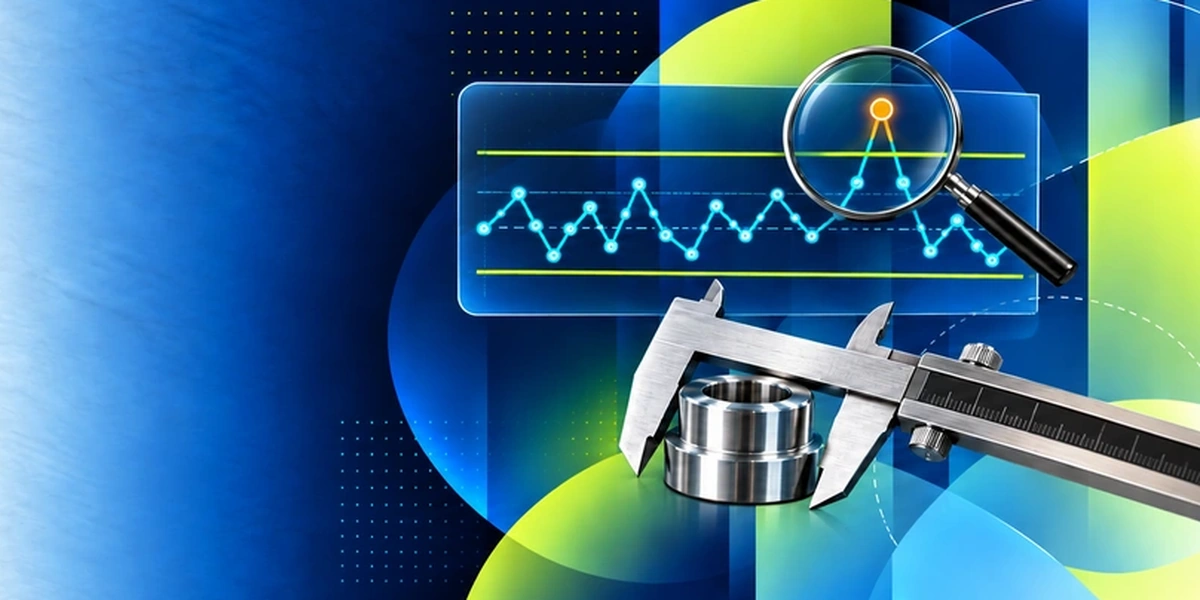
SPC
Statistical Process Control Training
Use control charts and capability studies to understand how much a process naturally varies.
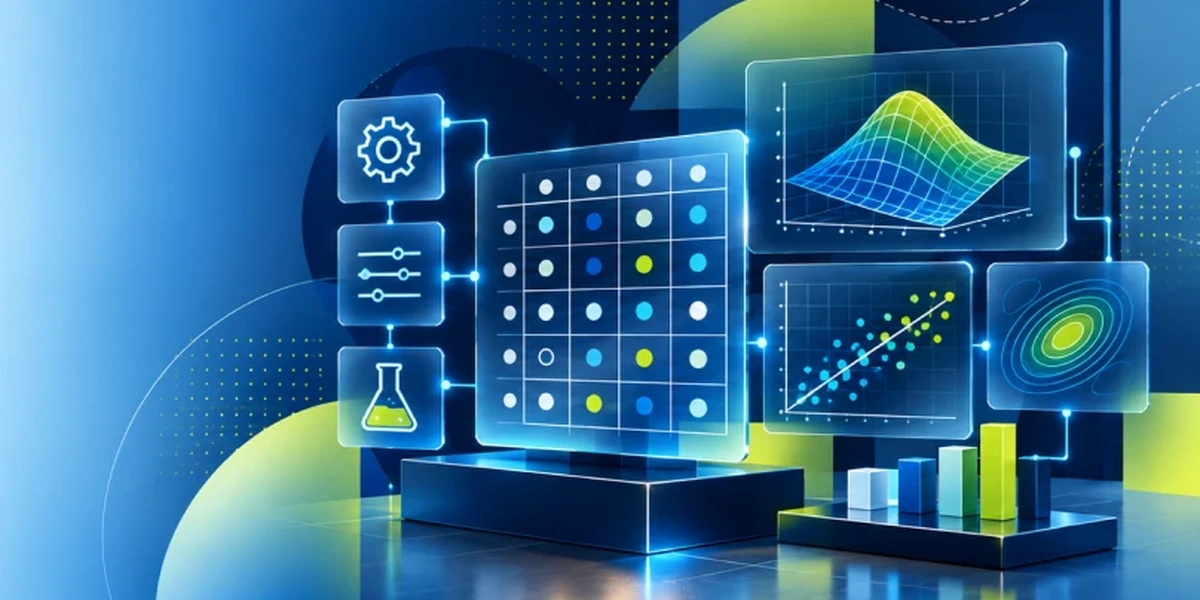
DESIGN EXPERIMENTS
Design of Experiments (DOE) Training
Plan, run and analyse factorial and other designed experiments to find the factors that matter.

BLACK BELT
Lean Six Sigma Black Belt Training
Use DOE inside larger Black Belt projects alongside advanced statistics and project leadership.

QUALITY BY DESIGN
Quality by Design Training
Apply experiments to define design spaces and critical process parameters in regulated manufacturing.
Why Choose Edstellar as Your Design of Experiments (DOE) Training Provider
Edstellar delivers DOE training that is technical, applied, and tied to your processes, so skills transfer directly to the next improvement project.
EXPERT TRAINERS
YEARS DELIVERING
ORGANIZATIONS TRAINED
CERTIFIED
Tailored
Curriculum, datasets, and capstone scenarios are adapted to your industry, processes, and statistical tools.
Proven Methodology
A field-tested DOE workflow moves cohorts from planning to confirmation with consistent, defensible results.
Practice-Based Learning
Guided hands-on labs in every module let learners analyze realistic experiments before touching live processes.
Expert Trainers
Instructors are practitioners who run designed experiments in manufacturing, quality, and R&D settings.
Global Scale
Consistent DOE curriculum delivery across sites and time zones keeps every team to the same analytical standard.
Measurable Outcomes
Capstone experiments and lab reviews show confirmed improvements in yield, waste, or variation for your records.
Make Process Experiments Informative Through Structured Designs and Clear Statistical Evidence
Edstellar develops DOE capability from objectives and factors to screening, optimization, and robust design. Participants analyze representative datasets and plan confirmation before presenting a complete experiment cycle. Review focuses on design suitability, interaction and noise interpretation, and the evidence supporting a recommended operating window, including relevant uncertainty and limitations.
- Step 01
Consult
We explore process-improvement responsibilities and statistical familiarity to identify gaps in factor selection, design choice, interaction analysis, and confirming experimental findings.
- Step 02
Plan
We establish experimental planning before factorial ANOVA and screening, then response surfaces and Taguchi methods within the complete DOE project and confirmation review.
- Step 03
Align
We align experimental-design instruction with quality, manufacturing, process, and R&D teams, providing statistical foundations and tools suited to their existing analytical experience.
- Step 04
Customize
We tailor sample process factors, responses, and noise conditions to relevant operations while keeping run constraints, measurement quality, and confirmation requirements explicit.
- Step 05
Execute
Participants analyze effects, select screening factors, and compare operating windows, receiving feedback on design assumptions, interactions, robustness, and the strength of statistical conclusions.
- Step 06
Evaluate
We assess the DOE project for appropriate design, transparent analysis, supported recommendations, and confirmation evidence that acknowledges variability and limits of inference.
Also from Edstellar
Talent assessments
Psychometric, behavioral, leadership and 360-degree assessment.
→Training needs analysis
Needs analysis, gap identification, and a training roadmap.
→L&D consulting
Learning strategy, content, technology and ROI measurement.
→OD consulting
Org design, succession planning and cultural change.
→Managed training services
Training outsourcing, vendor management, logistics and administration.
→Coaching solutions
Executive and manager coaching that keeps skills in use.
Start an RFP shaped to your needs.
Answer three quick questions about team size, scope, and how often you need the program run, then send the request from the last step. Everything you choose travels with it, so you only fill this in once.
How many team members need training?
Design of Experiments (DOE) Training Packages & Pricing
Where L&D holds an annual budget, license packages price the whole year at once instead of raising a purchase order per workshop. Hours and licenses are pooled across teams, programs and locations, so unused capacity is not stranded in one department.
Starter
120
trainee licenses64 hours of group training
Tailored for SMBs
Growth
320
trainee licenses160 hours of group training
Ideal for growing SMBs
Enterprise
800
trainee licenses400 hours of group training
Designed for large corporations
Custom
Unlimited
trainee licensesDuration set by the rollout
Multi-region and multi-year
Training Packages & Pricing
Choose the training format that works for your team. Pricing is customized based on your requirements, cohort size, and delivery needs.
Request a Quote for Design of Experiments (DOE) Training for Your Team
Tell us about your team, processes, and goals, and we will shape the DOE program around your improvement priorities.