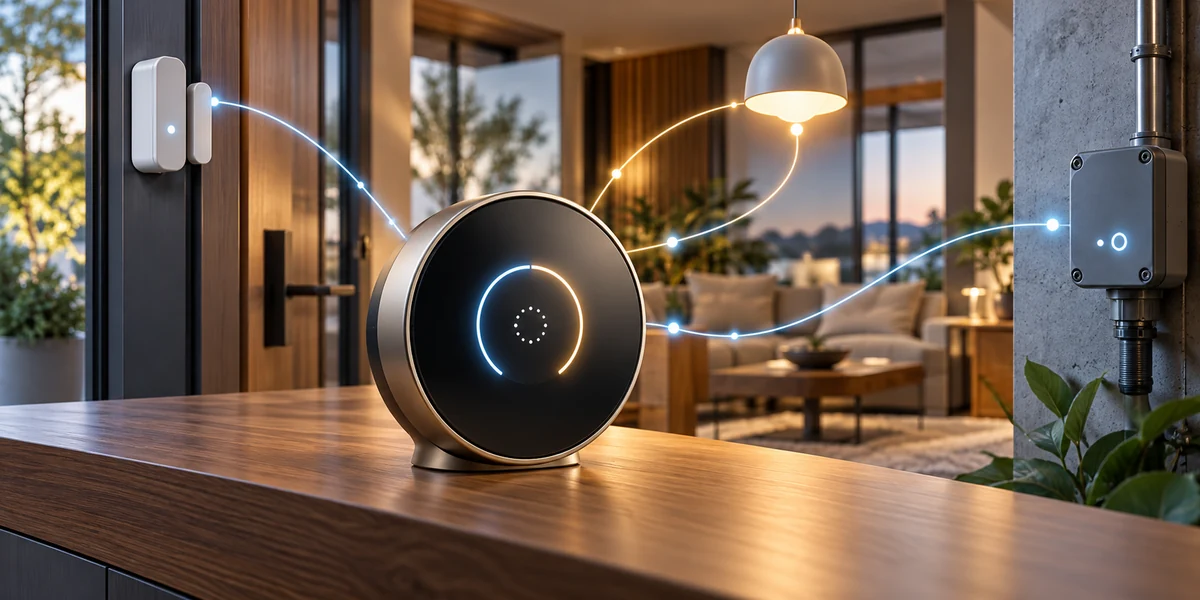
Connected Product Program
Takes a connected product from device to platform
2 ProgramsIoT architects, embedded engineers, and product managers


From sensor to cloud, built for the enterprise.
Edstellar builds IoT capability inside enterprises: architecture, connectivity, edge computing, and device security for connected products, smart infrastructure, and industrial IoT. Programs are instructor-led, tailored to your use cases and hardware, and delivered virtually or onsite.
Instructor-led workshops and programsIn-house, virtual or blended10+ languagesDelivered in English, Spanish, Mandarin, German, Arabic, Portuguese, Hindi, French, Japanese, Italian, and more100+ countriesWe have delivered in United States, United Kingdom, India, Canada, Germany, France, Netherlands, UAE, Saudi Arabia, Singapore, Australia, Japan, Brazil, South Africa and 90+ more countries

Trusted as a Leading Corporate Training Provider by
















Internet of Things training is instructor-led group training that builds an organization's ability to design, deploy, and operate connected products and systems. It spans IoT architecture, smart devices, and fleet telematics. Programs are scoped to your use cases, from connected products to logistics fleets, and delivered to a closed cohort rather than sold as individual seats.
The distinction that matters commercially is between connected demos and connected operations. A prototype that reports to a dashboard is not a product: security, scale, device management, and data value are what separate pilots from revenue. Our programs build that operational discipline, so teams ship connected systems that work in the field, not just the lab.
Programs cover the IoT stack end to end. Architecture and connected products: designing systems from sensor to cloud. Smart devices: architecting hardware, firmware, and connectivity. And fleet telematics: IoT for fleet management teams, from tracking to predictive operations.
Every engagement starts with discovery: your use case, your devices, and where the value sits. Trainers are then matched from a vetted bench of IoT practitioners, and the program is tailored before delivery. Cohorts are closed to your organization, run in your timezone, and measured with pre- and post-assessments so leadership can see what changed.
One area carries the catalog. Start where your use case sits.
Internet of Things (IoT) programs to start with.
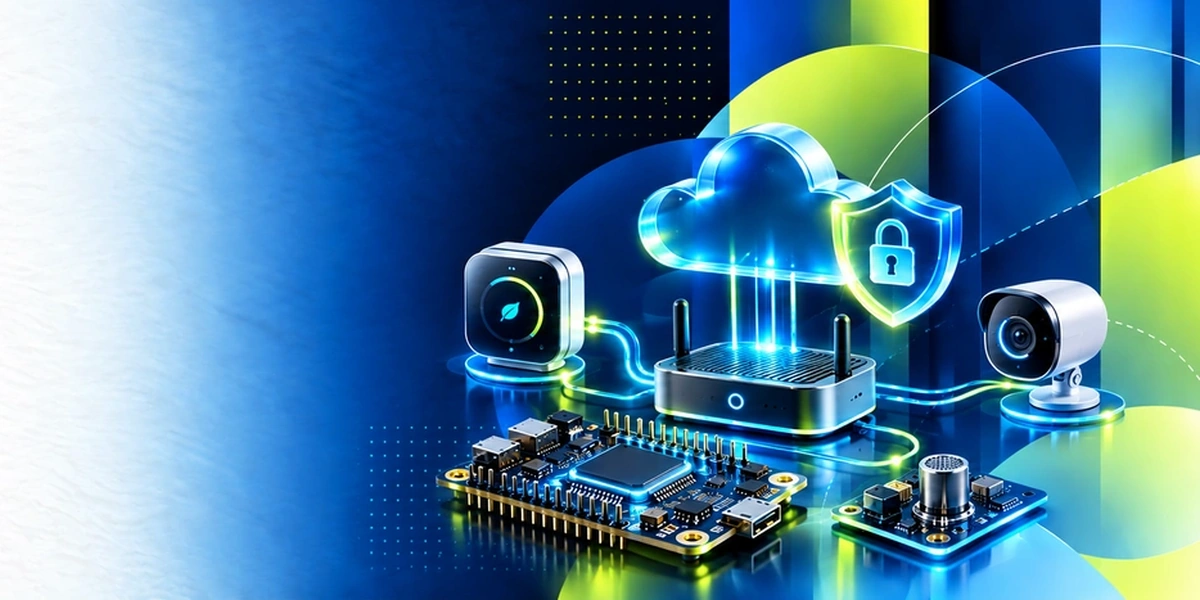
Architect smart IoT devices across hardware, firmware, connectivity and cloud.
Browse all 8 Internet of Things programs across 1 topic, from IoT architecture and smart devices to embedded security and hardware design. Filter by topic and delivery format, then request a tailored proposal.
SHOWING 1–7 OF 7 · 7 IN THE LIVE CATALOG
Architect smart IoT devices across hardware, firmware, connectivity and cloud.
Add secure boot, firmware protection and secure coding to embedded devices.
Design hardware from requirements through schematics and component selection.
Design connected product architecture across devices, networks and cloud.
Test IoT devices with attacker techniques to find weaknesses.
Write, build and debug Linux kernel device drivers.
Build prototypes on Raspberry Pi with sensors, GPIO and Linux.
Build your team’s capabilities in internet of things (IoT) with curated training programs arranged in a clear learning sequence. Each pathway builds skills progressively, helping your workforce achieve defined milestones and apply their learning to business goals.
Takes a connected product from device to platform
Design IoT architectures for connected products: edge-cloud topology, data flow and lifecycle management.
Architect smart IoT devices: hardware selection, firmware design, connectivity protocols and security.
Explore internet of things (IoT) training aligned with your teams’ functions, job roles, industry and tools. Help your teams build the knowledge and practical skills to apply internet of things (IoT) technologies across your organization, supporting your business priorities and evolving needs.
Connect equipment signals with maintenance decisions and operational priorities. Develop monitoring and escalation practices that turn device data into useful action.
Build useful data flows from connected devices to business analysis. Improve telemetry quality, context and interpretation across edge and cloud systems.
Manage connected devices as an ongoing operational service. Strengthen onboarding, monitoring and change practices across the device lifecycle.
Identify security responsibilities across devices, networks and supporting services. Build practical requirements and review processes for secure product lifecycles.
Develop device software that communicates reliably with surrounding systems. Connect hardware constraints, telemetry and update behavior with the intended operational use.
Design connected systems around business outcomes and operating constraints. Balance edge, cloud, data, security and integration choices across the solution lifecycle.
Apply connected-device data to production visibility and process improvement. Coordinate operational technology, quality and maintenance perspectives around practical plant use cases.
Use connected infrastructure data to understand demand, assets and operating conditions. Design monitoring and analytical workflows appropriate to energy services and charging networks.
Build connected workflows using relevant AWS IoT services. Strengthen device communication, fleet operations and integration with cloud or edge processing.
Connect device information with Azure-supported operational workflows. Develop stronger patterns for telemetry ingestion, device management and downstream analysis.
Training a role that is not listed, or a mix of them? Tell us who you are training and what they need to do, and we build the shortlist
Where IoT teams most often cross-train, based on how these courses are classified.
Domain-level outcomes, not course objectives. These are the capabilities enterprises usually buy this training to build.
Design IoT systems from sensor to cloud: devices, connectivity, and platforms that scale.
Build smart devices with the hardware, firmware, and connectivity choices that survive the field.
Run fleet telematics that cut cost and improve safety: tracking, maintenance, and insight.
Secure devices and data across the IoT lifecycle, from provisioning to decommission.
Turn device data into decisions: pipelines and analytics that create value.
Move from pilot to production: device management, updates, and operations at scale.
Onsite, live virtual, or hybrid, every program is instructor-led and built around your teams.
A trainer comes to your office and works face to face with your team, using your policies and your examples.
For small teams or enterprise-wide training, across one site or multiple global locations, in one language or multiple languages.
Get a QuoteExpert-led live online sessions delivered anywhere, with consistency and easy scheduling. Training tools such as Zoom or Microsoft Teams are selected subject to your organization's approval and compliance requirements.
For small teams or enterprise-wide training, across one site or multiple global locations, in one language or multiple languages.
Get a QuoteCombine in-person sessions with live online training in a coordinated instructor-led program, with the mix planned around your team's needs.
For small teams or enterprise-wide training, across one site or multiple global locations, in one language or multiple languages.
Get a QuoteConnected devices create value when engineering choices reflect operational needs. Edstellar tailors role-based, instructor-led IoT training for engineers, developers, IT teams and operational stakeholders around your use cases and environment. Practical learning connects sensing, connectivity and data flows with reliability, device security and lifecycle responsibilities, helping teams evaluate deployment trade-offs and build capabilities for evolving devices, edge technologies and connected business services.

Link sensors, connectivity and data flows to operational use cases
Connect engineering, IT and operational teams around deployment decisions
Consider onboarding, updates and device risks throughout operational lifecycles
Evaluate emerging devices and edge capabilities against real deployment constraints
Organizations trained across industries inform learning around connected operational needs
Company-wide corporate training experience supports applied IoT capability development
Our company-wide trainer network connects IoT with complementary engineering disciplines
Edstellar's certified quality and information-security management systems support IoT training delivery
Every engagement runs the same five stages, from capability baseline through delivery to sustained measurement.
We meet your stakeholders and L&D team to baseline what your people can do today against the IoT capability you need.
Weeks 1–2
Programs are assembled against your policies, obligations, and team levels, then trainers are shortlisted from the vetted bench.
Weeks 2–4
Closed-cohort instructor-led sessions in your language and timezone, with labs, exercises, and materials shipped alongside.
Scheduled to your calendar
Pre- and post-assessments establish a measurable change in capability, benchmarked against role frameworks.
Immediately after delivery
Retrospectives, refresher modules and skill-refresh tracking keep the investment from decaying, and the measured gaps feed the next cycle.
Quarterly
Stage 05 feeds the next cycle: the gaps it measures become the next Discover.
Also from Edstellar
Psychometric, behavioral, leadership and 360-degree assessment.
Needs analysis, gap identification, and a training roadmap.
Learning strategy, content, technology and ROI measurement.
Org design, succession planning and cultural change.
Training outsourcing, vendor management, logistics and administration.
Executive and manager coaching that keeps skills in use.
Product engineers, embedded teams, fleet operators, logistics managers, and innovation leaders exploring connected products.
Instructor-led and live, as a closed cohort for your team, onsite, virtual, or hybrid. Labs use realistic device scenarios. You choose the format, schedule, and timezone.
Yes. Programs are tailored to your use case: connected products, smart devices, or fleet telematics. Tell us your context in the discovery call.
Most programs run 16 to 24 hours across several sessions, scheduled around your calendar.
Cohorts run from a single small team up to multi-team rollouts, with one trainer per cohort for hands-on quality.
Yes. Programs include architecture workshops and device-scenario labs built on realistic IoT deployments.
Pre- and post-assessments benchmark each participant, with a completion report showing measured change per cohort.
Yes. Your devices, use cases, and data goals are built into the exercises.
Yes. Programs address device security, data protection, and fleet compliance requirements.
A room or virtual setup and participant list. We ship lab guides, exercises, and completion evidence.
Discovery to delivery typically takes two to four weeks, depending on customization depth and trainer matching.
Yes. You can sit in on a trial session with the shortlisted trainer before committing, to check fit with your team and level.
Pick the scale that matches your rollout. Every quote is tailored to your teams and timeline.
Team size
1–25 PARTICIPANTS
One or two programs for a single team, delivered as a closed cohort. The usual entry point for a first IoT engagement.
26–150 PARTICIPANTS
Multiple cohorts or programs for larger teams, with delivery structured around your workforce and training requirements.
151–1,000 PARTICIPANTS
A coordinated rollout across business units, with role-based tracks and central reporting for L&D.
1,000+ PARTICIPANTS
IoT capability at organizational scale, with dedicated management and measurement from pilot to rollout.
Tell us which teams you are training and what they need to be able to do. Anything you filtered in the catalog comes through with your message.