10 Most In-Demand Skills in Botswana for 2026
.webp)

.svg "edstellar")

Botswana is navigating its most significant economic transition since independence, with unemployment standing at 38.2% according to the UNDP's 4th National Human Development Report, youth unemployment reaching 36%, and the diamond sector that built the country's middle-income status contracting 43.1% in Q2 2025. De Beers' rough diamond sales dropped from $6 billion in 2022 to $2.7 billion in 2024, and lab-grown diamonds now account for nearly 50% of engagement ring purchases globally, a tenfold increase from 5% in 2019.
For corporate L&D leaders and HR managers operating in Southern Africa's most stable democracy, these numbers translate into an urgent need to build skills in the sectors that will replace diamonds as the engine of Botswana's economy.
The government's response has been decisive. President Duma Boko launched the Botswana Economic Transformation Program (BETP) in June 2025, a comprehensive strategy targeting nine priority sectors: agriculture, manufacturing, infrastructure, financial services, digitalisation, tourism, energy, healthcare, and education. The 2025/2026 national budget allocated P1.47 billion (approximately $117 million) to accelerate the SmartBots digital transformation strategy, while the 12th National Development Plan commits 388 billion pula ($27 billion) to diversification through 2030.
A new sovereign wealth fund launched in September 2025 is directing diamond revenues into agro-processing, renewables, and tourism. Yet 71% of employers report difficulty finding qualified talent, and the gap between what the economy needs and what the education system produces remains the central workforce challenge.
So which skills are truly driving Botswana's transformed economy, and where should organisations invest their training budgets? This guide breaks down the top 10 skills in demand in Botswana, spanning digital technology, mining, healthcare, tourism, and renewable energy. Drawing on Statistics Botswana labour data, the Botswana Labour Market Observatory, BETP sector priorities, and industry hiring trends, it provides an evidence-based picture of what jobs are in demand in Botswana, whether you are planning corporate upskilling programmes, building internal talent pipelines, or advising teams on high demand skills in Botswana for 2026 and beyond.
Every ranking in this guide is backed by data from Botswana government bodies, industry associations, and international development organisations.
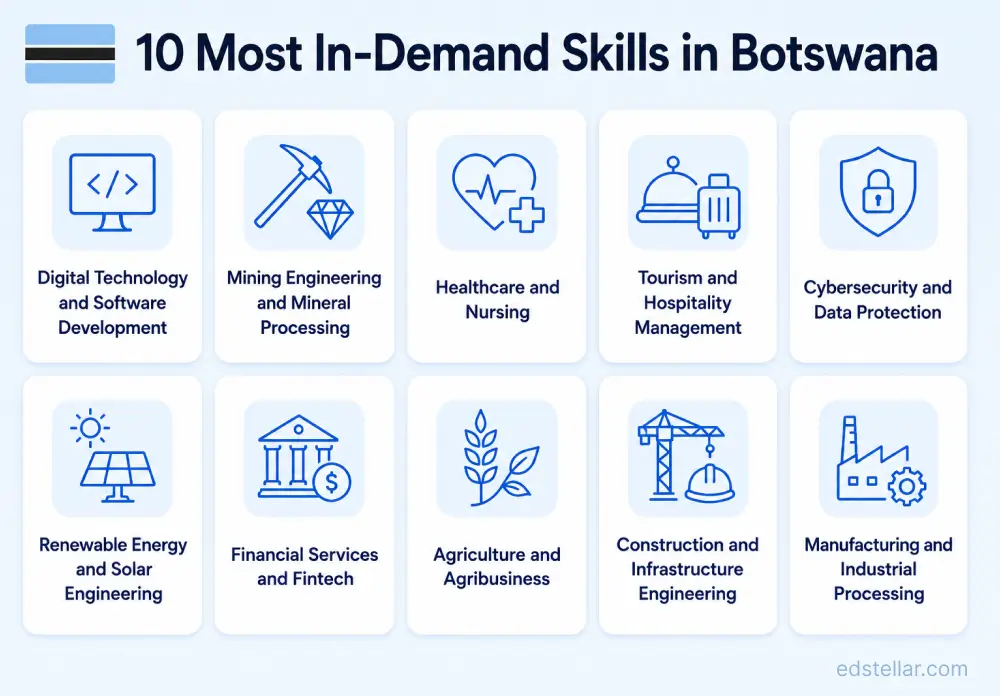
Botswana's skills landscape in 2026 reflects the urgent need to diversify beyond diamonds into sectors that can absorb the country's educated but underemployed youth. The 10 skills below span technology, mining, healthcare, tourism, agriculture, and energy, mirroring the BETP's nine priority sectors and the areas where government investment, employer demand, and growth potential are highest. Each ranking draws on the policy signals, job market data, and industry investments outlined in the sources above.

The Botswana government allocated P1.47 billion ($117 million) in the 2025/26 national budget to accelerate the SmartBots digital transformation strategy, making ICT one of the most heavily funded sectors in the country. The ICT sector grew 4.1% in Q2 2024 while the broader economy contracted, and the 2026/27 Budget Strategy Paper positions digitalisation as one of four core national priorities alongside private-sector expansion, infrastructure modernisation, and human capital development. The SmartBots strategy aims to connect 500 schools to the internet, expand village connectivity, and roll out a Digital Competency Framework to enhance digital literacy across the population.
Despite this investment, many young Batswana lack the technical skills needed for digital jobs and advanced ICT positions. The skills shortage is the primary barrier to growth in the sector, and without the right capabilities, businesses and government agencies cannot fully implement the SmartBots vision. Software developers, web designers, mobile application engineers, and systems administrators are in consistent demand across government ministries, banks, telecommunications companies (Mascom, Orange, BTC), and the growing startup ecosystem in Gaborone. The EU is also supporting Botswana's digital transformation through the Expertise France programme, adding international dimension to workforce development efforts.
The SmartBots Lab initiative is financing startups and incubators, while a partnership with MIT is bringing international expertise to Botswana's tech training ecosystem. The government is creating a Technical and Vocational Education and Training (TVET) Policy that incorporates AI, signalling the direction of future skills demand. For professionals already working in IT support or basic administration, upskilling into software development, cloud computing, or data analytics represents one of the most direct pathways to higher compensation and career growth in Botswana's evolving economy.
Government & Public Sector, Banking & Financial Services, Telecommunications, E-Commerce & Startups
Explore Related Training:
Python Programming MERN Full Stack Development All Software Development Programs
While diamonds have defined Botswana's mining sector for decades, the country is turning its attention to a richer spectrum of mineral opportunities including copper, nickel, gold, silver, uranium, coal, and rare earth elements according to the U.S. International Trade Administration. Botswana holds approximately 200 billion tonnes of coal reserves, and major copper operations including Sandfire Resources' Motheo Copper Mine and MMG's Khoemacau Copper Mine (acquired in 2024) are expanding production. The emphasis on domestic value addition means that Botswana needs not just extractive expertise but also mineral processing, metallurgy, and beneficiation skills.
The diamond sector itself is undergoing transformation. Jwaneng, the richest diamond mine in the world and responsible for more than half of Debswana's total production, has open-pit operations projected to end in 2036, with underground expansion requiring entirely different mining competencies. The new De Beers partnership signed in February 2025 gradually increases Botswana's share of rough diamond output from 25% to 50%, creating demand for diamond cutting, polishing, and valuation professionals. Despite Debswana's 1,000-person layoff in 2025, the broader mining diversification is creating new roles in exploration, geological surveying, and environmental compliance.
Mining employs only 1.4% of the total workforce yet contributes approximately 16.7% of GDP, making it one of the highest-productivity sectors. Professionals with expertise in geological exploration, mine planning, environmental management, and mineral beneficiation are in demand across both established and emerging operations. The BETP's focus on value addition means that processing minerals domestically rather than exporting raw ore will create entirely new categories of manufacturing and engineering jobs over the next decade.
Diamond Mining & Beneficiation, Copper & Nickel Mining, Coal & Uranium Extraction, Geological Services

Botswana faces an acute shortage of nurses and midwives across health facilities, with staff shortages particularly severe in rural and hard-to-reach areas according to Botswana Gazette reporting. The Nursing and Midwifery Council of Botswana's strategic plan projected the need for at least 12,000 registered nurses and midwives, but current supply falls significantly short of this target. Hospital nurse vacancy rates have risen post-COVID, and experienced nurses with over ten years of service continue to be the most likely to leave the profession, creating a critical gap in clinical leadership and mentorship.
The government has embarked on a recruitment drive to strengthen the healthcare workforce, with 16 D1 nursing positions and three D2 positions recently filled through promotions. Additional recruitment is ongoing, with more positions expected to be filled by the end of April 2026. The Ministry is exploring long-term measures including rationalising nurse specialists such as midwives and expanding training opportunities through collaboration with development partners. Healthcare is one of the nine BETP priority sectors, and the BETP healthcare cluster is focusing on expanding primary care capacity, strengthening referral systems, and building digital health infrastructure.
Beyond nursing, Botswana needs physicians, pharmacists, laboratory technicians, and allied health professionals to serve its population of approximately 2.4 million. The HIV/AIDS burden, which affects approximately 20% of adults, requires ongoing investment in antiretroviral therapy management, counselling, and community health services. For healthcare professionals, Botswana offers opportunities in both public hospitals and the growing private healthcare sector, with Princess Marina Hospital in Gaborone, Nyangabgwe Referral Hospital in Francistown, and private facilities expanding their service offerings.
Public Hospitals & Clinics, Private Healthcare, NGOs & Development Partners, Pharmaceutical & Laboratory Services

Tourism is central to Botswana's post-diamond economic strategy, with the government aiming to create 5,000 additional jobs by 2030 through the National Tourism Strategy and Master Plan. In the 2025/2026 financial year, 223 new tourism enterprise licences were issued, with citizens owning the majority, and 416 new jobs were created through newly licensed facilities against a target of 1,000 by year-end. The government is strengthening inter-district tourism circuits linking the Okavango Delta, Tsodilo Hills, Kasane, Chobe National Park, Gaborone, and Francistown, while expanding offerings in culture, heritage, conferencing, sport, and urban tourism.
Botswana's high-value, low-volume tourism model positions it at the premium end of the African safari market, attracting affluent international travellers willing to pay significant amounts for exclusive wilderness experiences. This model requires exceptionally well-trained staff in luxury hospitality, wildlife guide certification, lodge management, and conservation-based tourism. International operators including Wilderness Safaris, &Beyond, Belmond, and Natural Selection run premium properties across the Okavango Delta and Makgadikgadi Pans, each requiring skilled managers, chefs, guides, and conservation staff.
The government is upgrading infrastructure in wildlife-protected areas and approving new lodging sites within four of the largest national parks. As more affluent travellers seek remote, untouched landscapes, Botswana's position as a luxury and sustainable tourism destination is strengthening. For young Batswana, tourism offers one of the most accessible pathways to employment, with roles ranging from safari guiding and lodge operations to event management and cultural tourism, though the sector requires service standards that demand structured training programmes.
Safari & Wildlife Tourism, Luxury Lodges & Hotels, National Parks & Conservation, Cultural & Heritage Tourism

As Botswana accelerates its digital transformation under the SmartBots strategy, the need for cybersecurity professionals is growing across banking, telecommunications, healthcare, corporate enterprises, and government institutions. The P1.47 billion investment in digital infrastructure, connecting 500 schools and 1,000 public facilities to the internet, creates a vastly expanded attack surface that requires trained security professionals to protect. Financial institutions including First National Bank Botswana, Stanbic Bank, Absa Botswana, and Bank of Botswana are all investing in cybersecurity capabilities as digital banking adoption increases.
The cybersecurity talent pool in Botswana remains small relative to the growing demand. Understanding the full scope of cybersecurity engineer roles and responsibilities helps organisations design training that builds both technical and governance capabilities. Professionals with certifications in CISSP, CEH, or CompTIA Security+ are particularly valued, as they demonstrate international-standard competencies that Botswana's regulatory framework increasingly requires. The Data Protection Act and evolving compliance requirements are creating additional demand for privacy officers and data governance specialists.
For Batswana professionals, cybersecurity represents one of the highest-paying technology career paths, with salaries significantly above the national average. The field also offers strong remote work potential, as Botswana-based professionals can serve clients across Southern Africa. Government ministries, parastatals, mining companies, and financial institutions all represent active hiring markets for cybersecurity talent. The SmartBots Lab and international training partnerships are beginning to build a domestic pipeline, but demand will outpace supply for years to come.
Banking & Financial Services, Government & Parastatals, Telecommunications, Mining & Energy

Botswana receives over 3,200 hours of sunshine per year, making it one of the most solar-rich countries in Africa, yet renewable energy capacity remains low. The government has set targets to source 15% of energy from renewables by 2030, 36% by 2036, and 50% by 2040. Renewable energy capacity is expected to grow at a compound annual growth rate of approximately 72% between 2025 and 2030 according to industry projections. In collaboration with Namibia, the African Development Bank, and other international partners, Botswana is working on a Mega Solar project aimed at generating 2 to 5 gigawatts of solar power.
A memorandum signed with India's KP Group to develop up to 5 GW of renewable capacity could mobilise approximately $4 billion in investment, including grid and interconnection upgrades. Energy is one of the nine BETP priority sectors, with 26 energy, water, and transport infrastructure projects prioritised under the programme. The Diamonds for Development Fund, worth 1 billion pula, jointly established by Gaborone and De Beers, specifically targets energy alongside smart agriculture and tourism, channelling diamond revenues into clean energy development.
The rapid scaling of solar and wind projects will create demand for solar PV designers, installation technicians, electrical engineers, project managers, and grid integration specialists. Salary ranges for skilled technicians and installers are currently $375 to $750 per month, while engineers and project managers earn $750 to $1,500. Botswana's large unskilled workforce of approximately 40% presents both a challenge and an opportunity: with structured training programmes, the renewable energy sector can absorb significant numbers of workers transitioning from traditional sectors while building the clean energy infrastructure the country needs.
Solar Power Generation, Utilities & Power Distribution, Construction & Engineering, Government Energy Projects

Financial services and digitalisation is one of the nine BETP priority sectors, and Botswana's fintech ecosystem is showing promising growth, particularly in digital payments and mobile money. The Bank of Botswana oversees a banking sector that includes both established commercial banks (First National Bank, Stanbic, Absa, Standard Chartered) and emerging digital financial services providers. The BETP's vision of positioning Botswana as a regional financial centre builds on the country's strong governance reputation and the existing Botswana International Financial Services Centre (IFSC).
The demand for professionals with combined finance and technology skills is growing as banks digitise their operations and new fintech entrants launch mobile payment, digital lending, and insurance technology platforms. Compliance, anti-money laundering, and financial crime prevention skills are also in demand as regulatory requirements evolve, and professionals who can analyse customer transaction data to support data-driven lending decisions are increasingly valued across the sector.
Botswana's fintech sector remains at an early stage compared to African hubs like Kenya, South Africa, and Nigeria, but the BETP's commitment to regional finance positions the country for growth. Venture capital activity in fintech is still limited, presenting opportunities for professionals who can build and scale financial technology products in an emerging market. For accountants, bankers, and finance professionals, upskilling into data analytics, digital banking platforms, and regulatory technology represents a path to higher-value roles in Botswana's evolving financial sector.
Commercial Banking, Insurance, Pension & Asset Management, Fintech Startups, Regulatory Bodies
Explore Related Training:
Financial Modeling with Excel Financial Risk Management All Finance & Accounting Programs
Agriculture employs 18% of Botswana's total workforce yet contributes less than 2% to GDP, representing both a productivity challenge and a massive opportunity for modernisation. Despite flooding and pest infestations in February 2025, cereal production rose to 117,228 tonnes, meeting 39% of national demand compared to just 6% the previous season according to IFAD data. Botswana imports most of its food and beverages, with imports totalling $86 million (1,256.3 million pula) in May 2025 alone, representing 15.4% of total imports, creating a clear economic case for domestic food production expansion.
Agriculture is one of the nine BETP priority sectors, with 26 transformative agriculture projects spanning crop and livestock under implementation. A BETP agriculture-based cluster project made its first confirmed export of Moringa to Germany in February 2026, demonstrating the value-addition potential the government is pursuing. The Botswana Livestock Commercialisation Project (BoLCoP) targets the country's significant cattle herding sector, which is culturally and economically important but largely operating at subsistence level. Smart agriculture, precision farming, and agro-processing are priority investment areas under the Diamonds for Development Fund.
Professionals with expertise in agricultural technology, irrigation management, soil science, livestock management, and agro-processing are in growing demand. The challenge of farming in Botswana is significant: 70% of the landscape is desert (Kalahari), water is scarce, and soils are poor. Technologies including drip irrigation, greenhouse cultivation, and solar-powered water pumping are essential for scaling production. For young Batswana, agribusiness offers one of the most accessible pathways to entrepreneurship, particularly in value-added products like processed foods, organic exports, and livestock products.
Livestock & Cattle Farming, Crop Production & Horticulture, Agro-Processing & Food Manufacturing, Agricultural Research

The BETP prioritises 26 infrastructure projects across energy, water, and transport, and the 12th National Development Plan commits $27 billion over five years with infrastructure modernisation as a core pillar. Botswana's construction sector is being driven by road network expansion, dam and water infrastructure projects, new government buildings, and the development of tourism facilities across national parks. The SmartBots Village Connectivity Programme alone requires significant civil engineering and telecommunications infrastructure work to connect 500 villages to broadband and build a 12,000 km fibre optic network.
The construction sector in Botswana faces a shortage of skilled tradespeople including electricians, plumbers, welders, heavy equipment operators, and construction supervisors. The Botswana workforce lacks job-specific skills, particularly in engineering, science, and technology according to multiple labour market assessments. Civil engineers, quantity surveyors, project managers, and structural engineers are consistently among the hardest positions to fill, with many projects relying on expatriate professionals from South Africa, Zimbabwe, and other neighbouring countries.
For young Batswana, construction trades offer immediate employment opportunities that do not require university degrees. The government's TVET reform agenda is expanding vocational training in construction-related skills, and apprenticeship programmes with major contractors provide structured pathways into the industry. As the BETP infrastructure programme scales over the next five years, demand for construction professionals at every level, from site labourers to programme directors, will intensify significantly.
Road & Transport Infrastructure, Water & Sanitation, Government & Public Works, Telecommunications Infrastructure
Manufacturing is one of the nine BETP priority sectors, with 22 projects focused on assembly-based manufacturing, resource-based heavy industry, clean technologies, and precision manufacturing under implementation. These projects are designed to link agriculture, mining, and energy into higher-value goods, retain value domestically, deepen supply chains, and create skilled employment. The manufacturing sector contracted 1.7% in 2024, but the BETP represents a deliberate policy pivot toward industrial development that will drive hiring demand over the next five years.
Botswana's manufacturing ambitions focus on areas where the country has natural advantages: diamond polishing and jewellery manufacturing, leather and beef processing (building on the large cattle herd), solar panel assembly (leveraging the solar resource), and mineral beneficiation (adding value to copper, nickel, and coal before export). The BETP manufacturing cluster specifically targets clean technology manufacturing, recognising the intersection of the country's energy transition goals with industrial development potential.
Professionals with skills in production management, quality control, industrial maintenance, supply chain coordination, and lean manufacturing are needed to support the BETP's manufacturing expansion. The sector offers opportunities for young Batswana who may not pursue university education but can build technical careers through vocational training and on-the-job learning. As domestic manufacturing scales, the multiplier effects on employment, including supporting logistics, maintenance, and service roles, will be significant across the broader economy.
Diamond Beneficiation & Jewellery, Food & Beverage Processing, Clean Technology Manufacturing, Leather & Textile Processing
Explore Related Training:
Lean Manufacturing Green Belt Lean Six Sigma Green Belt All Quality Management Programs"Digital technology will enable inclusive development, support job creation and make relevant impact to the lives of everyday Batswana."
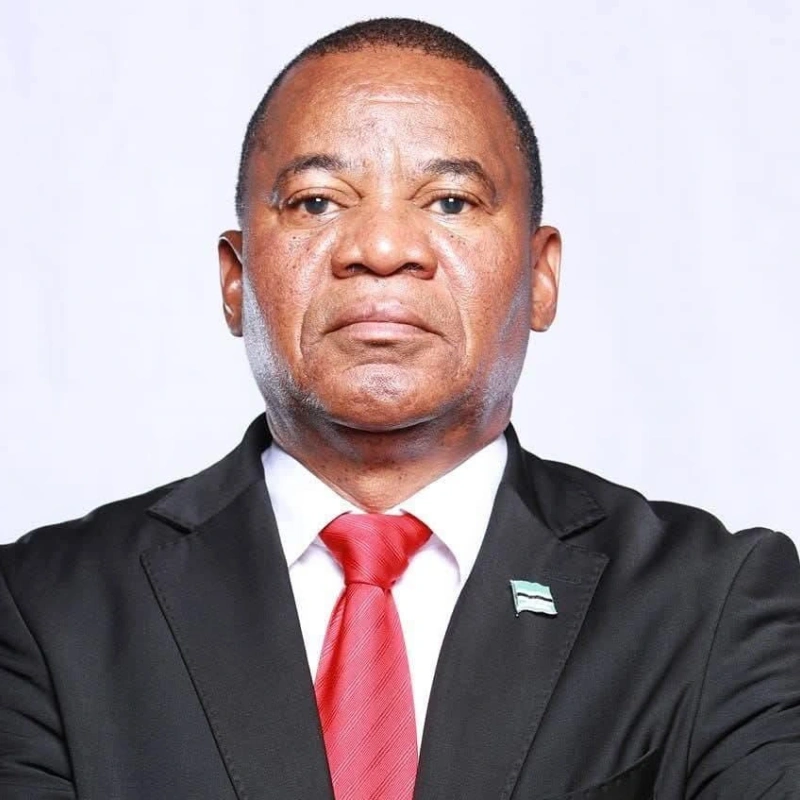


Bloomberg interview with President Duma Boko on Botswana's diamond crisis, sovereign wealth fund, and economic diversification strategy beyond diamonds.
Botswana's skills demand is shaped by the geographic distribution of natural resources, tourism assets, and urban economic activity. Understanding these regional patterns helps corporate L&D teams and HR managers target training investments where they will have the greatest impact on both organisational performance and national development goals.
Gaborone dominates government, financial services, and technology employment, hosting the headquarters of all major banks, telecommunications companies, and government ministries. The Okavango Delta and Chobe regions are the heart of Botswana's tourism economy, requiring trained hospitality and conservation professionals. Francistown and the North-East serve as the mining corridor, with copper and nickel operations driving demand for engineering and technical skills. Selebi-Phikwe, formerly dependent on a now-closed nickel mine, represents the front line of Botswana's diversification challenge, with the government actively investing in alternative industries to replace lost mining employment.
#On-site #Virtual #GroupTraining #Customized
Explore 2000+ industry ready instructor-led training programs.

Create dynamic leaders and cohesive teams. Learn more now!


Do a quick Skill gap analysis with Edstellar’s Free Skill Matrix tool

Unlock premium resources, tools, and frameworks designed for HR and learning professionals. Our L&D Hub gives you everything needed to elevate your organization's training approach.
Access L&D Hub Resources.svg)
.svg)
.svg)
.svg)

.svg)


.svg "Click Here to Follow on Medium")
.svg)


