

Autodesk Inventor Mechanical Design Corporate Training
Give your design team production-ready parametric CAD skills with Autodesk Inventor.
Build the mechanical design skills your team needs. Edstellar's Autodesk Inventor Mechanical Design corporate training program helps your engineers master parametric part modeling, assembly design, and manufacturing documentation through instructor-led sessions with hands-on labs on real-world use cases. As the corporate training company enterprises trust for emerging-technology programs, we tailor every program to your products, materials, and design standards.
Instructor-led group trainingVirtual / on-site / hybrid10+ languagesDelivered in English, Spanish, Mandarin, German, Arabic, Portuguese, Hindi, French, Japanese, Italian, and more100+ countriesWe have delivered in United States, United Kingdom, India, Canada, Germany, France, Netherlands, UAE, Saudi Arabia, Singapore, Australia, Japan, Brazil, South Africa and 90+ more countries
How we build Inventor-ready design teams
THE EDSTELLAR AUTODESK INVENTOR CAPABILITY MODEL
Baseline CAD fluency
Assess how your engineers rate Inventor sketching, part modeling, and assembly skills.
Set one design standard
One shared Inventor workflow for sketches, features, and assemblies across the team.
Practice real parts
Guided hands-on labs model your own components, products, and assemblies.
Prove the design lift
Before-and-after exercises measure each engineer's modeling speed and design quality.
Scale across the business
One parametric CAD program rolls out across teams and cohorts as design work grows.
 Expert trainers
Need more than one program?Get a group quote
Trusted as a Leading Corporate Training Provider by
















Program Overview: What is Autodesk Inventor Mechanical Design Corporate Training?

Autodesk Inventor Mechanical Design is Edstellar's instructor-led technical program for mechanical engineers and product designers who build parametric 3D models for manufacturing. Participants master the Inventor interface and design workflow, 2D sketches with parametric constraints, 3D part modeling, and assembly design with joints. The program covers sheet metal, frame design, and production drawings.
Training is hands-on from the first module. Participants model in guided labs: constrained 2D sketches, 3D parts built from parametric features, assemblies with working joints, then sheet metal parts and structural frames. Instructors coach your team through realistic mechanical design scenarios, from concept sketch to documented assembly, with direct feedback on every model. The program closes with a mechanical design capstone project the team plans, models, assembles, and documents.
Parametric models break the same way: unconstrained sketches, assemblies that won't update, drawings divorced from the model. This program teaches parametric discipline, fully constrained sketches, robust feature trees, and assemblies that rebuild cleanly. Everything is practiced on realistic mechanical parts, so design changes stop breaking the model.
The capstone is a complete mechanical design project: parts modeled parametrically, assembled with working joints, sheet metal and frame elements included, all documented in production drawings. Engineers return with models that survive design changes, because the next revision updates the assembly instead of breaking it.
Across six modules, your design team moves from the Inventor interface to a full mechanical design capstone. Labs use real-world use cases and sample part libraries, so every workflow transfers directly to your enterprise.
Delivered as a hybrid instructor-led program, it fits around your calendar, with scheduling set along with you, and content tailored to your products and design standards.
What's Included in this Workshop for Your Enterprise Teams
- 1
Inventor setup and sketching
Set up the workspace and master constrained 2D sketches.
- 2
Parametric part modeling
Build feature-based 3D parts from sketch to solid.
- 3
Assembly design
Constrain components into working mechanical assemblies.
- 4
Sheet metal and drawings
Create manufacturable parts and 2D documentation.
- 5
Design capstone
Model, assemble, and document a full mechanical design.
- Training delivered at any of your offices globally
- 10+ languages
- Schedule around your calendar
- Group size set along with you
- Run as one cohort or split into batches
- Instructor-led (virtual/onsite/hybrid)
- Recurring and annual options
- Trainer sourcing, matching and logistics
Build your team's skills. Anywhere in the world.
Real-world use cases
from day one
Instructor-led training
for your teams
Delivered globally
in 100+ countries

Enterprise Training Solutions Customized for Your Company
One partner for instructor-led corporate training, delivered the way your teams work.
Request a Training Quote- Customized Training Delivery
- Scale Your Training: Small to Large Teams
- In-person Onsite, Live Virtual or Hybrid Training Modes
- Plan from 2000+ Industry-ready Training Programs
- Guided Technical Labs, Led by Industry Experts
Autodesk Inventor Mechanical Design Course Topics and Program Outline
Six instructor-led modules take your team from the Inventor interface to a complete mechanical design capstone, with hands-on labs in every module.
Built by Edstellar with Inventor design specialists
Built by practitioners who model and ship mechanical designs with Autodesk Inventor in production, shaped around your stack and use cases.
Baseline each participant's Inventor and CAD readiness before module 01 begins.
Build strong Inventor modeling foundations in instructor-led sessions for your team.
Reinforce skills through guided hands-on labs in sketching, parts, and assemblies.
Apply Inventor skills to real-world scenarios and a capstone assembly design project.
A short pre-training assessment sets each participant's entry level, so the program starts where your team actually is. The rest is weighted toward hands-on practice: guided labs on parametric sketching, 3D parts, assemblies, sheet metal, and drawings, plus realistic scenarios drawn from your team's work, not slides.
Delivered as
Entry level set by the assessment. Depth and schedule customized to your team.

Set up projects, templates, and unit standards, then navigate the Inventor interface with a guided first sketch.
learnInventor interface, ribbon, and browser navigation
Project files, templates, and folder structure
Unit standards and document settings for mechanical work
Sketch environment and drawing tools
Design workflow: from sketch to part to drawing
Build fully defined sketches for real mechanical components, applying constraints and parametric dimensions that survive edits.
practiceSketch geometry: lines, arcs, circles, and profiles
Geometric constraints: coincident, parallel, tangent, and more
Parametric dimensions and design intent
Editing, troubleshooting, and fully defining sketches
Sketch patterns and construction geometry
Model parametric 3D parts from mechanical sketches using extrude, revolve, sweep, and loft, then edit them without breaking the feature tree.
practiceExtrude, revolve, and hole features
Sweep, loft, and advanced profile features
Fillets, chamfers, shells, and draft
Feature patterns, mirrors, and the feature tree
Editing parts: design intent and rebuild strategies
Assemble mechanical components into working mechanisms, apply joints and constraints, and check for interference and motion.
practiceAssembly structure, grounding, and component placement
Assembly constraints: mate, flush, angle, and insert
Joints: rigid, revolute, slider, and cylindrical
Interference detection and contact sets
Adaptive features and top-down design basics
Create sheet metal parts with flat patterns and frame members, then produce dimensioned manufacturing drawings with BOMs.
practiceSheet metal design: flanges, bends, and flat patterns
Sheet metal styles and K-factor basics
Frame generator: structural members and end treatments
Drawing views, sections, and dimensions
Annotations, BOMs, and parts lists
Design a complete mechanical assembly from scratch: sketch, parts, joints, and manufacturing drawings, then present it for peer review.
applyCapstone brief: a real-world mechanical design task
Modeling parts and assemblies end to end
Drawing documentation and BOM creation
Design presentation and peer feedback
Customize This Program Tailored to Your Team?
Tell us your training needs: what your team already works with, the level they’re at, and the topics you want them to focus on. We’ll adjust the modules, duration and hands-on labs, and send you a customized outline for your group.
Key Skills and Outcomes Your Team Will Gain
Your design team will leave able to model parametric parts, build mechanical assemblies, and produce manufacturing drawings. Each outcome is practiced in hands-on labs and shown in the capstone.
Navigate the Inventor interface
Set up projects, templates, and design workflows for mechanical work.
Build constrained sketches
Create fully defined 2D sketches with parametric dimensions and geometric constraints.
Model parametric parts
Apply extrude, revolve, sweep, and loft features to build robust 3D components that update cleanly.
Assemble mechanical systems
Apply joints and constraints to build moving assemblies and check interferences.
Design sheet metal and frames
Model sheet metal parts with flat patterns and structural frame members.
Produce manufacturing drawings
Generate dimensioned 2D drawings with BOMs and parts lists from your models.
Troubleshoot design errors
Diagnose and fix broken constraints, failed features, and assembly conflicts.
Teams that Benefit from this Autodesk Inventor Mechanical Design Group Training
This program is built for engineering teams that design mechanical products, from CAD users to the managers who set design standards. No prior Inventor experience is needed; content adapts to each cohort, so every employee practices the design work their role actually owns.
Model faster with parametric Inventor workflows.
Design engineers master constrained sketching, feature-based part modeling, and assembly design in Inventor, so parts update reliably and rework drops.
Workflow friction
- Sketch rework slows every design
- Parts fail when features change
- Models differ across the team
How the program helps
- Cut modeling rework with parametric design
- Build parts that update reliably
- Work from one shared CAD standard
Practice use cases
- Part modeling
- Assembly updates
- Design revisions
Turn designs into manufacturable products.
Manufacturing and product engineers learn to read, update, and document Inventor models, so designs arrive shop-ready and changes flow without friction.
Workflow friction
- Designs arrive incomplete for manufacture
- Drawings lack the detail shops need
- Design changes break downstream
How the program helps
- Read and update Inventor models confidently
- Get shop-ready drawings and BOMs
- Catch interference before prototyping
Practice use cases
- Drawing review
- Prototyping
- Vendor handoff
Standardize CAD practice across the team.
Engineering managers learn what good Inventor practice looks like, so they can set modeling standards, lift design quality, and ramp up new hires faster.
Workflow friction
- No shared Inventor standards
- CAD quality varies between engineers
- New hires take months to ramp up
How the program helps
- Set team-wide modeling standards
- Lift design quality measurably
- Onboard engineers faster
Practice use cases
- CAD standards
- Team upskilling
- Hiring readiness
Each cohort works through role-relevant hands-on labs, then leaves with a capstone mechanical design built end to end.
Prerequisites: No prior Autodesk Inventor experience is required; basic familiarity with mechanical drawings or CAD concepts helps but is not essential. What matters most is day-to-day work in product design, engineering, or manufacturing. Content is tailored to your team's products, materials, and design standards before delivery.
CAD Drafter to Mechanical Design Specialist
The program takes engineers from Inventor fundamentals to production-ready mechanical design: foundation sketching, intermediate part and assembly modeling, then advanced sheet metal, drawings, and a capstone project.
Engineers grow from sketching basics to owning complete mechanical design workflows as the modules progress.
Different Teams, Locations, Time Zones, or Languages? We've Got You Covered.
Whether your teams are spread across countries, time zones, languages, or experience levels, we deliver tailored training programs that ensure a consistent learning experience across your global workforce.
Certificate of Training Completion.
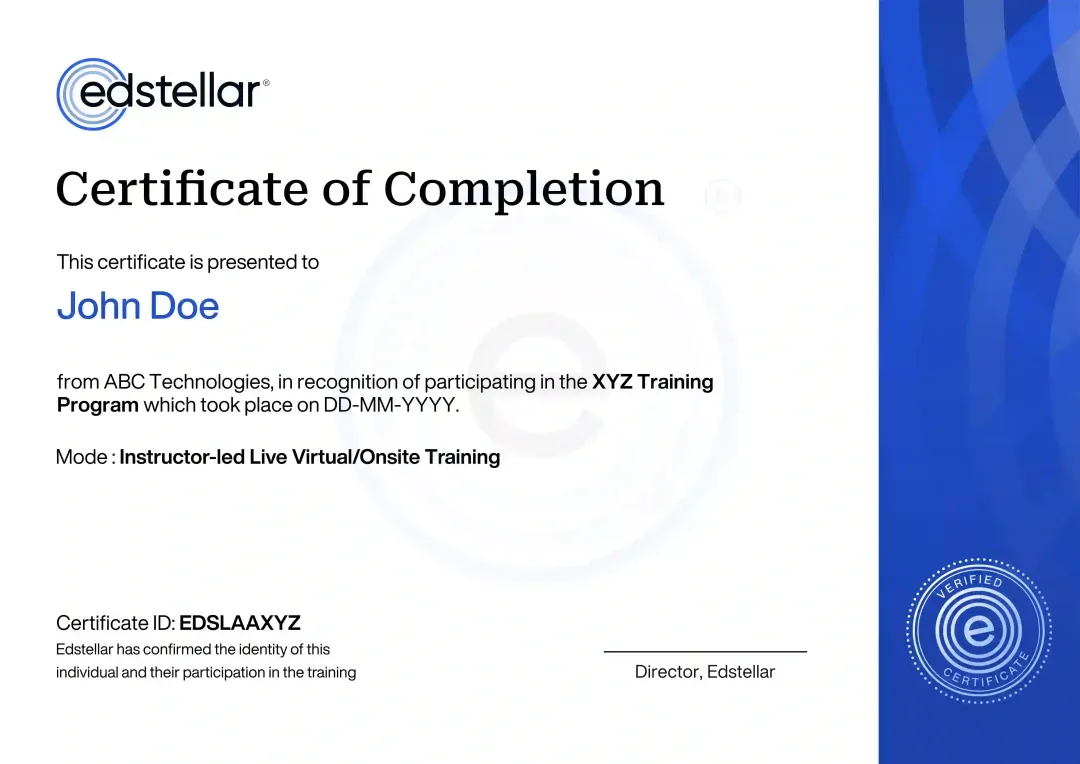
On successful completion, employees receive an Edstellar course completion certificate, recognizing their commitment to ongoing learning and professional development. It validates the skills they have built and motivates them to keep growing and contribute to organizational success.
Earned, not attended. Awarded on completion of all hands-on labs and the capstone project.
Training Delivery Modes: Onsite, Virtual and Hybrid
Every mode is shaped around your products before delivery. The curriculum, hands-on labs, and capstone stay the same in each format, so what your engineers can do after training never depends on how you run it.
Autodesk Inventor Mechanical Design Onsite Training
Your instructor delivers at your facility, with lab setups tailored to your team and products. Participants model parts, build assemblies, and create drawings with direct coaching. Best for co-located teams.
- Instructor delivers at your facility
- Lab machines set up for your team and products
- Direct coaching through every modeling task
- Best for co-located teams wanting maximum interaction

Autodesk Inventor Mechanical Design Live Virtual Training
Live virtual sessions on Zoom or Microsoft Teams, with remote Inventor labs and screen-shared guidance through every modeling task. Your engineers collaborate on parts and assemblies in real time. Best for distributed design teams.
- Live sessions on Zoom or Microsoft Teams
- Remote access to the Inventor lab environment
- Screen-shared guidance through every lab
- Best for distributed design teams

Autodesk Inventor Mechanical Design Hybrid Training
Live instruction across office and remote sessions, with hands-on labs and instructor coaching throughout. Your engineers model parts and assemblies with Inventor guidance in every session. Best for multi-site teams.
- Live instruction across office and remote sessions
- Hands-on labs coached in the Inventor environment
- Real-world use cases from your design work
- Best for teams across sites and time zones

Need a Customized Training Format That Works for Your Team?
Our training delivery is customized to your team's schedule, full days, half days, sessions spread across weeks, or modular formats. Share your preferred timeline, and we'll plan the training around it.
Frequently Asked Questions
Mechanical designers use Inventor to connect design intent with an assembly and its manufacturing information. The capstone brings parametric modeling, fit checks and documentation into a single reviewed result.
The course connects parametric parts with assemblies and manufacturing documentation. A mechanical-design capstone brings the workflows together, with instructor review of how the model and its drawings support the design intent.
Autodesk Inventor Mechanical Design training is one of Edstellar's 2,000+ instructor-led programs, delivered to enterprise teams in 100+ countries by a network of 5,000+ vetted trainers and coaches. Developed with mechanical designers who use Inventor, it focuses on part and assembly modeling, drawings, simulation and design automation. Exercises can use your own tools, data and scenarios, and you can review the matched trainer's profile before confirming. Training runs onsite, virtual or hybrid, and pre- and post-training assessments track skill gains.
Look for practical expertise in parametric sketches and feature-based parts, exercises that fit your workplace and clear assessment criteria. Review Edstellar's trainer profile and proposed outline against your Inventor environment, products, materials and engineering standards. Compare the complete scope, delivery quality, practice and follow-on support as well as price.
Ask to review the proposed trainer's profile and discuss the delivery approach before confirming. Prioritize practical experience in parametric sketches and feature-based parts and the ability to facilitate relevant work for product-design, mechanical-engineering and manufacturing teams. Confirm required industry experience, qualifications and language skills during selection.
Question Not Answered Here?
Put it in the request. A training specialist answers it directly, within one business day.
Where this Training Fits in Your Team's learning path.
Inventor modeling follows 2D drafting and leads into tolerancing and manufacture. Your team drafts in AutoCAD, models parts and assemblies in Inventor in this course, then specifies tolerances with GD&T and finally designs for manufacture and assembly.

DRAFT IN AUTOCAD
AutoCAD for Engineering Disciplines Training
Draft in AutoCAD, the drawing skills that carry over into 3D design.

MODEL IN INVENTOR
Autodesk Inventor Mechanical Design Training
Model parts, assemblies and drawings in Autodesk Inventor, using parametric features and constraints.
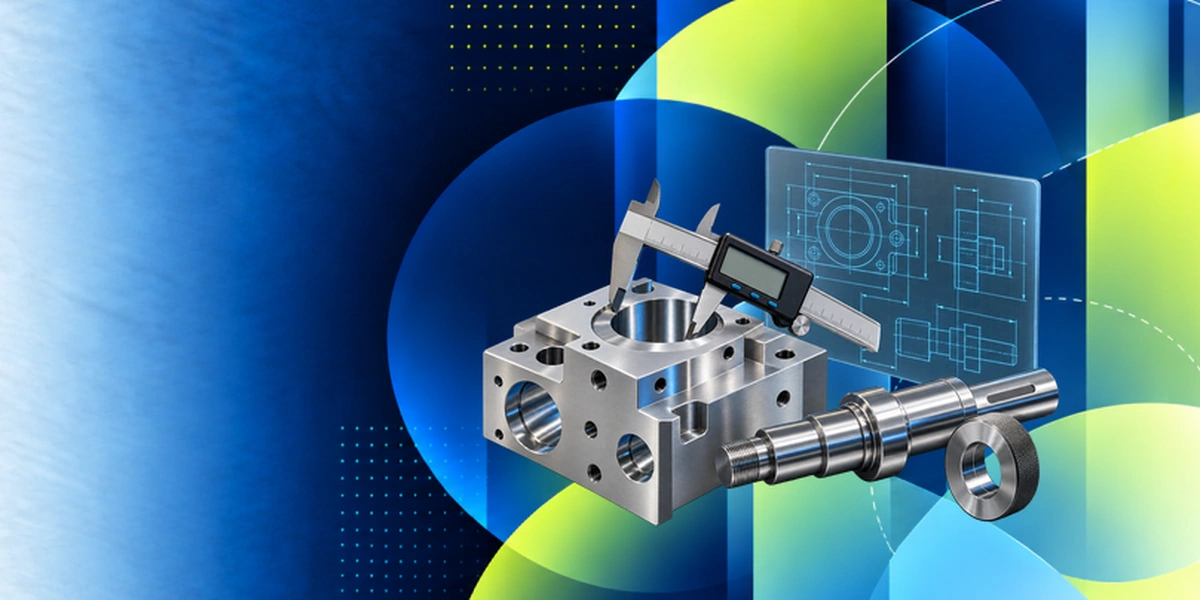
TOLERANCE WITH GD&T
GD&T (Geometric Dimensioning & Tolerancing) Training
Specify geometric tolerances with GD&T on Inventor drawings so parts fit and function.
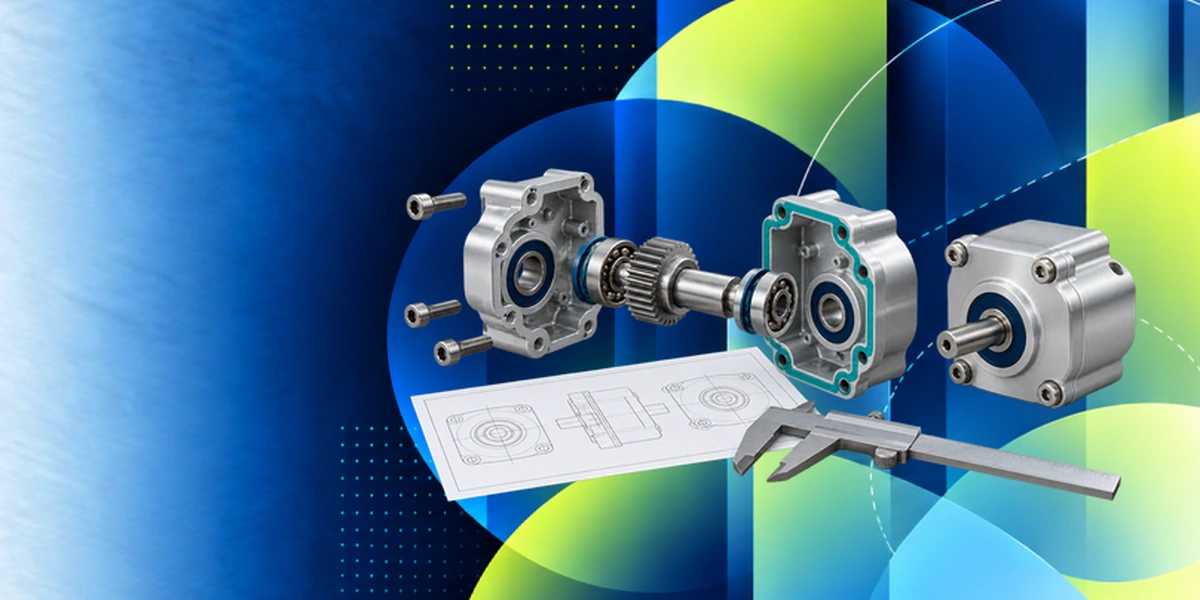
DESIGN FOR MANUFACTURE
Design for Manufacturing & Assembly (DFM/DFMA) Training
Design parts and assemblies that are easier and cheaper to make with DFM and DFMA.
More related courses
SolidWorks Training
ANSYS Simulation (FEA & CFD) Training
Product Lifecycle Management (Windchill, ENOVIA, Teamcenter) Training
Why Choose Edstellar as Your Autodesk Inventor Mechanical Design Enterprise Training Provider
If your design team needs production-ready Inventor skills, start here. Tell us about your products, timelines, and preferred delivery mode, and we will shape a program around them.

EXPERT TRAINERS
YEARS DELIVERING
ORGANIZATIONS TRAINED
CERTIFIED
Tailored
Content shaped around your mechanical design and Inventor modeling use cases, so every session maps to your real design needs.
Proven Methodology
Clear instruction paired with guided labs and feedback, a repeatable method that turns Autodesk Inventor Mechanical Design into practiced team skill.
Practice-Based Learning
6 hands-on labs across 6 modules. Your team builds production-ready part and assembly models with instructor guidance.
Expert Trainers
5,000+ certified trainers matched to your Autodesk Inventor practice, with a full trainer profile shared before your program is booked.
Global Scale
One mechanical design program across your offices worldwide, in hybrid, onsite, or live virtual.
Measurable Outcomes
Baseline-to-capstone measurement and Skills Matrix reporting keep your mechanical design capability lift visible.
Develop Parametric Mechanical Assemblies from Inventor Sketches to Drawings
Our Autodesk Inventor training builds mechanical design skills around a complete assembly. Participants constrain sketches, develop editable parts, and test joints and interference before preparing sheet metal, frames, and manufacturing documentation. The capstone connects design intent with model behavior, giving teams a practical basis for reviewing changes and troubleshooting construction errors.
- Step 01
Consult
We review your mechanical design responsibilities and CAD experience, identifying development needs in sketch constraints, feature construction, assemblies, sheet metal, and manufacturing drawings.
- Step 02
Plan
We move from project setup and constrained sketches to parametric parts, assembly joints, sheet metal and frames, then the complete mechanical design capstone.
- Step 03
Align
We adapt Inventor explanations to product design, engineering, and manufacturing participants, checking drawing familiarity and providing additional foundations where prior CAD experience is limited.
- Step 04
Customize
We tailor component geometry and assembly requirements to a representative mechanism, giving parameters, joint choices, and manufacturing annotations a clear functional purpose.
- Step 05
Execute
Participants revise constrained sketches, troubleshoot feature failures, check motion and interference, and create drawings with guided feedback on model stability and design intent.
- Step 06
Evaluate
We assess the completed assembly for robust constraints, editable features, appropriate joint behavior, resolved interference, and manufacturing drawings and BOMs consistent with the model.
Also from Edstellar
Talent assessments
Psychometric, behavioral, leadership and 360-degree assessment.
→Training needs analysis
Needs analysis, gap identification, and a training roadmap.
→L&D consulting
Learning strategy, content, technology and ROI measurement.
→OD consulting
Org design, succession planning and cultural change.
→Managed training services
Training outsourcing, vendor management, logistics and administration.
→Coaching solutions
Executive and manager coaching that keeps skills in use.
Start an RFP shaped to your needs.
Answer three quick questions about team size, scope, and how often you need the program run, then send the request from the last step. Everything you choose travels with it, so you only fill this in once.
How many team members need training?
Autodesk Inventor Mechanical Design Training Packages & Pricing
Where L&D holds an annual budget, license packages price the whole year at once instead of raising a purchase order per workshop. Hours and licenses are pooled across teams, programs and locations, so unused capacity is not stranded in one department.
Starter
120
trainee licenses64 hours of group training
Tailored for SMBs
Growth
320
trainee licenses160 hours of group training
Ideal for growing SMBs
Enterprise
800
trainee licenses400 hours of group training
Designed for large corporations
Custom
Unlimited
trainee licensesDuration set by the rollout
Multi-region and multi-year
Training Packages & Pricing
Choose the training format that works for your team. Pricing is customized based on your requirements, cohort size, and delivery needs.
Request a Quote for Autodesk Inventor Mechanical Design Training for Your Team
Share your team size, design goals, preferred delivery mode, and timelines. We will respond with a tailored training plan covering scope, schedule, and pricing, and confirm trainer availability.