Corporate Operational Risk Management Training Course
Edstellar's Operational Risk Management (ORM) instructor-led training course equips professionals with the skills to methodically identify, evaluate, and manage the risks associated with their day-to-day operations. Upskill your teams with the tools to determine the impact of risks, devise strategies to address them, and deal with uncertainties.
(Virtual / On-site / Off-site)
Available Languages
English, Español, 普通话, Deutsch, العربية, Português, हिंदी, Français, 日本語 and Italiano
Drive Team Excellence with Operational Risk Management Corporate Training
Empower your teams with expert-led on-site, off-site, and virtual Operational Risk Management Training through Edstellar, a premier corporate training provider for organizations globally. Designed to meet your specific training needs, this group training program ensures your team is primed to drive your business goals. Help your employees build lasting capabilities that translate into real performance gains.
Operational Risk Management (ORM) identifies, assesses, manages, and mitigates risks that can hinder an organization's operational efficiency and effectiveness. ORM focuses on risks arising from day-to-day business activities, systems failures, process breakdowns, human error, and external events that could impact the organization's ability to achieve its objectives. This process enables teams to anticipate and navigate operational challenges, thereby minimizing potential losses and enhancing business resilience. Professionals need training in ORM to ensure smoother operations, compliance with regulatory standards, and safeguarding assets and reputation.
Edstellar's Operational Risk Management (ORM) instructor-led training course is delivered by highly skilled trainers with extensive experience in the ORM field. The virtual/onsite Operational Risk Management (ORM) training course is uniquely tailored to each organization's specific needs and challenges. This customization ensures that this training enhances the professionals’ ability to apply ORM principles and practices within their operational contexts.

Key Skills Employees Gain from instructor-led Operational Risk Management Training
Operational Risk Management skills corporate training will enable teams to effectively apply their learnings at work.
- Risk Mitigation EvaluationRisk Mitigation Evaluation is the process of identifying, assessing, and prioritizing risks to minimize their impact. this skill is important for project managers and analysts to ensure successful outcomes.
- Risk Culture DevelopmentRisk Culture Development involves fostering an organizational mindset that prioritizes risk awareness and management. This skill is important for roles in compliance, finance, and management, as it enhances decision-making, promotes accountability, and mitigates potential losses.
- Consequence AssessmentConsequence Assessment is the ability to evaluate potential outcomes of actions or decisions. this skill is important for roles in risk management, ensuring informed decision-making and minimizing negative impacts.
- Risk Management PlanningRisk Management Planning involves identifying, assessing, and prioritizing risks to minimize their impact. this skill is important for project managers and business analysts to ensure successful project delivery and organizational resilience.
- Stakeholder CommunicationStakeholder Communication is the ability to effectively convey information and engage with various parties involved in a project. This skill is important for project managers and team leaders, as it fosters collaboration, ensures alignment, and enhances project success.
- Risk Mitigation EvaluationRisk Mitigation Evaluation is the process of identifying, assessing, and prioritizing risks to minimize their impact. this skill is important for project managers and analysts to ensure successful outcomes.
Key Learning Outcomes of Operational Risk Management Training Workshop for Employees
Upon completing Edstellar’s Operational Risk Management workshop, employees will gain valuable, job-relevant insights and develop the confidence to apply their learning effectively in the professional environment.
- Identify specific operational risks and their origins across various organizational departments and processes
- Effectively disseminate operational risk management insights, updates, and recommendations to all relevant stakeholders
- Critically appraise the impact and success of implemented risk mitigation strategies in minimizing operational risk exposure
- Utilize advanced operational risk management theories and methodologies to formulate targeted risk mitigation approaches
- Develop an organizational culture that prioritizes operational risk awareness, and encourages proactive risk management initiatives
- Assess the potential consequences of identified operational risks on the efficiency, productivity, and strategic goals of the organization
- Craft a detailed operational risk management plan that is coherent with the broader objectives and strategic direction of the organization
- Incorporate operational risk management practices systematically into the organization’s day-to-day workflows and decision-making processes
Key Benefits of the Operational Risk Management Group Training with Instructor-led Face to Face and Virtual Options
Attending our Operational Risk Management group training classes provides your team with a powerful opportunity to build skills, boost confidence, and develop a deeper understanding of the concepts that matter most. The collaborative learning environment fosters knowledge sharing and enables employees to translate insights into actionable work outcomes.
- Solidifies a commitment to continuous enhancement of ORM practices
- Improves the capability of the team to identify and evaluate operational risks precisely
- Equips professionals with the expertise to devise and implement robust risk mitigation strategies
- Delivers strategic insights into the utilization of ORM for enhancing risk management efficacy and facilitating informed decision-making
- Encourages the development of a proactive risk management culture, cultivating an anticipatory approach to potential operational disruptions
- Strengthens organizational resilience by providing employees with comprehensive strategies for early risk detection and efficient response mechanisms
- Develops the necessary skills within operational teams for the seamless integration of operational risk management (ORM) principles into daily business operations
- Establishes an effective risk communication protocol, ensuring that all pertinent stakeholders are adequately informed and actively involved in the risk management process
Topics and Outline of Operational Risk Management Training
Our virtual and on-premise Operational Risk Management training curriculum is structured into focused modules developed by industry experts. This training for organizations provides an interactive learning experience that addresses the evolving demands of the workplace, making it both relevant and practical.
1. What is risk and operational risk management?
- Defining risk in a business context
- The evolution of operational risk management
- Key components of an ORM program
- The role of ORM in strategic planning
2. The benefits of operational risk management
- Improving financial performance through effective risk mitigation
- Enhancing reputation and stakeholder confidence
- Fostering innovation by understanding and managing risks
- Compliance benefits and avoiding regulatory fines
3. The operational risk management framework
- Overview of ORM frameworks (e.g., COSO, ISO 31000)
- Customizing the ORM framework for different organizations
4. The 6-step operational risk management cycle
- Identifying risks: Tools and techniques
- Risk assessment: Methods and processes
- Response planning: Strategies and options
- Monitoring and reviewing: Continuous improvement in ORM
- Reporting risks: Internal and external communication
- Review and learn: Capturing lessons learned
5. Enterprise risk management
- The relationship between ORM and ERM
- Building an integrated risk management program
- Strategic risk management and business objectives
6. Risk identification process
- Sources of operational risk
- Risk identification tools and techniques
- Building a risk register
- Prioritizing risks for assessment
7. Risk management principles and standards
- Introduction to ISO 31000 and other ORM standards
- Principles of effective risk management
- Adapting international standards to the local context
- Benchmarking and continuous improvement in ORM
8. Risk assessment
- Quantitative vs. qualitative risk assessment
- Risk matrices and their use
- Advanced risk assessment techniques (e.g., Monte Carlo simulations)
1. The challenges of risk management
- Common obstacles in implementing ORM
- Cultural barriers to effective risk management
- Overcoming resistance to change
2. Operational risk management in the corporate structure
- Roles and responsibilities in ORM
- Building an effective ORM team
- ORM across different organizational levels
- Case studies on successful ORM structure implementations
3. Probability and statistics for operational risk management
- Basic concepts in probability and their application in ORM
- Statistical tools for risk analysis
- Data collection and analysis for risk assessment
4. Risk modeling
- Introduction to risk models and their applications
- Developing and validating risk models
- Scenario analysis in risk modeling
- Challenges and best practices in risk modeling
5. Failure modes and effects
- Conducting Failure Mode and Effects Analysis (FMEA)
- Identifying potential failure points in operations
- Integrating FMEA into the risk management process
6. Risk measurement
- Key risk indicators (KRIs) and their development
- Measuring risk exposure and impact
- Risk appetite and tolerance
- Tools for risk measurement and monitoring
7. Risk maturity level and risk appetite
- Assessing your organization's risk maturity
- Defining and communicating risk appetite
- Tools and frameworks for managing risk appetite
8. Risk response
- Risk avoidance, reduction, transfer, and acceptance
- Developing effective risk response plans
- Implementing and monitoring risk responses
- Crisis management and emergency response planning
1. Risk controls
- Types of risk controls (preventive, detective, corrective)
- Implementing effective risk controls
2. Key risk indicators (KRIs)
- Designing effective KRIs
- Monitoring and reporting KRIs
- Integrating KRIs into business processes
- Case studies on KRI implementation
3. Qualitative and quantitative risk analysis
- Techniques for qualitative risk analysis
- Quantitative analysis methods and tools
- Combining qualitative and quantitative analyses
- Best practices in risk analysis
4. Risk actions
- Planning effective risk actions
- Implementing risk actions across the organization
- Monitoring the effectiveness of risk actions
5. Risk reviews
- Conducting regular risk reviews
- Integrating risk reviews into the ORM cycle
- Tools and techniques for risk review
6. Risk governance – Three lines of defense
- Understanding the three lines of defense model
- Implementing the model in your organization
- Roles and responsibilities in each line of defense
- Challenges and solutions in applying the model
7. Risk oversight, documentation, and reporting
- Establishing effective risk oversight
- Best practices in risk documentation
- Designing and implementing risk reporting processes
- Leveraging technology for risk oversight and reporting
8. Project risk management
- Applying ORM principles to project management
9. Identifying and assessing risks in project settings
- Developing risk response strategies for projects
- Monitoring and controlling risks throughout the project lifecycle
1. Overcoming the hurdles to risk management
- Identifying common implementation challenges
- Strategies for engaging stakeholders and gaining support
- Sustaining risk management efforts over time
2. Risk management communication
- Effective communication strategies for risk information
- Tailoring communication to different audiences
- Using communication to foster a risk-aware culture
- Tools and channels for risk communication
3. Setting a risk management vision
- Defining a clear and compelling risk management vision
- Aligning the vision with organizational values and goals
- Communicating the vision to stakeholders
- Measuring progress towards the vision
4. Stakeholder ownership of risk management
- Encouraging stakeholder engagement in risk processes
- Roles and responsibilities of stakeholders in risk management
5. Instilling a risk management culture
- Elements of a strong risk management culture
- Assessing and addressing cultural barriers to risk management
- Celebrating successes and learning from failures
6. International attitudes to risk
- Global variations in risk perception and management
- Adapting risk management practices to different cultural contexts
- Lessons from International Risk Management case studies
- Managing cross-border risks in multinational organizations
7. Embedding operational risk management
- Integrating ORM into daily operations and decision-making
- Tools and techniques for embedding ORM
- Monitoring the integration of ORM into business processes
- Case studies of successful ORM integration
1. Web-based risk management tools
- Overview of digital tools and platforms for ORM
- Selecting the right technology solutions for your needs
2. Integrating risk management into your operations
- Practical steps for operationalizing risk management
- Ensuring seamless integration with existing processes
- Overcoming operational challenges in integration
- Examples of effective integration across various business functions
3. Top tips for successful operational risk management
- Key strategies for enhancing ORM effectiveness
- Avoiding common pitfalls in risk management
- Continuous improvement and adaptation in ORM
Who Can Take the Operational Risk Management Training Course
The Operational Risk Management training program can also be taken by professionals at various levels in the organization.
- Risk Analysts
- Lean Managers
- Compliance Officers
- Internal Auditors
- Operations Supervisors
- Risk Coordinators
- Safety Engineers
- Loss Prevention Officers
- Operational Risk Specialists
- Compliance Officers
- Quality Managers
- Risk Assessment Officers
Prerequisites for Operational Risk Management Training
Professionals with a basic understanding of organizational processes and operations can take up the Operational Risk Management training course.
Corporate Group Training Delivery Modes
for Operational Risk Management Training
At Edstellar, we understand the importance of impactful and engaging training for employees. As a leading Operational Risk Management training provider, we ensure the training is more interactive by offering Face-to-Face onsite/in-house or virtual/online sessions for companies. This approach has proven to be effective, outcome-oriented, and produces a well-rounded training experience for your teams.


.webp)
Edstellar's Operational Risk Management virtual/online training sessions bring expert-led, high-quality training to your teams anywhere, ensuring consistency and seamless integration into their schedules.
.webp)
Edstellar's Operational Risk Management inhouse face to face instructor-led training delivers immersive and insightful learning experiences right in the comfort of your office.
.webp)
Edstellar's Operational Risk Management offsite face-to-face instructor-led group training offer a unique opportunity for teams to immerse themselves in focused and dynamic learning environments away from their usual workplace distractions.
Explore Our Customized Pricing Package
for
Operational Risk Management Corporate Training
Looking for pricing details for onsite, offsite, or virtual instructor-led Operational Risk Management training? Get a customized proposal tailored to your team’s specific needs.
64 hours of group training (includes VILT/In-person On-site)
Tailored for SMBs
Tailor-Made Trainee Licenses with Our Exclusive Training Packages!
160 hours of group training (includes VILT/In-person On-site)
Ideal for growing SMBs
Tailor-Made Trainee Licenses with Our Exclusive Training Packages!
400 hours of group training (includes VILT/In-person On-site)
Designed for large corporations
Tailor-Made Trainee Licenses with Our Exclusive Training Packages!
Unlimited duration
Designed for large corporations
Edstellar: Your Go-to Operational Risk Management Training Company
Experienced Trainers
Our trainers bring years of industry expertise to ensure the training is practical and impactful.
Quality Training
With a strong track record of delivering training worldwide, Edstellar maintains its reputation for its quality and training engagement.
Industry-Relevant Curriculum
Our course is designed by experts and is tailored to meet the demands of the current industry.
Customizable Training
Our course can be customized to meet the unique needs and goals of your organization.
Comprehensive Support
We provide pre and post training support to your organization to ensure a complete learning experience.
Multilingual Training Capabilities
We offer training in multiple languages to cater to diverse and global teams.
What Our Clients Say
We pride ourselves on delivering exceptional training solutions. Here's what our clients have to say about their experiences with Edstellar.
"This Operational Risk Management course was exactly what I needed to advance my career. As a Principal Security Consultant, mastering advanced methodologies has become crucial for my success. The in-depth frameworks I use daily. I've confidently led multiple high-visibility initiatives leveraging this comprehensive knowledge. The real-world examples and deep dive into expert-led workshops were particularly valuable for my professional growth.”
Salvador Dixon
Principal Security Consultant,
Leadership Development Platform
"The Operational Risk Management training provided critical insights into strategic frameworks that enhanced my consulting capabilities. As a Lead Cybersecurity Analyst, I now leverage hands-on exercises with expertise to deliver practical exercises on real-world case studies prepared me perfectly for real-world client scenarios. Our client satisfaction scores improved by 35% across all accounts, demonstrating immediate value from this investment.”
Liu Yi
Lead Cybersecurity Analyst,
Organizational Excellence Platform
"As a Lead Security Auditor leading professional expertise operations, the Operational Risk Management training provided our team with essential industry best practices expertise at scale. The comprehensive modules on complete operational footprint. Our team's capability maturity level increased by three full stages within six months. This course has proven invaluable for driving our organizational transformation and sustained excellence.”
Sumathi Francis
Lead Security Auditor,
Management Training Services Firm
“Edstellar’s Management training programs have greatly improved our teams’ ability to lead with clarity, confidence, and operational efficiency. The sessions combine practical leadership frameworks, real-world case studies, and hands-on exercises that strengthen decision-making, cross-functional collaboration, and execution excellence across departments, driving measurable improvements in overall business performance.”
Meera Rao
HR & L&D Head,
A Global Services Company
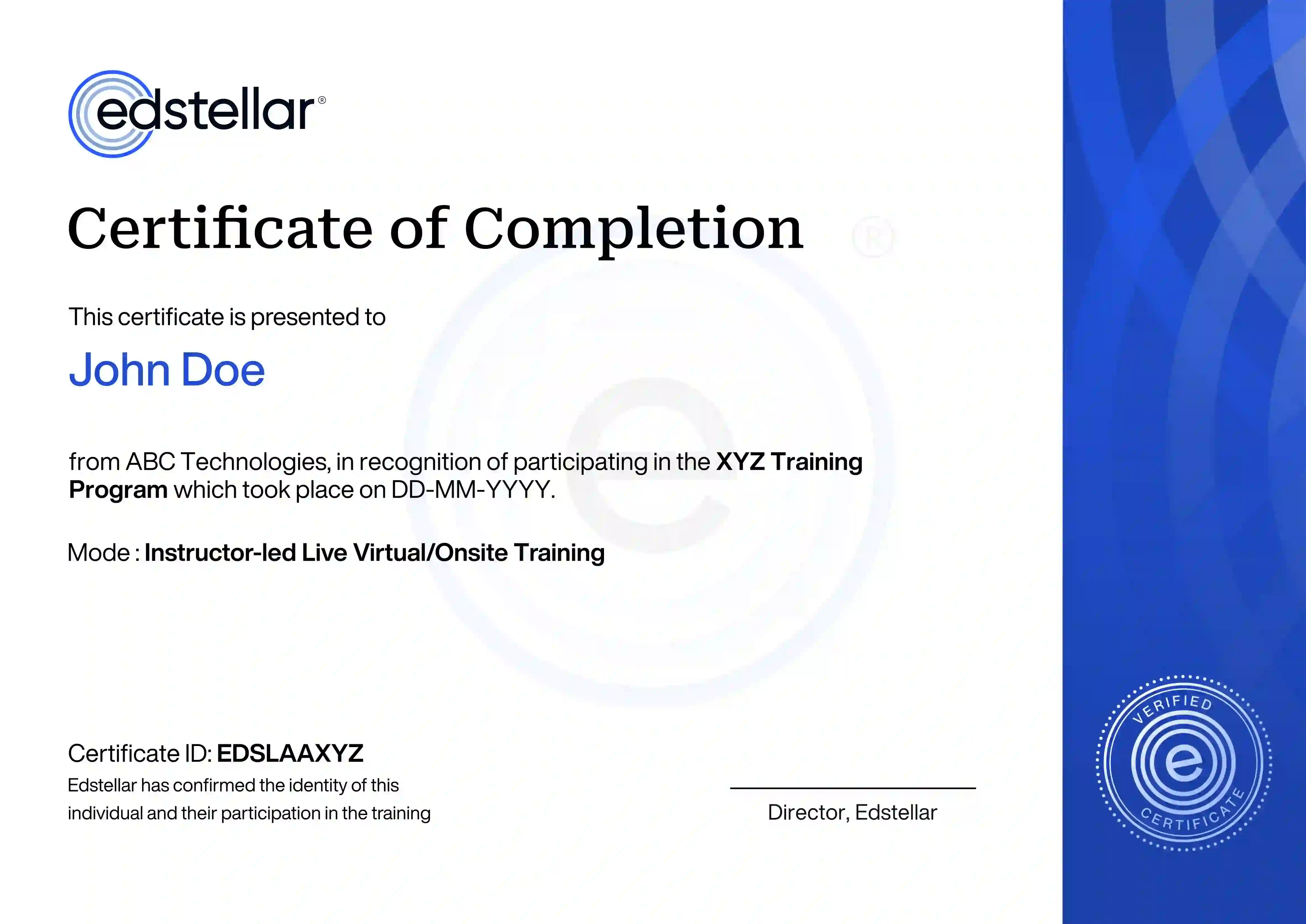
Get Your Team Members Recognized with Edstellar’s Course Certificate
Upon successful completion of the training course offered by Edstellar, employees receive a course completion certificate, symbolizing their dedication to ongoing learning and professional development.
This certificate validates the employee's acquired skills and is a powerful motivator, inspiring them to enhance their expertise further and contribute effectively to organizational success.


We have Expert Trainers to Meet Your Operational Risk Management Training Needs
The instructor-led training is conducted by certified trainers with extensive expertise in the field. Participants will benefit from the instructor's vast knowledge, gaining valuable insights and practical skills essential for success in Access practices.
Explore More Courses
Edstellar is a one-stop instructor-led corporate training and coaching solution that addresses organizational upskilling and talent transformation needs globally.
Marketing Excellence
Operational Excellence
Finance Excellence
HR Excellence
IT Excellence
Customer Service
Leadership Excellence
Quality Management
Software
How it WorksFAQ'sCorporate Training
CatalogStellar AI
Skill MatrixHRMS Integration
Who we ServeCEO RetreatsPricingTraining DeliveryPartner with Edstellar
CareersContact us
.webp)