14 Customer Service Activities, Games & Exercises for Employees
A curated guide to customer service games for teams, compiled by an L&D leader with 24+ years of experience in operations, service excellence, and frontline team development.
14 Customer Service Activities, Games & Exercises for Employees
Content
Table of Content
Quick Overview
Customer service excellence drives loyalty, retention, and brand reputation in 2026.
Empathy and active listening are the foundation of every great customer interaction.
Role-play and scenario drills build confidence to handle real customer challenges.
Product knowledge and quick thinking shorten response times and improve outcomes.
Tone, body language, and rapport shape how customers feel about your brand.
Continuous feedback and coaching turn good service teams into exceptional ones.
In 2026, customer experience has become the primary battleground for B2B and B2C retention, with frontline teams driving NPS, CSAT, and lifetime value more than any marketing campaign can. According to Gallup's State of the Global Workplace 2024, only 23% of employees worldwide are engaged at work, and disengaged service teams cost companies an estimated 18% of annual revenue in lost customers and reduced spend. L&D leaders who invest in structured, scenario-based customer service activities consistently outperform peers on first-contact resolution and post-interaction sentiment scores.
Well-trained customer service teams turn moments of friction into moments of loyalty, but that capability is built through deliberate practice, not policy memos. Employees need repeated, low-risk reps in empathy, active listening, de-escalation, tone control, product knowledge, and cross-channel consistency before they face a real escalation queue. Targeted customer service activities and facilitated workshops compress months of on-the-job learning into hours of high-signal practice, which is why active listening training and recovery role-plays now sit at the core of every mature CX enablement program.
This blog walks through 14 practical customer service activities, games, and exercises that L&D and CX leaders can run live with frontline teams, team leads, and managers. Each activity includes an interactive demo, the materials and group setup required, the specific skill it builds, and the measurable behavior change you should track afterward. Use it as a working playbook for your next customer service offsite, onboarding cohort, or quarterly CX refresh.
Author Insight
"Customer service skills develop through practice, not presentations. The activities that create the biggest improvement simulate real customer interactions, build empathy, and give teams a safe space to experiment with different approaches. "
Subbaiah M U
✓ 24+ years of L&D and operations leadership with hands on experience building service excellence and frontline team capability across large organizations.
The Need for Customer Service Activities, Games & Exercises
Customer expectations in 2026 are sharper than ever: speed, personalization, and emotional attunement are now baseline, not differentiation. Frontline teams handle higher ticket volumes across more channels (voice, chat, email, social, in-app), often under real-time AI assist that exposes any skill gap immediately. Without deliberate practice through structured customer service activities, even experienced agents default to script-reading, which erodes CSAT and NPS one interaction at a time.
Customer service activities create the safe-rep environment that policy documents and e-learning modules cannot. They let teams rehearse de-escalation, empathy, tone shifts, and recovery sequences in front of peers and a facilitator who can call out subtle gaps in real time. Structured games also surface the hidden patterns (repeated customer pain points, recurring policy friction, product knowledge blind spots) that frontline teams notice but rarely escalate.
Organizations that invest in regular customer service activities and workshops see measurable lifts: faster first-contact resolution, higher Net Promoter Scores, lower repeat-contact rates, and notably stronger frontline retention. Conversely, teams that rely solely on tribal knowledge and shadowing tend to plateau on CSAT and burn out their best agents on escalations. The 14 customer service activities below give L&D and CX leaders a working library to address each of those skill gaps directly.
"Customer service is not a department. It is a philosophy that should be embraced by everyone in every department. It is something we all do, both for our external customers and our internal customers."
Shep Hyken
Chief Amazement Officer, Shepard Presentations · Greater St. Louis, USA
✔ Customer service expert focused on customer experience, loyalty, service excellence, and customer-centric business culture.
The Top 14 Customer Service Activities, Games & Exercises
The 14 customer service activities below are designed to equip frontline teams, team leads, and CX managers with the skills to deliver consistent, high-quality customer experiences across every channel. Each includes an interactive demo, required materials, measurable learning outcomes, and expert facilitator guidance.
👤 Age 18+👥 6+ Players⏱ 25-35 min
1. Listening Pairs
Team members pair up to practice focused active listening, summarising what they heard and giving feedback to sharpen comprehension and customer empathy.
ListeningEmpathyFeedback
1 Interactive Guided Demo
1
2
3
4
5
6
7
8
9
10
Step 1 of 10
👆
👂
👂👥💬
📋⏱️📝🖊️💬
⏱️
📋✨🎯🤝
✨✨
📝✅🌟💡
🖊️
🎯🤝📌💡
✨✨
💬📋⏱️📝🖊️
💡🚀📌🤝
✨📋⏱️📝🖊️
🎯
✨🤝📌💡
✨✨
🏆
🎉🌟✨🎊💫
Welcome to Listening Pairs
Sharpen active listening through focused paired conversations.
👆 Click anywhere to continue
2 Activity Details
👂
Team members pair up to practice focused active listening, summarising what they heard and giving feedback to sharpen comprehension and customer empathy.
Players
👥 6+ Players
Recommended
Time
⏱ 25-35 min
Activity + debrief
Format
Team Game
Facilitated
Skill
Active Listening
Primary outcome
What You'll Need
Prepare these items before the activity begins so the session runs smoothly.
📋
Listening Guidelines
Required for activity
⏱️
Timer
Required for activity
📝
Notepads
Required for activity
🖊️
Pens
Required for activity
💬
Discussion Prompts
Required for activity
Step-by-Step Walkthrough
1
Set the Space
Organize the room to create a quiet, comfortable environment with enough space for pairs to sit facing each other without distractions.
5 min
2
Explain the Purpose
Gather the team and explain the purpose of the Listening Pairs activity, emphasizing its importance for improving communication and customer interactions.
5 min
3
Form Diverse Pairs
Divide the team into pairs, ideally pairing members who don't frequently work together to promote diverse perspectives and fresh dialogue.
5 min
4
Share Listening Rules
Distribute active listening guidelines, including maintaining eye contact, using nonverbal cues, and avoiding interruptions while the other person speaks.
5 min
5
Set the Timer
Set a time limit for each round, for example five minutes for speaking and three minutes for feedback from the listener.
5 min
6
Speak and Listen
The first person speaks on a customer service topic such as challenges faced or areas for improvement, while the listener focuses fully without interrupting.
5 min
7
Summarize and Swap
Once the speaking time ends, the listener summarizes what they heard and gives feedback. Then switch roles so both members practice both sides.
5 min
8
Debrief and Apply
Bring the team together to discuss key insights, how the skills apply to real customer interactions, and collect feedback on the activity itself.
5 min
Ground Rules
✓ Do
Explain the goal and constraints before starting.
Give every participant a clear role or opportunity to contribute.
Keep the timer visible and the rules consistent.
Encourage teams to explain their reasoning.
Close with a structured debrief.
✕ Don't
Do not let one person dominate the activity.
Do not change the rules midway unless it is a planned variation.
Do not skip reflection after the activity.
Do not make the activity personal or uncomfortable.
Do not focus only on winning; focus on learning.
What Your Team Will Learn
These outcomes should be reinforced during the debrief.
🧠
Outcome
Active Listening
Participants practice this capability through the activity and reinforce it through discussion.
🛠️
Outcome
Empathy
Participants practice this capability through the activity and reinforce it through discussion.
🤝
Outcome
Clarity
Participants practice this capability through the activity and reinforce it through discussion.
⏱
Outcome
Patience
Participants practice this capability through the activity and reinforce it through discussion.
💡
Outcome
Feedback
Participants practice this capability through the activity and reinforce it through discussion.
📊
Outcome
Communication
Participants practice this capability through the activity and reinforce it through discussion.
Ways to Mix It Up
🔁
Repeat Round
Run a second round after debrief to test improved thinking.
🤐
Silent Mode
Add a short no-speaking phase to test non-verbal coordination.
💰
Budget Mode
Assign costs or limits to resources to force prioritization.
🌐
Virtual Edition
Adapt the activity using breakout rooms and shared documents.
🏆
Scored Challenge
Award points for creativity, teamwork, and quality of reasoning.
Debrief Questions
Use these prompts to convert the activity into workplace learning.
What did your team do first during Listening Pairs?
Which assumption turned out to be wrong?
How did communication affect the result?
Where did the team lose time or clarity?
What workplace situation feels similar to this activity?
What would you change if you ran the activity again?
3 Tips for Facilitators
⏱
Time Box Clearly
Use a visible timer so participants feel the constraint and pace their decisions.
🧑🏫
Facilitate, Don't Solve
Guide with questions instead of giving answers.
📌
Capture Observations
Note communication patterns, decision points, and bottlenecks.
💬
Debrief Deeply
Reserve enough time to connect the activity to workplace behavior.
4 Real-World Applications
🎯
Quarterly Planning
Translate annual goals into focused, time-bound milestones.
📈
Performance Reviews
Anchor 1:1s to specific, measurable outcomes.
🤝
Team Alignment
Make individual work visible so the team can support each other.
🚀
Career Development
Turn reflection into structured, repeatable growth plans.
👤 Age 18+👥 6+ Players⏱ 30-45 min
2. Empathy Mapping Sessions
Small groups complete empathy maps for real customer scenarios, capturing what customers think, feel, say, and do to deepen empathy and service quality.
EmpathyInsightCollaboration
1 Interactive Guided Demo
1
2
3
4
5
6
7
Step 1 of 7
👆
💗
❤️🗺️🤝
🗺️🖍️📇📝📋
🖍️
📋✨🎯🤝
✨✨
📇✅🌟💡
📝
🎯🤝📌💡
✨✨
📋🗺️🖍️📇📝
🏆
🎉🌟✨🎊💫
Welcome to Empathy Mapping Sessions
Map what customers think, feel, say, and do.
👆 Click anywhere to continue
2 Activity Details
💗
Small groups complete empathy maps for real customer scenarios, capturing what customers think, feel, say, and do to deepen empathy and service quality.
Players
👥 6+ Players
Recommended
Time
⏱ 30-45 min
Activity + debrief
Format
Team Game
Facilitated
Skill
Empathy
Primary outcome
What You'll Need
Prepare these items before the activity begins so the session runs smoothly.
🗺️
Empathy Map Templates
Required for activity
🖍️
Markers
Required for activity
📇
Scenario Cards
Required for activity
📝
Notepads
Required for activity
📋
Whiteboard
Required for activity
Step-by-Step Walkthrough
1
Hand Out Maps
Divide employees into small groups and give each one an empathy map template with sections for What the customer thinks, feels, says, and does.
5 min
2
Present a Scenario
Present a detailed customer scenario such as a customer frustrated with a service issue or a delayed product delivery.
5 min
3
Fill the Map
Groups discuss and fill in each section of the empathy map, identifying the customer's emotions, thoughts, and behaviors throughout the experience.
5 min
4
Share Maps
Each group presents their empathy map and explains how they interpreted the customer's perspective and emotional journey.
5 min
5
Apply Insights
Facilitate a team discussion on how these insights can be used to enhance empathy and improve customer service interactions going forward.
5 min
Ground Rules
✓ Do
Explain the goal and constraints before starting.
Give every participant a clear role or opportunity to contribute.
Keep the timer visible and the rules consistent.
Encourage teams to explain their reasoning.
Close with a structured debrief.
✕ Don't
Do not let one person dominate the activity.
Do not change the rules midway unless it is a planned variation.
Do not skip reflection after the activity.
Do not make the activity personal or uncomfortable.
Do not focus only on winning; focus on learning.
What Your Team Will Learn
These outcomes should be reinforced during the debrief.
🧠
Outcome
Empathy
Participants practice this capability through the activity and reinforce it through discussion.
🛠️
Outcome
Customer Insight
Participants practice this capability through the activity and reinforce it through discussion.
🤝
Outcome
Collaboration
Participants practice this capability through the activity and reinforce it through discussion.
⏱
Outcome
Emotional Intelligence
Participants practice this capability through the activity and reinforce it through discussion.
💡
Outcome
Communication
Participants practice this capability through the activity and reinforce it through discussion.
📊
Outcome
Customer Focus
Participants practice this capability through the activity and reinforce it through discussion.
Ways to Mix It Up
🔁
Repeat Round
Run a second round after debrief to test improved thinking.
🤐
Silent Mode
Add a short no-speaking phase to test non-verbal coordination.
💰
Budget Mode
Assign costs or limits to resources to force prioritization.
🌐
Virtual Edition
Adapt the activity using breakout rooms and shared documents.
🏆
Scored Challenge
Award points for creativity, teamwork, and quality of reasoning.
Debrief Questions
Use these prompts to convert the activity into workplace learning.
What did your team do first during Empathy Mapping Sessions?
Which assumption turned out to be wrong?
How did communication affect the result?
Where did the team lose time or clarity?
What workplace situation feels similar to this activity?
What would you change if you ran the activity again?
3 Tips for Facilitators
⏱
Time Box Clearly
Use a visible timer so participants feel the constraint and pace their decisions.
🧑🏫
Facilitate, Don't Solve
Guide with questions instead of giving answers.
📌
Capture Observations
Note communication patterns, decision points, and bottlenecks.
💬
Debrief Deeply
Reserve enough time to connect the activity to workplace behavior.
4 Real-World Applications
🎯
Quarterly Planning
Translate annual goals into focused, time-bound milestones.
📈
Performance Reviews
Anchor 1:1s to specific, measurable outcomes.
🤝
Team Alignment
Make individual work visible so the team can support each other.
🚀
Career Development
Turn reflection into structured, repeatable growth plans.
👤 Age 18+👥 6+ Players⏱ 30-40 min
3. Service Recovery Roleplay
Pairs simulate a service failure scenario then practice the recovery: acknowledge, apologize, own it, offer a solution, confirm satisfaction; building de-escalation reflexes that hold up in a real meltdown. Repetition matters more than perfection here.
RecoveryDe-escalationEmpathy
1 Interactive Guided Demo
1
2
3
4
5
6
7
8
9
10
11
Step 1 of 11
👆
🚑
🛠️🤝💬
🛠️🤝💬✨🩹
🚑
💡🎯❤️🏆
✨✨
🛠️🤝💬✨
🚑
💡🎯❤️🏆
✨✨
🛠️🤝💬✨🩹
🩹🛠️🤝💬
🛠️🤝💬✨🩹
🚑
💡🎯❤️🏆
✨✨
✨🩹🛠️🤝
🚑
🎉🌟✨🎊💫
Welcome to Service Recovery Roleplay
Practice recovering from service failures with empathy and ownership.
👆 Click anywhere to continue
2 Activity Details
🤝
Pairs simulate a service failure scenario then practice the recovery: acknowledge, apologize, own it, offer a solution, confirm satisfaction; building de-escalation reflexes that hold up in a real meltdown. Repetition matters more than perfection here.
Players
👥 6+ Players
Recommended
Time
⏱ 30-40 min
Activity + debrief
Format
Team Game
Facilitated
Skill
Service Recovery
Primary outcome
What You'll Need
Prepare these items before the activity begins so the session runs smoothly.
🚑
Scenario Cards
Required for activity
🚑
Timer
Required for activity
🚑
Notepads
Required for activity
🚑
Pens
Required for activity
🚑
Feedback Sheets
Required for activity
Step-by-Step Walkthrough
1
Set the Failure Scenario
Gather the customer service team in a designated training area and explain the purpose of the activity, highlighting the importance of persuasive communication in customer service.
5 min
2
Voice the Complaint
Divide the group into pairs or small teams, mixing experience levels for balanced learning so newer reps learn from seasoned ones.
5 min
3
Apologize and Own It
Provide each group with predefined customer scenarios that reflect common challenges they may encounter in real interactions.
5 min
4
Offer the Solution
One person acts as the customer, expressing needs or concerns, while the other plays the service representative, tasked with addressing those needs persuasively.
5 min
5
Confirm the Save
Allow 5 to 10 minutes for the team to discuss strategies before roleplay begins so they enter the conversation prepared.
5 min
6
Run Roleplays
Set a timer for 5 to 10 minutes for each interaction, then switch roles so each member practices both customer and representative perspectives.
5 min
7
Debrief Together
After roleplays, bring the group together for a debrief session to discuss successful strategies, common pitfalls, and shared challenges.
5 min
8
Give Feedback
Provide feedback to each pair, focusing on empathy, negotiation techniques, tone, and specific areas for improvement.
5 min
9
Reflect and Commit
Conclude with a reflection period for employees to write down personal insights and action steps for applying these skills in real customer interactions.
5 min
Ground Rules
✓ Do
Explain the goal and constraints before starting.
Give every participant a clear role or opportunity to contribute.
Keep the timer visible and the rules consistent.
Encourage teams to explain their reasoning.
Close with a structured debrief.
✕ Don't
Do not let one person dominate the activity.
Do not change the rules midway unless it is a planned variation.
Do not skip reflection after the activity.
Do not make the activity personal or uncomfortable.
Do not focus only on winning; focus on learning.
What Your Team Will Learn
These outcomes should be reinforced during the debrief.
🧠
Outcome
Service Recovery
Participants practice this capability through the activity and reinforce it through discussion.
🛠️
Outcome
Empathy
Participants practice this capability through the activity and reinforce it through discussion.
🤝
Outcome
Negotiation
Participants practice this capability through the activity and reinforce it through discussion.
⏱
Outcome
Confidence
Participants practice this capability through the activity and reinforce it through discussion.
💡
Outcome
Active Listening
Participants practice this capability through the activity and reinforce it through discussion.
📊
Outcome
Conflict Resolution
Participants practice this capability through the activity and reinforce it through discussion.
Ways to Mix It Up
🔁
Repeat Round
Run a second round after debrief to test improved thinking.
🤐
Silent Mode
Add a short no-speaking phase to test non-verbal coordination.
💰
Budget Mode
Assign costs or limits to resources to force prioritization.
🌐
Virtual Edition
Adapt the activity using breakout rooms and shared documents.
🏆
Scored Challenge
Award points for creativity, teamwork, and quality of reasoning.
Debrief Questions
Use these prompts to convert the activity into workplace learning.
What did your team do first during Service Recovery Roleplay?
Which assumption turned out to be wrong?
How did communication affect the result?
Where did the team lose time or clarity?
What workplace situation feels similar to this activity?
What would you change if you ran the activity again?
3 Tips for Facilitators
⏱
Time Box Clearly
Use a visible timer so participants feel the constraint and pace their decisions.
🧑🏫
Facilitate, Don't Solve
Guide with questions instead of giving answers.
📌
Capture Observations
Note communication patterns, decision points, and bottlenecks.
💬
Debrief Deeply
Reserve enough time to connect the activity to workplace behavior.
4 Real-World Applications
🎯
Quarterly Planning
Translate annual goals into focused, time-bound milestones.
📈
Performance Reviews
Anchor 1:1s to specific, measurable outcomes.
🤝
Team Alignment
Make individual work visible so the team can support each other.
🚀
Career Development
Turn reflection into structured, repeatable growth plans.
👤 Age 18+👥 6+ Players⏱ 30-40 min
4. Persuasion Roleplay
Pair up team members to roleplay realistic customer scenarios, practicing persuasive communication, empathy, and negotiation to handle objections and guide customers to positive outcomes.
PersuasionEmpathyNegotiation
1 Interactive Guided Demo
1
2
3
4
5
6
7
8
9
10
11
Step 1 of 11
👆
🤝
💬🤝🎯
📇⏱️📝🖊️📋
⏱️
📋✨🎯🤝
✨✨
📝✅🌟💡
🖊️
🎯🤝📌💡
✨✨
📋📇⏱️📝🖊️
💡🚀📌🤝
✨📇⏱️📝🖊️
🎯
✨🤝📌💡
✨✨
📌💬✅🌟
🏆
🎉🌟✨🎊💫
Welcome to Persuasion Roleplay
Practice persuasive customer conversations in safe pairs.
👆 Click anywhere to continue
2 Activity Details
🤝
Pair up team members to roleplay realistic customer scenarios, practicing persuasive communication, empathy, and negotiation to handle objections and guide customers to positive outcomes.
Players
👥 6+ Players
Recommended
Time
⏱ 30-40 min
Activity + debrief
Format
Team Game
Facilitated
Skill
Persuasion
Primary outcome
What You'll Need
Prepare these items before the activity begins so the session runs smoothly.
📇
Scenario Cards
Required for activity
⏱️
Timer
Required for activity
📝
Notepads
Required for activity
🖊️
Pens
Required for activity
📋
Feedback Sheets
Required for activity
Step-by-Step Walkthrough
1
Set the Stage
Gather the customer service team in a designated training area and explain the purpose of the activity, highlighting the importance of persuasive communication in customer service.
5 min
2
Form Pairs
Divide the group into pairs or small teams, mixing experience levels for balanced learning so newer reps learn from seasoned ones.
5 min
3
Hand Out Scenarios
Provide each group with predefined customer scenarios that reflect common challenges they may encounter in real interactions.
5 min
4
Assign Roles
One person acts as the customer, expressing needs or concerns, while the other plays the service representative, tasked with addressing those needs persuasively.
5 min
5
Strategize
Allow 5 to 10 minutes for the team to discuss strategies before roleplay begins so they enter the conversation prepared.
5 min
6
Run Roleplays
Set a timer for 5 to 10 minutes for each interaction, then switch roles so each member practices both customer and representative perspectives.
5 min
7
Debrief Together
After roleplays, bring the group together for a debrief session to discuss successful strategies, common pitfalls, and shared challenges.
5 min
8
Give Feedback
Provide feedback to each pair, focusing on empathy, negotiation techniques, tone, and specific areas for improvement.
5 min
9
Reflect and Commit
Conclude with a reflection period for employees to write down personal insights and action steps for applying these skills in real customer interactions.
5 min
Ground Rules
✓ Do
Explain the goal and constraints before starting.
Give every participant a clear role or opportunity to contribute.
Keep the timer visible and the rules consistent.
Encourage teams to explain their reasoning.
Close with a structured debrief.
✕ Don't
Do not let one person dominate the activity.
Do not change the rules midway unless it is a planned variation.
Do not skip reflection after the activity.
Do not make the activity personal or uncomfortable.
Do not focus only on winning; focus on learning.
What Your Team Will Learn
These outcomes should be reinforced during the debrief.
🧠
Outcome
Persuasion
Participants practice this capability through the activity and reinforce it through discussion.
🛠️
Outcome
Empathy
Participants practice this capability through the activity and reinforce it through discussion.
🤝
Outcome
Negotiation
Participants practice this capability through the activity and reinforce it through discussion.
⏱
Outcome
Confidence
Participants practice this capability through the activity and reinforce it through discussion.
💡
Outcome
Active Listening
Participants practice this capability through the activity and reinforce it through discussion.
📊
Outcome
Conflict Resolution
Participants practice this capability through the activity and reinforce it through discussion.
Ways to Mix It Up
🔁
Repeat Round
Run a second round after debrief to test improved thinking.
🤐
Silent Mode
Add a short no-speaking phase to test non-verbal coordination.
💰
Budget Mode
Assign costs or limits to resources to force prioritization.
🌐
Virtual Edition
Adapt the activity using breakout rooms and shared documents.
🏆
Scored Challenge
Award points for creativity, teamwork, and quality of reasoning.
Debrief Questions
Use these prompts to convert the activity into workplace learning.
What did your team do first during Persuasion Roleplay?
Which assumption turned out to be wrong?
How did communication affect the result?
Where did the team lose time or clarity?
What workplace situation feels similar to this activity?
What would you change if you ran the activity again?
3 Tips for Facilitators
⏱
Time Box Clearly
Use a visible timer so participants feel the constraint and pace their decisions.
🧑🏫
Facilitate, Don't Solve
Guide with questions instead of giving answers.
📌
Capture Observations
Note communication patterns, decision points, and bottlenecks.
💬
Debrief Deeply
Reserve enough time to connect the activity to workplace behavior.
4 Real-World Applications
🎯
Quarterly Planning
Translate annual goals into focused, time-bound milestones.
📈
Performance Reviews
Anchor 1:1s to specific, measurable outcomes.
🤝
Team Alignment
Make individual work visible so the team can support each other.
🚀
Career Development
Turn reflection into structured, repeatable growth plans.
👤 Age 18+👥 5+ Players⏱ 40-60 min
5. The Complaint Iceberg
Map visible customer complaints, then dig under the surface to find root causes, hidden patterns, and systemic fixes that prevent issues from returning.
Map visible customer complaints, then dig under the surface to find root causes, hidden patterns, and systemic fixes that prevent issues from returning.
Players
👥 5+ Players
Recommended
Time
⏱ 40-60 min
Activity + debrief
Format
Team Game
Facilitated
Skill
Root Cause Analysis
Primary outcome
What You'll Need
Prepare these items before the activity begins so the session runs smoothly.
🗒️
Sticky Notes
Required for activity
🖍️
Markers
Required for activity
📋
Whiteboard
Required for activity
📊
Action Plan Template
Required for activity
📝
Notepads
Required for activity
Step-by-Step Walkthrough
1
Introduce the Iceberg
Gather the team and introduce the Complaint Iceberg concept, explaining that visible complaints are only the tip, while many issues lie beneath the surface.
5 min
2
Capture Complaints
Provide paper, markers, and sticky notes. Have team members write down specific customer complaints they've encountered, one per sticky note.
5 min
3
Cluster Patterns
Collect the sticky notes and group similar complaints together on a whiteboard to reveal recurring patterns and themes.
5 min
4
Dig Deeper
Facilitate a discussion exploring each cluster with prompts like, What could be causing this complaint? and What processes contribute to this issue?
5 min
5
Map Root Causes
Use the iceberg analogy to document the deeper layers and hidden factors behind the complaints, then prioritize them by impact and frequency.
5 min
6
Brainstorm Fixes
Brainstorm potential solutions for the top-priority issues as a team, encouraging creative ideas for lasting improvement.
5 min
7
Assign and Track
Assign owners for each solution with deadlines, then build an action plan with monitoring methods and ways to measure effectiveness.
5 min
8
Review and Revisit
Schedule follow-up meetings to review progress, foster open feedback, and revisit the Complaint Iceberg later to assess change and surface new issues.
5 min
Ground Rules
✓ Do
Explain the goal and constraints before starting.
Give every participant a clear role or opportunity to contribute.
Keep the timer visible and the rules consistent.
Encourage teams to explain their reasoning.
Close with a structured debrief.
✕ Don't
Do not let one person dominate the activity.
Do not change the rules midway unless it is a planned variation.
Do not skip reflection after the activity.
Do not make the activity personal or uncomfortable.
Do not focus only on winning; focus on learning.
What Your Team Will Learn
These outcomes should be reinforced during the debrief.
🧠
Outcome
Root Cause Analysis
Participants practice this capability through the activity and reinforce it through discussion.
🛠️
Outcome
Problem-Solving
Participants practice this capability through the activity and reinforce it through discussion.
🤝
Outcome
Collaboration
Participants practice this capability through the activity and reinforce it through discussion.
⏱
Outcome
Customer Service
Participants practice this capability through the activity and reinforce it through discussion.
💡
Outcome
Customer Focus
Participants practice this capability through the activity and reinforce it through discussion.
📊
Outcome
Accountability
Participants practice this capability through the activity and reinforce it through discussion.
Ways to Mix It Up
🔁
Repeat Round
Run a second round after debrief to test improved thinking.
🤐
Silent Mode
Add a short no-speaking phase to test non-verbal coordination.
💰
Budget Mode
Assign costs or limits to resources to force prioritization.
🌐
Virtual Edition
Adapt the activity using breakout rooms and shared documents.
🏆
Scored Challenge
Award points for creativity, teamwork, and quality of reasoning.
Debrief Questions
Use these prompts to convert the activity into workplace learning.
What did your team do first during The Complaint Iceberg?
Which assumption turned out to be wrong?
How did communication affect the result?
Where did the team lose time or clarity?
What workplace situation feels similar to this activity?
What would you change if you ran the activity again?
3 Tips for Facilitators
⏱
Time Box Clearly
Use a visible timer so participants feel the constraint and pace their decisions.
🧑🏫
Facilitate, Don't Solve
Guide with questions instead of giving answers.
📌
Capture Observations
Note communication patterns, decision points, and bottlenecks.
💬
Debrief Deeply
Reserve enough time to connect the activity to workplace behavior.
4 Real-World Applications
🎯
Quarterly Planning
Translate annual goals into focused, time-bound milestones.
📈
Performance Reviews
Anchor 1:1s to specific, measurable outcomes.
🤝
Team Alignment
Make individual work visible so the team can support each other.
🚀
Career Development
Turn reflection into structured, repeatable growth plans.
👤 Age 18+👥 6+ Players⏱ 30-45 min
6. Tone of Voice Challenge
Groups practice matching tone to different customer emotions through scenario roleplays, learning how vocal warmth, calmness, and clarity shape every interaction.
ToneEmpathyCommunication
1 Interactive Guided Demo
1
2
3
4
5
6
7
8
9
Step 1 of 9
👆
🎙️
🎵🗣️💬
📇⏱️📋🎙️📝
⏱️
📋✨🎯🤝
✨✨
📋✅🌟💡
📝
🎯🤝📌💡
✨✨
💡📇⏱️📋🎙️
✨🎯🚀📌
🎯📇⏱️📋🎙️
🏆
🎉🌟✨🎊💫
Welcome to Tone of Voice Challenge
Match your tone to the customer's emotional state.
👆 Click anywhere to continue
2 Activity Details
🎙️
Groups practice matching tone to different customer emotions through scenario roleplays, learning how vocal warmth, calmness, and clarity shape every interaction.
Players
👥 6+ Players
Recommended
Time
⏱ 30-45 min
Activity + debrief
Format
Team Game
Facilitated
Skill
Vocal Tone
Primary outcome
What You'll Need
Prepare these items before the activity begins so the session runs smoothly.
📇
Emotion Scenario Cards
Required for activity
⏱️
Timer
Required for activity
📋
Feedback Sheets
Required for activity
🎙️
Optional Recorder
Required for activity
📝
Notepads
Required for activity
Step-by-Step Walkthrough
1
Introduce Tone
Gather the team and introduce the activity by explaining how tone in customer interactions can shape the customer experience for better or worse.
5 min
2
Form Groups
Divide the team into small groups of 3 to 5 people to foster collaboration and varied perspectives.
5 min
3
Hand Out Scenarios
Prepare scenario cards depicting customer situations with varying emotional states such as frustration, excitement, confusion, and satisfaction, then distribute one per group.
5 min
4
Plan the Tone
Allow groups 5 to 10 minutes to discuss their response strategy, focusing on the right tone for the emotion in the scenario.
5 min
5
Roleplay Live
Each group picks one member to roleplay their scenario in front of the team while the rest of the group provides observations and feedback.
5 min
6
Rotate Scenarios
Rotate scenarios among groups so every team experiences different emotional states and customer situations.
5 min
7
Debrief and Apply
Hold a debrief on lessons learned about tone, share personal stories, summarize key takeaways, and offer resources like workshops or coaching for ongoing growth.
5 min
Ground Rules
✓ Do
Explain the goal and constraints before starting.
Give every participant a clear role or opportunity to contribute.
Keep the timer visible and the rules consistent.
Encourage teams to explain their reasoning.
Close with a structured debrief.
✕ Don't
Do not let one person dominate the activity.
Do not change the rules midway unless it is a planned variation.
Do not skip reflection after the activity.
Do not make the activity personal or uncomfortable.
Do not focus only on winning; focus on learning.
What Your Team Will Learn
These outcomes should be reinforced during the debrief.
🧠
Outcome
Vocal Tone
Participants practice this capability through the activity and reinforce it through discussion.
🛠️
Outcome
Empathy
Participants practice this capability through the activity and reinforce it through discussion.
🤝
Outcome
Communication
Participants practice this capability through the activity and reinforce it through discussion.
⏱
Outcome
Self-Awareness
Participants practice this capability through the activity and reinforce it through discussion.
💡
Outcome
Adaptability
Participants practice this capability through the activity and reinforce it through discussion.
📊
Outcome
Customer Focus
Participants practice this capability through the activity and reinforce it through discussion.
Ways to Mix It Up
🔁
Repeat Round
Run a second round after debrief to test improved thinking.
🤐
Silent Mode
Add a short no-speaking phase to test non-verbal coordination.
💰
Budget Mode
Assign costs or limits to resources to force prioritization.
🌐
Virtual Edition
Adapt the activity using breakout rooms and shared documents.
🏆
Scored Challenge
Award points for creativity, teamwork, and quality of reasoning.
Debrief Questions
Use these prompts to convert the activity into workplace learning.
What did your team do first during Tone of Voice Challenge?
Which assumption turned out to be wrong?
How did communication affect the result?
Where did the team lose time or clarity?
What workplace situation feels similar to this activity?
What would you change if you ran the activity again?
3 Tips for Facilitators
⏱
Time Box Clearly
Use a visible timer so participants feel the constraint and pace their decisions.
🧑🏫
Facilitate, Don't Solve
Guide with questions instead of giving answers.
📌
Capture Observations
Note communication patterns, decision points, and bottlenecks.
💬
Debrief Deeply
Reserve enough time to connect the activity to workplace behavior.
4 Real-World Applications
🎯
Quarterly Planning
Translate annual goals into focused, time-bound milestones.
📈
Performance Reviews
Anchor 1:1s to specific, measurable outcomes.
🤝
Team Alignment
Make individual work visible so the team can support each other.
🚀
Career Development
Turn reflection into structured, repeatable growth plans.
👤 Age 18+👥 6+ Players⏱ 30-40 min
7. Feedback Round Robin
Each participant gives targeted, specific service feedback to the colleague on their left in a structured loop, building a culture of candid coaching where strengths and growth edges both surface. The closed loop format keeps it balanced and prevents one-sided critique.
FeedbackCultureCoaching
1 Interactive Guided Demo
1
2
3
4
5
6
7
8
9
10
11
Step 1 of 11
👆
🔁
💬👂🤝
💬👂🤝💡✍️
🔁
🎯🌱✨🏆
✨✨
💬👂🤝💡
🔁
🎯🌱✨🏆
✨✨
💬👂🤝💡✍️
✍️💬👂🤝
💬👂🤝💡✍️
🔁
🎯🌱✨🏆
✨✨
💡✍️💬👂
🔁
🎉🌟✨🎊💫
Welcome to Feedback Round Robin
Practice giving and receiving direct, useful service feedback.
👆 Click anywhere to continue
2 Activity Details
🤝
Each participant gives targeted, specific service feedback to the colleague on their left in a structured loop, building a culture of candid coaching where strengths and growth edges both surface. The closed loop format keeps it balanced and prevents one-sided critique.
Players
👥 6+ Players
Recommended
Time
⏱ 30-40 min
Activity + debrief
Format
Team Game
Facilitated
Skill
Feedback Skills
Primary outcome
What You'll Need
Prepare these items before the activity begins so the session runs smoothly.
🔁
Scenario Cards
Required for activity
🔁
Timer
Required for activity
🔁
Notepads
Required for activity
🔁
Pens
Required for activity
🔁
Feedback Sheets
Required for activity
Step-by-Step Walkthrough
1
Form the Circle
Gather the customer service team in a designated training area and explain the purpose of the activity, highlighting the importance of persuasive communication in customer service.
5 min
2
Set the Frame
Divide the group into pairs or small teams, mixing experience levels for balanced learning so newer reps learn from seasoned ones.
5 min
3
Share Strengths
Provide each group with predefined customer scenarios that reflect common challenges they may encounter in real interactions.
5 min
4
Share Growth Edges
One person acts as the customer, expressing needs or concerns, while the other plays the service representative, tasked with addressing those needs persuasively.
5 min
5
Commit to Change
Allow 5 to 10 minutes for the team to discuss strategies before roleplay begins so they enter the conversation prepared.
5 min
6
Run Roleplays
Set a timer for 5 to 10 minutes for each interaction, then switch roles so each member practices both customer and representative perspectives.
5 min
7
Debrief Together
After roleplays, bring the group together for a debrief session to discuss successful strategies, common pitfalls, and shared challenges.
5 min
8
Give Feedback
Provide feedback to each pair, focusing on empathy, negotiation techniques, tone, and specific areas for improvement.
5 min
9
Reflect and Commit
Conclude with a reflection period for employees to write down personal insights and action steps for applying these skills in real customer interactions.
5 min
Ground Rules
✓ Do
Explain the goal and constraints before starting.
Give every participant a clear role or opportunity to contribute.
Keep the timer visible and the rules consistent.
Encourage teams to explain their reasoning.
Close with a structured debrief.
✕ Don't
Do not let one person dominate the activity.
Do not change the rules midway unless it is a planned variation.
Do not skip reflection after the activity.
Do not make the activity personal or uncomfortable.
Do not focus only on winning; focus on learning.
What Your Team Will Learn
These outcomes should be reinforced during the debrief.
🧠
Outcome
Feedback Skills
Participants practice this capability through the activity and reinforce it through discussion.
🛠️
Outcome
Empathy
Participants practice this capability through the activity and reinforce it through discussion.
🤝
Outcome
Negotiation
Participants practice this capability through the activity and reinforce it through discussion.
⏱
Outcome
Confidence
Participants practice this capability through the activity and reinforce it through discussion.
💡
Outcome
Active Listening
Participants practice this capability through the activity and reinforce it through discussion.
📊
Outcome
Conflict Resolution
Participants practice this capability through the activity and reinforce it through discussion.
Ways to Mix It Up
🔁
Repeat Round
Run a second round after debrief to test improved thinking.
🤐
Silent Mode
Add a short no-speaking phase to test non-verbal coordination.
💰
Budget Mode
Assign costs or limits to resources to force prioritization.
🌐
Virtual Edition
Adapt the activity using breakout rooms and shared documents.
🏆
Scored Challenge
Award points for creativity, teamwork, and quality of reasoning.
Debrief Questions
Use these prompts to convert the activity into workplace learning.
What did your team do first during Feedback Round Robin?
Which assumption turned out to be wrong?
How did communication affect the result?
Where did the team lose time or clarity?
What workplace situation feels similar to this activity?
What would you change if you ran the activity again?
3 Tips for Facilitators
⏱
Time Box Clearly
Use a visible timer so participants feel the constraint and pace their decisions.
🧑🏫
Facilitate, Don't Solve
Guide with questions instead of giving answers.
📌
Capture Observations
Note communication patterns, decision points, and bottlenecks.
💬
Debrief Deeply
Reserve enough time to connect the activity to workplace behavior.
4 Real-World Applications
🎯
Quarterly Planning
Translate annual goals into focused, time-bound milestones.
📈
Performance Reviews
Anchor 1:1s to specific, measurable outcomes.
🤝
Team Alignment
Make individual work visible so the team can support each other.
🚀
Career Development
Turn reflection into structured, repeatable growth plans.
Ready to roll out customer service workshops for your team?
Edstellar facilitators deliver all 14 activities live, on-site or virtually, fully tailored to your team's roles, channels, and specific CX challenges.
Teams roleplay scenarios that test interpersonal skills, active listening, and empathy, learning how genuine rapport drives lasting customer loyalty.
RapportListeningEmpathy
1 Interactive Guided Demo
1
2
3
4
5
6
7
8
9
Step 1 of 9
👆
🤗
🤝💬✨
📇📋📚📝🖊️
📋
✨🎯🤝📌
✨✨
📚✅🌟💡
📝
🎯🤝📌💡
✨✨
🖊️📇📋📚📝
💡🚀📌🤝
✨📇📋📚📝
🏆
🎉🌟✨🎊💫
Welcome to Building Rapport Challenge
Build genuine rapport that earns customer loyalty.
👆 Click anywhere to continue
2 Activity Details
🤗
Teams roleplay scenarios that test interpersonal skills, active listening, and empathy, learning how genuine rapport drives lasting customer loyalty.
Players
👥 6+ Players
Recommended
Time
⏱ 35-45 min
Activity + debrief
Format
Team Game
Facilitated
Skill
Rapport Building
Primary outcome
What You'll Need
Prepare these items before the activity begins so the session runs smoothly.
📇
Scenario Cards
Required for activity
📋
Feedback Sheets
Required for activity
📚
Skill Guides
Required for activity
📝
Notepads
Required for activity
🖊️
Pens
Required for activity
Step-by-Step Walkthrough
1
Set the Objective
Define the objective of the activity, emphasizing the importance of interpersonal skills in customer service and the role rapport plays in satisfaction.
5 min
2
Form Small Groups
Divide the team into small groups of 3 to 5 members to encourage close collaboration during prep and presentation.
5 min
3
Hand Out Scenarios
Create a list of common customer service scenarios requiring communication, active listening, and empathy, then assign each group a different scenario.
5 min
4
Prepare Roleplays
Give groups time to prepare a creative role-play, with guidelines that ensure participants switch between customer and service representative roles.
5 min
5
Present and Feedback
Each group presents their roleplay, then the team gives constructive feedback focused on active listening, empathy, and clear communication.
5 min
6
Commit to Skills
Each member picks one or two specific skills to focus on improving, reinforcing rapport-building's impact on satisfaction and loyalty.
5 min
7
Follow Up
Provide resources for ongoing learning and schedule a follow-up session to assess progress and reinforce rapport-building skills.
5 min
Ground Rules
✓ Do
Explain the goal and constraints before starting.
Give every participant a clear role or opportunity to contribute.
Keep the timer visible and the rules consistent.
Encourage teams to explain their reasoning.
Close with a structured debrief.
✕ Don't
Do not let one person dominate the activity.
Do not change the rules midway unless it is a planned variation.
Do not skip reflection after the activity.
Do not make the activity personal or uncomfortable.
Do not focus only on winning; focus on learning.
What Your Team Will Learn
These outcomes should be reinforced during the debrief.
🧠
Outcome
Rapport Building
Participants practice this capability through the activity and reinforce it through discussion.
🛠️
Outcome
Active Listening
Participants practice this capability through the activity and reinforce it through discussion.
🤝
Outcome
Empathy
Participants practice this capability through the activity and reinforce it through discussion.
⏱
Outcome
Communication
Participants practice this capability through the activity and reinforce it through discussion.
💡
Outcome
Customer Loyalty
Participants practice this capability through the activity and reinforce it through discussion.
📊
Outcome
Confidence
Participants practice this capability through the activity and reinforce it through discussion.
Ways to Mix It Up
🔁
Repeat Round
Run a second round after debrief to test improved thinking.
🤐
Silent Mode
Add a short no-speaking phase to test non-verbal coordination.
💰
Budget Mode
Assign costs or limits to resources to force prioritization.
🌐
Virtual Edition
Adapt the activity using breakout rooms and shared documents.
🏆
Scored Challenge
Award points for creativity, teamwork, and quality of reasoning.
Debrief Questions
Use these prompts to convert the activity into workplace learning.
What did your team do first during Building Rapport Challenge?
Which assumption turned out to be wrong?
How did communication affect the result?
Where did the team lose time or clarity?
What workplace situation feels similar to this activity?
What would you change if you ran the activity again?
3 Tips for Facilitators
⏱
Time Box Clearly
Use a visible timer so participants feel the constraint and pace their decisions.
🧑🏫
Facilitate, Don't Solve
Guide with questions instead of giving answers.
📌
Capture Observations
Note communication patterns, decision points, and bottlenecks.
💬
Debrief Deeply
Reserve enough time to connect the activity to workplace behavior.
4 Real-World Applications
🎯
Quarterly Planning
Translate annual goals into focused, time-bound milestones.
📈
Performance Reviews
Anchor 1:1s to specific, measurable outcomes.
🤝
Team Alignment
Make individual work visible so the team can support each other.
🚀
Career Development
Turn reflection into structured, repeatable growth plans.
👤 Age 18+👥 6+ Players⏱ 30-40 min
9. Mystery Shopper Exercise
Employees pose as undercover customers, evaluating the team's service end-to-end across phone, chat, and in-person touchpoints, then report findings to surface real friction the dashboards never see. The exercise builds empathy faster than any training deck possibly can.
ExperienceAuditEmpathy
1 Interactive Guided Demo
1
2
3
4
5
6
7
8
9
10
11
Step 1 of 11
👆
🛍️
🕵️📝⭐
🕵️📝⭐🛒💳
🛍️
📊🤝💡🏆
✨✨
🕵️📝⭐🛒
🛍️
📊🤝💡🏆
✨✨
🕵️📝⭐🛒💳
💳🕵️📝⭐
🕵️📝⭐🛒💳
🛍️
📊🤝💡🏆
✨✨
🛒💳🕵️📝
🛍️
🎉🌟✨🎊💫
Welcome to Mystery Shopper Exercise
Observe real service interactions and report on what good looks like.
👆 Click anywhere to continue
2 Activity Details
🤝
Employees pose as undercover customers, evaluating the team's service end-to-end across phone, chat, and in-person touchpoints, then report findings to surface real friction the dashboards never see. The exercise builds empathy faster than any training deck possibly can.
Players
👥 6+ Players
Recommended
Time
⏱ 30-40 min
Activity + debrief
Format
Team Game
Facilitated
Skill
Service Observation
Primary outcome
What You'll Need
Prepare these items before the activity begins so the session runs smoothly.
🛍️
Scenario Cards
Required for activity
🛍️
Timer
Required for activity
🛍️
Notepads
Required for activity
🛍️
Pens
Required for activity
🛍️
Feedback Sheets
Required for activity
Step-by-Step Walkthrough
1
Brief the Shoppers
Gather the customer service team in a designated training area and explain the purpose of the activity, highlighting the importance of persuasive communication in customer service.
5 min
2
Visit the Touchpoints
Divide the group into pairs or small teams, mixing experience levels for balanced learning so newer reps learn from seasoned ones.
5 min
3
Score the Experience
Provide each group with predefined customer scenarios that reflect common challenges they may encounter in real interactions.
5 min
4
Compile the Report
One person acts as the customer, expressing needs or concerns, while the other plays the service representative, tasked with addressing those needs persuasively.
5 min
5
Share Surprising Findings
Allow 5 to 10 minutes for the team to discuss strategies before roleplay begins so they enter the conversation prepared.
5 min
6
Run Roleplays
Set a timer for 5 to 10 minutes for each interaction, then switch roles so each member practices both customer and representative perspectives.
5 min
7
Debrief Together
After roleplays, bring the group together for a debrief session to discuss successful strategies, common pitfalls, and shared challenges.
5 min
8
Give Feedback
Provide feedback to each pair, focusing on empathy, negotiation techniques, tone, and specific areas for improvement.
5 min
9
Reflect and Commit
Conclude with a reflection period for employees to write down personal insights and action steps for applying these skills in real customer interactions.
5 min
Ground Rules
✓ Do
Explain the goal and constraints before starting.
Give every participant a clear role or opportunity to contribute.
Keep the timer visible and the rules consistent.
Encourage teams to explain their reasoning.
Close with a structured debrief.
✕ Don't
Do not let one person dominate the activity.
Do not change the rules midway unless it is a planned variation.
Do not skip reflection after the activity.
Do not make the activity personal or uncomfortable.
Do not focus only on winning; focus on learning.
What Your Team Will Learn
These outcomes should be reinforced during the debrief.
🧠
Outcome
Service Observation
Participants practice this capability through the activity and reinforce it through discussion.
🛠️
Outcome
Empathy
Participants practice this capability through the activity and reinforce it through discussion.
🤝
Outcome
Negotiation
Participants practice this capability through the activity and reinforce it through discussion.
⏱
Outcome
Confidence
Participants practice this capability through the activity and reinforce it through discussion.
💡
Outcome
Active Listening
Participants practice this capability through the activity and reinforce it through discussion.
📊
Outcome
Conflict Resolution
Participants practice this capability through the activity and reinforce it through discussion.
Ways to Mix It Up
🔁
Repeat Round
Run a second round after debrief to test improved thinking.
🤐
Silent Mode
Add a short no-speaking phase to test non-verbal coordination.
💰
Budget Mode
Assign costs or limits to resources to force prioritization.
🌐
Virtual Edition
Adapt the activity using breakout rooms and shared documents.
🏆
Scored Challenge
Award points for creativity, teamwork, and quality of reasoning.
Debrief Questions
Use these prompts to convert the activity into workplace learning.
What did your team do first during Mystery Shopper Exercise?
Which assumption turned out to be wrong?
How did communication affect the result?
Where did the team lose time or clarity?
What workplace situation feels similar to this activity?
What would you change if you ran the activity again?
3 Tips for Facilitators
⏱
Time Box Clearly
Use a visible timer so participants feel the constraint and pace their decisions.
🧑🏫
Facilitate, Don't Solve
Guide with questions instead of giving answers.
📌
Capture Observations
Note communication patterns, decision points, and bottlenecks.
💬
Debrief Deeply
Reserve enough time to connect the activity to workplace behavior.
4 Real-World Applications
🎯
Quarterly Planning
Translate annual goals into focused, time-bound milestones.
📈
Performance Reviews
Anchor 1:1s to specific, measurable outcomes.
🤝
Team Alignment
Make individual work visible so the team can support each other.
🚀
Career Development
Turn reflection into structured, repeatable growth plans.
👤 Age 18+👥 6+ Players⏱ 30-45 min
10. Product Knowledge Jeopardy
A game-show style quiz across product features, benefits, and common questions that strengthens product mastery and turns learning into friendly competition.
KnowledgeTeamworkRecall
1 Interactive Guided Demo
1
2
3
4
5
6
7
8
Step 1 of 8
👆
🎯
📚💡🏆
🎲❓🔔📊📚
❓
📋✨🎯🤝
✨✨
🔔✅🌟💡
📊
🎯🤝📌💡
✨✨
📚🎲❓🔔📊
💡🚀📌🤝
🏆
🎉🌟✨🎊💫
Welcome to Product Knowledge Jeopardy
Test product mastery with a fast Jeopardy-style quiz.
👆 Click anywhere to continue
2 Activity Details
🎯
A game-show style quiz across product features, benefits, and common questions that strengthens product mastery and turns learning into friendly competition.
Players
👥 6+ Players
Recommended
Time
⏱ 30-45 min
Activity + debrief
Format
Team Game
Facilitated
Skill
Product Knowledge
Primary outcome
What You'll Need
Prepare these items before the activity begins so the session runs smoothly.
🎲
Jeopardy Board
Required for activity
❓
Question Cards
Required for activity
🔔
Buzzer
Required for activity
📊
Scoreboard
Required for activity
📚
Product Guides
Required for activity
Step-by-Step Walkthrough
1
Pick the Products
Choose the products and services to cover in the game, focusing on features, benefits, and common customer inquiries.
5 min
2
Build the Board
Create categories such as Features, Benefits, Common Questions, and Customer Scenarios, with questions of varying difficulty and point values based on complexity.
5 min
3
Set Up the Game
Set up the game either digitally using an online Jeopardy platform or physically using a board, then split the team into smaller groups or pairs.
5 min
4
Explain the Rules
Explain the rules: teams choose categories, answer questions, and earn points based on correct answers.
5 min
5
Play and Score
Facilitate the game by asking questions, allowing teams time to discuss, and tracking scores visibly to keep up the competitive spirit.
5 min
6
Review and Reinforce
After the game, review answers and clarify gaps, gather feedback on areas to explore further, and share follow-up resources to reinforce learning.
5 min
Ground Rules
✓ Do
Explain the goal and constraints before starting.
Give every participant a clear role or opportunity to contribute.
Keep the timer visible and the rules consistent.
Encourage teams to explain their reasoning.
Close with a structured debrief.
✕ Don't
Do not let one person dominate the activity.
Do not change the rules midway unless it is a planned variation.
Do not skip reflection after the activity.
Do not make the activity personal or uncomfortable.
Do not focus only on winning; focus on learning.
What Your Team Will Learn
These outcomes should be reinforced during the debrief.
🧠
Outcome
Product Knowledge
Participants practice this capability through the activity and reinforce it through discussion.
🛠️
Outcome
Recall
Participants practice this capability through the activity and reinforce it through discussion.
🤝
Outcome
Teamwork
Participants practice this capability through the activity and reinforce it through discussion.
⏱
Outcome
Confidence
Participants practice this capability through the activity and reinforce it through discussion.
💡
Outcome
Customer Focus
Participants practice this capability through the activity and reinforce it through discussion.
📊
Outcome
Engagement
Participants practice this capability through the activity and reinforce it through discussion.
Ways to Mix It Up
🔁
Repeat Round
Run a second round after debrief to test improved thinking.
🤐
Silent Mode
Add a short no-speaking phase to test non-verbal coordination.
💰
Budget Mode
Assign costs or limits to resources to force prioritization.
🌐
Virtual Edition
Adapt the activity using breakout rooms and shared documents.
🏆
Scored Challenge
Award points for creativity, teamwork, and quality of reasoning.
Debrief Questions
Use these prompts to convert the activity into workplace learning.
What did your team do first during Product Knowledge Jeopardy?
Which assumption turned out to be wrong?
How did communication affect the result?
Where did the team lose time or clarity?
What workplace situation feels similar to this activity?
What would you change if you ran the activity again?
3 Tips for Facilitators
⏱
Time Box Clearly
Use a visible timer so participants feel the constraint and pace their decisions.
🧑🏫
Facilitate, Don't Solve
Guide with questions instead of giving answers.
📌
Capture Observations
Note communication patterns, decision points, and bottlenecks.
💬
Debrief Deeply
Reserve enough time to connect the activity to workplace behavior.
4 Real-World Applications
🎯
Quarterly Planning
Translate annual goals into focused, time-bound milestones.
📈
Performance Reviews
Anchor 1:1s to specific, measurable outcomes.
🤝
Team Alignment
Make individual work visible so the team can support each other.
🚀
Career Development
Turn reflection into structured, repeatable growth plans.
👤 Age 18+👥 6+ Players⏱ 25-35 min
11. Speed Response Drill
Small teams race against the clock to craft quick, accurate responses to time-sensitive customer scenarios, building agility, teamwork, and confidence under pressure.
SpeedTeamworkAdaptability
1 Interactive Guided Demo
1
2
3
4
5
6
7
8
9
Step 1 of 9
👆
⚡
⚡💬⏱️
⏱️📇📋📝🖊️
📇
📋✨🎯🤝
✨✨
📋✅🌟💡
📝
🎯🤝📌💡
✨✨
🖊️⏱️📇📋📝
💡🚀📌🤝
✨⏱️📇📋📝
🏆
🎉🌟✨🎊💫
Welcome to Speed Response Drill
Train fast, accurate responses to live customer pressure.
👆 Click anywhere to continue
2 Activity Details
⚡
Small teams race against the clock to craft quick, accurate responses to time-sensitive customer scenarios, building agility, teamwork, and confidence under pressure.
Players
👥 6+ Players
Recommended
Time
⏱ 25-35 min
Activity + debrief
Format
Team Game
Facilitated
Skill
Quick Thinking
Primary outcome
What You'll Need
Prepare these items before the activity begins so the session runs smoothly.
⏱️
Timer
Required for activity
📇
Scenario Cards
Required for activity
📋
Feedback Sheets
Required for activity
📝
Notepads
Required for activity
🖊️
Pens
Required for activity
Step-by-Step Walkthrough
1
Set the Goal
Gather the customer service team in a designated training space and explain the focus of the drill: speed and efficiency in handling customer inquiries.
5 min
2
Form Groups
Divide the team into small groups or pairs to foster collaboration and quick communication during the exercise.
5 min
3
Hand Out Scenarios
Create and distribute a variety of time-sensitive customer service scenarios to each group, ensuring a range of complexity.
5 min
4
Strategize Quickly
Set a timer for 3 to 5 minutes for each group to strategize and prepare a quick role-play or presentation on how they would handle the scenario.
5 min
5
Present Responses
After the time is up, have each group present their response to the rest of the team and invite constructive feedback from peers.
5 min
6
Discuss Strategies
Facilitate a group discussion on the different strategies used and stress the importance of flexibility in real customer interactions.
5 min
7
Repeat and Reflect
Repeat the drill with new scenarios, then summarize lessons learned and gather feedback on further training needs.
5 min
Ground Rules
✓ Do
Explain the goal and constraints before starting.
Give every participant a clear role or opportunity to contribute.
Keep the timer visible and the rules consistent.
Encourage teams to explain their reasoning.
Close with a structured debrief.
✕ Don't
Do not let one person dominate the activity.
Do not change the rules midway unless it is a planned variation.
Do not skip reflection after the activity.
Do not make the activity personal or uncomfortable.
Do not focus only on winning; focus on learning.
What Your Team Will Learn
These outcomes should be reinforced during the debrief.
🧠
Outcome
Quick Thinking
Participants practice this capability through the activity and reinforce it through discussion.
🛠️
Outcome
Adaptability
Participants practice this capability through the activity and reinforce it through discussion.
🤝
Outcome
Teamwork
Participants practice this capability through the activity and reinforce it through discussion.
⏱
Outcome
Communication
Participants practice this capability through the activity and reinforce it through discussion.
💡
Outcome
Confidence
Participants practice this capability through the activity and reinforce it through discussion.
📊
Outcome
Customer Focus
Participants practice this capability through the activity and reinforce it through discussion.
Ways to Mix It Up
🔁
Repeat Round
Run a second round after debrief to test improved thinking.
🤐
Silent Mode
Add a short no-speaking phase to test non-verbal coordination.
💰
Budget Mode
Assign costs or limits to resources to force prioritization.
🌐
Virtual Edition
Adapt the activity using breakout rooms and shared documents.
🏆
Scored Challenge
Award points for creativity, teamwork, and quality of reasoning.
Debrief Questions
Use these prompts to convert the activity into workplace learning.
What did your team do first during Speed Response Drill?
Which assumption turned out to be wrong?
How did communication affect the result?
Where did the team lose time or clarity?
What workplace situation feels similar to this activity?
What would you change if you ran the activity again?
3 Tips for Facilitators
⏱
Time Box Clearly
Use a visible timer so participants feel the constraint and pace their decisions.
🧑🏫
Facilitate, Don't Solve
Guide with questions instead of giving answers.
📌
Capture Observations
Note communication patterns, decision points, and bottlenecks.
💬
Debrief Deeply
Reserve enough time to connect the activity to workplace behavior.
4 Real-World Applications
🎯
Quarterly Planning
Translate annual goals into focused, time-bound milestones.
📈
Performance Reviews
Anchor 1:1s to specific, measurable outcomes.
🤝
Team Alignment
Make individual work visible so the team can support each other.
🚀
Career Development
Turn reflection into structured, repeatable growth plans.
👤 Age 18+👥 6+ Players⏱ 20-30 min
12. Rapid-Fire Customer Requests
Teams respond to rapid-fire customer inquiries within tight time limits, sharpening quick thinking, teamwork, and clear communication under realistic pressure.
SpeedTeamworkCommunication
1 Interactive Guided Demo
1
2
3
4
5
6
7
8
Step 1 of 8
👆
🔥
⚡💬🎯
📇⏱️🔔📋📝
⏱️
📋✨🎯🤝
✨✨
🔔✅🌟💡
📋
🤝📌💡✨
✨✨
📝📇⏱️🔔📋
💡🚀📌🤝
🏆
🎉🌟✨🎊💫
Welcome to Rapid-Fire Customer Requests
Answer fast-moving customer requests as a team.
👆 Click anywhere to continue
2 Activity Details
🔥
Teams respond to rapid-fire customer inquiries within tight time limits, sharpening quick thinking, teamwork, and clear communication under realistic pressure.
Players
👥 6+ Players
Recommended
Time
⏱ 20-30 min
Activity + debrief
Format
Team Game
Facilitated
Skill
Quick Thinking
Primary outcome
What You'll Need
Prepare these items before the activity begins so the session runs smoothly.
📇
Inquiry Cards
Required for activity
⏱️
Timer
Required for activity
🔔
Bell or Buzzer
Required for activity
📋
Scoreboard
Required for activity
📝
Notepads
Required for activity
Step-by-Step Walkthrough
1
Prep the Inquiries
Prepare a list of varied customer inquiries covering different complexities and topics, and explain that the goal is quick thinking, communication, and teamwork under time pressure.
5 min
2
Form Teams
Divide the team into smaller groups or pairs and assign a facilitator for each round who will read out customer requests.
5 min
3
Set the Clock
Set a time limit of 30 seconds to 1 minute for each inquiry, then the facilitator reads out a customer request and starts the timer.
5 min
4
Collaborate and Respond
Team members collaborate to formulate a quick response, with one member presenting it on behalf of the group.
5 min
5
Rotate Roles
Rotate roles within each group so every member responds to different inquiries and gets time in the spotlight.
5 min
6
Debrief and Celebrate
Gather feedback after several rounds, debrief on communication and quick thinking, and celebrate the team's effort to reinforce continuous improvement.
5 min
Ground Rules
✓ Do
Explain the goal and constraints before starting.
Give every participant a clear role or opportunity to contribute.
Keep the timer visible and the rules consistent.
Encourage teams to explain their reasoning.
Close with a structured debrief.
✕ Don't
Do not let one person dominate the activity.
Do not change the rules midway unless it is a planned variation.
Do not skip reflection after the activity.
Do not make the activity personal or uncomfortable.
Do not focus only on winning; focus on learning.
What Your Team Will Learn
These outcomes should be reinforced during the debrief.
🧠
Outcome
Quick Thinking
Participants practice this capability through the activity and reinforce it through discussion.
🛠️
Outcome
Teamwork
Participants practice this capability through the activity and reinforce it through discussion.
🤝
Outcome
Communication
Participants practice this capability through the activity and reinforce it through discussion.
⏱
Outcome
Confidence
Participants practice this capability through the activity and reinforce it through discussion.
💡
Outcome
Adaptability
Participants practice this capability through the activity and reinforce it through discussion.
📊
Outcome
Composure
Participants practice this capability through the activity and reinforce it through discussion.
Ways to Mix It Up
🔁
Repeat Round
Run a second round after debrief to test improved thinking.
🤐
Silent Mode
Add a short no-speaking phase to test non-verbal coordination.
💰
Budget Mode
Assign costs or limits to resources to force prioritization.
🌐
Virtual Edition
Adapt the activity using breakout rooms and shared documents.
🏆
Scored Challenge
Award points for creativity, teamwork, and quality of reasoning.
Debrief Questions
Use these prompts to convert the activity into workplace learning.
What did your team do first during Rapid-Fire Customer Requests?
Which assumption turned out to be wrong?
How did communication affect the result?
Where did the team lose time or clarity?
What workplace situation feels similar to this activity?
What would you change if you ran the activity again?
3 Tips for Facilitators
⏱
Time Box Clearly
Use a visible timer so participants feel the constraint and pace their decisions.
🧑🏫
Facilitate, Don't Solve
Guide with questions instead of giving answers.
📌
Capture Observations
Note communication patterns, decision points, and bottlenecks.
💬
Debrief Deeply
Reserve enough time to connect the activity to workplace behavior.
4 Real-World Applications
🎯
Quarterly Planning
Translate annual goals into focused, time-bound milestones.
📈
Performance Reviews
Anchor 1:1s to specific, measurable outcomes.
🤝
Team Alignment
Make individual work visible so the team can support each other.
🚀
Career Development
Turn reflection into structured, repeatable growth plans.
👤 Age 18+👥 6+ Players⏱ 30-40 min
13. Customer Service Bingo
Bingo cards filled with service behaviors: resolve a complaint calmly, use active listening, offer a proactive solution; are checked off as they are modeled live on shift. The gamification reinforces the right habits without feeling like another compliance checklist.
HabitsDrillEngagement
1 Interactive Guided Demo
1
2
3
4
5
6
7
8
9
10
11
Step 1 of 11
👆
🎟️
✅🎯🏆
✅🎯🏆⭐📋
🎟️
🎉💬🤝💡
✨✨
✅🎯🏆⭐
🎟️
🎉💬🤝💡
✨✨
✅🎯🏆⭐📋
📋✅🎯🏆
✅🎯🏆⭐📋
🎟️
🎉💬🤝💡
✨✨
⭐📋✅🎯
🎟️
🎉🌟✨🎊💫
Welcome to Customer Service Bingo
Reinforce service behaviors on shift with a live bingo board.
👆 Click anywhere to continue
2 Activity Details
🤝
Bingo cards filled with service behaviors: resolve a complaint calmly, use active listening, offer a proactive solution; are checked off as they are modeled live on shift. The gamification reinforces the right habits without feeling like another compliance checklist.
Players
👥 6+ Players
Recommended
Time
⏱ 30-40 min
Activity + debrief
Format
Team Game
Facilitated
Skill
Behavior Reinforcement
Primary outcome
What You'll Need
Prepare these items before the activity begins so the session runs smoothly.
🎟️
Scenario Cards
Required for activity
🎟️
Timer
Required for activity
🎟️
Notepads
Required for activity
🎟️
Pens
Required for activity
🎟️
Feedback Sheets
Required for activity
Step-by-Step Walkthrough
1
Hand Out Bingo Cards
Gather the customer service team in a designated training area and explain the purpose of the activity, highlighting the importance of persuasive communication in customer service.
5 min
2
Set the Service Targets
Divide the group into pairs or small teams, mixing experience levels for balanced learning so newer reps learn from seasoned ones.
5 min
3
Spot the Behaviors
Provide each group with predefined customer scenarios that reflect common challenges they may encounter in real interactions.
5 min
4
Call Bingo
One person acts as the customer, expressing needs or concerns, while the other plays the service representative, tasked with addressing those needs persuasively.
5 min
5
Celebrate the Habits
Allow 5 to 10 minutes for the team to discuss strategies before roleplay begins so they enter the conversation prepared.
5 min
6
Run Roleplays
Set a timer for 5 to 10 minutes for each interaction, then switch roles so each member practices both customer and representative perspectives.
5 min
7
Debrief Together
After roleplays, bring the group together for a debrief session to discuss successful strategies, common pitfalls, and shared challenges.
5 min
8
Give Feedback
Provide feedback to each pair, focusing on empathy, negotiation techniques, tone, and specific areas for improvement.
5 min
9
Reflect and Commit
Conclude with a reflection period for employees to write down personal insights and action steps for applying these skills in real customer interactions.
5 min
Ground Rules
✓ Do
Explain the goal and constraints before starting.
Give every participant a clear role or opportunity to contribute.
Keep the timer visible and the rules consistent.
Encourage teams to explain their reasoning.
Close with a structured debrief.
✕ Don't
Do not let one person dominate the activity.
Do not change the rules midway unless it is a planned variation.
Do not skip reflection after the activity.
Do not make the activity personal or uncomfortable.
Do not focus only on winning; focus on learning.
What Your Team Will Learn
These outcomes should be reinforced during the debrief.
🧠
Outcome
Behavior Reinforcement
Participants practice this capability through the activity and reinforce it through discussion.
🛠️
Outcome
Empathy
Participants practice this capability through the activity and reinforce it through discussion.
🤝
Outcome
Negotiation
Participants practice this capability through the activity and reinforce it through discussion.
⏱
Outcome
Confidence
Participants practice this capability through the activity and reinforce it through discussion.
💡
Outcome
Active Listening
Participants practice this capability through the activity and reinforce it through discussion.
📊
Outcome
Conflict Resolution
Participants practice this capability through the activity and reinforce it through discussion.
Ways to Mix It Up
🔁
Repeat Round
Run a second round after debrief to test improved thinking.
🤐
Silent Mode
Add a short no-speaking phase to test non-verbal coordination.
💰
Budget Mode
Assign costs or limits to resources to force prioritization.
🌐
Virtual Edition
Adapt the activity using breakout rooms and shared documents.
🏆
Scored Challenge
Award points for creativity, teamwork, and quality of reasoning.
Debrief Questions
Use these prompts to convert the activity into workplace learning.
What did your team do first during Customer Service Bingo?
Which assumption turned out to be wrong?
How did communication affect the result?
Where did the team lose time or clarity?
What workplace situation feels similar to this activity?
What would you change if you ran the activity again?
3 Tips for Facilitators
⏱
Time Box Clearly
Use a visible timer so participants feel the constraint and pace their decisions.
🧑🏫
Facilitate, Don't Solve
Guide with questions instead of giving answers.
📌
Capture Observations
Note communication patterns, decision points, and bottlenecks.
💬
Debrief Deeply
Reserve enough time to connect the activity to workplace behavior.
4 Real-World Applications
🎯
Quarterly Planning
Translate annual goals into focused, time-bound milestones.
📈
Performance Reviews
Anchor 1:1s to specific, measurable outcomes.
🤝
Team Alignment
Make individual work visible so the team can support each other.
🚀
Career Development
Turn reflection into structured, repeatable growth plans.
👤 Age 18+👥 6+ Players⏱ 25-35 min
14. Behavior Mirroring Challenge
Pairs take turns leading and mirroring non-verbal cues to build awareness of body language, tone, and emotion that influences every customer interaction.
Body LanguageEmpathyAwareness
1 Interactive Guided Demo
1
2
3
4
5
6
7
8
9
Step 1 of 9
👆
🪞
🪞👥🤝
⏱️📇🪞📝📋
📇
📋✨🎯🤝
✨✨
📝✅🌟💡
📋
🤝📌💡✨
✨✨
💡⏱️📇🪞📝
✨🎯🚀📌
🎯⏱️📇🪞📝
🏆
🎉🌟✨🎊💫
Welcome to Behavior Mirroring Challenge
Mirror tone and body language to deepen connection.
👆 Click anywhere to continue
2 Activity Details
🪞
Pairs take turns leading and mirroring non-verbal cues to build awareness of body language, tone, and emotion that influences every customer interaction.
Players
👥 6+ Players
Recommended
Time
⏱ 25-35 min
Activity + debrief
Format
Team Game
Facilitated
Skill
Non-Verbal Communication
Primary outcome
What You'll Need
Prepare these items before the activity begins so the session runs smoothly.
⏱️
Timer
Required for activity
📇
Emotion Cards
Required for activity
🪞
Optional Mirror
Required for activity
📝
Notepads
Required for activity
📋
Feedback Sheets
Required for activity
Step-by-Step Walkthrough
1
Set the Space
Gather the team in a distraction-free space where everyone can participate comfortably and observe each other clearly.
5 min
2
Explain the Goal
Explain the objectives of the challenge, emphasizing its role in enhancing communication and empathy for customer interactions.
5 min
3
Pair Up
Divide the team into pairs, mixing experience levels and personalities to create varied dynamics.
5 min
4
Assign Roles
Each pair takes turns being the Leader and the Mirror. The Leader conveys an emotion or message using only body language, tone, and facial expressions.
5 min
5
Lead and Mirror
The Leader demonstrates the chosen emotion or message for 30 seconds while the Mirror observes, then the Mirror replicates the actions for the same duration.
5 min
6
Switch Roles
After each round, switch roles so that both members get to lead and mirror across different emotions and messages.
5 min
7
Debrief and Apply
Facilitate a group discussion on what was learned about non-verbal communication, then encourage the team to practice mirroring in real customer interactions.
5 min
Ground Rules
✓ Do
Explain the goal and constraints before starting.
Give every participant a clear role or opportunity to contribute.
Keep the timer visible and the rules consistent.
Encourage teams to explain their reasoning.
Close with a structured debrief.
✕ Don't
Do not let one person dominate the activity.
Do not change the rules midway unless it is a planned variation.
Do not skip reflection after the activity.
Do not make the activity personal or uncomfortable.
Do not focus only on winning; focus on learning.
What Your Team Will Learn
These outcomes should be reinforced during the debrief.
🧠
Outcome
Non-Verbal Communication
Participants practice this capability through the activity and reinforce it through discussion.
🛠️
Outcome
Empathy
Participants practice this capability through the activity and reinforce it through discussion.
🤝
Outcome
Self-Awareness
Participants practice this capability through the activity and reinforce it through discussion.
⏱
Outcome
Observation
Participants practice this capability through the activity and reinforce it through discussion.
💡
Outcome
Emotional Intelligence
Participants practice this capability through the activity and reinforce it through discussion.
📊
Outcome
Connection
Participants practice this capability through the activity and reinforce it through discussion.
Ways to Mix It Up
🔁
Repeat Round
Run a second round after debrief to test improved thinking.
🤐
Silent Mode
Add a short no-speaking phase to test non-verbal coordination.
💰
Budget Mode
Assign costs or limits to resources to force prioritization.
🌐
Virtual Edition
Adapt the activity using breakout rooms and shared documents.
🏆
Scored Challenge
Award points for creativity, teamwork, and quality of reasoning.
Debrief Questions
Use these prompts to convert the activity into workplace learning.
What did your team do first during Behavior Mirroring Challenge?
Which assumption turned out to be wrong?
How did communication affect the result?
Where did the team lose time or clarity?
What workplace situation feels similar to this activity?
What would you change if you ran the activity again?
3 Tips for Facilitators
⏱
Time Box Clearly
Use a visible timer so participants feel the constraint and pace their decisions.
🧑🏫
Facilitate, Don't Solve
Guide with questions instead of giving answers.
📌
Capture Observations
Note communication patterns, decision points, and bottlenecks.
💬
Debrief Deeply
Reserve enough time to connect the activity to workplace behavior.
4 Real-World Applications
🎯
Quarterly Planning
Translate annual goals into focused, time-bound milestones.
📈
Performance Reviews
Anchor 1:1s to specific, measurable outcomes.
🤝
Team Alignment
Make individual work visible so the team can support each other.
🚀
Career Development
Turn reflection into structured, repeatable growth plans.
"Empathy is not just a nice-to-have in customer service; it's a necessity. When a company representative demonstrates empathy, it can compensate for not being able to immediately solve the customer's problem."
Dan Gingiss
Chief Experience Maker, The Experience Maker, LLC · Chicago, USA
✔ Customer experience strategist specializing in empathy-driven service, customer engagement, and experience management.
Which Customer Service Skill Does Your Team Actually Need?
Not every customer service team needs the same activity. Use the matrix below to map the specific skill gap your team is showing today to the activities most likely to close it. Cross-reference with your CSAT, NPS, repeat-contact rate, and escalation reasons before picking a session for your next workshop.
Skill Gap
Signs Your Team Has This Gap
Best Activities to Build It
Works Best For
Empathy & Active Listening
Customers repeat themselves; agents jump to solutions before the issue is fully stated.
Listening Pairs, Empathy Mapping Sessions, The Complaint Iceberg
New hires, escalation specialists
De-escalation & Service Recovery
Repeat-contact rate climbs after refunds; managers absorb every angry call.
Service Recovery Roleplay, Persuasion Roleplay
Tier-2 agents, team leads
Product Knowledge Depth
Agents transfer or hold for "let me check" on basic product questions.
Customers get different answers on chat vs. voice for the same question.
Customer Service Bingo, Mystery Shopper Exercise
Omnichannel CX teams
Escalation Judgement
Tickets escalate too early or too late; team leads miss recovery windows.
Feedback Round Robin, Service Recovery Roleplay
Team leads, senior agents
Rapport & Customer-Centric Problem Solving
High CSAT on easy tickets but low loyalty scores; customers don't return.
Building Rapport Challenge, Empathy Mapping Sessions
Account managers, CX leads
Pair the matrix with your latest CSAT and NPS verbatims to make the choice obvious. For broader frontline upskilling, our instructor-led training services bundle these activities into multi-day workshops, and the active listening training program is the most common starting point for new CX cohorts.
Conclusion
Customer service is no longer a cost center to be optimized; it is the single largest driver of retention, expansion revenue, and word-of-mouth growth in 2026. Frontline teams who can listen with empathy, recover gracefully from service failures, and stay consistent across channels create measurable lifts in CSAT, NPS, and lifetime value. That capability is built deliberately, through repeated practice, peer feedback, and facilitated workshops, not through onboarding decks alone.
The 14 activities above give L&D and CX leaders a working library to address each of the most common service skill gaps. Start with one or two activities tied to your weakest CSAT or NPS driver, run them monthly with a tight debrief, and you'll see the difference in handle time, escalation rates, and verbatim sentiment inside a quarter. For deeper cross-skill development, pair the activities with our critical thinking activities blog to build the analytical muscle frontline teams use when scripts run out.
At Edstellar, we help global L&D teams roll out customer service workshops, assessments, and ongoing coaching at scale. Whether you need a one-off offsite or a 12-month upskilling program for a 500-agent contact center, our facilitators tailor every session to your customer base, channels, and CX metrics. Explore our active listening training and instructor-led training services to get started.
Frequently Asked Questions
What are customer service activities?
Customer service activities are structured, facilitator-led exercises that let frontline teams practice the skills that drive CSAT, NPS, and retention in a safe, low-stakes environment. They cover empathy and active listening, de-escalation, tone control, product knowledge, service recovery, and cross-channel consistency. Unlike e-learning modules, these activities use role-play, scenarios, and games so behaviors get rehearsed live, with peer feedback and a facilitator who can call out subtle gaps in real time. L&D teams typically run them in onboarding, quarterly refreshers, or after a CSAT or NPS drop.
Why use customer service activities for employee training?
Because policy documents, scripts, and recorded modules cannot build the reflexes a real customer interaction demands. Activities like service recovery role-plays, empathy mapping, and tone challenges force agents to make judgement calls in front of peers and recover when they fumble, which is exactly the muscle they need on a live escalation. Companies that invest in structured customer service practice see measurable lifts in first-contact resolution, lower repeat-contact rates, and stronger frontline retention. In 2026, with AI assist exposing every skill gap in real time, deliberate practice is the only durable advantage frontline teams have.
How do I choose the right customer service activity for my team's goal?
Start with your weakest CX metric, not the most popular activity. If repeat-contact rate is high, prioritise de-escalation and service recovery role-plays. If CSAT verbatims mention feeling unheard, run empathy mapping and listening pairs. If average handle time is climbing, drill speed response and rapid-fire requests. The Skills Matrix above maps each activity to the symptom most likely to fix; cross-reference with your latest QA scorecards before picking a session for your next workshop.
How long should a customer service training session last?
Individual activities run 25 to 45 minutes, including a tight debrief, which is the sweet spot for retention without burning out floor coverage. A typical workshop bundles three to four activities for a half-day session of two to three hours, ending with action commitments and a one-week follow-up. For onboarding cohorts, spread eight to ten activities across two days. Anything longer than three hours in a single block loses energy fast, especially after live shifts.
What group size do customer service activities work best for?
Most activities scale cleanly from 6 to 24 participants in a single facilitator-led session. Role-plays like Service Recovery and Persuasion work best in pairs or trios with a rotating observer. Group games like Customer Service Bingo and Product Knowledge Jeopardy work for teams of 12 to 30. For contact centers larger than 30, run parallel breakout rooms with co-facilitators and reconvene for the debrief. Smaller pods of 4 to 6 work well for focused skill drills on a specific QA failure mode.
Do these activities work for remote and hybrid customer service teams?
Yes, and increasingly they are designed remote-first. Listening Pairs, Empathy Mapping, Tone of Voice Challenge, and Speed Response Drill all run cleanly on Zoom or Teams with breakout rooms and a shared whiteboard (Miro, Mural, or FigJam). Mystery Shopper and Customer Service Bingo translate well to async week-long formats. The one rule for hybrid is consistency: every participant should join from their own device with their own camera, even if some are co-located, so everyone gets equal practice and visibility in the debrief.
What does it cost to run customer service training activities?
In-house, the variable cost is almost zero: a facilitator's prep time, a meeting room or Zoom license, and a handful of printed worksheets. The real cost is opportunity cost: pulling agents off the floor for two to three hours per session. When that floor time is too expensive (peak season, lean staffing), most L&D teams bring in external facilitators who deliver a full workshop including activity design, materials, scenarios tailored to your products, and a measurable outcome report. Edstellar's instructor-led training services typically range from a single-day workshop to a multi-month program depending on team size and scope.
Can customer service activities be customised for specific industries or roles?
Yes, and they should be. A SaaS support team needs different scenarios from a hospital patient services team or a retail flagship. Good customisation rewrites the role-play scripts using real (anonymised) tickets from your queue, swaps generic personas for your actual customer segments, and tunes the QA rubric to your scorecard. Edstellar facilitators routinely build industry-specific versions for healthcare, financial services, retail, hospitality, SaaS, and telecom, including regulatory constraints where relevant (HIPAA, PCI, KYC).
How do you get manager buy-in for customer service training?
Frame it as a CSAT, NPS, or repeat-contact rate intervention, not as soft-skills training. Bring three artefacts to the conversation: your last two months of QA fails grouped by skill gap, the cost of one lost customer at your average LTV, and a one-page plan showing which activities address which gap and the metric you will move. Most CX leaders sign off quickly when training is tied to a specific score and a specific cohort, with a 30-day measurement window. Avoid pitching it as a generic team-building exercise; that immediately reframes it as discretionary spend.
How do I measure success after a customer service training workshop?
Set the baseline before the workshop and measure the same metric on the same cohort 30 and 60 days after. The four metrics that move first are: first-contact resolution rate, CSAT on the participating cohort's tickets, repeat-contact rate, and QA scorecard scores on the specific behavior trained. NPS and retention move on a quarterly lag, so track those over 90 days. Anchor every workshop to one primary metric and one secondary metric; reporting on five at once dilutes the signal.
How does live customer service training compare to e-learning modules?
E-learning is good for knowledge (policy, product specs, compliance) and bad for behavior change. Live activities are the opposite: weak for memorisation, very strong for changing how agents handle real customer pressure. The mature CX programs we work with use both: e-learning for product and policy, live activities for the empathy, tone, de-escalation, and judgement calls that actually drive CSAT. Treat them as complementary layers, not competing options, and you'll get the retention benefits of e-learning with the behavior change of facilitated practice.
Download the Customer Service Activity Playbook
Get all 14 activities with facilitator scripts, debrief prompts, and CSAT/NPS trackers in one ready-to-run guide for L&D teams.
Subbaiah M.U. is the Learning and Development Head at Edstellar, bringing over 24 years of experience in driving organizational learning strategy and workforce transformation.
Explore High-impact instructor-led training for your teams.
Unlock premium resources, tools, and frameworks designed for HR and learning professionals. Our L&D Hub gives you everything needed to elevate your organization's training approach.
.svg "edstellar")

.webp)



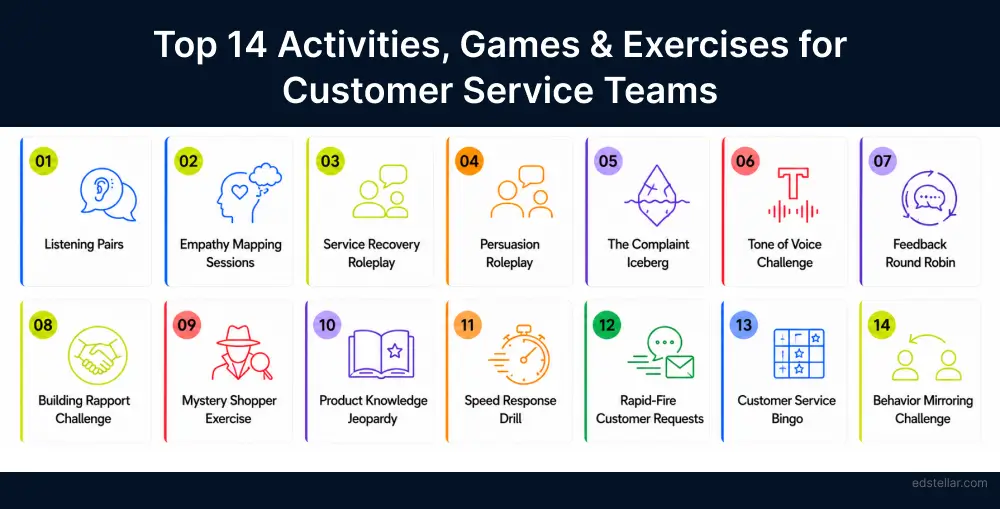







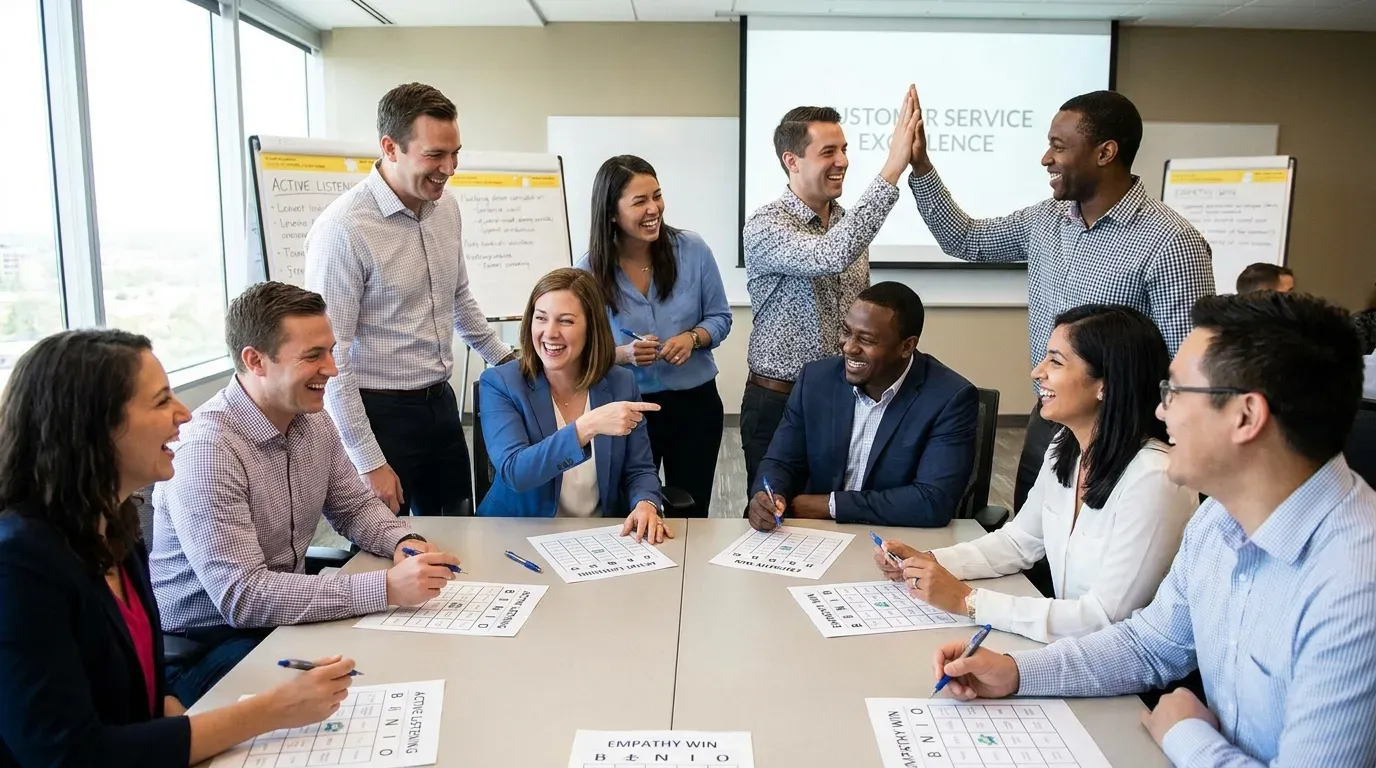

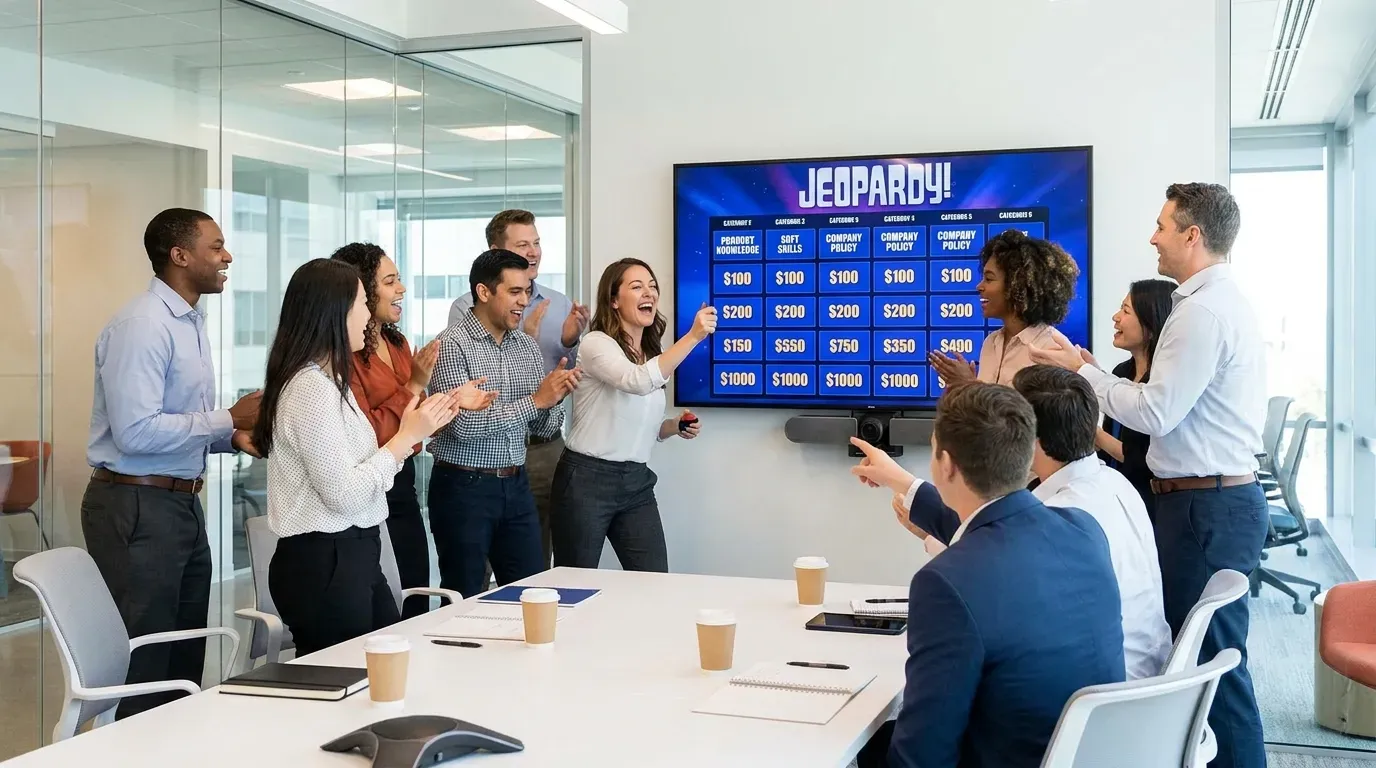



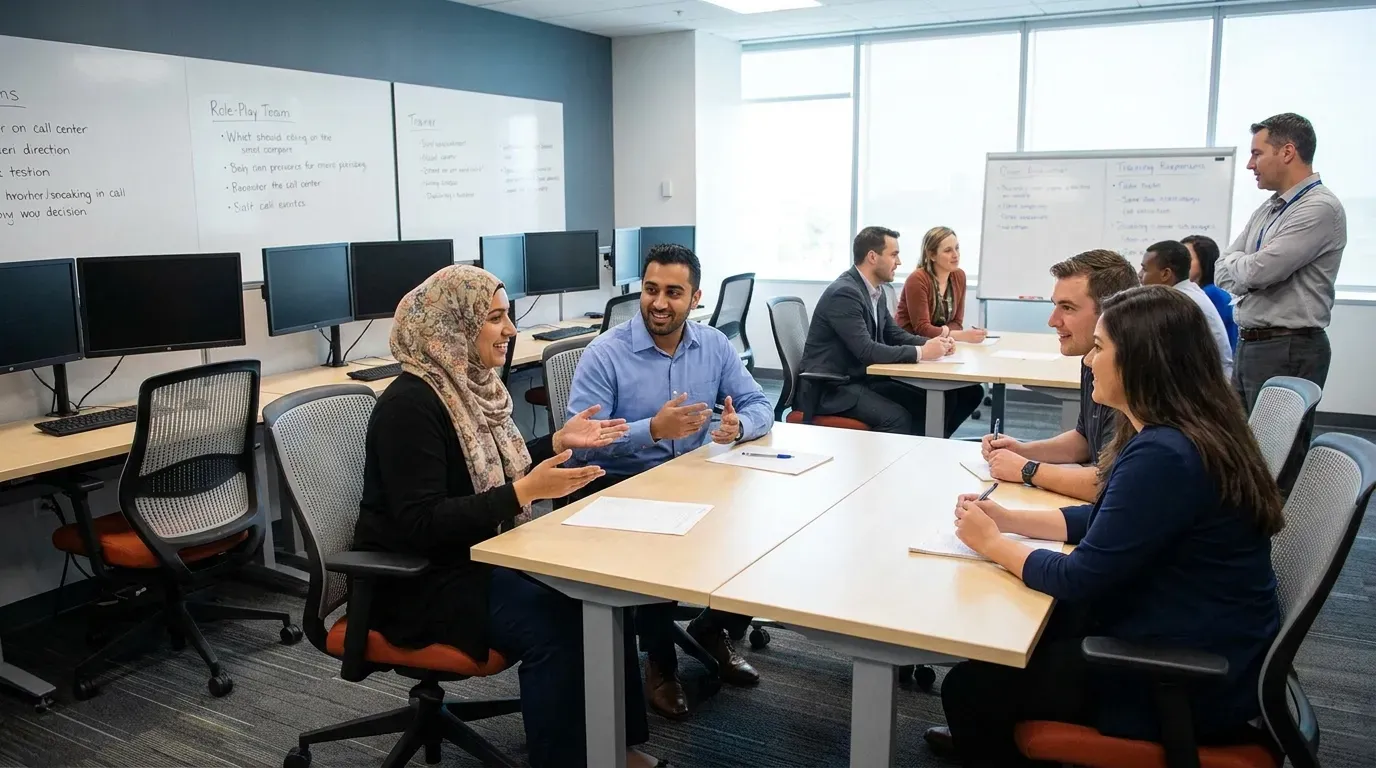



.svg "Click Here to Follow on Medium")
.svg)



.svg)


.svg)
.svg)
.svg)

.svg)