.svg "edstellar")

Persuasive Communication for Leaders Corporate Training Program
This training equips leaders with persuasion science, storytelling, emotional intelligence, and influence frameworks to communicate ideas compellingly and win commitment from any audience.
(Virtual / On-site / Off-site)
.svg)
Drive Team Excellence with Persuasive Communication for Leaders Corporate Training
Persuasive communication is the engine of leadership impact - the ability to move people, win commitment, and inspire action separates leaders who get ideas approved from those who do not. This training covers the full science and practice of leadership persuasion, from audience psychology and emotional intelligence to storytelling, objection handling, and high-stakes pitching, equipping leaders with skills that drive results across every communication context.
Edstellar's Persuasive Communication for Leaders Instructor-led course offers virtual/onsite training options so teams can learn in the format that suits them best. The curriculum combines persuasion theory with live practice sessions, real-time feedback, and applied exercises, enabling leaders to immediately strengthen their ability to influence, inspire, and win the commitment of any audience they face.
.svg)

Skills Your Employees Will Gain
These are the core, hands-on capabilities your team builds during the program.
- Persuasive Messaging
- Leadership Storytelling
- Audience Analysis and Adaptation
- Influence Without Authority
- Objection Handling
- Emotional Intelligence in Communication
- High-Stakes Presentation Delivery
What Your Team Will Achieve After This Training
- Master the principles of persuasion science and apply proven influence frameworks to leadership communication.
- Gain skills to craft and deliver compelling leadership narratives that move diverse audiences to action.
- Develop audience analysis techniques to tailor persuasive messages to different decision styles and values.
- Learn objection handling and resistance management strategies that win over skeptical stakeholders.
- Build emotional intelligence in communication to create trust, rapport, and lasting leadership influence.
- Apply high-stakes presentation and pitching skills to win executive approval and organizational commitment.
Topics & Program Outline
The curriculum is organized into focused modules built by industry experts and delivered virtually or on-premise. Interactive sessions reflect the evolving demands of the workplace, keeping the learning both relevant and practical.
- Why Persuasion Matters in Leadership
- How persuasive communication separates highly effective leaders from technically capable ones
- The cost of poor persuasion: missed approvals, slow decisions, and disengaged teams
- Persuasion as an ethical leadership discipline built on credibility and genuine respect
- Self-assessment: identifying your current persuasion strengths and development priorities
- The Aristotelian Framework for Leaders
- Ethos, Pathos, and Logos: the timeless three pillars of persuasive communication
- How modern neuroscience validates and extends Aristotle's persuasion framework
- Diagnosing which pillar is weakest in your current leadership communication style
- Applying the Ethos-Pathos-Logos balance to real leadership communication challenges
- The Psychology of How People Change Their Minds
- How the brain processes persuasive messages: dual process theory for leaders
- The role of cognitive bias in shaping how audiences receive leadership communication
- Psychological safety as a prerequisite for effective leadership persuasion
- Timing and context: why when you communicate is as important as what you say
- Credibility as the Foundation of Persuasion
- Three components of leadership credibility: expertise, trustworthiness, and goodwill
- How to build and protect credibility in every leadership communication interaction
- Recovering credibility after communication failures or leadership missteps
- Communicating with intellectual humility while maintaining leadership confidence
- Ethical Persuasion vs Manipulation
- The clear ethical boundary between persuasion and psychological manipulation
- Identifying manipulative communication tactics and refusing to deploy them
- Long-term trust erosion caused by short-term manipulation in leadership communication
- Building a personal code of ethical communication for leadership influence
- Persuasion in Leadership Contexts
- Persuasion in formal settings: board rooms, executive presentations, and town halls
- Persuasion in informal settings: hallway conversations, 1:1s, and team meetings
- Written vs verbal persuasion: when each medium is more effective for leadership
- Adapting persuasion strategy across cultures, hierarchies, and organizational contexts
- Understanding Your Audience Before You Speak
- The audience analysis framework: motivations, values, objections, and decision style
- Primary and secondary audiences: who is in the room and who is influenced by the room
- Gathering audience intelligence before high-stakes presentations and key conversations
- Avoiding common assumptions that lead leaders to misjudge their audience
- Identifying Decision Styles
- Four primary decision-making styles and their distinct communication preferences
- How to quickly identify a stakeholder's decision style before a critical conversation
- Adapting evidence, detail level, and structure to each decision-maker's style
- Persuading mixed audiences with diverse decision styles simultaneously
- Values-Based Persuasion
- Identifying the core values that drive your audience's priorities and decisions
- Framing your proposal in language that aligns with what the audience cares about most
- Avoiding value misalignment that triggers instinctive resistance from stakeholders
- Value mapping exercise: connecting your message to audience priorities and motivations
- Tailoring Messages for Different Stakeholders
- How to communicate the same strategic idea differently to the CEO, CFO, and COO
- Adapting level of detail, technical language, and evidence type per audience type
- The WIIFM (What's In It For Me) principle and its central role in audience tailoring
- Maintaining a consistent core message while adapting its framing for each stakeholder
- Reading the Room in Real Time
- Non-verbal cues that signal agreement, confusion, skepticism, or disengagement
- Adjusting message, pace, and approach based on live audience response signals
- When to pause, invite questions, or reframe mid-presentation based on room energy
- Recovering audience attention and buy-in when the room loses engagement
- Persuasion in One-on-One Leadership Conversations
- How persuasion in a 1:1 setting differs from group presentation and public speaking
- Building rapport rapidly at the start of a key persuasion conversation
- Listening as a persuasion tool: drawing out concerns before making your case
- Collaborative framing: co-creating solutions to reduce resistance in 1:1 conversations
- Why Stories Persuade Better Than Data Alone
- The neuroscience of storytelling: why narrative activates and aligns audience thinking
- How stories lower psychological defenses that block rational persuasion arguments
- When to lead with data vs lead with story for maximum persuasive leadership impact
- Common leadership storytelling mistakes and why they undermine persuasive intent
- Story Structures for Leadership Persuasion
- The problem-solution-benefit story arc for executive proposal and pitch communication
- The hero's journey structure applied to organizational change and transformation narratives
- Before-after-bridge storytelling for communicating the value of new initiatives
- Choosing the right narrative structure based on audience and communication purpose
- Crafting Compelling Leadership Stories
- The five elements of a memorable leadership story: character, tension, stakes, turn, and resolution
- Using specific, concrete detail to make leadership stories vivid and credible
- Building a personal story library of leadership moments that illustrate key messages
- Story length calibration: how much narrative is enough for different leadership contexts
- Data Storytelling for Leaders
- Wrapping data in narrative to make numbers emotionally resonant for stakeholders
- The data point, so what, and story structure for connecting evidence to meaning
- Visualization choices that amplify the persuasive power of data in presentations
- Avoiding the data dump: selecting the one or two statistics that matter most
- Organizational Stories for Culture and Alignment
- Using organizational origin stories to reinforce culture and strategic identity
- Customer and stakeholder success stories as persuasive leadership communication tools
- Stories of organizational struggle and resilience that build cohesion and commitment
- How to collect, curate, and deploy organizational stories for repeated leadership use
- Delivering Stories with Maximum Impact
- Vocal delivery skills for storytelling: pace, pause, emphasis, and tonal variation
- Physical presence and gesture to bring leadership stories to life with authenticity
- Eye contact and connection techniques that deepen audience engagement during storytelling
- Rehearsal methods for making leadership stories feel natural, fresh, and unrehearsed
- Designing a Persuasive Presentation
- The three questions every persuasive presentation must answer for the audience
- Pyramid principle: structuring executive presentations for top-down clarity and logic
- Opening with impact: the first 60 seconds that determine audience engagement
- Closing to a decision: ending presentations with a clear and confident call to action
- Slide Design for Persuasion
- The one idea per slide principle and its impact on persuasive clarity
- Visual hierarchy and layout choices that guide attention and reinforce the argument
- Common slide design mistakes that undermine executive communication credibility
- The slide headline as a persuasive argument: writing assertion-based slide titles
- Pitching Ideas to Senior Leadership
- The executive pitch structure: problem, solution, evidence, ask, and next steps
- Securing executive attention in the first two minutes of a leadership pitch
- Anticipating and pre-empting the questions executives will ask about your proposal
- Managing the budget conversation: presenting ROI and cost-benefit arguments credibly
- Persuasive Delivery Skills
- Vocal confidence: projection, pace, and strategic pause for persuasive leadership presence
- Managing presentation anxiety: preparation techniques and in-the-moment composure tools
- Body language and spatial movement that project authority and command attention
- The power of silence: using deliberate pauses for emphasis and audience reflection
- Handling Questions and Pushback
- Turning hostile or skeptical questions into opportunities to deepen persuasion
- The PREP (Point, Reason, Example, Point) framework for confident Q&A responses
- Buying time gracefully when you need to think before answering a difficult question
- Bridging technique: redirecting off-topic questions back to your core message
- Virtual and Hybrid Presentation Persuasion
- How to maintain persuasive energy and connection in virtual presentation settings
- On-camera presence techniques for executive credibility in video presentations
- Adapting slide design and pacing for virtual audience attention and engagement
- Interactive tools for increasing participation and buy-in in virtual leadership presentations
- Emotional Intelligence and Leadership Persuasion
- How emotional intelligence (EI) amplifies the persuasive power of leadership communication
- The four EI domains most critical for effective leadership persuasion
- Self-assessment of emotional intelligence as a communication leadership skill
- EI development practices that strengthen leadership communication impact over time
- Self-Awareness in Communication
- How your emotional state affects the persuasive quality and tone of your communication
- Identifying communication triggers that undermine leadership effectiveness under pressure
- Real-time self-monitoring techniques for high-stakes leadership conversations
- Using pre-communication rituals to achieve optimal persuasion state and composure
- Empathy as a Persuasion Tool
- Why demonstrating empathy is the fastest way to lower audience resistance to your message
- Acknowledging concerns and emotions before making your persuasive case
- Empathic listening techniques that build the relational foundation for persuasion
- Separating empathy from agreement: understanding does not require conceding
- Building Trust Through Communication
- The trust equation: credibility plus reliability plus intimacy minus self-orientation
- How consistent communication behavior builds or destroys trust with key stakeholders
- Vulnerability in leadership communication: when sharing uncertainty builds more trust
- Rebuilding trust through communication after a leadership misstep or broken commitment
- Managing Emotion in High-Stakes Communication
- Recognizing and managing your emotional responses in adversarial leadership conversations
- De-escalation communication techniques for emotionally charged stakeholder interactions
- Maintaining persuasive authority when challenged aggressively or personally attacked
- Emotion regulation practices that preserve communication quality under intense pressure
- Creating Psychological Safety for Persuasion
- Why audiences cannot be persuaded in psychologically unsafe communication environments
- Creating safety through invitation, validation, and non-judgmental leadership communication
- Signal behaviors that make stakeholders feel heard before presenting your persuasive case
- Balancing challenge and support in persuasive conversations to maintain productive tension
- Understanding Objections as Persuasion Opportunities
- Why objections signal engagement and interest rather than rejection of your message
- Types of leadership objections: logical, emotional, political, and resource-based
- The objection anticipation exercise: mapping likely pushback before a critical conversation
- Reframing objections as questions the audience needs answered before committing
- The Objection Handling Framework
- The four-step objection handling model: acknowledge, clarify, respond, and confirm
- Acknowledging objections without conceding to build rapport with the challenger
- Clarifying questions that reveal the true concern behind surface-level objections
- Confirming that your response landed by checking for stakeholder satisfaction
- Handling Common Leadership Objections
- Responding persuasively to the cost and resource objection in executive communication
- Handling the timing objection: why now is the right moment for this proposal
- Managing the risk objection: reframing risk as managed opportunity rather than threat
- Responding to the credibility objection: establishing authority and track record
- Managing Entrenched Resistance
- When an audience is deeply resistant: recognizing the limits of single-conversation persuasion
- The drip strategy: planned multi-touchpoint persuasion for deeply entrenched opposition
- Coalition building as a persuasion strategy for moving resistant leadership stakeholders
- Knowing when to postpone, reframe, or abandon a persuasion approach that is not working
- Staying Composed Under Pressure
- Communication techniques for maintaining persuasive authority under hostile questioning
- The strategic pause: using silence to recover composure and demonstrate confidence
- Redirecting personal attacks back to substantive issues with dignity and clarity
- Post-pressure debrief: evaluating what worked and what to adjust in the next conversation
- Negotiating Commitment After Persuasion
- Transitioning from persuasion to commitment: securing a clear decision or next step
- Closing techniques for leadership communication: direct ask, alternative choice, and summary close
- Handling the ambiguous or non-committal response with a follow-up communication strategy
- Documenting and reinforcing commitments made in persuasive leadership conversations
- The Influence Without Authority Challenge
- Why positional authority is insufficient for leadership persuasion in modern organizations
- The sources of informal leadership influence: expertise, relationships, and reputation
- Mapping your informal influence network and identifying gaps to develop
- Sustainable influence vs short-term pressure: why the former always outperforms
- Cialdini's Principles Applied to Leadership
- Reciprocity: how giving generously creates a foundation for leadership influence
- Social proof: using precedent, peer adoption, and external validation in communication
- Authority: communicating expertise and credibility without arrogance or overreach
- Scarcity, commitment, and liking as leadership persuasion tools applied ethically
- Persuading Peers and Lateral Stakeholders
- Communication strategies for persuading peers who have equal or greater organizational status
- Framing proposals in terms of shared organizational goals and mutual benefit
- Building relational capital with peer stakeholders before persuasion conversations
- Managing political dynamics when peer persuasion intersects with competing priorities
- Persuading Upward in the Organization
- Communication principles for influencing leaders who have authority over you
- Presenting ideas to senior stakeholders with confidence, evidence, and executive framing
- The briefing upward model: what to include and what to leave out for senior audiences
- Managing disagreement with senior leaders respectfully and without damaging relationships
- Building a Reciprocal Influence Network
- Why deliberately building an influence network amplifies your leadership persuasion power
- Contributing knowledge, connections, and advocacy to build informal relational capital
- Identifying and cultivating key champions who advocate for your ideas and initiatives
- Maintaining influence relationships through consistent, genuine communication over time
- Persuasion in Organizational Politics
- Understanding organizational political dynamics and their impact on persuasion strategies
- Navigating competing agendas while maintaining ethical and principled persuasion communication
- Pre-meeting conversations: building persuasion momentum before formal decision points
- Managing political resistance without compromising integrity or damaging key relationships
- Principles of Persuasive Executive Writing
- Why clear, direct writing is the foundation of all persuasive leadership communication
- Brevity and structure: writing for executives who read fast and decide quickly
- The BLUF (Bottom Line Up Front) principle applied to persuasive written leadership communication
- Common executive writing mistakes that undermine message authority and persuasion
- Persuasive Email Communication
- Subject line strategy: making decision-makers open and prioritize your email
- The three-part persuasive email: context, ask, and benefit stated in the first paragraph
- Tone calibration in email: assertive, warm, and credible without being aggressive
- Follow-up email strategy when a key decision or response has not been received
- Writing Persuasive Proposals and Memos
- The executive proposal structure: problem, proposed solution, evidence, risks, and ask
- Writing one-page memos that communicate complex proposals with clarity and impact
- Anticipating and addressing likely objections within the written proposal document
- Executive summary writing: the most important 200 words in any leadership document
- Persuasion in Digital and Social Leadership Communication
- Writing for LinkedIn and professional social platforms as a leadership communication tool
- Building thought leadership through consistent, high-quality written communication
- Short-form persuasion: making a compelling case in 280 characters or a single paragraph
- Managing reputation and influence through strategic digital writing and engagement
- Persuasive Slide Writing
- Writing assertion-based slide titles that advance the persuasive argument of a presentation
- Bullet points vs paragraphs: choosing the right written format for each slide type
- Speaker notes as a persuasion script: preparing verbal language to reinforce written slides
- Reviewing slides for persuasive flow: does each slide advance the audience toward yes?
- Editing for Persuasion
- The self-editing checklist for persuasive leadership writing: clarity, brevity, and logic
- Eliminating passive voice, filler phrases, and jargon that dilute persuasive impact
- Reading your writing from the audience's perspective to identify gaps in logic or empathy
- Getting feedback on persuasive writing and implementing it quickly and consistently
- Persuading Skeptical or Cynical Audiences
- Why cynicism develops and how to communicate credibly with deeply skeptical stakeholders
- Evidence selection for skeptical audiences: what type of proof shifts their position
- Third-party validation: using external credibility to reach internally resistant audiences
- The long-game approach to persuading persistent organizational skeptics over time
- Persuading Across Generational and Cultural Differences
- How persuasion norms and communication preferences differ across generational cohorts
- Cultural dimensions of persuasion: directness, hierarchy, and relationship expectations
- Adapting persuasion strategy for high-context vs low-context communication cultures
- Avoiding cultural missteps that undermine persuasive credibility in diverse audiences
- Persuasion During Organizational Crisis
- How crisis conditions change the rules of effective and ethical persuasive communication
- Communicating confidence and direction without overpromising during organizational uncertainty
- Persuading teams to take decisive action when fear and resistance are high
- Maintaining persuasive credibility when previous commitments have not been fully delivered
- Persuading Through Change and Disruption
- Communication strategies for persuading stakeholders to embrace uncomfortable organizational change
- Framing disruption as opportunity using optimistic but realistic leadership narratives
- Sustaining persuasion momentum through extended periods of organizational transformation
- Addressing the loss aversion that makes persuading through change particularly difficult
- Communicating Bad News Persuasively
- How to deliver difficult decisions or news while preserving trust and future credibility
- Framing unfavorable outcomes in ways that maintain organizational confidence and morale
- The honest acknowledgment technique: naming the difficulty before making your case
- Following up after hard news to reinforce relationships and rebuild forward momentum
- Rebuilding Influence After a Persuasion Failure
- What to do when a critical pitch, proposal, or influence attempt fails
- Debrief discipline: extracting learning from persuasion failures without self-blame
- Re-approaching a stakeholder after an unsuccessful first persuasion conversation
- Long-term credibility repair when a persuasion failure has damaged a key relationship
- Personal Brand as a Persuasion Asset
- How your leadership reputation precedes and amplifies every persuasion conversation
- Defining the persuasive leadership brand you want stakeholders to associate with you
- Aligning visible communication behaviors with the reputation you intend to build
- Consistency as the most powerful personal brand and persuasion strategy over time
- Thought Leadership as Persuasion
- How sharing expertise and insight builds influence before a persuasion conversation begins
- Internal thought leadership: speaking, writing, and contributing to organizational discourse
- External thought leadership: publishing, speaking, and building market credibility
- Converting thought leadership into organizational persuasion capital and stakeholder trust
- Consistency and Follow-Through as Persuasion Tools
- How following through on commitments is the most persuasive behavior a leader can demonstrate
- Communication practices that reinforce reliability and strengthen persuasion credibility
- Managing expectations precisely so follow-through consistently meets or exceeds them
- Repairing persuasive credibility when a commitment has not been honored
- Developing Persuasion Skills in Your Team
- Why developing persuasion capability in your team multiplies your organizational influence
- Coaching direct reports on persuasive communication through observation and feedback
- Creating opportunities for your team to practice and develop persuasion skills safely
- Building a team culture where constructive persuasion and reasoned debate are valued
- Measuring and Improving Persuasion Effectiveness
- How to know if your persuasive communication is working: tracking decisions and commitment
- Feedback-gathering methods for improving persuasive communication performance over time
- Video review and peer coaching as accelerated persuasion development practices
- Setting a personal persuasion development goal and reviewing progress quarterly
- Sustaining Persuasive Leadership Excellence
- Building habits and routines that sustain persuasion development over a leadership career
- Learning from the most persuasive leaders in your industry and organization
- Staying current with persuasion research, communication science, and leadership best practices
- The legacy of persuasive leadership: the ideas, cultures, and changes your communication creates
Who Should Attend?
This program suits professionals at many levels across the organization, including:
- Senior Managers
- Directors
- Vice Presidents
- C-Suite Executives
- Business Development Leaders
- Department Heads
What are the Prerequisites?
Professionals should have experience in a leadership or management role and comfort with public speaking or group communication to take the Persuasive Communication for Leaders training course.
Choose the Format That Fits Your Team
We design training your teams actually engage with, and deliver it the way that suits you best. Through a vetted global trainer network, Edstellar runs sessions in 10+ languages with consistent quality anywhere.


.webp "Virtual Persuasive Communication for Leaders Training")
Virtual / online: expert-led live sessions delivered anywhere, with consistency and easy scheduling.
.webp "On-site Persuasive Communication for Leaders Training")
On-site (in-house): immersive, instructor-led learning at your office.
.webp "Off-site Persuasive Communication for Leaders Training")
Off-site: focused, instructor-led group learning away from everyday workplace distractions.
Get a Proposal Shaped to Your Needs
Need pricing for onsite, offsite, or virtual delivery? Get a proposal tailored to your team's needs.
64 hours of group training (includes VILT/In-person On-site)
Tailored for SMBs
Tailor-Made Trainee Licenses with Our Exclusive Training Packages!
160 hours of group training (includes VILT/In-person On-site)
Ideal for growing SMBs
Tailor-Made Trainee Licenses with Our Exclusive Training Packages!
400 hours of group training (includes VILT/In-person On-site)
Designed for large corporations
Tailor-Made Trainee Licenses with Our Exclusive Training Packages!
Unlimited duration
Designed for large corporations
What Sets Edstellar Apart
Experienced Trainers
Our trainers are drawn from a vetted global network and bring years of industry expertise, keeping every session practical and impactful.
Proven Quality
With a strong global track record, Edstellar is known for quality and engaging delivery.
Industry-Relevant Curriculum
Our programs are built by experts to match the demands of today's industry.
Fully Customizable
Every program can be tailored to your organization's goals.
Comprehensive Support
We provide pre- and post-session support for a complete learning experience.
Global Multi-Location & Multilingual Training Delivery
We deliver in multiple languages to support diverse global teams.
Recognition That Motivates Your Team
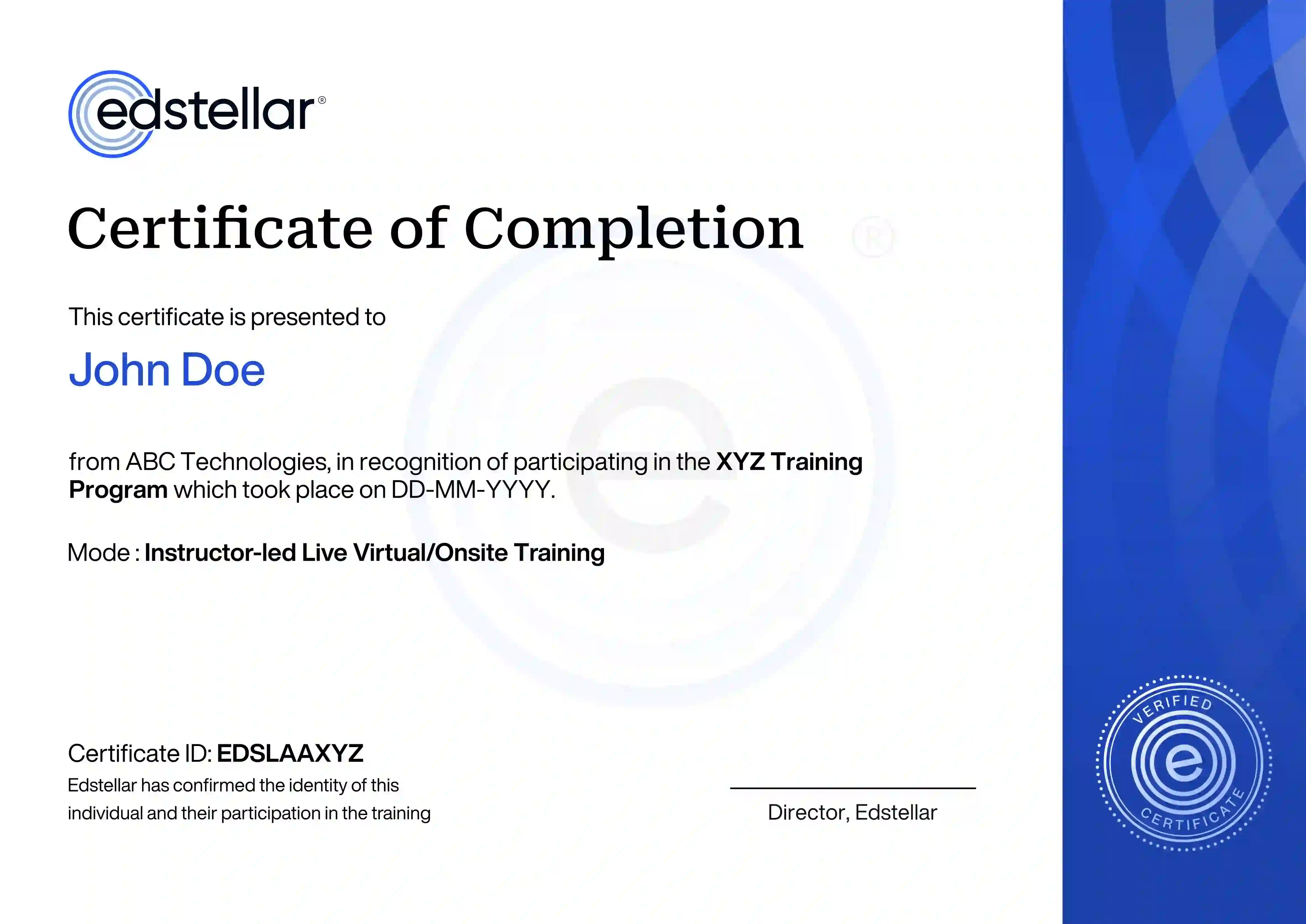
Upon successful completion of the Persuasive Communication for Leaders training course offered by Edstellar, employees receive a course completion certificate, symbolizing their dedication to ongoing learning and professional development.
This certificate validates the employee's acquired skills and is a powerful motivator, inspiring them to enhance their expertise further and contribute effectively to organizational success.

Explore More Courses


Edstellar is a one-stop instructor-led corporate training and coaching solution that addresses organizational upskilling and talent transformation needs globally.
.svg)
.svg)
.svg)

.svg)
Learning Technology
Learning Content Design and Development
Learning Governance, Analytics & ROI
Digital Learning Ecosystem
Training Simulations, AR/VR & Case Studies
Employee Performance Support
Leadership Pipeline & Succession PlanningStrategic Workforce Planning for EnterprisesTransformation & Risk Advisory for EnterprisesDEI Consulting for EnterprisesEmployee Engagement Consulting for Enterprises
Cultural Transformation