.svg "edstellar")
.webp)
Strategic Communication for Leaders Corporate Training Program
This training equips senior leaders with strategic communication frameworks covering executive messaging, stakeholder engagement, crisis response, and change communication to drive organizational alignment.
(Virtual / On-site / Off-site)
.svg)
Drive Team Excellence with Strategic Communication for Leaders Corporate Training
Strategic communication is one of the most critical capabilities of effective leadership - the ability to translate vision into action, align diverse stakeholders, and maintain clarity and credibility under pressure defines leaders who drive lasting organizational impact. This training covers the full spectrum of strategic communication for leaders, from executive messaging and stakeholder engagement to crisis response and organizational change communication.
Edstellar's Strategic Communication for Leaders Instructor-led course offers virtual/onsite training options so teams can learn in the format that suits them best. The curriculum combines communication theory with practical exercises including live presentations, messaging workshops, and real-world case studies, enabling leaders to immediately strengthen their communication effectiveness and organizational influence.
.svg)

Skills Your Employees Will Gain
These are the core, hands-on capabilities your team builds during the program.
- Executive Messaging
- Stakeholder Communication
- Strategic Narrative Building
- Crisis Communication
- Board and C-Suite Presentation
- Change Communication
- Cross-Functional Alignment
What Your Team Will Achieve After This Training
- Master strategic communication frameworks to craft clear, compelling executive messages aligned to organizational goals.
- Gain skills to communicate organizational strategy persuasively to boards, C-suites, and diverse stakeholder audiences.
- Develop crisis communication plans and rapid-response protocols that protect organizational reputation under pressure.
- Learn cross-functional communication strategies to align teams, break down silos, and drive consistent execution.
- Build proficiency in change communication frameworks to lead teams effectively through transformation and uncertainty.
- Apply storytelling and narrative techniques to make complex strategies accessible and inspiring for all audiences.
Topics & Program Outline
The curriculum is organized into focused modules built by industry experts and delivered virtually or on-premise. Interactive sessions reflect the evolving demands of the workplace, keeping the learning both relevant and practical.
- The Strategic Leader's Communication Imperative
- Why communication is the defining capability of senior leadership effectiveness
- How communication quality shapes organizational culture, trust, and performance
- The gap between technical leadership skills and executive communication capability
- Self-assessment: identifying current communication strengths and priority growth areas
- Strategic vs Tactical Communication
- Distinguishing strategic messages from operational and tactical communication
- Altitude framework: matching communication to leadership level and audience type
- Common mistakes leaders make when communicating strategy to their organizations
- Moving from information sharing to meaning-making and direction-setting for teams
- Communication Style and Leadership Presence
- Four leadership communication styles and when to deploy each one effectively
- Building executive presence through voice, body language, and deliberate pacing
- Adapting communication style to different audience types, contexts, and cultures
- Authentic vs polished communication: finding the balance that builds trust
- The Strategic Communication Planning Model
- Structured frameworks for planning high-stakes leadership communications
- Audience analysis: understanding what different stakeholders need to hear
- Objective setting for communication: clarity on desired outcomes before crafting messages
- Planning and sequencing communications for complex organizational announcements
- Leadership Listening and Upward Feedback
- Why listening is the most underrated strategic leadership communication skill
- Active listening techniques for senior leaders in high-stakes conversations
- Creating feedback-rich environments where honest communication flows upward freely
- Using listening insights to calibrate and strengthen organizational communication strategy
- Communication Ethics and Transparency
- The ethical dimensions of strategic leadership communication for senior leaders
- Balancing transparency with confidentiality in sensitive organizational communications
- Building long-term trust through consistent, honest, and timely leadership communication
- Managing the tension between message control and authentic, credible leadership voice
- Crafting the Leadership Message Architecture
- What message architecture is and why every senior leader needs one
- The three-layer message model: vision, strategy, and action priorities
- Cascading messages consistently from the executive team to frontline employees
- Reviewing and refreshing the leadership message architecture on a regular cadence
- Strategic Storytelling for Leaders
- Why narrative is more persuasive than data alone for executive and board audiences
- Proven narrative structures for executive communication: STAR and pyramid approaches
- Building compelling leadership stories that anchor strategy in human experience
- Personal leadership storytelling: using your own experience to inspire and connect
- The Strategy Elevator Pitch
- Distilling complex strategies into a clear, memorable 60-second narrative
- Making strategic priorities tangible with vivid, concrete, accessible language
- Avoiding jargon, buzzwords, and strategic clichés that dilute message impact
- Practicing and refining the strategy elevator pitch for multiple leadership contexts
- Data-Driven Storytelling
- Combining quantitative evidence with narrative for maximum persuasive leadership impact
- Visualizing data for executive and board audiences effectively and memorably
- Choosing the right level of data detail for different leadership audience types
- Making financial and performance data compelling without losing nuance or accuracy
- Written Executive Communication
- Principles of effective executive writing: brevity, clarity, and logical structure
- Crafting executive memos, strategy documents, and concise leadership briefings
- Email communication standards for senior leadership effectiveness and tone
- The one-page briefing: distilling complex issues for executive decision-making
- Message Testing and Refinement
- Pre-testing executive messages with a trusted advisory group before delivery
- Feedback loops for assessing message clarity and reception across audiences
- Adapting the core message for different channels, contexts, and audience segments
- Building a message refinement discipline into regular leadership communication practice
- Stakeholder Mapping for Strategic Communication
- Identifying and categorizing key stakeholders for organizational strategy messages
- Power-interest matrix for prioritizing stakeholder communication time and investment
- Understanding stakeholder motivations, concerns, and communication preferences
- Developing tailored communication plans for each key stakeholder segment
- Communicating with the Board
- What boards need from leadership communication and how to consistently deliver it
- Structuring board reports: balancing information depth and strategic clarity
- Managing board questions and challenges with composure and executive credibility
- Building an ongoing communication rhythm with board members outside formal meetings
- Investor and Analyst Communication
- Crafting earnings narratives and investor communications that build market confidence
- Managing difficult investor questions with transparency and strategic framing
- Maintaining consistency between internal and external strategy communication messages
- Crisis communication with investors: protecting confidence and relationships under pressure
- Employee Communication at Scale
- Communicating organizational strategy effectively to large, diverse employee populations
- Town hall design: format, content, and Q&A management for senior leader delivery
- Cascade communication models ensuring strategic messages reach all employee levels
- Measuring employee communication effectiveness and continuously improving over time
- External Stakeholder and Media Communication
- Developing key messages for media interviews, press releases, and public statements
- Media training fundamentals for senior leaders engaging with journalists and press
- Managing organizational reputation through proactive and reactive external communication
- Social media communication standards and reputation risks for senior leaders
- Cultural and Cross-Cultural Communication
- Communicating across cultural and linguistic boundaries as a global leadership team
- High-context vs low-context communication styles and their business impact on leadership
- Avoiding cultural assumptions and biases that undermine leadership credibility and trust
- Building inclusive communication practices that engage and respect diverse audiences
- The Dynamics of C-Suite Communication
- How communication norms and expectations differ in C-suite and board environments
- Peer communication among C-suite executives: directness, brevity, and mutual respect
- Managing upward communication to the CEO and executive leadership team effectively
- C-suite debate and disagreement: communicating dissent professionally and constructively
- Presenting Strategy to the Board
- Structuring a board strategy presentation for maximum clarity and productive engagement
- Leading board discussion vs presenting: how to facilitate meaningful strategic dialogue
- Anticipating board questions and preparing credible, concise, confident responses
- Following up after board presentations to reinforce decisions and sustain momentum
- Executive Briefings and Decision Papers
- Designing concise executive briefings that enable fast and confident decisions
- The BLUF (Bottom Line Up Front) structure for C-suite decision communication
- Visual frameworks: one-pagers, logic trees, and structured summaries for executives
- Briefing senior leaders verbally vs in writing: choosing the right channel and format
- Communicating Financial Performance
- Presenting financial results to board and executive audiences with clarity and confidence
- Framing performance narratives with context, drivers, and forward-looking guidance
- Managing communication when performance misses expectations or targets
- Connecting financial metrics to strategic progress in leadership reporting and updates
- Crisis Communication at the Executive Level
- Leadership communication responsibilities and priorities during organizational crises
- The first 24 hours: rapid response communication principles for senior executives
- Balancing transparency, legal constraints, and organizational reputation in a crisis
- Post-crisis communication: rebuilding trust and demonstrating leadership accountability
- Building Influence in the C-Suite
- Influence strategies for leaders operating in peer and cross-functional leadership settings
- Coalition building: aligning executive peers around shared strategic priorities
- Managing disagreement and competing priorities constructively at the leadership table
- Demonstrating strategic communication competence that builds executive-level credibility
- Crisis Communication Fundamentals
- Definition of organizational crisis and the communication imperatives it creates
- The 3 Cs of crisis communication: clarity, compassion, and control for leaders
- Types of organizational crises and their distinct communication requirements
- The reputational cost of poor crisis communication illustrated through case studies
- Crisis Communication Planning
- Building a crisis communication plan before a crisis occurs or escalates
- Identifying spokespersons and defining communication roles across the leadership team
- Developing pre-approved message templates for common organizational crisis scenarios
- Crisis communication rehearsal through simulation exercises and tabletop drills
- Rapid Response Communication
- The first 30 minutes: leadership communication priorities in an emerging crisis
- Holding statements: communicating responsibly before all facts are fully known
- Internal communication priorities during a crisis: employees must come before media
- Managing the information vacuum before the full crisis picture becomes clear
- Media and Public Communication in a Crisis
- Delivering difficult news to journalists with clarity, authority, and controlled composure
- Responding to hostile media questioning without escalating the situation further
- Managing social media communication during fast-moving organizational crises
- Press conference preparation: format, messaging strategy, and Q&A management
- Employee Communication During a Crisis
- Why employee communication is the most critical channel in any organizational crisis
- Communicating uncertainty honestly while maintaining leadership confidence and composure
- Frequency, format, and tone of employee updates during extended crisis situations
- Supporting managers to communicate effectively with their teams throughout a crisis
- Post-Crisis Communication and Recovery
- Communicating accountability and learning clearly in the aftermath of a crisis
- The leader's role in post-crisis narrative, organizational healing, and renewal
- Monitoring reputation recovery and adjusting communication approach accordingly
- Capturing lessons learned and updating the crisis communication plan post-incident
- The Cross-Functional Communication Challenge
- Why cross-functional communication is harder than vertical leadership communication
- Common barriers to alignment: language differences, competing metrics, and priorities
- The role of shared narrative in building sustained cross-functional collaboration
- Diagnosing and mapping cross-functional communication breakdowns in your organization
- Communicating Strategy Across Functions
- Translating enterprise strategy into function-specific language and operational priorities
- Making the connection between functional goals and organizational strategy visible
- Maintaining consistent strategy communication across business units and geographies
- Resolving conflicting interpretations of strategy that arise between business functions
- Influence Without Authority
- Communication strategies for leaders who must lead without direct positional authority
- Building credibility and peer trust through consistent and principled communication
- Framing requests and proposals in terms of shared goals and mutual organizational benefit
- Managing resistance from peer teams through constructive, empathy-led communication
- Facilitating Cross-Functional Alignment Conversations
- Designing and leading productive cross-functional alignment meetings and workshops
- Surfacing and resolving tensions between competing functional priorities respectfully
- Using structured dialogue to achieve durable cross-functional decisions and commitment
- Following up to reinforce agreements and hold cross-functional commitments accountable
- Breaking Down Silos Through Communication
- How communication norms and practices create and sustain organizational silos over time
- Structural communication interventions that progressively reduce silo behavior
- Building cross-functional communication channels and collaborative communities of practice
- Leadership modeling of cross-functional transparency and proactive information sharing
- Communication in Matrix Organizations
- Navigating dual reporting and competing loyalties in complex matrix structures
- Establishing clear communication norms for matrixed teams and cross-functional projects
- Managing conflicting messages from multiple leadership lines in matrix environments
- Communication strategies for resolving prioritization conflicts in matrix organizations
- Communication in Organizational Change
- Why communication is the most critical factor in change management success
- The change communication cycle: awareness, understanding, buy-in, and action
- Tailoring change messages to different stakeholder groups' concerns and readiness
- Common change communication failures and how to avoid them in leadership practice
- The Leader's Change Narrative
- Building a compelling narrative for organizational change using urgency and vision
- Articulating the vision for change in terms that genuinely motivate and inspire teams
- Connecting organizational change rationale to individual team and personal impact
- Sustaining the change narrative with consistency throughout extended transformation timelines
- Communicating During Uncertainty
- How to lead communication effectively when the future direction is unclear or undefined
- Being honest about uncertainty without undermining team confidence or organizational morale
- Frequency, format, and cadence of communications during extended periods of uncertainty
- Managing rumor and misinformation during periods of significant organizational change
- Managing Resistance Through Communication
- Understanding resistance as a communication challenge, not a leadership or personal failure
- Communicating with resistant stakeholders through empathy, honesty, and calm persistence
- Addressing objections to change with credible evidence, full context, and genuine respect
- Knowing when to mandate change and when to continue the communication dialogue
- Manager Enablement for Change Communication
- Why frontline managers are the most critical channel for organizational change communication
- Equipping managers with the message, rationale, and tools to communicate change effectively
- Manager cascade briefings: message scripts, Q&A preparation, and delivery support
- Measuring manager communication effectiveness throughout the change program lifecycle
- Sustaining Communication Through Transformation
- Maintaining communication momentum and consistency through extended transformation programs
- Celebrating progress milestones and communicating achievements to sustain engagement
- Adjusting the change narrative as organizational circumstances and priorities evolve
- Closing the change communication loop with outcomes, learnings, and genuine gratitude
- Strategic Listening for Leaders
- How senior leaders signal openness or closure through their listening behaviors
- Structured listening practices: town halls, listening tours, and 1:1 dialogue formats
- Overcoming the information asymmetry problem inherent in senior leadership positions
- Acting visibly on listening insights to build organizational trust and engagement
- The Science of Leadership Influence
- Principles of influence applied to senior leadership communication and decision-making
- Emotional and rational persuasion: when to appeal to each type of stakeholder thinking
- Building credibility as the enduring foundation of long-term leadership influence
- Ethical influence: the clear difference between genuine persuasion and manipulation
- Negotiation Communication for Leaders
- Communication strategies for high-stakes leadership negotiations and complex discussions
- Interest-based vs positional negotiation and the communication implications of each
- Managing emotion in negotiation: your own responses and your counterpart's reactions
- Post-negotiation communication: confirming agreements and managing ongoing expectations
- Leading Difficult Conversations
- Framework for planning and initiating high-stakes difficult conversations as a leader
- Delivering performance feedback, managing underperformance, and communicating consequences
- Maintaining composure and empathy under significant communication pressure and conflict
- Resolving interpersonal conflict through structured, respectful, and productive dialogue
- Delivering Bad News Effectively
- Minimizing threat response when delivering difficult organizational news to teams
- Sequencing bad news communication: timing, channel selection, and contextual framing
- Balancing directness with genuine compassion when delivering unwelcome messages
- Following up after delivering bad news to sustain relationships and provide support
- Feedback Culture and Communication
- Creating a leadership environment where honest and constructive feedback flows freely
- Modeling receiving feedback gracefully as a visible senior leadership communication norm
- Designing feedback rituals and structured practices for the senior leadership team
- Distinguishing clearly between developmental feedback and criticism in communication
- The Virtual Leadership Communication Challenge
- How virtual and hybrid environments change the dynamics of leadership communication
- Lost communication signals in digital contexts: what leaders must actively compensate for
- Building trust and relationship capital in distributed and remote leadership contexts
- Communication discipline required for credible and effective virtual leadership presence
- Video Communication for Leaders
- Technical and environmental setup for professional, credible video communication presence
- Eye contact, framing, and lighting choices for authoritative on-camera leadership delivery
- Adapting presentation style for video audiences vs in-person meeting delivery
- Virtual body language and its critical role in digital leadership communication presence
- Written Communication in a Digital-First Environment
- Written communication standards for leaders across email, messaging apps, and documents
- Tone, brevity, and formality calibration in digital leadership communication channels
- Avoiding misinterpretation in asynchronous written leadership communication
- Documentation practices that support organizational accountability and strategic clarity
- Virtual Meeting Leadership
- Designing and facilitating high-impact virtual leadership meetings with clear outcomes
- Engagement techniques for distributed audiences in virtual team and all-hands settings
- Managing virtual Q&A, structured discussion, and decision-making processes effectively
- Reducing meeting overload while maintaining organizational communication and alignment
- Asynchronous Communication Strategies
- When to use asynchronous vs synchronous communication as a senior organizational leader
- Video messaging, voice notes, and written leadership updates as strategic communication tools
- Building organizational norms for asynchronous leadership communication at scale
- Measuring the effectiveness of asynchronous communication across dispersed organizations
- Building Connection in Virtual Teams
- How senior leaders create belonging and human connection in distributed organizations
- Virtual town halls, fireside chats, and informal leadership communication formats
- Recognition and celebration communication practices in virtual and hybrid team environments
- Bridging the emotional distance of virtual leadership through intentional and frequent communication
- Communication Self-Assessment and Development
- Conducting an honest assessment of your current leadership communication effectiveness
- Identifying the highest-impact communication areas for focused personal development
- Feedback gathering methods for senior leader communication insight and improvement
- Building a personal communication development plan with specific measurable goals
- Personal Brand and Leadership Voice
- Defining your authentic leadership voice and distinctive communication brand
- Aligning personal communication style with organizational culture, values, and context
- Maintaining consistency of voice across different audiences, contexts, and channels
- Managing the tension between authentic communication and strategic message discipline
- Presentation Skills for Senior Leaders
- High-stakes presentation preparation framework for polished executive delivery
- Managing presentation anxiety and building peak performance communication routines
- Handling Q&A with confidence: preparation, brevity, and consistent executive credibility
- Continuous improvement discipline for ongoing leadership presentation effectiveness
- Communication Through Others
- Developing communication capability in your leadership team and direct reports
- Coaching direct reports on executive communication skills, presence, and confidence
- Delegating communication responsibilities while maintaining organizational message consistency
- Building a high-communication culture within your team and organizational unit
- Communication Metrics and Feedback Loops
- How to measure the effectiveness of your leadership communication over time
- Pulse surveys, listening sessions, and informal feedback for communication performance insight
- Adjusting communication strategy and style based on organizational response and measured impact
- Sharing communication improvement as a visible and valued leadership development priority
- Sustaining Communication Excellence
- Building communication practice habits that sustain growth and development over time
- Peer learning and accountability partnerships for ongoing leadership communication development
- Staying current with communication research, emerging tools, and evolving best practices
- Leaving a communication legacy: the lasting impact of consistently great leadership communication
Who Should Attend?
This program suits professionals at many levels across the organization, including:
- Senior Managers
- Directors
- Vice Presidents
- C-Suite Executives
- Department Heads
- Team Leaders
What are the Prerequisites?
Professionals should have experience in a leadership or management role and familiarity with corporate communication practices to take the Strategic Communication for Leaders training course.
Choose the Format That Fits Your Team
We design training your teams actually engage with, and deliver it the way that suits you best. Through a vetted global trainer network, Edstellar runs sessions in 10+ languages with consistent quality anywhere.


.webp "Virtual Strategic Communication for Leaders Training")
Virtual / online: expert-led live sessions delivered anywhere, with consistency and easy scheduling.
.webp "On-site Strategic Communication for Leaders Training")
On-site (in-house): immersive, instructor-led learning at your office.
.webp "Off-site Strategic Communication for Leaders Training")
Off-site: focused, instructor-led group learning away from everyday workplace distractions.
Get a Proposal Shaped to Your Needs
Need pricing for onsite, offsite, or virtual delivery? Get a proposal tailored to your team's needs.
64 hours of group training (includes VILT/In-person On-site)
Tailored for SMBs
Tailor-Made Trainee Licenses with Our Exclusive Training Packages!
160 hours of group training (includes VILT/In-person On-site)
Ideal for growing SMBs
Tailor-Made Trainee Licenses with Our Exclusive Training Packages!
400 hours of group training (includes VILT/In-person On-site)
Designed for large corporations
Tailor-Made Trainee Licenses with Our Exclusive Training Packages!
Unlimited duration
Designed for large corporations
What Sets Edstellar Apart
Experienced Trainers
Our trainers are drawn from a vetted global network and bring years of industry expertise, keeping every session practical and impactful.
Proven Quality
With a strong global track record, Edstellar is known for quality and engaging delivery.
Industry-Relevant Curriculum
Our programs are built by experts to match the demands of today's industry.
Fully Customizable
Every program can be tailored to your organization's goals.
Comprehensive Support
We provide pre- and post-session support for a complete learning experience.
Global Multi-Location & Multilingual Training Delivery
We deliver in multiple languages to support diverse global teams.
Recognition That Motivates Your Team
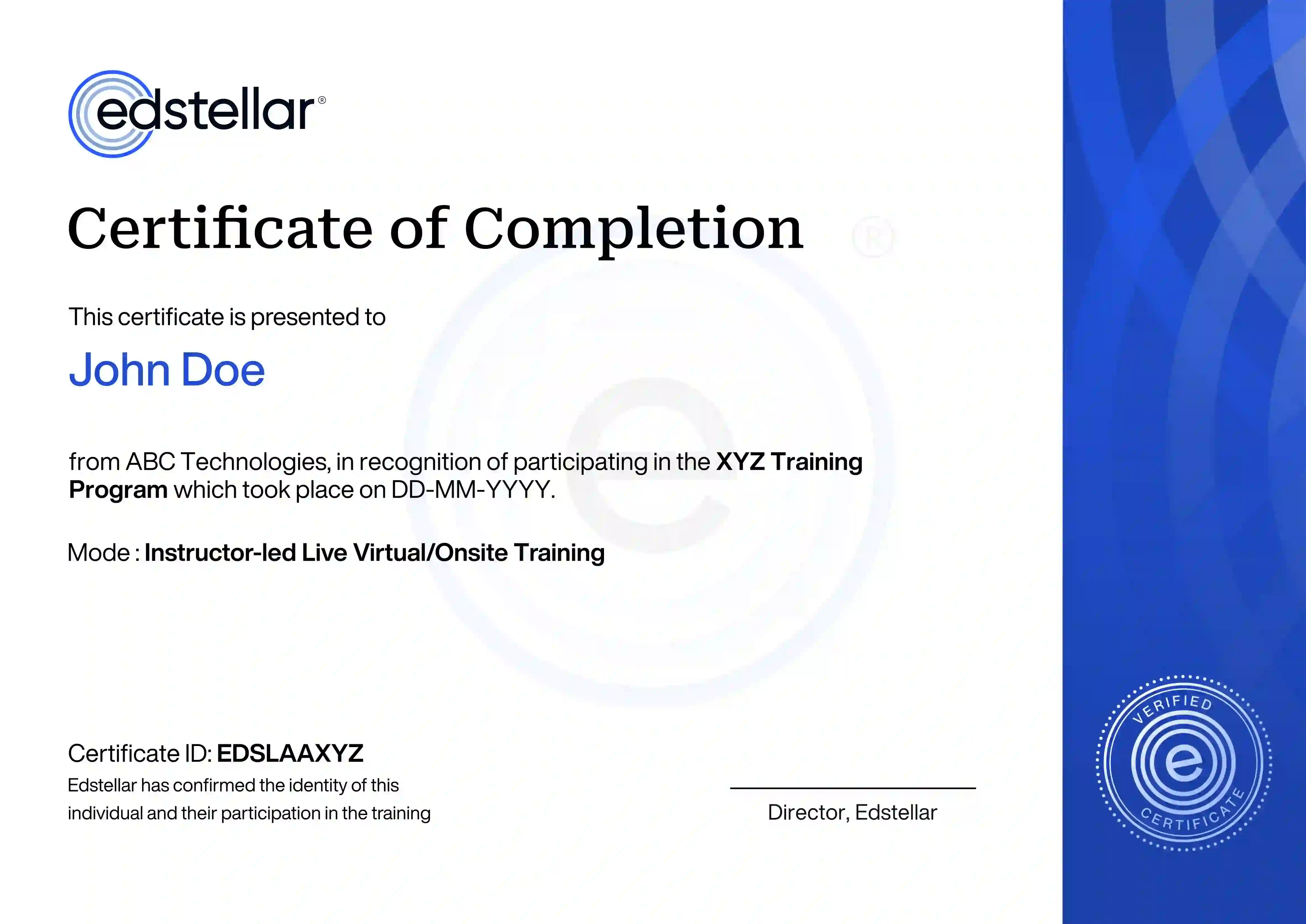
Upon successful completion of the Strategic Communication for Leaders training course offered by Edstellar, employees receive a course completion certificate, symbolizing their dedication to ongoing learning and professional development.
This certificate validates the employee's acquired skills and is a powerful motivator, inspiring them to enhance their expertise further and contribute effectively to organizational success.

Explore More Courses


Edstellar is a one-stop instructor-led corporate training and coaching solution that addresses organizational upskilling and talent transformation needs globally.
.svg)
.svg)
.svg)

.svg)
Learning Technology
Learning Content Design and Development
Learning Governance, Analytics & ROI
Digital Learning Ecosystem
Training Simulations, AR/VR & Case Studies
Employee Performance Support
Leadership Pipeline & Succession PlanningStrategic Workforce Planning for EnterprisesTransformation & Risk Advisory for EnterprisesDEI Consulting for EnterprisesEmployee Engagement Consulting for Enterprises
Cultural Transformation