
Enterprise AI Adoption Program
Teaches reliable prompting: context design, iteration habits, and patterns that survive contact with production.
10 ProgramsFor all employees


Build the employees who will run your AI, not just the models.
We build AI capability inside enterprises: the people, the standards and the governance that let an organization run AI itself. Instructor-led programs across generative AI, machine learning, MLOps and governance are how we do it, scoped to your stack and delivered wherever your teams are.
Instructor-led workshops and programsIn-house, virtual or blended10+ languagesDelivered in English, Spanish, Mandarin, German, Arabic, Portuguese, Hindi, French, Japanese, Italian, and more100+ countriesWe have delivered in United States, United Kingdom, India, Canada, Germany, France, Netherlands, UAE, Saudi Arabia, Singapore, Australia, Japan, Brazil, South Africa and 90+ more countries

Trusted as a Leading Corporate Training Provider by
















Edstellar's corporate Artificial Intelligence training courses bring together a curated collection of programs for the whole workforce, business teams, data and technology teams, and senior leaders. Selected around current enterprise demand, the collection covers foundational literacy, applied generative AI in daily work, advanced engineering for builders, and the strategy and governance capability leaders need to scale AI responsibly.
Employees build skill in prompting AI tools well, checking outputs before relying on them, protecting sensitive data, and working within company policy on responsible use. Business teams apply these skills to drafting, analysis, and decision support, while engineers go deeper into model development, evaluation, retrieval, agents, and deployment, and leaders address governance, risk, and value measurement. Programs close with hands-on exercises and realistic workplace scenarios drawn from real business situations, not theory alone.
Organizations gain consistent AI skills across teams, sounder judgment about where AI helps and where it creates risk, and productivity gains that show up in daily work rather than pilot reports. Shared standards also make adoption easier to govern as tools and use cases multiply. Programs are tailored to employee roles, the organization's tools and processes, and the skill gaps found in an initial assessment, and delivered to closed cohorts.
Every engagement starts with discovery: which teams, which use cases, which tools and data, and which regulatory obligations apply. Trainers are matched from practitioners who build or govern AI in comparable settings, and sponsors agree the outcomes each cohort should reach, from safer everyday use to production ready engineering, before programs are sequenced and scheduled.
The areas that carry most of the catalog. Start where your teams need it most.
AI programs to start with.
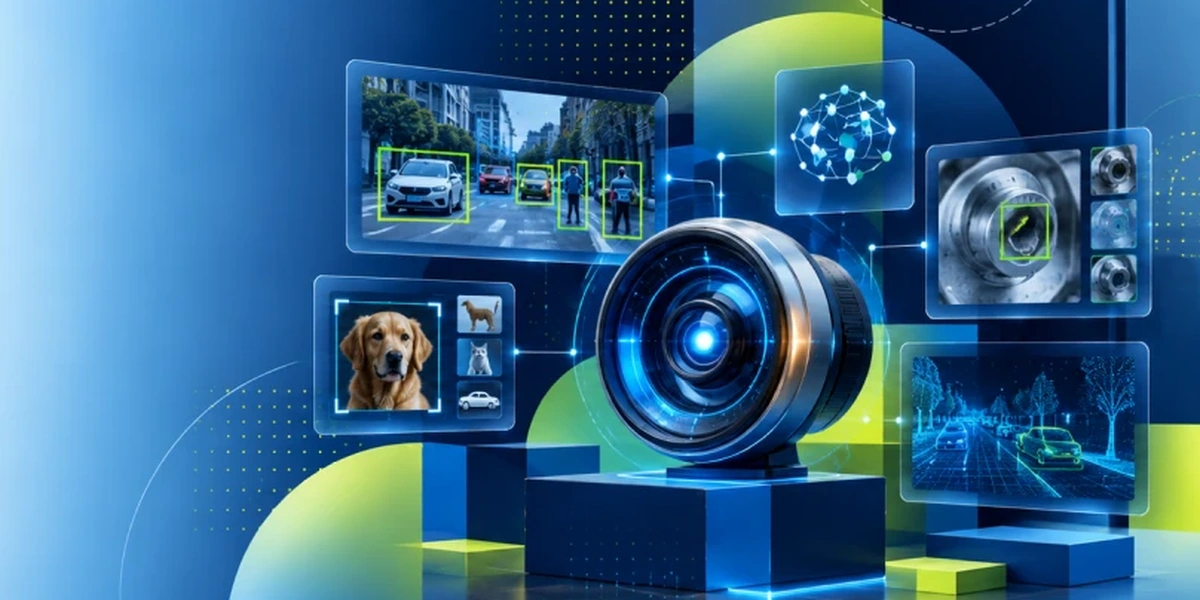
Cover image classification, object detection, segmentation, and the model families behind each of them.

Call LLM APIs and handle embeddings, structured outputs and evaluation in Python.
Handle copyright in training data and outputs, model licences, content provenance and ownership of AI-generated work.
Manage ML model risk: explainability, bias, drift, validation and documentation for regulated use.
Browse all 165 artificial intelligence programs across 31 topics. Filter by topic and delivery format, then request a tailored proposal.
SHOWING 1–15 OF 164 · 164 IN THE LIVE CATALOG
Understand agent architectures, tool use, memory and planning, and where agents fit in the business.
Handle copyright in training data and outputs, model licences, content provenance and ownership of AI-generated work.
Manage ML model risk: explainability, bias, drift, validation and documentation for regulated use.
Build evaluation sets, guardrails, tracing and reliability checks so agents behave predictably in production.
Set permissions, approval gates, audit trails and human-in-the-loop checks for agents acting on live systems.
Trace prompts and responses, track quality, latency, cost, and drift, and alert when LLM behavior changes.
Identify automatable tasks and connect AI models to everyday processes such as email, documents and approvals.
Lead AI adoption: communicate, handle resistance, redesign roles and reskill your workforce.
Plan power, liquid cooling, rack density, and resilience for facilities built around dense AI hardware.
Call LLM APIs and handle embeddings, structured outputs and evaluation in Python.
Give every employee a shared, practical understanding of AI, its uses and its limits.
Use AI for reconciliations, document extraction, variance commentary and month-end close tasks.
Apply AI to lending, customer service, risk, fraud and operations across the bank.
Equip directors to question AI proposals, judge risk and set the organization's AI appetite.
Use AI to draft requirements, user stories, process maps and analysis faster.
Build your team’s capabilities in artificial intelligence with curated training programs arranged in a clear learning sequence. Each pathway builds skills progressively, helping your workforce achieve defined milestones and apply their learning to business goals.
Teaches reliable prompting: context design, iteration habits, and patterns that survive contact with production.
Builds baseline AI fluency across the workforce: what AI can do, where it fails, and how to use it well.
Introduces AI agents to non-technical teams: what agents do, where they fit, and how to oversee them.
End-to-end GenAI capability, from how LLMs work to prompt design and production deployment.
Makes everyday tools (Copilot, ChatGPT, NotebookLM) deliver real time savings in knowledge work.
Gets every employee confidently using ChatGPT for drafting, summarizing, and analysis within guardrails.
Rolls ChatGPT out safely at enterprise scale: licensing, acceptable use, and data handling rules.
Turns Copilot into a presentation accelerator: drafting, designing, and refining decks faster.
Unlocks Copilot inside Excel: formulas, analysis, and reporting without the learning curve.
Uses NotebookLM as a research assistant: grounded summaries and Q&A over your own documents.
Teaches reliable prompting: context design, iteration habits, and patterns that survive contact with production.

Navigates sovereign AI: national compute strategy, data residency, and policy for regulated contexts.
Equips managers to lead AI adoption: spotting use cases, setting guardrails, and coaching their teams.
A repeatable method for finding, scoring, and sequencing AI use cases by value and feasibility.
Designs the CoE that scales AI: mandate, operating model, intake, and capability building.
Navigates sovereign AI: national compute strategy, data residency, and policy for regulated contexts.

Grounds teams in responsible AI: fairness, transparency, and ethical decision-making in practice.
Clarifies IP risk in AI: training data rights, output ownership, and licensing exposure.
Prepares teams for model failures: detection, containment, and post-incident learning.
Buys AI safely: vendor due diligence, contract terms, and ongoing third-party monitoring.
Runs structured AI risk and impact assessments that stand up to internal and external scrutiny.
Gets data AI-ready: quality, lineage tracking, and consent management before modeling begins.
Grounds teams in responsible AI: fairness, transparency, and ethical decision-making in practice.

Makes agents reliable: evaluation harnesses, guardrails, and reliability engineering practices.
Design and deploy AI agents that act inside enterprise workflows, with evaluation and guardrails.
Connects agents to enterprise tools via MCP: secure, governed tool integration patterns.
Architects multi-agent systems: orchestration, delegation, and coordination patterns that work.
Builds and deploys Agentforce agents inside Salesforce for service and sales workflows.

Deploys small language models on-premise: selection, optimization, and private infrastructure.
Works with vision, speech, and document AI: capabilities, integration, and enterprise use cases.
Masters modern NLP: transformers, LLMs, and fine-tuning for language tasks.
The Python toolkit for AI engineering: data handling, model APIs, and application building. (GenAI track)
Builds LLM applications with LangChain: chains, agents, memory, and tool use.
Deploys small language models on-premise: selection, optimization, and private infrastructure.

Engineers privacy into AI systems: controls, measurement, and compliance by design.
Builds visual AI: image classification, detection, and vision-language models for enterprise use.
Applies deep learning to geospatial data: mapping, earth observation, and location intelligence.
Runs ML on AWS: SageMaker workflows from training to deployment.
Runs ML on Google Cloud: Vertex AI workflows from training to deployment.
Runs ML on Azure: machine learning service workflows from training to deployment.
Core ML with scikit-learn: classical algorithms, pipelines, and model selection done right.
Trains models without exposing data: privacy-preserving techniques and synthetic data generation.
Applies reinforcement learning: sequential decision-making and agent optimization.
The Python toolkit for AI engineering: data handling, model APIs, and application building. (ML track)
Deep learning with PyTorch: neural networks, training at scale, and production patterns.
Engineers privacy into AI systems: controls, measurement, and compliance by design.

Operates ML and LLM systems in production: pipelines, monitoring, and incident response.
Compares and operates the major cloud AI platforms: selection, integration, and cost control.
Programs GPUs with CUDA: accelerating AI workloads at the hardware level.

Builds automations with UiPath: Studio development, Orchestrator, and scaled delivery.
Combines RPA and AI agents: automation strategy from rules-based bots to intelligent workflows.
Automates workflows with n8n and open-source models: self-hosted, extensible automation.
Explore AI training aligned with your teams’ functions, job roles, industry and tools. Help your teams build the knowledge and practical skills to apply artificial intelligence across your organization, supporting your business priorities and evolving needs.
Build the leadership capability to identify valuable AI opportunities, guide adoption and connect AI initiatives to business priorities. Prioritize AI initiatives and lead measurable, responsible organizational adoption.
Apply AI to people and learning workflows while strengthening human judgment, employee trust and responsible handling of workforce information. Use AI effectively across talent and learning activities while maintaining appropriate human review.
Develop practical AI skills for customer research, campaigns and sales workflows, with clear standards for accuracy, brand consistency and review. Improve commercial workflows and the quality of customer-facing work.
Use AI to support customer-service workflows, improve access to knowledge and strengthen response quality while retaining clear escalation and human oversight. Build more consistent, efficient service processes with reliable human escalation.
Build analytical and model-development skills across AI-assisted analysis, machine learning and evaluation, with learning depth matched to each team’s technical responsibilities. Develop and evaluate useful analytical and machine-learning solutions with appropriate evidence and controls.
Apply AI across software delivery and enterprise IT, from assisted development and testing to reliable integration of retrieval-based applications and agents. Build, integrate and operate AI-enabled applications and development workflows more reliably.
Build practical capability to assess AI risk, set policies and evaluate controls, helping teams oversee AI systems and document responsible decisions. Establish and assess organizational AI controls with clear accountability and usable evidence.
Develop AI capability for financial-services workflows, combining practical applications with model-risk awareness, appropriate controls and sector-specific operating needs. Apply AI to financial-services use cases with suitable evaluation, oversight and risk awareness.
Help teams use Microsoft 365 Copilot effectively in familiar workplace applications, with practical workflows, output checking and appropriate information-access awareness. Use Microsoft 365 Copilot more effectively in day-to-day collaboration and information work.
Build effective ChatGPT working habits for research, analysis and repeatable tasks, with clear standards for verifying outputs and handling business information responsibly. Use ChatGPT reliably for approved business tasks and reusable team workflows.
Training a role that is not listed, or a mix of them? Tell us who you are training and what they need to do, and we build the shortlist
Where AI teams most often cross-train, based on how these courses are classified.
Domain-level outcomes, not course objectives. These are the capabilities L&D and engineering leaders usually buy AI training to build.
Staff who know what to put into a model, what not to, and when a human has to decide.
End-to-end delivery from problem framing and features through training, packaging, and release.
Offline and online evaluation, benchmark design, red teaming, and honest reporting of limits.
Drift detection, performance tracking, alerting, incident response, and retraining pipelines.
Retrieval, agents, tool use, latency and cost control, and graceful degradation in real applications.
Model inventory, risk classification, documented controls, and audit-ready evidence.
ISO/IEC 42001 alignment, EU AI Act readiness, sector rules, and privacy-by-design for AI systems.
Platform standards, reusable components, cost management, and an internal capability ladder.
Onsite, live virtual, or hybrid, every program is instructor-led and built around your teams.
A trainer comes to your office and works face to face with your team, using your tools and your examples.
For small teams or enterprise-wide training, across one site or multiple global locations, in one language or multiple languages.
Get a QuoteExpert-led live online sessions delivered anywhere, with consistency and easy scheduling. Training tools such as Zoom or Microsoft Teams are selected subject to your organization's approval and compliance requirements.
For small teams or enterprise-wide training, across one site or multiple global locations, in one language or multiple languages.
Get a QuoteCombine in-person sessions with live online training in a coordinated instructor-led program, with the mix planned around your team's needs.
For small teams or enterprise-wide training, across one site or multiple global locations, in one language or multiple languages.
Get a QuoteEdstellar helps enterprises move beyond AI awareness to practical adoption. We design role-based, instructor-led AI programs for technical teams, business functions and leadership, aligned with your priorities and evolving AI needs. Training combines hands-on use cases with responsible AI practices to build capabilities that support measurable business outcomes.

Training shaped around your AI priorities and use cases
Relevant capabilities for business, technical and leadership teams
Build judgment around privacy, risk and human oversight
Learning that adapts to new tools and emerging needs
Organizations trained across industries, informing business-focused AI learning
Years delivering corporate training to support your AI learning journey
Expert trainers: a multidisciplinary network supporting AI and complementary skills
Certified quality and information-security management systems
Every engagement runs the same five stages, from capability baseline through delivery to sustained measurement.
We meet your CTO and L&D team to baseline what your data, engineering and product people can actually do today, against the roles you need them to fill.
Weeks 1–2
Programs are assembled against your model stack, your data, and the governance regime you operate under, then trainers are shortlisted from the vetted bench.
Weeks 2–4
Closed-cohort instructor-led sessions in your language and timezone, with GPU sandboxes, notebooks and retrieval or agent environments shipped alongside.
Scheduled to your calendar
Pre- and post-technical assessments establish a measurable change in capability, benchmarked against role frameworks.
Immediately after delivery
Retrospectives, refresher modules and skill-refresh tracking keep the investment from decaying, and the measured gaps feed the next cycle.
Quarterly
Stage 05 feeds the next cycle: the gaps it measures become the next Discover.
Also from Edstellar
Psychometric, behavioral, leadership and 360-degree assessment.
Needs analysis, gap identification, and a training roadmap.
Learning strategy, content, technology and ROI measurement.
Org design, succession planning and cultural change.
Training outsourcing, vendor management, logistics and administration.
Executive and manager coaching that keeps skills in use.
ML engineers, data scientists, MLOps engineers, analysts, AI product managers, and developers, plus governance and risk owners. A separate track covers staff who use AI tools without building them.
Instructor-led and live, as a closed cohort for your team, onsite, virtual, or hybrid. There are no self-paced modules. You choose the format, location, language, and schedule.
ILT is in person with a trainer at your premises. VILT is the live online equivalent, run in real time. Both include hands-on labs and live interaction; the choice is logistics, not depth.
Yes. Each program is scoped to your model stack, data, team level, and governance obligations, starting with a discovery call before a trainer is shortlisted.
Most programs run 16 to 24 hours across several sessions. Multi-program bundles and enterprise rollouts are scheduled around your calendar.
Cohorts run from a single small team up to enterprise rollouts of hundreds, with one trainer per cohort for hands-on quality.
Yes. Technical programs run in GPU sandboxes and notebooks; tool programs use live exercises on your use cases. Every program ends with applied work, not just demos.
Pre- and post-assessments benchmark each participant against role frameworks, with a completion report showing measured change per cohort.
Yes. Data handling, evaluation, and control expectations are woven into technical programs, and dedicated governance programs go deeper for risk and legal teams.
Yes. Literacy, productivity-tool, and prompt programs are built for business functions, with no coding assumed and governance covered in plain terms.
Yes. Programs adapt to financial services, healthcare, and public sector obligations, including ISO/IEC 42001 alignment and EU AI Act readiness.
A room or virtual setup, participant list, and access to your tools where relevant. We ship lab environments, sandboxes, and materials.
Discovery to delivery typically takes two to four weeks, depending on customization depth and trainer matching for your stack and timezone.
Yes. You can sit in on a trial session with the shortlisted trainer before committing, to check fit with your team and level.
Pick the scale that matches your rollout. Every quote is tailored to your teams and timeline.
Team size
1–25 PARTICIPANTS
One or two programs for a single team, delivered as a closed cohort. The usual entry point for a first AI engagement.
26–150 PARTICIPANTS
Multiple cohorts or programs for larger teams, with delivery structured around your workforce and training requirements.
151–1,000 PARTICIPANTS
A coordinated rollout across business units, with role-based tracks and central reporting for L&D.
1,000+ PARTICIPANTS
AI capability at organizational scale, with dedicated management and measurement from pilot to rollout.
Tell us which teams you are training and what they need to be able to do. Anything you filtered in the catalog comes through with your message.