Corporate Energy Isolation: Plan, Procedure and Checklist Training Course
Edstellar's instructor-led Energy Isolation: Plan, Procedure and Checklist training course enables teams with safety skills to achieve operational excellence for the organization. The course equips employees to implement energy isolation measures, thereby minimizing the risk of accidents and promoting a safety culture within the organization.
(Virtual / On-site / Off-site)
Available Languages
English, Español, 普通话, Deutsch, العربية, Português, हिंदी, Français, 日本語 and Italiano
Drive Team Excellence with Energy Isolation: Plan, Procedure and Checklist Corporate Training
Empower your teams with expert-led on-site, off-site, and virtual Energy Isolation: Plan, Procedure and Checklist Training through Edstellar, a premier corporate training provider for organizations globally. Designed to meet your specific training needs, this group training program ensures your team is primed to drive your business goals. Help your employees build lasting capabilities that translate into real performance gains.
Energy Isolation: Plan, Procedure and Checklist is a safety protocol to effectively control and isolate energy sources in industrial environments to prevent accidents and injuries during maintenance or servicing activities. It is essential for organizations to implement this protocol to comply with safety regulations, mitigate risks, and safeguard employee well-being. Energy Isolation: Plan, Procedure and Checklist training course equips employees with the knowledge and skills to implement these procedures confidently and ensure a safe working environment.
Edstellar's instructor-led Energy Isolation: Plan, Procedure and Checklist training course is facilitated by industry experts with years of experience in energy management through virtual/onsite formats. The course provides practical insights into energy isolation procedures tailored to each organization's specific needs. Employees benefit from a customizable curriculum, hands-on exercises, and access to a network of corporate experts.

Key Skills Employees Gain from instructor-led Energy Isolation: Plan, Procedure and Checklist Training
Energy Isolation: Plan, Procedure and Checklist skills corporate training will enable teams to effectively apply their learnings at work.
- Energy ManagementEnergy Management is the strategic use and conservation of energy resources to enhance efficiency and reduce costs. This skill is important for roles in sustainability, engineering, and facility management, as it drives operational efficiency and environmental responsibility.
- Hazard IdentificationHazard Identification is the ability to recognize potential risks in the workplace. This skill is important for safety officers and managers to prevent accidents and ensure compliance.
- Lockout TagoutLockout Tagout (LOTO) is a safety procedure ensuring machines are properly shut off and unable to start during maintenance. This skill is important for technicians and safety personnel to prevent accidents and ensure a safe working environment.
- Safety ProceduresSafety Procedures refer to established protocols designed to ensure a safe working environment. This skill is important for roles in construction, healthcare, and manufacturing to prevent accidents and protect employees.
- Compliance StandardsCompliance Standards refer to the regulations and guidelines organizations must follow to ensure legal and ethical operations. This skill is important for roles in finance, healthcare, and legal sectors, as it ensures adherence to laws, reduces risks, and fosters trust.
- Equipment MaintenanceEquipment Maintenance is the process of regularly inspecting, repairing, and servicing machinery to ensure optimal performance. This skill is important for technicians and engineers, as it minimizes downtime, enhances safety, and prolongs equipment lifespan.
Key Learning Outcomes of Energy Isolation: Plan, Procedure and Checklist Training Workshop for Employees
Upon completing Edstellar’s Energy Isolation: Plan, Procedure and Checklist workshop, employees will gain valuable, job-relevant insights and develop the confidence to apply their learning effectively in the professional environment.
- Apply energy isolation procedures in diverse industrial settings to ensure workplace safety
- Analyze energy sources and assess potential hazards to develop effective isolation plans and procedures
- Utilize appropriate techniques for isolating instrumentation and control systems, ensuring operational safety
- Evaluate and mitigate risks associated with potentially explosive energy sources, adhering to industry standards
- Demonstrate proficiency in implementing Lockout/Tagout (LOTO) procedures for electrical and mechanical energy sources
Key Benefits of the Energy Isolation: Plan, Procedure and Checklist Group Training
Attending our Energy Isolation: Plan, Procedure and Checklist group training classes provides your team with a powerful opportunity to build skills, boost confidence, and develop a deeper understanding of the concepts that matter most. The collaborative learning environment fosters knowledge sharing and enables employees to translate insights into actionable work outcomes.
- Equip yourself with the skills to effectively identify and isolate energy sources, minimizing the risk of accidents and injuries
- Learn essential energy isolation techniques and procedures to enhance workplace safety in various industrial environments
- Learn to analyze potential hazards associated with energy sources and develop comprehensive isolation plans to mitigate risks
- Explore effective communication and collaboration strategies among team members to ensure seamless energy isolation processes
- Develop proficiency in implementing lockout/tagout (LOTO) procedures for electrical, mechanical, and instrumentation energy sources
Topics and Outline of Energy Isolation: Plan, Procedure and Checklist Training
Our virtual and on-premise Energy Isolation: Plan, Procedure and Checklist training curriculum is structured into focused modules developed by industry experts. This training for organizations provides an interactive learning experience that addresses the evolving demands of the workplace, making it both relevant and practical.
- What is energy?
- Definition and types of energy
- Forms of energy encountered in industrial settings
- Common energy sources
- Identification of common energy sources (electrical, mechanical, etc.)
- Examples of energy sources in various industries
- OSHA requirements and Electricity at Work regulations
- Overview of Occupational Safety and Health Administration (OSHA) regulations
- Understanding Electricity at Work regulations and their application in the workplace
- Procedures, standards, and approved codes of practice
- Explanation of energy control procedures
- Compliance with industry standards and approved codes of practice
- Introduction to energy control procedures
- Definition and importance of energy control procedures
- Overview of the energy isolation process
- Scope
- Understanding the scope of energy isolation procedures
- Inclusion and exclusion criteria
- Purpose
- Objectives and goals of energy isolation procedures
- Importance of ensuring safety during maintenance activities
- Authority
- Roles and responsibilities of personnel involved in energy isolation procedures
- Authorization requirements for implementing energy isolation measures
- Periodic inspections
- Importance of periodic inspections in ensuring the effectiveness of energy isolation procedures
- Frequency and documentation of inspections
- Introduction to energy isolation (electrical)
- Understanding electrical energy sources and hazards
- Importance of electrical isolation in preventing accidents
- Safe systems of work
- Implementing procedures to ensure safe working practices
- Importance of following established safety protocols
- Electrical isolations and techniques
- Methods and procedures for safely isolating electrical energy sources
- Practical techniques for electrical isolation
- LOTO requirements
- Overview of Lockout/Tagout (LOTO) procedures
- Importance of LOTO in preventing hazardous energy release
- Earthing requirements for isolation
- Understanding the role of earthing in electrical isolation
- Importance of proper earthing techniques
- Problems associated with electrical isolation
- Common challenges and issues encountered during electrical isolation procedures
- Strategies for troubleshooting and problem-solving
- Isolation confirmation certificates
- Importance and significance of isolation confirmation certificates
- Documentation requirements for isolation procedures
- Introduction to energy isolation (instrumentation)
- Understanding instrumentation energy sources and hazards
- Importance of instrumentation isolation in industrial settings
- Instrument isolation techniques
- Methods and procedures for isolating instrumentation energy sources
- Practical techniques for instrumentation isolation
- Intrinsically safe systems and dangers associated with intrinsic safety
- Overview of intrinsically safe systems and their applications
- Hazards associated with intrinsic safety and mitigation strategies
- ELV isolation for instrument energy sources
- Techniques for isolating Extra-Low Voltage (ELV) instrument energy sources
- Safety considerations and procedures for ELV isolation
- 'Block and bleed' techniques
- Overview of block and bleed isolation methods
- Application of block and bleed techniques in process control
- Isolation of instrument piping
- Procedures for isolating instrument piping systems
- Importance of proper isolation to prevent contamination or leakage
- Isolation of devices & plans used in process control
- Methods for isolating devices and components in process control systems
- Importance of proper isolation for maintenance and safety
- Issues/problems associated with instrumentation isolation
- Common challenges and issues encountered during instrumentation isolation procedures
- Strategies for addressing and resolving issues
- Energy control procedures – documentation exceptions
- Instances where documentation exceptions may apply in energy control procedures
- Procedures for documenting exceptions and ensuring safety compliance
- Introduction to mechanical energy isolation
- Understanding mechanical energy sources and hazards
- Importance of mechanical isolation in preventing accidents
- Mechanical isolation techniques
- Methods and procedures for safely isolating mechanical energy sources
- Practical techniques for mechanical isolation
- Valves, gearboxes, and motors
- Isolation procedures for valves, gearboxes, motors, and other mechanical components
- Importance of proper maintenance and isolation for mechanical equipment
- Piping, pipe flanges, and joints
- Procedures for isolating piping systems and joints
- Importance of proper isolation to prevent leaks or bursts
- Hydraulic and pneumatic isolation
- Techniques for isolating hydraulic and pneumatic energy sources
- Safety considerations and procedures for hydraulic and pneumatic isolation
- Issues/problems associated with mechanical isolation
- Common challenges and issues encountered during mechanical isolation procedures
- Strategies for troubleshooting and problem-solving
- Introduction to potentially explosive atmospheres
- Understanding the risks associated with potentially explosive atmospheres
- Importance of proper isolation and safety measures in hazardous environments
- Overview of potential electrical energy release risks
- Understanding the risks associated with electrical energy release
- Importance of risk assessment and mitigation strategies
- Overview of potential instrument energy release risks
- Identifying potential hazards associated with instrument energy release
- Importance of proper isolation and safety measures for instruments
- Overview of potential mechanical energy release risks
- Recognizing the risks associated with mechanical energy release
- Importance of mechanical isolation and safety procedures
- Ignition energy assessment of oil & gas operations
- Techniques for assessing ignition energy risks in oil and gas operations
- Importance of preventive measures to minimize ignition risks
- Overview of equipment concepts
- Understanding equipment design and functionality
- Importance of equipment knowledge in implementing safety measures
- Owner departments
- Identification of departments responsible for implementing energy isolation procedures
- Clarification of roles and duties within each owner department
- Principal investigator / Project supervisor / Supervisor
- Responsibilities of individuals overseeing energy isolation procedures
- Authority to authorize and monitor isolation activities
- Faculty, staff, and any affected person
- Responsibilities of personnel working in areas affected by energy isolation procedures
- Compliance with safety protocols and procedures
- Qualified person
- Qualifications and expertise required to perform energy isolation tasks
- Responsibilities in ensuring safety and compliance with regulations
- Capital projects / Construction project manager
- Responsibilities of individuals managing capital projects or construction activities involving energy sources
- Coordination with other stakeholders for safe implementation
- Contractors and joint projects
- Expectations and requirements for contractors involved in energy isolation procedures
- Collaboration with internal staff to ensure safety and compliance
- Outside personnel (contractors)
- Procedures for integrating outside contractors into energy isolation processes
- Communication of safety protocols and expectations
- Group lockout/tagout requirements
- Guidelines for implementing group lockout/tagout procedures
- Coordination among multiple workers during energy isolation tasks
- Periodic inspection
- Importance of regular inspections to ensure ongoing compliance and safety
- Frequency and documentation requirements for periodic inspections
- EH&S/General safety
- Emphasis on environmental health and safety practices during energy isolation procedures
- General safety guidelines applicable to all personnel involved
- Employee training and communication
- Importance of training employees on energy isolation procedures
- Communication channels for disseminating safety information and updates
- Shift & personnel changes
- Procedures for managing energy isolation during shift changes
- Communication of relevant information to incoming personnel
Who Can Take the Energy Isolation: Plan, Procedure and Checklist Training Course
The Energy Isolation: Plan, Procedure and Checklist training program can also be taken by professionals at various levels in the organization.
- Safety Officers
- Health and Safety Technicians
- Facility Engineers
- Operations Staff
- Maintenance Technicians
- Electrical Technicians
- Process Safety Engineers
- Safety Coordinators
- Compliance Officers
- Risk Management Specialists
- Energy Safety Specialists
- Managers
Prerequisites for Energy Isolation: Plan, Procedure and Checklist Training
Employees with a basic understanding of industrial safety protocols can take up the Energy Isolation: Plan, Procedure and Checklist training course.
Corporate Group Training Delivery Modes
for Energy Isolation: Plan, Procedure and Checklist Training
At Edstellar, we understand the importance of impactful and engaging training for employees. As a leading Energy Isolation: Plan, Procedure and Checklist training provider, we ensure the training is more interactive by offering Face-to-Face onsite/in-house or virtual/online sessions for companies. This approach has proven to be effective, outcome-oriented, and produces a well-rounded training experience for your teams.
.webp)
Edstellar's Energy Isolation: Plan, Procedure and Checklist virtual/online training sessions bring expert-led, high-quality training to your teams anywhere, ensuring consistency and seamless integration into their schedules.
.webp)
Edstellar's Energy Isolation: Plan, Procedure and Checklist inhouse training delivers immersive and insightful learning experiences right in the comfort of your office.
.webp)
Edstellar's Energy Isolation: Plan, Procedure and Checklist offsite group training offer a unique opportunity for teams to immerse themselves in focused and dynamic learning environments away from their usual workplace distractions.
Explore Our Customized Pricing Package
for
Energy Isolation: Plan, Procedure and Checklist Corporate Training
Looking for pricing details for onsite, offsite, or virtual instructor-led Energy Isolation: Plan, Procedure and Checklist training? Get a customized proposal tailored to your team’s specific needs.
64 hours of group training (includes VILT/In-person On-site)
Tailored for SMBs
Tailor-Made Trainee Licenses with Our Exclusive Training Packages!
160 hours of group training (includes VILT/In-person On-site)
Ideal for growing SMBs
Tailor-Made Trainee Licenses with Our Exclusive Training Packages!
400 hours of group training (includes VILT/In-person On-site)
Designed for large corporations
Tailor-Made Trainee Licenses with Our Exclusive Training Packages!
Unlimited duration
Designed for large corporations
Edstellar: Your Go-to Energy Isolation: Plan, Procedure and Checklist Training Company
Experienced Trainers
Our trainers bring years of industry expertise to ensure the training is practical and impactful.
Quality Training
With a strong track record of delivering training worldwide, Edstellar maintains its reputation for its quality and training engagement.
Industry-Relevant Curriculum
Our course is designed by experts and is tailored to meet the demands of the current industry.
Customizable Training
Our course can be customized to meet the unique needs and goals of your organization.
Comprehensive Support
We provide pre and post training support to your organization to ensure a complete learning experience.
Multilingual Training Capabilities
We offer training in multiple languages to cater to diverse and global teams.
What Our Clients Say
We pride ourselves on delivering exceptional training solutions. Here's what our clients have to say about their experiences with Edstellar.
"The Energy Isolation: Plan, Procedure and Checklist training exceeded my expectations in every way. As a Senior Software Engineer, I gained comprehensive knowledge of practical applications that transformed my practical and immediately applicable. My productivity and technical capabilities have increased dramatically since applying these concepts. The instructor's expertise in hands-on exercises made complex concepts crystal clear and actionable.”
Donna Spencer
Senior Software Engineer,
Enterprise Software Development Firm
"The Energy Isolation: Plan, Procedure and Checklist training provided critical insights into industry best practices that enhanced my consulting capabilities. As a Senior Software Engineer, I now leverage practical exercises on expert-led workshops prepared me perfectly for real-world client scenarios. Client engagement and retention metrics have improved significantly across our practice, demonstrating immediate value from this investment.”
Lukas Hansen
Senior Software Engineer,
Digital Innovation Platform
"As a Senior Software Engineer overseeing operational excellence initiatives, the Energy Isolation: Plan, Procedure and Checklist training significantly elevated our team's capabilities. The course expertly covered our operational effectiveness. Our department achieved a remarkable 50% improvement in operational efficiency metrics. Our department has achieved remarkable improvements, demonstrating this course's lasting organizational impact.”
Firas Qais
Senior Software Engineer,
Technology Consulting Services Company
“Edstellar’s Social Impact training programs have helped our organization strengthen its commitment to responsible practices, sustainability, and community well-being. The sessions offer actionable insights, structured sustainability frameworks, and real-world case studies that empower teams to embed ethical practices, create measurable social value, and drive meaningful, long-term impact across business operations.”
Leena Thomas
Head of Sustainability & CSR,
A Global Industrial Group
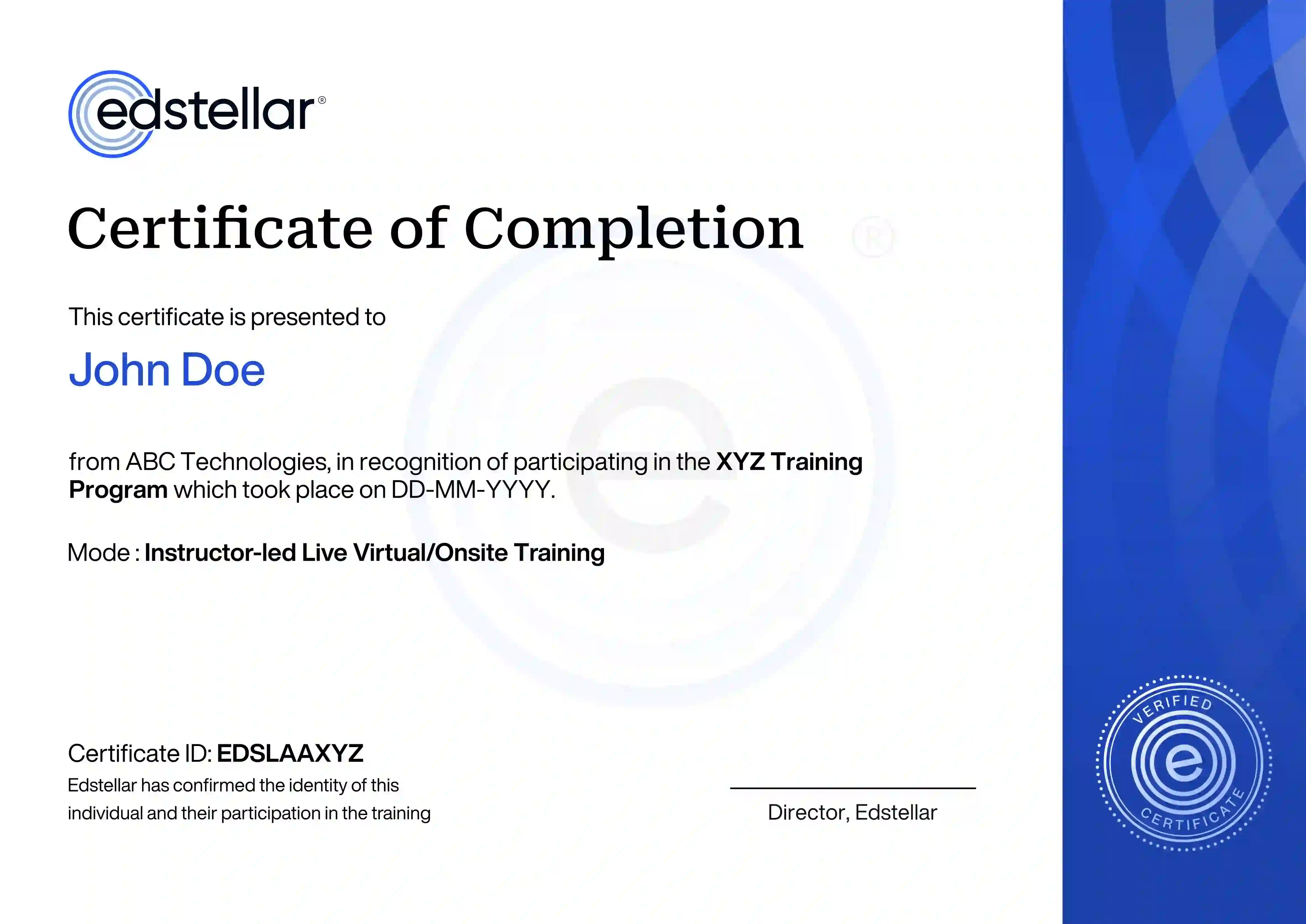
Get Your Team Members Recognized with Edstellar’s Course Certificate
Upon successful completion of the training course offered by Edstellar, employees receive a course completion certificate, symbolizing their dedication to ongoing learning and professional development.
This certificate validates the employee's acquired skills and is a powerful motivator, inspiring them to enhance their expertise further and contribute effectively to organizational success.


We have Expert Trainers to Meet Your Energy Isolation: Plan, Procedure and Checklist Training Needs
The instructor-led training is conducted by certified trainers with extensive expertise in the field. Participants will benefit from the instructor's vast knowledge, gaining valuable insights and practical skills essential for success in Access practices.
Other Related Corporate Training Courses
Explore More Courses
Edstellar is a one-stop instructor-led corporate training and coaching solution that addresses organizational upskilling and talent transformation needs globally. Edstellar offers 2000+ tailored programs across disciplines that include Technical, Behavioral, Management, Compliance, Leadership and Social Impact.
FAQs
BlogSitemap