
QA & Test Automation CoE Program
Builds a test automation capability from fundamentals to AI-augmented quality engineering.
7 ProgramsFor QA & test teams


Build the engineers who ship your software, not just the codebase.
We build software engineering capability inside enterprises: the developers, testers, architects, and integration specialists who design, build, and run business-critical systems. Instructor-led programs across programming languages, test automation, APIs, cloud-native development, and AI-assisted engineering are how we do it, scoped to your stack and delivered wherever your teams are.
Instructor-led workshops and programsIn-house, virtual or blended10+ languagesDelivered in English, Spanish, Mandarin, German, Arabic, Portuguese, Hindi, French, Japanese, Italian, and more100+ countriesWe have delivered in United States, United Kingdom, India, Canada, Germany, France, Netherlands, UAE, Saudi Arabia, Singapore, Australia, Japan, Brazil, South Africa and 90+ more countries

Trusted as a Leading Corporate Training Provider by
















Corporate software development training is instructor-led group training that builds an organization's ability to design, build, test, and run software systems. It spans the full engineering lifecycle: programming languages and frameworks, test automation and quality engineering, APIs and integration, cloud-native development, and the AI-assisted workflows now reshaping how code gets written. Programs are scoped to an employer's stack and delivered to a closed cohort rather than sold as individual seats.
The distinction that matters commercially is between hiring skill and building it. Recruiting senior engineers is slow and expensive; group training raises the level of the team you already have, with a shared baseline of practices: the same coding standards, the same testing discipline, and the same review habits. For enterprises modernizing legacy estates or scaling delivery, that shared baseline is what makes velocity sustainable.
Programs split across the engineering lifecycle. Languages and frameworks for backend, frontend, and mobile developers, from foundations to advanced enterprise patterns. Quality engineering for testers and SDETs: automation frameworks, API testing, and AI-augmented testing. Architecture and modernization for tech leads and architects: domain-driven design, microservices, and clean code. Integration and cloud-native development for platform teams. And AI-assisted engineering for everyone writing code today.
Every engagement starts with discovery: which teams, which languages and frameworks, which cloud and tooling, and what the delivery pressure looks like. Trainers are then matched from a vetted bench of working engineers, and the program is tailored before delivery. Cohorts are closed to your organization, run in your timezone, and measured with pre- and post-assessments so L&D can show what changed.
Six areas carry most of the catalog. Start where your delivery pressure is heaviest.
Software Development programs to start with.
Delegate planning, coding and testing tasks to AI coding agents with review.
Handle Swift concurrency, performance tuning, modular architecture and advanced frameworks for larger iOS apps.
Plan and run the move from .NET Framework to .NET 8 and later: dependencies, breaking changes, testing and staged cut-over.
Test inside Agile sprints with the testing quadrants, whole-team quality and shift-left practice.
Browse all 182 software development programs across 14 topics, from AI-Assisted Software Engineering and Mobile App Development to Programming Languages & Back-End Development and Software Testing & Quality Engineering. Filter by topic and delivery format, then request a tailored proposal.
SHOWING 1–15 OF 179 · 179 IN THE LIVE CATALOG
Apply SOLID, clean architecture and proven design patterns so .NET code stays easy to change.
Plan and run the move from .NET Framework to .NET 8 and later: dependencies, breaking changes, testing and staged cut-over.
Maintain and extend ColdFusion applications, CFML components and integrations that the business still relies on.
Run AEM day to day: users, permissions, replication, workflows, backups, upgrades and performance tuning.
Develop AEM components, templates, Sling models, OSGi services and headless content delivery.
Handle Swift concurrency, performance tuning, modular architecture and advanced frameworks for larger iOS apps.
Delegate planning, coding and testing tasks to AI coding agents with review.
Test inside Agile sprints with the testing quadrants, whole-team quality and shift-left practice.
Use AI assistants to design, write and test cloud-native .NET services faster.
Prompt AI tools to scaffold, write and iterate on working code quickly.
Use AI assistants to generate, test and refactor Angular code faster.
Use AI assistants to generate, test and refactor React code with care.
Use AI assistants to generate, test and refactor Vue code faster.
Use AI assistants to build and test front end and back end together.
Use AI assistants to generate, test and refactor Java and Spring code.
Build your team’s capabilities in software development with curated training programs arranged in a clear learning sequence. Each pathway builds skills progressively, helping your workforce achieve defined milestones and apply their learning to business goals.
Builds a test automation capability from fundamentals to AI-augmented quality engineering.
Testing inside agile delivery: fitting quality work into sprints without slowing the team.
Browser automation with Selenium and Playwright: stable selectors, waits, and CI-ready suites.
Front-end test automation with Cypress: fast, reliable end-to-end tests developers actually run.
API test automation: contract checks and integration tests with Postman and Rest Assured.
Behavior-driven testing: Gherkin specs that align testers, developers, and business owners.
AI in the test pipeline: generation, healing, and analysis that speed up quality engineering.
Static analysis with SonarQube: quality gates and security findings wired into the build.

Builds a governed API and integration capability on the client's integration platform.
API design: REST and GraphQL contracts, versioning, and OpenAPI-first workflows.
Integration architecture: patterns, governance, and managing APIs as products.
Apigee on Google Cloud: proxies, policies, and developer portal management.
Oracle Integration Cloud: connecting Oracle and third-party apps with prebuilt adapters.
Messaging with RabbitMQ: queues, exchanges, and reliable async communication.
IBM DataPower: gateway security, transformation, and policy enforcement.
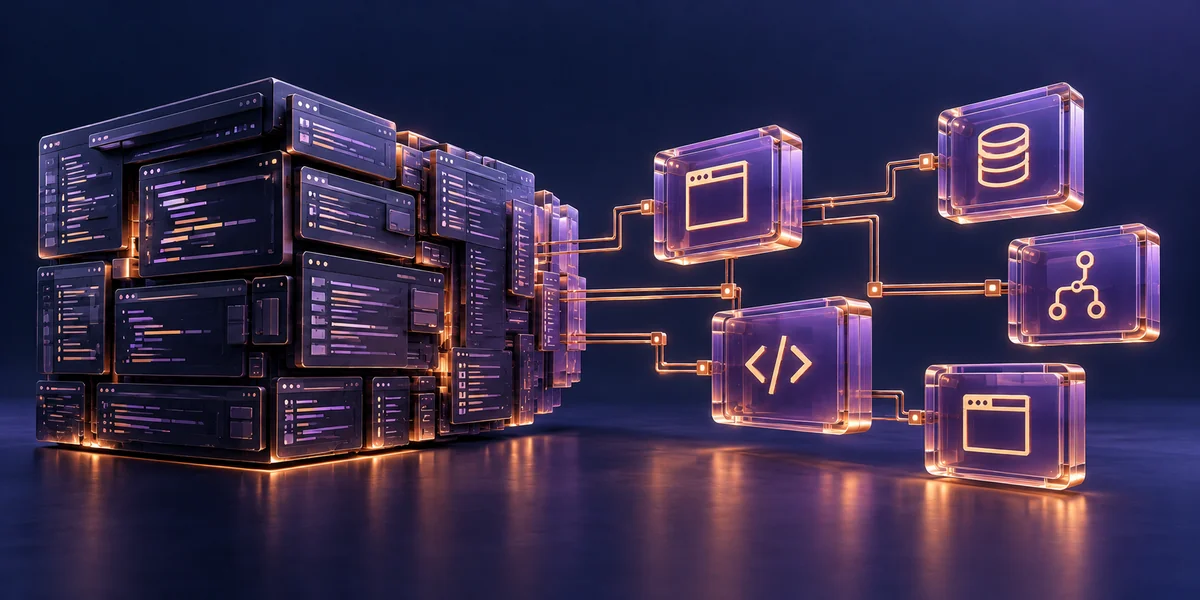
Equips architects to break up monoliths and design maintainable systems.
Clean code practice: readability, refactoring, and AI-assisted review habits.
DDD for modernization: bounded contexts and domain models that guide the rebuild.
Micro-frontends: splitting large front-ends into independently shippable parts.
.NET architecture: patterns and practices for maintainable .NET systems.

Builds applications designed for the client's cloud platform.
Serverless on AWS: Lambda, events, and architectures without servers to manage.
Application development on Google Cloud: services and deployment patterns.
Search and vector retrieval: powering AI-era search with Elasticsearch and OpenSearch.

Sets up a governed low-code capability on the client's platform.
Power Platform: apps, flows, and Dataverse for Microsoft-centric teams.
Appian development: process models, interfaces, and enterprise app delivery.
Pega development: case management and intelligent automation on the Pega platform.
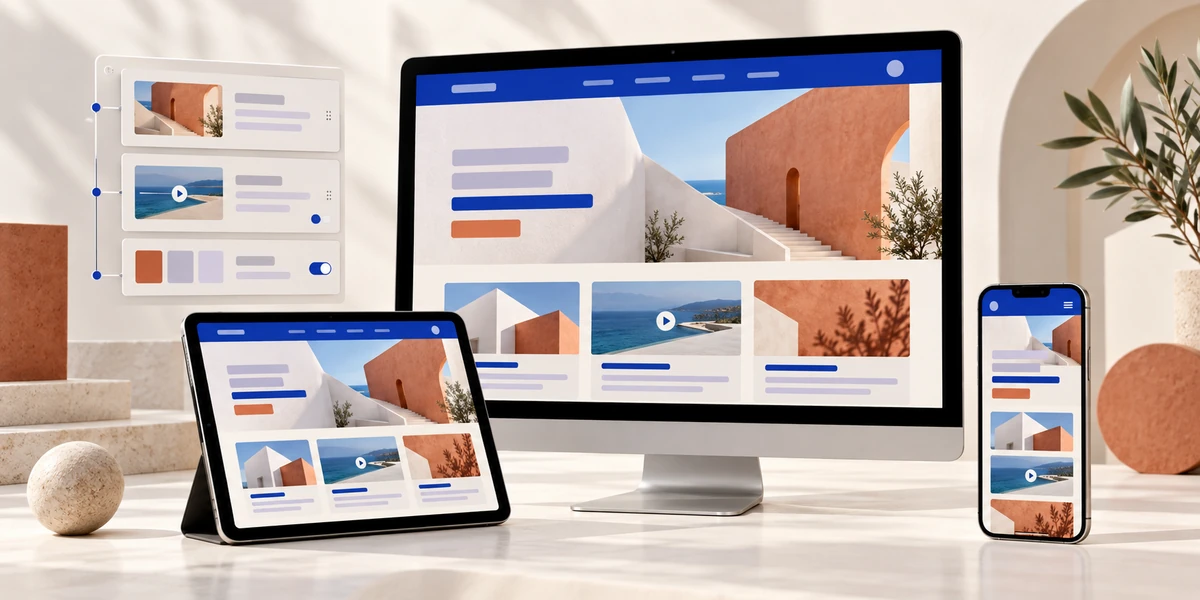
Supports the client's website and digital experience platform.
AEM development: components, templates, and content-driven sites on Adobe's platform.
Sitecore development: building personalized digital experiences on Sitecore.
WordPress and Drupal: building and running content sites teams can manage.
No-code builders: Wix, Squarespace, and Webflow for fast marketing sites.

Builds automotive and embedded software skills aligned with ASPICE.
C for embedded: memory, pointers, and the discipline constrained systems demand.
C and C++ for safety-critical work: standards, static analysis, and certification awareness.
Android internals: the platform beneath the apps, for infotainment and device teams.
AAOS development: building for the car as a compute platform.
Software-defined vehicles: ASPICE process and the shift to software-first cars.
Explore software development training aligned with your teams’ functions, job roles, industry and tools. Help your teams build the knowledge and practical skills to apply software development across your organization, supporting your business priorities and evolving needs.
Build accessible, maintainable interfaces that translate product requirements into reliable user experiences. Strengthen component design, state handling and browser-level validation through practical development work.
Develop services with clear contracts, robust data handling and predictable behavior under load. Practice API design, error handling and integration testing to reduce failures between systems.
Design mobile experiences that work across device constraints, unreliable connectivity and evolving platforms. Build stronger release practices around application state, secure storage and device testing.
Make quality visible throughout development instead of relying only on final checks. Develop risk-based test coverage, maintainable automation and useful defect feedback for product teams.
Integrate security decisions into design, implementation and review. Practice threat-aware coding, dependency assessment and vulnerability remediation across the software lifecycle.
Create repeatable paths from committed code to a monitored release. Improve build pipelines, release safeguards and rollback practices while keeping delivery feedback clear.
Assess existing systems and improve them without losing critical behavior. Use characterization tests, incremental refactoring and migration planning to manage technical debt and change risk.
Translate business needs and quality constraints into defensible architecture decisions. Compare design options, document trade-offs and guide implementation across system boundaries.
Build the team conditions that support sustainable software delivery. Use delivery evidence, coaching and capacity decisions to improve performance without rewarding output volume alone.
Turn stakeholder problems into testable software requirements and clear acceptance criteria. Improve prioritization and trade-off conversations so engineering effort stays connected to user value.
Training a role that is not listed, or a mix of them? Tell us who you are training and what they need to do, and we build the shortlist
Where software teams most often cross-train, based on how these courses are classified.
Domain-level outcomes, not course objectives. These are the capabilities L&D and engineering leaders usually buy software development training to build.
Engineering discipline: clean code, testing, and review habits that keep velocity up and defects down.
Server-side systems: APIs, data access, and services designed to grow with demand.
Test automation across UI, API, and unit levels, wired into CI so regressions get caught early.
Architecture judgment: modular design, domain modeling, and modernization without big-bang rewrites.
APIs and integration platforms that connect legacy systems, SaaS, and new services reliably.
Cloud-native development: containers, serverless, and architectures that use the platform well.
Coding assistants used well: prompting, review, and team practices that raise output without lowering the bar.
Native and cross-platform mobile apps built to the platform standards users expect.
Onsite, live virtual, or hybrid, every program is instructor-led and built around your teams.
A trainer comes to your office and works face to face with your team, using your tools and your examples.
For small teams or enterprise-wide training, across one site or multiple global locations, in one language or multiple languages.
Get a QuoteExpert-led live online sessions delivered anywhere, with consistency and easy scheduling. Training tools such as Zoom or Microsoft Teams are selected subject to your organization's approval and compliance requirements.
For small teams or enterprise-wide training, across one site or multiple global locations, in one language or multiple languages.
Get a QuoteCombine in-person sessions with live online training in a coordinated instructor-led program, with the mix planned around your team's needs.
For small teams or enterprise-wide training, across one site or multiple global locations, in one language or multiple languages.
Get a QuoteEdstellar connects software development learning to the products your teams build and maintain. We customize role-based, instructor-led programs for developers, technical leads and engineering managers around delivery priorities, architecture choices and code quality. Practical exercises bring design, implementation and collaboration into focus, while adaptable learning supports changing technology stacks and the capabilities needed to maintain reliable, usable software over time.

Practice development tasks aligned with your products and engineering workflows
Connect developer, technical lead and manager responsibilities through relevant learning
Evaluate maintainability, security and design tradeoffs through practical engineering scenarios
Adapt learning as languages, frameworks and application requirements evolve
Experience across industries brings business context to software development learning
Company-wide training experience informing practical learning for engineering teams
Company-wide trainer network supporting software development learning and complementary business skills
Edstellar's certified quality and information-security management systems support software development training delivery
Every engagement runs the same five stages, from capability baseline through delivery to sustained measurement.
We meet your CTO and L&D team to baseline what your developers, testers, and architects can actually do today, against the roles you need them to fill.
Weeks 1–2
Programs are assembled against your languages, frameworks, cloud, and delivery practices, then trainers are shortlisted from the vetted bench.
Weeks 2–4
Closed-cohort instructor-led sessions in your language and timezone, with lab environments, repos, and tooling shipped alongside.
Scheduled to your calendar
Pre- and post-technical assessments establish a measurable change in capability, benchmarked against role frameworks.
Immediately after delivery
Retrospectives, refresher modules and skill-refresh tracking keep the investment from decaying, and the measured gaps feed the next cycle.
Quarterly
Stage 05 feeds the next cycle: the gaps it measures become the next Discover.
Also from Edstellar
Psychometric, behavioral, leadership and 360-degree assessment.
Needs analysis, gap identification, and a training roadmap.
Learning strategy, content, technology and ROI measurement.
Org design, succession planning and cultural change.
Training outsourcing, vendor management, logistics and administration.
Executive and manager coaching that keeps skills in use.
Backend, frontend, mobile, QA, and integration engineers, plus architects, tech leads, and engineering managers. Programs are leveled from foundations to advanced architecture.
Instructor-led and live, as a closed cohort for your team, onsite, virtual, or hybrid. No self-paced modules. You choose the format, location, language, and schedule.
ILT is in person with a trainer at your premises. VILT is the live online equivalent in real time. Both include hands-on labs; the choice is logistics, not depth.
Yes. Every program is scoped to your languages, frameworks, cloud, and tooling, starting with a discovery call before a trainer is shortlisted.
Most programs run 20 to 32 hours across several sessions. Multi-program bundles and CoE builds are scheduled around your calendar.
Cohorts run from a single small team up to enterprise rollouts of hundreds, with one trainer per cohort for hands-on quality.
Yes. Every program is lab-driven: real code, real repos, and real tooling. Participants build and fix things, not just watch demos.
Pre- and post-assessments benchmark each participant against role frameworks, with a completion report showing measured change per cohort.
Yes. Copilot, Claude Code, and agentic coding workflows are covered as engineering practice: effective use plus the review discipline that keeps quality up.
Yes. Foundations and advanced tracks run separately, and trainers calibrate pace after a pre-assessment so no one is left behind or held back.
Yes. Mainframe, monolith, and legacy stack programs cover assessment, strangler patterns, and incremental modernization with your architects.
A room or virtual setup, participant list, and repo or environment access where relevant. We ship lab environments and all materials.
Discovery to delivery typically takes two to four weeks, depending on customization depth and trainer matching for your stack and timezone.
Yes. You can sit in on a trial session with the shortlisted trainer before committing, to check fit with your team and level.
Pick the scale that matches your rollout. Every quote is tailored to your teams and timeline.
Team size
1–25 PARTICIPANTS
One or two programs for a single team, delivered as a closed cohort. The usual entry point for a first software development engagement.
26–150 PARTICIPANTS
Multiple cohorts or programs for larger engineering orgs, with delivery structured around your teams and release cadence.
151–1,000 PARTICIPANTS
A coordinated rollout across engineering, with role-based tracks and central reporting for L&D.
1,000+ PARTICIPANTS
Engineering capability at organizational scale, with dedicated management and measurement from pilot to rollout.
Tell us which teams you are training and what they need to be able to do. Anything you filtered in the catalog comes through with your message.