Home
Corporate Training Courses
Management
Risk Management Training
Structured Analysis and Structured Design Training

Drive Team Excellence with Structured Analysis and Structured Design Corporate Training

Structured Analysis and Structured Design (SA/SD) are methodologies central to effective system development, focusing on clear and organized approaches to analyzing and designing software systems. These techniques are vital for teams to create efficient, reliable, and adaptable systems to changing business needs. SA/SD training course is paramount as it equips professionals with the skills to handle complex systems and ensures that the development process aligns with organizational goals.

Edstellar's instructor-led Structured Analysis and Structured Design training offers an exceptional learning experience in enhancing system analysis and design. This course is designed to cater to the diverse needs of global teams and therefore it is available in onsite and virtual delivery options. Edstellar's customizable curriculum allows the training to be tailored to the specific requirements of different organizations, making it highly relevant and immediately applicable.

Get Customized Expert-led Training for Your Teams
Customized Training Delivery
Scale Your Training: Small to Large Teams
In-person Onsite, Live Virtual or Hybrid Training Modes
Plan from 2000+ Industry-ready Training Programs
Experience Hands-On Learning from Industry Experts
Delivery Capability Across 100+ Countries & 10+ Languages
""""

Skills Your Employees Will Gain

These are the core, hands-on capabilities your team builds during the program.

  • Diagram Modeling
    Diagram Modeling is the process of creating visual representations of systems, processes, or data. This skill is important for roles like business analysts and software developers, as it enhances communication, clarifies complex concepts, and aids in problem-solving.
  • System Design Principles
    System Design Principles involve creating efficient, scalable, and maintainable systems. This skill is important for software engineers and architects to ensure robust solutions.
  • Process Analysis
    Process Analysis is the skill of examining workflows to identify inefficiencies and areas for improvement. this skill is important for roles in operations, management, and quality assurance, as it enhances productivity and optimizes resources.
  • Documentation Creation
    Documentation Creation is the ability to produce clear, concise, and organized written materials. this skill is important for roles like project managers and technical writers, ensuring effective communication and knowledge sharing.
  • Scalable System Design
    Scalable System Design is the ability to create systems that efficiently handle growth in users and data. this skill is important for software engineers and architects to ensure performance and reliability as demand increases.
  • Maintainable System Design
    Maintainable System Design is the practice of creating systems that are easy to understand, modify, and extend. This skill is important for software engineers and architects, as it ensures long-term efficiency, reduces technical debt, and enhances collaboration.

What Your Team Will Achieve After This Training

  • Apply structured analysis techniques to break down complex business processes into manageable components effectively
  • Design structured diagrams and models to represent system requirements and workflows accurately
  • Develop efficient system designs using structured design principles, ensuring scalability and maintainability
  • Analyze existing systems and processes to identify areas for improvement through structured methodologies
  • Create detailed documentation for systems design and analysis, enhancing clarity and communication among stakeholders

Topics & Program Outline

The curriculum is organized into focused modules built by industry experts and delivered virtually or on-premise. Interactive sessions reflect the evolving demands of the workplace, keeping the learning both relevant and practical.

  1. Overview of structured systems analysis
    • Definition and historical context
    • Comparison with other analysis methodologies
  2. Importance in systems development
    • Role in project success
    • Benefits for stakeholders
  3. Key concepts and methodologies
    • Fundamental principles
    • Commonly used methodologies and their applications
  1. Understanding data flow diagrams
    • Purpose and benefits
    • Key components and symbols
  2. Symbols and notations
    • Standard symbols used
    • Reading and interpreting notations
  3. Creating and interpreting data flow diagrams
    • Steps to create a DFD
    • Common pitfalls and how to avoid them
  1. Defining processing specifications
    • Purpose and importance
    • Components of a mini-spec
  2. Role in system analysis
    • Integration with other analysis tools
    • Impact on overall system design
  3. Developing effective mini-specs
    • Best practices
    • Common challenges and solutions
  1. Introduction to data dictionary
    • Definition and purpose
    • Benefits of maintaining a data dictionary
  2. Components and structure
    • Key elements of a data dictionary
    • Structuring information effectively
  3. Creating and maintaining a data dictionary
    • Steps for creation
    • Updating and managing changes
  1. Analyzing a real-world scenario
    • Selection criteria for case study
    • Understanding the context and requirements
  2. Application of structured analysis techniques
    • Tools and techniques used
    • Adaptation to the specific scenario
  3. Tools utilized in structured analysis
    • Overview of tools
    • Demonstrating usage in the case study
  1. Principles of structured design
    • Core principles and philosophies
    • How these principles guide the design process
  2. Techniques and strategies
    • Common design techniques
    • Strategic approaches to structured design
  3. From analysis to design
    • Transitioning from system analysis to design
    • Ensuring consistency and integrity
  1. Understanding structure charts
    • Definition and purpose
    • Reading and interpreting structure charts
  2. Designing structure charts for system design
    • Steps to create a structure chart
    • Tips for effective design
  3. Case examples and best practices
    • Real-world examples
    • Lessons learned and tips
  1. Key attributes of effective design
    • Identifying and defining quality attributes
    • Balancing competing priorities
  2. Balancing functionality and usability
    • Understanding user needs
    • Designing for usability while maintaining functionality
  3. Evaluating and improving design quality
    • Methods for evaluation
    • Iterative improvement processes
  1. Exploring transform and transaction analysis
    • Definitions and differences
    • Applicability and scenarios
  2. Techniques and application
    • Step-by-step guide to performing analyses
    • Integration with other analysis and design methods
  3. Case studies and examples
    • Historical and contemporary examples
    • Analysis and lessons learned
  1. Strategies for effective implementation
    • Planning and preparation
    • Risk management and mitigation
  2. Managing change and transition
    • Change management strategies
    • Ensuring smooth transition
  3. Testing and quality assurance
    • Types of testing
    • Maintaining quality throughout the implementation phase
  1. Role of management in structured systems development
    • Leadership and guidance
    • Resource allocation and management
  2. Planning, monitoring, and controlling development projects
    • Project management methodologies
    • Tools and techniques for monitoring and control
  3. Managing teams and resources
    • Team dynamics and communication
    • Effective resource management strategies
  1. Analyzing a structured design project
    • Selection and overview of the project
    • Detailed analysis of design approach and methodology
  2. Utilization of tools and techniques
    • Tools used in the project
    • Effectiveness and impact on the project outcome
  3. Lessons learned and best practices
    • Key takeaways
    • Recommendations for future projects

Who Should Attend?

This program suits professionals at many levels across the organization, including:

  • Systems Analysts
  • Software Engineers
  • IT Architects
  • Business Analysts
  • Systems Designers
  • Project Leaders
  • Application Architects
  • Solution Architects
  • Technical Analysts
  • Technical Architects
  • Database Designers
  • Development Managers

What are the Prerequisites?

The Structured Analysis and Structured Design training can be taken by professionals with a basic understanding of software development and system design concepts.

Request a Quote for your Corporate Training Requirements

Valid number

Delivering Training for Organizations across 100 Countries and 10+ Languages

Choose the Format That Fits Your Team

We design training your teams actually engage with, and deliver it the way that suits you best. Through a vetted global trainer network, Edstellar runs sessions in 10+ languages with consistent quality anywhere.

Virtual Structured Analysis and Structured Design Training

Virtual / online: expert-led live sessions delivered anywhere, with consistency and easy scheduling.

We deliver anywhere worldwide
Standardized content for consistent outcomes
Join from own workspace, no travel
We scale to large groups across sites
Interactive tools keep remote learners engaged
On-site Structured Analysis and Structured Design Training

On-site (in-house): immersive, instructor-led learning at your office.

Our trainers run face-to-face at your office
We tailor setup/content to your workplace and tools
Group exercises drive collaboration
Live demos +  hands-on practice
Direct trainer access to clarify doubts
Off-site Structured Analysis and Structured Design Training

Off-site: focused, instructor-led group learning away from everyday workplace distractions.

We host your teams at a venue of your preferred choice
Built-in group activities for bonding
Full uninterrupted schedule for focus/retention
Boosts morale and signals commitment

Get a Proposal Shaped to Your Needs

Need pricing for onsite, offsite, or virtual delivery? Get a proposal tailored to your team's needs.

Request a Group Training Quote
""
How Many Team Members Need Training?
Please select an option or fill in the custom field.
"'

Is Your Corporate Training Requirement Only for Structured Analysis and Structured Design?

Please select at least one course.
""
Add the List of Training Workshops
search icon

      Please select the course

      No. of Courses selected: 0

      Clear

      Upload a CSV

      Send us your Training Requirements in 3 Easy steps

      1. 1
      2. 2
        Add the required training workshops
      3. 3
        Upload to get a quick quote or email it to contact@edstellar.com

      ""

      Looking for a Complete Package?

      Looking for a one-time pricing option for all your annual training requirements?

      View Corporate Training Packages
      ""
      Select the Option that Best Describes Your Corporate Training Requirement

      Please select an option or choose from the recurring options.
      ""
      Verify and Submit Your Request

      Review Your Corporate Training Selection Summary

      Training Program: Structured Analysis and Structured Design Training

      1. No of Team Members

      2. Selected Training Preference

      3. Selected Recurring Sessions

      1

      Review your Requirements

      Training Workshops Selected :


        Excel
        File has been
        successfully uploaded.
        Fill the form to submit
 your details
        Submit Your Professional Contact Information
        Valid number
        We've received your enquiry. Our team will be in touch soon.
        Oops! Something went wrong while submitting the form.
        Starter
        120 licences

        Tailor-Made Trainee Licenses with Our Exclusive Training Packages!

        View Package

        64 hours of group training (includes VILT/In-person On-site)

        Tailored for SMBs

        Growth
        320 licences

        Tailor-Made Trainee Licenses with Our Exclusive Training Packages!

        View Package

        160 hours of group training (includes VILT/In-person On-site)

        Ideal for growing SMBs

        Enterprise
        800 licences

        Tailor-Made Trainee Licenses with Our Exclusive Training Packages!

        View Package

        400 hours of group training (includes VILT/In-person On-site)

        Designed for large corporations

        Custom
        Unlimited licenses

        Tailor-Made Trainee Licenses with Our Exclusive Training Packages!

        View Package

        Unlimited duration

        Designed for large corporations

        What Sets Edstellar Apart

        Experienced Trainers

        Our trainers are drawn from a vetted global network and bring years of industry expertise, keeping every session practical and impactful.

        Proven Quality

        With a strong global track record, Edstellar is known for quality and engaging delivery.

        Industry-Relevant Curriculum

        Our programs are built by experts to match the demands of today's industry.

        Fully Customizable

        Every program can be tailored to your organization's goals.

        Comprehensive Support

        We provide pre- and post-session support for a complete learning experience.

        Global Multi-Location & Multilingual Training Delivery

        We deliver in multiple languages to support diverse global teams.

        Hear from Organizations We've Trained

        "The Structured Analysis and Structured Design training provided me with comprehensive capabilities that elevated my expertise. As a Design Engineer, I needed to understand industry best practices deeply, and this course with expert-led workshops gave me hands-on experience with industry best practices. I've been able to drive meaningful innovation and improvement within my department. Highly recommend for anyone serious about this field.”

        Ashley Gilbert

        Design Engineer,

        Digital Innovation Platform

        "This Structured Analysis and Structured Design course equipped me with comprehensive practical applications expertise that I've seamlessly integrated into our professional services practice. The hands-on modules covering real-world design solutions that consistently deliver measurable business results. We delivered a high-visibility enterprise project two months ahead of schedule, validating the immediate impact of this training program.”

        Gao Shun

        Solutions Designer,

        Global Technology Solutions Provider

        "As a Systems Designer overseeing strategic implementation initiatives, the Structured Analysis and Structured Design training significantly elevated our team's capabilities. The course expertly covered advanced operational effectiveness. Our department achieved a remarkable 50% improvement in operational efficiency metrics. Our department has achieved remarkable improvements, demonstrating this course's lasting organizational impact.”

        Nizam Saber

        Systems Designer,

        Technology Consulting Services Company

        “Edstellar’s Management training programs have greatly improved our teams’ ability to lead with clarity, confidence, and operational efficiency. The sessions combine practical leadership frameworks, real-world case studies, and hands-on exercises that strengthen decision-making, cross-functional collaboration, and execution excellence across departments, driving measurable improvements in overall business performance.”

        Meera Rao

        HR & L&D Head,

        A Global Services Company

        Recognition That Motivates Your Team

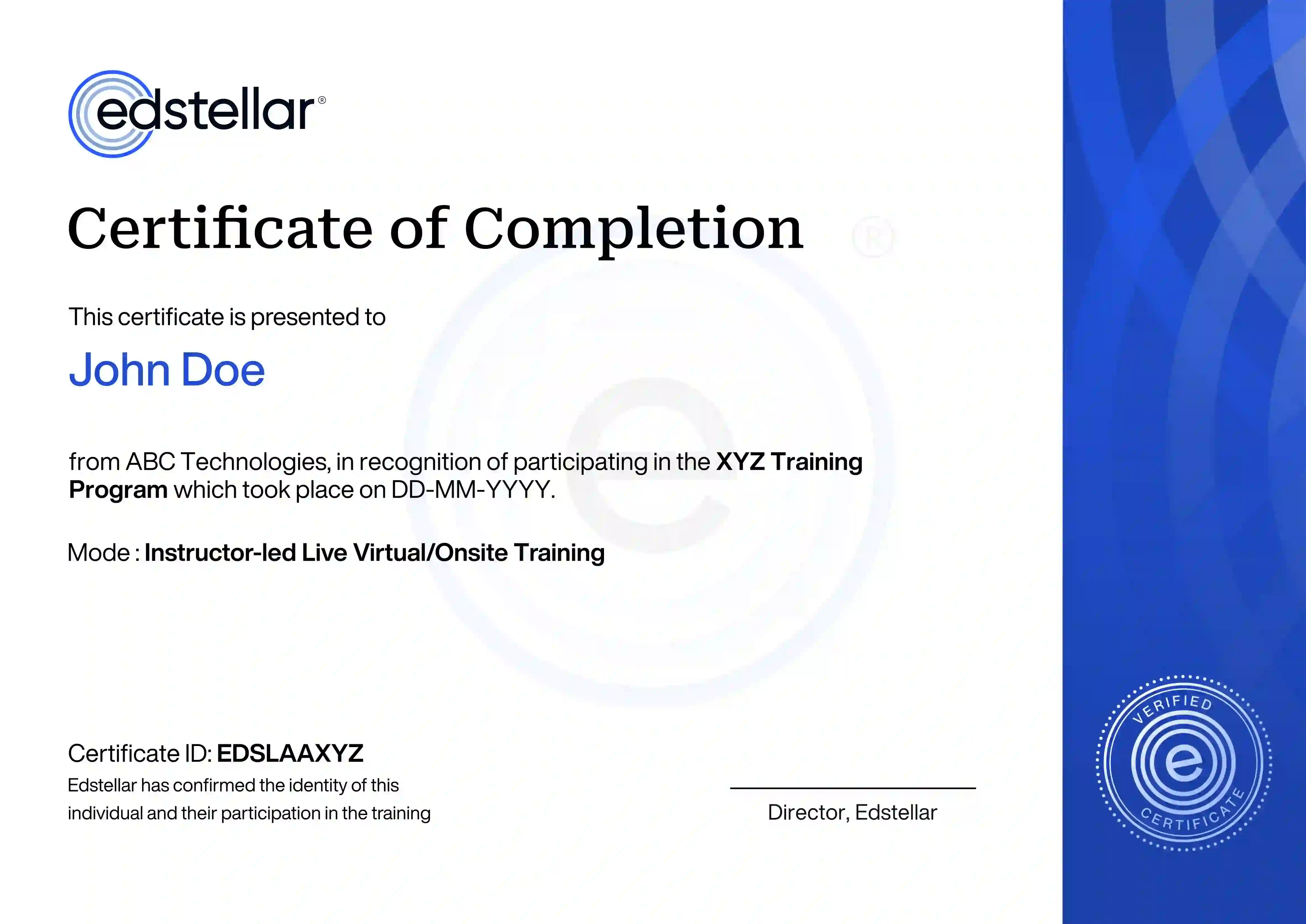
        Upon successful completion of the training course offered by Edstellar, employees receive a course completion certificate, symbolizing their dedication to ongoing learning and professional development.

        This certificate validates the employee's acquired skills and is a powerful motivator, inspiring them to enhance their expertise further and contribute effectively to organizational success.

        Recognition That Motivates Your Team