Drive Team Excellence with CompTIA A+ Corporate Training

Empower your teams with expert-led on-site, off-site, and virtual CompTIA A+ Training through Edstellar, a premier corporate training provider for organizations globally. Designed to meet your specific training needs, this group training program ensures your team is primed to drive your business goals. Help your employees build lasting capabilities that translate into real performance gains.

CompTIA A+ is a widely recognized certification that validates foundational skills and knowledge in IT support and technical troubleshooting. The objective of the CompTIA A+ is to equip teams with the essential competencies needed to support and maintain computer systems effectively. CompTIA A+ training course empowers professionals with a broad range of topics, including hardware, software, networking, and security, providing a comprehensive understanding of the fundamental aspects of IT support. The course equips teams with foundational IT support and technical troubleshooting skills, enabling them to achieve seamless operation of computer systems and enhance productivity for the organization.

Edstellar's instructor-led CompTIA A+ training course offers immersive virtual/onsite training sessions led by industry experts. The course delivers practical insights and a customizable curriculum tailored to organizational needs. The course empowers professionals by providing real-world scenarios and hands-on practice essential for mastering CompTIA A+.

Get Customized Expert-led Training for Your Teams
Customized Training Delivery
Scale Your Training: Small to Large Teams
In-person Onsite, Live Virtual or Hybrid Training Modes
Plan from 2000+ Industry-ready Training Programs
Experience Hands-On Learning from Industry Experts
Delivery Capability Across 100+ Countries & 10+ Languages
""""

Key Skills Employees Gain from instructor-led CompTIA A+ Training

CompTIA A+ skills corporate training will enable teams to effectively apply their learnings at work.

  • Hardware Troubleshooting
    Hardware Troubleshooting is the ability to diagnose and resolve issues with computer hardware components. this skill is important for IT support roles, ensuring efficient system performance and minimizing downtime.
  • Software Installation
    Software Installation involves setting up software applications on computers or servers. This skill is important for IT support roles, ensuring systems run efficiently and securely.
  • Operating Systems
    Operating Systems manage hardware and software resources, enabling user interaction and application execution. This skill is important for IT roles, ensuring efficient system performance and troubleshooting.
  • Networking Fundamentals
    Networking Fundamentals involves understanding network design, protocols, and security. This skill is important for IT roles as it ensures efficient communication, data transfer, and system security.
  • Security Concepts
    Security Concepts encompass the principles and practices that protect information systems. This skill is important for roles in cybersecurity, IT management, and risk assessment, ensuring data integrity and safety.
  • Troubleshooting Methodologies
    Troubleshooting Methodologies involve systematic approaches to identify, analyze, and resolve issues. This skill is important for IT support roles, ensuring efficient problem resolution and minimizing downtime.

Key Learning Outcomes of CompTIA A+ Training Workshop for Employees

Upon completing Edstellar’s CompTIA A+ workshop, employees will gain valuable, job-relevant insights and develop the confidence to apply their learning effectively in the professional environment.

  • Apply troubleshooting methodologies to efficiently diagnose and rectify hardware and software issues encountered in professional IT environments
  • Utilize advanced networking concepts to optimize network configurations and ensure seamless connectivity for organizational systems
  • Employ cybersecurity principles to safeguard sensitive data and mitigate potential threats, enhancing overall organizational security posture
  • Develop customized solutions tailored to specific organizational needs, leveraging acquired knowledge and practical skills in computer system configuration and maintenance
  • Utilize diagnostic tools and resources proficiently to identify and address technical challenges, minimizing downtime and maximizing productivity in the workplace

Key Benefits of the CompTIA A+ Group Training

Attending our CompTIA A+ group training classes provides your team with a powerful opportunity to build skills, boost confidence, and develop a deeper understanding of the concepts that matter most. The collaborative learning environment fosters knowledge sharing and enables employees to translate insights into actionable work outcomes.

  • Learn essential troubleshooting techniques to diagnose and resolve hardware and software issues effectively, empowering you to tackle diverse IT challenges with confidence
  • Equip yourself with advanced networking knowledge to optimize connectivity and performance, enhancing your ability to support organizational network infrastructure efficiently
  • Develop a comprehensive understanding of cybersecurity fundamentals, equipping you with the skills to protect sensitive data and mitigate potential threats effectively
  • Explore emerging technologies and trends in the IT industry, staying ahead of the curve and positioning yourself as a valuable asset to your organization
  • Develop strong collaboration skills by working with cross-functional teams to address complex IT issues, promoting a proactive and cooperative work environment

Topics and Outline of CompTIA A+ Training

Our virtual and on-premise CompTIA A+ training curriculum is structured into focused modules developed by industry experts. This training for organizations provides an interactive learning experience that addresses the evolving demands of the workplace, making it both relevant and practical.

  1. Explain cable types and connectors

    • Identify different types of computer cables (e.g., USB, Ethernet, HDMI)

    • Discuss the purpose and compatibility of various cable connectors

    • Demonstrate proper cable management techniques

  2. Install and configure motherboards
    • Steps to install a motherboard safely
    • Overview of motherboard components (e.g., CPU socket, RAM slots)
    • BIOS/UEFI settings configuration
  3. Explain legacy cable types
    • Introduction to legacy cables such as VGA, Serial, and Parallel
    • Transition from legacy cables to current standards
  1. Install and configure power supplies and cooling
    • Selection of appropriate power supply based on system requirements
    • Installation of power supply units
    • Types and installation of cooling solutions
  2. Select and install storage devices
    • Types of storage devices (SSD, HDD, NVMe)
    • Criteria for selecting storage devices based on performance and storage needs
    • Installation procedures for internal and external storage devices
  3. Install and configure system memory
    • Different types of RAM and their specifications
    • Installation process for RAM modules
  4. Install and configure CPUs
    • Different types of processors and their specifications
    • Installing a CPU and applying thermal paste
    • BIOS/UEFI configuration for new CPUs
  1. Apply troubleshooting methodology
    • Steps of systematic troubleshooting
    • Importance of documentation during troubleshooting
    • Common diagnostic tools and their use
  2. Configure BIOS/UEFI
    • Accessing and navigating BIOS/UEFI settings
    • Key BIOS/UEFI configurations for troubleshooting
    • Updating BIOS/UEFI firmware
  3. Troubleshoot power and disk issues
    • Diagnosing power supply problems
    • Troubleshooting common disk errors and failures
  4. Troubleshoot system and display issues
    • Methods to diagnose video card and monitor problems
    • Resolving common errors related to system instability
  1. Compare network types
    • Overview of local, wide, and personal area networks
    • Impact of network types on performance and scalability
  2. Compare networking hardware
    • Characteristics of routers, switches, and hubs
    • Selecting the right hardware for different network configurations
    • Benefits and limitations of various networking devices
  3. Explain network cable types
    • Features of twisted pair, coaxial, and fiber optic cables
    • Cable standards and their bandwidth capabilities
    • Selecting the appropriate cable type for specific networking needs
  4. Compare wireless networking types
    • Differences between WiFi, Bluetooth, and cellular connections
    • Advantages and challenges of wireless communication
  1. Compare internet connection types
    • Overview of broadband, DSL, and fiber-optic services
    • Comparison of data speed, reliability, and geographical availability
    • Selecting an internet service provider based on user needs
  2. Use basic TCP/IP concepts
    • Understanding IP addressing and how IP addresses are assigned
    • The role of subnet masks and gateways in network segmentation
    • Basics of DHCP and static IP configurations
  3. Compare protocols and ports
    • Explanation of common protocols like HTTP, SMTP, and FTP
    • Understanding how ports work in network communications
    • Importance of port numbers in firewall configurations and security
  4. Compare network configuration concepts
    • Differentiating between star, bus, and ring topologies
    • Benefits and drawbacks of each network topology
  1. Summarize services provided by networked hosts
    • Overview of common network services like DHCP, DNS, and file sharing
    • Importance of network services in maintaining connectivity and functionality
    • How network services impact user experience and network efficiency?
  2. Compare internet and embedded appliances
    • Distinctions between dedicated network appliances and general-purpose servers
    • Impact of Internet of Things (IoT) devices on network architecture and security
  3. Troubleshoot networks
    • Strategies for diagnosing network connectivity and performance issues
    • Tools and techniques for network troubleshooting (e.g., ping, traceroute)
    • Common network problems and their typical solutions
  1. Summarize client-side virtualization
    • Understanding different types of client-side virtualization technologies
    • Benefits and drawbacks of using client-side virtualization
  2. Summarize cloud concepts
    • Overview of cloud computing models: IaaS, PaaS, SaaS
    • Key benefits of cloud computing such as scalability, cost-effectiveness, and accessibility
    • Security considerations and best practices in cloud environments
  1. Set up mobile devices and peripherals
    • Steps for configuring new mobile devices (smartphones, tablets)
    • Connecting and configuring peripherals such as Bluetooth devices, external keyboards
  2. Configure mobile device apps
    • Installing, updating, and managing apps on mobile devices
    • Setting app permissions and ensuring data privacy
    • Troubleshooting common app installation and performance issues
  3. Install and configure laptop hardware
    • Identifying and upgrading components like RAM, SSDs, and batteries in laptops
    • Tips for optimizing laptop performance and battery life
    • Common issues in laptop hardware and how to troubleshoot them
  4. Troubleshoot mobile device issues
    • Diagnosing common issues such as connectivity problems, battery drain, and unresponsive apps
    • A step-by-step approach to troubleshooting Android and iOS devices
    • Tools and resources for mobile device troubleshooting
  1. Deploy printer and multifunction devices
    • Steps for installing and configuring printers and multifunction devices in a network environment
    • Guidelines for selecting the right print device based on business needs
    • Integration of print devices with different operating systems and network configurations
  2. Replace print device consumables
    • Procedures for replacing ink cartridges, toner, and other consumables
    • Tips for extending the life of consumables and minimizing waste
    • Environmental considerations and recycling of print consumables
  3. Troubleshoot print device issues
    • Common printer problems such as paper jams, connectivity issues, and poor print quality
    • Diagnostic techniques and tools to identify and resolve printer issues
  1. Configure Windows user settings
    • Manage user accounts
    • Customize user interfaces
    • Configure accessibility options
  2. Configure Windows system settings
    • Adjust system performance settings
    • Manage system updates
    • Configure security settings
  1. Use management consoles
    • Access and navigate Microsoft Management Console (MMC)
    • Utilize Computer Management for system administration
    • Manage devices and disks through Device Manager
  2. Use performance and troubleshooting tools
    • Monitor system performance with Task Manager
    • Diagnose issues with Event Viewer
    • Optimize the system with Performance Monitor
  3. Use command-line tools
    • Basic commands for system management
    • Scripting with PowerShell for automation
    • Advanced troubleshooting with command-line tools
  1. Explain OS types
    • Overview of desktop and mobile operating systems
    • Discuss multi-user and single-user operating systems
  2. Compare Windows editions
    • Distinguish between Windows Home, Pro, and Enterprise editions
    • Key features unique to each Windows edition
    • Suitability of each edition for different user environments
  1. Perform OS installations and upgrades
    • Prepare for installation and backup data
    • Steps for a clean OS installation
    • Upgrade paths for different OS versions
  2. Install and configure applications
    • Methods for installing software applications
    • Configure application settings for optimal performance
    • Manage application updates and licenses
  3. Troubleshoot Windows OS problems
    • Resolve startup and boot problems
    • Fix common Windows errors and crashes
    • Techniques for recovering lost data
  1. Configuring Windows networking
    • Set up and manage network connections
    • Configure shared network resources
    • Implement network security protocols
  2. Troubleshoot Windows networking
    • Diagnose and resolve network connectivity issues
    • Tools and methods for network troubleshooting
    • Strategies for resolving shared resource conflicts
  3. Configure Windows security settings
    • Implement user account control settings
    • Configure firewall and antivirus settings
  4. Manage Windows shares
    • Create and configure file shares
    • Set permissions and access controls
    • Monitor and audit network file access
  1. Identify features of Linux
    • Linux kernel and its components
    • Linux distributions and their uses
    • Command-line utilities and graphical environments
  2. Identify features of macOS
    • macOS architecture and design philosophy
    • Built-in macOS applications and utilities
  1. Attacks, threats, and vulnerabilities
    • Types of network attacks and their impacts
    • Common vulnerabilities in SOHO networks
    • Risk assessment strategies for SOHO environments
  2. Compare wireless security protocols
    • Overview of WEP, WPA, WPA2, and WPA3 protocols
    • Advantages and limitations of each security protocol
  3. Configure SOHO router security
    • Steps to secure a router and its firmware
    • Network segmentation and guest networking
    • Implementing VPNs and firewalls in SOHO networks
  4. Summarize security measures
    • Use of anti-malware and anti-spyware tools
    • Data encryption and secure data disposal techniques
  1. Configure workstation security
    • Set up endpoint protection solutions
    • Configure operating system security settings
    • Implement user access controls and permissions
  2. Configure browser security
    • Browser security settings and configurations
    • Managing plugins and extensions for security
  3. Troubleshoot workstation security issues
    • Identifying and resolving security breaches
    • Managing updates to ensure security patch compliance
    • Recovery techniques after security incidents
  1. Configure mobile OS security
    • Implementing device encryption and secure boot
    • Managing app permissions and privacy settings
    • Securing remote access and data transmission
  2. Troubleshoot mobile OS and app software
    • Diagnosing common mobile OS problems
    • Resolving app crashes and compatibility issues
  3. Troubleshoot mobile OS and app security
    • Addressing mobile malware and spyware issues
    • Ensuring security in mobile payment and online transactions
    • Strategies for protecting personal data on mobile devices
  1. Use remote access technologies
    • Implementing remote desktop and VPN solutions
    • Configuring remote management tools
    • Ensuring security in remote connections
  2. Implement backup and recovery
    • Strategies for data backup (cloud, local, hybrid)
    • Procedures for disaster recovery planning
    • Testing and verifying backup integrity
  3. Data handling best practices
    • Data privacy and compliance with regulations
    • Data storage and archiving techniques
    • Secure data transfer methods
  4. Identify the basics of scripting
    • Scripting languages (e.g., PowerShell, Bash)
    • Automating routine tasks with scripts
    • Debugging and optimizing scripts
  1. Implement best practice documentation
    • Developing and maintaining standard operating procedures
    • Creating user manuals and technical documentation
    • Document management and version control
  2. Use proper communication techniques
    • Effective communication in technical support
    • Techniques for explaining complex concepts to non-technical users
    • Managing communication in crisis situations
  3. Use common safety and environmental procedures
    • Workplace safety practices in IT environments
    • Environmental impact of IT operations and sustainability practices

Who Can Take the CompTIA A+ Training Course

The CompTIA A+ training program can also be taken by professionals at various levels in the organization.

  • IT Support Specialists
  • Network Technicians
  • Help Desk Technicians
  • System Administrators
  • Technical Support Specialists
  • Field Service Technicians
  • IT Specialists
  • End User Support Specialists
  • Desktop Support Technicians
  • IT Operations Specialists
  • Service Desk Technicians
  • Managers

Prerequisites for CompTIA A+ Training

Professionals with a basic understanding of IT devices and networking can take up the CompTIA A+ training course.

Request a Quote for your Corporate Training Requirements

Valid number

Delivering Training for Organizations across 100 Countries and 10+ Languages

Corporate Group Training Delivery Modes
for CompTIA A+ Training

At Edstellar, we understand the importance of impactful and engaging training for employees. As a leading CompTIA A+ training provider, we ensure the training is more interactive by offering Face-to-Face onsite/in-house or virtual/online sessions for companies. This approach has proven to be effective, outcome-oriented, and produces a well-rounded training experience for your teams.

 Virtual trainig

Edstellar's CompTIA A+ virtual/online training sessions bring expert-led, high-quality training to your teams anywhere, ensuring consistency and seamless integration into their schedules.

With global reach, your employees can get trained from various locations
The consistent training quality ensures uniform learning outcomes
Participants can attend training in their own space without the need for traveling
Organizations can scale learning by accommodating large groups of participants
Interactive tools can be used to enhance learning engagement
 On-site trainig

Edstellar's CompTIA A+ inhouse training delivers immersive and insightful learning experiences right in the comfort of your office.

Higher engagement and better learning experience through face-to-face interaction
Workplace environment can be tailored to learning requirements
Team collaboration and knowledge sharing improves training effectiveness
Demonstration of processes for hands-on learning and better understanding
Participants can get their doubts clarified and gain valuable insights through direct interaction
 Off-site trainig

Edstellar's CompTIA A+ offsite group training offer a unique opportunity for teams to immerse themselves in focused and dynamic learning environments away from their usual workplace distractions.

Distraction-free environment improves learning engagement
Team bonding can be improved through activities
Dedicated schedule for training away from office set up can improve learning effectiveness
Boosts employee morale and reflects organization's commitment to employee development

Explore Our Customized Pricing Package
for
CompTIA A+ Corporate Training

Looking for pricing details for onsite, offsite, or virtual instructor-led CompTIA A+ training? Get a customized proposal tailored to your team’s specific needs.

Request a Group Training Quote
""
How Many Team Members Need Training?
Please select an option or fill in the custom field.
"'

Is Your Corporate Training Requirement Only for CompTIA A+?

Please select at least one course.
""
Add the List of Training Workshops
search icon

      Please select the course

      No. of Courses selected: 0

      Clear

      Upload a CSV

      Send us your Training Requirements in 3 Easy steps

      1. 1
      2. 2
        Add the required training workshops
      3. 3
        Upload to get a quick quote or email it to contact@edstellar.com

      ""

      Looking for a Complete Package?

      Looking for a one-time pricing option for all your annual training requirements?

      View Corporate Training Packages
      ""
      Select the Option that Best Describes Your Corporate Training Requirement

      Please select an option or choose from the recurring options.
      ""
      Verify and Submit Your Request

      Review Your Corporate Training Selection Summary

      Training Program: CompTIA A+ Training

      1. No of Team Members

      2. Selected Training Preference

      3. Selected Recurring Sessions

      1

      Review your Requirements

      Training Workshops Selected :


        Excel
        File has been
        successfully uploaded.
        Fill the form to submit
 your details
        Submit Your Professional Contact Information
        Valid number
        We've received your enquiry. Our team will be in touch soon.
        Oops! Something went wrong while submitting the form.
        Starter
        120 licences

        Tailor-Made Trainee Licenses with Our Exclusive Training Packages!

        View Package

        64 hours of group training (includes VILT/In-person On-site)

        Tailored for SMBs

        Growth
        320 licences

        Tailor-Made Trainee Licenses with Our Exclusive Training Packages!

        View Package

        160 hours of group training (includes VILT/In-person On-site)

        Ideal for growing SMBs

        Enterprise
        800 licences

        Tailor-Made Trainee Licenses with Our Exclusive Training Packages!

        View Package

        400 hours of group training (includes VILT/In-person On-site)

        Designed for large corporations

        Custom
        Unlimited licenses

        Tailor-Made Trainee Licenses with Our Exclusive Training Packages!

        View Package

        Unlimited duration

        Designed for large corporations

        Edstellar: Your Go-to CompTIA A+ Training Company

        Experienced Trainers

        Our trainers bring years of industry expertise to ensure the training is practical and impactful.

        Quality Training

        With a strong track record of delivering training worldwide, Edstellar maintains its reputation for its quality and training engagement.

        Industry-Relevant Curriculum

        Our course is designed by experts and is tailored to meet the demands of the current industry.

        Customizable Training

        Our course can be customized to meet the unique needs and goals of your organization.

        Comprehensive Support

        We provide pre and post training support to your organization to ensure a complete learning experience.

        Multilingual Training Capabilities

        We offer training in multiple languages to cater to diverse and global teams.

        Testimonials

        What Our Clients Say

        We pride ourselves on delivering exceptional training solutions. Here's what our clients have to say about their experiences with Edstellar.

        "This CompTIA A+ course was exactly what I needed to advance my career. As a Senior Software Engineer, mastering advanced methodologies has become crucial for my success. The in-depth coverage of practical I use daily. I've successfully implemented these advanced techniques in production environments with measurable impact. The real-world examples and deep dive into real-world case studies were particularly valuable for my professional growth.”

        Ben Hopkins

        Senior Software Engineer,

        IT Services and Solutions Provider

        "The CompTIA A+ training enhanced my ability to architect and implement sophisticated professional expertise strategies. Understanding strategic frameworks through intensive hands-on exercises exercises proved invaluable for client enterprise initiatives. Client engagement and retention metrics have improved significantly across our practice. The detailed exploration of expert-led workshops provided methodologies I leverage in every engagement.”

        Yao Qi

        Senior Software Engineer,

        Enterprise Software Development Firm

        "As a Senior Software Engineer overseeing strategic implementation initiatives, the CompTIA A+ training significantly elevated our team's capabilities. The course expertly covered industry best practices, practical operational effectiveness. Our team delivered record-breaking results in the subsequent quarter, exceeding all targets. Our department has achieved remarkable improvements, demonstrating this course's lasting organizational impact.”

        Lakshmi Narayanan

        Senior Software Engineer,

        Global Technology Solutions Provider

        “Edstellar’s IT & Technical training programs have been instrumental in strengthening our engineering teams and building future-ready capabilities. The hands-on approach, practical cloud scenarios, and expert guidance helped our teams improve technical depth, problem-solving skills, and execution across multiple projects. We’re excited to extend more of these impactful programs to other business units.”

        Aditi Rao

        L&D Head,

        A Global Technology Company

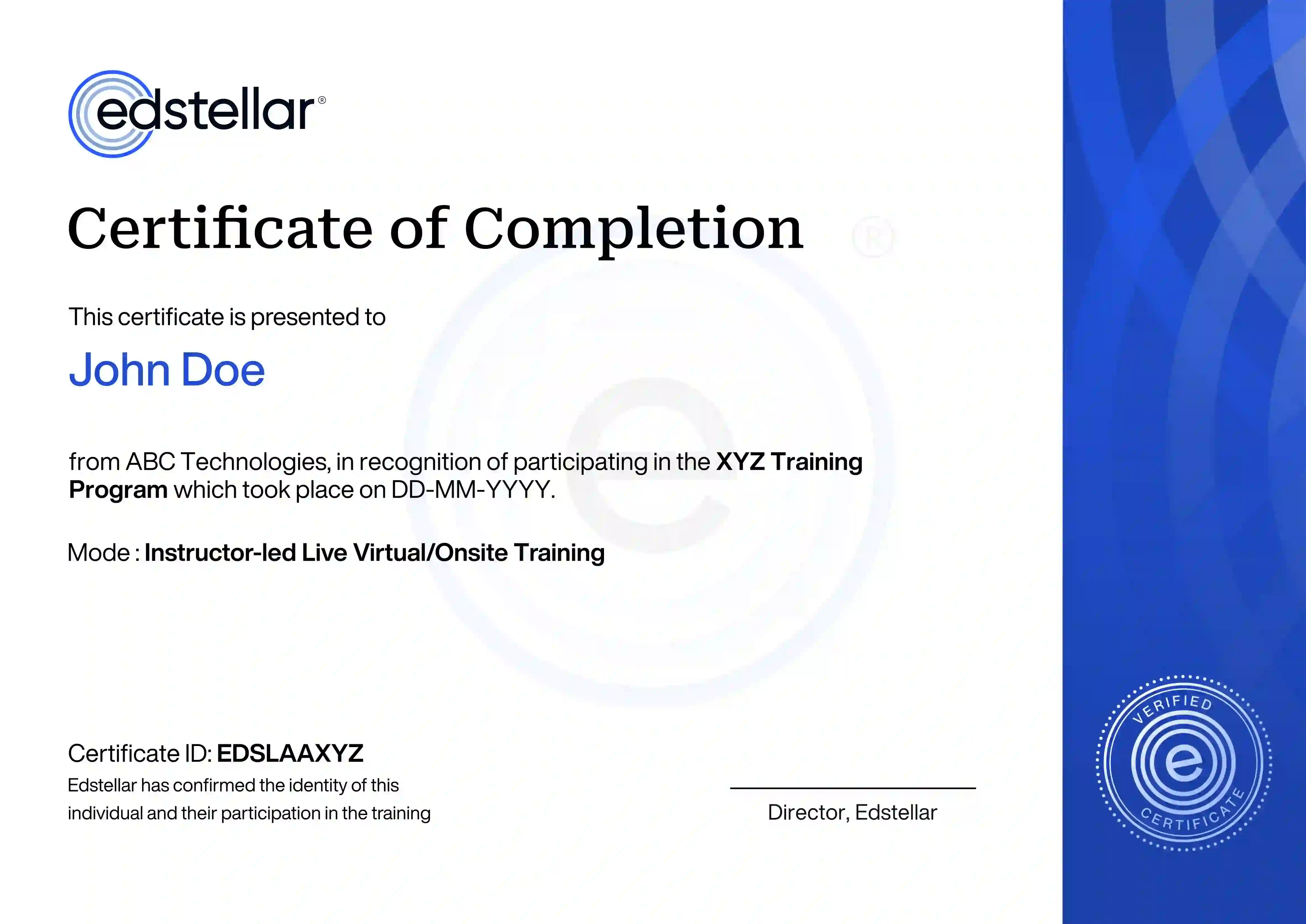
        Get Your Team Members Recognized with Edstellar’s Course Certificate

        Upon successful completion of the training course offered by Edstellar, employees receive a course completion certificate, symbolizing their dedication to ongoing learning and professional development.

        This certificate validates the employee's acquired skills and is a powerful motivator, inspiring them to enhance their expertise further and contribute effectively to organizational success.

        Certificate of Excellence

        We have Expert Trainers to Meet Your CompTIA A+ Training Needs

        The instructor-led training is conducted by certified trainers with extensive expertise in the field. Participants will benefit from the instructor's vast knowledge, gaining valuable insights and practical skills essential for success in Access practices.

        CompTIA A+ Trainer in Bikaner
        Neeraj
        Bikaner, India
        Trainer since
        December 1, 2010
        CompTIA Network+ Trainer in Delhi
        Saroj
        New Delhi, India
        Trainer since
        January 1, 2010

        Other Related Corporate Training Courses