Drive Team Excellence with Gitlab Corporate Training

GitLab is a web-based DevOps lifecycle tool that provides a Git repository manager providing wiki, issue-tracking, and continuous integration/continuous deployment pipeline features, with additional features such as code review, monitoring, and collaboration tools. In organizations, GitLab is essential for streamlining collaboration among developers, facilitating version control, automating testing and deployment processes, and ensuring project transparency and traceability. Training in GitLab encompasses mastering its features and workflows to optimize development processes and foster efficient collaboration within teams.

Edstellar's virtual/onsite GitLab training course offers customization options and employs cutting-edge methodologies. Our trainers are renowned for their expertise in GitLab instructor-led training course and have vast experience in guiding teams through the complexities of GitLab.

Get Customized Expert-led Training for Your Teams
Customized Training Delivery
Scale Your Training: Small to Large Teams
In-person Onsite, Live Virtual or Hybrid Training Modes
Plan from 2000+ Industry-ready Training Programs
Experience Hands-On Learning from Industry Experts
Delivery Capability Across 100+ Countries & 10+ Languages
""""

Skills Your Employees Will Gain

These are the core, hands-on capabilities your team builds during the program.

  • CI/CD Implementation
    Ci/cd Implementation refers to the continuous integration and continuous delivery process in software development. This skill is important for DevOps and software engineering roles as it ensures faster, reliable code deployment, enhancing collaboration and reducing errors.
  • Version Control
    Version Control is the management of changes to code or documents, allowing multiple contributors to collaborate efficiently. This skill is important for software developers, as it ensures code integrity, facilitates collaboration, and enables tracking of project history.
  • Pipeline Automation
    Pipeline Automation is the process of automating the steps in software delivery, enhancing efficiency and reliability. this skill is important for DevOps and software engineering roles, as it streamlines workflows, reduces errors, and accelerates deployment.
  • Project Management
    Project Management is the process of planning, executing, and closing projects efficiently. This skill is important for roles like project manager, ensuring timely delivery and resource optimization.
  • Security Management
    Security Management involves protecting an organization's assets through risk assessment, policy development, and incident response. This skill is important for roles in cybersecurity, risk management, and compliance, ensuring safety and resilience against threats.
  • Code Review
    Code Review is the process of evaluating and improving code quality through peer feedback. this skill is important for software developers to ensure maintainability, reduce bugs, and enhance collaboration.

What Your Team Will Achieve After This Training

  • Apply version control principles to effectively manage code repositories using GitLab
  • Create and manage merge requests to facilitate efficient collaboration and code integration
  • Design and implement project workflows to streamline development processes within GitLab
  • Analyze code changes and collaborate with team members using GitLab's code review features
  • Demonstrate proficiency in configuring and optimizing CI/CD pipelines for automated software deployment
  • Evaluate and troubleshoot issues encountered during software development using GitLab's issue tracking system

Topics & Program Outline

The curriculum is organized into focused modules built by industry experts and delivered virtually or on-premise. Interactive sessions reflect the evolving demands of the workplace, keeping the learning both relevant and practical.

  1. About version control
    • Benefits of using version control systems
    • Different types of version control systems
    • Core concepts 
  2. A short history of Git
    • Origins and development of Git by Linus Torvalds
    • Reasons behind creating Git - limitations of existing systems
    • Key milestones and evolution of Git
  3. Git basics
    • Fundamental Git commands
    • Understanding the staging area
    • Ignoring files and directories
    • Resolving conflicts during merges
    • Branching strategies
  4. The command line
    • Introduction to the Command Line Interface (CLI)
    • Basic navigation commands
    • Working with files and directories
    • Using flags and options with commands
    • Getting help 
  5. Installation and setup of Git
    • Downloading and installing Git for Unix-based systems
    • Configuring Git 
    • Verifying Git installation
    • Setting up environment variables
    • Installing Git on Windows
  1. Cloning a Git repository
    • Understanding URLs for remote repositories
    • Cloning a public or private repository
    • Specifying branch or specific revision during clone
    • Cloning into an existing directory
    • Shallow clones
  2. Recording changes to the repository
    • Staging changes with Git add 
    • Unstaging changes 
    • Creating meaningful commit messages with guidelines
    • Amending existing commits
    • Combining multiple commits 
  3. Viewing the commit history
    • Using git log to show commit history
    • Filtering commits by author, date, message keywords
    • Viewing commit details
    • Using git reflog to see all changes to HEAD reference
  4. Git logs
    • Advanced options for Hit log 
    • Limiting the number of displayed commits
    • Specifying a branch or commit to start from
  5. Undoing things
    • Unstaging changes with git reset HEAD 
    • Discarding uncommitted changes from working directory
    • Reverting a commit
    • Resetting HEAD to a previous commit 
    • Soft reset
  1. Installing GitLab
    • Downloading and installing GitLab on a server 
    • Choosing an installation method
    • Configuring database and other settings during installation
    • Verifying successful installation and accessing the GitLab interface
  2. Configuring GitLab
    • Setting up a root user and initial configuration
    • Configuring authentication methods (internal, LDAP, OAuth)
    • Enabling features and services (protected branches, webhooks)
    • Customizing domain name and branding
    • Managing users and groups
  1. GitLab Basics: Start Working on Your Command Line and on GitLab
    • Using Git commands directly within the GitLab web interface
    • Pushing and pulling changes to/from remote repositories on GitLab
  2. GitLab workflow
    • Understanding the recommended GitLab workflow 
    • Creating a new branch for specific features or bug fixes
    • Pushing your branch to GitLab and creating a pull request
    • Discussing changes and collaborating through pull requests
  3. GitLab Markdown
    • Using Markdown syntax for formatting text in issues, comments, and wiki pages
    • Creating headings, lists, code blocks, and tables using Markdown
    • Embedding images and other media content with Markdown
    • Leveraging advanced features like links, mentions, and emojis
  4. GitLab Flow
    • Benefits of using GitLab Flow for branching strategies
    • Branching for development, bug fixing, hotfixes
  5. Customizing GitLab appearance
    • Changing themes and colors to personalize your GitLab experience
    • Uploading custom logos and branding elements
    • Modifying the navigation bar and menu options
  1. Updating GitLab
    • Importance of keeping GitLab updated for security and new features
    • Upgrading GitLab to the latest version
    • Backing up your GitLab instance before upgrading
  2. GitLab platform integrations
    • Integrating GitLab with third-party tools and services
    • Setting up webhooks for automatic notifications and actions
    • Utilizing GitLab APIs for custom integrations
  3. Project settings
    • Managing project visibility
    • Setting access permissions for users and groups on projects
    • Configuring protected branches and merge requirements
    • enabling features like issue trackers, merge requests, wikis
  4. repository settings
    • Managing repository settings
    • Controlling access permissions for users and groups on repositories
    • Configuring branch protection rules
    • Enabling code review features
  1. Continuous integration settings
    • Defining CI/CD pipelines in GitLab
    • Specifying stages and jobs in the pipeline
    • Configuring triggers for running the pipeline
    • Using GitLab runners for executing pipeline jobs
  2. Git configuration options
    • Integrating Git configuration within CI/CD pipelines
    • Using environment variables to store sensitive information
    • Cloning repositories and specifying branch or commit during pipeline execution
  3. Monitoring GitLab
    • Viewing pipeline execution status and logs
    • Monitoring project activity and code changes
    • Setting up alerts and notifications for events
    • Utilizing dashboards for visualizing key metrics
  4. Troubleshooting GitLab
    • Identifying common GitLab issues 
    • Debugging CI/CD pipelines based on logs and error messages
    • Utilizing troubleshooting resources and documentation
  5. Use cases
    • Applying GitLab CI/CD for automating software builds and deployments
    • Integrating with testing frameworks for automated testing
  1. GitLab groups
    • Creating and managing groups in GitLab
    • Assigning users to groups and managing group permissions
    • Utilizing groups for project collaboration and access control
    • Nesting groups for hierarchical organization
  2. GitLab flavored markdown
    • Advanced features of GitLab Markdown beyond basic syntax
    • Embedding snippets, issues, and merge requests within Markdown content
  3. GitLab to-dos
    • Assigning tasks and creating to-do lists within GitLab
    • Marking tasks as complete and tracking progress
    • Collaborating on tasks and managing workflow
    • Utilizing to-do lists for issue tracking and project management
  4. GitLab search
    • Searching for code, issues, merge requests, and other content in GitLab
    • Using advanced search queries for filtering results
    • Specifying keywords, project scope, and other search parameters
    • Utilizing saved searches for frequently used queries
  5. GitLab snippets
    • Creating and managing reusable code snippets within GitLab
    • Sharing snippets privately or publicly
    • Organizing snippets with folders and tags
  6. GitLab integrations
    • Integrating GitLab with external tools and services
    • Setting up webhooks for automatic notifications in external tools
    • Utilizing GitLab APIs for custom integrations with third-party platforms
    • Exploring popular integrations for CI/CD, issue tracking, and communication
  7. GitLab webhooks
    • Understanding webhooks and their functionality in GitLab
    • Creating webhooks for specific events
  8. GitLab API
    • Introduction to the GitLab API for programmatic access
    • Using the API to manage projects, repositories, issues, and other entities
    • Authentication methods for accessing the API
  1. Using Docker images
    • Leveraging Docker containers for running CI/CD pipelines
    • Building and pushing Docker images to the GitLab Container Registry
  2. API
    • Advanced exploration of the GitLab API for complex tasks
    • Scripting automation using the API for managing GitLab resources
    • Integrating custom applications with GitLab through the API
  3. Auto DevOps
    • Setting up Auto DevOps in GitLab for automatic CI/CD pipelines
    • Configuring pipelines based on project languages and frameworks
    • Utilizing pre-defined templates for common workflows
    • Customizing Auto DevOps settings for specific needs
  4. SSH authentication
    • Setting up SSH keys for secure authentication with GitLab
    • Managing SSH keys for users and projects
  5. Kubernetes integration
    • Integrating GitLab with Kubernetes for container orchestration
    • Deploying applications to Kubernetes clusters through GitLab pipelines
    • Managing deployments and scaling applications with Kubernetes
  6. GitLab Pages
    • Hosting static websites directly on GitLab using GitLab Pages
    • Creating a website from a specific branch in a repository
    • Customizing domain names and configurations for GitLab Pages
  7. GitLab Container Registry
    • Storing and managing Docker images in the GitLab Container Registry
    • Pushing and pulling images from the registry
    • Setting access permissions for images
    • Utilizing private container registries
  8. Complete DevOps with GitLab
    • Utilizing GitLab for the entire DevOps lifecycle
    • Implementing version control, CI/CD pipelines, issue tracking, and collaboration
    • Extending GitLab with integrations for a complete DevOps toolchain

Who Should Attend?

This program suits professionals at many levels across the organization, including:

  • System Administrators
  • Software Engineers
  • DevOps Engineers
  • Release Engineers
  • Project Managers
  • IT Engineers
  • Automation Engineers
  • Continuous Integration Engineers
  • Software Developers
  • Site Reliability Engineers
  • Infrastructure Engineers
  • Network Engineers

What are the Prerequisites?

Professionals with a basic understanding of command-line interfaces and version control concepts can take up the Gitlab training course.

Request a Quote for your Corporate Training Requirements

Valid number

Delivering Training for Organizations across 100 Countries and 10+ Languages

Choose the Format That Fits Your Team

We design training your teams actually engage with, and deliver it the way that suits you best. Through a vetted global trainer network, Edstellar runs sessions in 10+ languages with consistent quality anywhere.

Virtual Gitlab Training

Virtual / online: expert-led live sessions delivered anywhere, with consistency and easy scheduling.

We deliver anywhere worldwide
Standardized content for consistent outcomes
Join from own workspace, no travel
We scale to large groups across sites
Interactive tools keep remote learners engaged
On-site Gitlab Training

On-site (in-house): immersive, instructor-led learning at your office.

Our trainers run face-to-face at your office
We tailor setup/content to your workplace and tools
Group exercises drive collaboration
Live demos +  hands-on practice
Direct trainer access to clarify doubts
Off-site Gitlab Training

Off-site: focused, instructor-led group learning away from everyday workplace distractions.

We host your teams at a venue of your preferred choice
Built-in group activities for bonding
Full uninterrupted schedule for focus/retention
Boosts morale and signals commitment

Get a Proposal Shaped to Your Needs

Need pricing for onsite, offsite, or virtual delivery? Get a proposal tailored to your team's needs.

Request a Group Training Quote
""
How Many Team Members Need Training?
Please select an option or fill in the custom field.
"'

Is Your Corporate Training Requirement Only for Gitlab ?

Please select at least one course.
""
Add the List of Training Workshops
search icon

      Please select the course

      No. of Courses selected: 0

      Clear

      Upload a CSV

      Send us your Training Requirements in 3 Easy steps

      1. 1
      2. 2
        Add the required training workshops
      3. 3
        Upload to get a quick quote or email it to contact@edstellar.com

      ""

      Looking for a Complete Package?

      Looking for a one-time pricing option for all your annual training requirements?

      View Corporate Training Packages
      ""
      Select the Option that Best Describes Your Corporate Training Requirement

      Please select an option or choose from the recurring options.
      ""
      Verify and Submit Your Request

      Review Your Corporate Training Selection Summary

      Training Program: Gitlab Training

      1. No of Team Members

      2. Selected Training Preference

      3. Selected Recurring Sessions

      1

      Review your Requirements

      Training Workshops Selected :


        Excel
        File has been
        successfully uploaded.
        Fill the form to submit
 your details
        Submit Your Professional Contact Information
        Valid number
        We've received your enquiry. Our team will be in touch soon.
        Oops! Something went wrong while submitting the form.
        Starter
        120 licences

        Tailor-Made Trainee Licenses with Our Exclusive Training Packages!

        View Package

        64 hours of group training (includes VILT/In-person On-site)

        Tailored for SMBs

        Growth
        320 licences

        Tailor-Made Trainee Licenses with Our Exclusive Training Packages!

        View Package

        160 hours of group training (includes VILT/In-person On-site)

        Ideal for growing SMBs

        Enterprise
        800 licences

        Tailor-Made Trainee Licenses with Our Exclusive Training Packages!

        View Package

        400 hours of group training (includes VILT/In-person On-site)

        Designed for large corporations

        Custom
        Unlimited licenses

        Tailor-Made Trainee Licenses with Our Exclusive Training Packages!

        View Package

        Unlimited duration

        Designed for large corporations

        What Sets Edstellar Apart

        Experienced Trainers

        Our trainers are drawn from a vetted global network and bring years of industry expertise, keeping every session practical and impactful.

        Proven Quality

        With a strong global track record, Edstellar is known for quality and engaging delivery.

        Industry-Relevant Curriculum

        Our programs are built by experts to match the demands of today's industry.

        Fully Customizable

        Every program can be tailored to your organization's goals.

        Comprehensive Support

        We provide pre- and post-session support for a complete learning experience.

        Global Multi-Location & Multilingual Training Delivery

        We deliver in multiple languages to support diverse global teams.

        Hear from Organizations We've Trained

        "The Gitlab training provided me with comprehensive capabilities that elevated my expertise. As a Senior Software Engineer, I needed to understand strategic frameworks deeply, and this course delivered perfectly. The workshops gave me hands-on experience with industry best practices. I've successfully implemented these advanced techniques in production environments with measurable impact. Highly recommend for anyone serious about this field.”

        Sammie Chandler

        Senior Software Engineer,

        Git-Based CI/CD Solutions Firm

        "This Gitlab course was precisely what I needed to design robust strategic implementation architectures. The hands-on approach to interactive labs and seamless integration with real-world case studies was outstanding projects using advanced techniques from this training. We've successfully expanded our service portfolio based on these enhanced capabilities. The comprehensive curriculum has elevated my solution delivery capabilities significantly.”

        Lin Qiang

        Senior Software Engineer,

        Collaborative Development Platform

        "As a Senior Software Engineer overseeing operational excellence initiatives, the Gitlab training significantly elevated our team's capabilities. The course expertly covered industry best practices, hands-on exercises, our operational effectiveness. Our department achieved a remarkable 50% improvement in operational efficiency metrics. Our department has achieved remarkable improvements, demonstrating this course's lasting organizational impact.”

        Kamran Uday

        Senior Software Engineer,

        DevSecOps Platform Solutions Provider

        “Edstellar’s IT & Technical training programs have been instrumental in strengthening our engineering teams and building future-ready capabilities. The hands-on approach, practical cloud scenarios, and expert guidance helped our teams improve technical depth, problem-solving skills, and execution across multiple projects. We’re excited to extend more of these impactful programs to other business units.”

        Aditi Rao

        L&D Head,

        A Global Technology Company

        Recognition That Motivates Your Team

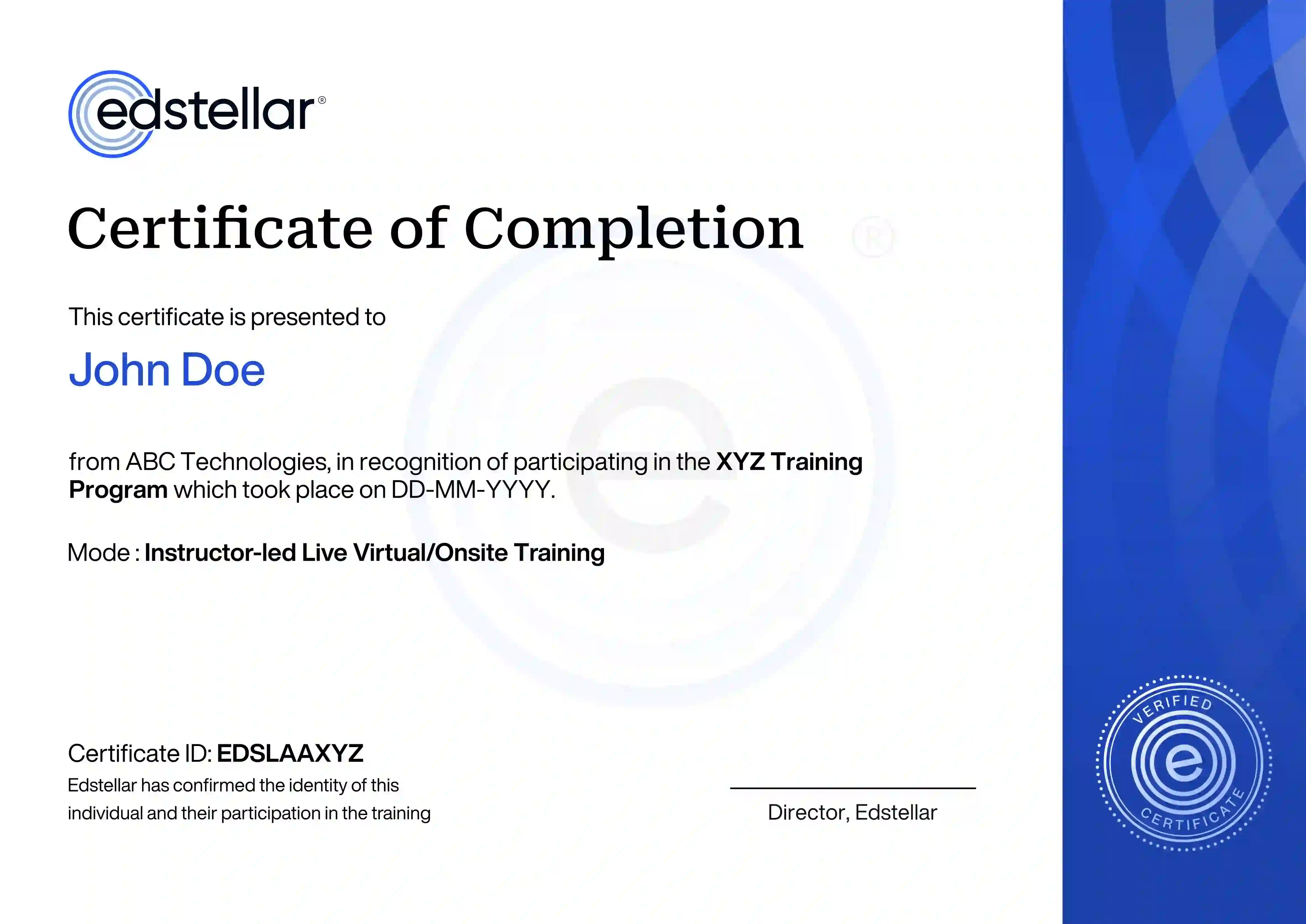
        Upon successful completion of the training course offered by Edstellar, employees receive a course completion certificate, symbolizing their dedication to ongoing learning and professional development.

        This certificate validates the employee's acquired skills and is a powerful motivator, inspiring them to enhance their expertise further and contribute effectively to organizational success.

        Recognition That Motivates Your Team
        We have Expert Trainers to Meet Your Gitlab Training Needs

        The instructor-led training is conducted by certified trainers with extensive expertise in the field. Participants will benefit from the instructor's vast knowledge, gaining valuable insights and practical skills essential for success in Access practices.

        MEAN Full Stack Trainer in Bengaluru
        Ramananda
        Bengaluru, India
        Trainer since
        February 1, 2014

        Other Related Corporate Training Courses