16 Best Problem Solving Games, Activities & Exercises for the Workplace
A comprehensive guide to problem solving games for the workplace, evaluated by an L&D leader with 24+ years of experience in operations optimization and team capability building.
16 Best Problem Solving Games, Activities & Exercises for the Workplace
Content
Table of Content
Quick Overview
Hands-on games build problem-solving faster than theory alone.
Constraints like time, materials, or senses unlock creative thinking.
Clear communication and active listening drive team breakthroughs.
Resourcefulness and prioritization separate winning teams from stuck ones.
Reflection after each activity converts experience into transferable skill.
Problem-solving applies across marketing, sales, support, HR, ops, and IT.
In today's business environment, teams that solve problems quickly and creatively outperform those that escalate every obstacle. The ability to diagnose root causes, generate viable options, and execute a chosen solution under pressure is no longer a nice-to-have skill: it is a core operational competency. Organizations that invest in problem-solving training report faster decision cycles and higher employee confidence in navigating ambiguity.
Effective problem-solving capabilities enable teams to identify root causes, develop innovative solutions, and implement changes that drive business success. Tackling significant challenges head-on, even when the odds are not favorable, is essential for transformative results. When individuals from diverse backgrounds and perspectives come together, the synergy created leads to groundbreaking solutions and measurable advancement for the organization.
Cultivating a culture of problem-solving fosters autonomy and empowerment among employees. Structured activities give teams a safe environment to practice the full problem-solving cycle: framing, ideating, deciding, executing, and reflecting. The 16 activities below are designed to sharpen that cycle across every stage of your team's development.
Author Insight
"Problem solving is a muscle that strengthens with use. The best activities put teams into unfamiliar scenarios where they must think creatively, collaborate under constraints, and arrive at solutions together. Regular practice builds confidence for real business challenges. "
Subbaiah M U
✓ 24+ years of L&D and operations leadership with deep experience in solving complex operational challenges and building structured team problem solving capabilities.
16 Workplace Problem-Solving Games and Activities
Just as you can't learn to write a novel solely by reading about it or swim merely by observing others, true mastery of problem-solving skills requires more than just theory. It demands immersion and action. That's why, when fostering problem-solving abilities in your employees, it's essential to engage them in problem-solving tasks that simulate real-world challenges. By participating in challenging and fun problem-solving games for adults, teams develop the skills and confidence needed to effectively navigate real-world challenges.
According to the WEF Future of Jobs 2025, analytical thinking which encompasses problem-solving remains the top core skill sought by employers, with seven out of ten companies rating it as essential. Structured critical thinking training accelerates the transfer of that analytical capability from workshop to daily decision-making.
"Purposeful play builds self-confidence and real-world problem-solving skills."
Jane McGonigal
Director of Game Research, Institute for the Future · California, USA
✔ Game designer and futurist focused on innovation, resilience, learning, and problem-solving through purposeful play.
The large group problem solving activities for employees mentioned below are designed to enhance the problem-solving, creativity, and collaborative capabilities of your teams. These activities are not just problem solving exercises for teams, they are strategic investments in building a workforce that can navigate complexities, innovate solutions, and drive the organization towards its goals.
By engaging in structured problem-solving group activities, teams focus on building problem-solving skills, allowing them to tackle challenges methodically and develop a proactive mindset essential for overcoming obstacles in today's dynamic business environment.
👤 Age 18+👥 6+ Players⏱ 18-25 min
1. Marshmallow Spaghetti Tower
Teams use spaghetti, tape, and string to build the tallest free-standing structure that can hold a single marshmallow on top within 18 minutes.
CreativityEngineeringTeamwork
1 Interactive Guided Demo
1
2
3
4
5
6
7
Step 1 of 7
👆
🍝
🍡🗼🏗️
🧵🍝📏🍡⏱️
📏
📋✨🎯🤝
✨✨
🍡✅🌟💡
⏱️
🎯🤝📌💡
✨✨
💡🍝🧵📏🍡
🏆
🎉🌟✨🎊💫
Welcome to Marshmallow Spaghetti Tower
Build the tallest tower that holds one marshmallow.
👆 Click anywhere to continue
2 Activity Details
🍝
Teams use spaghetti, tape, and string to build the tallest free-standing structure that can hold a single marshmallow on top within 18 minutes.
Players
👥 6+ Players
Recommended
Time
⏱ 18-25 min
Activity + debrief
Format
Team Game
Facilitated
Skill
Creativity
Primary outcome
What You'll Need
Prepare these items before the activity begins so the session runs smoothly.
🍝
20 Spaghetti
Required for activity
🧵
1 Yard String
Required for activity
📏
1 Yard Tape
Required for activity
🍡
1 Marshmallow
Required for activity
⏱️
Timer
Required for activity
Step-by-Step Walkthrough
1
Form Teams
Split participants into small teams and seat them at flat work surfaces with their building kit.
5 min
2
Hand Out Materials
Give each team 20 sticks of spaghetti, one yard of tape, one yard of string, and one marshmallow.
5 min
3
Set the Clock
Explain the 18-minute time limit and that the marshmallow must sit on top of a free-standing structure.
5 min
4
Build and Iterate
Teams sketch, test, and revise designs, learning quickly from collapses and tweaking the base for stability.
5 min
5
Measure and Debrief
Measure each tower from base to marshmallow, crown the winner, and debrief on design choices and teamwork.
5 min
Ground Rules
✓ Do
Explain the goal and constraints before starting.
Give every participant a clear role or opportunity to contribute.
Keep the timer visible and the rules consistent.
Encourage teams to explain their reasoning.
Close with a structured debrief.
✕ Don't
Do not let one person dominate the activity.
Do not change the rules midway unless it is a planned variation.
Do not skip reflection after the activity.
Do not make the activity personal or uncomfortable.
Do not focus only on winning; focus on learning.
What Your Team Will Learn
These outcomes should be reinforced during the debrief.
🧠
Outcome
Creativity
Participants practice this capability through the activity and reinforce it through discussion.
🛠️
Outcome
Collaboration
Participants practice this capability through the activity and reinforce it through discussion.
🤝
Outcome
Engineering
Participants practice this capability through the activity and reinforce it through discussion.
⏱
Outcome
Planning
Participants practice this capability through the activity and reinforce it through discussion.
💡
Outcome
Resourcefulness
Participants practice this capability through the activity and reinforce it through discussion.
📊
Outcome
Iteration
Participants practice this capability through the activity and reinforce it through discussion.
Ways to Mix It Up
🔁
Repeat Round
Run a second round after debrief to test improved thinking.
🤐
Silent Mode
Add a short no-speaking phase to test non-verbal coordination.
💰
Budget Mode
Assign costs or limits to resources to force prioritization.
🌐
Virtual Edition
Adapt the activity using breakout rooms and shared documents.
🏆
Scored Challenge
Award points for creativity, teamwork, and quality of reasoning.
Debrief Questions
Use these prompts to convert the activity into workplace learning.
What did your team do first during Marshmallow Spaghetti Tower?
Which assumption turned out to be wrong?
How did communication affect the result?
Where did the team lose time or clarity?
What workplace situation feels similar to this activity?
What would you change if you ran the activity again?
3 Tips for Facilitators
⏱
Time Box Clearly
Use a visible timer so participants feel the constraint and pace their decisions.
🧑🏫
Facilitate, Don't Solve
Guide with questions instead of giving answers.
📌
Capture Observations
Note communication patterns, decision points, and bottlenecks.
💬
Debrief Deeply
Reserve enough time to connect the activity to workplace behavior.
4 Real-World Applications
🎯
Quarterly Planning
Translate annual goals into focused, time-bound milestones.
📈
Performance Reviews
Anchor 1:1s to specific, measurable outcomes.
🤝
Team Alignment
Make individual work visible so the team can support each other.
🚀
Career Development
Turn reflection into structured, repeatable growth plans.
👤 Age 18+👥 6+ Players⏱ 30-40 min
2. Egg Drop Challenge
Teams design a protective device from everyday materials so a raw egg survives a drop from height, balancing creativity, physics, and time.
InnovationEngineeringCollaboration
1 Interactive Guided Demo
1
2
3
4
5
6
7
Step 1 of 7
👆
🥚
🥚⬇️🛡️
🥤🥚📰📏🎈
📰
📋✨🎯🤝
✨✨
📏✅🌟💡
🎈
🎯🤝📌💡
✨✨
🛍️🥚🥤📰📏
🏆
🎉🌟✨🎊💫
Welcome to Egg Drop Challenge
Protect a raw egg from a 10 foot drop.
👆 Click anywhere to continue
2 Activity Details
🥚
Teams design a protective device from everyday materials so a raw egg survives a drop from height, balancing creativity, physics, and time.
Players
👥 6+ Players
Recommended
Time
⏱ 30-40 min
Activity + debrief
Format
Team Game
Facilitated
Skill
Innovation
Primary outcome
What You'll Need
Prepare these items before the activity begins so the session runs smoothly.
🥚
Raw Eggs
Required for activity
🥤
Straws
Required for activity
📰
Newspaper
Required for activity
📏
Tape
Required for activity
🎈
Rubber Bands
Required for activity
🛍️
Plastic Bags
Required for activity
Step-by-Step Walkthrough
1
Form Teams
Divide participants into teams of four to six and give each team a clear workspace.
5 min
2
Distribute Kit
Hand each team straws, tape, newspaper, rubber bands, plastic bags, and one raw egg.
5 min
3
Design and Build
Allow 30 minutes for teams to design and build a protective shell, encouraging quick prototypes and tests.
5 min
4
Drop Test
Drop each egg from a fixed height, such as 10 feet, and check for survival in front of the group.
5 min
5
Debrief Designs
Discuss which designs worked, why others failed, and how teams traded off speed, weight, and cushioning.
5 min
Ground Rules
✓ Do
Explain the goal and constraints before starting.
Give every participant a clear role or opportunity to contribute.
Keep the timer visible and the rules consistent.
Encourage teams to explain their reasoning.
Close with a structured debrief.
✕ Don't
Do not let one person dominate the activity.
Do not change the rules midway unless it is a planned variation.
Do not skip reflection after the activity.
Do not make the activity personal or uncomfortable.
Do not focus only on winning; focus on learning.
What Your Team Will Learn
These outcomes should be reinforced during the debrief.
🧠
Outcome
Innovation
Participants practice this capability through the activity and reinforce it through discussion.
🛠️
Outcome
Engineering
Participants practice this capability through the activity and reinforce it through discussion.
🤝
Outcome
Collaboration
Participants practice this capability through the activity and reinforce it through discussion.
⏱
Outcome
Planning
Participants practice this capability through the activity and reinforce it through discussion.
💡
Outcome
Resourcefulness
Participants practice this capability through the activity and reinforce it through discussion.
📊
Outcome
Risk Analysis
Participants practice this capability through the activity and reinforce it through discussion.
Ways to Mix It Up
🔁
Repeat Round
Run a second round after debrief to test improved thinking.
🤐
Silent Mode
Add a short no-speaking phase to test non-verbal coordination.
💰
Budget Mode
Assign costs or limits to resources to force prioritization.
🌐
Virtual Edition
Adapt the activity using breakout rooms and shared documents.
🏆
Scored Challenge
Award points for creativity, teamwork, and quality of reasoning.
Debrief Questions
Use these prompts to convert the activity into workplace learning.
What did your team do first during Egg Drop Challenge?
Which assumption turned out to be wrong?
How did communication affect the result?
Where did the team lose time or clarity?
What workplace situation feels similar to this activity?
What would you change if you ran the activity again?
3 Tips for Facilitators
⏱
Time Box Clearly
Use a visible timer so participants feel the constraint and pace their decisions.
🧑🏫
Facilitate, Don't Solve
Guide with questions instead of giving answers.
📌
Capture Observations
Note communication patterns, decision points, and bottlenecks.
💬
Debrief Deeply
Reserve enough time to connect the activity to workplace behavior.
4 Real-World Applications
🎯
Quarterly Planning
Translate annual goals into focused, time-bound milestones.
📈
Performance Reviews
Anchor 1:1s to specific, measurable outcomes.
🤝
Team Alignment
Make individual work visible so the team can support each other.
🚀
Career Development
Turn reflection into structured, repeatable growth plans.
👤 Age 18+👥 4-8 Players⏱ 45-60 min
3. Escape Room
Teams solve a chain of puzzles and clues hidden inside a themed room, racing the clock to crack the final lock and escape together.
Problem SolvingTeamworkPuzzle Solving
1 Interactive Guided Demo
1
2
3
4
5
6
7
Step 1 of 7
👆
🔐
🔐🗝️⏰
🗝️⏰🧩🔍💡
🔐
🤝🎯⭐🏆
✨✨
🗝️⏰🧩🔍
🔐
🤝🎯⭐🏆
✨✨
🗝️⏰🧩🔍💡
🔐
🎉🌟✨🎊💫
Welcome to Escape Room
Crack every puzzle and escape before time runs out.
👆 Click anywhere to continue
2 Activity Details
🔐
Teams solve a chain of puzzles and clues hidden inside a themed room, racing the clock to crack the final lock and escape together.
Players
👥 4-8 Players
Recommended
Time
⏱ 45-60 min
Activity + debrief
Format
Team Game
Facilitated
Skill
Problem Solving
Primary outcome
What You'll Need
Prepare these items before the activity begins so the session runs smoothly.
🗝️
Locks and Keys
Required for activity
⏰
Puzzles
Required for activity
🧩
Clue Cards
Required for activity
🔍
Countdown Timer
Required for activity
💡
Hint Cards
Required for activity
Step-by-Step Walkthrough
1
Build the Room
Hide puzzles, props, and clues across the room and weave them into a clear theme and backstory.
5 min
2
Brief the Teams
Split into small teams and explain the goal of solving every puzzle and escaping within 60 minutes.
5 min
3
Start the Timer
Launch the countdown and let teams search, sort clues, and divide work across the puzzles.
5 min
4
Offer Hints
Provide measured hints when a team gets stuck so momentum holds without solving for them.
5 min
5
Debrief the Run
End on escape or time out, then debrief on strategy, role allocation, and use of individual strengths.
5 min
Ground Rules
✓ Do
Explain the goal and constraints before starting.
Give every participant a clear role or opportunity to contribute.
Keep the timer visible and the rules consistent.
Encourage teams to explain their reasoning.
Close with a structured debrief.
✕ Don't
Do not let one person dominate the activity.
Do not change the rules midway unless it is a planned variation.
Do not skip reflection after the activity.
Do not make the activity personal or uncomfortable.
Do not focus only on winning; focus on learning.
What Your Team Will Learn
These outcomes should be reinforced during the debrief.
🧠
Outcome
Problem Solving
Participants practice this capability through the activity and reinforce it through discussion.
🛠️
Outcome
Collaboration
Participants practice this capability through the activity and reinforce it through discussion.
🤝
Outcome
Communication
Participants practice this capability through the activity and reinforce it through discussion.
⏱
Outcome
Leadership
Participants practice this capability through the activity and reinforce it through discussion.
💡
Outcome
Time Management
Participants practice this capability through the activity and reinforce it through discussion.
📊
Outcome
Creativity
Participants practice this capability through the activity and reinforce it through discussion.
Ways to Mix It Up
🔁
Repeat Round
Run a second round after debrief to test improved thinking.
🤐
Silent Mode
Add a short no-speaking phase to test non-verbal coordination.
💰
Budget Mode
Assign costs or limits to resources to force prioritization.
🌐
Virtual Edition
Adapt the activity using breakout rooms and shared documents.
🏆
Scored Challenge
Award points for creativity, teamwork, and quality of reasoning.
Debrief Questions
Use these prompts to convert the activity into workplace learning.
What did your team do first during Escape Room?
Which assumption turned out to be wrong?
How did communication affect the result?
Where did the team lose time or clarity?
What workplace situation feels similar to this activity?
What would you change if you ran the activity again?
3 Tips for Facilitators
⏱
Time Box Clearly
Use a visible timer so participants feel the constraint and pace their decisions.
🧑🏫
Facilitate, Don't Solve
Guide with questions instead of giving answers.
📌
Capture Observations
Note communication patterns, decision points, and bottlenecks.
💬
Debrief Deeply
Reserve enough time to connect the activity to workplace behavior.
4 Real-World Applications
🎯
Quarterly Planning
Translate annual goals into focused, time-bound milestones.
📈
Performance Reviews
Anchor 1:1s to specific, measurable outcomes.
🤝
Team Alignment
Make individual work visible so the team can support each other.
🚀
Career Development
Turn reflection into structured, repeatable growth plans.
👤 Age 18+👥 6-12 Players⏱ 10-20 min
4. Human Knot
A classic team puzzle where participants hold hands across a circle to form a tangle, then untangle it without ever letting go.
CollaborationCommunicationPatience
1 Interactive Guided Demo
1
2
3
4
5
6
7
Step 1 of 7
👆
🤝
🪢👥🤝
📐🤝⏱️📣🤝
⏱️
📋✨🎯🤝
✨✨
📣✅🌟💡
💡
🤝📌📋✨
✨✨
📋🤝📐⏱️📣
🏆
🎉🌟✨🎊💫
Welcome to Human Knot
Untangle the human knot without breaking grip.
👆 Click anywhere to continue
2 Activity Details
🤝
A classic team puzzle where participants hold hands across a circle to form a tangle, then untangle it without ever letting go.
Players
👥 6-12 Players
Recommended
Time
⏱ 10-20 min
Activity + debrief
Format
Team Game
Facilitated
Skill
Collaboration
Primary outcome
What You'll Need
Prepare these items before the activity begins so the session runs smoothly.
🤝
Willing Hands
Required for activity
📐
Open Space
Required for activity
⏱️
Timer
Required for activity
📣
Facilitator
Required for activity
Step-by-Step Walkthrough
1
Form the Circle
Have everyone stand shoulder to shoulder in a tight circle facing inward.
5 min
2
Cross Right Hands
Each person extends a right hand and grabs the right hand of someone across the circle, not next to them.
5 min
3
Cross Left Hands
Repeat with the left hand, holding a different person's hand so the group is tangled.
5 min
4
Untangle Together
Start the timer. The group must untangle into a single circle without releasing any hand grips.
5 min
5
Reflect and Debrief
End on a clean circle or time out, then debrief on patience, leadership, and how plans emerged.
5 min
Ground Rules
✓ Do
Explain the goal and constraints before starting.
Give every participant a clear role or opportunity to contribute.
Keep the timer visible and the rules consistent.
Encourage teams to explain their reasoning.
Close with a structured debrief.
✕ Don't
Do not let one person dominate the activity.
Do not change the rules midway unless it is a planned variation.
Do not skip reflection after the activity.
Do not make the activity personal or uncomfortable.
Do not focus only on winning; focus on learning.
What Your Team Will Learn
These outcomes should be reinforced during the debrief.
🧠
Outcome
Collaboration
Participants practice this capability through the activity and reinforce it through discussion.
🛠️
Outcome
Communication
Participants practice this capability through the activity and reinforce it through discussion.
🤝
Outcome
Patience
Participants practice this capability through the activity and reinforce it through discussion.
⏱
Outcome
Leadership
Participants practice this capability through the activity and reinforce it through discussion.
💡
Outcome
Strategy
Participants practice this capability through the activity and reinforce it through discussion.
📊
Outcome
Trust
Participants practice this capability through the activity and reinforce it through discussion.
Ways to Mix It Up
🔁
Repeat Round
Run a second round after debrief to test improved thinking.
🤐
Silent Mode
Add a short no-speaking phase to test non-verbal coordination.
💰
Budget Mode
Assign costs or limits to resources to force prioritization.
🌐
Virtual Edition
Adapt the activity using breakout rooms and shared documents.
🏆
Scored Challenge
Award points for creativity, teamwork, and quality of reasoning.
Debrief Questions
Use these prompts to convert the activity into workplace learning.
What did your team do first during Human Knot?
Which assumption turned out to be wrong?
How did communication affect the result?
Where did the team lose time or clarity?
What workplace situation feels similar to this activity?
What would you change if you ran the activity again?
3 Tips for Facilitators
⏱
Time Box Clearly
Use a visible timer so participants feel the constraint and pace their decisions.
🧑🏫
Facilitate, Don't Solve
Guide with questions instead of giving answers.
📌
Capture Observations
Note communication patterns, decision points, and bottlenecks.
💬
Debrief Deeply
Reserve enough time to connect the activity to workplace behavior.
4 Real-World Applications
🎯
Quarterly Planning
Translate annual goals into focused, time-bound milestones.
📈
Performance Reviews
Anchor 1:1s to specific, measurable outcomes.
🤝
Team Alignment
Make individual work visible so the team can support each other.
🚀
Career Development
Turn reflection into structured, repeatable growth plans.
👤 Age 18+👥 8+ Players⏱ 15-20 min
5. Clue Murder Mystery
Teams sift through clues to identify who had the means, motive, and opportunity: a hands-on drill in evidence-based reasoning where every accusation has to be defended against the file, training the habit of refusing to commit to a theory until the evidence is in.
DeductionEvidenceLogic
1 Interactive Guided Demo
1
2
3
4
5
6
7
Step 1 of 7
👆
🔍
🕵️🔍💭
🕵️📜💭🎯🧩
🔎
🔍💡✨🏆
✨✨
🕵️📜💭🎯
🔎
🔍💡✨🏆
✨✨
🕵️📜💭🎯🧩
🔎
🎉🌟✨🎊💫
Welcome to Clue Murder Mystery
Sift through clues to find the culprit.
👆 Click anywhere to continue
2 Activity Details
🟦
Teams sift through clues to identify who had the means, motive, and opportunity: a hands-on drill in evidence-based reasoning where every accusation has to be defended against the file, training the habit of refusing to commit to a theory until the evidence is in.
Players
👥 8+ Players
Recommended
Time
⏱ 15-20 min
Activity + debrief
Format
Team Game
Facilitated
Skill
Adaptability
Primary outcome
What You'll Need
Prepare these items before the activity begins so the session runs smoothly.
🔎
Rope or Tape
Required for activity
🔎
Whistle
Required for activity
🔎
Timer
Required for activity
🔎
Open Space
Required for activity
Step-by-Step Walkthrough
1
Set the Scene
Use tape or rope to mark a large open boundary where the whole team can comfortably stand together.
5 min
2
Distribute the Clues
Bring everyone inside the boundary so the activity begins with all participants standing comfortably together.
5 min
3
Map Means & Motive
Announce that the boundary will shrink every 2 to 3 minutes and that a whistle signals each reduction.
5 min
4
Cross-Reference
At each signal, reduce the boundary and let the team reposition, lift, or rearrange to keep everyone inside.
5 min
5
Name the Suspect
Stop when staying inside becomes impossible, then debrief on adaptability, communication, and the strategies used.
5 min
Ground Rules
✓ Do
Explain the goal and constraints before starting.
Give every participant a clear role or opportunity to contribute.
Keep the timer visible and the rules consistent.
Encourage teams to explain their reasoning.
Close with a structured debrief.
✕ Don't
Do not let one person dominate the activity.
Do not change the rules midway unless it is a planned variation.
Do not skip reflection after the activity.
Do not make the activity personal or uncomfortable.
Do not focus only on winning; focus on learning.
What Your Team Will Learn
These outcomes should be reinforced during the debrief.
🧠
Outcome
Adaptability
Participants practice this capability through the activity and reinforce it through discussion.
🛠️
Outcome
Collaboration
Participants practice this capability through the activity and reinforce it through discussion.
🤝
Outcome
Communication
Participants practice this capability through the activity and reinforce it through discussion.
⏱
Outcome
Creativity
Participants practice this capability through the activity and reinforce it through discussion.
💡
Outcome
Strategy
Participants practice this capability through the activity and reinforce it through discussion.
📊
Outcome
Resilience
Participants practice this capability through the activity and reinforce it through discussion.
Ways to Mix It Up
🔁
Repeat Round
Run a second round after debrief to test improved thinking.
🤐
Silent Mode
Add a short no-speaking phase to test non-verbal coordination.
💰
Budget Mode
Assign costs or limits to resources to force prioritization.
🌐
Virtual Edition
Adapt the activity using breakout rooms and shared documents.
🏆
Scored Challenge
Award points for creativity, teamwork, and quality of reasoning.
Debrief Questions
Use these prompts to convert the activity into workplace learning.
What did your team do first during Clue Murder Mystery?
Which assumption turned out to be wrong?
How did communication affect the result?
Where did the team lose time or clarity?
What workplace situation feels similar to this activity?
What would you change if you ran the activity again?
3 Tips for Facilitators
⏱
Time Box Clearly
Use a visible timer so participants feel the constraint and pace their decisions.
🧑🏫
Facilitate, Don't Solve
Guide with questions instead of giving answers.
📌
Capture Observations
Note communication patterns, decision points, and bottlenecks.
💬
Debrief Deeply
Reserve enough time to connect the activity to workplace behavior.
4 Real-World Applications
🎯
Quarterly Planning
Translate annual goals into focused, time-bound milestones.
📈
Performance Reviews
Anchor 1:1s to specific, measurable outcomes.
🤝
Team Alignment
Make individual work visible so the team can support each other.
🚀
Career Development
Turn reflection into structured, repeatable growth plans.
👤 Age 18+👥 8+ Players⏱ 15-20 min
6. MacGyver Challenge
Teams are given a random assortment of objects and must build a working solution to a defined problem, driving extreme creative problem-solving where ingenuity matters more than the right tool. Produces a story the team retells whenever they need to remember they can adapt.
CreativityResourcefulnessBuild
1 Interactive Guided Demo
1
2
3
4
5
6
7
Step 1 of 7
👆
🛠️
🔧⚡💡
🔧⚡💡🏆🪛
🛠️
🎯🔩🤝🚀
✨✨
🔧⚡💡🏆
🛠️
🎯🔩🤝🚀
✨✨
🔧⚡💡🏆🪛
🛠️
🎉🌟✨🎊💫
Welcome to MacGyver Challenge
Build a solution using only the random kit.
👆 Click anywhere to continue
2 Activity Details
🟦
Teams are given a random assortment of objects and must build a working solution to a defined problem, driving extreme creative problem-solving where ingenuity matters more than the right tool. Produces a story the team retells whenever they need to remember they can adapt.
Players
👥 8+ Players
Recommended
Time
⏱ 15-20 min
Activity + debrief
Format
Team Game
Facilitated
Skill
Adaptability
Primary outcome
What You'll Need
Prepare these items before the activity begins so the session runs smoothly.
🛠️
Rope or Tape
Required for activity
🛠️
Whistle
Required for activity
🛠️
Timer
Required for activity
🛠️
Open Space
Required for activity
Step-by-Step Walkthrough
1
Define the Problem
Use tape or rope to mark a large open boundary where the whole team can comfortably stand together.
5 min
2
Inventory the Junk
Bring everyone inside the boundary so the activity begins with all participants standing comfortably together.
5 min
3
Prototype Fast
Announce that the boundary will shrink every 2 to 3 minutes and that a whistle signals each reduction.
5 min
4
Test the Build
At each signal, reduce the boundary and let the team reposition, lift, or rearrange to keep everyone inside.
5 min
5
Iterate the Fix
Stop when staying inside becomes impossible, then debrief on adaptability, communication, and the strategies used.
5 min
Ground Rules
✓ Do
Explain the goal and constraints before starting.
Give every participant a clear role or opportunity to contribute.
Keep the timer visible and the rules consistent.
Encourage teams to explain their reasoning.
Close with a structured debrief.
✕ Don't
Do not let one person dominate the activity.
Do not change the rules midway unless it is a planned variation.
Do not skip reflection after the activity.
Do not make the activity personal or uncomfortable.
Do not focus only on winning; focus on learning.
What Your Team Will Learn
These outcomes should be reinforced during the debrief.
🧠
Outcome
Adaptability
Participants practice this capability through the activity and reinforce it through discussion.
🛠️
Outcome
Collaboration
Participants practice this capability through the activity and reinforce it through discussion.
🤝
Outcome
Communication
Participants practice this capability through the activity and reinforce it through discussion.
⏱
Outcome
Creativity
Participants practice this capability through the activity and reinforce it through discussion.
💡
Outcome
Strategy
Participants practice this capability through the activity and reinforce it through discussion.
📊
Outcome
Resilience
Participants practice this capability through the activity and reinforce it through discussion.
Ways to Mix It Up
🔁
Repeat Round
Run a second round after debrief to test improved thinking.
🤐
Silent Mode
Add a short no-speaking phase to test non-verbal coordination.
💰
Budget Mode
Assign costs or limits to resources to force prioritization.
🌐
Virtual Edition
Adapt the activity using breakout rooms and shared documents.
🏆
Scored Challenge
Award points for creativity, teamwork, and quality of reasoning.
Debrief Questions
Use these prompts to convert the activity into workplace learning.
What did your team do first during MacGyver Challenge?
Which assumption turned out to be wrong?
How did communication affect the result?
Where did the team lose time or clarity?
What workplace situation feels similar to this activity?
What would you change if you ran the activity again?
3 Tips for Facilitators
⏱
Time Box Clearly
Use a visible timer so participants feel the constraint and pace their decisions.
🧑🏫
Facilitate, Don't Solve
Guide with questions instead of giving answers.
📌
Capture Observations
Note communication patterns, decision points, and bottlenecks.
💬
Debrief Deeply
Reserve enough time to connect the activity to workplace behavior.
4 Real-World Applications
🎯
Quarterly Planning
Translate annual goals into focused, time-bound milestones.
📈
Performance Reviews
Anchor 1:1s to specific, measurable outcomes.
🤝
Team Alignment
Make individual work visible so the team can support each other.
🚀
Career Development
Turn reflection into structured, repeatable growth plans.
👤 Age 18+👥 6+ Players⏱ 30-40 min
7. Stranded
A survival simulation where teams prioritize a small list of island resources and present a clear plan to stay alive until rescue arrives.
PrioritizationStrategyTeamwork
1 Interactive Guided Demo
1
2
3
4
5
6
7
Step 1 of 7
👆
🏝️
⛺🏝️🤝
📜📋✏️📒⏱️
📋
✨🎯🤝📌
✨✨
✏️✅🌟💡
📒
🎯🤝📌💡
✨✨
⏱️📜📋✏️📒
🏆
🎉🌟✨🎊💫
Welcome to Stranded
Rank island resources and pitch a survival plan.
👆 Click anywhere to continue
2 Activity Details
🏝️
A survival simulation where teams prioritize a small list of island resources and present a clear plan to stay alive until rescue arrives.
Players
👥 6+ Players
Recommended
Time
⏱ 30-40 min
Activity + debrief
Format
Team Game
Facilitated
Skill
Prioritization
Primary outcome
What You'll Need
Prepare these items before the activity begins so the session runs smoothly.
📜
Scenario Card
Required for activity
📋
Resource List
Required for activity
✏️
Pens
Required for activity
📒
Notepads
Required for activity
⏱️
Timer
Required for activity
Step-by-Step Walkthrough
1
Set the Scenario
Describe the deserted island scenario and the constraint that rescue will not arrive for several days.
5 min
2
Share the Resource List
Give each team the same list of hypothetical items, such as rope, tarp, matches, knife, and water.
5 min
3
Prioritize and Plan
Allow 30 minutes to rank resources, assign roles, and build a step by step survival plan for the first 72 hours.
5 min
4
Present and Question
Teams present their plans to the room and field tough questions from the other teams.
5 min
5
Debrief Choices
Debrief on prioritization, tradeoffs, and how the group handled disagreement under pressure.
5 min
Ground Rules
✓ Do
Explain the goal and constraints before starting.
Give every participant a clear role or opportunity to contribute.
Keep the timer visible and the rules consistent.
Encourage teams to explain their reasoning.
Close with a structured debrief.
✕ Don't
Do not let one person dominate the activity.
Do not change the rules midway unless it is a planned variation.
Do not skip reflection after the activity.
Do not make the activity personal or uncomfortable.
Do not focus only on winning; focus on learning.
What Your Team Will Learn
These outcomes should be reinforced during the debrief.
🧠
Outcome
Prioritization
Participants practice this capability through the activity and reinforce it through discussion.
🛠️
Outcome
Strategy
Participants practice this capability through the activity and reinforce it through discussion.
🤝
Outcome
Collaboration
Participants practice this capability through the activity and reinforce it through discussion.
⏱
Outcome
Decision Making
Participants practice this capability through the activity and reinforce it through discussion.
💡
Outcome
Communication
Participants practice this capability through the activity and reinforce it through discussion.
📊
Outcome
Resilience
Participants practice this capability through the activity and reinforce it through discussion.
Ways to Mix It Up
🔁
Repeat Round
Run a second round after debrief to test improved thinking.
🤐
Silent Mode
Add a short no-speaking phase to test non-verbal coordination.
💰
Budget Mode
Assign costs or limits to resources to force prioritization.
🌐
Virtual Edition
Adapt the activity using breakout rooms and shared documents.
🏆
Scored Challenge
Award points for creativity, teamwork, and quality of reasoning.
Debrief Questions
Use these prompts to convert the activity into workplace learning.
What did your team do first during Stranded?
Which assumption turned out to be wrong?
How did communication affect the result?
Where did the team lose time or clarity?
What workplace situation feels similar to this activity?
What would you change if you ran the activity again?
3 Tips for Facilitators
⏱
Time Box Clearly
Use a visible timer so participants feel the constraint and pace their decisions.
🧑🏫
Facilitate, Don't Solve
Guide with questions instead of giving answers.
📌
Capture Observations
Note communication patterns, decision points, and bottlenecks.
💬
Debrief Deeply
Reserve enough time to connect the activity to workplace behavior.
4 Real-World Applications
🎯
Quarterly Planning
Translate annual goals into focused, time-bound milestones.
📈
Performance Reviews
Anchor 1:1s to specific, measurable outcomes.
🤝
Team Alignment
Make individual work visible so the team can support each other.
🚀
Career Development
Turn reflection into structured, repeatable growth plans.
👤 Age 18+👥 4+ Players⏱ 20-30 min
8. Legoman
One teammate sees a pre-built Lego model and describes it verbally while the rest rebuild it from instructions alone, with no peeking.
CommunicationActive ListeningPrecision
1 Interactive Guided Demo
1
2
3
4
5
6
7
Step 1 of 7
👆
🧱
🧱👀🔧
🖼️🧱⏱️📋🧱
⏱️
📋✨🎯🤝
✨✨
📋✅🌟💡
💡
🤝📌📋✨
✨✨
✨🧱🖼️⏱️📋
🏆
🎉🌟✨🎊💫
Welcome to Legoman
Rebuild a hidden Lego model from words only.
👆 Click anywhere to continue
2 Activity Details
🧱
One teammate sees a pre-built Lego model and describes it verbally while the rest rebuild it from instructions alone, with no peeking.
Players
👥 4+ Players
Recommended
Time
⏱ 20-30 min
Activity + debrief
Format
Team Game
Facilitated
Skill
Communication
Primary outcome
What You'll Need
Prepare these items before the activity begins so the session runs smoothly.
🧱
Lego Sets
Required for activity
🖼️
Hidden Model
Required for activity
⏱️
Timer
Required for activity
📋
Workspace
Required for activity
Step-by-Step Walkthrough
1
Pre-Build the Model
Build a small Lego structure in advance and keep it hidden from all participants.
5 min
2
Form Teams
Split into teams and give each team an identical set of Lego pieces matching the hidden model.
5 min
3
Pick a Describer
Select one person per team to view the model and describe it without using hands or showing it.
5 min
4
Build From Words
Start the timer. Builders work only from the describer's instructions while asking clarifying questions.
5 min
5
Compare and Debrief
Reveal the original, compare results, and debrief on language precision, listening, and feedback loops.
5 min
Ground Rules
✓ Do
Explain the goal and constraints before starting.
Give every participant a clear role or opportunity to contribute.
Keep the timer visible and the rules consistent.
Encourage teams to explain their reasoning.
Close with a structured debrief.
✕ Don't
Do not let one person dominate the activity.
Do not change the rules midway unless it is a planned variation.
Do not skip reflection after the activity.
Do not make the activity personal or uncomfortable.
Do not focus only on winning; focus on learning.
What Your Team Will Learn
These outcomes should be reinforced during the debrief.
🧠
Outcome
Communication
Participants practice this capability through the activity and reinforce it through discussion.
🛠️
Outcome
Active Listening
Participants practice this capability through the activity and reinforce it through discussion.
🤝
Outcome
Precision
Participants practice this capability through the activity and reinforce it through discussion.
⏱
Outcome
Collaboration
Participants practice this capability through the activity and reinforce it through discussion.
💡
Outcome
Patience
Participants practice this capability through the activity and reinforce it through discussion.
📊
Outcome
Feedback
Participants practice this capability through the activity and reinforce it through discussion.
Ways to Mix It Up
🔁
Repeat Round
Run a second round after debrief to test improved thinking.
🤐
Silent Mode
Add a short no-speaking phase to test non-verbal coordination.
💰
Budget Mode
Assign costs or limits to resources to force prioritization.
🌐
Virtual Edition
Adapt the activity using breakout rooms and shared documents.
🏆
Scored Challenge
Award points for creativity, teamwork, and quality of reasoning.
Debrief Questions
Use these prompts to convert the activity into workplace learning.
What did your team do first during Legoman?
Which assumption turned out to be wrong?
How did communication affect the result?
Where did the team lose time or clarity?
What workplace situation feels similar to this activity?
What would you change if you ran the activity again?
3 Tips for Facilitators
⏱
Time Box Clearly
Use a visible timer so participants feel the constraint and pace their decisions.
🧑🏫
Facilitate, Don't Solve
Guide with questions instead of giving answers.
📌
Capture Observations
Note communication patterns, decision points, and bottlenecks.
💬
Debrief Deeply
Reserve enough time to connect the activity to workplace behavior.
4 Real-World Applications
🎯
Quarterly Planning
Translate annual goals into focused, time-bound milestones.
📈
Performance Reviews
Anchor 1:1s to specific, measurable outcomes.
🤝
Team Alignment
Make individual work visible so the team can support each other.
🚀
Career Development
Turn reflection into structured, repeatable growth plans.
Build a Problem-Solving Culture Across Your Organization
Edstellar's expert facilitators design custom problem-solving workshops for teams at every stage, from first-time programs to ongoing capability-building.
Teams build a shelter in simulated extreme conditions while one teammate cannot use their hands, forcing clear instructions and division of labor.
ResourcefulnessLeadershipAdaptability
1 Interactive Guided Demo
1
2
3
4
5
6
7
Step 1 of 7
👆
❄️
❄️🥶🤝
📦📏🧣✂️⏱️
📏
📋✨🎯🤝
✨✨
🧣✅🌟💡
✂️
🎯🤝📌💡
✨✨
⏱️📦📏🧣✂️
🏆
🎉🌟✨🎊💫
Welcome to Frostbite
Build a shelter with one teammate's hands tied.
👆 Click anywhere to continue
2 Activity Details
❄️
Teams build a shelter in simulated extreme conditions while one teammate cannot use their hands, forcing clear instructions and division of labor.
Players
👥 5+ Players
Recommended
Time
⏱ 25-35 min
Activity + debrief
Format
Team Game
Facilitated
Skill
Resourcefulness
Primary outcome
What You'll Need
Prepare these items before the activity begins so the session runs smoothly.
📦
Cardboard
Required for activity
📏
Tape
Required for activity
🧣
Blankets
Required for activity
✂️
Scissors
Required for activity
⏱️
Timer
Required for activity
Step-by-Step Walkthrough
1
Form Teams
Split into teams of five to seven and give each team a building kit of cardboard, tape, and blankets.
5 min
2
Assign Frostbite
Pick one teammate per group to have frostbite. They cannot use their hands for the rest of the task.
5 min
3
Brief the Mission
Explain that the shelter must hold every team member and survive a gentle shake test at the end.
5 min
4
Build Under Pressure
Start the timer. The frostbitten teammate leads through clear verbal instructions while others build.
5 min
5
Test and Debrief
Test each shelter for stability, then debrief on leadership under constraint and how roles emerged.
5 min
Ground Rules
✓ Do
Explain the goal and constraints before starting.
Give every participant a clear role or opportunity to contribute.
Keep the timer visible and the rules consistent.
Encourage teams to explain their reasoning.
Close with a structured debrief.
✕ Don't
Do not let one person dominate the activity.
Do not change the rules midway unless it is a planned variation.
Do not skip reflection after the activity.
Do not make the activity personal or uncomfortable.
Do not focus only on winning; focus on learning.
What Your Team Will Learn
These outcomes should be reinforced during the debrief.
🧠
Outcome
Resourcefulness
Participants practice this capability through the activity and reinforce it through discussion.
🛠️
Outcome
Leadership
Participants practice this capability through the activity and reinforce it through discussion.
🤝
Outcome
Adaptability
Participants practice this capability through the activity and reinforce it through discussion.
⏱
Outcome
Communication
Participants practice this capability through the activity and reinforce it through discussion.
💡
Outcome
Trust
Participants practice this capability through the activity and reinforce it through discussion.
📊
Outcome
Resilience
Participants practice this capability through the activity and reinforce it through discussion.
Ways to Mix It Up
🔁
Repeat Round
Run a second round after debrief to test improved thinking.
🤐
Silent Mode
Add a short no-speaking phase to test non-verbal coordination.
💰
Budget Mode
Assign costs or limits to resources to force prioritization.
🌐
Virtual Edition
Adapt the activity using breakout rooms and shared documents.
🏆
Scored Challenge
Award points for creativity, teamwork, and quality of reasoning.
Debrief Questions
Use these prompts to convert the activity into workplace learning.
What did your team do first during Frostbite?
Which assumption turned out to be wrong?
How did communication affect the result?
Where did the team lose time or clarity?
What workplace situation feels similar to this activity?
What would you change if you ran the activity again?
3 Tips for Facilitators
⏱
Time Box Clearly
Use a visible timer so participants feel the constraint and pace their decisions.
🧑🏫
Facilitate, Don't Solve
Guide with questions instead of giving answers.
📌
Capture Observations
Note communication patterns, decision points, and bottlenecks.
💬
Debrief Deeply
Reserve enough time to connect the activity to workplace behavior.
4 Real-World Applications
🎯
Quarterly Planning
Translate annual goals into focused, time-bound milestones.
📈
Performance Reviews
Anchor 1:1s to specific, measurable outcomes.
🤝
Team Alignment
Make individual work visible so the team can support each other.
🚀
Career Development
Turn reflection into structured, repeatable growth plans.
👤 Age 18+👥 8+ Players⏱ 15-20 min
10. A Shrinking Vessel
Participants stand inside a boundary that gradually shrinks, forcing them to strategize and cooperate to keep everyone inside the diminishing space.
AdaptabilityCollaborationStrategy
1 Interactive Guided Demo
1
2
3
4
5
6
7
Step 1 of 7
👆
🟦
🛶⬇️👥
🪢📣⏱️📐📣
📣
📋✨🎯🤝
✨✨
⏱️✅🌟💡
📐
🎯🤝📌💡
✨✨
💡🪢📣⏱️📐
🏆
🎉🌟✨🎊💫
Welcome to A Shrinking Vessel
Stay inside a boundary that keeps shrinking.
👆 Click anywhere to continue
2 Activity Details
🟦
Participants stand inside a boundary that gradually shrinks, forcing them to strategize and cooperate to keep everyone inside the diminishing space.
Players
👥 8+ Players
Recommended
Time
⏱ 15-20 min
Activity + debrief
Format
Team Game
Facilitated
Skill
Adaptability
Primary outcome
What You'll Need
Prepare these items before the activity begins so the session runs smoothly.
🪢
Rope or Tape
Required for activity
📣
Whistle
Required for activity
⏱️
Timer
Required for activity
📐
Open Space
Required for activity
Step-by-Step Walkthrough
1
Mark the Space
Use tape or rope to mark a large open boundary where the whole team can comfortably stand together.
5 min
2
Gather the Group
Bring everyone inside the boundary so the activity begins with all participants standing comfortably together.
5 min
3
Explain the Shrink Rule
Announce that the boundary will shrink every 2 to 3 minutes and that a whistle signals each reduction.
5 min
4
Shrink and Adapt
At each signal, reduce the boundary and let the team reposition, lift, or rearrange to keep everyone inside.
5 min
5
End and Debrief
Stop when staying inside becomes impossible, then debrief on adaptability, communication, and the strategies used.
5 min
Ground Rules
✓ Do
Explain the goal and constraints before starting.
Give every participant a clear role or opportunity to contribute.
Keep the timer visible and the rules consistent.
Encourage teams to explain their reasoning.
Close with a structured debrief.
✕ Don't
Do not let one person dominate the activity.
Do not change the rules midway unless it is a planned variation.
Do not skip reflection after the activity.
Do not make the activity personal or uncomfortable.
Do not focus only on winning; focus on learning.
What Your Team Will Learn
These outcomes should be reinforced during the debrief.
🧠
Outcome
Adaptability
Participants practice this capability through the activity and reinforce it through discussion.
🛠️
Outcome
Collaboration
Participants practice this capability through the activity and reinforce it through discussion.
🤝
Outcome
Communication
Participants practice this capability through the activity and reinforce it through discussion.
⏱
Outcome
Creativity
Participants practice this capability through the activity and reinforce it through discussion.
💡
Outcome
Strategy
Participants practice this capability through the activity and reinforce it through discussion.
📊
Outcome
Resilience
Participants practice this capability through the activity and reinforce it through discussion.
Ways to Mix It Up
🔁
Repeat Round
Run a second round after debrief to test improved thinking.
🤐
Silent Mode
Add a short no-speaking phase to test non-verbal coordination.
💰
Budget Mode
Assign costs or limits to resources to force prioritization.
🌐
Virtual Edition
Adapt the activity using breakout rooms and shared documents.
🏆
Scored Challenge
Award points for creativity, teamwork, and quality of reasoning.
Debrief Questions
Use these prompts to convert the activity into workplace learning.
What did your team do first during A Shrinking Vessel?
Which assumption turned out to be wrong?
How did communication affect the result?
Where did the team lose time or clarity?
What workplace situation feels similar to this activity?
What would you change if you ran the activity again?
3 Tips for Facilitators
⏱
Time Box Clearly
Use a visible timer so participants feel the constraint and pace their decisions.
🧑🏫
Facilitate, Don't Solve
Guide with questions instead of giving answers.
📌
Capture Observations
Note communication patterns, decision points, and bottlenecks.
💬
Debrief Deeply
Reserve enough time to connect the activity to workplace behavior.
4 Real-World Applications
🎯
Quarterly Planning
Translate annual goals into focused, time-bound milestones.
📈
Performance Reviews
Anchor 1:1s to specific, measurable outcomes.
🤝
Team Alignment
Make individual work visible so the team can support each other.
🚀
Career Development
Turn reflection into structured, repeatable growth plans.
👤 Age 18+👥 8+ Players⏱ 15-20 min
11. Digital Scavenger Hunt
Teams solve problem-based clues using only digital tools (Slack, Google, the company wiki, internal dashboards), building the remote problem-solving muscle modern teams rely on every day. The hunt rewards knowing where to look as much as what to ask.
RemoteToolsDiscovery
1 Interactive Guided Demo
1
2
3
4
5
6
7
Step 1 of 7
👆
💻
🔍🌐📧
🔍🌐📧🏆💬
💻
📱🎯💡🚀
✨✨
🔍🌐📧🏆
💻
📱🎯💡🚀
✨✨
🔍🌐📧🏆💬
💻
🎉🌟✨🎊💫
Welcome to Digital Scavenger Hunt
Race to find clues using only digital tools.
👆 Click anywhere to continue
2 Activity Details
🟦
Teams solve problem-based clues using only digital tools (Slack, Google, the company wiki, internal dashboards), building the remote problem-solving muscle modern teams rely on every day. The hunt rewards knowing where to look as much as what to ask.
Players
👥 8+ Players
Recommended
Time
⏱ 15-20 min
Activity + debrief
Format
Team Game
Facilitated
Skill
Adaptability
Primary outcome
What You'll Need
Prepare these items before the activity begins so the session runs smoothly.
💻
Rope or Tape
Required for activity
💻
Whistle
Required for activity
💻
Timer
Required for activity
💻
Open Space
Required for activity
Step-by-Step Walkthrough
1
Brief the Hunt
Use tape or rope to mark a large open boundary where the whole team can comfortably stand together.
5 min
2
Decode the First Clue
Bring everyone inside the boundary so the activity begins with all participants standing comfortably together.
5 min
3
Use Digital Tools
Announce that the boundary will shrink every 2 to 3 minutes and that a whistle signals each reduction.
5 min
4
Submit Evidence
At each signal, reduce the boundary and let the team reposition, lift, or rearrange to keep everyone inside.
5 min
5
Reveal the Final Answer
Stop when staying inside becomes impossible, then debrief on adaptability, communication, and the strategies used.
5 min
Ground Rules
✓ Do
Explain the goal and constraints before starting.
Give every participant a clear role or opportunity to contribute.
Keep the timer visible and the rules consistent.
Encourage teams to explain their reasoning.
Close with a structured debrief.
✕ Don't
Do not let one person dominate the activity.
Do not change the rules midway unless it is a planned variation.
Do not skip reflection after the activity.
Do not make the activity personal or uncomfortable.
Do not focus only on winning; focus on learning.
What Your Team Will Learn
These outcomes should be reinforced during the debrief.
🧠
Outcome
Adaptability
Participants practice this capability through the activity and reinforce it through discussion.
🛠️
Outcome
Collaboration
Participants practice this capability through the activity and reinforce it through discussion.
🤝
Outcome
Communication
Participants practice this capability through the activity and reinforce it through discussion.
⏱
Outcome
Creativity
Participants practice this capability through the activity and reinforce it through discussion.
💡
Outcome
Strategy
Participants practice this capability through the activity and reinforce it through discussion.
📊
Outcome
Resilience
Participants practice this capability through the activity and reinforce it through discussion.
Ways to Mix It Up
🔁
Repeat Round
Run a second round after debrief to test improved thinking.
🤐
Silent Mode
Add a short no-speaking phase to test non-verbal coordination.
💰
Budget Mode
Assign costs or limits to resources to force prioritization.
🌐
Virtual Edition
Adapt the activity using breakout rooms and shared documents.
🏆
Scored Challenge
Award points for creativity, teamwork, and quality of reasoning.
Debrief Questions
Use these prompts to convert the activity into workplace learning.
What did your team do first during Digital Scavenger Hunt?
Which assumption turned out to be wrong?
How did communication affect the result?
Where did the team lose time or clarity?
What workplace situation feels similar to this activity?
What would you change if you ran the activity again?
3 Tips for Facilitators
⏱
Time Box Clearly
Use a visible timer so participants feel the constraint and pace their decisions.
🧑🏫
Facilitate, Don't Solve
Guide with questions instead of giving answers.
📌
Capture Observations
Note communication patterns, decision points, and bottlenecks.
💬
Debrief Deeply
Reserve enough time to connect the activity to workplace behavior.
4 Real-World Applications
🎯
Quarterly Planning
Translate annual goals into focused, time-bound milestones.
📈
Performance Reviews
Anchor 1:1s to specific, measurable outcomes.
🤝
Team Alignment
Make individual work visible so the team can support each other.
🚀
Career Development
Turn reflection into structured, repeatable growth plans.
👤 Age 18+👥 6+ Players⏱ 15-20 min
12. Blind Formation
Blindfolded participants form specific shapes guided only by the voices of non-blindfolded teammates, sharpening verbal precision and trust.
TrustCommunicationCoordination
1 Interactive Guided Demo
1
2
3
4
5
6
7
Step 1 of 7
👆
🙈
🤐📐👥
📐🙈📣⏱️🙈
📣
📋✨🎯🤝
✨✨
⏱️✅🌟💡
💡
🤝📌📋✨
✨✨
📋🙈📐📣⏱️
🏆
🎉🌟✨🎊💫
Welcome to Blind Formation
Form shapes blindfolded using only your guide's voice.
👆 Click anywhere to continue
2 Activity Details
🙈
Blindfolded participants form specific shapes guided only by the voices of non-blindfolded teammates, sharpening verbal precision and trust.
Players
👥 6+ Players
Recommended
Time
⏱ 15-20 min
Activity + debrief
Format
Team Game
Facilitated
Skill
Trust
Primary outcome
What You'll Need
Prepare these items before the activity begins so the session runs smoothly.
🙈
Blindfolds
Required for activity
📐
Open Space
Required for activity
📣
Voice Only
Required for activity
⏱️
Timer
Required for activity
Step-by-Step Walkthrough
1
Clear the Space
Choose a large open space, remove trip hazards, and lay out blindfolds for every team member.
5 min
2
Assign Guides
Split into teams and pick one guide per team. Only the guide stays sighted throughout the round.
5 min
3
Blindfold the Builders
Blindfold everyone except the guide and check that no one can see before the round starts.
5 min
4
Form the Shape
The guide directs the team to form a shape such as a square, triangle, or circle within 10 to 15 minutes.
5 min
5
Unmask and Debrief
Remove blindfolds, judge the shape, and debrief on instruction clarity, listening, and trust.
5 min
Ground Rules
✓ Do
Explain the goal and constraints before starting.
Give every participant a clear role or opportunity to contribute.
Keep the timer visible and the rules consistent.
Encourage teams to explain their reasoning.
Close with a structured debrief.
✕ Don't
Do not let one person dominate the activity.
Do not change the rules midway unless it is a planned variation.
Do not skip reflection after the activity.
Do not make the activity personal or uncomfortable.
Do not focus only on winning; focus on learning.
What Your Team Will Learn
These outcomes should be reinforced during the debrief.
🧠
Outcome
Trust
Participants practice this capability through the activity and reinforce it through discussion.
🛠️
Outcome
Communication
Participants practice this capability through the activity and reinforce it through discussion.
🤝
Outcome
Coordination
Participants practice this capability through the activity and reinforce it through discussion.
⏱
Outcome
Active Listening
Participants practice this capability through the activity and reinforce it through discussion.
💡
Outcome
Patience
Participants practice this capability through the activity and reinforce it through discussion.
📊
Outcome
Teamwork
Participants practice this capability through the activity and reinforce it through discussion.
Ways to Mix It Up
🔁
Repeat Round
Run a second round after debrief to test improved thinking.
🤐
Silent Mode
Add a short no-speaking phase to test non-verbal coordination.
💰
Budget Mode
Assign costs or limits to resources to force prioritization.
🌐
Virtual Edition
Adapt the activity using breakout rooms and shared documents.
🏆
Scored Challenge
Award points for creativity, teamwork, and quality of reasoning.
Debrief Questions
Use these prompts to convert the activity into workplace learning.
What did your team do first during Blind Formation?
Which assumption turned out to be wrong?
How did communication affect the result?
Where did the team lose time or clarity?
What workplace situation feels similar to this activity?
What would you change if you ran the activity again?
3 Tips for Facilitators
⏱
Time Box Clearly
Use a visible timer so participants feel the constraint and pace their decisions.
🧑🏫
Facilitate, Don't Solve
Guide with questions instead of giving answers.
📌
Capture Observations
Note communication patterns, decision points, and bottlenecks.
💬
Debrief Deeply
Reserve enough time to connect the activity to workplace behavior.
4 Real-World Applications
🎯
Quarterly Planning
Translate annual goals into focused, time-bound milestones.
📈
Performance Reviews
Anchor 1:1s to specific, measurable outcomes.
🤝
Team Alignment
Make individual work visible so the team can support each other.
🚀
Career Development
Turn reflection into structured, repeatable growth plans.
👤 Age 18+👥 6+ Players⏱ 10-15 min
13. Line Up Blind
Blindfolded participants line up in a specific order such as height or birthday without speaking, relying on touch and signals alone.
Non-Verbal CommunicationTeamworkAdaptability
1 Interactive Guided Demo
1
2
3
4
5
6
7
Step 1 of 7
👆
📏
🤐📏👥
🙈📐⏱️📋📐
📐
📋✨🎯🤝
✨✨
⏱️✅🌟💡
📋
🤝📌💡✨
✨✨
💡🙈📐⏱️📋
🏆
🎉🌟✨🎊💫
Welcome to Line Up Blind
Line up by height while blindfolded and silent.
👆 Click anywhere to continue
2 Activity Details
📏
Blindfolded participants line up in a specific order such as height or birthday without speaking, relying on touch and signals alone.
Players
👥 6+ Players
Recommended
Time
⏱ 10-15 min
Activity + debrief
Format
Team Game
Facilitated
Skill
Non-Verbal Communication
Primary outcome
What You'll Need
Prepare these items before the activity begins so the session runs smoothly.
🙈
Blindfolds
Required for activity
📐
Open Space
Required for activity
⏱️
Timer
Required for activity
📋
Rule Card
Required for activity
Step-by-Step Walkthrough
1
Prepare the Space
Secure a large clear area and hand out blindfolds to every participant before starting.
5 min
2
Set the Order
Explain the ordering rule, such as shortest to tallest, and confirm no talking is allowed.
5 min
3
Blindfold the Group
Blindfold everyone and verify no visibility before opening the floor for non verbal coordination.
5 min
4
Find Position
Allow 10 to 15 minutes for the group to feel, signal, and shift into the correct order.
5 min
5
Reveal and Debrief
Remove blindfolds, check accuracy, and debrief on the non verbal strategies that worked best.
5 min
Ground Rules
✓ Do
Explain the goal and constraints before starting.
Give every participant a clear role or opportunity to contribute.
Keep the timer visible and the rules consistent.
Encourage teams to explain their reasoning.
Close with a structured debrief.
✕ Don't
Do not let one person dominate the activity.
Do not change the rules midway unless it is a planned variation.
Do not skip reflection after the activity.
Do not make the activity personal or uncomfortable.
Do not focus only on winning; focus on learning.
What Your Team Will Learn
These outcomes should be reinforced during the debrief.
🧠
Outcome
Non-Verbal Communication
Participants practice this capability through the activity and reinforce it through discussion.
🛠️
Outcome
Teamwork
Participants practice this capability through the activity and reinforce it through discussion.
🤝
Outcome
Trust
Participants practice this capability through the activity and reinforce it through discussion.
⏱
Outcome
Patience
Participants practice this capability through the activity and reinforce it through discussion.
💡
Outcome
Adaptability
Participants practice this capability through the activity and reinforce it through discussion.
📊
Outcome
Creativity
Participants practice this capability through the activity and reinforce it through discussion.
Ways to Mix It Up
🔁
Repeat Round
Run a second round after debrief to test improved thinking.
🤐
Silent Mode
Add a short no-speaking phase to test non-verbal coordination.
💰
Budget Mode
Assign costs or limits to resources to force prioritization.
🌐
Virtual Edition
Adapt the activity using breakout rooms and shared documents.
🏆
Scored Challenge
Award points for creativity, teamwork, and quality of reasoning.
Debrief Questions
Use these prompts to convert the activity into workplace learning.
What did your team do first during Line Up Blind?
Which assumption turned out to be wrong?
How did communication affect the result?
Where did the team lose time or clarity?
What workplace situation feels similar to this activity?
What would you change if you ran the activity again?
3 Tips for Facilitators
⏱
Time Box Clearly
Use a visible timer so participants feel the constraint and pace their decisions.
🧑🏫
Facilitate, Don't Solve
Guide with questions instead of giving answers.
📌
Capture Observations
Note communication patterns, decision points, and bottlenecks.
💬
Debrief Deeply
Reserve enough time to connect the activity to workplace behavior.
4 Real-World Applications
🎯
Quarterly Planning
Translate annual goals into focused, time-bound milestones.
📈
Performance Reviews
Anchor 1:1s to specific, measurable outcomes.
🤝
Team Alignment
Make individual work visible so the team can support each other.
🚀
Career Development
Turn reflection into structured, repeatable growth plans.
👤 Age 18+👥 4+ Players⏱ 15-20 min
14. Reverse Pyramid
Teams flip a pyramid of cups one move at a time using strict rules, rewarding planning, attention to detail, and patient coordination.
Strategic ThinkingPlanningTeamwork
1 Interactive Guided Demo
1
2
3
4
5
6
7
Step 1 of 7
👆
🥤
🔻🔄🏗️
📋🥤⏱️🪑🥤
⏱️
📋✨🎯🤝
✨✨
🪑✅🌟💡
💡
🤝📌📋✨
✨✨
✨🥤📋⏱️🪑
🏆
🎉🌟✨🎊💫
Welcome to Reverse Pyramid
Flip the cup pyramid one move at a time.
👆 Click anywhere to continue
2 Activity Details
🥤
Teams flip a pyramid of cups one move at a time using strict rules, rewarding planning, attention to detail, and patient coordination.
Players
👥 4+ Players
Recommended
Time
⏱ 15-20 min
Activity + debrief
Format
Team Game
Facilitated
Skill
Strategic Thinking
Primary outcome
What You'll Need
Prepare these items before the activity begins so the session runs smoothly.
🥤
10 Cups Per Team
Required for activity
📋
Rule Card
Required for activity
⏱️
Timer
Required for activity
🪑
Flat Table
Required for activity
Step-by-Step Walkthrough
1
Set the Pyramid
Stack each team's cups into a pyramid with a base of four, then rows of three, two, and one.
5 min
2
Explain the Rules
Players may only move one cup at a time and the pyramid must end fully inverted with the same shape.
5 min
3
Plan the Sequence
Give teams a couple of minutes to plan the move order before they touch a single cup.
5 min
4
Execute the Flip
Start the timer. Teams execute the plan and call out each move so everyone tracks progress.
5 min
5
Compare and Debrief
End on success or time out, then debrief on planning depth, role clarity, and rule discipline.
5 min
Ground Rules
✓ Do
Explain the goal and constraints before starting.
Give every participant a clear role or opportunity to contribute.
Keep the timer visible and the rules consistent.
Encourage teams to explain their reasoning.
Close with a structured debrief.
✕ Don't
Do not let one person dominate the activity.
Do not change the rules midway unless it is a planned variation.
Do not skip reflection after the activity.
Do not make the activity personal or uncomfortable.
Do not focus only on winning; focus on learning.
What Your Team Will Learn
These outcomes should be reinforced during the debrief.
🧠
Outcome
Strategic Thinking
Participants practice this capability through the activity and reinforce it through discussion.
🛠️
Outcome
Planning
Participants practice this capability through the activity and reinforce it through discussion.
🤝
Outcome
Collaboration
Participants practice this capability through the activity and reinforce it through discussion.
⏱
Outcome
Patience
Participants practice this capability through the activity and reinforce it through discussion.
💡
Outcome
Attention to Detail
Participants practice this capability through the activity and reinforce it through discussion.
📊
Outcome
Communication
Participants practice this capability through the activity and reinforce it through discussion.
Ways to Mix It Up
🔁
Repeat Round
Run a second round after debrief to test improved thinking.
🤐
Silent Mode
Add a short no-speaking phase to test non-verbal coordination.
💰
Budget Mode
Assign costs or limits to resources to force prioritization.
🌐
Virtual Edition
Adapt the activity using breakout rooms and shared documents.
🏆
Scored Challenge
Award points for creativity, teamwork, and quality of reasoning.
Debrief Questions
Use these prompts to convert the activity into workplace learning.
What did your team do first during Reverse Pyramid?
Which assumption turned out to be wrong?
How did communication affect the result?
Where did the team lose time or clarity?
What workplace situation feels similar to this activity?
What would you change if you ran the activity again?
3 Tips for Facilitators
⏱
Time Box Clearly
Use a visible timer so participants feel the constraint and pace their decisions.
🧑🏫
Facilitate, Don't Solve
Guide with questions instead of giving answers.
📌
Capture Observations
Note communication patterns, decision points, and bottlenecks.
💬
Debrief Deeply
Reserve enough time to connect the activity to workplace behavior.
4 Real-World Applications
🎯
Quarterly Planning
Translate annual goals into focused, time-bound milestones.
📈
Performance Reviews
Anchor 1:1s to specific, measurable outcomes.
🤝
Team Alignment
Make individual work visible so the team can support each other.
🚀
Career Development
Turn reflection into structured, repeatable growth plans.
👤 Age 18+👥 5+ Players⏱ 20-30 min
15. Move It!
Teams move an object from point A to point B using only a small kit of supplied resources, rewarding clever sequencing and tight coordination.
Resource ManagementCreativityCoordination
1 Interactive Guided Demo
1
2
3
4
5
6
7
Step 1 of 7
👆
📦
📦🏃💪
🪢📦🪵📦⏱️
🪵
📋✨🎯🤝
✨✨
⏱️✅🌟💡
💡
🤝📌📋✨
✨✨
📋📦🪢🪵📦
🏆
🎉🌟✨🎊💫
Welcome to Move It!
Move the object from A to B using only the kit.
👆 Click anywhere to continue
2 Activity Details
📦
Teams move an object from point A to point B using only a small kit of supplied resources, rewarding clever sequencing and tight coordination.
Players
👥 5+ Players
Recommended
Time
⏱ 20-30 min
Activity + debrief
Format
Team Game
Facilitated
Skill
Resource Management
Primary outcome
What You'll Need
Prepare these items before the activity begins so the session runs smoothly.
📦
Object to Move
Required for activity
🪢
Ropes
Required for activity
🪵
Planks
Required for activity
📦
Cardboard
Required for activity
⏱️
Timer
Required for activity
Step-by-Step Walkthrough
1
Set Points A and B
Choose a heavy or awkward object and mark a clear start point A and finish point B in the space.
5 min
2
Hand Out the Kit
Give each team a limited kit such as ropes, planks, and cardboard, and forbid anything outside the kit.
5 min
3
Plan First
Allow 10 minutes for teams to plan their route, leverage points, and roles before any movement starts.
5 min
4
Move the Object
Start the timer. Teams execute the plan and adapt when reality differs from the whiteboard.
5 min
5
Finish and Debrief
End when the object reaches B or time runs out, then debrief on planning, adaptation, and teamwork.
5 min
Ground Rules
✓ Do
Explain the goal and constraints before starting.
Give every participant a clear role or opportunity to contribute.
Keep the timer visible and the rules consistent.
Encourage teams to explain their reasoning.
Close with a structured debrief.
✕ Don't
Do not let one person dominate the activity.
Do not change the rules midway unless it is a planned variation.
Do not skip reflection after the activity.
Do not make the activity personal or uncomfortable.
Do not focus only on winning; focus on learning.
What Your Team Will Learn
These outcomes should be reinforced during the debrief.
🧠
Outcome
Resource Management
Participants practice this capability through the activity and reinforce it through discussion.
🛠️
Outcome
Creativity
Participants practice this capability through the activity and reinforce it through discussion.
🤝
Outcome
Coordination
Participants practice this capability through the activity and reinforce it through discussion.
⏱
Outcome
Planning
Participants practice this capability through the activity and reinforce it through discussion.
💡
Outcome
Adaptability
Participants practice this capability through the activity and reinforce it through discussion.
📊
Outcome
Teamwork
Participants practice this capability through the activity and reinforce it through discussion.
Ways to Mix It Up
🔁
Repeat Round
Run a second round after debrief to test improved thinking.
🤐
Silent Mode
Add a short no-speaking phase to test non-verbal coordination.
💰
Budget Mode
Assign costs or limits to resources to force prioritization.
🌐
Virtual Edition
Adapt the activity using breakout rooms and shared documents.
🏆
Scored Challenge
Award points for creativity, teamwork, and quality of reasoning.
Debrief Questions
Use these prompts to convert the activity into workplace learning.
What did your team do first during Move It!?
Which assumption turned out to be wrong?
How did communication affect the result?
Where did the team lose time or clarity?
What workplace situation feels similar to this activity?
What would you change if you ran the activity again?
3 Tips for Facilitators
⏱
Time Box Clearly
Use a visible timer so participants feel the constraint and pace their decisions.
🧑🏫
Facilitate, Don't Solve
Guide with questions instead of giving answers.
📌
Capture Observations
Note communication patterns, decision points, and bottlenecks.
💬
Debrief Deeply
Reserve enough time to connect the activity to workplace behavior.
4 Real-World Applications
🎯
Quarterly Planning
Translate annual goals into focused, time-bound milestones.
📈
Performance Reviews
Anchor 1:1s to specific, measurable outcomes.
🤝
Team Alignment
Make individual work visible so the team can support each other.
🚀
Career Development
Turn reflection into structured, repeatable growth plans.
👤 Age 18+👥 4+ Players⏱ 15-20 min
16. Dumbest Idea Ever
Teams race to propose the worst possible solutions to a real problem, then mine those bad ideas for genuinely useful and unconventional insights.
Creative ThinkingBrainstormingInnovation
1 Interactive Guided Demo
1
2
3
4
5
6
7
Step 1 of 7
👆
💡
💡🤪🔄
📝🖊️📋⏱️🪑
🖊️
📋✨🎯🤝
✨✨
📋✅🌟💡
⏱️
🎯🤝📌💡
✨✨
🪑📝🖊️📋⏱️
🏆
🎉🌟✨🎊💫
Welcome to Dumbest Idea Ever
Pitch the worst ideas first, then mine the gold.
👆 Click anywhere to continue
2 Activity Details
💡
Teams race to propose the worst possible solutions to a real problem, then mine those bad ideas for genuinely useful and unconventional insights.
Players
👥 4+ Players
Recommended
Time
⏱ 15-20 min
Activity + debrief
Format
Team Game
Facilitated
Skill
Creative Thinking
Primary outcome
What You'll Need
Prepare these items before the activity begins so the session runs smoothly.
📝
Paper
Required for activity
🖊️
Pens
Required for activity
📋
Whiteboard
Required for activity
⏱️
Timer
Required for activity
🪑
Round Table
Required for activity
Step-by-Step Walkthrough
1
Pick a Real Problem
Choose a current workplace problem the group cares about and write it on a board for everyone to see.
5 min
2
Pass Out Paper
Hand each participant a pen and paper and explain that only the worst ideas are welcome here.
5 min
3
Write Bad Ideas
Start a 10 minute timer for everyone to write as many terrible, funny, or absurd ideas as they can.
5 min
4
Share and Laugh
Go round the room and share ideas out loud, encouraging laughter and zero judgment of any kind.
5 min
5
Mine for Gold
Pick a handful of the worst ideas and reshape them into workable, often surprising real solutions.
5 min
Ground Rules
✓ Do
Explain the goal and constraints before starting.
Give every participant a clear role or opportunity to contribute.
Keep the timer visible and the rules consistent.
Encourage teams to explain their reasoning.
Close with a structured debrief.
✕ Don't
Do not let one person dominate the activity.
Do not change the rules midway unless it is a planned variation.
Do not skip reflection after the activity.
Do not make the activity personal or uncomfortable.
Do not focus only on winning; focus on learning.
What Your Team Will Learn
These outcomes should be reinforced during the debrief.
🧠
Outcome
Creative Thinking
Participants practice this capability through the activity and reinforce it through discussion.
🛠️
Outcome
Brainstorming
Participants practice this capability through the activity and reinforce it through discussion.
🤝
Outcome
Innovation
Participants practice this capability through the activity and reinforce it through discussion.
⏱
Outcome
Open-Mindedness
Participants practice this capability through the activity and reinforce it through discussion.
💡
Outcome
Collaboration
Participants practice this capability through the activity and reinforce it through discussion.
📊
Outcome
Risk Taking
Participants practice this capability through the activity and reinforce it through discussion.
Ways to Mix It Up
🔁
Repeat Round
Run a second round after debrief to test improved thinking.
🤐
Silent Mode
Add a short no-speaking phase to test non-verbal coordination.
💰
Budget Mode
Assign costs or limits to resources to force prioritization.
🌐
Virtual Edition
Adapt the activity using breakout rooms and shared documents.
🏆
Scored Challenge
Award points for creativity, teamwork, and quality of reasoning.
Debrief Questions
Use these prompts to convert the activity into workplace learning.
What did your team do first during Dumbest Idea Ever?
Which assumption turned out to be wrong?
How did communication affect the result?
Where did the team lose time or clarity?
What workplace situation feels similar to this activity?
What would you change if you ran the activity again?
3 Tips for Facilitators
⏱
Time Box Clearly
Use a visible timer so participants feel the constraint and pace their decisions.
🧑🏫
Facilitate, Don't Solve
Guide with questions instead of giving answers.
📌
Capture Observations
Note communication patterns, decision points, and bottlenecks.
💬
Debrief Deeply
Reserve enough time to connect the activity to workplace behavior.
4 Real-World Applications
🎯
Quarterly Planning
Translate annual goals into focused, time-bound milestones.
📈
Performance Reviews
Anchor 1:1s to specific, measurable outcomes.
🤝
Team Alignment
Make individual work visible so the team can support each other.
🚀
Career Development
Turn reflection into structured, repeatable growth plans.
"Introducing play into training is important if you want to create new insights and growth. Play enables us to experiment safely. The learning gained can then be used in the real world when the stakes are high."
Claire Rason
Executive Director, Client Talk · UK
✔ Business development leader advocating experiential learning, workplace engagement, and growth through play-based learning.
How Problem-Solving Activities Map to Team Development Stages
Not every team struggles at the same point in the problem-solving cycle. Use the table below to match the symptom you see in your team to the stage it belongs to, and to the activities that address it directly.
Stage
Signs Your Team Is Stuck Here
Best Activities
Works Best For
Framing and Diagnosis
First idea raised becomes the plan; root causes are never named; the same issues resurface every quarter.
Clue Murder Mystery, Stranded, Egg Drop Challenge
New teams, cross-functional groups, teams with recurring issues
Creative Ideation
Brainstorming sessions converge in five minutes; no one brings genuinely new thinking; innovation pipeline stalls.
Dumbest Idea Ever, MacGyver Challenge, Marshmallow Spaghetti Tower
Product, R&D, strategy, and marketing teams
Constraint-Based Solving
Team stalls when a budget, person, or data set is missing; managers receive decisions they should not own; over-escalation is frequent.
A Shrinking Vessel, Frostbite, Reverse Pyramid
Operations, engineering, and project teams
Collaborative Execution
Instructions get lost in translation; sub-groups optimize for their own piece; mid-project pivots driven by misalignment rather than new information.
Legoman, Blind Formation, Line Up Blind, Human Knot
Remote or hybrid teams, newly formed teams, cross-department collaborators
Reflection and Transfer
Team repeats the same mistakes across projects; post-mortems focus on blame rather than reusable patterns; retrospectives produce no lasting change.
Match the row to the gap that shows up most often on your floor and run two activities from that row over a single month. For teams with gaps across multiple stages, pair these sessions with instructor-led training to build a structured development path.
How Problem-Solving Skills Apply to Various Job Functions
1. Problem-Solving Skills for Marketing Teams
Marketing teams rely extensively on problem solving skills to navigate critical challenges. One of their primary challenges would be to enhance lead conversions, where strategic analysis of funnel metrics and identification of bottlenecks are of utmost importance. Problem-solving skills enables them to devise tailored campaigns and initiatives that address specific barriers to conversion, thereby optimizing marketing efforts for measurable business impact.
Budget limitations often restrict marketing initiatives and resource allocation. Marketing teams need to creatively optimize spending, prioritize high-impact activities, and find cost-effective solutions to achieve desired outcomes. Edstellar's Marketing Excellence program is meticulously designed to help organizations maximize reach, drive engagement and nurture long-lasting consumer relationships.
2. Problem-Solving Skills for Sales Teams
Problem-solving skills enable sales professionals to navigate diverse customer needs effectively. Engaging in games that improve problem-solving skills can enhance their ability to handle conflicts or disagreements during negotiations or client interactions. These advanced skills empower sales professionals to navigate challenging situations diplomatically, resolve conflicts amicably, and maintain positive relationships with stakeholders.
Problem-solving skills empower sales professionals to analyze market trends, identify emerging opportunities, and pivot strategies swiftly. Edstellar's Sales Excellence program offers custom-crafted framework for organizations to amplify sales, expand profits, and enhance customer satisfaction.
3. Problem-Solving Skills for Customer Service Teams
Customer service teams encounter a wide range of customer issues and complaints on a daily basis. Problem-solving skills enable them to quickly analyze the root causes of these issues, identify appropriate solutions, and implement corrective actions. Edstellar's Customer Service Excellence program is specially designed to improve customer satisfaction for an organization's products or services.
4. Problem-Solving Skills for Human Resources Teams
HR professionals frequently encounter conflicts among employees or between employees and management. Problem-solving skills equip HR teams to identify root causes of conflicts, facilitate constructive dialogue, and negotiate mutually beneficial resolutions. Edstellar's Human Resource Excellence program is designed to support organizations to improve employee retention, foster a highly engaged and productive workforce and boost organizational culture.
5. Problem-Solving Skills for Operations Teams
Operations teams manage risks associated with supply chain disruptions, regulatory changes, or technological failures. Problem-solving skills enable them to anticipate potential risks, develop contingency plans, and swiftly address unforeseen challenges. Edstellar's Operations Excellence program empowers organizations to optimize workflows, reduce operational costs, enhance productivity, and ensure swift and efficient decision-making.
6. Problem-Solving Skills for Information Technology (IT) Teams
Problem-solving skills enable IT teams to swiftly diagnose and resolve complex technical issues, minimizing downtime and ensuring seamless operations across the organization. Edstellar's IT Excellence program is designed to help organizations strengthen key areas such as cybersecurity, cloud computing, and data analytics.
Conclusion
Problem-solving is not a soft skill to develop once and file away. It is a recurring operational capability that determines how fast your organization can adapt to market shifts, customer escalations, and internal failures. Teams that practice structured problem-solving activities regularly build the diagnostic instincts, creative range, and coordinated execution that separate high-performing organizations from reactive ones. The 16 activities in this guide collectively cover every stage of that cycle, from framing and ideation through constraint navigation and cross-team execution.
The most effective rollout is a staged one. Start with a single activity matched to your team's current weakest stage (use the Pipeline Stage Diagnostic above), run a 30-minute debrief immediately after, and schedule the next session within four weeks before the habit fades. For teams looking to build a broader analytical culture, pairing this programme with Edstellar's critical thinking activities guide creates coverage across the full analytical development cycle, rather than reinforcing only the stages teams are already good at.
At Edstellar, our facilitators design and deliver problem-solving workshops tailored to your team's size, industry, and specific development gap. Whether you need a two-hour on-site session or a full virtual programme for a distributed team, our team builds the capability directly into your workflow. For teams who also want to strengthen the planning and prioritisation habits that make problem-solving outcomes stick, the goal-setting activities guide is a natural companion.
Build a Problem-Solving Culture Across Your Organization
Edstellar's facilitators deliver all 16 activities on-site or virtually, tailored to your team's development stage and business objectives.
Problem-solving activities are structured games and exercises that place teams against a defined constraint or challenge so they practice diagnosing issues, generating options, and executing solutions under pressure. Unlike workshops that teach frameworks conceptually, activities produce behavior change by putting people through the full problem-solving cycle in a low-stakes environment. The experience of succeeding or failing at a physical or digital challenge creates muscle memory that transfers directly to real work situations. Facilitators debrief after each activity to help teams name the patterns they just demonstrated and commit to applying them on live projects.
Why do problem-solving activities matter for business performance?
Organizations where teams solve problems effectively move faster, escalate less, and recover from setbacks with lower cost. According to the World Economic Forum's Future of Jobs Report 2025, analytical thinking remains the single most in-demand skill across industries, rated essential by seven in ten employers globally. Teams that practice structured problem-solving activities develop diagnostic instincts, creative range, and coordinated execution that compound over time. Companies that invest in this capability report shorter decision cycles, higher employee confidence in ambiguous situations, and measurably stronger cross-functional collaboration.
How do you run a problem-solving activity effectively?
Effective facilitation follows four steps: brief, play, debrief, and transfer. The brief sets the context, rules, and success criteria clearly so participants can engage without confusion. During play, the facilitator observes rather than helps, noting communication patterns and decision moments for use in the debrief. The debrief, which should run at least 15 minutes, connects what happened in the activity to specific workplace behaviors using open questions rather than lectures. The transfer step happens one to two weeks later, when the facilitator or manager checks in to see whether the insight from the debrief is showing up in real work.
How do you choose the right problem-solving activity for your team?
The best choice depends on the specific stage where your team breaks down, not on what sounds most engaging. Use the Pipeline Stage Diagnostic in this blog to identify whether the gap is in framing, ideation, constraint navigation, collaborative execution, or reflection. Teams that jump to solutions too quickly benefit most from evidence-based activities like Clue Murder Mystery or Stranded. Teams that produce uncreative ideas need Dumbest Idea Ever or MacGyver Challenge. Teams that struggle to execute together should start with Legoman or Blind Formation. Matching activity type to diagnosed gap produces faster behavior change than rotating through a random activity calendar.
How do you measure the impact of problem-solving activities?
Measure at three levels: immediate, behavioral, and business. At the immediate level, track participant self-ratings before and after the session on targeted skills such as root-cause analysis, creative confidence, or cross-team communication. At the behavioral level, run a 15-minute retro four weeks after the session and ask managers to cite specific instances where team members applied the skill from the activity. At the business level, define one leading indicator before the program begins, such as escalation rate, time to first solution, or cross-functional decision speed, and re-measure it at 60 and 90 days. Qualitative debrief notes are useful supplementary evidence but should not be the only data collected.
Do these activities work for remote and hybrid teams?
Yes, with the right activity selection and facilitation setup. Activities like Dumbest Idea Ever, Clue Murder Mystery, Digital Scavenger Hunt, and Legoman translate directly to video calls using shared whiteboards, breakout rooms, and collaborative documents. Physical activities like Human Knot and A Shrinking Vessel require an in-person setting, though hybrid teams can run them with the in-person cohort while remote members observe and participate in the debrief. For fully distributed teams, plan two to three purely digital activities per quarter alongside one in-person session at an offsite or team summit to cover the physical and sensory activities that do not translate virtually.
How often should teams run problem-solving activities?
Once every four to six weeks is the minimum cadence for meaningful skill development. Running activities less frequently than monthly means the insights from each session fade before the next one reinforces them. High-performing organizations that treat problem-solving as a core competency typically embed one short activity (20 to 30 minutes) into a regular team meeting each month, and run a longer two-hour workshop (two to three activities plus a structured debrief) once per quarter. New teams or teams undergoing significant change benefit from a higher frequency during the first 90 days, tapering to maintenance cadence once baseline capability is established.
Which teams benefit most from problem-solving activities?
Any team that makes decisions under uncertainty benefits, but the highest returns typically come from cross-functional project teams, newly formed or restructured teams, and teams in fast-moving functions such as product, sales, operations, and engineering. Cross-functional teams gain shared problem-solving language that reduces friction at handoff points. New teams develop psychological safety and communication norms faster through structured activities than through regular project work alone. Experienced teams with long tenure benefit from activities that disrupt ingrained patterns and force them to approach familiar problems from different angles. Senior leadership teams often see the largest individual impact because the debrief surfaces blind spots that normal hierarchy suppresses.
Subbaiah M.U. is the Learning and Development Head at Edstellar, bringing over 24 years of experience in driving organizational learning strategy and workforce transformation.
Explore High-impact instructor-led training for your teams.
Unlock premium resources, tools, and frameworks designed for HR and learning professionals. Our L&D Hub gives you everything needed to elevate your organization's training approach.
.svg "edstellar")


.webp)














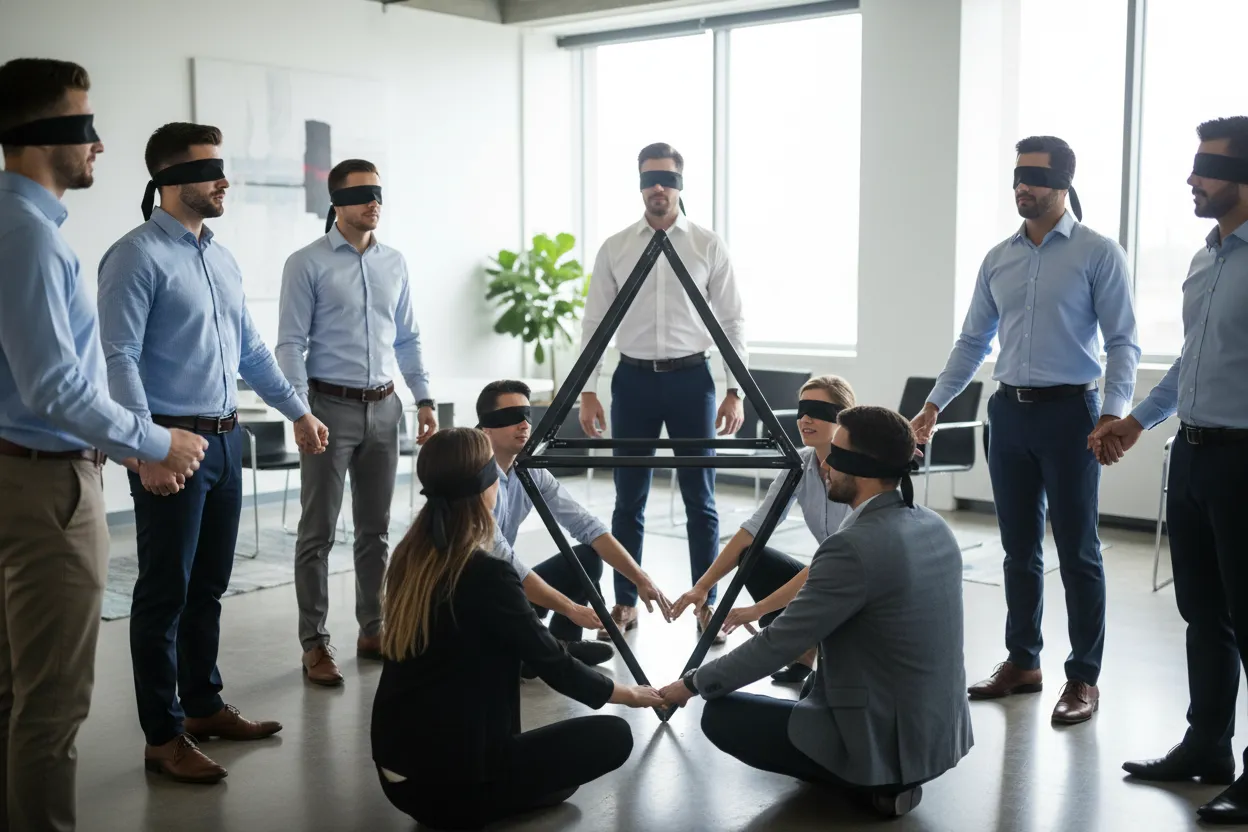

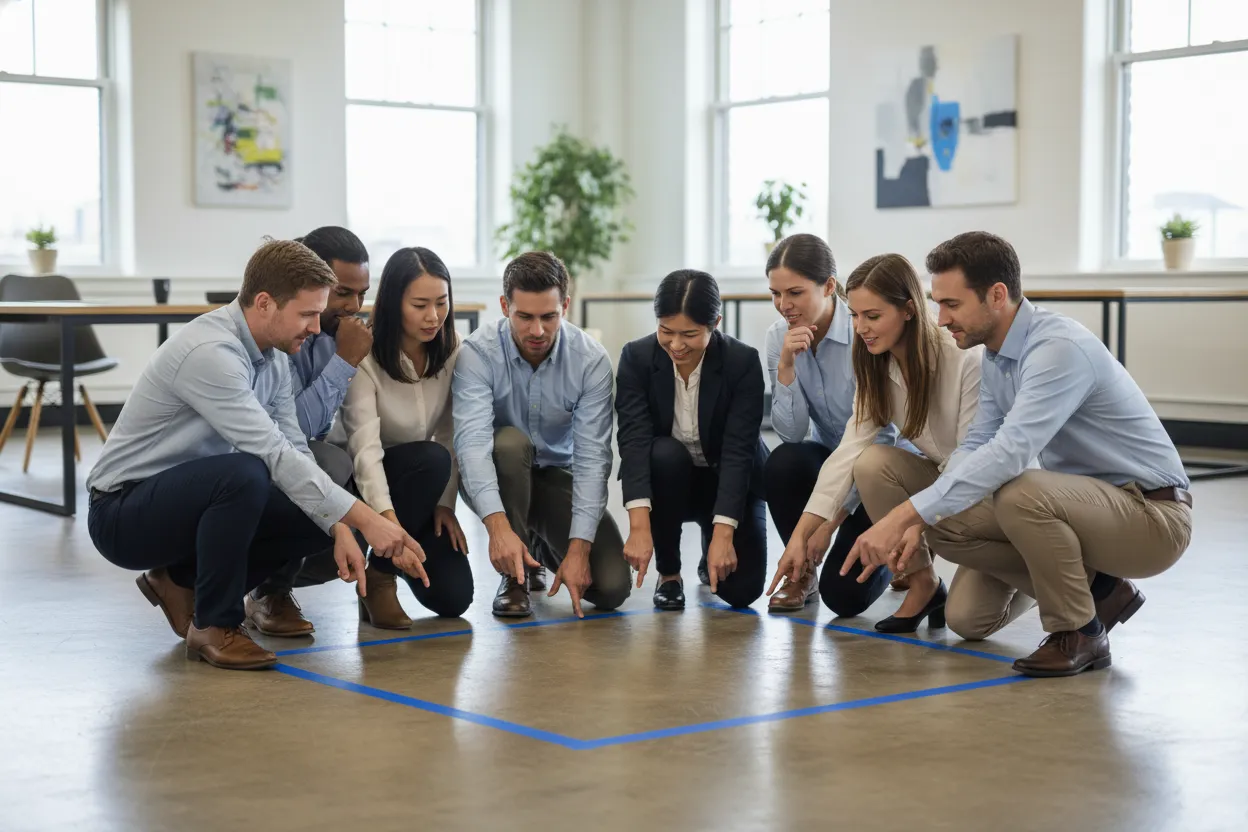
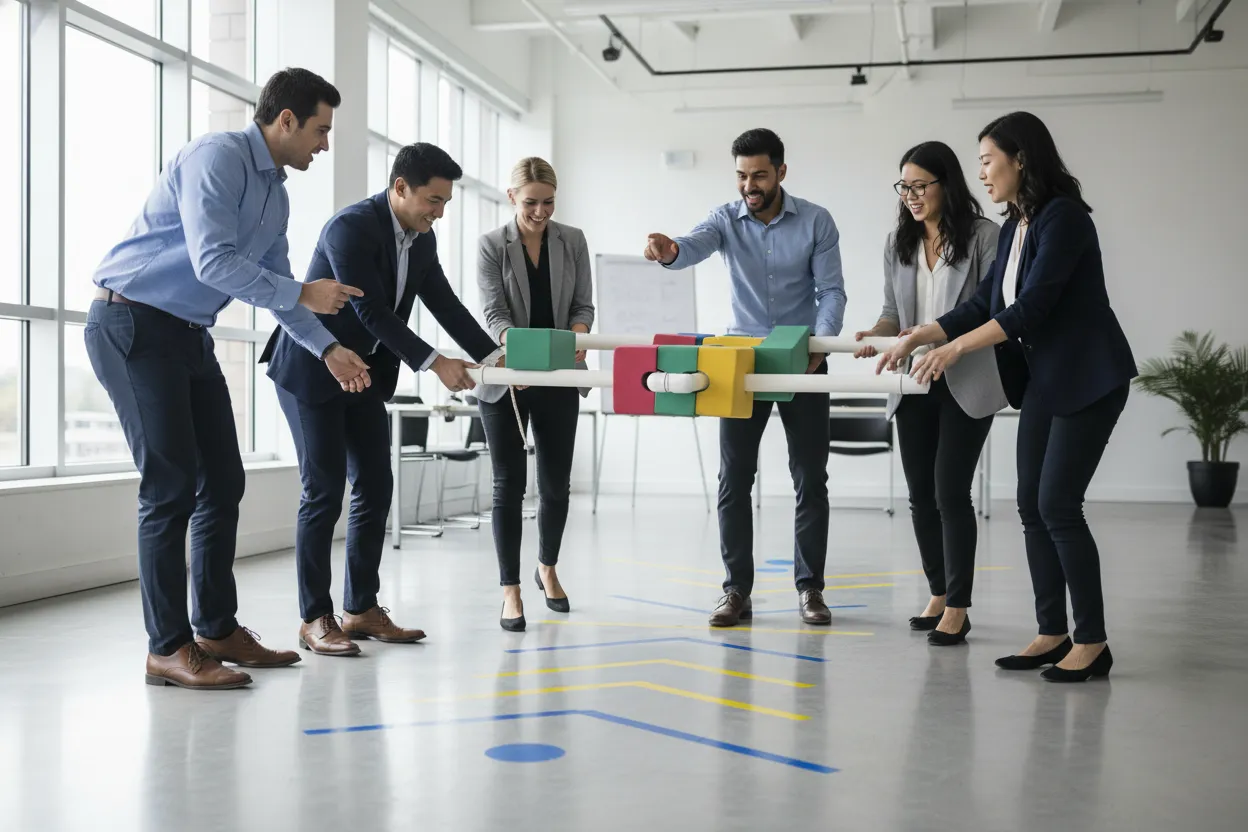


.svg "Click Here to Follow on Medium")
.svg)



.svg)


.svg)
.svg)
.svg)

