The AI Revolution at Work: Essential Insights for 2026
.webp)

.svg "edstellar")

Are we using AI in the right places, at the right scale?
That’s the question most organizations are facing right now. As AI becomes embedded across functions, companies are beginning to make structural and organizational changes to unlock future value from generative AI, and large enterprises are leading the way.
Recent McKinsey research shows just how fast things have moved: around 88% of organizations now use AI in at least one business function, up from 78% the year before. Yet only a minority have managed to scale it beyond pilots, with many still stuck in experimentation mode rather than true transformation.
The early wins are real. Companies report faster workflows, leaner operations, and lower error rates when AI is applied to well-chosen use cases. But the gap is widening between organizations that simply “have AI somewhere” and those that are deliberately rewiring how decisions are made, how work is organized, and how people are developed.
That’s the real story of AI at work in 2026: it’s less about the technology itself and more about where you deploy it, how you govern it, and how ready your people and workflows are to change.
This article breaks down five key transformations already reshaping work and offers a practical roadmap to help leaders turn AI from isolated tools into a strategic advantage.

AI-driven automation has moved far beyond simple task execution; it now reshapes cognitive work at scale. McKinsey notes that AI holds “a transformative potential poised to surpass even the biggest innovations of the past, from the printing press to the automobile.” Unlike previous technologies, AI doesn’t just complete tasks; it can adapt, plan, guide, and even make decisions.
This marks a new era where automation is not merely about efficiency, it’s about intelligence.
Today, AI is eliminating or streamlining repetitive, manual, and time-intensive responsibilities across every industry. Tasks such as data entry, report generation, appointment scheduling, and basic customer support now happen in seconds, not hours. Entire workflows that used to require coordination across teams can be triggered, monitored, and optimized automatically.
The impact is clear:
But the more profound shift is what McKinsey describes as AI’s ability to automate cognitive functions, something no technology in history has been capable of. This means AI can analyze patterns, prioritize actions, surface insights, and support decision-making with unprecedented speed and precision.
As automation becomes more sophisticated, organizations are beginning to redesign roles around AI rather than tasks. Employees are transitioning from executing routines to managing systems, validating outputs, and applying judgment where human nuance still matters.
In short: Automation is no longer about reducing effort; it’s about expanding capability. And it’s setting the foundation for how work will be re-imagined in 2026 and beyond.
The next phase of AI adoption isn’t about replacement, it’s about partnership. As Raj Koneru, CEO of Kore.ai, puts it:
“With AI, automation is not just about improving the speed of operations or productivity; it’s about becoming smarter, more efficient, and more intelligent. In this evolving landscape, we are focused on advancing technologies that enhance, rather than replace, human potential."


This captures the heart of augmentation in today’s workplace.
AI is now evolving from a task executor into an adaptive digital collaborator. Modern AI assistants learn from employees’ habits, preferences, and workflows, offering personalized support that grows more intuitive with time. Instead of adding complexity, AI simplifies work and elevates clarity.
In an augmented workforce, humans and AI contribute different but complementary strengths. AI handles pattern recognition, information retrieval, and repetitive tasks; people bring creativity, empathy, and strategic decision-making. Together, they create a performance dynamic far greater than either side can achieve alone.
This collaboration is already transforming day-to-day work. Reports that once required hours now take minutes. Insights surface instantly. Employees gain the mental bandwidth to innovate, lead, and solve complex problems, not just complete tasks. Work becomes more meaningful, not more mechanical.
Collaboration, not competition, defines the future. As Harvard Business Review notes, “AI won’t replace managers, but managers who use AI will replace those who don’t.”
Ultimately, augmentation signals a workplace redesigned with people at the center. AI amplifies human capabilities, unlocking higher-quality work and richer employee experiences. Organizations that embrace this synergy will build teams that are not only more efficient but also more capable, confident, and future-ready.
The AI era is rewriting the rulebook on what skills matter.
According to the World Economic Forum, nearly 44% of workers’ core skills will change by 2027. That means many traditional skills, manual reporting, routine administration, and repetitive analysis are losing value.
Taking their place are AI literacy, data fluency, prompt engineering, and adaptive thinking. Just as computer literacy was essential in the 1990s, AI literacy is now the new baseline for employability.
But technical skills alone aren’t enough. Human-centric capabilities like critical thinking, creativity, and emotional intelligence are growing in value because machines can’t replicate them.
This shift calls for a culture of continuous learning. Employees must embrace upskilling as a career strategy, while organizations must invest in structured learning programs to close the AI skills gap.
Those who adapt will not only stay relevant, they’ll lead the way in shaping the new digital workforce.
AI isn’t just a tool; it’s a workforce architect, reshaping how work gets done from the ground up. Forward-thinking organizations are no longer simply adding AI to old workflows; they’re building AI-first systems that streamline processes end to end.
Transformation for the sake of transformation is not enough. Effective leaders navigate this landscape by understanding the problems they face and identifying AI solutions as problem solvers. This is how meaningful transformation happens, by aligning technology with purpose, not just innovation.
Examples of AI-driven workflow reinvention:
This reinvention delivers massive results. Tasks that once took weeks now happen in hours, decision-making cycles shrink, and collaboration across departments becomes seamless.
However, faster automation introduces a new challenge: the human bottleneck. As AI accelerates execution, delays often occur in approvals, oversight, or ethical reviews. Employees shift from content creators to content curators, ensuring AI-generated work meets brand, quality, and ethical standards.
In the AI-powered workplace, success isn’t about doing more; it’s about doing what matters most, faster, smarter, and with purpose.
No AI transformation succeeds without cultural transformation.
Leaders must shift from risk-averse management to experimentation-friendly leadership. Instead of fearing AI, teams should see it as an opportunity to innovate.
The best AI cultures are built on trust and transparency. Employees must understand how AI decisions are made and why they can trust them. Building responsible AI practices with clear ethical guidelines is no longer optional.
At the same time, leaders must address the emotional side of change. Many employees fear being replaced or left behind. Clear communication, reskilling programs, and a shared sense of purpose help counter this anxiety.
Generational attitudes also play a role. Younger professionals tend to embrace AI tools readily, while others may need tailored training and support.
Ultimately, a thriving AI culture balances technology with humanity. It encourages curiosity, collaboration, and compassion because the future of work is not just bright, it’s empathetic.
Leaders must evolve from strategists to AI enablers. Their role is to champion ethical AI, foster trust, and empower teams through data-driven decision-making. Investing in AI literacy and emotional intelligence will be critical to lead effectively in this new age.
AI is not a threat; it’s a catalyst for personal growth. Employees should embrace it as an assistant, learning to collaborate with tools that make them faster, more innovative, and more creative. Upskilling and adaptability are no longer optional; they are the new currency of career success.
AI adoption requires structural change. Companies must redesign workflows, reimagine metrics, and nurture a culture of innovation. Those that prioritize responsible AI and human development will not only stay competitive; they’ll become industry leaders.
AI transformation is not about tools alone; it’s about aligning technology with strategic business outcomes. This roadmap provides a 30/60/90-day plan to embed AI with governance, accountability, and measurable value. Each phase builds on the previous, ensuring momentum, risk management, and ROI.
Objective: Establish governance, risk controls, and identify high-impact pilot use cases.
Objective: Run pilots, measure outcomes, and refine implementation for scaling.
Objective: Transform successful pilots into strategic, organization-wide AI initiatives.
Imagine the workplace of 2026. AI is everywhere, not as a novelty, but as an invisible co-worker.
Meetings summarize themselves. Reports generate automatically. Marketing campaigns adapt in real time. Employees use AI copilots to analyze, ideate, and deliver results faster than ever before.
Work becomes more creative, more strategic, and more human. People spend less time on repetition and more time on innovation.
But the most significant transformation isn’t in the tools, it’s in the mindset. Teams that once feared change now thrive on it. Leaders see AI as an ally, not a risk. Collaboration is seamless, productivity is higher, and decisions are smarter.
This is the AI workplace of 2026, where technology amplifies humanity, and success belongs to those who learn, adapt, and lead with purpose.
The AI revolution isn’t about replacing humans; it’s about reinventing how we work and grow. Automation is streamlining operations, augmentation is enhancing potential, skills are shifting rapidly, and cultures are evolving to balance trust with innovation.
This is not just a technological shift, it’s a human one. The future belongs to the curious, the adaptable, and the courageous.
Instead of asking, “Will AI take my job?” the smarter question is, “How can I use AI to make my job and myself better?”
So embrace the revolution. Learn it. Lead it. And let AI help you do what you were always meant to do: create, connect, and make an impact.
AI transformation isn’t just about technology; it’s about people.
At Edstellar, we help organizations bridge the skills gap through tailored AI literacy and digital transformation programs.
From AI fundamentals to advanced data science and MLOps, Edstellar enables teams to thrive confidently in the age of intelligent transformation.
Ready to future-proof your workforce? Explore AI Learning Programs at Edstellar
Empower your teams. Accelerate innovation. Lead the AI revolution.
#On-site #Virtual #GroupTraining #Customized
Explore 2000+ industry ready instructor-led training programs.

Create dynamic leaders and cohesive teams. Learn more now!

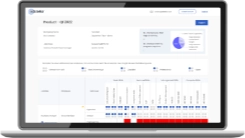
Do a quick Skill gap analysis with Edstellar’s Free Skill Matrix tool

Unlock premium resources, tools, and frameworks designed for HR and learning professionals. Our L&D Hub gives you everything needed to elevate your organization's training approach.
Access L&D Hub Resources.svg)
.svg)
.svg)
.svg)

.svg)


.svg "Click Here to Follow on Medium")
.svg)


