Role-play, reflection, and simulation build empathy, resilience, and adaptability.
Open dialogue and stakeholder mapping reduce resistance during transitions.
Companies with strong training see 218% higher income per employee (ATD).
Choosing context-appropriate exercises drives smoother, more successful change.
Change management activities give organizations a structured, repeatable method for guiding employees through organizational change, reducing resistance before it escalates, and aligning team behavior with new strategic directions. Connecting change management training to hands-on exercises, games, and facilitated workshops creates a learning environment where employees do not simply hear about transformation but actively experience and rehearse it. According to Gallup research, only 23% of employees globally are engaged at work, a figure that drops sharply during poorly managed transitions.
Team-building activities designed for change management give employees a low-stakes environment to voice concerns, surface hidden resistance, and rehearse new behaviours before they are required in live operations. The most effective exercises combine reflective individual tasks with collaborative group challenges, ensuring that both personal mindsets and collective team dynamics shift in alignment with the organizational change goal. Thoughtfully chosen activities also accelerate trust between employees and leadership, a factor the APA Work in America survey identifies as a primary determinant of employee wellbeing during periods of significant workplace transformation.
The 45 change management activities, games, and exercises in this guide cover every stage of the change journey, from surfacing resistance on day one to embedding new ways of working at day ninety. Each activity includes structured facilitation guidance, learning outcomes, and adaptation notes for remote and hybrid delivery so that L&D professionals and managers can run effective sessions regardless of team size, format, or industry context.
Author Insight
"Change is uncomfortable, and no amount of communication decks will fix that. The exercises that actually help teams navigate change acknowledge resistance, build psychological safety, and let people practice adapting in low stakes scenarios before the real transition hits.
"
Subbaiah M U
✓ 24+ years of experience leading organizational transformation and large scale change across training operations, technology adoption, and team restructuring.
What is Change Management in 2026?
Change management is the structured process of preparing, supporting, and guiding individuals, teams, and organizations through planned transitions. Whether the trigger is a new technology rollout, a process redesign, or a broader cultural transformation, effective change management reduces disruption, accelerates adoption, and ensures that strategic intent translates into lasting behavioural change at every level of the organization.
Structured change management workshop activities engage employees directly in the transition process, aligning them with new goals and minimizing resistance through experience rather than instruction alone. Organizations that invest in organizational resilience training alongside change exercises consistently report stronger adoption rates, lower attrition during transitions, and greater leadership confidence in managing future change cycles.
45 Best Change Management Activities, Games & Exercises for Employees
Explore our curated selection of the best 45 change management team-building games and activities below. Each exercise includes a guided interactive demo, materials, learning outcomes, and expert facilitator tips.
👤 Age 18+👥 6-20 Players⏱ 45 min
1. Resistance Identification
Small groups role-play common objections to change, then brainstorm response strategies while the facilitator emphasises empathy and listening.
EmpathyCommunicationInfluence
1 Interactive Guided Demo
Step 1 of 6
👆
🛡️
🛑🔍💡
📋🟨🖍️🖊️🟨
🟨
📋✨🎯🤝
✨✨
🖍️✅🌟💡
🖊️
🎯🤝📌💡
✨✨
🏆
🎉🌟✨🎊💫
Welcome to Resistance Identification
Name objections, answer with empathy.
👆 Click anywhere to continue
2 Activity Details
🛡️
Small groups role-play common objections to change, then brainstorm response strategies while the facilitator emphasises empathy and listening.
Players
👥 6-20 Players
Recommended
Time
⏱ 45 min
Activity + debrief
Format
Team Game
Facilitated
Skill
Empathy
Primary outcome
What You'll Need
Prepare these items before the activity begins so the session runs smoothly.
📋
Scenario Cards
Required for activity
🟨
Sticky Notes
Required for activity
🖍️
Markers
Required for activity
🖊️
Pens
Required for activity
Step-by-Step Walkthrough
1
Set the Frame
Discuss why resistance is normal and useful to surface.
5 min
2
Role-Play Objections
Small groups voice common objections aloud.
5 min
3
Brainstorm Responses
Teams craft empathetic responses to each objection.
5 min
4
Share and Refine
Present responses and refine with group feedback.
5 min
Ground Rules
✓ Do
Explain the goal and constraints before starting.
Give every participant a clear role or opportunity to contribute.
Keep the timer visible and the rules consistent.
Encourage teams to explain their reasoning.
Close with a structured debrief.
✕ Don't
Do not let one person dominate the activity.
Do not change the rules midway unless it is a planned variation.
Do not skip reflection after the activity.
Do not make the activity personal or uncomfortable.
Do not focus only on winning; focus on learning.
What Your Team Will Learn
These outcomes should be reinforced during the debrief.
🧠
Outcome
Empathy
Participants practice this capability through the activity and reinforce it through discussion.
🛠️
Outcome
Communication
Participants practice this capability through the activity and reinforce it through discussion.
🤝
Outcome
Influence
Participants practice this capability through the activity and reinforce it through discussion.
⏱
Outcome
Insight
Participants practice this capability through the activity and reinforce it through discussion.
💡
Outcome
Confidence
Participants practice this capability through the activity and reinforce it through discussion.
📊
Outcome
Resilience
Participants practice this capability through the activity and reinforce it through discussion.
Ways to Mix It Up
🔁
Repeat Round
Run a second round after debrief to test improved thinking.
🤐
Silent Mode
Add a short no-speaking phase to test non-verbal coordination.
💰
Budget Mode
Assign costs or limits to resources to force prioritization.
🌐
Virtual Edition
Adapt the activity using breakout rooms and shared documents.
🏆
Scored Challenge
Award points for creativity, teamwork, and quality of reasoning.
Debrief Questions
Use these prompts to convert the activity into workplace learning.
What did your team do first during Resistance Identification?
Which assumption turned out to be wrong?
How did communication affect the result?
Where did the team lose time or clarity?
What workplace situation feels similar to this activity?
What would you change if you ran the activity again?
3 Tips for Facilitators
⏱
Time Box Clearly
Use a visible timer so participants feel the constraint and pace their decisions.
🧑🏫
Facilitate, Don't Solve
Guide with questions instead of giving answers.
📌
Capture Observations
Note communication patterns, decision points, and bottlenecks.
💬
Debrief Deeply
Reserve enough time to connect the activity to workplace behavior.
4 Real-World Applications
🎯
Quarterly Planning
Translate annual goals into focused, time-bound milestones.
📈
Performance Reviews
Anchor 1:1s to specific, measurable outcomes.
🤝
Team Alignment
Make individual work visible so the team can support each other.
🚀
Career Development
Turn reflection into structured, repeatable growth plans.
👤 Age 18+👥 5-15 Players⏱ 60 min
2. Force-Field Analysis
Teams brainstorm forces supporting and resisting a change, score impact, and design strategies that strengthen drivers while reducing barriers.
StrategyAnalysisPlanning
1 Interactive Guided Demo
Step 1 of 7
👆
⚡
⚖️🧲💪
📋🖍️🟨📝🖍️
🖍️
📋✨🎯🤝
✨✨
🟨✅🌟💡
📝
🎯🤝📌💡
✨✨
💡📋🖍️🟨📝
🏆
🎉🌟✨🎊💫
Welcome to Force-Field Analysis
Weigh forces that push and pull change.
👆 Click anywhere to continue
2 Activity Details
⚡
Teams brainstorm forces supporting and resisting a change, score impact, and design strategies that strengthen drivers while reducing barriers.
Players
👥 5-15 Players
Recommended
Time
⏱ 60 min
Activity + debrief
Format
Team Game
Facilitated
Skill
Strategic Thinking
Primary outcome
What You'll Need
Prepare these items before the activity begins so the session runs smoothly.
Capture forces holding the change back on another column.
5 min
4
Score Impact
Assign impact scores to each force and total each side.
5 min
5
Design Strategies
Plan actions that boost drivers and weaken restraints.
5 min
Ground Rules
✓ Do
Explain the goal and constraints before starting.
Give every participant a clear role or opportunity to contribute.
Keep the timer visible and the rules consistent.
Encourage teams to explain their reasoning.
Close with a structured debrief.
✕ Don't
Do not let one person dominate the activity.
Do not change the rules midway unless it is a planned variation.
Do not skip reflection after the activity.
Do not make the activity personal or uncomfortable.
Do not focus only on winning; focus on learning.
What Your Team Will Learn
These outcomes should be reinforced during the debrief.
🧠
Outcome
Strategy
Participants practice this capability through the activity and reinforce it through discussion.
🛠️
Outcome
Analysis
Participants practice this capability through the activity and reinforce it through discussion.
🤝
Outcome
Planning
Participants practice this capability through the activity and reinforce it through discussion.
⏱
Outcome
Teamwork
Participants practice this capability through the activity and reinforce it through discussion.
💡
Outcome
Commitment
Participants practice this capability through the activity and reinforce it through discussion.
📊
Outcome
Clarity
Participants practice this capability through the activity and reinforce it through discussion.
Ways to Mix It Up
🔁
Repeat Round
Run a second round after debrief to test improved thinking.
🤐
Silent Mode
Add a short no-speaking phase to test non-verbal coordination.
💰
Budget Mode
Assign costs or limits to resources to force prioritization.
🌐
Virtual Edition
Adapt the activity using breakout rooms and shared documents.
🏆
Scored Challenge
Award points for creativity, teamwork, and quality of reasoning.
Debrief Questions
Use these prompts to convert the activity into workplace learning.
What did your team do first during Force-Field Analysis?
Which assumption turned out to be wrong?
How did communication affect the result?
Where did the team lose time or clarity?
What workplace situation feels similar to this activity?
What would you change if you ran the activity again?
3 Tips for Facilitators
⏱
Time Box Clearly
Use a visible timer so participants feel the constraint and pace their decisions.
🧑🏫
Facilitate, Don't Solve
Guide with questions instead of giving answers.
📌
Capture Observations
Note communication patterns, decision points, and bottlenecks.
💬
Debrief Deeply
Reserve enough time to connect the activity to workplace behavior.
4 Real-World Applications
🎯
Quarterly Planning
Translate annual goals into focused, time-bound milestones.
📈
Performance Reviews
Anchor 1:1s to specific, measurable outcomes.
🤝
Team Alignment
Make individual work visible so the team can support each other.
🚀
Career Development
Turn reflection into structured, repeatable growth plans.
👤 Age 18+👥 5+ Players⏱ 10-15 min
3. Cross Your Arms: Adaptability
Participants cross their arms in the usual way then reverse the position, surfacing the discomfort of small changes and linking it to larger organizational shifts.
AdaptabilitySelf-ReflectionMindset
1 Interactive Guided Demo
Step 1 of 6
👆
🤝
💪🔀🧠
🪑📝🖊️⏱️📝
📝
📋✨🎯🤝
✨✨
🖊️✅🌟💡
⏱️
🎯🤝📌💡
✨✨
🏆
🎉🌟✨🎊💫
Welcome to Cross Your Arms
Feel discomfort of change in a single gesture.
👆 Click anywhere to continue
2 Activity Details
🤝
Participants cross their arms in the usual way then reverse the position, surfacing the discomfort of small changes and linking it to larger organizational shifts.
Players
👥 5+ Players
Recommended
Time
⏱ 10-15 min
Activity + debrief
Format
Team Game
Facilitated
Skill
Adaptability
Primary outcome
What You'll Need
Prepare these items before the activity begins so the session runs smoothly.
🪑
Open Space
Required for activity
📝
Reflection Sheet
Required for activity
🖊️
Pens
Required for activity
⏱️
Timer
Required for activity
Step-by-Step Walkthrough
1
Cross Naturally
Ask everyone to cross their arms in their usual, comfortable way and notice how it feels.
5 min
2
Reverse the Position
Now ask participants to uncross and recross arms in the opposite way.
5 min
3
Reflect on Discomfort
Invite participants to describe the discomfort and link it to organizational change.
5 min
4
Discuss Adaptability
Facilitate a group conversation about embracing discomfort as a step toward adaptability.
5 min
Ground Rules
✓ Do
Explain the goal and constraints before starting.
Give every participant a clear role or opportunity to contribute.
Keep the timer visible and the rules consistent.
Encourage teams to explain their reasoning.
Close with a structured debrief.
✕ Don't
Do not let one person dominate the activity.
Do not change the rules midway unless it is a planned variation.
Do not skip reflection after the activity.
Do not make the activity personal or uncomfortable.
Do not focus only on winning; focus on learning.
What Your Team Will Learn
These outcomes should be reinforced during the debrief.
🧠
Outcome
Adaptability
Participants practice this capability through the activity and reinforce it through discussion.
🛠️
Outcome
Self-Awareness
Participants practice this capability through the activity and reinforce it through discussion.
🤝
Outcome
Resilience
Participants practice this capability through the activity and reinforce it through discussion.
⏱
Outcome
Mindset
Participants practice this capability through the activity and reinforce it through discussion.
💡
Outcome
Empathy
Participants practice this capability through the activity and reinforce it through discussion.
📊
Outcome
Openness
Participants practice this capability through the activity and reinforce it through discussion.
Ways to Mix It Up
🔁
Repeat Round
Run a second round after debrief to test improved thinking.
🤐
Silent Mode
Add a short no-speaking phase to test non-verbal coordination.
💰
Budget Mode
Assign costs or limits to resources to force prioritization.
🌐
Virtual Edition
Adapt the activity using breakout rooms and shared documents.
🏆
Scored Challenge
Award points for creativity, teamwork, and quality of reasoning.
Debrief Questions
Use these prompts to convert the activity into workplace learning.
What did your team do first during Cross Your Arms?
Which assumption turned out to be wrong?
How did communication affect the result?
Where did the team lose time or clarity?
What workplace situation feels similar to this activity?
What would you change if you ran the activity again?
3 Tips for Facilitators
⏱
Time Box Clearly
Use a visible timer so participants feel the constraint and pace their decisions.
🧑🏫
Facilitate, Don't Solve
Guide with questions instead of giving answers.
📌
Capture Observations
Note communication patterns, decision points, and bottlenecks.
💬
Debrief Deeply
Reserve enough time to connect the activity to workplace behavior.
4 Real-World Applications
🎯
Quarterly Planning
Translate annual goals into focused, time-bound milestones.
📈
Performance Reviews
Anchor 1:1s to specific, measurable outcomes.
🤝
Team Alignment
Make individual work visible so the team can support each other.
🚀
Career Development
Turn reflection into structured, repeatable growth plans.
👤 Age 18+👥 5-30 Players⏱ 30 min
4. Change Readiness Survey
Project teams complete a concise readiness survey, leaders analyze responses for strengths and concerns, and a follow-up meeting plans next steps.
AssessmentReadinessPlanning
1 Interactive Guided Demo
Step 1 of 6
👆
📈
📋✅📊
💻📊📋📝📊
📊
📋✨🎯🤝
✨✨
📋✅🌟💡
📝
🎯🤝📌💡
✨✨
🏆
🎉🌟✨🎊💫
Welcome to Change Readiness Survey
Measure readiness before the project starts.
👆 Click anywhere to continue
2 Activity Details
📈
Project teams complete a concise readiness survey, leaders analyze responses for strengths and concerns, and a follow-up meeting plans next steps.
Players
👥 5-30 Players
Recommended
Time
⏱ 30 min
Activity + debrief
Format
Team Game
Facilitated
Skill
Assessment
Primary outcome
What You'll Need
Prepare these items before the activity begins so the session runs smoothly.
💻
Survey Tool
Required for activity
📊
Data Tools
Required for activity
📋
Question Set
Required for activity
📝
Notes
Required for activity
Step-by-Step Walkthrough
1
Create the Survey
Draft a short survey on understanding, concerns, and support.
5 min
2
Distribute Anonymously
Share via an online tool to encourage honest answers.
5 min
3
Analyze Responses
Look for trends in strengths and concerns.
5 min
4
Follow-Up Meeting
Discuss results and plan next steps with the team.
5 min
Ground Rules
✓ Do
Explain the goal and constraints before starting.
Give every participant a clear role or opportunity to contribute.
Keep the timer visible and the rules consistent.
Encourage teams to explain their reasoning.
Close with a structured debrief.
✕ Don't
Do not let one person dominate the activity.
Do not change the rules midway unless it is a planned variation.
Do not skip reflection after the activity.
Do not make the activity personal or uncomfortable.
Do not focus only on winning; focus on learning.
What Your Team Will Learn
These outcomes should be reinforced during the debrief.
🧠
Outcome
Assessment
Participants practice this capability through the activity and reinforce it through discussion.
🛠️
Outcome
Readiness
Participants practice this capability through the activity and reinforce it through discussion.
🤝
Outcome
Planning
Participants practice this capability through the activity and reinforce it through discussion.
⏱
Outcome
Awareness
Participants practice this capability through the activity and reinforce it through discussion.
💡
Outcome
Trust
Participants practice this capability through the activity and reinforce it through discussion.
📊
Outcome
Engagement
Participants practice this capability through the activity and reinforce it through discussion.
Ways to Mix It Up
🔁
Repeat Round
Run a second round after debrief to test improved thinking.
🤐
Silent Mode
Add a short no-speaking phase to test non-verbal coordination.
💰
Budget Mode
Assign costs or limits to resources to force prioritization.
🌐
Virtual Edition
Adapt the activity using breakout rooms and shared documents.
🏆
Scored Challenge
Award points for creativity, teamwork, and quality of reasoning.
Debrief Questions
Use these prompts to convert the activity into workplace learning.
What did your team do first during Change Readiness Survey?
Which assumption turned out to be wrong?
How did communication affect the result?
Where did the team lose time or clarity?
What workplace situation feels similar to this activity?
What would you change if you ran the activity again?
3 Tips for Facilitators
⏱
Time Box Clearly
Use a visible timer so participants feel the constraint and pace their decisions.
🧑🏫
Facilitate, Don't Solve
Guide with questions instead of giving answers.
📌
Capture Observations
Note communication patterns, decision points, and bottlenecks.
💬
Debrief Deeply
Reserve enough time to connect the activity to workplace behavior.
4 Real-World Applications
🎯
Quarterly Planning
Translate annual goals into focused, time-bound milestones.
📈
Performance Reviews
Anchor 1:1s to specific, measurable outcomes.
🤝
Team Alignment
Make individual work visible so the team can support each other.
🚀
Career Development
Turn reflection into structured, repeatable growth plans.
👤 Age 18+👥 8-20 Players⏱ 60-90 min
5. Vision Alignment: Team Goals
Small groups outline their vision for organizational success, present findings, and identify gaps between team and organizational visions to build shared purpose.
VisionAlignmentCollaboration
1 Interactive Guided Demo
Step 1 of 7
👆
🧭
🎯🧭🤝
📋🖍️🟨🖊️🖍️
🖍️
📋✨🎯🤝
✨✨
🟨✅🌟💡
🖊️
🎯🤝📌💡
✨✨
💡📋🖍️🟨🖊️
🏆
🎉🌟✨🎊💫
Welcome to Vision Alignment
Align team visions with the bigger picture.
👆 Click anywhere to continue
2 Activity Details
🧭
Small groups outline their vision for organizational success, present findings, and identify gaps between team and organizational visions to build shared purpose.
Players
👥 8-20 Players
Recommended
Time
⏱ 60-90 min
Activity + debrief
Format
Team Game
Facilitated
Skill
Vision
Primary outcome
What You'll Need
Prepare these items before the activity begins so the session runs smoothly.
📋
Flip Charts
Required for activity
🖍️
Markers
Required for activity
🟨
Sticky Notes
Required for activity
🖊️
Pens
Required for activity
Step-by-Step Walkthrough
1
Share Org Vision
Restate the organizational vision in plain terms.
5 min
2
Group Visioning
Small groups draft their picture of team success.
5 min
3
Present Findings
Each group presents its vision to the room.
5 min
4
Find the Gaps
Compare drafts to the org vision and mark gaps.
5 min
5
Plan Bridges
Agree on actions that close the gaps.
5 min
Ground Rules
✓ Do
Explain the goal and constraints before starting.
Give every participant a clear role or opportunity to contribute.
Keep the timer visible and the rules consistent.
Encourage teams to explain their reasoning.
Close with a structured debrief.
✕ Don't
Do not let one person dominate the activity.
Do not change the rules midway unless it is a planned variation.
Do not skip reflection after the activity.
Do not make the activity personal or uncomfortable.
Do not focus only on winning; focus on learning.
What Your Team Will Learn
These outcomes should be reinforced during the debrief.
🧠
Outcome
Vision
Participants practice this capability through the activity and reinforce it through discussion.
🛠️
Outcome
Alignment
Participants practice this capability through the activity and reinforce it through discussion.
🤝
Outcome
Collaboration
Participants practice this capability through the activity and reinforce it through discussion.
⏱
Outcome
Purpose
Participants practice this capability through the activity and reinforce it through discussion.
💡
Outcome
Engagement
Participants practice this capability through the activity and reinforce it through discussion.
📊
Outcome
Clarity
Participants practice this capability through the activity and reinforce it through discussion.
Ways to Mix It Up
🔁
Repeat Round
Run a second round after debrief to test improved thinking.
🤐
Silent Mode
Add a short no-speaking phase to test non-verbal coordination.
💰
Budget Mode
Assign costs or limits to resources to force prioritization.
🌐
Virtual Edition
Adapt the activity using breakout rooms and shared documents.
🏆
Scored Challenge
Award points for creativity, teamwork, and quality of reasoning.
Debrief Questions
Use these prompts to convert the activity into workplace learning.
What did your team do first during Vision Alignment?
Which assumption turned out to be wrong?
How did communication affect the result?
Where did the team lose time or clarity?
What workplace situation feels similar to this activity?
What would you change if you ran the activity again?
3 Tips for Facilitators
⏱
Time Box Clearly
Use a visible timer so participants feel the constraint and pace their decisions.
🧑🏫
Facilitate, Don't Solve
Guide with questions instead of giving answers.
📌
Capture Observations
Note communication patterns, decision points, and bottlenecks.
💬
Debrief Deeply
Reserve enough time to connect the activity to workplace behavior.
4 Real-World Applications
🎯
Quarterly Planning
Translate annual goals into focused, time-bound milestones.
📈
Performance Reviews
Anchor 1:1s to specific, measurable outcomes.
🤝
Team Alignment
Make individual work visible so the team can support each other.
🚀
Career Development
Turn reflection into structured, repeatable growth plans.
👤 Age 18+👥 5-15 Players⏱ 60 min
6. Communication Planning
Project teams co-develop a communication plan covering key messages, audiences, channels, and timing, then agree on feedback loops and individual roles.
CommunicationPlanningClarity
1 Interactive Guided Demo
Step 1 of 6
👆
📣
📣📝📅
📋📝🖍️🖊️📝
📝
📋✨🎯🤝
✨✨
🖍️✅🌟💡
🖊️
🎯🤝📌💡
✨✨
🏆
🎉🌟✨🎊💫
Welcome to Communication Planning
Plan the message, audience, and timing.
👆 Click anywhere to continue
2 Activity Details
📣
Project teams co-develop a communication plan covering key messages, audiences, channels, and timing, then agree on feedback loops and individual roles.
Players
👥 5-15 Players
Recommended
Time
⏱ 60 min
Activity + debrief
Format
Team Game
Facilitated
Skill
Communication
Primary outcome
What You'll Need
Prepare these items before the activity begins so the session runs smoothly.
📋
Comms Templates
Required for activity
📝
Feedback Tools
Required for activity
🖍️
Markers
Required for activity
🖊️
Pens
Required for activity
Step-by-Step Walkthrough
1
Discuss Why Comms Matter
Explain how clear messaging drives engagement.
5 min
2
Develop the Plan
Draft messages, audiences, channels, and timing.
5 min
3
Build Feedback Loops
Decide how to collect feedback on messaging.
5 min
4
Finalize Roles
Confirm who delivers what and by when.
5 min
Ground Rules
✓ Do
Explain the goal and constraints before starting.
Give every participant a clear role or opportunity to contribute.
Keep the timer visible and the rules consistent.
Encourage teams to explain their reasoning.
Close with a structured debrief.
✕ Don't
Do not let one person dominate the activity.
Do not change the rules midway unless it is a planned variation.
Do not skip reflection after the activity.
Do not make the activity personal or uncomfortable.
Do not focus only on winning; focus on learning.
What Your Team Will Learn
These outcomes should be reinforced during the debrief.
🧠
Outcome
Communication
Participants practice this capability through the activity and reinforce it through discussion.
🛠️
Outcome
Planning
Participants practice this capability through the activity and reinforce it through discussion.
🤝
Outcome
Clarity
Participants practice this capability through the activity and reinforce it through discussion.
⏱
Outcome
Engagement
Participants practice this capability through the activity and reinforce it through discussion.
💡
Outcome
Alignment
Participants practice this capability through the activity and reinforce it through discussion.
📊
Outcome
Trust
Participants practice this capability through the activity and reinforce it through discussion.
Ways to Mix It Up
🔁
Repeat Round
Run a second round after debrief to test improved thinking.
🤐
Silent Mode
Add a short no-speaking phase to test non-verbal coordination.
💰
Budget Mode
Assign costs or limits to resources to force prioritization.
🌐
Virtual Edition
Adapt the activity using breakout rooms and shared documents.
🏆
Scored Challenge
Award points for creativity, teamwork, and quality of reasoning.
Debrief Questions
Use these prompts to convert the activity into workplace learning.
What did your team do first during Communication Planning?
Which assumption turned out to be wrong?
How did communication affect the result?
Where did the team lose time or clarity?
What workplace situation feels similar to this activity?
What would you change if you ran the activity again?
3 Tips for Facilitators
⏱
Time Box Clearly
Use a visible timer so participants feel the constraint and pace their decisions.
🧑🏫
Facilitate, Don't Solve
Guide with questions instead of giving answers.
📌
Capture Observations
Note communication patterns, decision points, and bottlenecks.
💬
Debrief Deeply
Reserve enough time to connect the activity to workplace behavior.
4 Real-World Applications
🎯
Quarterly Planning
Translate annual goals into focused, time-bound milestones.
📈
Performance Reviews
Anchor 1:1s to specific, measurable outcomes.
🤝
Team Alignment
Make individual work visible so the team can support each other.
🚀
Career Development
Turn reflection into structured, repeatable growth plans.
👤 Age 18+👥 5-15 Players⏱ 45 min
7. Stakeholder Mapping
Teams identify key stakeholders, place them on a visual map by support and resistance level, then build engagement strategies tailored to each group.
StakeholdersStrategyInfluence
1 Interactive Guided Demo
Step 1 of 6
👆
🕸️
🗺️👥📌
📋🖍️🟨🖊️🖍️
🖍️
📋✨🎯🤝
✨✨
🟨✅🌟💡
🖊️
🎯🤝📌💡
✨✨
🏆
🎉🌟✨🎊💫
Welcome to Stakeholder Mapping
See who supports and who resists at a glance.
👆 Click anywhere to continue
2 Activity Details
🕸️
Teams identify key stakeholders, place them on a visual map by support and resistance level, then build engagement strategies tailored to each group.
Players
👥 5-15 Players
Recommended
Time
⏱ 45 min
Activity + debrief
Format
Team Game
Facilitated
Skill
Stakeholder Management
Primary outcome
What You'll Need
Prepare these items before the activity begins so the session runs smoothly.
📋
Map Templates
Required for activity
🖍️
Markers
Required for activity
🟨
Sticky Notes
Required for activity
🖊️
Pens
Required for activity
Step-by-Step Walkthrough
1
Introduce the Map
Explain what stakeholder mapping reveals.
5 min
2
Identify Stakeholders
List individuals and groups affected by the change.
5 min
3
Create the Visual Map
Place each stakeholder by support and resistance.
5 min
4
Build Engagement Plans
Design tailored actions for each segment.
5 min
Ground Rules
✓ Do
Explain the goal and constraints before starting.
Give every participant a clear role or opportunity to contribute.
Keep the timer visible and the rules consistent.
Encourage teams to explain their reasoning.
Close with a structured debrief.
✕ Don't
Do not let one person dominate the activity.
Do not change the rules midway unless it is a planned variation.
Do not skip reflection after the activity.
Do not make the activity personal or uncomfortable.
Do not focus only on winning; focus on learning.
What Your Team Will Learn
These outcomes should be reinforced during the debrief.
🧠
Outcome
Stakeholders
Participants practice this capability through the activity and reinforce it through discussion.
🛠️
Outcome
Strategy
Participants practice this capability through the activity and reinforce it through discussion.
🤝
Outcome
Influence
Participants practice this capability through the activity and reinforce it through discussion.
⏱
Outcome
Awareness
Participants practice this capability through the activity and reinforce it through discussion.
💡
Outcome
Engagement
Participants practice this capability through the activity and reinforce it through discussion.
📊
Outcome
Alignment
Participants practice this capability through the activity and reinforce it through discussion.
Ways to Mix It Up
🔁
Repeat Round
Run a second round after debrief to test improved thinking.
🤐
Silent Mode
Add a short no-speaking phase to test non-verbal coordination.
💰
Budget Mode
Assign costs or limits to resources to force prioritization.
🌐
Virtual Edition
Adapt the activity using breakout rooms and shared documents.
🏆
Scored Challenge
Award points for creativity, teamwork, and quality of reasoning.
Debrief Questions
Use these prompts to convert the activity into workplace learning.
What did your team do first during Stakeholder Mapping?
Which assumption turned out to be wrong?
How did communication affect the result?
Where did the team lose time or clarity?
What workplace situation feels similar to this activity?
What would you change if you ran the activity again?
3 Tips for Facilitators
⏱
Time Box Clearly
Use a visible timer so participants feel the constraint and pace their decisions.
🧑🏫
Facilitate, Don't Solve
Guide with questions instead of giving answers.
📌
Capture Observations
Note communication patterns, decision points, and bottlenecks.
💬
Debrief Deeply
Reserve enough time to connect the activity to workplace behavior.
4 Real-World Applications
🎯
Quarterly Planning
Translate annual goals into focused, time-bound milestones.
📈
Performance Reviews
Anchor 1:1s to specific, measurable outcomes.
🤝
Team Alignment
Make individual work visible so the team can support each other.
🚀
Career Development
Turn reflection into structured, repeatable growth plans.
Ready to Roll Out Change Management Workshops for Your Team?
Edstellar facilitators run these change management workshops on-site or virtually, fully customized to your team's goals.
Give every participant a clear role or opportunity to contribute.
Keep the timer visible and the rules consistent.
Encourage teams to explain their reasoning.
Close with a structured debrief.
✕ Don't
Do not let one person dominate the activity.
Do not change the rules midway unless it is a planned variation.
Do not skip reflection after the activity.
Do not make the activity personal or uncomfortable.
Do not focus only on winning; focus on learning.
What Your Team Will Learn
These outcomes should be reinforced during the debrief.
🧠
Outcome
Planning
Participants practice this capability through the activity and reinforce it through discussion.
🛠️
Outcome
Accountability
Participants practice this capability through the activity and reinforce it through discussion.
🤝
Outcome
Execution
Participants practice this capability through the activity and reinforce it through discussion.
⏱
Outcome
Clarity
Participants practice this capability through the activity and reinforce it through discussion.
💡
Outcome
Ownership
Participants practice this capability through the activity and reinforce it through discussion.
📊
Outcome
Momentum
Participants practice this capability through the activity and reinforce it through discussion.
Ways to Mix It Up
🔁
Repeat Round
Run a second round after debrief to test improved thinking.
🤐
Silent Mode
Add a short no-speaking phase to test non-verbal coordination.
💰
Budget Mode
Assign costs or limits to resources to force prioritization.
🌐
Virtual Edition
Adapt the activity using breakout rooms and shared documents.
🏆
Scored Challenge
Award points for creativity, teamwork, and quality of reasoning.
Debrief Questions
Use these prompts to convert the activity into workplace learning.
What did your team do first during Action Planning?
Which assumption turned out to be wrong?
How did communication affect the result?
Where did the team lose time or clarity?
What workplace situation feels similar to this activity?
What would you change if you ran the activity again?
3 Tips for Facilitators
⏱
Time Box Clearly
Use a visible timer so participants feel the constraint and pace their decisions.
🧑🏫
Facilitate, Don't Solve
Guide with questions instead of giving answers.
📌
Capture Observations
Note communication patterns, decision points, and bottlenecks.
💬
Debrief Deeply
Reserve enough time to connect the activity to workplace behavior.
4 Real-World Applications
🎯
Quarterly Planning
Translate annual goals into focused, time-bound milestones.
📈
Performance Reviews
Anchor 1:1s to specific, measurable outcomes.
🤝
Team Alignment
Make individual work visible so the team can support each other.
🚀
Career Development
Turn reflection into structured, repeatable growth plans.
👤 Age 18+👥 4-15 Players⏱ 45-60 min
9. The Change Agent
Change agents outline communication, training, and stakeholder steps, share approaches, and discuss likely challenges and solutions for leading change.
LeadershipStrategyInfluence
1 Interactive Guided Demo
Step 1 of 6
👆
🌟
🚀🔄🌟
📋🖍️📝🖊️🖍️
🖍️
📋✨🎯🤝
✨✨
📝✅🌟💡
🖊️
🎯🤝📌💡
✨✨
🏆
🎉🌟✨🎊💫
Welcome to The Change Agent
Plan the change agent playbook end to end.
👆 Click anywhere to continue
2 Activity Details
🌟
Change agents outline communication, training, and stakeholder steps, share approaches, and discuss likely challenges and solutions for leading change.
Players
👥 4-15 Players
Recommended
Time
⏱ 45-60 min
Activity + debrief
Format
Team Game
Facilitated
Skill
Leadership
Primary outcome
What You'll Need
Prepare these items before the activity begins so the session runs smoothly.
📋
Whiteboard
Required for activity
🖍️
Markers
Required for activity
📝
Notepads
Required for activity
🖊️
Pens
Required for activity
Step-by-Step Walkthrough
1
Identify Change Agents
Name the agents and the change they will lead.
5 min
2
Map Key Steps
Outline communication, training, and stakeholder plans.
5 min
3
Share Approaches
Each agent presents their plan to the group.
5 min
4
Solve Challenges
Discuss likely challenges and agree on responses.
5 min
Ground Rules
✓ Do
Explain the goal and constraints before starting.
Give every participant a clear role or opportunity to contribute.
Keep the timer visible and the rules consistent.
Encourage teams to explain their reasoning.
Close with a structured debrief.
✕ Don't
Do not let one person dominate the activity.
Do not change the rules midway unless it is a planned variation.
Do not skip reflection after the activity.
Do not make the activity personal or uncomfortable.
Do not focus only on winning; focus on learning.
What Your Team Will Learn
These outcomes should be reinforced during the debrief.
🧠
Outcome
Leadership
Participants practice this capability through the activity and reinforce it through discussion.
🛠️
Outcome
Strategy
Participants practice this capability through the activity and reinforce it through discussion.
🤝
Outcome
Influence
Participants practice this capability through the activity and reinforce it through discussion.
⏱
Outcome
Ownership
Participants practice this capability through the activity and reinforce it through discussion.
💡
Outcome
Clarity
Participants practice this capability through the activity and reinforce it through discussion.
📊
Outcome
Confidence
Participants practice this capability through the activity and reinforce it through discussion.
Ways to Mix It Up
🔁
Repeat Round
Run a second round after debrief to test improved thinking.
🤐
Silent Mode
Add a short no-speaking phase to test non-verbal coordination.
💰
Budget Mode
Assign costs or limits to resources to force prioritization.
🌐
Virtual Edition
Adapt the activity using breakout rooms and shared documents.
🏆
Scored Challenge
Award points for creativity, teamwork, and quality of reasoning.
Debrief Questions
Use these prompts to convert the activity into workplace learning.
What did your team do first during The Change Agent?
Which assumption turned out to be wrong?
How did communication affect the result?
Where did the team lose time or clarity?
What workplace situation feels similar to this activity?
What would you change if you ran the activity again?
3 Tips for Facilitators
⏱
Time Box Clearly
Use a visible timer so participants feel the constraint and pace their decisions.
🧑🏫
Facilitate, Don't Solve
Guide with questions instead of giving answers.
📌
Capture Observations
Note communication patterns, decision points, and bottlenecks.
💬
Debrief Deeply
Reserve enough time to connect the activity to workplace behavior.
4 Real-World Applications
🎯
Quarterly Planning
Translate annual goals into focused, time-bound milestones.
📈
Performance Reviews
Anchor 1:1s to specific, measurable outcomes.
🤝
Team Alignment
Make individual work visible so the team can support each other.
🚀
Career Development
Turn reflection into structured, repeatable growth plans.
👤 Age 18+👥 8-20 Players⏱ 45-60 min
10. Fishbowl Discussion
Two concentric circles form, the inner one discusses change while the outer observes, then groups swap roles to model open and active listening.
CommunicationListeningDialogue
1 Interactive Guided Demo
Step 1 of 6
👆
🐠
🐠💬👀
🪑📋⏱️🖊️📋
📋
✨🎯🤝📌
✨✨
⏱️✅🌟💡
🖊️
🎯🤝📌💡
✨✨
🏆
🎉🌟✨🎊💫
Welcome to Fishbowl Discussion
Inner ring talks, outer ring listens deeply.
👆 Click anywhere to continue
2 Activity Details
🐠
Two concentric circles form, the inner one discusses change while the outer observes, then groups swap roles to model open and active listening.
Players
👥 8-20 Players
Recommended
Time
⏱ 45-60 min
Activity + debrief
Format
Team Game
Facilitated
Skill
Communication
Primary outcome
What You'll Need
Prepare these items before the activity begins so the session runs smoothly.
🪑
Chairs
Required for activity
📋
Topic Cards
Required for activity
⏱️
Timer
Required for activity
🖊️
Pens
Required for activity
Step-by-Step Walkthrough
1
Form Two Circles
Arrange chairs in an inner and outer circle.
5 min
2
Inner Circle Discusses
Inner group discusses a change topic while outer group listens.
5 min
3
Swap Roles
After 10 minutes the circles swap places.
5 min
4
Whole-Group Debrief
Discuss what surfaced and what listening revealed.
5 min
Ground Rules
✓ Do
Explain the goal and constraints before starting.
Give every participant a clear role or opportunity to contribute.
Keep the timer visible and the rules consistent.
Encourage teams to explain their reasoning.
Close with a structured debrief.
✕ Don't
Do not let one person dominate the activity.
Do not change the rules midway unless it is a planned variation.
Do not skip reflection after the activity.
Do not make the activity personal or uncomfortable.
Do not focus only on winning; focus on learning.
What Your Team Will Learn
These outcomes should be reinforced during the debrief.
🧠
Outcome
Communication
Participants practice this capability through the activity and reinforce it through discussion.
🛠️
Outcome
Listening
Participants practice this capability through the activity and reinforce it through discussion.
🤝
Outcome
Dialogue
Participants practice this capability through the activity and reinforce it through discussion.
⏱
Outcome
Empathy
Participants practice this capability through the activity and reinforce it through discussion.
💡
Outcome
Trust
Participants practice this capability through the activity and reinforce it through discussion.
📊
Outcome
Insight
Participants practice this capability through the activity and reinforce it through discussion.
Ways to Mix It Up
🔁
Repeat Round
Run a second round after debrief to test improved thinking.
🤐
Silent Mode
Add a short no-speaking phase to test non-verbal coordination.
💰
Budget Mode
Assign costs or limits to resources to force prioritization.
🌐
Virtual Edition
Adapt the activity using breakout rooms and shared documents.
🏆
Scored Challenge
Award points for creativity, teamwork, and quality of reasoning.
Debrief Questions
Use these prompts to convert the activity into workplace learning.
What did your team do first during Fishbowl Discussion?
Which assumption turned out to be wrong?
How did communication affect the result?
Where did the team lose time or clarity?
What workplace situation feels similar to this activity?
What would you change if you ran the activity again?
3 Tips for Facilitators
⏱
Time Box Clearly
Use a visible timer so participants feel the constraint and pace their decisions.
🧑🏫
Facilitate, Don't Solve
Guide with questions instead of giving answers.
📌
Capture Observations
Note communication patterns, decision points, and bottlenecks.
💬
Debrief Deeply
Reserve enough time to connect the activity to workplace behavior.
4 Real-World Applications
🎯
Quarterly Planning
Translate annual goals into focused, time-bound milestones.
📈
Performance Reviews
Anchor 1:1s to specific, measurable outcomes.
🤝
Team Alignment
Make individual work visible so the team can support each other.
🚀
Career Development
Turn reflection into structured, repeatable growth plans.
👤 Age 18+👥 8-25 Players⏱ 60 min
11. Values Mapping Exercise
Participants brainstorm core organizational values, map connections and criticality in small groups, then develop action plans to promote values across teams.
ValuesCultureStrategy
1 Interactive Guided Demo
Step 1 of 6
👆
🗺️
🧭💎🗺️
📋🖍️🟨🖊️🖍️
🖍️
📋✨🎯🤝
✨✨
🟨✅🌟💡
🖊️
🎯🤝📌💡
✨✨
🏆
🎉🌟✨🎊💫
Welcome to Values Mapping
Map the values that hold the culture together.
👆 Click anywhere to continue
2 Activity Details
🗺️
Participants brainstorm core organizational values, map connections and criticality in small groups, then develop action plans to promote values across teams.
Players
👥 8-25 Players
Recommended
Time
⏱ 60 min
Activity + debrief
Format
Team Game
Facilitated
Skill
Culture
Primary outcome
What You'll Need
Prepare these items before the activity begins so the session runs smoothly.
📋
Flip Charts
Required for activity
🖍️
Markers
Required for activity
🟨
Post-It Notes
Required for activity
🖊️
Pens
Required for activity
Step-by-Step Walkthrough
1
Brainstorm Values
List core values that matter most across the organization.
5 min
2
Map Connections
Show how values link and reinforce each other.
5 min
3
Rank Criticality
Mark which values are most critical right now.
5 min
4
Plan Promotion
Agree on actions that promote values across teams.
5 min
Ground Rules
✓ Do
Explain the goal and constraints before starting.
Give every participant a clear role or opportunity to contribute.
Keep the timer visible and the rules consistent.
Encourage teams to explain their reasoning.
Close with a structured debrief.
✕ Don't
Do not let one person dominate the activity.
Do not change the rules midway unless it is a planned variation.
Do not skip reflection after the activity.
Do not make the activity personal or uncomfortable.
Do not focus only on winning; focus on learning.
What Your Team Will Learn
These outcomes should be reinforced during the debrief.
🧠
Outcome
Values
Participants practice this capability through the activity and reinforce it through discussion.
🛠️
Outcome
Culture
Participants practice this capability through the activity and reinforce it through discussion.
🤝
Outcome
Strategy
Participants practice this capability through the activity and reinforce it through discussion.
⏱
Outcome
Collaboration
Participants practice this capability through the activity and reinforce it through discussion.
💡
Outcome
Unity
Participants practice this capability through the activity and reinforce it through discussion.
📊
Outcome
Engagement
Participants practice this capability through the activity and reinforce it through discussion.
Ways to Mix It Up
🔁
Repeat Round
Run a second round after debrief to test improved thinking.
🤐
Silent Mode
Add a short no-speaking phase to test non-verbal coordination.
💰
Budget Mode
Assign costs or limits to resources to force prioritization.
🌐
Virtual Edition
Adapt the activity using breakout rooms and shared documents.
🏆
Scored Challenge
Award points for creativity, teamwork, and quality of reasoning.
Debrief Questions
Use these prompts to convert the activity into workplace learning.
What did your team do first during Values Mapping?
Which assumption turned out to be wrong?
How did communication affect the result?
Where did the team lose time or clarity?
What workplace situation feels similar to this activity?
What would you change if you ran the activity again?
3 Tips for Facilitators
⏱
Time Box Clearly
Use a visible timer so participants feel the constraint and pace their decisions.
🧑🏫
Facilitate, Don't Solve
Guide with questions instead of giving answers.
📌
Capture Observations
Note communication patterns, decision points, and bottlenecks.
💬
Debrief Deeply
Reserve enough time to connect the activity to workplace behavior.
4 Real-World Applications
🎯
Quarterly Planning
Translate annual goals into focused, time-bound milestones.
📈
Performance Reviews
Anchor 1:1s to specific, measurable outcomes.
🤝
Team Alignment
Make individual work visible so the team can support each other.
🚀
Career Development
Turn reflection into structured, repeatable growth plans.
👤 Age 18+👥 5-15 Players⏱ 45 min
12. Future Backwards Mapping
Leaders envision a successful future, identify key milestones to get there, build a timeline back to today, and agree on actionable next steps.
PlanningVisionStrategy
1 Interactive Guided Demo
Step 1 of 8
👆
🛤️
⏪🔮🎯
📋🖍️📅🖊️🖍️
🖍️
📋✨🎯🤝
✨✨
📅✅🌟💡
🖊️
🎯🤝📌💡
✨✨
💡📋🖍️📅🖊️
✨🎯🚀📌
🏆
🎉🌟✨🎊💫
Welcome to Future Backwards Mapping
Map success back to today's first step.
👆 Click anywhere to continue
2 Activity Details
🛤️
Leaders envision a successful future, identify key milestones to get there, build a timeline back to today, and agree on actionable next steps.
Players
👥 5-15 Players
Recommended
Time
⏱ 45 min
Activity + debrief
Format
Team Game
Facilitated
Skill
Strategic Planning
Primary outcome
What You'll Need
Prepare these items before the activity begins so the session runs smoothly.
📋
Whiteboard
Required for activity
🖍️
Markers
Required for activity
📅
Timeline Templates
Required for activity
🖊️
Pens
Required for activity
Step-by-Step Walkthrough
1
Introduce Backwards Mapping
Explain how working back from the future clarifies steps.
5 min
2
Envision Success
Picture success one to two years out.
5 min
3
List Key Milestones
Brainstorm milestones needed along the way.
5 min
4
Build the Timeline
Map milestones backward to today on a whiteboard.
5 min
5
Share Insights
Discuss what stands out from the map.
5 min
6
Set First Steps
Agree on the first short-term actions to take.
5 min
Ground Rules
✓ Do
Explain the goal and constraints before starting.
Give every participant a clear role or opportunity to contribute.
Keep the timer visible and the rules consistent.
Encourage teams to explain their reasoning.
Close with a structured debrief.
✕ Don't
Do not let one person dominate the activity.
Do not change the rules midway unless it is a planned variation.
Do not skip reflection after the activity.
Do not make the activity personal or uncomfortable.
Do not focus only on winning; focus on learning.
What Your Team Will Learn
These outcomes should be reinforced during the debrief.
🧠
Outcome
Planning
Participants practice this capability through the activity and reinforce it through discussion.
🛠️
Outcome
Vision
Participants practice this capability through the activity and reinforce it through discussion.
🤝
Outcome
Strategy
Participants practice this capability through the activity and reinforce it through discussion.
⏱
Outcome
Foresight
Participants practice this capability through the activity and reinforce it through discussion.
💡
Outcome
Resilience
Participants practice this capability through the activity and reinforce it through discussion.
📊
Outcome
Clarity
Participants practice this capability through the activity and reinforce it through discussion.
Ways to Mix It Up
🔁
Repeat Round
Run a second round after debrief to test improved thinking.
🤐
Silent Mode
Add a short no-speaking phase to test non-verbal coordination.
💰
Budget Mode
Assign costs or limits to resources to force prioritization.
🌐
Virtual Edition
Adapt the activity using breakout rooms and shared documents.
🏆
Scored Challenge
Award points for creativity, teamwork, and quality of reasoning.
Debrief Questions
Use these prompts to convert the activity into workplace learning.
What did your team do first during Future Backwards Mapping?
Which assumption turned out to be wrong?
How did communication affect the result?
Where did the team lose time or clarity?
What workplace situation feels similar to this activity?
What would you change if you ran the activity again?
3 Tips for Facilitators
⏱
Time Box Clearly
Use a visible timer so participants feel the constraint and pace their decisions.
🧑🏫
Facilitate, Don't Solve
Guide with questions instead of giving answers.
📌
Capture Observations
Note communication patterns, decision points, and bottlenecks.
💬
Debrief Deeply
Reserve enough time to connect the activity to workplace behavior.
4 Real-World Applications
🎯
Quarterly Planning
Translate annual goals into focused, time-bound milestones.
📈
Performance Reviews
Anchor 1:1s to specific, measurable outcomes.
🤝
Team Alignment
Make individual work visible so the team can support each other.
🚀
Career Development
Turn reflection into structured, repeatable growth plans.
👤 Age 18+👥 6+ Players⏱ 30-60 min
13. Role Reversal: Team Empathy
Team members pair up and temporarily swap roles or duties for 15 to 30 minutes, then debrief on what they learned about each other's work.
EmpathyCollaborationCommunication
1 Interactive Guided Demo
Step 1 of 6
👆
🔁
🔄🎭👀
🪪📝⏱️🖊️📝
📝
📋✨🎯🤝
✨✨
⏱️✅🌟💡
🖊️
🎯🤝📌💡
✨✨
🏆
🎉🌟✨🎊💫
Welcome to Role Reversal
Swap roles for an hour, build real empathy.
👆 Click anywhere to continue
2 Activity Details
🔁
Team members pair up and temporarily swap roles or duties for 15 to 30 minutes, then debrief on what they learned about each other's work.
Players
👥 6+ Players
Recommended
Time
⏱ 30-60 min
Activity + debrief
Format
Team Game
Facilitated
Skill
Empathy
Primary outcome
What You'll Need
Prepare these items before the activity begins so the session runs smoothly.
🪪
Role Cards
Required for activity
📝
Task Brief
Required for activity
⏱️
Timer
Required for activity
🖊️
Pens
Required for activity
Step-by-Step Walkthrough
1
Pair Up
Match each person with a colleague whose role differs from theirs.
5 min
2
Brief Each Other
Spend five minutes explaining your key responsibilities.
5 min
3
Swap and Try
Swap roles and attempt a typical task for 15 to 30 minutes.
5 min
4
Debrief Together
Share what surprised you and what new respect you gained.
5 min
Ground Rules
✓ Do
Explain the goal and constraints before starting.
Give every participant a clear role or opportunity to contribute.
Keep the timer visible and the rules consistent.
Encourage teams to explain their reasoning.
Close with a structured debrief.
✕ Don't
Do not let one person dominate the activity.
Do not change the rules midway unless it is a planned variation.
Do not skip reflection after the activity.
Do not make the activity personal or uncomfortable.
Do not focus only on winning; focus on learning.
What Your Team Will Learn
These outcomes should be reinforced during the debrief.
🧠
Outcome
Empathy
Participants practice this capability through the activity and reinforce it through discussion.
🛠️
Outcome
Collaboration
Participants practice this capability through the activity and reinforce it through discussion.
🤝
Outcome
Communication
Participants practice this capability through the activity and reinforce it through discussion.
⏱
Outcome
Respect
Participants practice this capability through the activity and reinforce it through discussion.
💡
Outcome
Insight
Participants practice this capability through the activity and reinforce it through discussion.
📊
Outcome
Trust
Participants practice this capability through the activity and reinforce it through discussion.
Ways to Mix It Up
🔁
Repeat Round
Run a second round after debrief to test improved thinking.
🤐
Silent Mode
Add a short no-speaking phase to test non-verbal coordination.
💰
Budget Mode
Assign costs or limits to resources to force prioritization.
🌐
Virtual Edition
Adapt the activity using breakout rooms and shared documents.
🏆
Scored Challenge
Award points for creativity, teamwork, and quality of reasoning.
Debrief Questions
Use these prompts to convert the activity into workplace learning.
What did your team do first during Role Reversal?
Which assumption turned out to be wrong?
How did communication affect the result?
Where did the team lose time or clarity?
What workplace situation feels similar to this activity?
What would you change if you ran the activity again?
3 Tips for Facilitators
⏱
Time Box Clearly
Use a visible timer so participants feel the constraint and pace their decisions.
🧑🏫
Facilitate, Don't Solve
Guide with questions instead of giving answers.
📌
Capture Observations
Note communication patterns, decision points, and bottlenecks.
💬
Debrief Deeply
Reserve enough time to connect the activity to workplace behavior.
4 Real-World Applications
🎯
Quarterly Planning
Translate annual goals into focused, time-bound milestones.
📈
Performance Reviews
Anchor 1:1s to specific, measurable outcomes.
🤝
Team Alignment
Make individual work visible so the team can support each other.
🚀
Career Development
Turn reflection into structured, repeatable growth plans.
👤 Age 18+👥 6-20 Players⏱ 30-45 min
14. Mission Statement Redesign
Small teams brainstorm mission statement ideas on sticky notes, draft revised statements, present them, receive feedback, and finalize a clearer direction.
VisionPurposeCollaboration
1 Interactive Guided Demo
Step 1 of 6
👆
📝
🎯📜✨
📋🖍️🟨📓🖍️
🖍️
📋✨🎯🤝
✨✨
🟨✅🌟💡
📓
🎯🤝📌💡
✨✨
🏆
🎉🌟✨🎊💫
Welcome to Mission Redesign
Rewrite the mission, sharpen the purpose.
👆 Click anywhere to continue
2 Activity Details
📜
Small teams brainstorm mission statement ideas on sticky notes, draft revised statements, present them, receive feedback, and finalize a clearer direction.
Players
👥 6-20 Players
Recommended
Time
⏱ 30-45 min
Activity + debrief
Format
Team Game
Facilitated
Skill
Vision
Primary outcome
What You'll Need
Prepare these items before the activity begins so the session runs smoothly.
📋
Whiteboard
Required for activity
🖍️
Markers
Required for activity
🟨
Sticky Notes
Required for activity
📓
Journals
Required for activity
Step-by-Step Walkthrough
1
Review Current Mission
Read the existing mission statement aloud and discuss its fit.
5 min
2
Brainstorm Ideas
Capture fresh mission ideas on sticky notes.
5 min
3
Draft New Versions
Small teams draft revised statements in plain words.
5 min
4
Present and Refine
Share drafts, gather feedback, and finalize one direction.
5 min
Ground Rules
✓ Do
Explain the goal and constraints before starting.
Give every participant a clear role or opportunity to contribute.
Keep the timer visible and the rules consistent.
Encourage teams to explain their reasoning.
Close with a structured debrief.
✕ Don't
Do not let one person dominate the activity.
Do not change the rules midway unless it is a planned variation.
Do not skip reflection after the activity.
Do not make the activity personal or uncomfortable.
Do not focus only on winning; focus on learning.
What Your Team Will Learn
These outcomes should be reinforced during the debrief.
🧠
Outcome
Vision
Participants practice this capability through the activity and reinforce it through discussion.
🛠️
Outcome
Purpose
Participants practice this capability through the activity and reinforce it through discussion.
🤝
Outcome
Collaboration
Participants practice this capability through the activity and reinforce it through discussion.
⏱
Outcome
Clarity
Participants practice this capability through the activity and reinforce it through discussion.
💡
Outcome
Communication
Participants practice this capability through the activity and reinforce it through discussion.
📊
Outcome
Alignment
Participants practice this capability through the activity and reinforce it through discussion.
Ways to Mix It Up
🔁
Repeat Round
Run a second round after debrief to test improved thinking.
🤐
Silent Mode
Add a short no-speaking phase to test non-verbal coordination.
💰
Budget Mode
Assign costs or limits to resources to force prioritization.
🌐
Virtual Edition
Adapt the activity using breakout rooms and shared documents.
🏆
Scored Challenge
Award points for creativity, teamwork, and quality of reasoning.
Debrief Questions
Use these prompts to convert the activity into workplace learning.
What did your team do first during Mission Redesign?
Which assumption turned out to be wrong?
How did communication affect the result?
Where did the team lose time or clarity?
What workplace situation feels similar to this activity?
What would you change if you ran the activity again?
3 Tips for Facilitators
⏱
Time Box Clearly
Use a visible timer so participants feel the constraint and pace their decisions.
🧑🏫
Facilitate, Don't Solve
Guide with questions instead of giving answers.
📌
Capture Observations
Note communication patterns, decision points, and bottlenecks.
💬
Debrief Deeply
Reserve enough time to connect the activity to workplace behavior.
4 Real-World Applications
🎯
Quarterly Planning
Translate annual goals into focused, time-bound milestones.
📈
Performance Reviews
Anchor 1:1s to specific, measurable outcomes.
🤝
Team Alignment
Make individual work visible so the team can support each other.
🚀
Career Development
Turn reflection into structured, repeatable growth plans.
👤 Age 18+👥 6-20 Players⏱ 60 min
15. Uncertainty Matrix
Teams place uncertainties on a certainty and impact matrix, then brainstorm strategies to manage each quadrant and improve leadership effectiveness.
StrategyDecisionAnalysis
1 Interactive Guided Demo
Step 1 of 8
👆
🎲
🎲❓📊
📋🖍️🟨📝🖍️
🖍️
📋✨🎯🤝
✨✨
🟨✅🌟💡
📝
🎯🤝📌💡
✨✨
💡📋🖍️🟨📝
✨🎯🚀📌
🏆
🎉🌟✨🎊💫
Welcome to Uncertainty Matrix
Sort uncertainties by certainty and impact.
👆 Click anywhere to continue
2 Activity Details
🎲
Teams place uncertainties on a certainty and impact matrix, then brainstorm strategies to manage each quadrant and improve leadership effectiveness.
Players
👥 6-20 Players
Recommended
Time
⏱ 60 min
Activity + debrief
Format
Team Game
Facilitated
Skill
Strategic Thinking
Primary outcome
What You'll Need
Prepare these items before the activity begins so the session runs smoothly.
📋
Whiteboard
Required for activity
🖍️
Markers
Required for activity
🟨
Large Sticky Notes
Required for activity
📝
Notes
Required for activity
Step-by-Step Walkthrough
1
Draw the Matrix
Sketch four quadrants for certainty and impact.
5 min
2
List Uncertainties
Small groups list current uncertainties on sticky notes.
5 min
3
Place on Matrix
Position each note in the right quadrant.
5 min
4
Present Findings
Each group walks through its placements.
5 min
5
Brainstorm Strategies
Plan responses for each quadrant.
5 min
6
Reflect on Adaptability
Discuss how to lead adaptively from here.
5 min
Ground Rules
✓ Do
Explain the goal and constraints before starting.
Give every participant a clear role or opportunity to contribute.
Keep the timer visible and the rules consistent.
Encourage teams to explain their reasoning.
Close with a structured debrief.
✕ Don't
Do not let one person dominate the activity.
Do not change the rules midway unless it is a planned variation.
Do not skip reflection after the activity.
Do not make the activity personal or uncomfortable.
Do not focus only on winning; focus on learning.
What Your Team Will Learn
These outcomes should be reinforced during the debrief.
🧠
Outcome
Strategy
Participants practice this capability through the activity and reinforce it through discussion.
🛠️
Outcome
Decision
Participants practice this capability through the activity and reinforce it through discussion.
🤝
Outcome
Analysis
Participants practice this capability through the activity and reinforce it through discussion.
⏱
Outcome
Adaptability
Participants practice this capability through the activity and reinforce it through discussion.
💡
Outcome
Resilience
Participants practice this capability through the activity and reinforce it through discussion.
📊
Outcome
Foresight
Participants practice this capability through the activity and reinforce it through discussion.
Ways to Mix It Up
🔁
Repeat Round
Run a second round after debrief to test improved thinking.
🤐
Silent Mode
Add a short no-speaking phase to test non-verbal coordination.
💰
Budget Mode
Assign costs or limits to resources to force prioritization.
🌐
Virtual Edition
Adapt the activity using breakout rooms and shared documents.
🏆
Scored Challenge
Award points for creativity, teamwork, and quality of reasoning.
Debrief Questions
Use these prompts to convert the activity into workplace learning.
What did your team do first during Uncertainty Matrix?
Which assumption turned out to be wrong?
How did communication affect the result?
Where did the team lose time or clarity?
What workplace situation feels similar to this activity?
What would you change if you ran the activity again?
3 Tips for Facilitators
⏱
Time Box Clearly
Use a visible timer so participants feel the constraint and pace their decisions.
🧑🏫
Facilitate, Don't Solve
Guide with questions instead of giving answers.
📌
Capture Observations
Note communication patterns, decision points, and bottlenecks.
💬
Debrief Deeply
Reserve enough time to connect the activity to workplace behavior.
4 Real-World Applications
🎯
Quarterly Planning
Translate annual goals into focused, time-bound milestones.
📈
Performance Reviews
Anchor 1:1s to specific, measurable outcomes.
🤝
Team Alignment
Make individual work visible so the team can support each other.
🚀
Career Development
Turn reflection into structured, repeatable growth plans.
👤 Age 18+👥 5+ Players⏱ 10-15 min
16. Gamified Change Journey
A story-based simulation where teams steer a fictional company through an organizational change, making decisions each round and watching consequences ripple through morale, performance, and culture in real time. Builds intuition for change at scale.
SimulationDecisionsAdaptability
1 Interactive Guided Demo
Step 1 of 6
👆
🕹️
🎲🎯⚡
🎲🎯⚡🏆🎮
🗺️
🚀📊🎉⭐
✨✨
🎲🎯⚡🏆
🗺️
🚀📊🎉⭐
✨✨
🗺️
🎉🌟✨🎊💫
Welcome to Gamified Change Journey
Get ready to begin Gamified Change Journey.
👆 Click anywhere to continue
2 Activity Details
🕹️
A story-based simulation where teams steer a fictional company through an organizational change, making decisions each round and watching consequences ripple through morale, performance, and culture in real time. Builds intuition for change at scale.
Players
👥 5+ Players
Recommended
Time
⏱ 10-15 min
Activity + debrief
Format
Team Game
Facilitated
Skill
Adaptability
Primary outcome
What You'll Need
Prepare these items before the activity begins so the session runs smoothly.
🎲
Game Board
One per team
🃏
Challenge Cards
Deck of 20+
🪙
Point Tokens
50 per team
⏱️
Timer
One visible to all
Step-by-Step Walkthrough
1
Introduce the Scenario
Introduce the change game: each team starts at the bottom of the journey board and must roll, move, and complete challenges to advance through transformation stages.
5 min
2
Make Round 1 Decisions
Teams roll the dice and land on a stage. Each square presents a real change scenario (e.g., resistance from a peer, ambiguous direction from a leader) that requires a decision.
5 min
3
See the Consequences
Reveal the outcome of each decision: points awarded for behaviours that move the team forward, lost for choices that increase resistance or delay adoption.
5 min
4
Adapt the Strategy
After each round, teams debrief and adapt their strategy. The team with the most change points at the final square wins, but the bigger win is the shared playbook of effective change behaviours.
5 min
Ground Rules
✓ Do
Explain the goal and constraints before starting.
Give every participant a clear role or opportunity to contribute.
Keep the timer visible and the rules consistent.
Encourage teams to explain their reasoning.
Close with a structured debrief.
✕ Don't
Do not let one person dominate the activity.
Do not change the rules midway unless it is a planned variation.
Do not skip reflection after the activity.
Do not make the activity personal or uncomfortable.
Do not focus only on winning; focus on learning.
What Your Team Will Learn
These outcomes should be reinforced during the debrief.
🧠
Outcome
Adaptability
Participants practice this capability through the activity and reinforce it through discussion.
🛠️
Outcome
Self-Awareness
Participants practice this capability through the activity and reinforce it through discussion.
🤝
Outcome
Resilience
Participants practice this capability through the activity and reinforce it through discussion.
⏱
Outcome
Mindset
Participants practice this capability through the activity and reinforce it through discussion.
💡
Outcome
Empathy
Participants practice this capability through the activity and reinforce it through discussion.
📊
Outcome
Openness
Participants practice this capability through the activity and reinforce it through discussion.
Ways to Mix It Up
🔁
Repeat Round
Run a second round after debrief to test improved thinking.
🤐
Silent Mode
Add a short no-speaking phase to test non-verbal coordination.
💰
Budget Mode
Assign costs or limits to resources to force prioritization.
🌐
Virtual Edition
Adapt the activity using breakout rooms and shared documents.
🏆
Scored Challenge
Award points for creativity, teamwork, and quality of reasoning.
Debrief Questions
Use these prompts to convert the activity into workplace learning.
What did your team do first during Gamified Change Journey?
Which assumption turned out to be wrong?
How did communication affect the result?
Where did the team lose time or clarity?
What workplace situation feels similar to this activity?
What would you change if you ran the activity again?
3 Tips for Facilitators
⏱
Time Box Clearly
Use a visible timer so participants feel the constraint and pace their decisions.
🧑🏫
Facilitate, Don't Solve
Guide with questions instead of giving answers.
📌
Capture Observations
Note communication patterns, decision points, and bottlenecks.
💬
Debrief Deeply
Reserve enough time to connect the activity to workplace behavior.
4 Real-World Applications
🎯
Quarterly Planning
Translate annual goals into focused, time-bound milestones.
📈
Performance Reviews
Anchor 1:1s to specific, measurable outcomes.
🤝
Team Alignment
Make individual work visible so the team can support each other.
🚀
Career Development
Turn reflection into structured, repeatable growth plans.
👤 Age 18+👥 5-15 Players⏱ 60 min
17. Pattern Identification
Teams review past change logs, identify recurring behaviours in small groups, share findings, and develop strategies for addressing patterns proactively.
AnalysisInsightStrategy
1 Interactive Guided Demo
Step 1 of 6
👆
🔍
🔍🧩📊
📋🖍️📊🖊️🖍️
🖍️
📋✨🎯🤝
✨✨
📊✅🌟💡
🖊️
🎯🤝📌💡
✨✨
🏆
🎉🌟✨🎊💫
Welcome to Pattern Identification
Spot patterns in how change unfolds.
👆 Click anywhere to continue
2 Activity Details
🔍
Teams review past change logs, identify recurring behaviours in small groups, share findings, and develop strategies for addressing patterns proactively.
Players
👥 5-15 Players
Recommended
Time
⏱ 60 min
Activity + debrief
Format
Team Game
Facilitated
Skill
Analysis
Primary outcome
What You'll Need
Prepare these items before the activity begins so the session runs smoothly.
📋
Whiteboard
Required for activity
🖍️
Markers
Required for activity
📊
Change Logs
Required for activity
🖊️
Pens
Required for activity
Step-by-Step Walkthrough
1
Review Past Change Logs
Share recent change logs or reports with each group.
5 min
2
Spot Recurring Behaviours
Small groups mark behaviours that repeat across cases.
5 min
3
Share Findings
Each group presents its pattern map to the room.
5 min
4
Build Strategies
Agree on actions that address the most common patterns.
5 min
Ground Rules
✓ Do
Explain the goal and constraints before starting.
Give every participant a clear role or opportunity to contribute.
Keep the timer visible and the rules consistent.
Encourage teams to explain their reasoning.
Close with a structured debrief.
✕ Don't
Do not let one person dominate the activity.
Do not change the rules midway unless it is a planned variation.
Do not skip reflection after the activity.
Do not make the activity personal or uncomfortable.
Do not focus only on winning; focus on learning.
What Your Team Will Learn
These outcomes should be reinforced during the debrief.
🧠
Outcome
Analysis
Participants practice this capability through the activity and reinforce it through discussion.
🛠️
Outcome
Insight
Participants practice this capability through the activity and reinforce it through discussion.
🤝
Outcome
Strategy
Participants practice this capability through the activity and reinforce it through discussion.
⏱
Outcome
Awareness
Participants practice this capability through the activity and reinforce it through discussion.
💡
Outcome
Foresight
Participants practice this capability through the activity and reinforce it through discussion.
📊
Outcome
Collaboration
Participants practice this capability through the activity and reinforce it through discussion.
Ways to Mix It Up
🔁
Repeat Round
Run a second round after debrief to test improved thinking.
🤐
Silent Mode
Add a short no-speaking phase to test non-verbal coordination.
💰
Budget Mode
Assign costs or limits to resources to force prioritization.
🌐
Virtual Edition
Adapt the activity using breakout rooms and shared documents.
🏆
Scored Challenge
Award points for creativity, teamwork, and quality of reasoning.
Debrief Questions
Use these prompts to convert the activity into workplace learning.
What did your team do first during Pattern Identification?
Which assumption turned out to be wrong?
How did communication affect the result?
Where did the team lose time or clarity?
What workplace situation feels similar to this activity?
What would you change if you ran the activity again?
3 Tips for Facilitators
⏱
Time Box Clearly
Use a visible timer so participants feel the constraint and pace their decisions.
🧑🏫
Facilitate, Don't Solve
Guide with questions instead of giving answers.
📌
Capture Observations
Note communication patterns, decision points, and bottlenecks.
💬
Debrief Deeply
Reserve enough time to connect the activity to workplace behavior.
4 Real-World Applications
🎯
Quarterly Planning
Translate annual goals into focused, time-bound milestones.
📈
Performance Reviews
Anchor 1:1s to specific, measurable outcomes.
🤝
Team Alignment
Make individual work visible so the team can support each other.
🚀
Career Development
Turn reflection into structured, repeatable growth plans.
👤 Age 18+👥 8-25 Players⏱ 60 min
18. Culture and Change
Employees share original organizational cultures through stories, identify overlapping values, and plan how to weave shared values into daily practice.
CultureValuesUnity
1 Interactive Guided Demo
Step 1 of 6
👆
🪢
🌍🎭🔄
📋🟨🖍️📝🟨
🟨
📋✨🎯🤝
✨✨
🖍️✅🌟💡
📝
🎯🤝📌💡
✨✨
🏆
🎉🌟✨🎊💫
Welcome to Culture and Change
Weave two cultures into one fabric.
👆 Click anywhere to continue
2 Activity Details
🪢
Employees share original organizational cultures through stories, identify overlapping values, and plan how to weave shared values into daily practice.
Players
👥 8-25 Players
Recommended
Time
⏱ 60 min
Activity + debrief
Format
Team Game
Facilitated
Skill
Cultural Alignment
Primary outcome
What You'll Need
Prepare these items before the activity begins so the session runs smoothly.
📋
Culture Tools
Required for activity
🟨
Sticky Notes
Required for activity
🖍️
Markers
Required for activity
📝
Notes
Required for activity
Step-by-Step Walkthrough
1
Tell Culture Stories
Each side shares stories that show its culture.
5 min
2
Map Shared Values
Spot values that overlap across both organizations.
5 min
3
Identify Differences
Acknowledge cultural differences with respect.
5 min
4
Plan Daily Practices
Agree on small daily rituals that live the shared values.
5 min
Ground Rules
✓ Do
Explain the goal and constraints before starting.
Give every participant a clear role or opportunity to contribute.
Keep the timer visible and the rules consistent.
Encourage teams to explain their reasoning.
Close with a structured debrief.
✕ Don't
Do not let one person dominate the activity.
Do not change the rules midway unless it is a planned variation.
Do not skip reflection after the activity.
Do not make the activity personal or uncomfortable.
Do not focus only on winning; focus on learning.
What Your Team Will Learn
These outcomes should be reinforced during the debrief.
🧠
Outcome
Culture
Participants practice this capability through the activity and reinforce it through discussion.
🛠️
Outcome
Values
Participants practice this capability through the activity and reinforce it through discussion.
🤝
Outcome
Unity
Participants practice this capability through the activity and reinforce it through discussion.
⏱
Outcome
Trust
Participants practice this capability through the activity and reinforce it through discussion.
💡
Outcome
Belonging
Participants practice this capability through the activity and reinforce it through discussion.
📊
Outcome
Alignment
Participants practice this capability through the activity and reinforce it through discussion.
Ways to Mix It Up
🔁
Repeat Round
Run a second round after debrief to test improved thinking.
🤐
Silent Mode
Add a short no-speaking phase to test non-verbal coordination.
💰
Budget Mode
Assign costs or limits to resources to force prioritization.
🌐
Virtual Edition
Adapt the activity using breakout rooms and shared documents.
🏆
Scored Challenge
Award points for creativity, teamwork, and quality of reasoning.
Debrief Questions
Use these prompts to convert the activity into workplace learning.
What did your team do first during Culture and Change?
Which assumption turned out to be wrong?
How did communication affect the result?
Where did the team lose time or clarity?
What workplace situation feels similar to this activity?
What would you change if you ran the activity again?
3 Tips for Facilitators
⏱
Time Box Clearly
Use a visible timer so participants feel the constraint and pace their decisions.
🧑🏫
Facilitate, Don't Solve
Guide with questions instead of giving answers.
📌
Capture Observations
Note communication patterns, decision points, and bottlenecks.
💬
Debrief Deeply
Reserve enough time to connect the activity to workplace behavior.
4 Real-World Applications
🎯
Quarterly Planning
Translate annual goals into focused, time-bound milestones.
📈
Performance Reviews
Anchor 1:1s to specific, measurable outcomes.
🤝
Team Alignment
Make individual work visible so the team can support each other.
🚀
Career Development
Turn reflection into structured, repeatable growth plans.
👤 Age 18+👥 5-15 Players⏱ 30-45 min
19. Bounce Back: Team Resilience
Team members share stories of overcoming challenges, then identify the common themes that build collective resilience and a supportive team culture.
ResilienceStorytellingSupport
1 Interactive Guided Demo
Step 1 of 6
👆
💪
🏀💪🌟
📋🖍️🟨⏱️🖍️
🖍️
📋✨🎯🤝
✨✨
🟨✅🌟💡
⏱️
🎯🤝📌💡
✨✨
🏆
🎉🌟✨🎊💫
Welcome to Bounce Back
Share resilience stories, find common strength.
👆 Click anywhere to continue
2 Activity Details
💪
Team members share stories of overcoming challenges, then identify the common themes that build collective resilience and a supportive team culture.
Players
👥 5-15 Players
Recommended
Time
⏱ 30-45 min
Activity + debrief
Format
Team Game
Facilitated
Skill
Resilience
Primary outcome
What You'll Need
Prepare these items before the activity begins so the session runs smoothly.
📋
Whiteboard
Required for activity
🖍️
Markers
Required for activity
🟨
Sticky Notes
Required for activity
⏱️
Timer
Required for activity
Step-by-Step Walkthrough
1
Frame Resilience
Open with why resilience matters in teams facing change.
5 min
2
Share Personal Stories
Each member shares a challenge and how they overcame it.
5 min
3
Spot Common Themes
Capture recurring resilience themes on a board.
5 min
4
Commit to Support
Agree on small actions that reinforce team resilience daily.
5 min
Ground Rules
✓ Do
Explain the goal and constraints before starting.
Give every participant a clear role or opportunity to contribute.
Keep the timer visible and the rules consistent.
Encourage teams to explain their reasoning.
Close with a structured debrief.
✕ Don't
Do not let one person dominate the activity.
Do not change the rules midway unless it is a planned variation.
Do not skip reflection after the activity.
Do not make the activity personal or uncomfortable.
Do not focus only on winning; focus on learning.
What Your Team Will Learn
These outcomes should be reinforced during the debrief.
🧠
Outcome
Resilience
Participants practice this capability through the activity and reinforce it through discussion.
🛠️
Outcome
Trust
Participants practice this capability through the activity and reinforce it through discussion.
🤝
Outcome
Support
Participants practice this capability through the activity and reinforce it through discussion.
⏱
Outcome
Empathy
Participants practice this capability through the activity and reinforce it through discussion.
💡
Outcome
Cohesion
Participants practice this capability through the activity and reinforce it through discussion.
📊
Outcome
Adaptability
Participants practice this capability through the activity and reinforce it through discussion.
Ways to Mix It Up
🔁
Repeat Round
Run a second round after debrief to test improved thinking.
🤐
Silent Mode
Add a short no-speaking phase to test non-verbal coordination.
💰
Budget Mode
Assign costs or limits to resources to force prioritization.
🌐
Virtual Edition
Adapt the activity using breakout rooms and shared documents.
🏆
Scored Challenge
Award points for creativity, teamwork, and quality of reasoning.
Debrief Questions
Use these prompts to convert the activity into workplace learning.
What did your team do first during Bounce Back?
Which assumption turned out to be wrong?
How did communication affect the result?
Where did the team lose time or clarity?
What workplace situation feels similar to this activity?
What would you change if you ran the activity again?
3 Tips for Facilitators
⏱
Time Box Clearly
Use a visible timer so participants feel the constraint and pace their decisions.
🧑🏫
Facilitate, Don't Solve
Guide with questions instead of giving answers.
📌
Capture Observations
Note communication patterns, decision points, and bottlenecks.
💬
Debrief Deeply
Reserve enough time to connect the activity to workplace behavior.
4 Real-World Applications
🎯
Quarterly Planning
Translate annual goals into focused, time-bound milestones.
📈
Performance Reviews
Anchor 1:1s to specific, measurable outcomes.
🤝
Team Alignment
Make individual work visible so the team can support each other.
🚀
Career Development
Turn reflection into structured, repeatable growth plans.
👤 Age 18+👥 5-15 Players⏱ 45 min
20. Bounce Back: Resilience Stories
Leaders share personal resilience stories in small groups, discuss common themes, and identify actionable steps to promote resilience within their teams.
ResilienceLeadershipStorytelling
1 Interactive Guided Demo
Step 1 of 6
👆
🌱
🏀💪🌟
🪑📝🖊️⏱️📝
📝
📋✨🎯🤝
✨✨
🖊️✅🌟💡
⏱️
🎯🤝📌💡
✨✨
🏆
🎉🌟✨🎊💫
Welcome to Bounce Back (Uncertain)
Lead through uncertainty with real stories.
👆 Click anywhere to continue
2 Activity Details
🌱
Leaders share personal resilience stories in small groups, discuss common themes, and identify actionable steps to promote resilience within their teams.
Players
👥 5-15 Players
Recommended
Time
⏱ 45 min
Activity + debrief
Format
Team Game
Facilitated
Skill
Resilience
Primary outcome
What You'll Need
Prepare these items before the activity begins so the session runs smoothly.
🪑
Quiet Space
Required for activity
📝
Notepads
Required for activity
🖊️
Pens
Required for activity
⏱️
Timer
Required for activity
Step-by-Step Walkthrough
1
Frame Resilience
Discuss why resilience matters most in uncertain times.
5 min
2
Share in Small Groups
Leaders share a personal resilience story.
5 min
3
Find Common Themes
Surface what helped each leader bounce back.
5 min
4
Agree on Actions
Identify steps each leader will take with their team.
5 min
Ground Rules
✓ Do
Explain the goal and constraints before starting.
Give every participant a clear role or opportunity to contribute.
Keep the timer visible and the rules consistent.
Encourage teams to explain their reasoning.
Close with a structured debrief.
✕ Don't
Do not let one person dominate the activity.
Do not change the rules midway unless it is a planned variation.
Do not skip reflection after the activity.
Do not make the activity personal or uncomfortable.
Do not focus only on winning; focus on learning.
What Your Team Will Learn
These outcomes should be reinforced during the debrief.
🧠
Outcome
Resilience
Participants practice this capability through the activity and reinforce it through discussion.
🛠️
Outcome
Leadership
Participants practice this capability through the activity and reinforce it through discussion.
🤝
Outcome
Storytelling
Participants practice this capability through the activity and reinforce it through discussion.
⏱
Outcome
Empathy
Participants practice this capability through the activity and reinforce it through discussion.
💡
Outcome
Support
Participants practice this capability through the activity and reinforce it through discussion.
📊
Outcome
Adaptability
Participants practice this capability through the activity and reinforce it through discussion.
Ways to Mix It Up
🔁
Repeat Round
Run a second round after debrief to test improved thinking.
🤐
Silent Mode
Add a short no-speaking phase to test non-verbal coordination.
💰
Budget Mode
Assign costs or limits to resources to force prioritization.
🌐
Virtual Edition
Adapt the activity using breakout rooms and shared documents.
🏆
Scored Challenge
Award points for creativity, teamwork, and quality of reasoning.
Debrief Questions
Use these prompts to convert the activity into workplace learning.
What did your team do first during Bounce Back (Uncertain)?
Which assumption turned out to be wrong?
How did communication affect the result?
Where did the team lose time or clarity?
What workplace situation feels similar to this activity?
What would you change if you ran the activity again?
3 Tips for Facilitators
⏱
Time Box Clearly
Use a visible timer so participants feel the constraint and pace their decisions.
🧑🏫
Facilitate, Don't Solve
Guide with questions instead of giving answers.
📌
Capture Observations
Note communication patterns, decision points, and bottlenecks.
💬
Debrief Deeply
Reserve enough time to connect the activity to workplace behavior.
4 Real-World Applications
🎯
Quarterly Planning
Translate annual goals into focused, time-bound milestones.
📈
Performance Reviews
Anchor 1:1s to specific, measurable outcomes.
🤝
Team Alignment
Make individual work visible so the team can support each other.
🚀
Career Development
Turn reflection into structured, repeatable growth plans.
👤 Age 18+👥 5+ Players⏱ 30-45 min
21. Personal Vision Boards
Participants build visual collages of personal goals using cut-outs and words, then share boards to clarify aspirations amid organizational shifts.
VisionMotivationGoal-Setting
1 Interactive Guided Demo
Step 1 of 6
👆
🎯
🖼️🎨🎯
📰✂️🧴📋🖍️
✂️
📋✨🎯🤝
✨✨
🧴✅🌟💡
📋
🤝📌💡✨
✨✨
🏆
🎉🌟✨🎊💫
Welcome to Vision Boards
Build a board that shows your future self.
👆 Click anywhere to continue
2 Activity Details
🎯
Participants build visual collages of personal goals using cut-outs and words, then share boards to clarify aspirations amid organizational shifts.
Players
👥 5+ Players
Recommended
Time
⏱ 30-45 min
Activity + debrief
Format
Team Game
Facilitated
Skill
Vision
Primary outcome
What You'll Need
Prepare these items before the activity begins so the session runs smoothly.
📰
Magazines
Required for activity
✂️
Scissors
Required for activity
🧴
Glue
Required for activity
📋
Poster Boards
Required for activity
🖍️
Markers
Required for activity
Step-by-Step Walkthrough
1
Gather Materials
Provide magazines, scissors, glue, poster boards, and markers.
5 min
2
Reflect on Goals
Invite each person to picture personal goals one to two years out.
5 min
3
Build the Collage
Cut, arrange, and glue images and words representing those goals.
5 min
4
Share Boards
Take turns presenting boards and discuss recurring themes.
5 min
Ground Rules
✓ Do
Explain the goal and constraints before starting.
Give every participant a clear role or opportunity to contribute.
Keep the timer visible and the rules consistent.
Encourage teams to explain their reasoning.
Close with a structured debrief.
✕ Don't
Do not let one person dominate the activity.
Do not change the rules midway unless it is a planned variation.
Do not skip reflection after the activity.
Do not make the activity personal or uncomfortable.
Do not focus only on winning; focus on learning.
What Your Team Will Learn
These outcomes should be reinforced during the debrief.
🧠
Outcome
Vision
Participants practice this capability through the activity and reinforce it through discussion.
🛠️
Outcome
Motivation
Participants practice this capability through the activity and reinforce it through discussion.
🤝
Outcome
Clarity
Participants practice this capability through the activity and reinforce it through discussion.
⏱
Outcome
Self-Reflection
Participants practice this capability through the activity and reinforce it through discussion.
💡
Outcome
Goal-Setting
Participants practice this capability through the activity and reinforce it through discussion.
📊
Outcome
Aspiration
Participants practice this capability through the activity and reinforce it through discussion.
Ways to Mix It Up
🔁
Repeat Round
Run a second round after debrief to test improved thinking.
🤐
Silent Mode
Add a short no-speaking phase to test non-verbal coordination.
💰
Budget Mode
Assign costs or limits to resources to force prioritization.
🌐
Virtual Edition
Adapt the activity using breakout rooms and shared documents.
🏆
Scored Challenge
Award points for creativity, teamwork, and quality of reasoning.
Debrief Questions
Use these prompts to convert the activity into workplace learning.
What did your team do first during Vision Boards?
Which assumption turned out to be wrong?
How did communication affect the result?
Where did the team lose time or clarity?
What workplace situation feels similar to this activity?
What would you change if you ran the activity again?
3 Tips for Facilitators
⏱
Time Box Clearly
Use a visible timer so participants feel the constraint and pace their decisions.
🧑🏫
Facilitate, Don't Solve
Guide with questions instead of giving answers.
📌
Capture Observations
Note communication patterns, decision points, and bottlenecks.
💬
Debrief Deeply
Reserve enough time to connect the activity to workplace behavior.
4 Real-World Applications
🎯
Quarterly Planning
Translate annual goals into focused, time-bound milestones.
📈
Performance Reviews
Anchor 1:1s to specific, measurable outcomes.
🤝
Team Alignment
Make individual work visible so the team can support each other.
🚀
Career Development
Turn reflection into structured, repeatable growth plans.
👤 Age 18+👥 6-20 Players⏱ 30-45 min
22. Can-Do Company
Participants act out change scenarios in small groups using a positive, solution-oriented mindset, building a proactive culture and a habit of resilience.
ProactivityMindsetProblem-Solving
1 Interactive Guided Demo
Step 1 of 6
👆
✨
💪🚀✅
📋🎭🖊️📝🎭
🎭
📋✨🎯🤝
✨✨
🖊️✅🌟💡
📝
🎯🤝📌💡
✨✨
🏆
🎉🌟✨🎊💫
Welcome to Can-Do Company
Tackle change with a can-do attitude.
👆 Click anywhere to continue
2 Activity Details
✨
Participants act out change scenarios in small groups using a positive, solution-oriented mindset, building a proactive culture and a habit of resilience.
Players
👥 6-20 Players
Recommended
Time
⏱ 30-45 min
Activity + debrief
Format
Team Game
Facilitated
Skill
Proactivity
Primary outcome
What You'll Need
Prepare these items before the activity begins so the session runs smoothly.
📋
Scenario Cards
Required for activity
🎭
Props
Required for activity
🖊️
Pens
Required for activity
📝
Notes
Required for activity
Step-by-Step Walkthrough
1
Introduce Scenarios
Hand out short change scenarios to each small group.
5 min
2
Role-Play Positively
Groups act them out using solution-focused language.
5 min
3
Observe and Note
Other groups watch and note proactive moves they spot.
5 min
4
Debrief Mindset
Discuss what made the can-do mindset work and how to apply it.
5 min
Ground Rules
✓ Do
Explain the goal and constraints before starting.
Give every participant a clear role or opportunity to contribute.
Keep the timer visible and the rules consistent.
Encourage teams to explain their reasoning.
Close with a structured debrief.
✕ Don't
Do not let one person dominate the activity.
Do not change the rules midway unless it is a planned variation.
Do not skip reflection after the activity.
Do not make the activity personal or uncomfortable.
Do not focus only on winning; focus on learning.
What Your Team Will Learn
These outcomes should be reinforced during the debrief.
🧠
Outcome
Proactivity
Participants practice this capability through the activity and reinforce it through discussion.
🛠️
Outcome
Mindset
Participants practice this capability through the activity and reinforce it through discussion.
🤝
Outcome
Resilience
Participants practice this capability through the activity and reinforce it through discussion.
⏱
Outcome
Collaboration
Participants practice this capability through the activity and reinforce it through discussion.
💡
Outcome
Optimism
Participants practice this capability through the activity and reinforce it through discussion.
📊
Outcome
Innovation
Participants practice this capability through the activity and reinforce it through discussion.
Ways to Mix It Up
🔁
Repeat Round
Run a second round after debrief to test improved thinking.
🤐
Silent Mode
Add a short no-speaking phase to test non-verbal coordination.
💰
Budget Mode
Assign costs or limits to resources to force prioritization.
🌐
Virtual Edition
Adapt the activity using breakout rooms and shared documents.
🏆
Scored Challenge
Award points for creativity, teamwork, and quality of reasoning.
Debrief Questions
Use these prompts to convert the activity into workplace learning.
What did your team do first during Can-Do Company?
Which assumption turned out to be wrong?
How did communication affect the result?
Where did the team lose time or clarity?
What workplace situation feels similar to this activity?
What would you change if you ran the activity again?
3 Tips for Facilitators
⏱
Time Box Clearly
Use a visible timer so participants feel the constraint and pace their decisions.
🧑🏫
Facilitate, Don't Solve
Guide with questions instead of giving answers.
📌
Capture Observations
Note communication patterns, decision points, and bottlenecks.
💬
Debrief Deeply
Reserve enough time to connect the activity to workplace behavior.
4 Real-World Applications
🎯
Quarterly Planning
Translate annual goals into focused, time-bound milestones.
📈
Performance Reviews
Anchor 1:1s to specific, measurable outcomes.
🤝
Team Alignment
Make individual work visible so the team can support each other.
🚀
Career Development
Turn reflection into structured, repeatable growth plans.
👤 Age 18+👥 10-30 Players⏱ 60 min
23. Mergers & Acquisitions
Cross-organizational teams tackle problem-solving and brainstorming challenges together, discussing shared objectives and cultural values to build trust quickly.
IntegrationTrustTeamwork
1 Interactive Guided Demo
Step 1 of 6
👆
🌉
🤝🔗🌍
📋🖍️🟨🖊️🖍️
🖍️
📋✨🎯🤝
✨✨
🟨✅🌟💡
🖊️
🎯🤝📌💡
✨✨
🏆
🎉🌟✨🎊💫
Welcome to M&A Integration
Bridge two teams with shared challenges.
👆 Click anywhere to continue
2 Activity Details
🌉
Cross-organizational teams tackle problem-solving and brainstorming challenges together, discussing shared objectives and cultural values to build trust quickly.
Players
👥 10-30 Players
Recommended
Time
⏱ 60 min
Activity + debrief
Format
Team Game
Facilitated
Skill
Integration
Primary outcome
What You'll Need
Prepare these items before the activity begins so the session runs smoothly.
📋
Flip Charts
Required for activity
🖍️
Markers
Required for activity
🟨
Sticky Notes
Required for activity
🖊️
Pens
Required for activity
Step-by-Step Walkthrough
1
Form Mixed Teams
Create teams with members from both sides of the merger.
5 min
2
Solve a Shared Challenge
Hand each team a problem-solving challenge to crack together.
5 min
3
Brainstorm Together
Capture ideas on flip charts as one combined team.
5 min
4
Discuss Shared Goals
Surface common objectives and cultural values that emerged.
5 min
Ground Rules
✓ Do
Explain the goal and constraints before starting.
Give every participant a clear role or opportunity to contribute.
Keep the timer visible and the rules consistent.
Encourage teams to explain their reasoning.
Close with a structured debrief.
✕ Don't
Do not let one person dominate the activity.
Do not change the rules midway unless it is a planned variation.
Do not skip reflection after the activity.
Do not make the activity personal or uncomfortable.
Do not focus only on winning; focus on learning.
What Your Team Will Learn
These outcomes should be reinforced during the debrief.
🧠
Outcome
Integration
Participants practice this capability through the activity and reinforce it through discussion.
🛠️
Outcome
Trust
Participants practice this capability through the activity and reinforce it through discussion.
🤝
Outcome
Teamwork
Participants practice this capability through the activity and reinforce it through discussion.
⏱
Outcome
Communication
Participants practice this capability through the activity and reinforce it through discussion.
💡
Outcome
Connection
Participants practice this capability through the activity and reinforce it through discussion.
📊
Outcome
Innovation
Participants practice this capability through the activity and reinforce it through discussion.
Ways to Mix It Up
🔁
Repeat Round
Run a second round after debrief to test improved thinking.
🤐
Silent Mode
Add a short no-speaking phase to test non-verbal coordination.
💰
Budget Mode
Assign costs or limits to resources to force prioritization.
🌐
Virtual Edition
Adapt the activity using breakout rooms and shared documents.
🏆
Scored Challenge
Award points for creativity, teamwork, and quality of reasoning.
Debrief Questions
Use these prompts to convert the activity into workplace learning.
What did your team do first during M&A Integration?
Which assumption turned out to be wrong?
How did communication affect the result?
Where did the team lose time or clarity?
What workplace situation feels similar to this activity?
What would you change if you ran the activity again?
3 Tips for Facilitators
⏱
Time Box Clearly
Use a visible timer so participants feel the constraint and pace their decisions.
🧑🏫
Facilitate, Don't Solve
Guide with questions instead of giving answers.
📌
Capture Observations
Note communication patterns, decision points, and bottlenecks.
💬
Debrief Deeply
Reserve enough time to connect the activity to workplace behavior.
4 Real-World Applications
🎯
Quarterly Planning
Translate annual goals into focused, time-bound milestones.
📈
Performance Reviews
Anchor 1:1s to specific, measurable outcomes.
🤝
Team Alignment
Make individual work visible so the team can support each other.
🚀
Career Development
Turn reflection into structured, repeatable growth plans.
👤 Age 18+👥 6-20 Players⏱ 30-45 min
24. Restructuring Teams
Team members engage in seat switching, role assignment via index cards, and role reversals to help them understand new structural arrangements together.
AdaptabilityEmpathyCollaboration
1 Interactive Guided Demo
Step 1 of 7
👆
🏗️
🔧👥🔄
🪪🖊️🪑📋🖊️
🖊️
📋✨🎯🤝
✨✨
🪑✅🌟💡
📋
🤝📌💡✨
✨✨
💡🪪🖊️🪑📋
🏆
🎉🌟✨🎊💫
Welcome to Restructuring Teams
Move seats and roles to feel the new shape.
👆 Click anywhere to continue
2 Activity Details
🏗️
Team members engage in seat switching, role assignment via index cards, and role reversals to help them understand new structural arrangements together.
Players
👥 6-20 Players
Recommended
Time
⏱ 30-45 min
Activity + debrief
Format
Team Game
Facilitated
Skill
Adaptability
Primary outcome
What You'll Need
Prepare these items before the activity begins so the session runs smoothly.
🪪
Index Cards
Required for activity
🖊️
Pens
Required for activity
🪑
Open Space
Required for activity
📋
Briefing Sheet
Required for activity
Step-by-Step Walkthrough
1
Explain the Restructure
Outline the new team structure in plain words.
5 min
2
Switch Seats
Move into the new groupings around the room.
5 min
3
Assign Roles
Hand each person an index card with a new role.
5 min
4
Try Role Reversals
Briefly swap roles within the new group and discuss feel.
5 min
5
Debrief Together
Share what felt clear and what still needs work.
5 min
Ground Rules
✓ Do
Explain the goal and constraints before starting.
Give every participant a clear role or opportunity to contribute.
Keep the timer visible and the rules consistent.
Encourage teams to explain their reasoning.
Close with a structured debrief.
✕ Don't
Do not let one person dominate the activity.
Do not change the rules midway unless it is a planned variation.
Do not skip reflection after the activity.
Do not make the activity personal or uncomfortable.
Do not focus only on winning; focus on learning.
What Your Team Will Learn
These outcomes should be reinforced during the debrief.
🧠
Outcome
Adaptability
Participants practice this capability through the activity and reinforce it through discussion.
🛠️
Outcome
Empathy
Participants practice this capability through the activity and reinforce it through discussion.
🤝
Outcome
Collaboration
Participants practice this capability through the activity and reinforce it through discussion.
⏱
Outcome
Clarity
Participants practice this capability through the activity and reinforce it through discussion.
💡
Outcome
Support
Participants practice this capability through the activity and reinforce it through discussion.
📊
Outcome
Resilience
Participants practice this capability through the activity and reinforce it through discussion.
Ways to Mix It Up
🔁
Repeat Round
Run a second round after debrief to test improved thinking.
🤐
Silent Mode
Add a short no-speaking phase to test non-verbal coordination.
💰
Budget Mode
Assign costs or limits to resources to force prioritization.
🌐
Virtual Edition
Adapt the activity using breakout rooms and shared documents.
🏆
Scored Challenge
Award points for creativity, teamwork, and quality of reasoning.
Debrief Questions
Use these prompts to convert the activity into workplace learning.
What did your team do first during Restructuring Teams?
Which assumption turned out to be wrong?
How did communication affect the result?
Where did the team lose time or clarity?
What workplace situation feels similar to this activity?
What would you change if you ran the activity again?
3 Tips for Facilitators
⏱
Time Box Clearly
Use a visible timer so participants feel the constraint and pace their decisions.
🧑🏫
Facilitate, Don't Solve
Guide with questions instead of giving answers.
📌
Capture Observations
Note communication patterns, decision points, and bottlenecks.
💬
Debrief Deeply
Reserve enough time to connect the activity to workplace behavior.
4 Real-World Applications
🎯
Quarterly Planning
Translate annual goals into focused, time-bound milestones.
📈
Performance Reviews
Anchor 1:1s to specific, measurable outcomes.
🤝
Team Alignment
Make individual work visible so the team can support each other.
🚀
Career Development
Turn reflection into structured, repeatable growth plans.
👤 Age 18+👥 10-25 Players⏱ 60-90 min
25. Vision Alignment: Post-Merger
Small groups from each merging organization outline goals and values, then integrate visions into one cohesive statement and plan actions to align teams.
IntegrationVisionCollaboration
1 Interactive Guided Demo
Step 1 of 6
👆
🔗
🎯🧭🤝
📋🖍️🟨📝🖍️
🖍️
📋✨🎯🤝
✨✨
🟨✅🌟💡
📝
🎯🤝📌💡
✨✨
🏆
🎉🌟✨🎊💫
Welcome to Vision Alignment (Merger)
Merge two visions into one shared path.
👆 Click anywhere to continue
2 Activity Details
🔗
Small groups from each merging organization outline goals and values, then integrate visions into one cohesive statement and plan actions to align teams.
Players
👥 10-25 Players
Recommended
Time
⏱ 60-90 min
Activity + debrief
Format
Team Game
Facilitated
Skill
Integration
Primary outcome
What You'll Need
Prepare these items before the activity begins so the session runs smoothly.
📋
Whiteboard
Required for activity
🖍️
Markers
Required for activity
🟨
Sticky Notes
Required for activity
📝
Notepads
Required for activity
Step-by-Step Walkthrough
1
Share Original Visions
Each side outlines its prior goals and values.
5 min
2
Find Common Ground
Map overlaps and complementary elements.
5 min
3
Draft One Vision
Co-create one cohesive vision statement.
5 min
4
Plan Actions
Agree on next steps to live the new vision.
5 min
Ground Rules
✓ Do
Explain the goal and constraints before starting.
Give every participant a clear role or opportunity to contribute.
Keep the timer visible and the rules consistent.
Encourage teams to explain their reasoning.
Close with a structured debrief.
✕ Don't
Do not let one person dominate the activity.
Do not change the rules midway unless it is a planned variation.
Do not skip reflection after the activity.
Do not make the activity personal or uncomfortable.
Do not focus only on winning; focus on learning.
What Your Team Will Learn
These outcomes should be reinforced during the debrief.
🧠
Outcome
Integration
Participants practice this capability through the activity and reinforce it through discussion.
🛠️
Outcome
Vision
Participants practice this capability through the activity and reinforce it through discussion.
🤝
Outcome
Collaboration
Participants practice this capability through the activity and reinforce it through discussion.
⏱
Outcome
Alignment
Participants practice this capability through the activity and reinforce it through discussion.
💡
Outcome
Ownership
Participants practice this capability through the activity and reinforce it through discussion.
📊
Outcome
Purpose
Participants practice this capability through the activity and reinforce it through discussion.
Ways to Mix It Up
🔁
Repeat Round
Run a second round after debrief to test improved thinking.
🤐
Silent Mode
Add a short no-speaking phase to test non-verbal coordination.
💰
Budget Mode
Assign costs or limits to resources to force prioritization.
🌐
Virtual Edition
Adapt the activity using breakout rooms and shared documents.
🏆
Scored Challenge
Award points for creativity, teamwork, and quality of reasoning.
Debrief Questions
Use these prompts to convert the activity into workplace learning.
What did your team do first during Vision Alignment (Merger)?
Which assumption turned out to be wrong?
How did communication affect the result?
Where did the team lose time or clarity?
What workplace situation feels similar to this activity?
What would you change if you ran the activity again?
3 Tips for Facilitators
⏱
Time Box Clearly
Use a visible timer so participants feel the constraint and pace their decisions.
🧑🏫
Facilitate, Don't Solve
Guide with questions instead of giving answers.
📌
Capture Observations
Note communication patterns, decision points, and bottlenecks.
💬
Debrief Deeply
Reserve enough time to connect the activity to workplace behavior.
4 Real-World Applications
🎯
Quarterly Planning
Translate annual goals into focused, time-bound milestones.
📈
Performance Reviews
Anchor 1:1s to specific, measurable outcomes.
🤝
Team Alignment
Make individual work visible so the team can support each other.
🚀
Career Development
Turn reflection into structured, repeatable growth plans.
👤 Age 18+👥 8-25 Players⏱ 45-60 min
26. New Company Activity
Small teams invent a hypothetical company with mission, values, and marketing, then present creatively and exchange constructive feedback to spark innovation.
InnovationCreativityCollaboration
1 Interactive Guided Demo
Step 1 of 6
👆
🚀
🏢🎉🚀
📋🖍️🟨📝🖍️
🖍️
📋✨🎯🤝
✨✨
🟨✅🌟💡
📝
🎯🤝📌💡
✨✨
🏆
🎉🌟✨🎊💫
Welcome to New Company
Invent a fresh company in under an hour.
👆 Click anywhere to continue
2 Activity Details
🚀
Small teams invent a hypothetical company with mission, values, and marketing, then present creatively and exchange constructive feedback to spark innovation.
Players
👥 8-25 Players
Recommended
Time
⏱ 45-60 min
Activity + debrief
Format
Team Game
Facilitated
Skill
Innovation
Primary outcome
What You'll Need
Prepare these items before the activity begins so the session runs smoothly.
📋
Whiteboard
Required for activity
🖍️
Markers
Required for activity
🟨
Sticky Notes
Required for activity
📝
Brief Sheet
Required for activity
Step-by-Step Walkthrough
1
Form Teams
Split into small mixed teams of three to five.
5 min
2
Invent the Company
Each team creates a mission, values, product, and marketing pitch.
5 min
3
Pitch Creatively
Teams present in a fun creative format such as a skit or ad.
5 min
4
Exchange Feedback
Other teams offer constructive feedback on each pitch.
5 min
Ground Rules
✓ Do
Explain the goal and constraints before starting.
Give every participant a clear role or opportunity to contribute.
Keep the timer visible and the rules consistent.
Encourage teams to explain their reasoning.
Close with a structured debrief.
✕ Don't
Do not let one person dominate the activity.
Do not change the rules midway unless it is a planned variation.
Do not skip reflection after the activity.
Do not make the activity personal or uncomfortable.
Do not focus only on winning; focus on learning.
What Your Team Will Learn
These outcomes should be reinforced during the debrief.
🧠
Outcome
Innovation
Participants practice this capability through the activity and reinforce it through discussion.
🛠️
Outcome
Creativity
Participants practice this capability through the activity and reinforce it through discussion.
🤝
Outcome
Collaboration
Participants practice this capability through the activity and reinforce it through discussion.
⏱
Outcome
Communication
Participants practice this capability through the activity and reinforce it through discussion.
💡
Outcome
Confidence
Participants practice this capability through the activity and reinforce it through discussion.
📊
Outcome
Energy
Participants practice this capability through the activity and reinforce it through discussion.
Ways to Mix It Up
🔁
Repeat Round
Run a second round after debrief to test improved thinking.
🤐
Silent Mode
Add a short no-speaking phase to test non-verbal coordination.
💰
Budget Mode
Assign costs or limits to resources to force prioritization.
🌐
Virtual Edition
Adapt the activity using breakout rooms and shared documents.
🏆
Scored Challenge
Award points for creativity, teamwork, and quality of reasoning.
Debrief Questions
Use these prompts to convert the activity into workplace learning.
What did your team do first during New Company?
Which assumption turned out to be wrong?
How did communication affect the result?
Where did the team lose time or clarity?
What workplace situation feels similar to this activity?
What would you change if you ran the activity again?
3 Tips for Facilitators
⏱
Time Box Clearly
Use a visible timer so participants feel the constraint and pace their decisions.
🧑🏫
Facilitate, Don't Solve
Guide with questions instead of giving answers.
📌
Capture Observations
Note communication patterns, decision points, and bottlenecks.
💬
Debrief Deeply
Reserve enough time to connect the activity to workplace behavior.
4 Real-World Applications
🎯
Quarterly Planning
Translate annual goals into focused, time-bound milestones.
📈
Performance Reviews
Anchor 1:1s to specific, measurable outcomes.
🤝
Team Alignment
Make individual work visible so the team can support each other.
🚀
Career Development
Turn reflection into structured, repeatable growth plans.
👤 Age 18+👥 8-20 Players⏱ 30-45 min
27. New Company: New Culture
Employees role-play a day in the newly merged organization, identify new norms and challenges, and decide which behaviours to embrace going forward.
AdaptabilityCultureResilience
1 Interactive Guided Demo
Step 1 of 6
👆
🏢
🏢🎉🚀
📋🪪🖊️📝🪪
🪪
📋✨🎯🤝
✨✨
🖊️✅🌟💡
📝
🎯🤝📌💡
✨✨
🏆
🎉🌟✨🎊💫
Welcome to New Company (Merger)
Try a day inside the merged organization.
👆 Click anywhere to continue
2 Activity Details
🏢
Employees role-play a day in the newly merged organization, identify new norms and challenges, and decide which behaviours to embrace going forward.
Players
👥 8-20 Players
Recommended
Time
⏱ 30-45 min
Activity + debrief
Format
Team Game
Facilitated
Skill
Adaptability
Primary outcome
What You'll Need
Prepare these items before the activity begins so the session runs smoothly.
📋
Norm Handouts
Required for activity
🪪
Role Cards
Required for activity
🖊️
Pens
Required for activity
📝
Notes
Required for activity
Step-by-Step Walkthrough
1
Share New Norms
Hand out a sheet outlining likely new norms.
5 min
2
Role-Play a Workday
Act out a typical day in the merged organization.
5 min
3
Spot Challenges
Note what felt awkward or unclear in the role-play.
5 min
4
Choose What to Embrace
Agree which norms to embrace and how.
5 min
Ground Rules
✓ Do
Explain the goal and constraints before starting.
Give every participant a clear role or opportunity to contribute.
Keep the timer visible and the rules consistent.
Encourage teams to explain their reasoning.
Close with a structured debrief.
✕ Don't
Do not let one person dominate the activity.
Do not change the rules midway unless it is a planned variation.
Do not skip reflection after the activity.
Do not make the activity personal or uncomfortable.
Do not focus only on winning; focus on learning.
What Your Team Will Learn
These outcomes should be reinforced during the debrief.
🧠
Outcome
Adaptability
Participants practice this capability through the activity and reinforce it through discussion.
🛠️
Outcome
Culture
Participants practice this capability through the activity and reinforce it through discussion.
🤝
Outcome
Resilience
Participants practice this capability through the activity and reinforce it through discussion.
⏱
Outcome
Awareness
Participants practice this capability through the activity and reinforce it through discussion.
💡
Outcome
Empathy
Participants practice this capability through the activity and reinforce it through discussion.
📊
Outcome
Confidence
Participants practice this capability through the activity and reinforce it through discussion.
Ways to Mix It Up
🔁
Repeat Round
Run a second round after debrief to test improved thinking.
🤐
Silent Mode
Add a short no-speaking phase to test non-verbal coordination.
💰
Budget Mode
Assign costs or limits to resources to force prioritization.
🌐
Virtual Edition
Adapt the activity using breakout rooms and shared documents.
🏆
Scored Challenge
Award points for creativity, teamwork, and quality of reasoning.
Debrief Questions
Use these prompts to convert the activity into workplace learning.
What did your team do first during New Company (Merger)?
Which assumption turned out to be wrong?
How did communication affect the result?
Where did the team lose time or clarity?
What workplace situation feels similar to this activity?
What would you change if you ran the activity again?
3 Tips for Facilitators
⏱
Time Box Clearly
Use a visible timer so participants feel the constraint and pace their decisions.
🧑🏫
Facilitate, Don't Solve
Guide with questions instead of giving answers.
📌
Capture Observations
Note communication patterns, decision points, and bottlenecks.
💬
Debrief Deeply
Reserve enough time to connect the activity to workplace behavior.
4 Real-World Applications
🎯
Quarterly Planning
Translate annual goals into focused, time-bound milestones.
📈
Performance Reviews
Anchor 1:1s to specific, measurable outcomes.
🤝
Team Alignment
Make individual work visible so the team can support each other.
🚀
Career Development
Turn reflection into structured, repeatable growth plans.
👤 Age 18+👥 8-20 Players⏱ 45 min
28. Ups and Downs: Merging
Small groups reflect on merger experiences, document positives and challenges on flip charts, then share insights to build shared understanding and support.
ReflectionEmpathySupport
1 Interactive Guided Demo
Step 1 of 6
👆
🎢
📈📉🌊
📋🖍️🟨🖊️🖍️
🖍️
📋✨🎯🤝
✨✨
🟨✅🌟💡
🖊️
🎯🤝📌💡
✨✨
🏆
🎉🌟✨🎊💫
Welcome to Ups and Downs (Merger)
Map the highs and lows of the merger.
👆 Click anywhere to continue
2 Activity Details
🎢
Small groups reflect on merger experiences, document positives and challenges on flip charts, then share insights to build shared understanding and support.
Players
👥 8-20 Players
Recommended
Time
⏱ 45 min
Activity + debrief
Format
Team Game
Facilitated
Skill
Reflection
Primary outcome
What You'll Need
Prepare these items before the activity begins so the session runs smoothly.
📋
Flip Charts
Required for activity
🖍️
Markers
Required for activity
🟨
Sticky Notes
Required for activity
🖊️
Pens
Required for activity
Step-by-Step Walkthrough
1
Form Small Groups
Split into groups of four to six mixed members.
5 min
2
Capture Positives
List positive aspects of the merger so far.
5 min
3
Capture Challenges
List challenges and pain points honestly.
5 min
4
Share with the Room
Present findings and discuss how to navigate together.
5 min
Ground Rules
✓ Do
Explain the goal and constraints before starting.
Give every participant a clear role or opportunity to contribute.
Keep the timer visible and the rules consistent.
Encourage teams to explain their reasoning.
Close with a structured debrief.
✕ Don't
Do not let one person dominate the activity.
Do not change the rules midway unless it is a planned variation.
Do not skip reflection after the activity.
Do not make the activity personal or uncomfortable.
Do not focus only on winning; focus on learning.
What Your Team Will Learn
These outcomes should be reinforced during the debrief.
🧠
Outcome
Reflection
Participants practice this capability through the activity and reinforce it through discussion.
🛠️
Outcome
Empathy
Participants practice this capability through the activity and reinforce it through discussion.
🤝
Outcome
Support
Participants practice this capability through the activity and reinforce it through discussion.
⏱
Outcome
Honesty
Participants practice this capability through the activity and reinforce it through discussion.
💡
Outcome
Trust
Participants practice this capability through the activity and reinforce it through discussion.
📊
Outcome
Resilience
Participants practice this capability through the activity and reinforce it through discussion.
Ways to Mix It Up
🔁
Repeat Round
Run a second round after debrief to test improved thinking.
🤐
Silent Mode
Add a short no-speaking phase to test non-verbal coordination.
💰
Budget Mode
Assign costs or limits to resources to force prioritization.
🌐
Virtual Edition
Adapt the activity using breakout rooms and shared documents.
🏆
Scored Challenge
Award points for creativity, teamwork, and quality of reasoning.
Debrief Questions
Use these prompts to convert the activity into workplace learning.
What did your team do first during Ups and Downs (Merger)?
Which assumption turned out to be wrong?
How did communication affect the result?
Where did the team lose time or clarity?
What workplace situation feels similar to this activity?
What would you change if you ran the activity again?
3 Tips for Facilitators
⏱
Time Box Clearly
Use a visible timer so participants feel the constraint and pace their decisions.
🧑🏫
Facilitate, Don't Solve
Guide with questions instead of giving answers.
📌
Capture Observations
Note communication patterns, decision points, and bottlenecks.
💬
Debrief Deeply
Reserve enough time to connect the activity to workplace behavior.
4 Real-World Applications
🎯
Quarterly Planning
Translate annual goals into focused, time-bound milestones.
📈
Performance Reviews
Anchor 1:1s to specific, measurable outcomes.
🤝
Team Alignment
Make individual work visible so the team can support each other.
🚀
Career Development
Turn reflection into structured, repeatable growth plans.
👤 Age 18+👥 6-20 Players⏱ 45 min
29. Role Reversal: Building Empathy
Participants pair with colleagues in newly defined roles, explain duties to each other, swap roles briefly, act out tasks, then debrief learning together.
EmpathyCollaborationUnderstanding
1 Interactive Guided Demo
Step 1 of 6
👆
🔄
🔄🎭👀
🪪📝⏱️🖊️📝
📝
📋✨🎯🤝
✨✨
⏱️✅🌟💡
🖊️
🎯🤝📌💡
✨✨
🏆
🎉🌟✨🎊💫
Welcome to Role Reversal (Restructure)
Walk in your new role partner's shoes.
👆 Click anywhere to continue
2 Activity Details
👣
Participants pair with colleagues in newly defined roles, explain duties to each other, swap roles briefly, act out tasks, then debrief learning together.
Players
👥 6-20 Players
Recommended
Time
⏱ 45 min
Activity + debrief
Format
Team Game
Facilitated
Skill
Empathy
Primary outcome
What You'll Need
Prepare these items before the activity begins so the session runs smoothly.
🪪
Role Cards
Required for activity
📝
Task Brief
Required for activity
⏱️
Timer
Required for activity
🖊️
Pens
Required for activity
Step-by-Step Walkthrough
1
Pair by New Role
Pair people whose new roles differ.
5 min
2
Explain Duties
Each person explains their new responsibilities.
5 min
3
Swap and Act
Swap and act out a typical task for ten minutes.
5 min
4
Debrief Learning
Share what surprised you and what you now respect more.
5 min
Ground Rules
✓ Do
Explain the goal and constraints before starting.
Give every participant a clear role or opportunity to contribute.
Keep the timer visible and the rules consistent.
Encourage teams to explain their reasoning.
Close with a structured debrief.
✕ Don't
Do not let one person dominate the activity.
Do not change the rules midway unless it is a planned variation.
Do not skip reflection after the activity.
Do not make the activity personal or uncomfortable.
Do not focus only on winning; focus on learning.
What Your Team Will Learn
These outcomes should be reinforced during the debrief.
🧠
Outcome
Empathy
Participants practice this capability through the activity and reinforce it through discussion.
🛠️
Outcome
Collaboration
Participants practice this capability through the activity and reinforce it through discussion.
🤝
Outcome
Understanding
Participants practice this capability through the activity and reinforce it through discussion.
⏱
Outcome
Trust
Participants practice this capability through the activity and reinforce it through discussion.
💡
Outcome
Communication
Participants practice this capability through the activity and reinforce it through discussion.
📊
Outcome
Respect
Participants practice this capability through the activity and reinforce it through discussion.
Ways to Mix It Up
🔁
Repeat Round
Run a second round after debrief to test improved thinking.
🤐
Silent Mode
Add a short no-speaking phase to test non-verbal coordination.
💰
Budget Mode
Assign costs or limits to resources to force prioritization.
🌐
Virtual Edition
Adapt the activity using breakout rooms and shared documents.
🏆
Scored Challenge
Award points for creativity, teamwork, and quality of reasoning.
Debrief Questions
Use these prompts to convert the activity into workplace learning.
What did your team do first during Role Reversal (Restructure)?
Which assumption turned out to be wrong?
How did communication affect the result?
Where did the team lose time or clarity?
What workplace situation feels similar to this activity?
What would you change if you ran the activity again?
3 Tips for Facilitators
⏱
Time Box Clearly
Use a visible timer so participants feel the constraint and pace their decisions.
🧑🏫
Facilitate, Don't Solve
Guide with questions instead of giving answers.
📌
Capture Observations
Note communication patterns, decision points, and bottlenecks.
💬
Debrief Deeply
Reserve enough time to connect the activity to workplace behavior.
4 Real-World Applications
🎯
Quarterly Planning
Translate annual goals into focused, time-bound milestones.
📈
Performance Reviews
Anchor 1:1s to specific, measurable outcomes.
🤝
Team Alignment
Make individual work visible so the team can support each other.
🚀
Career Development
Turn reflection into structured, repeatable growth plans.
👤 Age 18+👥 6-20 Players⏱ 45 min
30. Cultural Perspectives Role Play
Small groups identify company norms, prepare role-plays explaining the culture to imaginary outsiders, present creatively, then reflect on what they noticed.
PerspectiveCultureStorytelling
1 Interactive Guided Demo
Step 1 of 6
👆
🎭
🌍🎭👀
📋🎭🖊️📝🎭
🖊️
📋✨🎯🤝
✨✨
📝✅🌟💡
💡
🤝📌📋✨
✨✨
🏆
🎉🌟✨🎊💫
Welcome to Cultural Perspectives Role Play
Explain your culture to a curious outsider.
👆 Click anywhere to continue
2 Activity Details
🎭
Small groups identify company norms, prepare role-plays explaining the culture to imaginary outsiders, present creatively, then reflect on what they noticed.
Players
👥 6-20 Players
Recommended
Time
⏱ 45 min
Activity + debrief
Format
Team Game
Facilitated
Skill
Perspective
Primary outcome
What You'll Need
Prepare these items before the activity begins so the session runs smoothly.
📋
Prompt Cards
Required for activity
🎭
Props
Required for activity
🖊️
Pens
Required for activity
📝
Notes
Required for activity
Step-by-Step Walkthrough
1
Identify Norms
Small groups list current company norms.
5 min
2
Prepare Role Plays
Plan a short skit explaining the culture to an outsider.
5 min
3
Perform for the Room
Act out the scene for the rest of the group.
5 min
4
Reflect Together
Discuss what felt strong, strange, or worth changing.
5 min
Ground Rules
✓ Do
Explain the goal and constraints before starting.
Give every participant a clear role or opportunity to contribute.
Keep the timer visible and the rules consistent.
Encourage teams to explain their reasoning.
Close with a structured debrief.
✕ Don't
Do not let one person dominate the activity.
Do not change the rules midway unless it is a planned variation.
Do not skip reflection after the activity.
Do not make the activity personal or uncomfortable.
Do not focus only on winning; focus on learning.
What Your Team Will Learn
These outcomes should be reinforced during the debrief.
🧠
Outcome
Perspective
Participants practice this capability through the activity and reinforce it through discussion.
🛠️
Outcome
Culture
Participants practice this capability through the activity and reinforce it through discussion.
🤝
Outcome
Storytelling
Participants practice this capability through the activity and reinforce it through discussion.
⏱
Outcome
Empathy
Participants practice this capability through the activity and reinforce it through discussion.
💡
Outcome
Adaptability
Participants practice this capability through the activity and reinforce it through discussion.
📊
Outcome
Awareness
Participants practice this capability through the activity and reinforce it through discussion.
Ways to Mix It Up
🔁
Repeat Round
Run a second round after debrief to test improved thinking.
🤐
Silent Mode
Add a short no-speaking phase to test non-verbal coordination.
💰
Budget Mode
Assign costs or limits to resources to force prioritization.
🌐
Virtual Edition
Adapt the activity using breakout rooms and shared documents.
🏆
Scored Challenge
Award points for creativity, teamwork, and quality of reasoning.
Debrief Questions
Use these prompts to convert the activity into workplace learning.
What did your team do first during Cultural Perspectives Role Play?
Which assumption turned out to be wrong?
How did communication affect the result?
Where did the team lose time or clarity?
What workplace situation feels similar to this activity?
What would you change if you ran the activity again?
3 Tips for Facilitators
⏱
Time Box Clearly
Use a visible timer so participants feel the constraint and pace their decisions.
🧑🏫
Facilitate, Don't Solve
Guide with questions instead of giving answers.
📌
Capture Observations
Note communication patterns, decision points, and bottlenecks.
💬
Debrief Deeply
Reserve enough time to connect the activity to workplace behavior.
4 Real-World Applications
🎯
Quarterly Planning
Translate annual goals into focused, time-bound milestones.
📈
Performance Reviews
Anchor 1:1s to specific, measurable outcomes.
🤝
Team Alignment
Make individual work visible so the team can support each other.
🚀
Career Development
Turn reflection into structured, repeatable growth plans.
👤 Age 18+👥 5-20 Players⏱ 30 min
31. Sharing Values
Participants write personal core values, share them in small groups, and identify ways to integrate shared values into daily work and team interactions.
ValuesBelongingConnection
1 Interactive Guided Demo
Step 1 of 6
👆
💎
💎🤝💬
📝🖊️📋⏱️🖊️
🖊️
📋✨🎯🤝
✨✨
📋✅🌟💡
⏱️
🎯🤝📌💡
✨✨
🏆
🎉🌟✨🎊💫
Welcome to Sharing Values
Match your values with the team's.
👆 Click anywhere to continue
2 Activity Details
💎
Participants write personal core values, share them in small groups, and identify ways to integrate shared values into daily work and team interactions.
Players
👥 5-20 Players
Recommended
Time
⏱ 30 min
Activity + debrief
Format
Team Game
Facilitated
Skill
Alignment
Primary outcome
What You'll Need
Prepare these items before the activity begins so the session runs smoothly.
📝
Paper
Required for activity
🖊️
Pens
Required for activity
📋
Value Cards
Required for activity
⏱️
Timer
Required for activity
Step-by-Step Walkthrough
1
Reflect Privately
Each person writes three personal core values.
5 min
2
Share in Small Groups
Read values aloud and explain why they matter.
5 min
3
Find Common Threads
Spot values shared across the group.
5 min
4
Integrate into Work
Agree on small daily ways to live those values together.
5 min
Ground Rules
✓ Do
Explain the goal and constraints before starting.
Give every participant a clear role or opportunity to contribute.
Keep the timer visible and the rules consistent.
Encourage teams to explain their reasoning.
Close with a structured debrief.
✕ Don't
Do not let one person dominate the activity.
Do not change the rules midway unless it is a planned variation.
Do not skip reflection after the activity.
Do not make the activity personal or uncomfortable.
Do not focus only on winning; focus on learning.
What Your Team Will Learn
These outcomes should be reinforced during the debrief.
🧠
Outcome
Values
Participants practice this capability through the activity and reinforce it through discussion.
🛠️
Outcome
Belonging
Participants practice this capability through the activity and reinforce it through discussion.
🤝
Outcome
Connection
Participants practice this capability through the activity and reinforce it through discussion.
⏱
Outcome
Alignment
Participants practice this capability through the activity and reinforce it through discussion.
💡
Outcome
Trust
Participants practice this capability through the activity and reinforce it through discussion.
📊
Outcome
Purpose
Participants practice this capability through the activity and reinforce it through discussion.
Ways to Mix It Up
🔁
Repeat Round
Run a second round after debrief to test improved thinking.
🤐
Silent Mode
Add a short no-speaking phase to test non-verbal coordination.
💰
Budget Mode
Assign costs or limits to resources to force prioritization.
🌐
Virtual Edition
Adapt the activity using breakout rooms and shared documents.
🏆
Scored Challenge
Award points for creativity, teamwork, and quality of reasoning.
Debrief Questions
Use these prompts to convert the activity into workplace learning.
What did your team do first during Sharing Values?
Which assumption turned out to be wrong?
How did communication affect the result?
Where did the team lose time or clarity?
What workplace situation feels similar to this activity?
What would you change if you ran the activity again?
3 Tips for Facilitators
⏱
Time Box Clearly
Use a visible timer so participants feel the constraint and pace their decisions.
🧑🏫
Facilitate, Don't Solve
Guide with questions instead of giving answers.
📌
Capture Observations
Note communication patterns, decision points, and bottlenecks.
💬
Debrief Deeply
Reserve enough time to connect the activity to workplace behavior.
4 Real-World Applications
🎯
Quarterly Planning
Translate annual goals into focused, time-bound milestones.
📈
Performance Reviews
Anchor 1:1s to specific, measurable outcomes.
🤝
Team Alignment
Make individual work visible so the team can support each other.
🚀
Career Development
Turn reflection into structured, repeatable growth plans.
👤 Age 18+👥 6+ Players⏱ 10-15 min
32. Changing Places: New Environments
Participants switch seats to fresh locations and reflect on how environmental shifts affect comfort, focus, and interactions during change.
FlexibilityAdaptabilityAwareness
1 Interactive Guided Demo
Step 1 of 6
👆
🪑
🪑🔄🚶
📋🪑🖊️⏱️🪑
🖊️
📋✨🎯🤝
✨✨
⏱️✅🌟💡
💡
🤝📌📋✨
✨✨
🏆
🎉🌟✨🎊💫
Welcome to Changing Places
Switch seats, feel fresh perspectives instantly.
👆 Click anywhere to continue
2 Activity Details
🪑
Participants switch seats to fresh locations and reflect on how environmental shifts affect comfort, focus, and interactions during change.
Players
👥 6+ Players
Recommended
Time
⏱ 10-15 min
Activity + debrief
Format
Team Game
Facilitated
Skill
Flexibility
Primary outcome
What You'll Need
Prepare these items before the activity begins so the session runs smoothly.
🪑
Chairs
Required for activity
📋
Prompt Cards
Required for activity
🖊️
Pens
Required for activity
⏱️
Timer
Required for activity
Step-by-Step Walkthrough
1
Set the Stage
Explain the activity and ask everyone to look around at their familiar seat.
5 min
2
Switch Seats
Direct participants to move to a different seat in the room.
5 min
3
Observe Differences
Ask participants to notice changes in view, neighbours, and comfort.
5 min
4
Share Reflections
Discuss how the small change feels and what it reveals about adaptability.
5 min
Ground Rules
✓ Do
Explain the goal and constraints before starting.
Give every participant a clear role or opportunity to contribute.
Keep the timer visible and the rules consistent.
Encourage teams to explain their reasoning.
Close with a structured debrief.
✕ Don't
Do not let one person dominate the activity.
Do not change the rules midway unless it is a planned variation.
Do not skip reflection after the activity.
Do not make the activity personal or uncomfortable.
Do not focus only on winning; focus on learning.
What Your Team Will Learn
These outcomes should be reinforced during the debrief.
🧠
Outcome
Flexibility
Participants practice this capability through the activity and reinforce it through discussion.
🛠️
Outcome
Adaptability
Participants practice this capability through the activity and reinforce it through discussion.
🤝
Outcome
Awareness
Participants practice this capability through the activity and reinforce it through discussion.
⏱
Outcome
Openness
Participants practice this capability through the activity and reinforce it through discussion.
💡
Outcome
Comfort
Participants practice this capability through the activity and reinforce it through discussion.
📊
Outcome
Reflection
Participants practice this capability through the activity and reinforce it through discussion.
Ways to Mix It Up
🔁
Repeat Round
Run a second round after debrief to test improved thinking.
🤐
Silent Mode
Add a short no-speaking phase to test non-verbal coordination.
💰
Budget Mode
Assign costs or limits to resources to force prioritization.
🌐
Virtual Edition
Adapt the activity using breakout rooms and shared documents.
🏆
Scored Challenge
Award points for creativity, teamwork, and quality of reasoning.
Debrief Questions
Use these prompts to convert the activity into workplace learning.
What did your team do first during Changing Places?
Which assumption turned out to be wrong?
How did communication affect the result?
Where did the team lose time or clarity?
What workplace situation feels similar to this activity?
What would you change if you ran the activity again?
3 Tips for Facilitators
⏱
Time Box Clearly
Use a visible timer so participants feel the constraint and pace their decisions.
🧑🏫
Facilitate, Don't Solve
Guide with questions instead of giving answers.
📌
Capture Observations
Note communication patterns, decision points, and bottlenecks.
💬
Debrief Deeply
Reserve enough time to connect the activity to workplace behavior.
4 Real-World Applications
🎯
Quarterly Planning
Translate annual goals into focused, time-bound milestones.
📈
Performance Reviews
Anchor 1:1s to specific, measurable outcomes.
🤝
Team Alignment
Make individual work visible so the team can support each other.
🚀
Career Development
Turn reflection into structured, repeatable growth plans.
👤 Age 18+👥 6+ Players⏱ 10-15 min
33. Changing Places: New Perspectives
Team members choose different seats during a meeting and reflect on how the small environmental shift changes interactions, comfort, and team perspective.
FlexibilityTeamworkAdaptability
1 Interactive Guided Demo
Step 1 of 6
👆
🪟
🪑🔄🚶
🪑📋🖊️📝📋
📋
✨🎯🤝📌
✨✨
🖊️✅🌟💡
📝
🎯🤝📌💡
✨✨
🏆
🎉🌟✨🎊💫
Welcome to Changing Places (Team)
Swap seats to refresh team interactions.
👆 Click anywhere to continue
2 Activity Details
🪞
Team members choose different seats during a meeting and reflect on how the small environmental shift changes interactions, comfort, and team perspective.
Players
👥 6+ Players
Recommended
Time
⏱ 10-15 min
Activity + debrief
Format
Team Game
Facilitated
Skill
Flexibility
Primary outcome
What You'll Need
Prepare these items before the activity begins so the session runs smoothly.
🪑
Chairs
Required for activity
📋
Agenda
Required for activity
🖊️
Pens
Required for activity
📝
Notes
Required for activity
Step-by-Step Walkthrough
1
Announce the Swap
Tell the team they will switch seats before discussion begins.
5 min
2
Choose New Seats
Each person picks a seat away from usual neighbours.
5 min
3
Run Normal Discussion
Hold the planned team conversation from the new spots.
5 min
4
Debrief the Shift
Compare the experience with the usual setup and share takeaways.
5 min
Ground Rules
✓ Do
Explain the goal and constraints before starting.
Give every participant a clear role or opportunity to contribute.
Keep the timer visible and the rules consistent.
Encourage teams to explain their reasoning.
Close with a structured debrief.
✕ Don't
Do not let one person dominate the activity.
Do not change the rules midway unless it is a planned variation.
Do not skip reflection after the activity.
Do not make the activity personal or uncomfortable.
Do not focus only on winning; focus on learning.
What Your Team Will Learn
These outcomes should be reinforced during the debrief.
🧠
Outcome
Flexibility
Participants practice this capability through the activity and reinforce it through discussion.
🛠️
Outcome
Teamwork
Participants practice this capability through the activity and reinforce it through discussion.
🤝
Outcome
Adaptability
Participants practice this capability through the activity and reinforce it through discussion.
⏱
Outcome
Perspective
Participants practice this capability through the activity and reinforce it through discussion.
💡
Outcome
Comfort
Participants practice this capability through the activity and reinforce it through discussion.
📊
Outcome
Connection
Participants practice this capability through the activity and reinforce it through discussion.
Ways to Mix It Up
🔁
Repeat Round
Run a second round after debrief to test improved thinking.
🤐
Silent Mode
Add a short no-speaking phase to test non-verbal coordination.
💰
Budget Mode
Assign costs or limits to resources to force prioritization.
🌐
Virtual Edition
Adapt the activity using breakout rooms and shared documents.
🏆
Scored Challenge
Award points for creativity, teamwork, and quality of reasoning.
Debrief Questions
Use these prompts to convert the activity into workplace learning.
What did your team do first during Changing Places (Team)?
Which assumption turned out to be wrong?
How did communication affect the result?
Where did the team lose time or clarity?
What workplace situation feels similar to this activity?
What would you change if you ran the activity again?
3 Tips for Facilitators
⏱
Time Box Clearly
Use a visible timer so participants feel the constraint and pace their decisions.
🧑🏫
Facilitate, Don't Solve
Guide with questions instead of giving answers.
📌
Capture Observations
Note communication patterns, decision points, and bottlenecks.
💬
Debrief Deeply
Reserve enough time to connect the activity to workplace behavior.
4 Real-World Applications
🎯
Quarterly Planning
Translate annual goals into focused, time-bound milestones.
📈
Performance Reviews
Anchor 1:1s to specific, measurable outcomes.
🤝
Team Alignment
Make individual work visible so the team can support each other.
🚀
Career Development
Turn reflection into structured, repeatable growth plans.
👤 Age 18+👥 5+ Players⏱ 15-20 min
34. Times Change: Transformation
Participants recall a change they once resisted but later valued, then share stories to highlight how perspective shifts over time and build a positive outlook.
ReflectionGrowthPositivity
1 Interactive Guided Demo
Step 1 of 6
👆
⏳
⏳🔄🌅
📝🖊️⏱️🪑🖊️
🖊️
📋✨🎯🤝
✨✨
⏱️✅🌟💡
🪑
🎯🤝📌💡
✨✨
🏆
🎉🌟✨🎊💫
Welcome to Times Change
Recall a change you grew to value.
👆 Click anywhere to continue
2 Activity Details
⏳
Participants recall a change they once resisted but later valued, then share stories to highlight how perspective shifts over time and build a positive outlook.
Players
👥 5+ Players
Recommended
Time
⏱ 15-20 min
Activity + debrief
Format
Team Game
Facilitated
Skill
Reflection
Primary outcome
What You'll Need
Prepare these items before the activity begins so the session runs smoothly.
📝
Paper
Required for activity
🖊️
Pens
Required for activity
⏱️
Timer
Required for activity
🪑
Quiet Space
Required for activity
Step-by-Step Walkthrough
1
Quiet Reflection
Give two minutes of silent thought on a change once resisted.
5 min
2
Capture the Story
Jot down what changed, the reaction, and the outcome.
5 min
3
Share in Small Groups
Share stories in small groups and listen for shifts in perspective.
5 min
4
Draw the Lesson
Discuss what helped the perspective shift happen.
5 min
Ground Rules
✓ Do
Explain the goal and constraints before starting.
Give every participant a clear role or opportunity to contribute.
Keep the timer visible and the rules consistent.
Encourage teams to explain their reasoning.
Close with a structured debrief.
✕ Don't
Do not let one person dominate the activity.
Do not change the rules midway unless it is a planned variation.
Do not skip reflection after the activity.
Do not make the activity personal or uncomfortable.
Do not focus only on winning; focus on learning.
What Your Team Will Learn
These outcomes should be reinforced during the debrief.
🧠
Outcome
Reflection
Participants practice this capability through the activity and reinforce it through discussion.
🛠️
Outcome
Growth
Participants practice this capability through the activity and reinforce it through discussion.
🤝
Outcome
Positivity
Participants practice this capability through the activity and reinforce it through discussion.
⏱
Outcome
Resilience
Participants practice this capability through the activity and reinforce it through discussion.
💡
Outcome
Insight
Participants practice this capability through the activity and reinforce it through discussion.
📊
Outcome
Optimism
Participants practice this capability through the activity and reinforce it through discussion.
Ways to Mix It Up
🔁
Repeat Round
Run a second round after debrief to test improved thinking.
🤐
Silent Mode
Add a short no-speaking phase to test non-verbal coordination.
💰
Budget Mode
Assign costs or limits to resources to force prioritization.
🌐
Virtual Edition
Adapt the activity using breakout rooms and shared documents.
🏆
Scored Challenge
Award points for creativity, teamwork, and quality of reasoning.
Debrief Questions
Use these prompts to convert the activity into workplace learning.
What did your team do first during Times Change?
Which assumption turned out to be wrong?
How did communication affect the result?
Where did the team lose time or clarity?
What workplace situation feels similar to this activity?
What would you change if you ran the activity again?
3 Tips for Facilitators
⏱
Time Box Clearly
Use a visible timer so participants feel the constraint and pace their decisions.
🧑🏫
Facilitate, Don't Solve
Guide with questions instead of giving answers.
📌
Capture Observations
Note communication patterns, decision points, and bottlenecks.
💬
Debrief Deeply
Reserve enough time to connect the activity to workplace behavior.
4 Real-World Applications
🎯
Quarterly Planning
Translate annual goals into focused, time-bound milestones.
📈
Performance Reviews
Anchor 1:1s to specific, measurable outcomes.
🤝
Team Alignment
Make individual work visible so the team can support each other.
🚀
Career Development
Turn reflection into structured, repeatable growth plans.
👤 Age 18+👥 6-20 Players⏱ 30-45 min
35. Times Change: Evolving Roles
Small groups discuss how roles have changed over time, document positive and challenging experiences on flip charts, and share insights with the larger group.
ReflectionResilienceInsight
1 Interactive Guided Demo
Step 1 of 6
👆
🕰️
⏳🔄🌅
📋🖍️🟨🖊️🖍️
🖍️
📋✨🎯🤝
✨✨
🟨✅🌟💡
🖊️
🎯🤝📌💡
✨✨
🏆
🎉🌟✨🎊💫
Welcome to Times Change (Roles)
Trace how your role has evolved over time.
👆 Click anywhere to continue
2 Activity Details
🕰️
Small groups discuss how roles have changed over time, document positive and challenging experiences on flip charts, and share insights with the larger group.
Players
👥 6-20 Players
Recommended
Time
⏱ 30-45 min
Activity + debrief
Format
Team Game
Facilitated
Skill
Reflection
Primary outcome
What You'll Need
Prepare these items before the activity begins so the session runs smoothly.
📋
Flip Charts
Required for activity
🖍️
Markers
Required for activity
🟨
Sticky Notes
Required for activity
🖊️
Pens
Required for activity
Step-by-Step Walkthrough
1
Form Small Groups
Split into groups of three to five members.
5 min
2
Map Role Evolution
Each person maps how their role has shifted over time.
5 min
3
Capture Highs and Lows
Note positive and challenging moments on flip charts.
5 min
4
Share with the Room
Present takeaways and adaptation strategies.
5 min
Ground Rules
✓ Do
Explain the goal and constraints before starting.
Give every participant a clear role or opportunity to contribute.
Keep the timer visible and the rules consistent.
Encourage teams to explain their reasoning.
Close with a structured debrief.
✕ Don't
Do not let one person dominate the activity.
Do not change the rules midway unless it is a planned variation.
Do not skip reflection after the activity.
Do not make the activity personal or uncomfortable.
Do not focus only on winning; focus on learning.
What Your Team Will Learn
These outcomes should be reinforced during the debrief.
🧠
Outcome
Reflection
Participants practice this capability through the activity and reinforce it through discussion.
🛠️
Outcome
Resilience
Participants practice this capability through the activity and reinforce it through discussion.
🤝
Outcome
Insight
Participants practice this capability through the activity and reinforce it through discussion.
⏱
Outcome
Adaptability
Participants practice this capability through the activity and reinforce it through discussion.
💡
Outcome
Growth
Participants practice this capability through the activity and reinforce it through discussion.
📊
Outcome
Empathy
Participants practice this capability through the activity and reinforce it through discussion.
Ways to Mix It Up
🔁
Repeat Round
Run a second round after debrief to test improved thinking.
🤐
Silent Mode
Add a short no-speaking phase to test non-verbal coordination.
💰
Budget Mode
Assign costs or limits to resources to force prioritization.
🌐
Virtual Edition
Adapt the activity using breakout rooms and shared documents.
🏆
Scored Challenge
Award points for creativity, teamwork, and quality of reasoning.
Debrief Questions
Use these prompts to convert the activity into workplace learning.
What did your team do first during Times Change (Roles)?
Which assumption turned out to be wrong?
How did communication affect the result?
Where did the team lose time or clarity?
What workplace situation feels similar to this activity?
What would you change if you ran the activity again?
3 Tips for Facilitators
⏱
Time Box Clearly
Use a visible timer so participants feel the constraint and pace their decisions.
🧑🏫
Facilitate, Don't Solve
Guide with questions instead of giving answers.
📌
Capture Observations
Note communication patterns, decision points, and bottlenecks.
💬
Debrief Deeply
Reserve enough time to connect the activity to workplace behavior.
4 Real-World Applications
🎯
Quarterly Planning
Translate annual goals into focused, time-bound milestones.
📈
Performance Reviews
Anchor 1:1s to specific, measurable outcomes.
🤝
Team Alignment
Make individual work visible so the team can support each other.
🚀
Career Development
Turn reflection into structured, repeatable growth plans.
👤 Age 18+👥 5+ Players⏱ 20-30 min
36. Positives & Negatives of Change
Each person lists three positives and three negatives about a current change, then shares with the group to surface honest perceptions and balanced dialogue.
ReflectionDialogueAwareness
1 Interactive Guided Demo
Step 1 of 6
👆
⚖️
💡🔄📚
📝🖊️🟨📌🖊️
🖊️
📋✨🎯🤝
✨✨
🟨✅🌟💡
📌
🎯🤝💡📋
✨✨
🏆
🎉🌟✨🎊💫
Welcome to Positives and Negatives
List the upsides and downsides of change.
👆 Click anywhere to continue
2 Activity Details
⚖️
Each person lists three positives and three negatives about a current change, then shares with the group to surface honest perceptions and balanced dialogue.
Players
👥 5+ Players
Recommended
Time
⏱ 20-30 min
Activity + debrief
Format
Team Game
Facilitated
Skill
Self-Reflection
Primary outcome
What You'll Need
Prepare these items before the activity begins so the session runs smoothly.
📝
Paper
Required for activity
🖊️
Pens
Required for activity
🟨
Sticky Notes
Required for activity
📌
Board
Required for activity
Step-by-Step Walkthrough
1
Introduce the Frame
Explain that change carries both gains and losses worth naming.
5 min
2
List Three of Each
Each person writes at least three positives and three negatives about the change.
5 min
3
Share in Pairs
Pair up and exchange the lists, comparing perceptions.
5 min
4
Group Discussion
Pull common themes onto a board and discuss insights as a group.
5 min
Ground Rules
✓ Do
Explain the goal and constraints before starting.
Give every participant a clear role or opportunity to contribute.
Keep the timer visible and the rules consistent.
Encourage teams to explain their reasoning.
Close with a structured debrief.
✕ Don't
Do not let one person dominate the activity.
Do not change the rules midway unless it is a planned variation.
Do not skip reflection after the activity.
Do not make the activity personal or uncomfortable.
Do not focus only on winning; focus on learning.
What Your Team Will Learn
These outcomes should be reinforced during the debrief.
🧠
Outcome
Reflection
Participants practice this capability through the activity and reinforce it through discussion.
🛠️
Outcome
Dialogue
Participants practice this capability through the activity and reinforce it through discussion.
🤝
Outcome
Awareness
Participants practice this capability through the activity and reinforce it through discussion.
⏱
Outcome
Honesty
Participants practice this capability through the activity and reinforce it through discussion.
💡
Outcome
Balance
Participants practice this capability through the activity and reinforce it through discussion.
📊
Outcome
Insight
Participants practice this capability through the activity and reinforce it through discussion.
Ways to Mix It Up
🔁
Repeat Round
Run a second round after debrief to test improved thinking.
🤐
Silent Mode
Add a short no-speaking phase to test non-verbal coordination.
💰
Budget Mode
Assign costs or limits to resources to force prioritization.
🌐
Virtual Edition
Adapt the activity using breakout rooms and shared documents.
🏆
Scored Challenge
Award points for creativity, teamwork, and quality of reasoning.
Debrief Questions
Use these prompts to convert the activity into workplace learning.
What did your team do first during Positives and Negatives?
Which assumption turned out to be wrong?
How did communication affect the result?
Where did the team lose time or clarity?
What workplace situation feels similar to this activity?
What would you change if you ran the activity again?
3 Tips for Facilitators
⏱
Time Box Clearly
Use a visible timer so participants feel the constraint and pace their decisions.
🧑🏫
Facilitate, Don't Solve
Guide with questions instead of giving answers.
📌
Capture Observations
Note communication patterns, decision points, and bottlenecks.
💬
Debrief Deeply
Reserve enough time to connect the activity to workplace behavior.
4 Real-World Applications
🎯
Quarterly Planning
Translate annual goals into focused, time-bound milestones.
📈
Performance Reviews
Anchor 1:1s to specific, measurable outcomes.
🤝
Team Alignment
Make individual work visible so the team can support each other.
🚀
Career Development
Turn reflection into structured, repeatable growth plans.
👤 Age 18+👥 6-20 Players⏱ 45 min
37. Positives & Negatives: Org Changes
Participants list positives and negatives of proposed changes on sticky notes, categorize them, and identify sources of likely resistance and support.
AnalysisReflectionStrategy
1 Interactive Guided Demo
Step 1 of 7
👆
📊
⚖️➕➖
📋🖍️🟨📝🖍️
🖍️
📋✨🎯🤝
✨✨
🟨✅🌟💡
📝
🎯🤝📌💡
✨✨
💡📋🖍️🟨📝
🏆
🎉🌟✨🎊💫
Welcome to Positives and Negatives (Org)
Sort the wins and risks of change side by side.
👆 Click anywhere to continue
2 Activity Details
📊
Participants list positives and negatives of proposed changes on sticky notes, categorize them, and identify sources of likely resistance and support.
Players
👥 6-20 Players
Recommended
Time
⏱ 45 min
Activity + debrief
Format
Team Game
Facilitated
Skill
Analysis
Primary outcome
What You'll Need
Prepare these items before the activity begins so the session runs smoothly.
📋
Whiteboard
Required for activity
🖍️
Markers
Required for activity
🟨
Sticky Notes
Required for activity
📝
Notes
Required for activity
Step-by-Step Walkthrough
1
Name the Change
Describe the proposed change in clear terms.
5 min
2
Capture Positives
Write positive aspects on green sticky notes.
5 min
3
Capture Negatives
Write negative aspects on red sticky notes.
5 min
4
Categorize
Group notes on a board to spot sources of support and resistance.
5 min
5
Plan Response
Agree on actions that build on positives and address negatives.
5 min
Ground Rules
✓ Do
Explain the goal and constraints before starting.
Give every participant a clear role or opportunity to contribute.
Keep the timer visible and the rules consistent.
Encourage teams to explain their reasoning.
Close with a structured debrief.
✕ Don't
Do not let one person dominate the activity.
Do not change the rules midway unless it is a planned variation.
Do not skip reflection after the activity.
Do not make the activity personal or uncomfortable.
Do not focus only on winning; focus on learning.
What Your Team Will Learn
These outcomes should be reinforced during the debrief.
🧠
Outcome
Analysis
Participants practice this capability through the activity and reinforce it through discussion.
🛠️
Outcome
Reflection
Participants practice this capability through the activity and reinforce it through discussion.
🤝
Outcome
Strategy
Participants practice this capability through the activity and reinforce it through discussion.
⏱
Outcome
Awareness
Participants practice this capability through the activity and reinforce it through discussion.
💡
Outcome
Empathy
Participants practice this capability through the activity and reinforce it through discussion.
📊
Outcome
Planning
Participants practice this capability through the activity and reinforce it through discussion.
Ways to Mix It Up
🔁
Repeat Round
Run a second round after debrief to test improved thinking.
🤐
Silent Mode
Add a short no-speaking phase to test non-verbal coordination.
💰
Budget Mode
Assign costs or limits to resources to force prioritization.
🌐
Virtual Edition
Adapt the activity using breakout rooms and shared documents.
🏆
Scored Challenge
Award points for creativity, teamwork, and quality of reasoning.
Debrief Questions
Use these prompts to convert the activity into workplace learning.
What did your team do first during Positives and Negatives (Org)?
Which assumption turned out to be wrong?
How did communication affect the result?
Where did the team lose time or clarity?
What workplace situation feels similar to this activity?
What would you change if you ran the activity again?
3 Tips for Facilitators
⏱
Time Box Clearly
Use a visible timer so participants feel the constraint and pace their decisions.
🧑🏫
Facilitate, Don't Solve
Guide with questions instead of giving answers.
📌
Capture Observations
Note communication patterns, decision points, and bottlenecks.
💬
Debrief Deeply
Reserve enough time to connect the activity to workplace behavior.
4 Real-World Applications
🎯
Quarterly Planning
Translate annual goals into focused, time-bound milestones.
📈
Performance Reviews
Anchor 1:1s to specific, measurable outcomes.
🤝
Team Alignment
Make individual work visible so the team can support each other.
🚀
Career Development
Turn reflection into structured, repeatable growth plans.
👤 Age 18+👥 8-20 Players⏱ 45 min
38. Positives & Negatives: Cultural Impact
One group lists positive cultural impacts while another lists negative ones, then both share findings and discuss how to leverage positives and address negatives.
AnalysisCultureTransparency
1 Interactive Guided Demo
Step 1 of 6
👆
🔬
⚖️➕➖
📋🖍️🟨🖊️🖍️
🖍️
📋✨🎯🤝
✨✨
🟨✅🌟💡
🖊️
🎯🤝📌💡
✨✨
🏆
🎉🌟✨🎊💫
Welcome to Positives and Negatives (Culture)
Surface culture wins and worries together.
👆 Click anywhere to continue
2 Activity Details
🔬
One group lists positive cultural impacts while another lists negative ones, then both share findings and discuss how to leverage positives and address negatives.
Players
👥 8-20 Players
Recommended
Time
⏱ 45 min
Activity + debrief
Format
Team Game
Facilitated
Skill
Analysis
Primary outcome
What You'll Need
Prepare these items before the activity begins so the session runs smoothly.
📋
Flip Charts
Required for activity
🖍️
Markers
Required for activity
🟨
Post-It Notes
Required for activity
🖊️
Pens
Required for activity
Step-by-Step Walkthrough
1
Split into Two Groups
Group A focuses on positives, Group B on negatives.
5 min
2
List Cultural Impacts
Each group writes impacts on sticky notes.
5 min
3
Swap and Share
Groups present findings to each other.
5 min
4
Plan Responses
Agree on how to leverage positives and address negatives.
5 min
Ground Rules
✓ Do
Explain the goal and constraints before starting.
Give every participant a clear role or opportunity to contribute.
Keep the timer visible and the rules consistent.
Encourage teams to explain their reasoning.
Close with a structured debrief.
✕ Don't
Do not let one person dominate the activity.
Do not change the rules midway unless it is a planned variation.
Do not skip reflection after the activity.
Do not make the activity personal or uncomfortable.
Do not focus only on winning; focus on learning.
What Your Team Will Learn
These outcomes should be reinforced during the debrief.
🧠
Outcome
Analysis
Participants practice this capability through the activity and reinforce it through discussion.
🛠️
Outcome
Culture
Participants practice this capability through the activity and reinforce it through discussion.
🤝
Outcome
Transparency
Participants practice this capability through the activity and reinforce it through discussion.
⏱
Outcome
Resilience
Participants practice this capability through the activity and reinforce it through discussion.
💡
Outcome
Awareness
Participants practice this capability through the activity and reinforce it through discussion.
📊
Outcome
Strategy
Participants practice this capability through the activity and reinforce it through discussion.
Ways to Mix It Up
🔁
Repeat Round
Run a second round after debrief to test improved thinking.
🤐
Silent Mode
Add a short no-speaking phase to test non-verbal coordination.
💰
Budget Mode
Assign costs or limits to resources to force prioritization.
🌐
Virtual Edition
Adapt the activity using breakout rooms and shared documents.
🏆
Scored Challenge
Award points for creativity, teamwork, and quality of reasoning.
Debrief Questions
Use these prompts to convert the activity into workplace learning.
What did your team do first during Positives and Negatives (Culture)?
Which assumption turned out to be wrong?
How did communication affect the result?
Where did the team lose time or clarity?
What workplace situation feels similar to this activity?
What would you change if you ran the activity again?
3 Tips for Facilitators
⏱
Time Box Clearly
Use a visible timer so participants feel the constraint and pace their decisions.
🧑🏫
Facilitate, Don't Solve
Guide with questions instead of giving answers.
📌
Capture Observations
Note communication patterns, decision points, and bottlenecks.
💬
Debrief Deeply
Reserve enough time to connect the activity to workplace behavior.
4 Real-World Applications
🎯
Quarterly Planning
Translate annual goals into focused, time-bound milestones.
📈
Performance Reviews
Anchor 1:1s to specific, measurable outcomes.
🤝
Team Alignment
Make individual work visible so the team can support each other.
🚀
Career Development
Turn reflection into structured, repeatable growth plans.
👤 Age 18+👥 6-20 Players⏱ 90 min
39. Vision Alignment: Project Goals
Project teams brainstorm how their goals connect to the organizational vision, hold small group discussions, then create an action plan capturing commitments.
VisionAlignmentPlanning
1 Interactive Guided Demo
Step 1 of 6
👆
🧲
🎯🧭🤝
📋🖍️📜🖊️🖍️
🖍️
📋✨🎯🤝
✨✨
📜✅🌟💡
🖊️
🎯🤝📌💡
✨✨
🏆
🎉🌟✨🎊💫
Welcome to Vision Alignment (Project)
Tie project goals to the bigger vision.
👆 Click anywhere to continue
2 Activity Details
🧲
Project teams brainstorm how their goals connect to the organizational vision, hold small group discussions, then create an action plan capturing commitments.
Players
👥 6-20 Players
Recommended
Time
⏱ 90 min
Activity + debrief
Format
Team Game
Facilitated
Skill
Alignment
Primary outcome
What You'll Need
Prepare these items before the activity begins so the session runs smoothly.
📋
Flip Charts
Required for activity
🖍️
Markers
Required for activity
📜
Vision Statements
Required for activity
🖊️
Pens
Required for activity
Step-by-Step Walkthrough
1
Outline Org Vision
Share the organizational vision and its meaning.
5 min
2
Brainstorm Alignment
Capture ways project goals map to the vision.
5 min
3
Small Group Discussion
Groups go deeper on how the project supports the vision.
5 min
4
Build the Action Plan
Document specific commitments to act on.
5 min
Ground Rules
✓ Do
Explain the goal and constraints before starting.
Give every participant a clear role or opportunity to contribute.
Keep the timer visible and the rules consistent.
Encourage teams to explain their reasoning.
Close with a structured debrief.
✕ Don't
Do not let one person dominate the activity.
Do not change the rules midway unless it is a planned variation.
Do not skip reflection after the activity.
Do not make the activity personal or uncomfortable.
Do not focus only on winning; focus on learning.
What Your Team Will Learn
These outcomes should be reinforced during the debrief.
🧠
Outcome
Vision
Participants practice this capability through the activity and reinforce it through discussion.
🛠️
Outcome
Alignment
Participants practice this capability through the activity and reinforce it through discussion.
🤝
Outcome
Planning
Participants practice this capability through the activity and reinforce it through discussion.
⏱
Outcome
Collaboration
Participants practice this capability through the activity and reinforce it through discussion.
💡
Outcome
Ownership
Participants practice this capability through the activity and reinforce it through discussion.
📊
Outcome
Clarity
Participants practice this capability through the activity and reinforce it through discussion.
Ways to Mix It Up
🔁
Repeat Round
Run a second round after debrief to test improved thinking.
🤐
Silent Mode
Add a short no-speaking phase to test non-verbal coordination.
💰
Budget Mode
Assign costs or limits to resources to force prioritization.
🌐
Virtual Edition
Adapt the activity using breakout rooms and shared documents.
🏆
Scored Challenge
Award points for creativity, teamwork, and quality of reasoning.
Debrief Questions
Use these prompts to convert the activity into workplace learning.
What did your team do first during Vision Alignment (Project)?
Which assumption turned out to be wrong?
How did communication affect the result?
Where did the team lose time or clarity?
What workplace situation feels similar to this activity?
What would you change if you ran the activity again?
3 Tips for Facilitators
⏱
Time Box Clearly
Use a visible timer so participants feel the constraint and pace their decisions.
🧑🏫
Facilitate, Don't Solve
Guide with questions instead of giving answers.
📌
Capture Observations
Note communication patterns, decision points, and bottlenecks.
💬
Debrief Deeply
Reserve enough time to connect the activity to workplace behavior.
4 Real-World Applications
🎯
Quarterly Planning
Translate annual goals into focused, time-bound milestones.
📈
Performance Reviews
Anchor 1:1s to specific, measurable outcomes.
🤝
Team Alignment
Make individual work visible so the team can support each other.
🚀
Career Development
Turn reflection into structured, repeatable growth plans.
👤 Age 18+👥 5-15 Players⏱ 45 min
40. Index Cards: Roles & Responsibilities
Each participant writes new roles and responsibilities on an index card, shares with the group, and discusses impact and clarifies uncertainties together.
ClarityCommunicationAlignment
1 Interactive Guided Demo
Step 1 of 6
👆
🪪
📇✏️📋
🖊️🪪📋📝🪪
📋
✨🎯🤝📌
✨✨
📝✅🌟💡
💡
🤝📌📋✨
✨✨
🏆
🎉🌟✨🎊💫
Welcome to Index Cards
Write your new role on a card, share it out.
👆 Click anywhere to continue
2 Activity Details
🪪
Each participant writes new roles and responsibilities on an index card, shares with the group, and discusses impact and clarifies uncertainties together.
Players
👥 5-15 Players
Recommended
Time
⏱ 45 min
Activity + debrief
Format
Team Game
Facilitated
Skill
Clarity
Primary outcome
What You'll Need
Prepare these items before the activity begins so the session runs smoothly.
🪪
Index Cards
Required for activity
🖊️
Pens
Required for activity
📋
Org Chart
Required for activity
📝
Notes
Required for activity
Step-by-Step Walkthrough
1
Hand Out Cards
Give each person an index card and a pen.
5 min
2
Write the New Role
Each person writes their new role and key duties.
5 min
3
Share Aloud
Take turns reading the cards to the group.
5 min
4
Clarify Overlaps
Discuss overlaps, gaps, and any open questions.
5 min
Ground Rules
✓ Do
Explain the goal and constraints before starting.
Give every participant a clear role or opportunity to contribute.
Keep the timer visible and the rules consistent.
Encourage teams to explain their reasoning.
Close with a structured debrief.
✕ Don't
Do not let one person dominate the activity.
Do not change the rules midway unless it is a planned variation.
Do not skip reflection after the activity.
Do not make the activity personal or uncomfortable.
Do not focus only on winning; focus on learning.
What Your Team Will Learn
These outcomes should be reinforced during the debrief.
🧠
Outcome
Clarity
Participants practice this capability through the activity and reinforce it through discussion.
🛠️
Outcome
Communication
Participants practice this capability through the activity and reinforce it through discussion.
🤝
Outcome
Alignment
Participants practice this capability through the activity and reinforce it through discussion.
⏱
Outcome
Confidence
Participants practice this capability through the activity and reinforce it through discussion.
💡
Outcome
Collaboration
Participants practice this capability through the activity and reinforce it through discussion.
📊
Outcome
Trust
Participants practice this capability through the activity and reinforce it through discussion.
Ways to Mix It Up
🔁
Repeat Round
Run a second round after debrief to test improved thinking.
🤐
Silent Mode
Add a short no-speaking phase to test non-verbal coordination.
💰
Budget Mode
Assign costs or limits to resources to force prioritization.
🌐
Virtual Edition
Adapt the activity using breakout rooms and shared documents.
🏆
Scored Challenge
Award points for creativity, teamwork, and quality of reasoning.
Debrief Questions
Use these prompts to convert the activity into workplace learning.
What did your team do first during Index Cards?
Which assumption turned out to be wrong?
How did communication affect the result?
Where did the team lose time or clarity?
What workplace situation feels similar to this activity?
What would you change if you ran the activity again?
3 Tips for Facilitators
⏱
Time Box Clearly
Use a visible timer so participants feel the constraint and pace their decisions.
🧑🏫
Facilitate, Don't Solve
Guide with questions instead of giving answers.
📌
Capture Observations
Note communication patterns, decision points, and bottlenecks.
💬
Debrief Deeply
Reserve enough time to connect the activity to workplace behavior.
4 Real-World Applications
🎯
Quarterly Planning
Translate annual goals into focused, time-bound milestones.
📈
Performance Reviews
Anchor 1:1s to specific, measurable outcomes.
🤝
Team Alignment
Make individual work visible so the team can support each other.
🚀
Career Development
Turn reflection into structured, repeatable growth plans.
👤 Age 18+👥 5+ Players⏱ 20 min
41. Cross Your Arms: New Roles
Participants cross arms in different ways, reflect on how each position feels, and discuss what arm-crossing variations symbolize about adapting to new roles.
AdaptabilitySymbolismReflection
1 Interactive Guided Demo
Step 1 of 6
👆
🫂
💪🔀🧠
🪑📝🖊️⏱️📝
📝
📋✨🎯🤝
✨✨
🖊️✅🌟💡
⏱️
🎯🤝📌💡
✨✨
🏆
🎉🌟✨🎊💫
Welcome to Cross Your Arms (Roles)
Use a small gesture to feel a big change.
👆 Click anywhere to continue
2 Activity Details
🫂
Participants cross arms in different ways, reflect on how each position feels, and discuss what arm-crossing variations symbolize about adapting to new roles.
Players
👥 5+ Players
Recommended
Time
⏱ 20 min
Activity + debrief
Format
Team Game
Facilitated
Skill
Adaptability
Primary outcome
What You'll Need
Prepare these items before the activity begins so the session runs smoothly.
🪑
Open Space
Required for activity
📝
Reflection Sheet
Required for activity
🖊️
Pens
Required for activity
⏱️
Timer
Required for activity
Step-by-Step Walkthrough
1
Cross Naturally
Cross arms in your usual way.
5 min
2
Switch It Up
Recross with the opposite arm on top.
5 min
3
Try a Third Way
Experiment with a different arm position.
5 min
4
Discuss Symbolism
Talk about what each variation feels like in a role change.
5 min
Ground Rules
✓ Do
Explain the goal and constraints before starting.
Give every participant a clear role or opportunity to contribute.
Keep the timer visible and the rules consistent.
Encourage teams to explain their reasoning.
Close with a structured debrief.
✕ Don't
Do not let one person dominate the activity.
Do not change the rules midway unless it is a planned variation.
Do not skip reflection after the activity.
Do not make the activity personal or uncomfortable.
Do not focus only on winning; focus on learning.
What Your Team Will Learn
These outcomes should be reinforced during the debrief.
🧠
Outcome
Adaptability
Participants practice this capability through the activity and reinforce it through discussion.
🛠️
Outcome
Symbolism
Participants practice this capability through the activity and reinforce it through discussion.
🤝
Outcome
Reflection
Participants practice this capability through the activity and reinforce it through discussion.
⏱
Outcome
Openness
Participants practice this capability through the activity and reinforce it through discussion.
💡
Outcome
Mindset
Participants practice this capability through the activity and reinforce it through discussion.
📊
Outcome
Connection
Participants practice this capability through the activity and reinforce it through discussion.
Ways to Mix It Up
🔁
Repeat Round
Run a second round after debrief to test improved thinking.
🤐
Silent Mode
Add a short no-speaking phase to test non-verbal coordination.
💰
Budget Mode
Assign costs or limits to resources to force prioritization.
🌐
Virtual Edition
Adapt the activity using breakout rooms and shared documents.
🏆
Scored Challenge
Award points for creativity, teamwork, and quality of reasoning.
Debrief Questions
Use these prompts to convert the activity into workplace learning.
What did your team do first during Cross Your Arms (Roles)?
Which assumption turned out to be wrong?
How did communication affect the result?
Where did the team lose time or clarity?
What workplace situation feels similar to this activity?
What would you change if you ran the activity again?
3 Tips for Facilitators
⏱
Time Box Clearly
Use a visible timer so participants feel the constraint and pace their decisions.
🧑🏫
Facilitate, Don't Solve
Guide with questions instead of giving answers.
📌
Capture Observations
Note communication patterns, decision points, and bottlenecks.
💬
Debrief Deeply
Reserve enough time to connect the activity to workplace behavior.
4 Real-World Applications
🎯
Quarterly Planning
Translate annual goals into focused, time-bound milestones.
📈
Performance Reviews
Anchor 1:1s to specific, measurable outcomes.
🤝
Team Alignment
Make individual work visible so the team can support each other.
🚀
Career Development
Turn reflection into structured, repeatable growth plans.
👤 Age 18+👥 5+ Players⏱ 10-15 min
42. Zen Counting
The team counts aloud to twenty without two people speaking at the same time, teaching the synchronized communication that organizational change demands. Each collision resets the count, building the careful listening and timing change initiatives require.
SyncFocusCommunication
1 Interactive Guided Demo
Step 1 of 6
👆
🔢
🤐🎯🔄
🤐🎯🔄✨👂
🔢
🧘⏰💡🏆
✨✨
🤐🎯🔄✨
🔢
🧘⏰💡🏆
✨✨
🔢
🎉🌟✨🎊💫
Welcome to Zen Counting
Get ready to begin Zen Counting.
👆 Click anywhere to continue
2 Activity Details
👂
The team counts aloud to twenty without two people speaking at the same time, teaching the synchronized communication that organizational change demands. Each collision resets the count, building the careful listening and timing change initiatives require.
Players
👥 5+ Players
Recommended
Time
⏱ 10-15 min
Activity + debrief
Format
Team Game
Facilitated
Skill
Adaptability
Primary outcome
What You'll Need
Prepare these items before the activity begins so the session runs smoothly.
🪑
Chairs in Circle
One per participant
🤫
Quiet Space
No interruptions
⏱️
Timer
For round limits
📝
Tally Sheet
For tracking resets
Step-by-Step Walkthrough
1
Form the Circle
Form a circle with all participants seated and silent. Explain that no eye contact, gestures, or signals are allowed during the exercise.
5 min
2
Set the Rules
Set the rules: the team must count aloud from one to twenty. Anyone may say the next number at any time, but only one voice can speak at a time.
5 min
3
Begin Counting
Begin the count. The room stays silent until someone naturally voices "one," then "two," and so on. Participants tune into the group rhythm.
5 min
4
Reset on Collision
If two people speak at the same number, the count resets to one. The exercise builds the deep listening and intuition required for sensing change before it disrupts the team.
5 min
Ground Rules
✓ Do
Explain the goal and constraints before starting.
Give every participant a clear role or opportunity to contribute.
Keep the timer visible and the rules consistent.
Encourage teams to explain their reasoning.
Close with a structured debrief.
✕ Don't
Do not let one person dominate the activity.
Do not change the rules midway unless it is a planned variation.
Do not skip reflection after the activity.
Do not make the activity personal or uncomfortable.
Do not focus only on winning; focus on learning.
What Your Team Will Learn
These outcomes should be reinforced during the debrief.
🧠
Outcome
Adaptability
Participants practice this capability through the activity and reinforce it through discussion.
🛠️
Outcome
Self-Awareness
Participants practice this capability through the activity and reinforce it through discussion.
🤝
Outcome
Resilience
Participants practice this capability through the activity and reinforce it through discussion.
⏱
Outcome
Mindset
Participants practice this capability through the activity and reinforce it through discussion.
💡
Outcome
Empathy
Participants practice this capability through the activity and reinforce it through discussion.
📊
Outcome
Openness
Participants practice this capability through the activity and reinforce it through discussion.
Ways to Mix It Up
🔁
Repeat Round
Run a second round after debrief to test improved thinking.
🤐
Silent Mode
Add a short no-speaking phase to test non-verbal coordination.
💰
Budget Mode
Assign costs or limits to resources to force prioritization.
🌐
Virtual Edition
Adapt the activity using breakout rooms and shared documents.
🏆
Scored Challenge
Award points for creativity, teamwork, and quality of reasoning.
Debrief Questions
Use these prompts to convert the activity into workplace learning.
What did your team do first during Zen Counting?
Which assumption turned out to be wrong?
How did communication affect the result?
Where did the team lose time or clarity?
What workplace situation feels similar to this activity?
What would you change if you ran the activity again?
3 Tips for Facilitators
⏱
Time Box Clearly
Use a visible timer so participants feel the constraint and pace their decisions.
🧑🏫
Facilitate, Don't Solve
Guide with questions instead of giving answers.
📌
Capture Observations
Note communication patterns, decision points, and bottlenecks.
💬
Debrief Deeply
Reserve enough time to connect the activity to workplace behavior.
4 Real-World Applications
🎯
Quarterly Planning
Translate annual goals into focused, time-bound milestones.
📈
Performance Reviews
Anchor 1:1s to specific, measurable outcomes.
🤝
Team Alignment
Make individual work visible so the team can support each other.
🚀
Career Development
Turn reflection into structured, repeatable growth plans.
👤 Age 18+👥 6-25 Players⏱ 30 min
43. Scavenger Hunt for Change
Participants hunt for items or examples linked to adaptability and change, then share findings and brainstorm strategies for enhancing team flexibility.
AdaptabilityEngagementCollaboration
1 Interactive Guided Demo
Step 1 of 6
👆
🔎
🗺️🔍🏆
📋🖊️⏱️📝🖊️
🖊️
📋✨🎯🤝
✨✨
⏱️✅🌟💡
📝
🎯🤝📌💡
✨✨
🏆
🎉🌟✨🎊💫
Welcome to Scavenger Hunt
Hunt for proof of change all around you.
👆 Click anywhere to continue
2 Activity Details
🔎
Participants hunt for items or examples linked to adaptability and change, then share findings and brainstorm strategies for enhancing team flexibility.
Players
👥 6-25 Players
Recommended
Time
⏱ 30 min
Activity + debrief
Format
Team Game
Facilitated
Skill
Adaptability
Primary outcome
What You'll Need
Prepare these items before the activity begins so the session runs smoothly.
📋
Hunt Lists
Required for activity
🖊️
Pens
Required for activity
⏱️
Timer
Required for activity
📝
Notes
Required for activity
Step-by-Step Walkthrough
1
Hand Out the Lists
Give each pair a printed scavenger hunt list.
5 min
2
Start the Hunt
Teams find items or examples of adaptability around them.
5 min
3
Share Findings
Each pair presents what they discovered.
5 min
4
Brainstorm Strategies
Group brainstorms ways to stay adaptable as a team.
5 min
Ground Rules
✓ Do
Explain the goal and constraints before starting.
Give every participant a clear role or opportunity to contribute.
Keep the timer visible and the rules consistent.
Encourage teams to explain their reasoning.
Close with a structured debrief.
✕ Don't
Do not let one person dominate the activity.
Do not change the rules midway unless it is a planned variation.
Do not skip reflection after the activity.
Do not make the activity personal or uncomfortable.
Do not focus only on winning; focus on learning.
What Your Team Will Learn
These outcomes should be reinforced during the debrief.
🧠
Outcome
Adaptability
Participants practice this capability through the activity and reinforce it through discussion.
🛠️
Outcome
Engagement
Participants practice this capability through the activity and reinforce it through discussion.
🤝
Outcome
Collaboration
Participants practice this capability through the activity and reinforce it through discussion.
⏱
Outcome
Curiosity
Participants practice this capability through the activity and reinforce it through discussion.
💡
Outcome
Energy
Participants practice this capability through the activity and reinforce it through discussion.
📊
Outcome
Insight
Participants practice this capability through the activity and reinforce it through discussion.
Ways to Mix It Up
🔁
Repeat Round
Run a second round after debrief to test improved thinking.
🤐
Silent Mode
Add a short no-speaking phase to test non-verbal coordination.
💰
Budget Mode
Assign costs or limits to resources to force prioritization.
🌐
Virtual Edition
Adapt the activity using breakout rooms and shared documents.
🏆
Scored Challenge
Award points for creativity, teamwork, and quality of reasoning.
Debrief Questions
Use these prompts to convert the activity into workplace learning.
What did your team do first during Scavenger Hunt?
Which assumption turned out to be wrong?
How did communication affect the result?
Where did the team lose time or clarity?
What workplace situation feels similar to this activity?
What would you change if you ran the activity again?
3 Tips for Facilitators
⏱
Time Box Clearly
Use a visible timer so participants feel the constraint and pace their decisions.
🧑🏫
Facilitate, Don't Solve
Guide with questions instead of giving answers.
📌
Capture Observations
Note communication patterns, decision points, and bottlenecks.
💬
Debrief Deeply
Reserve enough time to connect the activity to workplace behavior.
4 Real-World Applications
🎯
Quarterly Planning
Translate annual goals into focused, time-bound milestones.
📈
Performance Reviews
Anchor 1:1s to specific, measurable outcomes.
🤝
Team Alignment
Make individual work visible so the team can support each other.
🚀
Career Development
Turn reflection into structured, repeatable growth plans.
👤 Age 18+👥 5+ Players⏱ 10-15 min
44. The Alien Observer
One participant takes the role of a visiting 'alien' studying the team's behavior from the outside, then delivers a report on the norms they observed. The team sees its own habits, rituals, and unwritten rules with the kind of fresh perspective change requires.
PerspectiveOpennessObservation
1 Interactive Guided Demo
Step 1 of 6
👆
👽
🔭📓👀
🔭📓👀🌍💡
👽
📝🛸✨🏆
✨✨
🔭📓👀🌍
👽
📝🛸✨🏆
✨✨
👽
🎉🌟✨🎊💫
Welcome to The Alien Observer
Get ready to begin The Alien Observer.
👆 Click anywhere to continue
2 Activity Details
🛸
One participant takes the role of a visiting 'alien' studying the team's behavior from the outside, then delivers a report on the norms they observed. The team sees its own habits, rituals, and unwritten rules with the kind of fresh perspective change requires.
Players
👥 5+ Players
Recommended
Time
⏱ 10-15 min
Activity + debrief
Format
Team Game
Facilitated
Skill
Adaptability
Primary outcome
What You'll Need
Prepare these items before the activity begins so the session runs smoothly.
🔭
Observation Lens
Symbolic prop
📓
Field Notebook
One per observer
🖊️
Pens
One per observer
⏱️
Timer
For observation rounds
Step-by-Step Walkthrough
1
Assign the Alien
Assign one or two participants the role of the "alien observer." Their job is to study the team as if they had just arrived from another planet, with no prior assumptions about norms.
5 min
2
Observe the Team
During a normal team activity or meeting, the alien observers watch silently. They focus on rituals, communication patterns, unspoken hierarchies, and habits the team has stopped noticing.
5 min
3
Take Field Notes
Observers take field notes on what stands out as strange, surprising, or unexamined. They document the unwritten rules that shape how the team operates day to day.
5 min
4
Deliver the Report
The alien delivers a structured report to the team: what they observed, what surprised them, and what fresh-eyes questions surfaced. The team discusses which norms still serve them and which need to change.
5 min
Ground Rules
✓ Do
Explain the goal and constraints before starting.
Give every participant a clear role or opportunity to contribute.
Keep the timer visible and the rules consistent.
Encourage teams to explain their reasoning.
Close with a structured debrief.
✕ Don't
Do not let one person dominate the activity.
Do not change the rules midway unless it is a planned variation.
Do not skip reflection after the activity.
Do not make the activity personal or uncomfortable.
Do not focus only on winning; focus on learning.
What Your Team Will Learn
These outcomes should be reinforced during the debrief.
🧠
Outcome
Adaptability
Participants practice this capability through the activity and reinforce it through discussion.
🛠️
Outcome
Self-Awareness
Participants practice this capability through the activity and reinforce it through discussion.
🤝
Outcome
Resilience
Participants practice this capability through the activity and reinforce it through discussion.
⏱
Outcome
Mindset
Participants practice this capability through the activity and reinforce it through discussion.
💡
Outcome
Empathy
Participants practice this capability through the activity and reinforce it through discussion.
📊
Outcome
Openness
Participants practice this capability through the activity and reinforce it through discussion.
Ways to Mix It Up
🔁
Repeat Round
Run a second round after debrief to test improved thinking.
🤐
Silent Mode
Add a short no-speaking phase to test non-verbal coordination.
💰
Budget Mode
Assign costs or limits to resources to force prioritization.
🌐
Virtual Edition
Adapt the activity using breakout rooms and shared documents.
🏆
Scored Challenge
Award points for creativity, teamwork, and quality of reasoning.
Debrief Questions
Use these prompts to convert the activity into workplace learning.
What did your team do first during The Alien Observer?
Which assumption turned out to be wrong?
How did communication affect the result?
Where did the team lose time or clarity?
What workplace situation feels similar to this activity?
What would you change if you ran the activity again?
3 Tips for Facilitators
⏱
Time Box Clearly
Use a visible timer so participants feel the constraint and pace their decisions.
🧑🏫
Facilitate, Don't Solve
Guide with questions instead of giving answers.
📌
Capture Observations
Note communication patterns, decision points, and bottlenecks.
💬
Debrief Deeply
Reserve enough time to connect the activity to workplace behavior.
4 Real-World Applications
🎯
Quarterly Planning
Translate annual goals into focused, time-bound milestones.
📈
Performance Reviews
Anchor 1:1s to specific, measurable outcomes.
🤝
Team Alignment
Make individual work visible so the team can support each other.
🚀
Career Development
Turn reflection into structured, repeatable growth plans.
👤 Age 18+👥 4+ Players⏱ 15-20 min
45. Alien at Dinner
Participants imagine explaining everyday workplace norms to a visiting alien, sparking creative perspective-taking on routines we usually accept without question.
CreativityPerspectiveEmpathy
1 Interactive Guided Demo
Step 1 of 6
👆
🍽️
👽🍽️💬
📋🖊️📝⏱️🖊️
🖊️
📋✨🎯🤝
✨✨
📝✅🌟💡
⏱️
🎯🤝📌💡
✨✨
🏆
🎉🌟✨🎊💫
Welcome to Alien at Dinner
Explain office norms to a curious alien.
👆 Click anywhere to continue
2 Activity Details
🍴
Participants imagine explaining everyday workplace norms to a visiting alien, sparking creative perspective-taking on routines we usually accept without question.
Players
👥 4+ Players
Recommended
Time
⏱ 15-20 min
Activity + debrief
Format
Team Game
Facilitated
Skill
Perspective-Taking
Primary outcome
What You'll Need
Prepare these items before the activity begins so the session runs smoothly.
📋
Prompt Cards
Required for activity
🖊️
Pens
Required for activity
📝
Notepads
Required for activity
⏱️
Timer
Required for activity
Step-by-Step Walkthrough
1
Set the Scene
Tell participants an alien will join dinner and needs human norms explained.
5 min
2
Pick a Norm
Each person picks a workplace norm or daily ritual to explain.
5 min
3
Explain in Plain Words
Describe the norm to the imagined alien without jargon or assumptions.
5 min
4
Reflect on Oddities
Discuss which norms now look strange and what that reveals.
5 min
Ground Rules
✓ Do
Explain the goal and constraints before starting.
Give every participant a clear role or opportunity to contribute.
Keep the timer visible and the rules consistent.
Encourage teams to explain their reasoning.
Close with a structured debrief.
✕ Don't
Do not let one person dominate the activity.
Do not change the rules midway unless it is a planned variation.
Do not skip reflection after the activity.
Do not make the activity personal or uncomfortable.
Do not focus only on winning; focus on learning.
What Your Team Will Learn
These outcomes should be reinforced during the debrief.
🧠
Outcome
Perspective
Participants practice this capability through the activity and reinforce it through discussion.
🛠️
Outcome
Creativity
Participants practice this capability through the activity and reinforce it through discussion.
🤝
Outcome
Empathy
Participants practice this capability through the activity and reinforce it through discussion.
⏱
Outcome
Curiosity
Participants practice this capability through the activity and reinforce it through discussion.
💡
Outcome
Awareness
Participants practice this capability through the activity and reinforce it through discussion.
📊
Outcome
Openness
Participants practice this capability through the activity and reinforce it through discussion.
Ways to Mix It Up
🔁
Repeat Round
Run a second round after debrief to test improved thinking.
🤐
Silent Mode
Add a short no-speaking phase to test non-verbal coordination.
💰
Budget Mode
Assign costs or limits to resources to force prioritization.
🌐
Virtual Edition
Adapt the activity using breakout rooms and shared documents.
🏆
Scored Challenge
Award points for creativity, teamwork, and quality of reasoning.
Debrief Questions
Use these prompts to convert the activity into workplace learning.
What did your team do first during Alien at Dinner?
Which assumption turned out to be wrong?
How did communication affect the result?
Where did the team lose time or clarity?
What workplace situation feels similar to this activity?
What would you change if you ran the activity again?
3 Tips for Facilitators
⏱
Time Box Clearly
Use a visible timer so participants feel the constraint and pace their decisions.
🧑🏫
Facilitate, Don't Solve
Guide with questions instead of giving answers.
📌
Capture Observations
Note communication patterns, decision points, and bottlenecks.
💬
Debrief Deeply
Reserve enough time to connect the activity to workplace behavior.
4 Real-World Applications
🎯
Quarterly Planning
Translate annual goals into focused, time-bound milestones.
📈
Performance Reviews
Anchor 1:1s to specific, measurable outcomes.
🤝
Team Alignment
Make individual work visible so the team can support each other.
🚀
Career Development
Turn reflection into structured, repeatable growth plans.
How to Select Change Management Activities for Measurable Business Impact
L&D leaders, HR business partners, and transformation sponsors need a defensible rationale for every activity included in a change programme. The decision matrix below maps the most common enterprise change situations to a recommended activity set and the business outcome you can expect to report back to executive sponsors.
Selection Lens
Business Situation
Recommended Activities
Measurable Business Outcome
Change Programme Stage
Visible pushback and passive resistance within the first two weeks of announcement
Cross Your Arms · Resistance Identification · Force-Field Analysis
Reduced escalation volume; measurable lift in psychological safety scores
Inconsistent manager messaging; fewer than half the workforce can articulate the 90-day success definition
Communication Planning · Fishbowl Discussion · Stakeholder Mapping
Message consistency across reporting lines; documented stakeholder alignment
New processes executed in old ways; operational KPIs flat 3–6 weeks post-launch
Equitable participation across geographies; consistent debrief outputs by region
Enterprise-wide townhall or kickoff with 50+ participants in plenary format
Fishbowl Discussion · Stakeholder Mapping in plenary, reflective activities in breakouts
Scalable engagement; comparable insight capture across business units
Which Change Management Skill Does Your Team Actually Need?
Not every change management problem is the same. Use the table below to match the symptom you are observing on your team to the right stage, then run the activities listed for that stage before moving to the next one.
Stage
What You Are Seeing
Root Cause
Activities to Deploy
What Improves
Stage 1
Resistance at Announcement
Pushback in meetings, passive resistance in written channels, engagement score drop within 2 weeks of announcement
Psychological safety absent; employees have no shared language for change discomfort
Cross Your Arms · Resistance Identification · Force-Field Analysis
Psychological safety · Shared vocabulary
Stage 2
Communication Breakdown
Managers paraphrasing differently; fewer than half the team can state the 90-day success definition
Communication built for a single announcement, not a sustained conversation
Communication Planning · Fishbowl Discussion · Stakeholder Mapping
Message consistency · Stakeholder alignment
Stage 3
Vision-Execution Gap
Energy dropping 3–6 weeks in; new process executed in old ways; KPIs flat despite activity
No behavioral translation layer between inspiring vision and daily decisions
Leaders sending mixed signals; high-performers who backed the change are beginning to disengage
Leader behavior contradicts stated change; credibility erosion faster than any communication can repair
The Change Agent · Role Reversal · Values Mapping
Leader consistency · High-performer retention
Stage 5
Post-Launch Drift
Old behaviors creeping back 6 months in; change lives in policy documents but not in meetings, reviews, or onboarding
Reinforcement phase underfunded; cultural narratives still pulling toward pre-change norms
Culture and Change · Pattern Identification
Cultural embedding · Measurable adoption
Match the stage to the symptom you are actually observing, not the stage you wish your team was at. If your team is showing Stage 1 resistance, start there regardless of how far the project timeline has progressed. Edstellar's change management training programmes are structured around this diagnostic model, with facilitators who sequence activities based on where the team actually is. Explore organizational resilience training to build the foundational capability that makes every subsequent stage faster and less costly to navigate.
Conclusion
Structured change management activities are a business performance driver, not merely a facilitation nicety. Organizations that invest in the 45 activities outlined in this guide consistently report faster adoption rates for new processes, lower change-resistance turnover, and measurably stronger team cohesion during transitions. When employees have hands-on exposure to the psychological and practical dimensions of change before they encounter it in live operations, the gap between announcement and adoption narrows significantly. The evidence is clear: change management activities translate directly into commercial outcomes, including reduced time-to-productivity in restructured roles, fewer escalations during system rollouts, and higher retention among high-performers who feel respected and informed throughout the transition.
For L&D professionals and people managers rolling out these activities for the first time, the most effective starting point is to select one or two activities from the resistance identification and vision alignment categories, run a structured debrief immediately after each session, and use the insights to shape the next round of facilitation. Building toward a quarterly change-readiness cadence, rather than a one-off workshop, produces durable behavioural change rather than short-term awareness. As your programme matures, tracking pre- and post-session readiness scores alongside process adoption metrics will allow you to demonstrate ROI to senior stakeholders with precision. For teams experiencing sustained change pressure, understanding and proactively managing change fatigue is an essential complement to activity-based facilitation. You can also explore employee training best practices to build the broader learning infrastructure that supports change readiness over the long term.
Edstellar delivers all 45 of these activities through facilitator-led change management training programmes, available on-site, virtually, or in hybrid formats tailored to your team's schedules, roles, and the specific change initiative you are navigating. With over 2,000 courses across technical, behavioural, management, and leadership domains, Edstellar's customised delivery model ensures that every session aligns with your organisation's real change context rather than a generic curriculum. Book an instructor-led change management workshop to deploy these activities with your workforce.
Frequently Asked Questions
What are change management activities?
Change management activities are structured exercises that help teams navigate organizational transitions by building adaptability, reducing resistance, and aligning behavior with new ways of working. Unlike theoretical training alone, they give employees hands-on practice with real change scenarios, making the learning immediately applicable to workplace transformation. Each activity in this guide includes facilitation guidance and debrief prompts so that L&D teams can run them without prior specialist experience. Used consistently across a change programme, they create the psychological safety employees need to engage with, rather than resist, new ways of working.
Why use change management activities for employees?
Research from Gallup and the APA consistently shows that unmanaged change leads to employee disengagement, change fatigue, and higher voluntary turnover. Structured activities improve adoption rates compared to top-down announcements by creating psychological safety, shared understanding, and visible leadership commitment to employee wellbeing during transitions. Employees who participate in facilitated change exercises report greater confidence in navigating ambiguity and stronger alignment with organizational goals post-transition. The business case is straightforward: organisations that invest in structured change management activities see measurably lower attrition and faster time-to-productivity in restructured roles.
How do I choose the right change management activity for my team's goal?
Match the activity to the specific challenge your team is facing. Resistance-focused teams benefit most from the Resistance Identification Game or Force-Field Analysis; vision alignment gaps call for the Vision Alignment Workshop; hybrid or remote teams adapt well to the Gamified Change Journey or Uncertainty Matrix; and leadership development needs are best addressed through The Change Agent or Fishbowl Discussion. When in doubt, start with a diagnostic activity such as the Change Readiness Survey to identify the primary barrier before committing to a facilitation approach. Aligning activity choice with your change phase, awareness, commitment, or embedding, produces significantly better outcomes than selecting activities at random.
How long should a change management workshop session last?
Most change management activities in this guide run effectively in 60 to 90 minutes, which is long enough for meaningful reflection while short enough to maintain participant focus and energy. Full-day workshops suit deeper programmes that combine multiple activities with structured group debriefs and action planning. For teams in ongoing transition, 20 to 30 minute check-in formats work well as recurring quarterly cadences that maintain momentum without demanding large blocks of calendar time. The most important factor is not duration but debrief quality: even a 60-minute session with a rigorous 20-minute debrief delivers more lasting behaviour change than a half-day event with no structured reflection.
What group size works best for change management exercises?
Most activities in this guide are designed for groups of 8 to 25 participants, a range that allows rich discussion without losing individual voices. Breakout room variations extend effective delivery to groups of 60 or more, with each breakout of 5 to 8 people working through the core exercise before reconvening for a plenary debrief. Virtual formats make the exercises accessible to fully distributed teams regardless of time zone, with asynchronous pre-work handling the individual reflection component before the live session begins. For very small teams of 4 to 7 people, most pair and small-group activities can be facilitated in plenary without breakout structures.
Can these change management activities be run for remote and hybrid teams?
Yes, the majority of these activities translate well to remote and hybrid settings with minor adaptations. Physical sorting and mapping exercises move to collaborative digital boards such as Miro or Mural; in-person small groups become virtual breakout rooms with a shared timer; and async pre-work such as values card surveys or change-readiness questionnaires can be distributed 24 hours before the live session to maximise participation quality. Hybrid delivery, where some participants are co-located and others are remote, requires a dedicated facilitator for the virtual cohort to ensure equitable engagement. The activity notes in this guide flag which exercises need the most adaptation for distributed delivery.
Can these activities be customised for specific industries or roles?
Yes, every activity in this guide can be tailored by substituting generic change scenarios with live organisational initiatives relevant to your team. Vocabulary and context should align with the industry: frame scenarios around AI adoption for technology teams, care pathway redesign for healthcare staff, or regulatory compliance shifts for financial services organisations. L&D professionals should always brief the facilitator on the specific change initiative, the team's prior exposure to change management, and any known sensitivities before delivery. Role-specific customisation, using actual job titles and real processes, consistently increases engagement and perceived relevance compared to generic workshop content.
How do I get manager buy-in for change management training?
Tie training outcomes directly to metrics managers are already measured on: reduced voluntary turnover during transitions, faster time-to-productivity for employees in new roles, and fewer change-related escalations reaching senior leadership. Running a concise 30-minute pilot activity with the manager group before rolling out to their direct reports consistently improves endorsement rates, because managers who have experienced the exercise first-hand can brief their teams authentically and answer questions with confidence. Sharing pre- and post-session change-readiness survey data after the pilot gives managers tangible evidence of impact before they commit to a full programme. Framing the investment as risk mitigation for an already-planned change initiative, rather than discretionary L&D spend, significantly shortens approval timelines.
How do I measure success after running change management activities?
Track pre- and post-session change-readiness survey scores to capture immediate shifts in confidence and attitude. Measure the adoption rate of new processes at 30, 60, and 90 days post-workshop to distinguish durable behaviour change from short-term awareness. Self-reported employee confidence in navigating change, collected through a simple 5-point scale at the end of each session, provides a low-cost leading indicator of programme effectiveness. Qualitative signals, such as manager observations of reduced resistance behaviours in team meetings and a decrease in change-related escalations, provide supporting evidence that complements quantitative dashboards. Combining all four data streams gives L&D and HR business partners the evidence base needed to justify continued investment and iterate programme design.
Run These 45 Change Management Activities With Edstellar
Deploy facilitator-led workshops with debrief prompts and change-readiness trackers, delivered on-site, virtually, or hybrid for your L&D and HR teams.
Subbaiah M.U. is the Learning and Development Head at Edstellar, bringing over 24 years of experience in driving organizational learning strategy and workforce transformation.
Explore High-impact instructor-led training for your teams.
Unlock premium resources, tools, and frameworks designed for HR and learning professionals. Our L&D Hub gives you everything needed to elevate your organization's training approach.
.svg "edstellar")

.webp)






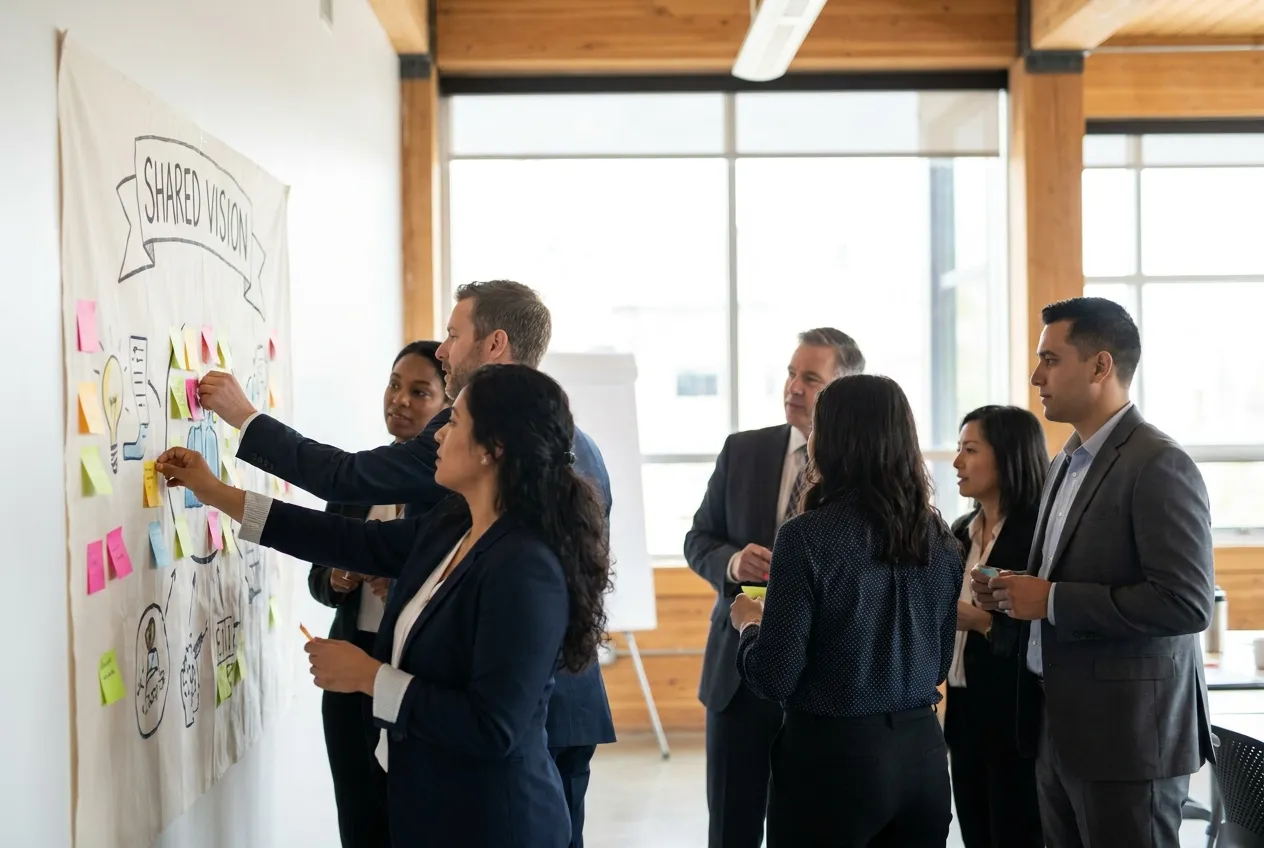

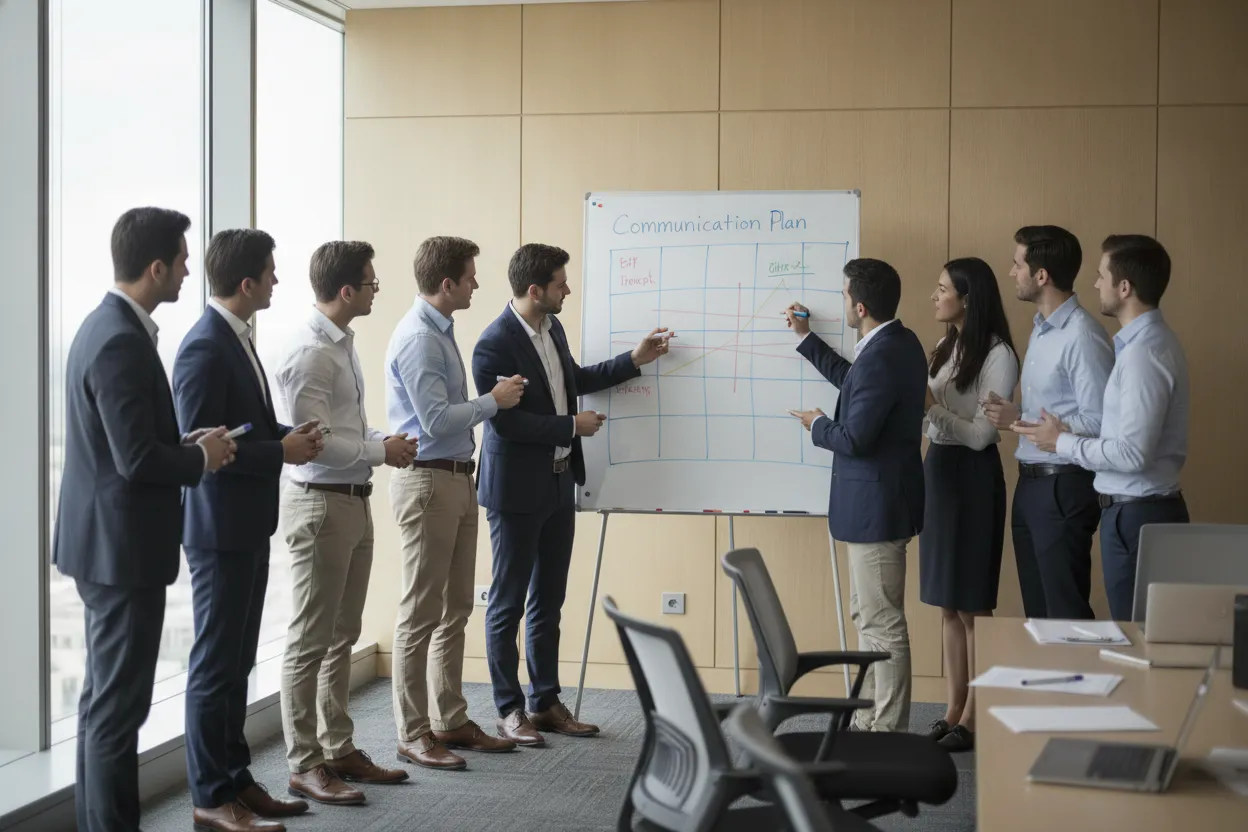
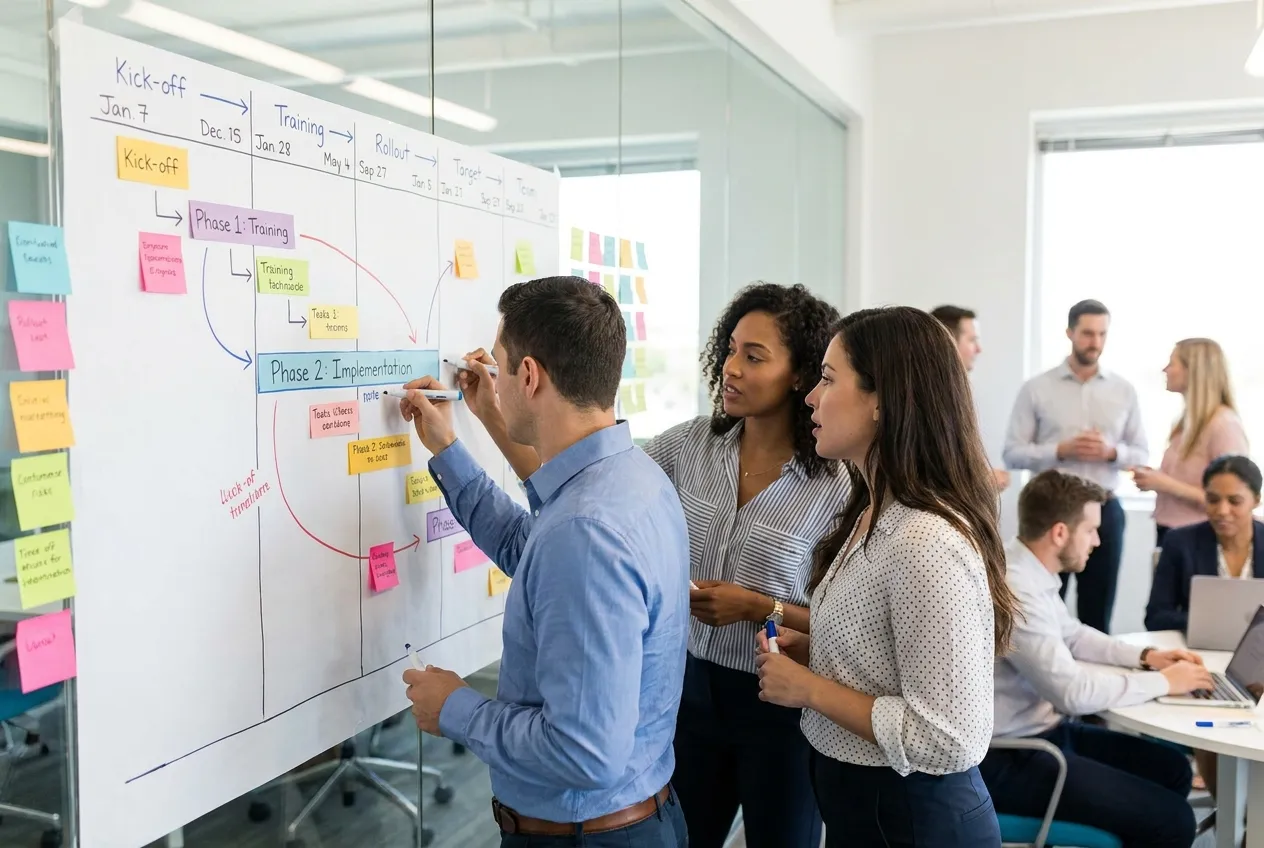

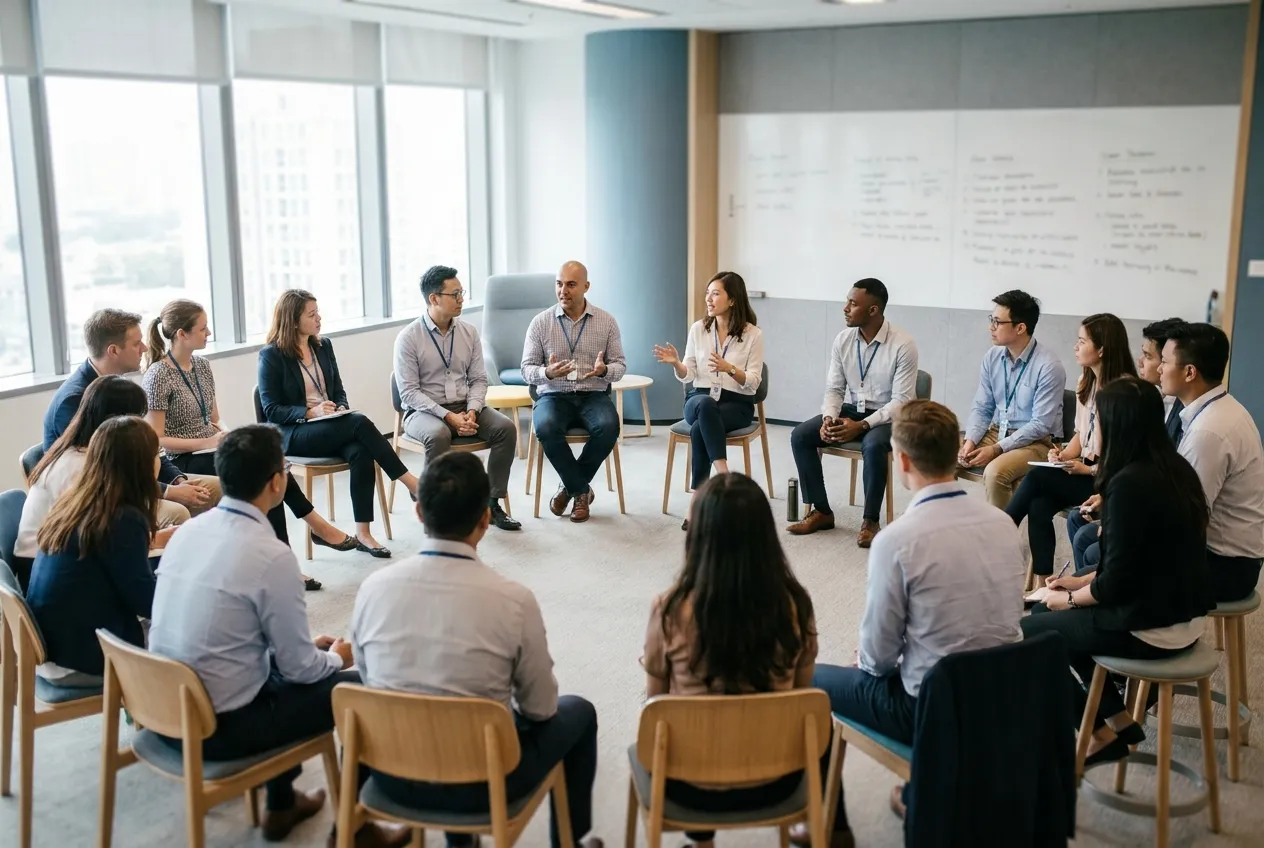
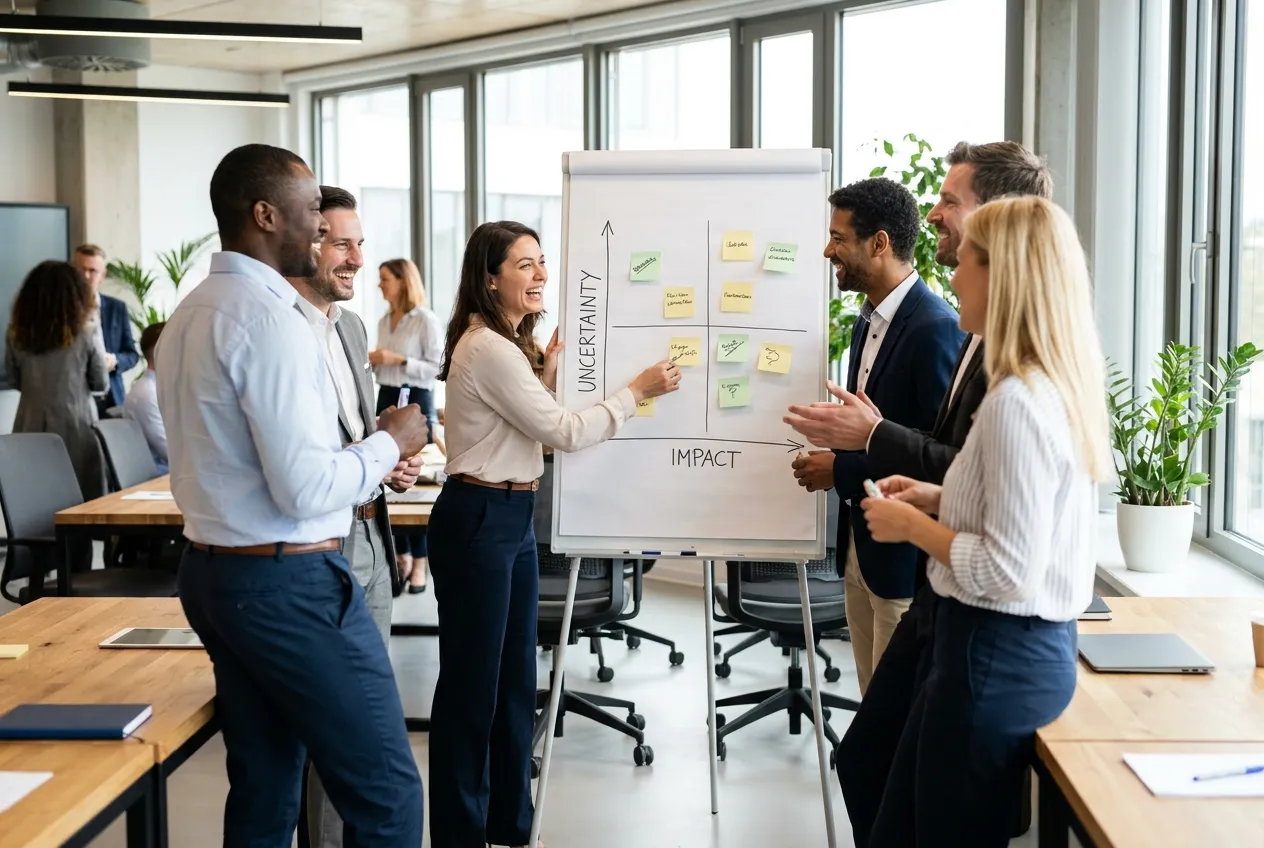

















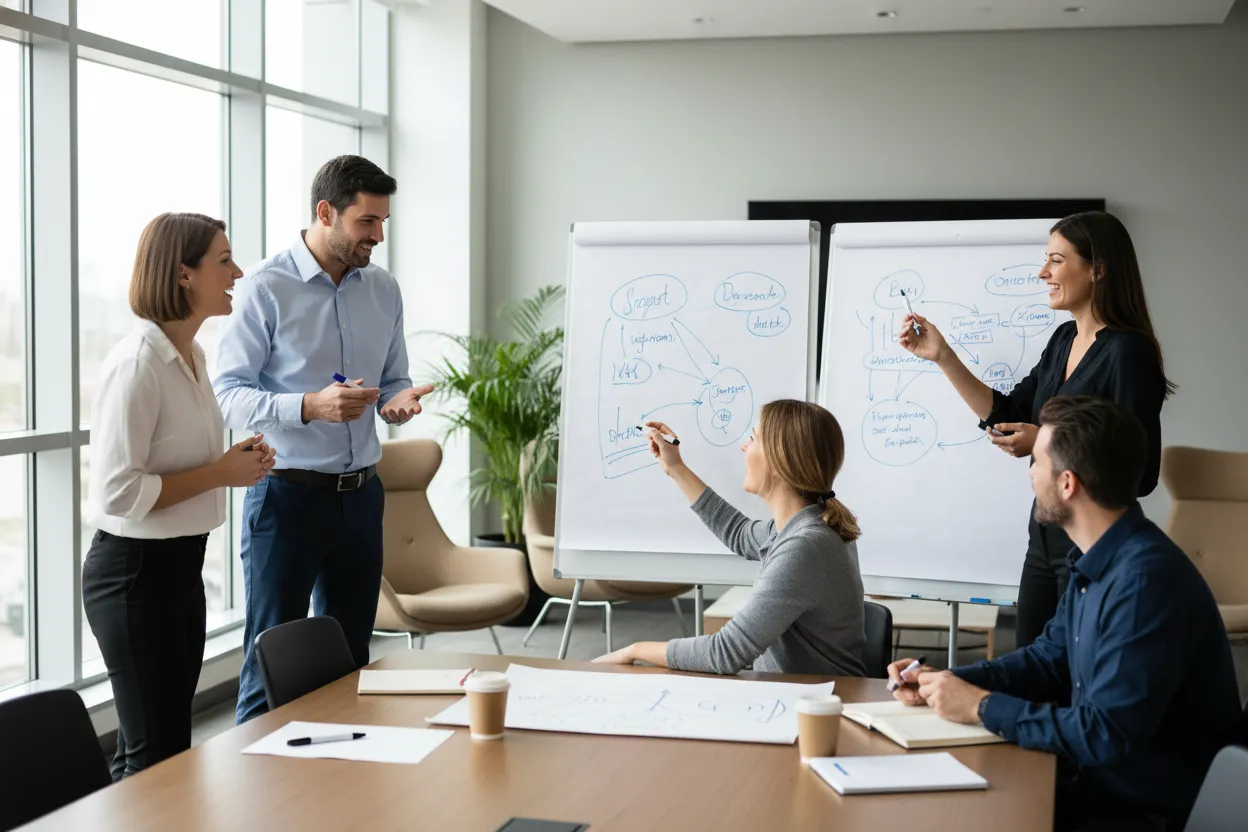








.svg "Click Here to Follow on Medium")
.svg)



.svg)


.svg)
.svg)
.svg)

.svg)