Drive Team Excellence with Supplier Audit Corporate Training

Supplier audit is a business evaluation to ensure that external suppliers meet the organization's quality standards. The auditor examines the supplier's compliance with industry regulation practices, including health and safety protocols and precise manufacturing procedures. Supplier Audit training course is essential to acquire significant control over risks, such as quality, safety, reputation, business continuity, and cost volatility. The course equips teams to effectively schedule, plan, prepare for, and conduct supplier audits.

Edstellar's instructor-led Supplier Audit training course offers virtual/onsite training options conducted by industry experts with extensive experience in the domain. The course stands out due to its practical, expert-driven curriculum, customized to meet your organization's needs. The course enables professionals to gain hands-on experience in supplier auditing, preparing them to apply what they have learned directly to their organizational roles.

Get Customized Expert-led Training for Your Teams
Customized Training Delivery
Scale Your Training: Small to Large Teams
In-person Onsite, Live Virtual or Hybrid Training Modes
Plan from 2000+ Industry-ready Training Programs
Experience Hands-On Learning from Industry Experts
Delivery Capability Across 100+ Countries & 10+ Languages
""""

Skills Your Employees Will Gain

These are the core, hands-on capabilities your team builds during the program.

  • Audit Procedures
    Audit Procedures are systematic methods used to evaluate financial records and compliance. This skill is important for auditors to ensure accuracy, integrity, and regulatory adherence.
  • Compliance Standards
    Compliance Standards refer to the regulations and guidelines organizations must follow to ensure legal and ethical operations. This skill is important for roles in finance, healthcare, and legal sectors, as it ensures adherence to laws, reduces risks, and fosters trust.
  • Risk Assessment
    Risk Assessment is the process of identifying, analyzing, and evaluating potential risks in a project or organization. This skill is important for roles in project management, finance, and compliance, as it helps mitigate threats, ensure safety, and enhance decision-making.
  • Root Cause Analysis
    Root Cause Analysis is the systematic process of identifying the underlying causes of problems. This skill is important for roles in quality assurance and troubleshooting, as it enables effective problem-solving and prevents recurrence.
  • Communication Skills
    Communication Skills refer to the ability to convey information clearly and effectively. This skill is important for roles in leadership, sales, and customer service, as it fosters collaboration, builds relationships, and enhances understanding.
  • Quality Management
    Quality Management is the process of overseeing all activities and tasks needed to maintain a desired level of excellence. This Skill is important for roles in manufacturing, healthcare, and service industries to ensure customer satisfaction, compliance, and continuous improvement.

What Your Team Will Achieve After This Training

  • Analyze supplier processes and operations to identify efficiency gaps and improvement areas, leading to more effective supply chain management
  • Develop comprehensive audit reports that detail findings and provide actionable recommendations, helping stakeholders make informed decisions
  • Evaluate the effectiveness of supplier quality management systems and recommend enhancements, contributing to continuous improvement in product and service quality
  • Design and implement tailored corrective action plans based on audit findings, facilitating rapid supplier performance and compliance improvements
  • Enhance communication and negotiation skills with suppliers, promoting stronger, more cooperative supplier relationships

Topics & Program Outline

The curriculum is organized into focused modules built by industry experts and delivered virtually or on-premise. Interactive sessions reflect the evolving demands of the workplace, keeping the learning both relevant and practical.

  1. Introduction to supplier and vendor audits
    • Understanding the role of audits in supplier management
    • Key differences between supplier audits and vendor audits
    • The impact of supplier audits on supply chain efficiency
  2. The purpose of auditing
    • Identifying objectives and benefits of supplier audits
    • How audits enhance supplier reliability and performance
  3. The principles of auditing
    • Upholding integrity and ethics in auditing practices
    • Ensuring objectivity and independence in audit processes
    • Consistency in audit execution and reporting
  4. The benefits of auditing
    • Strengthening supplier relationships through transparent assessments
    • Reducing risks and enhancing operational stability
  1. System audit
    • Examining the supplier's overall management systems
    • Assessing system integration and effectiveness in supplier operations
    • Identifying systemic issues that affect product quality and compliance
  2. Compliance audit
    • Ensuring supplier adherence to legal and regulatory requirements
    • Reviewing documentation and records for compliance verification
    • Evaluating compliance with environmental and safety standards
  3. Process audit
    • Analyzing the efficiency and effectiveness of supplier processes
    • Identifying process bottlenecks and opportunities for improvement
    • Assessing the alignment of processes with intended outcomes
  4. Product audit
    • Inspecting final products to ensure they meet quality standards
    • Testing products for functionality and performance against specifications
  1. Prepare a detailed supplier audit program
    • Defining the scope and objectives of the audit program
    • Allocating resources and scheduling audits
  2. Pre-audit questionnaire and visit
    • Designing and distributing pre-audit questionnaires
    • Conducting preliminary site visits and assessments
    • Gathering initial data to inform the audit strategy
  3. Team selection: Audit
    • Assembling a multidisciplinary audit team
    • Defining roles and responsibilities within the audit team
  4. Audit notification
    • Communicating audit schedules and requirements to suppliers
    • Ensuring all parties are informed of audit procedures
    • Managing supplier expectations and concerns regarding the audit
  5. Prepare a checklist
    • Developing a comprehensive audit checklist based on audit objectives
    • Customizing checklists to address specific supplier characteristics
    • Ensuring checklist completeness for thorough assessment
  6. Opening (in-brief) meeting
    • Setting the tone for the audit and outlining the agenda
    • Establishing communication protocols and expectations
  7. Audit
    • Conducting the audit according to the prepared checklist and program
    • Collecting evidence and documenting findings during the audit
    • Engaging with supplier personnel to clarify and verify processes
  8. Debriefing (out-brief) meeting
    • Summarizing findings and initial recommendations with the supplier
    • Discussing potential corrective actions and timelines
    • Ensuring mutual understanding and agreement on next steps
  9. Reporting
    • Compiling a detailed audit report that includes findings, evidence, and recommendations
    • Reviewing the report internally before submission to the supplier
    • Delivering the final report and discussing it with the supplier
  10. Follow-up & Review
    • Monitoring the implementation of corrective actions by the supplier
    • Scheduling follow-up audits or reviews to assess progress
  1. When conducting the supplier audit
    • Focusing on key performance indicators and critical supply areas
    • Balancing thorough assessment with efficiency
    • Maintaining professionalism and impartiality during audits
  2. What to/not to assess during a supplier audit
    • Defining clear boundaries for audit scope to avoid overreach
    • Focusing on areas with the highest impact on quality and compliance
    • Avoiding assessment of non-relevant or trivial supplier functions
  3. Determining your goals
    • Setting realistic and measurable goals for each audit session
    • Aligning audit goals with broader strategic objectives
  4. Reviewing supplier policies, procedures, and quality documents
    • Ensuring supplier documentation is current and comprehensive
    • Evaluating the effectiveness of quality control measures
  5. Field observations for site-level visibility
    • Conducting on-site inspections to observe operational practices
    • Identifying discrepancies between reported practices and actual operations
    • Gathering tangible evidence to support audit findings
  6. Reporting findings and giving recommendations
    • Structuring reports to highlight key findings and areas for improvement
    • Offering constructive recommendations tailored to the supplier's context
    • Ensuring clarity and actionability in reporting to facilitate improvements
  7. Coaching suppliers on how to close the gap
    • Establishing a collaborative approach to problem-solving
    • Setting up follow-up sessions to review progress and ensure compliance
  1. What is supplier due diligence?
    • Defining supplier due diligence and its importance in risk management
    • Distinguishing between due diligence and standard audits
  2. Why is it necessary?
    • Mitigating risks associated with supplier partnerships
    • Ensuring suppliers align with corporate values and compliance standards
    • Protecting organizational reputation and operational integrity
  3. Supplier due diligence framework
    • Establishing a comprehensive framework for conducting due diligence
    • Integrating due diligence into the overall supplier management process
    • Utilizing technology and tools to streamline due diligence processes
  4. Steps to ensure supply chain compliance
    • Identifying key compliance requirements for different types of suppliers
    • Implementing systematic procedures for regular compliance checks
  1. Risk management principles
    • Outlining foundational principles for effective supplier risk management
    • Integrating risk management into supplier selection and onboarding processes
    • Employing a proactive versus reactive approach to risk management
  2. Types of supplier risk
    • Identifying various risk categories affecting suppliers, including operational, financial, and reputational risks
    • Assessing risk impact and the likelihood of prioritizing management efforts
  3. Process for assessing supplier risk
    • Developing a structured approach for evaluating supplier risks
    • Utilizing risk assessment tools and methodologies
  4. Steps to mapping risk profiles
    • Mapping supplier risk profiles to visualize risk exposure
    • Tailoring risk management strategies based on risk profile analysis
    • Continuously updating risk profiles based on new information and market changes
  1. How to present findings
    • Techniques for effectively communicating audit results to stakeholders
    • Structuring presentations to highlight key points and recommendations
    • Ensuring clarity and precision in presenting audit findings
  2. How to develop an action plan or roadmap
    • Constructing actionable steps for addressing audit findings
    • Setting timelines and responsibilities within the action plan
  3. Adhering to the roadmap
    • Strategies for maintaining focus and adherence to the action plan
    • Addressing challenges and obstacles in following the roadmap
    • Evaluating the effectiveness of the action plan over time
  4. Control plan
    • Developing a control plan to manage and mitigate identified risks
    • Implementing control measures to prevent the recurrence of issues
    • Monitoring the effectiveness of control plans in real-time
  5. Metrics in accordance with the control plan
    • Selecting appropriate metrics to measure the success of the control plan
    • Utilizing data analytics to assess and refine control measures
    • Reporting on control plan outcomes to senior management
  6. Escalation, when required
    • Defining escalation procedures for unresolved issues or critical findings
  1. Techniques and tools for encouraging and improving supplier performance
    • Exploring modern techniques and tools that enhance supplier performance
    • Implementing performance management systems to track improvements
    • Encouraging continuous development through targeted incentives
  2. Emerging technologies for auditing
    • Identifying and adopting technologies that streamline auditing processes
    • Evaluating the impact of technological advancements on audit efficiency
  3. Suppliers are coached and mentored
    • Developing programs for ongoing supplier development and coaching
    • Setting up mentoring relationships between company and supplier personnel
    • Assessing the effectiveness of coaching and mentoring programs
  4. Simulation of supplier audit
    • Utilizing simulations to train and prepare audit teams
    • Creating realistic audit scenarios to test procedures and responses

Who Should Attend?

This program suits professionals at many levels across the organization, including:

  • Quality Assurance Specialists
  • Audit Officers
  • Compliance Analysts
  • Procurement Specialists
  • Internal Auditors
  • Purchasing Coordinators
  • Supply Chain Auditors
  • Contract Auditors
  • Vendor Relations Specialists
  • Financial Auditors
  • Operations Analysts
  • Managers

What are the Prerequisites?

Professionals with a basic understanding of supplier management and quality control can take the Supplier Audit training course.

Request a Quote for your Corporate Training Requirements

Valid number

Delivering Training for Organizations across 100 Countries and 10+ Languages

Choose the Format That Fits Your Team

We design training your teams actually engage with, and deliver it the way that suits you best. Through a vetted global trainer network, Edstellar runs sessions in 10+ languages with consistent quality anywhere.

Virtual Supplier Audit Training

Virtual / online: expert-led live sessions delivered anywhere, with consistency and easy scheduling.

We deliver anywhere worldwide
Standardized content for consistent outcomes
Join from own workspace, no travel
We scale to large groups across sites
Interactive tools keep remote learners engaged
On-site Supplier Audit Training

On-site (in-house): immersive, instructor-led learning at your office.

Our trainers run face-to-face at your office
We tailor setup/content to your workplace and tools
Group exercises drive collaboration
Live demos +  hands-on practice
Direct trainer access to clarify doubts
Off-site Supplier Audit Training

Off-site: focused, instructor-led group learning away from everyday workplace distractions.

We host your teams at a venue of your preferred choice
Built-in group activities for bonding
Full uninterrupted schedule for focus/retention
Boosts morale and signals commitment

Get a Proposal Shaped to Your Needs

Need pricing for onsite, offsite, or virtual delivery? Get a proposal tailored to your team's needs.

Request a Group Training Quote
""
How Many Team Members Need Training?
Please select an option or fill in the custom field.
"'

Is Your Corporate Training Requirement Only for Supplier Audit ?

Please select at least one course.
""
Add the List of Training Workshops
search icon

      Please select the course

      No. of Courses selected: 0

      Clear

      Upload a CSV

      Send us your Training Requirements in 3 Easy steps

      1. 1
      2. 2
        Add the required training workshops
      3. 3
        Upload to get a quick quote or email it to contact@edstellar.com

      ""

      Looking for a Complete Package?

      Looking for a one-time pricing option for all your annual training requirements?

      View Corporate Training Packages
      ""
      Select the Option that Best Describes Your Corporate Training Requirement

      Please select an option or choose from the recurring options.
      ""
      Verify and Submit Your Request

      Review Your Corporate Training Selection Summary

      Training Program: Supplier Audit Training

      1. No of Team Members

      2. Selected Training Preference

      3. Selected Recurring Sessions

      1

      Review your Requirements

      Training Workshops Selected :


        Excel
        File has been
        successfully uploaded.
        Fill the form to submit
 your details
        Submit Your Professional Contact Information
        Valid number
        We've received your enquiry. Our team will be in touch soon.
        Oops! Something went wrong while submitting the form.
        Starter
        120 licences

        Tailor-Made Trainee Licenses with Our Exclusive Training Packages!

        View Package

        64 hours of group training (includes VILT/In-person On-site)

        Tailored for SMBs

        Growth
        320 licences

        Tailor-Made Trainee Licenses with Our Exclusive Training Packages!

        View Package

        160 hours of group training (includes VILT/In-person On-site)

        Ideal for growing SMBs

        Enterprise
        800 licences

        Tailor-Made Trainee Licenses with Our Exclusive Training Packages!

        View Package

        400 hours of group training (includes VILT/In-person On-site)

        Designed for large corporations

        Custom
        Unlimited licenses

        Tailor-Made Trainee Licenses with Our Exclusive Training Packages!

        View Package

        Unlimited duration

        Designed for large corporations

        What Sets Edstellar Apart

        Experienced Trainers

        Our trainers are drawn from a vetted global network and bring years of industry expertise, keeping every session practical and impactful.

        Proven Quality

        With a strong global track record, Edstellar is known for quality and engaging delivery.

        Industry-Relevant Curriculum

        Our programs are built by experts to match the demands of today's industry.

        Fully Customizable

        Every program can be tailored to your organization's goals.

        Comprehensive Support

        We provide pre- and post-session support for a complete learning experience.

        Global Multi-Location & Multilingual Training Delivery

        We deliver in multiple languages to support diverse global teams.

        Hear from Organizations We've Trained

        "The Supplier Audit training provided me with comprehensive capabilities that elevated my expertise. As a Senior Software Engineer, I needed to understand industry best practices deeply, and this course delivered perfectly. practical simulations gave me hands-on experience with industry best practices. I now handle complex technical scenarios with enhanced confidence and systematic efficiency. Highly recommend for anyone serious about this field.”

        Apolinar Chandler

        Senior Software Engineer,

        Technology Consulting Services Company

        "This Supplier Audit course transformed my approach to technical mastery solutions. The comprehensive modules on real-world case studies were invaluable for our enterprise projects. I can now confidently implement strategic frameworks for diverse client requirements. The deep coverage of hands-on exercises gave me advanced skills I immediately applied to We delivered a high-visibility enterprise project two months ahead of schedule.”

        Xia Ying

        Senior Software Engineer,

        IT Services and Solutions Provider

        "The Supplier Audit training transformed our team's entire approach to operational excellence management and execution. As a Senior Software Engineer, the extensive coverage of advanced methodologies, interactive labs, and proven concepts to optimized processes. Our department achieved a remarkable 50% improvement in operational efficiency metrics. Our team's productivity and solution quality have improved measurably, validating this investment.”

        Durga Murugan

        Senior Software Engineer,

        Enterprise Software Development Firm

        “Edstellar’s Management training programs have greatly improved our teams’ ability to lead with clarity, confidence, and operational efficiency. The sessions combine practical leadership frameworks, real-world case studies, and hands-on exercises that strengthen decision-making, cross-functional collaboration, and execution excellence across departments, driving measurable improvements in overall business performance.”

        Meera Rao

        HR & L&D Head,

        A Global Services Company

        Recognition That Motivates Your Team

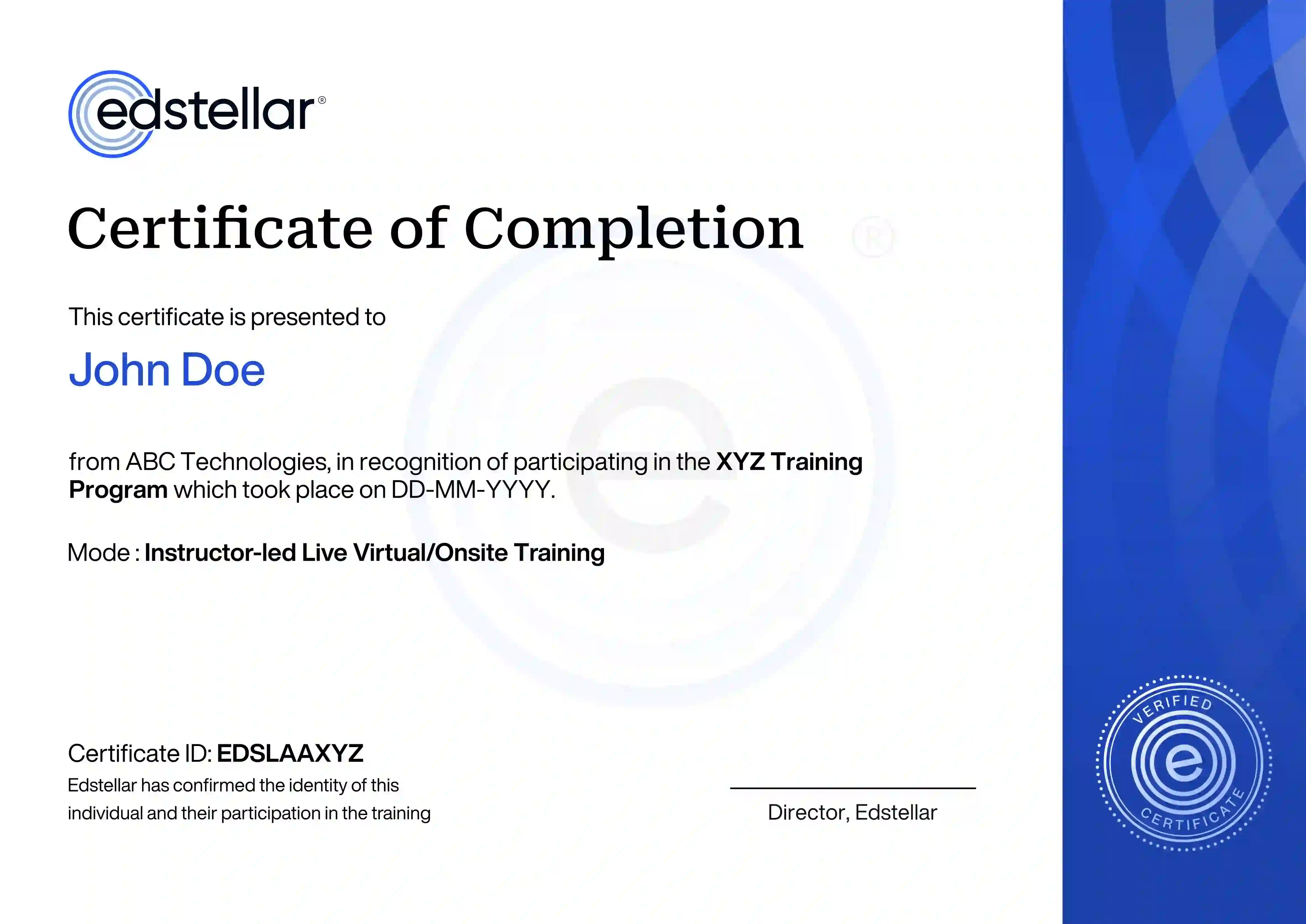
        Upon successful completion of the training course offered by Edstellar, employees receive a course completion certificate, symbolizing their dedication to ongoing learning and professional development.

        This certificate validates the employee's acquired skills and is a powerful motivator, inspiring them to enhance their expertise further and contribute effectively to organizational success.

        Recognition That Motivates Your Team
        Other Related Corporate Training Courses