Corporate Supplier Relationship Management Training Course
Edstellar's instructor-led Supplier Relationship Management training course empowers teams with strategic negotiation and communication skills to enable long-term partnerships and maximize value creation in the organization. The course equips professionals to optimize supplier contributions, reduce costs, and drive innovation.
(Virtual / On-site / Off-site)
Available Languages
English, Español, 普通话, Deutsch, العربية, Português, हिंदी, Français, 日本語 and Italiano
Drive Team Excellence with Supplier Relationship Management Corporate Training
Supplier Relationship Management (SRM) is a strategic business practice that cultivates mutually beneficial collaboration with suppliers to optimize value delivery throughout the supply chain. SRM aims to enhance supplier performance, reduce costs, drive innovation, and ensure a reliable flow of goods and services. Supplier Relationship Management training course is essential for procurement and supply chain management professionals as it equips them with the necessary skills and techniques to manage supplier relationships effectively. The course equips teams with strategies for supplier selection, performance evaluation, and risk mitigation to optimize supplier contributions, minimize costs, and drive innovation, enhancing organizational competitiveness and resilience.
Edstellar's instructor-led Supplier Relationship Management training course provides a comprehensive learning experience delivered through virtual/onsite training options. Industry experts tailor the course with years of practical knowledge and insights into the procurement domain. With customization, the course covers critical aspects of SRM and equips professionals with the strategies to monitor supplier performance and address any deviations.

Skills Your Employees Will Gain
These are the core, hands-on capabilities your team builds during the program.
- Supplier EvaluationSupplier Evaluation is the process of assessing potential suppliers based on criteria like quality, reliability, and cost. This skill is important for procurement roles to ensure optimal supplier selection, minimizing risks and maximizing value.
- Collaboration SkillsCollaboration Skills involve working effectively with others to achieve common goals. This skill is important for roles in team-based environments, enhancing productivity and innovation.
- Contract ManagementContract Management is the process of creating, executing, and overseeing contracts to ensure compliance and mitigate risks. This skill is important for roles in legal, procurement, and project management, as it ensures effective resource allocation and protects organizational interests.
- Vendor PerformanceVendor Performance refers to evaluating and managing suppliers' efficiency and quality. This skill is important for procurement roles to ensure optimal supply chain efficiency and cost-effectiveness.
- Risk AssessmentRisk Assessment is the process of identifying, analyzing, and evaluating potential risks in a project or organization. This skill is important for roles in project management, finance, and compliance, as it helps mitigate threats, ensure safety, and enhance decision-making.
- Relationship BuildingRelationship Building is the ability to create and maintain positive connections with others. this skill is important for roles in sales, management, and customer service, as it fosters trust, collaboration, and effective communication, driving success and loyalty.
What Your Team Will Achieve After This Training
- Apply negotiation techniques and strategies to establish favorable agreements with suppliers, resulting in cost savings and improved terms for the organization
- Analyze supplier performance data effectively to identify areas for improvement and implement strategies to optimize supplier contributions, enhancing overall supply chain efficiency
- Develop and implement risk mitigation and compliance practices, ensuring regulatory compliance and minimizing potential disruptions to supply chain operations
- Utilize innovative approaches to supplier collaboration and co-innovation to drive product innovation and process optimization, promoting a culture of continuous improvement within the organization
- Identify cost reduction and value creation opportunities through strategic supplier partnerships, driving tangible business outcomes and organizational competitiveness
Topics & Program Outline
The curriculum is organized into focused modules built by industry experts and delivered virtually or on-premise. Interactive sessions reflect the evolving demands of the workplace, keeping the learning both relevant and practical.
1. Build scorecards around business goals
- Define Key Performance Indicators (KPIs)
- Align scorecards with strategic objectives
- Regularly update scorecards based on business changes
2. Establish processes to evaluate the performance
- Develop standardized evaluation procedures
- Train staff on performance assessment techniques
- Schedule periodic review meetings
3. Communicate information to suppliers and take action
- Establish clear communication channels
- Provide constructive feedback
- Implement corrective actions and follow-ups
4. Share information internally
- Create internal reports on supplier performance
- Hold cross-departmental meetings to discuss findings
1. Avoid supply chain risks and disruptions
- Monitor external factors impacting supply chains
- Develop risk mitigation strategies
- Use predictive analytics to foresee potential disruptions
2. Protect and improve brand reputation
- Ensure supplier compliance with brand standards
- Publicize sustainability and ethical efforts
3. Avoid costs and achieve savings
- Identify inefficiencies in the supply chain
- Negotiate better terms based on performance data
- Optimize inventory to reduce holding costs
4. Segment and rank vendors
- Categorize suppliers based on performance and criticality
- Develop tiered supplier management strategies
- Use segmentation to prioritize improvement efforts
5. Collaborate with suppliers
- Engage in joint development initiatives
- Create partnerships for continuous improvement
- Facilitate technology and knowledge exchange
6. Improve internal processes
- Refine procurement and supply chain processes
- Enhance data management and analytics capabilities
1. Quantity ordered vs received
- Track the accuracy of order fulfillment
- Analyze discrepancies and identify causes
- Implement solutions to improve order accuracy
2. Assignment accuracy
- Measure the correctness of product specifications and delivery
- Conduct regular audits to ensure compliance
- Improve information accuracy at the ordering stage
3. On-time delivery
- Monitor delivery timelines
- Assess the impact of late deliveries on operations
- Work with suppliers to optimize shipping schedules
4. Ordered price vs invoiced
- Compare contract terms with billing
- Identify pricing errors or inconsistencies
- Adjust procurement processes to prevent overcharges
5. Inspection fails vs. total items inspected
- Calculate the rate of defective or non-conforming items
- Analyze root causes of quality issues
- Enhance quality control measures
6. Returns rate
- Track and analyze reasons for product returns
- Implement strategies to reduce return rates
- Improve product quality and customer satisfaction
7. Order fill rate
- Measure the percentage of customer orders fulfilled on the first request
- Identify factors affecting incomplete orders
- Optimize inventory levels and reorder processes
8. Lead-time variance
- Monitor deviations from expected delivery times
- Assess the impact of variance on business operations
- Collaborate with suppliers to stabilize lead times
1. Align performance goals
- Set clear and measurable objectives
- Ensure goals are understood by both parties
- Align supplier goals with company priorities
2. Choose an evaluation approach
- Decide between qualitative and quantitative metrics
- Determine frequency and methods of evaluation
- Select tools and technologies for performance tracking
3. Develop an information collection method
- Establish data collection protocols
- Choose technology solutions for data aggregation
4. Design a robust assessment system
- Build a framework for comprehensive supplier evaluation
- Integrate feedback mechanisms
- Ensure system adaptability to changing business needs
5. Roll out the system
- Implement the evaluation system in phases
- Monitor initial results and make adjustments
- Secure buy-in from all stakeholders
6. Provide actionable feedback
- Deliver clear, constructive, and timely feedback
- Discuss performance improvements and expectations
- Set up regular review sessions with suppliers
7. Showcase results
- Communicate the benefits of performance evaluations internally
- Share success stories and improvements made
1. Good communication
- Ensure timely and accurate information exchange
- Maintain open lines of communication for problem-solving
- Evaluate communication effectiveness regularly
2. Competency
- Assess the technical and managerial skills of the supplier
- Evaluate the supplier's industry knowledge and expertise
- Monitor ongoing training and development initiatives
3. Capacity
- Analyze the supplier's ability to meet business demands
- Assess the scalability and flexibility of operations
- Evaluate infrastructure and technological capabilities
4. Commitment
- Measure the supplier's dedication to meeting contractual obligations
- Assess the alignment of the supplier's values with the company's goals
- Evaluate willingness to invest in long-term relationships
5. Control
- Monitor the supplier's control over manufacturing and delivery processes
- Evaluate the effectiveness of internal quality control systems
6. Cost
- Analyze the cost-effectiveness of the supplier's products or services
- Evaluate pricing strategies and their impact on total cost of ownership
- Assess transparency and fairness in billing practices
7. Consistency
- Measure reliability in product or service quality over time
- Monitor performance consistency under varying conditions
- Evaluate the supplier's ability to deliver consistent results
8. Culture
- Assess cultural alignment with ethical, social, and business practices
- Evaluate the supplier's corporate social responsibility initiatives
- Monitor the influence of cultural factors on business relationships
9. Sustainability
- Evaluate the environmental impact of the supplier's operations
- Monitor initiatives for reducing environmental footprint
1. Identification
- Establish criteria for identifying critical suppliers
- Develop processes for regular supplier review and identification
- Use industry benchmarks and standards for comparison
2. Criteria
- Set specific, measurable, achievable, relevant, and time-bound (SMART) criteria
- Use a balanced scorecard approach for comprehensive evaluation
- Prioritize criteria based on strategic importance
3. Quality
- Assess quality management systems and certifications
- Monitor product or service quality through regular testing
- Evaluate supplier's quality control and improvement practices
4. Solutions
- Develop collaborative solutions for performance improvement
- Implement technology-driven solutions for enhanced monitoring
5. Expert insight
- Engage industry experts for specialized evaluation
- Use third-party audits for unbiased assessments
- Incorporate expert recommendations into performance strategies
1. Lack of uniform metrics
- Develop standardized metrics applicable across suppliers
- Collaborate with industry groups for metric standardization
2. Lack of transparency
- Implement technologies to improve visibility into supplier operations
- Conduct regular audits and checks to ensure data accuracy
3. Different business models
- Adapt evaluation strategies to fit various business models
- Understand the unique challenges of different supplier types
- Customize performance metrics to accommodate diverse operations
4. Lack of cooperation from suppliers
- Build stronger relationships with suppliers to encourage collaboration
- Implement incentive programs to align supplier objectives with company goals
- Address supplier concerns and feedback actively
5. Biased/incorrect audits
- Ensure audits are conducted by unbiased, trained professionals
- Use multiple sources of information to validate audit results
- Review and refine audit processes regularly to eliminate biases
1. Categorical system
- Implement a classification system based on supplier performance levels
- Use categories to determine focus areas for improvement and rewards
- Adjust categories based on evolving performance data
2. Weighted point system
- Assign weights to different performance criteria based on importance
- Calculate overall performance scores to facilitate comparison
- Use weighted scores to prioritize supplier development efforts
3. Cost-based system
- Analyze costs associated with each supplier
- Evaluate the impact of supplier performance on overall costs
- Use cost data to negotiate better terms or make sourcing decisions
4. The total cost of ownership
- Include all costs related to acquiring and using a supplier’s products or services
- Calculate long-term costs and benefits to assess value
Who Should Attend?
This program suits professionals at many levels across the organization, including:
- Supplier Relationship Specialists
- Procurement Officers
- Contract Administrators
- Vendor Specialists
- Supply Chain Coordinators
- Operations Analysts
- Strategic Sourcing Specialists
- Business Development Specialists
- Procurement Specialists
- Performance Analysts
- Compliance Officers
- Managers
What are the Prerequisites?
Professionals with a basic understanding of procurement processes can take the Supplier Relationship Management training course.
Choose the Format That Fits Your Team
We design training your teams actually engage with, and deliver it the way that suits you best. Through a vetted global trainer network, Edstellar runs sessions in 10+ languages with consistent quality anywhere.


.webp)
Virtual / online: expert-led live sessions delivered anywhere, with consistency and easy scheduling.
.webp)
On-site (in-house): immersive, instructor-led learning at your office.
.webp)
Off-site: focused, instructor-led group learning away from everyday workplace distractions.
Get a Proposal Shaped to Your Needs
Need pricing for onsite, offsite, or virtual delivery? Get a proposal tailored to your team's needs.
64 hours of group training (includes VILT/In-person On-site)
Tailored for SMBs
Tailor-Made Trainee Licenses with Our Exclusive Training Packages!
160 hours of group training (includes VILT/In-person On-site)
Ideal for growing SMBs
Tailor-Made Trainee Licenses with Our Exclusive Training Packages!
400 hours of group training (includes VILT/In-person On-site)
Designed for large corporations
Tailor-Made Trainee Licenses with Our Exclusive Training Packages!
Unlimited duration
Designed for large corporations
What Sets Edstellar Apart
Experienced Trainers
Our trainers are drawn from a vetted global network and bring years of industry expertise, keeping every session practical and impactful.
Proven Quality
With a strong global track record, Edstellar is known for quality and engaging delivery.
Industry-Relevant Curriculum
Our programs are built by experts to match the demands of today's industry.
Fully Customizable
Every program can be tailored to your organization's goals.
Comprehensive Support
We provide pre- and post-session support for a complete learning experience.
Global Multi-Location & Multilingual Training Delivery
We deliver in multiple languages to support diverse global teams.
Hear from Organizations We've Trained
"The Supplier Relationship Management training exceeded my expectations in every way. As a Principal Revenue Operations Manager, I gained comprehensive knowledge of advanced methodologies that transformed my approach and immediately applicable. My productivity and technical capabilities have increased dramatically since applying these concepts. The instructor's expertise in expert-led workshops made complex concepts crystal clear and actionable.”
Seth Bradley
Principal Revenue Operations Manager,
Management Training Services Firm
"This Supplier Relationship Management course equipped me with comprehensive strategic frameworks expertise that I've seamlessly integrated into our professional services practice. The hands-on modules covering practical simulations design solutions that consistently deliver measurable business results. Our project success rate and profitability increased dramatically within the quarter, validating the immediate impact of this training program.”
Gu Ren
Senior Enterprise Sales Director,
Organizational Excellence Platform
"The Supplier Relationship Management training transformed our team's entire approach to operational excellence management and execution. As a Principal Business Development Manager, the extensive coverage of industry best concepts to strategic initiatives. We reduced operational costs by 40% while simultaneously improving service quality standards. Our team's productivity and solution quality have improved measurably, validating this investment.”
Venkat Babu
Principal Business Development Manager,
Business Management Consultancy
“Edstellar’s Management training programs have greatly improved our teams’ ability to lead with clarity, confidence, and operational efficiency. The sessions combine practical leadership frameworks, real-world case studies, and hands-on exercises that strengthen decision-making, cross-functional collaboration, and execution excellence across departments, driving measurable improvements in overall business performance.”
Meera Rao
HR & L&D Head,
A Global Services Company
Recognition That Motivates Your Team
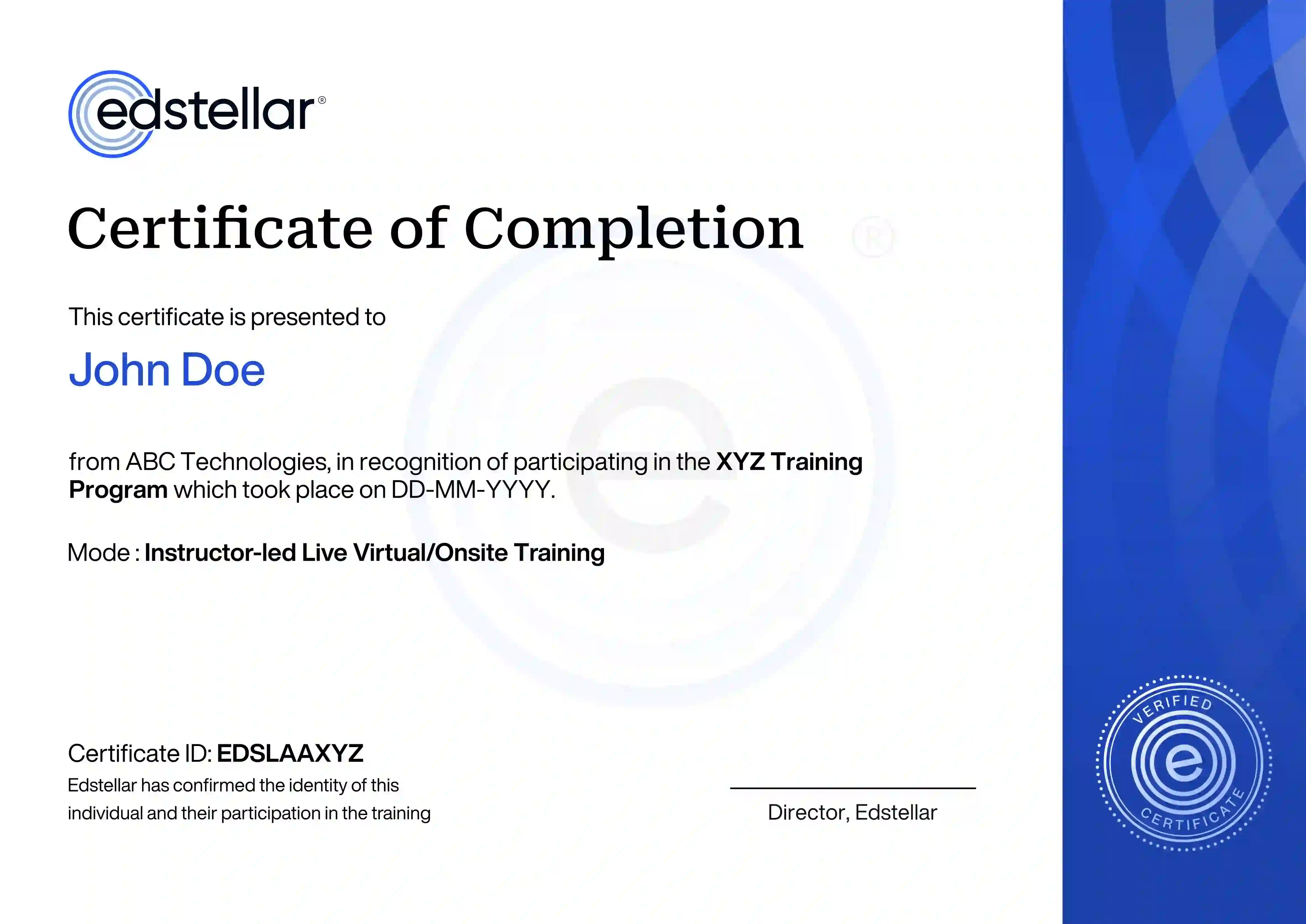
Upon successful completion of the training course offered by Edstellar, employees receive a course completion certificate, symbolizing their dedication to ongoing learning and professional development.
This certificate validates the employee's acquired skills and is a powerful motivator, inspiring them to enhance their expertise further and contribute effectively to organizational success.


We have Expert Trainers to Meet Your Supplier Relationship Management Training Needs
The instructor-led training is conducted by certified trainers with extensive expertise in the field. Participants will benefit from the instructor's vast knowledge, gaining valuable insights and practical skills essential for success in Access practices.
Other Related Corporate Training Courses
Explore More Courses
Edstellar is a one-stop instructor-led corporate training and coaching solution that addresses organizational upskilling and talent transformation needs globally.
Marketing Excellence
Operational Excellence
Finance Excellence
HR Excellence
IT Excellence
Customer Service
Leadership Excellence
Quality Management
Software
How it WorksFAQ'sCorporate Training
CatalogStellar AI
Skill MatrixHRMS Integration
Who we ServeCEO RetreatsPricingTraining DeliveryPartner with Edstellar
CareersContact us