17 Time Management Activities, Games & Exercises for Employees
A detailed guide to time management games for the workplace, curated by an L&D leader with 24+ years of experience in productivity optimization and training operations at scale.
Subbaiah M UCorporate Training Consultant - IndiaUpdated 10 January 202577 min read
Share
Quick Overview
Time management activities built around Pomodoro and Kanban convert intention into consistent execution.
Game-based time management activities boost engagement and retention more than lecture-style training.
Inside the right time management activities, prioritization frameworks like the Mayonnaise Jar and Eisenhower Matrix unlock focus.
Tracking time reveals hidden waste and surfaces real productivity patterns.
Techniques like Pomodoro and Kanban convert intention into consistent execution.
Tailor time management activities to team roles, seniority, and unique workflow challenges.
Time management is the single highest-leverage skill an L&D team can build today, because every other capability (deep work, OKR delivery, collaboration, even wellbeing) depends on whether people can protect focused hours from meeting bloat, notifications, and reactive work. Brian Tracy put it simply: "time management is really personal management, life management, and management of one self." In hybrid, AI-augmented workplaces, this self-management has become a competitive moat. Teams that learn to prioritize and protect focus consistently ship more, with less burnout, than teams that simply work longer.
Most organizations still treat time management as a personal productivity hack rather than a team capability, which is why training videos and to-do apps rarely move the needle. Real change happens when entire teams practice the same prioritization, time-blocking, and meeting-discipline behaviors together, in low-stakes settings where mistakes are cheap and the debrief is rich. A Gallup finding that 41% of employees experience daily stress, much of it tied to overload and poor prioritization, makes the case unavoidable for L&D teams in 2026.
This guide collects 17 proven time management activities, exercises, and games that help employees and managers sharpen prioritization, deep-work discipline, estimation, meeting hygiene, and delegation. Each activity includes an interactive demo, materials list, facilitator script, and measurable outcomes, so an L&D lead can pull it straight into a workshop. For a structured manager curriculum that complements these activities, our time management training program plugs in as the leader-led companion.
Author Insight
"Time management training fails when it stays theoretical. The time management activities that actually change behavior force participants to prioritize under pressure, reflect on their habits, and walk away with practical techniques they can use immediately.
"
Subbaiah M U
✓ 24+ years of experience leading training operations where productivity and time management were critical to daily performance across large teams.
The Strategic Value of Time Management Activities for Teams
Hybrid work and back-to-back video calls have quietly destroyed the average knowledge worker's focus time. Internal calendar audits across enterprises routinely show that fewer than two hours per day are spent on deep work the gap that targeted time management activities are designed to close. Time management activities are how L&D teams reset that pattern as a group norm, not a personal struggle.
Activity-based learning works here because time habits are behavioral, not informational. Reading about the Eisenhower Matrix changes nothing; physically sorting ten of your own real tasks into quadrants with teammates does. The World Economic Forum ranks self-management (which includes time discipline) among the top skills employers expect to grow in importance through 2030, and the gap is widest in middle managers who are squeezed between strategic asks and operational fires.
When teams run these activities together, the benefit compounds: prioritization becomes a shared vocabulary, meetings shrink because everyone has practiced saying no, and OKR delivery becomes more predictable because estimation gets honest.
"Time management requires self-discipline, self-mastery and self-control more than anything else."
Brian Tracy
Chairman & CEO, Brian Tracy International · California, USA
✔ Personal development expert known for leadership, productivity, goal achievement, and time management strategies.
Effective Time Management Training Activities and Games for Teams
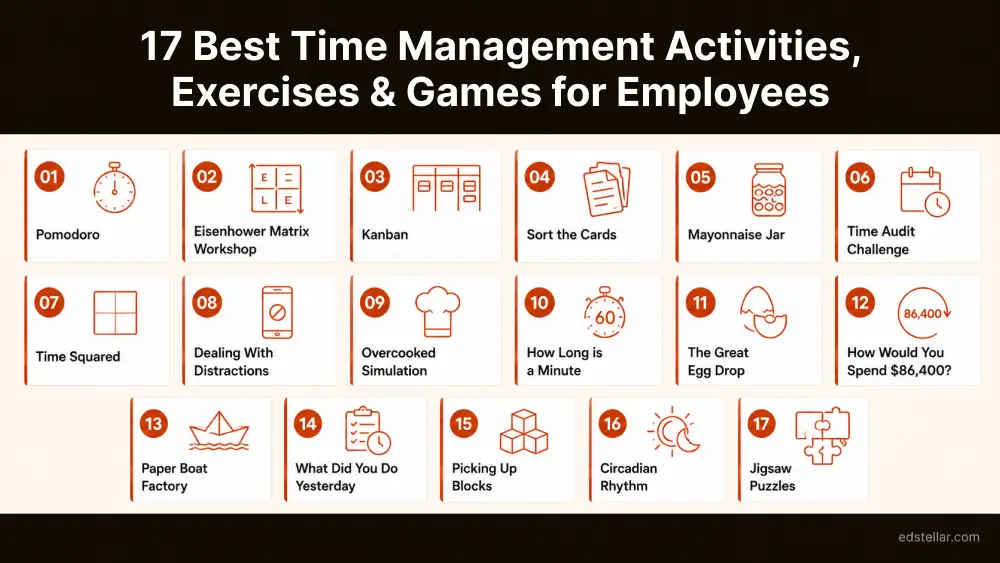
The 17 time management activities below are designed to help organizations improve team productivity, reduce bottlenecks, and consistently meet business deadlines. Each includes an interactive demo, required materials, measurable learning outcomes, and expert facilitator guidance.
👤 Age 18+👥 Any Players⏱ 25 min
1. Pomodoro
Participants run four 25-minute focused work sprints separated by short breaks, then take a longer break, learning a sustainable rhythm for deep work.
FocusSprintsProductivity
1 Interactive Guided Demo
1
2
3
4
5
6
7
8
Step 1 of 8
👆
🍅
🍅⏱️🎯
📋🍅🖊️🎧🍅
🖊️
📋✨🎯🤝
✨✨
🎧✅🌟💡
💡
🤝📌📋✨
✨✨
✨🍅📋🖊️🎧
🎯🚀📌🤝
🏆
🎉🌟✨🎊💫
Welcome to Pomodoro
Sprint 25, rest 5, repeat the cycle.
👆 Click anywhere to continue
2 Activity Details
🍅
Participants run four 25-minute focused work sprints separated by short breaks, then take a longer break, learning a sustainable rhythm for deep work.
Players
👥 Any Players
Recommended
Time
⏱ 25 min
Activity + debrief
Format
Team Game
Facilitated
Skill
Focus
Primary outcome
What You'll Need
Prepare these items before the activity begins so the session runs smoothly.
🍅
Pomodoro Timer
Required for activity
📋
Task List
Required for activity
🖊️
Pens
Required for activity
🎧
Headphones
Required for activity
Step-by-Step Walkthrough
1
Teach the Method
Explain the Pomodoro technique and the science behind focused sprints.
5 min
2
Ready the Timers
Make sure every participant has access to a working timer.
5 min
3
Run the Cycle
Work for 25 minutes, then break for 5 minutes, repeating four times before a longer break.
5 min
4
Start Sprint One
Begin the first 25 minute focused work sprint.
5 min
5
Observe Flow
Observe participants during the sprints and the recovery breaks.
5 min
6
Debrief Results
Discuss how the Pomodoro rhythm changed focus, output, and energy.
5 min
Ground Rules
✓ Do
Explain the goal and constraints before starting.
Give every participant a clear role or opportunity to contribute.
Keep the timer visible and the rules consistent.
Encourage teams to explain their reasoning.
Close with a structured debrief.
✕ Don't
Do not let one person dominate the activity.
Do not change the rules midway unless it is a planned variation.
Do not skip reflection after the activity.
Do not make the activity personal or uncomfortable.
Do not focus only on winning; focus on learning.
What Your Team Will Learn
These outcomes should be reinforced during the debrief.
🧠
Outcome
Focus
Participants practice this capability through the activity and reinforce it through discussion.
🛠️
Outcome
Productivity
Participants practice this capability through the activity and reinforce it through discussion.
🤝
Outcome
Discipline
Participants practice this capability through the activity and reinforce it through discussion.
⏱
Outcome
Energy
Participants practice this capability through the activity and reinforce it through discussion.
💡
Outcome
Sprints
Participants practice this capability through the activity and reinforce it through discussion.
📊
Outcome
Recovery
Participants practice this capability through the activity and reinforce it through discussion.
Ways to Mix It Up
🔁
Repeat Round
Run a second round after debrief to test improved thinking.
🤐
Silent Mode
Add a short no-speaking phase to test non-verbal coordination.
💰
Budget Mode
Assign costs or limits to resources to force prioritization.
🌐
Virtual Edition
Adapt the activity using breakout rooms and shared documents.
🏆
Scored Challenge
Award points for creativity, teamwork, and quality of reasoning.
Debrief Questions
Use these prompts to convert the activity into workplace learning.
What did your team do first during Pomodoro?
Which assumption turned out to be wrong?
How did communication affect the result?
Where did the team lose time or clarity?
What workplace situation feels similar to this activity?
What would you change if you ran the activity again?
3 Tips for Facilitators
⏱
Time Box Clearly
Use a visible timer so participants feel the constraint and pace their decisions.
🧑🏫
Facilitate, Don't Solve
Guide with questions instead of giving answers.
📌
Capture Observations
Note communication patterns, decision points, and bottlenecks.
💬
Debrief Deeply
Reserve enough time to connect the activity to workplace behavior.
4 Real-World Applications
🎯
Quarterly Planning
Translate annual goals into focused, time-bound milestones.
📈
Performance Reviews
Anchor 1:1s to specific, measurable outcomes.
🤝
Team Alignment
Make individual work visible so the team can support each other.
🚀
Career Development
Turn reflection into structured, repeatable growth plans.
👤 Age 18+👥 5+ Players⏱ 10 min
2. Eisenhower Matrix Workshop
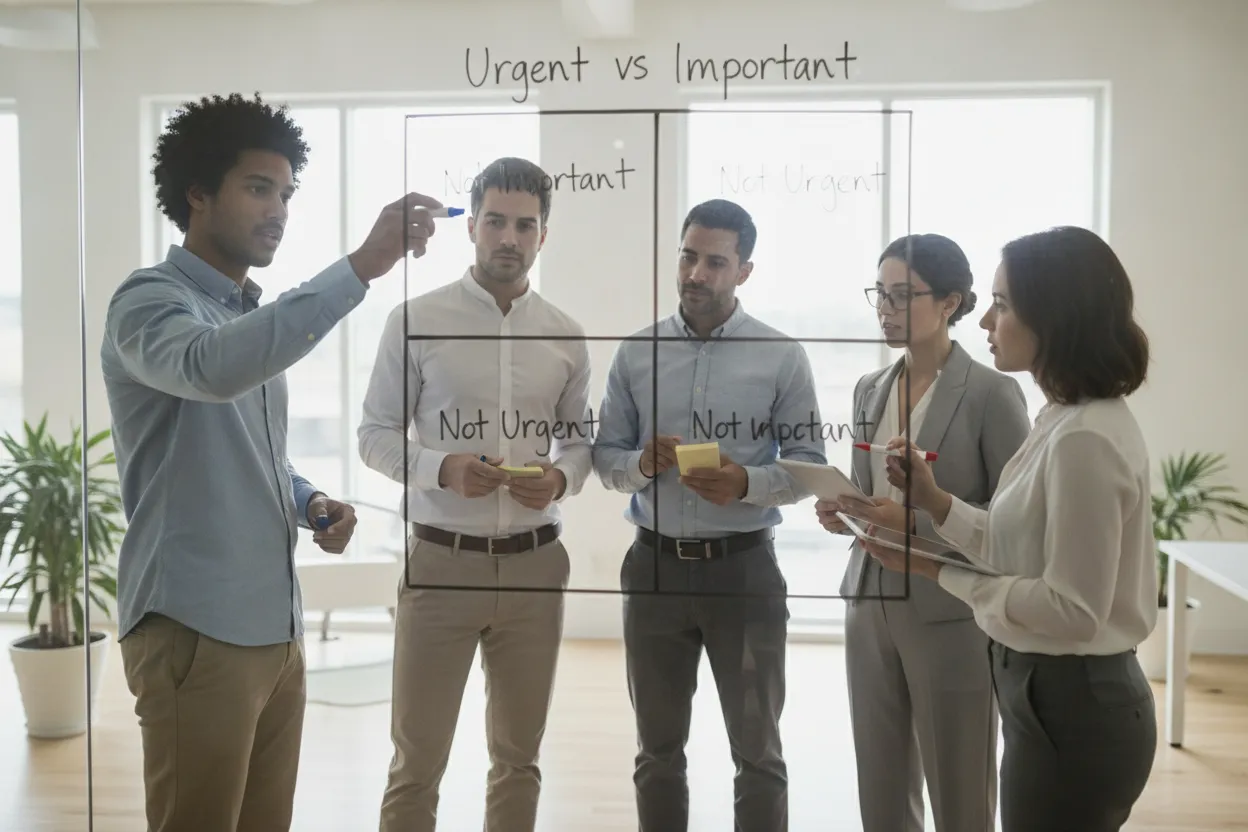
Teams place ten real tasks into Urgent/Important quadrants on sticky notes, then negotiate which to drop, delegate, defer, or do first. The physical sort makes prioritization visible and reveals the hidden rule: most teams treat almost everything as urgent until forced to choose.
PrioritizationQuadrantsDelegation
1 Interactive Guided Demo
1
2
3
4
5
6
7
8
Step 1 of 8
👆
🟦
🎯⚡✅
🎯⚡✅📋🔥
🟦
📌💡🤝🏆
✨✨
🎯⚡✅📋
🟦
📌💡🤝🏆
✨✨
🎯⚡✅📋🔥
🔥🎯⚡✅
🟦
🎉🌟✨🎊💫
Welcome to Eisenhower Matrix Workshop
Sort tasks into Urgent/Important quadrants.
👆 Click anywhere to continue
2 Activity Details
⏱️
Teams place ten real tasks into Urgent/Important quadrants on sticky notes, then negotiate which to drop, delegate, defer, or do first. The physical sort makes prioritization visible and reveals the hidden rule: most teams treat almost everything as urgent until forced to choose.
Players
👥 5+ Players
Recommended
Time
⏱ 10 min
Activity + debrief
Format
Team Game
Facilitated
Skill
Time Awareness
Primary outcome
What You'll Need
Prepare these items before the activity begins so the session runs smoothly.
🟦
Stopwatch
Required for activity
🟦
Chairs
Required for activity
🟦
Notepad
Required for activity
🟦
Pens
Required for activity
Step-by-Step Walkthrough
1
List Real Tasks
Explain that this activity helps participants understand time perception and how subjective time can feel.
5 min
2
Place in the Matrix
Ask participants to close their eyes and raise a hand when they think one minute has passed.
5 min
3
Debate Quadrants
Quietly start a stopwatch without letting participants see or hear it.
5 min
4
Delegate or Drop
Watch and note the moments when participants raise their hands.
5 min
5
Commit to the Top
Announce when the real minute ends and compare it against participant guesses.
5 min
6
Discuss Insights
Discuss variations in time perception and how they affect daily productivity.
5 min
Ground Rules
✓ Do
Explain the goal and constraints before starting.
Give every participant a clear role or opportunity to contribute.
Keep the timer visible and the rules consistent.
Encourage teams to explain their reasoning.
Close with a structured debrief.
✕ Don't
Do not let one person dominate the activity.
Do not change the rules midway unless it is a planned variation.
Do not skip reflection after the activity.
Do not make the activity personal or uncomfortable.
Do not focus only on winning; focus on learning.
What Your Team Will Learn
These outcomes should be reinforced during the debrief.
🧠
Outcome
Time Awareness
Participants practice this capability through the activity and reinforce it through discussion.
🛠️
Outcome
Focus
Participants practice this capability through the activity and reinforce it through discussion.
🤝
Outcome
Self-Awareness
Participants practice this capability through the activity and reinforce it through discussion.
⏱
Outcome
Perception
Participants practice this capability through the activity and reinforce it through discussion.
💡
Outcome
Mindfulness
Participants practice this capability through the activity and reinforce it through discussion.
📊
Outcome
Reflection
Participants practice this capability through the activity and reinforce it through discussion.
Ways to Mix It Up
🔁
Repeat Round
Run a second round after debrief to test improved thinking.
🤐
Silent Mode
Add a short no-speaking phase to test non-verbal coordination.
💰
Budget Mode
Assign costs or limits to resources to force prioritization.
🌐
Virtual Edition
Adapt the activity using breakout rooms and shared documents.
🏆
Scored Challenge
Award points for creativity, teamwork, and quality of reasoning.
Debrief Questions
Use these prompts to convert the activity into workplace learning.
What did your team do first during Eisenhower Matrix Workshop?
Which assumption turned out to be wrong?
How did communication affect the result?
Where did the team lose time or clarity?
What workplace situation feels similar to this activity?
What would you change if you ran the activity again?
3 Tips for Facilitators
⏱
Time Box Clearly
Use a visible timer so participants feel the constraint and pace their decisions.
🧑🏫
Facilitate, Don't Solve
Guide with questions instead of giving answers.
📌
Capture Observations
Note communication patterns, decision points, and bottlenecks.
💬
Debrief Deeply
Reserve enough time to connect the activity to workplace behavior.
4 Real-World Applications
🎯
Quarterly Planning
Translate annual goals into focused, time-bound milestones.
📈
Performance Reviews
Anchor 1:1s to specific, measurable outcomes.
🤝
Team Alignment
Make individual work visible so the team can support each other.
🚀
Career Development
Turn reflection into structured, repeatable growth plans.
👤 Age 18+👥 5+ Players⏱ 30 min
3. Kanban
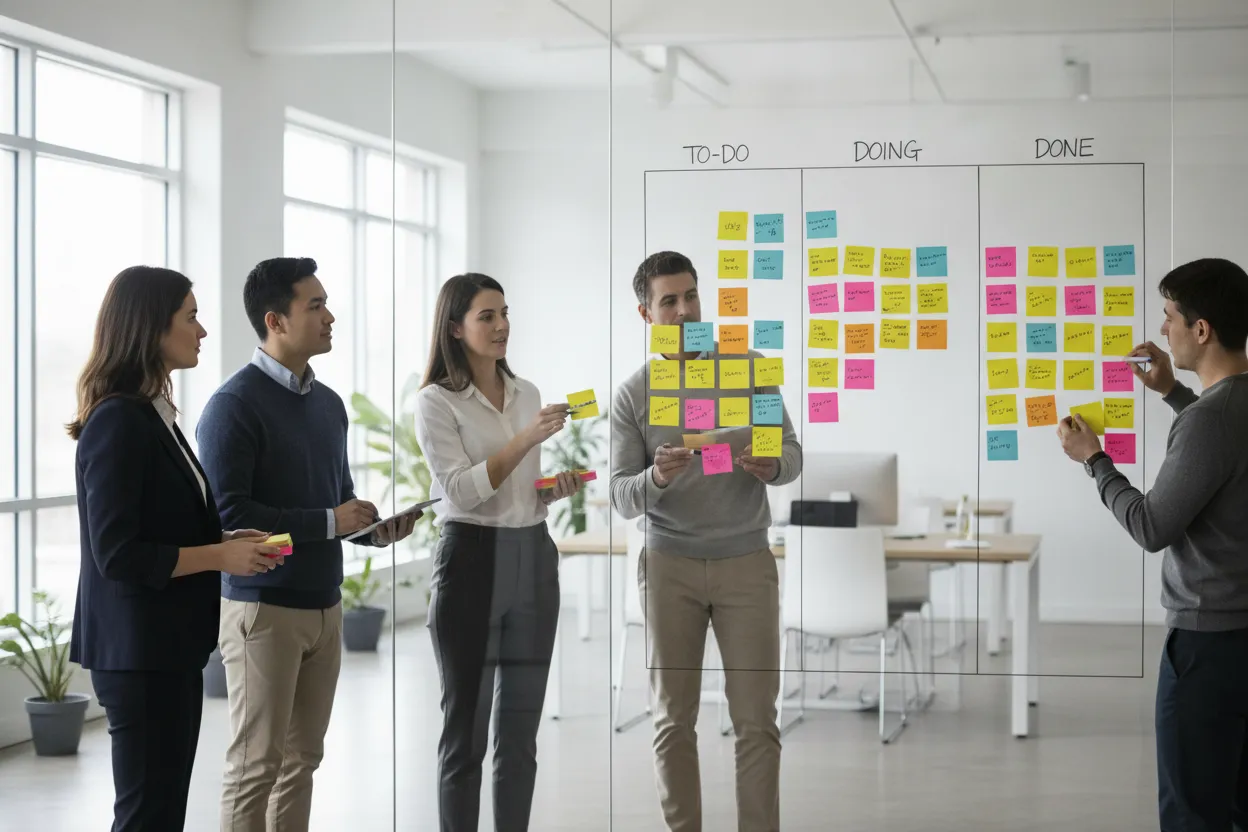
Participants set up a To Do, In Progress, and Done board and move sticky notes through the flow, learning to visualize work and limit work in progress.
WorkflowVisualizationFlow
1 Interactive Guided Demo
1
2
3
4
5
6
7
8
Step 1 of 8
👆
📋
📋🗂️🔄
🟨📋🖊️⏱️📋
🖊️
📋✨🎯🤝
✨✨
⏱️✅🌟💡
💡
🤝📌📋✨
✨✨
✨📋🟨🖊️⏱️
🎯🚀📌🤝
🏆
🎉🌟✨🎊💫
Welcome to Kanban
Visualize tasks, then flow them to done.
👆 Click anywhere to continue
2 Activity Details
📋
Participants set up a To Do, In Progress, and Done board and move sticky notes through the flow, learning to visualize work and limit work in progress.
Players
👥 5+ Players
Recommended
Time
⏱ 30 min
Activity + debrief
Format
Team Game
Facilitated
Skill
Workflow
Primary outcome
What You'll Need
Prepare these items before the activity begins so the session runs smoothly.
📋
Kanban Board
Required for activity
🟨
Sticky Notes
Required for activity
🖊️
Markers
Required for activity
⏱️
Timer
Required for activity
Step-by-Step Walkthrough
1
Teach Kanban
Explain the Kanban method and how it improves workflow management.
5 min
2
Set Up the Board
Give each participant sticky notes and access to a Kanban board.
5 min
3
Write Tasks
Write tasks on sticky notes and place them in the To Do column.
5 min
4
Move the Cards
Move sticky notes to In Progress and then to Done as work advances.
5 min
5
Observe Flow
Observe how tasks move through the workflow and where they stall.
5 min
6
Debrief Visibility
Discuss the benefits of visualizing tasks and managing flow on a board.
5 min
Ground Rules
✓ Do
Explain the goal and constraints before starting.
Give every participant a clear role or opportunity to contribute.
Keep the timer visible and the rules consistent.
Encourage teams to explain their reasoning.
Close with a structured debrief.
✕ Don't
Do not let one person dominate the activity.
Do not change the rules midway unless it is a planned variation.
Do not skip reflection after the activity.
Do not make the activity personal or uncomfortable.
Do not focus only on winning; focus on learning.
What Your Team Will Learn
These outcomes should be reinforced during the debrief.
🧠
Outcome
Workflow
Participants practice this capability through the activity and reinforce it through discussion.
🛠️
Outcome
Visualization
Participants practice this capability through the activity and reinforce it through discussion.
🤝
Outcome
Flow
Participants practice this capability through the activity and reinforce it through discussion.
⏱
Outcome
Prioritization
Participants practice this capability through the activity and reinforce it through discussion.
💡
Outcome
Focus
Participants practice this capability through the activity and reinforce it through discussion.
📊
Outcome
Collaboration
Participants practice this capability through the activity and reinforce it through discussion.
Ways to Mix It Up
🔁
Repeat Round
Run a second round after debrief to test improved thinking.
🤐
Silent Mode
Add a short no-speaking phase to test non-verbal coordination.
💰
Budget Mode
Assign costs or limits to resources to force prioritization.
🌐
Virtual Edition
Adapt the activity using breakout rooms and shared documents.
🏆
Scored Challenge
Award points for creativity, teamwork, and quality of reasoning.
Debrief Questions
Use these prompts to convert the activity into workplace learning.
What did your team do first during Kanban?
Which assumption turned out to be wrong?
How did communication affect the result?
Where did the team lose time or clarity?
What workplace situation feels similar to this activity?
What would you change if you ran the activity again?
3 Tips for Facilitators
⏱
Time Box Clearly
Use a visible timer so participants feel the constraint and pace their decisions.
🧑🏫
Facilitate, Don't Solve
Guide with questions instead of giving answers.
📌
Capture Observations
Note communication patterns, decision points, and bottlenecks.
💬
Debrief Deeply
Reserve enough time to connect the activity to workplace behavior.
4 Real-World Applications
🎯
Quarterly Planning
Translate annual goals into focused, time-bound milestones.
📈
Performance Reviews
Anchor 1:1s to specific, measurable outcomes.
🤝
Team Alignment
Make individual work visible so the team can support each other.
🚀
Career Development
Turn reflection into structured, repeatable growth plans.
👤 Age 18+👥 4+ Players⏱ 20 min
4. Sort the Cards
Participants race to sort a shuffled deck by suit and number, sharpening concentration, sequencing, and the ability to recover from small errors.
ConcentrationSpeedSequencing
1 Interactive Guided Demo
1
2
3
4
5
6
7
8
Step 1 of 8
👆
🃏
🗂️📋🎯
⏱️🃏📋🪑🃏
📋
✨🎯🤝📌
✨✨
🪑✅🌟💡
💡
🤝📌📋✨
✨✨
✨🃏⏱️📋🪑
🎯🚀📌🤝
🏆
🎉🌟✨🎊💫
Welcome to Sort the Cards
Sort the deck quickly without losing focus.
👆 Click anywhere to continue
2 Activity Details
🃏
Participants race to sort a shuffled deck by suit and number, sharpening concentration, sequencing, and the ability to recover from small errors.
Players
👥 4+ Players
Recommended
Time
⏱ 20 min
Activity + debrief
Format
Team Game
Facilitated
Skill
Concentration
Primary outcome
What You'll Need
Prepare these items before the activity begins so the session runs smoothly.
🃏
Card Decks
Required for activity
⏱️
Timer
Required for activity
📋
Score Sheet
Required for activity
🪑
Tables
Required for activity
Step-by-Step Walkthrough
1
Set the Goal
Explain that the activity sharpens concentration and motor coordination.
5 min
2
Deal the Decks
Give each participant a shuffled deck of cards.
5 min
3
Sort by Suit
Participants sort the deck by suit and number as quickly as possible.
5 min
4
Work the Window
Allow ten minutes for participants to finish the sort.
5 min
5
Observe Speed
Observe the sorting process and where time is lost or gained.
5 min
6
Debrief Focus
Discuss the challenges and how improved concentration shows up at work.
5 min
Ground Rules
✓ Do
Explain the goal and constraints before starting.
Give every participant a clear role or opportunity to contribute.
Keep the timer visible and the rules consistent.
Encourage teams to explain their reasoning.
Close with a structured debrief.
✕ Don't
Do not let one person dominate the activity.
Do not change the rules midway unless it is a planned variation.
Do not skip reflection after the activity.
Do not make the activity personal or uncomfortable.
Do not focus only on winning; focus on learning.
What Your Team Will Learn
These outcomes should be reinforced during the debrief.
🧠
Outcome
Concentration
Participants practice this capability through the activity and reinforce it through discussion.
🛠️
Outcome
Speed
Participants practice this capability through the activity and reinforce it through discussion.
🤝
Outcome
Sequencing
Participants practice this capability through the activity and reinforce it through discussion.
⏱
Outcome
Focus
Participants practice this capability through the activity and reinforce it through discussion.
💡
Outcome
Coordination
Participants practice this capability through the activity and reinforce it through discussion.
📊
Outcome
Discipline
Participants practice this capability through the activity and reinforce it through discussion.
Ways to Mix It Up
🔁
Repeat Round
Run a second round after debrief to test improved thinking.
🤐
Silent Mode
Add a short no-speaking phase to test non-verbal coordination.
💰
Budget Mode
Assign costs or limits to resources to force prioritization.
🌐
Virtual Edition
Adapt the activity using breakout rooms and shared documents.
🏆
Scored Challenge
Award points for creativity, teamwork, and quality of reasoning.
Debrief Questions
Use these prompts to convert the activity into workplace learning.
What did your team do first during Sort the Cards?
Which assumption turned out to be wrong?
How did communication affect the result?
Where did the team lose time or clarity?
What workplace situation feels similar to this activity?
What would you change if you ran the activity again?
3 Tips for Facilitators
⏱
Time Box Clearly
Use a visible timer so participants feel the constraint and pace their decisions.
🧑🏫
Facilitate, Don't Solve
Guide with questions instead of giving answers.
📌
Capture Observations
Note communication patterns, decision points, and bottlenecks.
💬
Debrief Deeply
Reserve enough time to connect the activity to workplace behavior.
4 Real-World Applications
🎯
Quarterly Planning
Translate annual goals into focused, time-bound milestones.
📈
Performance Reviews
Anchor 1:1s to specific, measurable outcomes.
🤝
Team Alignment
Make individual work visible so the team can support each other.
🚀
Career Development
Turn reflection into structured, repeatable growth plans.
👤 Age 18+👥 5+ Players⏱ 20 min
5. Mayonnaise Jar
A classic prioritization demo using a jar filled with rocks, pebbles, and sand to show that big priorities must go in first or smaller tasks will crowd them out.
PrioritizationFocusPlanning
1 Interactive Guided Demo
1
2
3
4
5
6
7
8
Step 1 of 8
👆
🫙
🫙🪨🏖️
🪨🫙🟤🏖️📋
🟤
📋✨🎯🤝
✨✨
🏖️✅🌟💡
📋
🤝📌💡✨
✨✨
💡🫙🪨🟤🏖️
✨🎯🚀📌
🏆
🎉🌟✨🎊💫
Welcome to Mayonnaise Jar
Load big priorities before the small stuff.
👆 Click anywhere to continue
2 Activity Details
🫙
A classic prioritization demo using a jar filled with rocks, pebbles, and sand to show that big priorities must go in first or smaller tasks will crowd them out.
Players
👥 5+ Players
Recommended
Time
⏱ 20 min
Activity + debrief
Format
Team Game
Facilitated
Skill
Prioritization
Primary outcome
What You'll Need
Prepare these items before the activity begins so the session runs smoothly.
🫙
Glass Jar
Required for activity
🪨
Rocks
Required for activity
🟤
Pebbles
Required for activity
🏖️
Sand
Required for activity
📋
Notepad
Required for activity
Step-by-Step Walkthrough
1
Explain the Metaphor
Explain the jar metaphor and why prioritizing the biggest tasks first matters.
5 min
2
Show the Materials
Display the empty jar along with rocks, pebbles, and sand on the table.
5 min
3
Map to Tasks
Describe how the jar represents a day and the materials represent tasks of varying importance.
5 min
4
Fill the Jar
Fill the jar with rocks first, then pebbles, then sand to show how big priorities make room for the rest.
5 min
5
Hands-On Try
Optionally let participants try filling their own jars to feel the principle in action.
5 min
6
Reflect
Discuss the metaphor and how the lesson applies to daily work and weekly planning.
5 min
Ground Rules
✓ Do
Explain the goal and constraints before starting.
Give every participant a clear role or opportunity to contribute.
Keep the timer visible and the rules consistent.
Encourage teams to explain their reasoning.
Close with a structured debrief.
✕ Don't
Do not let one person dominate the activity.
Do not change the rules midway unless it is a planned variation.
Do not skip reflection after the activity.
Do not make the activity personal or uncomfortable.
Do not focus only on winning; focus on learning.
What Your Team Will Learn
These outcomes should be reinforced during the debrief.
🧠
Outcome
Prioritization
Participants practice this capability through the activity and reinforce it through discussion.
🛠️
Outcome
Focus
Participants practice this capability through the activity and reinforce it through discussion.
🤝
Outcome
Planning
Participants practice this capability through the activity and reinforce it through discussion.
⏱
Outcome
Decision Making
Participants practice this capability through the activity and reinforce it through discussion.
💡
Outcome
Clarity
Participants practice this capability through the activity and reinforce it through discussion.
📊
Outcome
Discipline
Participants practice this capability through the activity and reinforce it through discussion.
Ways to Mix It Up
🔁
Repeat Round
Run a second round after debrief to test improved thinking.
🤐
Silent Mode
Add a short no-speaking phase to test non-verbal coordination.
💰
Budget Mode
Assign costs or limits to resources to force prioritization.
🌐
Virtual Edition
Adapt the activity using breakout rooms and shared documents.
🏆
Scored Challenge
Award points for creativity, teamwork, and quality of reasoning.
Debrief Questions
Use these prompts to convert the activity into workplace learning.
What did your team do first during Mayonnaise Jar?
Which assumption turned out to be wrong?
How did communication affect the result?
Where did the team lose time or clarity?
What workplace situation feels similar to this activity?
What would you change if you ran the activity again?
3 Tips for Facilitators
⏱
Time Box Clearly
Use a visible timer so participants feel the constraint and pace their decisions.
🧑🏫
Facilitate, Don't Solve
Guide with questions instead of giving answers.
📌
Capture Observations
Note communication patterns, decision points, and bottlenecks.
💬
Debrief Deeply
Reserve enough time to connect the activity to workplace behavior.
4 Real-World Applications
🎯
Quarterly Planning
Translate annual goals into focused, time-bound milestones.
📈
Performance Reviews
Anchor 1:1s to specific, measurable outcomes.
🤝
Team Alignment
Make individual work visible so the team can support each other.
🚀
Career Development
Turn reflection into structured, repeatable growth plans.
👤 Age 18+👥 5+ Players⏱ 10 min
6. Time Audit Challenge
Each participant tracks activities in 15-minute blocks for one day, then compares where time actually went versus where they thought it went. The gap between perception and reality is usually larger than expected and is the single most powerful starting point for any productivity intervention.
TrackingAwarenessHabits
1 Interactive Guided Demo
1
2
3
4
5
6
7
8
Step 1 of 8
👆
📒
⏱️📊💡
⏱️📊💡✅📝
📒
🔍⏰🎯🏆
✨✨
⏱️📊💡✅
📒
🔍⏰🎯🏆
✨✨
⏱️📊💡✅📝
📝⏱️📊💡
📒
🎉🌟✨🎊💫
Welcome to Time Audit Challenge
Log every task for a day, then surface the time leaks.
👆 Click anywhere to continue
2 Activity Details
⏱️
Each participant tracks activities in 15-minute blocks for one day, then compares where time actually went versus where they thought it went. The gap between perception and reality is usually larger than expected and is the single most powerful starting point for any productivity intervention.
Players
👥 5+ Players
Recommended
Time
⏱ 10 min
Activity + debrief
Format
Team Game
Facilitated
Skill
Time Awareness
Primary outcome
What You'll Need
Prepare these items before the activity begins so the session runs smoothly.
📒
Stopwatch
Required for activity
📒
Chairs
Required for activity
📒
Notepad
Required for activity
📒
Pens
Required for activity
Step-by-Step Walkthrough
1
Set Up the Log
Explain that this activity helps participants understand time perception and how subjective time can feel.
5 min
2
Track 15-Min Blocks
Ask participants to close their eyes and raise a hand when they think one minute has passed.
5 min
3
Tally the Day
Quietly start a stopwatch without letting participants see or hear it.
5 min
4
Compare to Estimate
Watch and note the moments when participants raise their hands.
5 min
5
Plan the Recovery
Announce when the real minute ends and compare it against participant guesses.
5 min
6
Discuss Insights
Discuss variations in time perception and how they affect daily productivity.
5 min
Ground Rules
✓ Do
Explain the goal and constraints before starting.
Give every participant a clear role or opportunity to contribute.
Keep the timer visible and the rules consistent.
Encourage teams to explain their reasoning.
Close with a structured debrief.
✕ Don't
Do not let one person dominate the activity.
Do not change the rules midway unless it is a planned variation.
Do not skip reflection after the activity.
Do not make the activity personal or uncomfortable.
Do not focus only on winning; focus on learning.
What Your Team Will Learn
These outcomes should be reinforced during the debrief.
🧠
Outcome
Time Awareness
Participants practice this capability through the activity and reinforce it through discussion.
🛠️
Outcome
Focus
Participants practice this capability through the activity and reinforce it through discussion.
🤝
Outcome
Self-Awareness
Participants practice this capability through the activity and reinforce it through discussion.
⏱
Outcome
Perception
Participants practice this capability through the activity and reinforce it through discussion.
💡
Outcome
Mindfulness
Participants practice this capability through the activity and reinforce it through discussion.
📊
Outcome
Reflection
Participants practice this capability through the activity and reinforce it through discussion.
Ways to Mix It Up
🔁
Repeat Round
Run a second round after debrief to test improved thinking.
🤐
Silent Mode
Add a short no-speaking phase to test non-verbal coordination.
💰
Budget Mode
Assign costs or limits to resources to force prioritization.
🌐
Virtual Edition
Adapt the activity using breakout rooms and shared documents.
🏆
Scored Challenge
Award points for creativity, teamwork, and quality of reasoning.
Debrief Questions
Use these prompts to convert the activity into workplace learning.
What did your team do first during Time Audit Challenge?
Which assumption turned out to be wrong?
How did communication affect the result?
Where did the team lose time or clarity?
What workplace situation feels similar to this activity?
What would you change if you ran the activity again?
3 Tips for Facilitators
⏱
Time Box Clearly
Use a visible timer so participants feel the constraint and pace their decisions.
🧑🏫
Facilitate, Don't Solve
Guide with questions instead of giving answers.
📌
Capture Observations
Note communication patterns, decision points, and bottlenecks.
💬
Debrief Deeply
Reserve enough time to connect the activity to workplace behavior.
4 Real-World Applications
🎯
Quarterly Planning
Translate annual goals into focused, time-bound milestones.
📈
Performance Reviews
Anchor 1:1s to specific, measurable outcomes.
🤝
Team Alignment
Make individual work visible so the team can support each other.
🚀
Career Development
Turn reflection into structured, repeatable growth plans.
👤 Age 18+👥 5+ Players⏱ 30 min
7. Time Squared
Participants log activities in 15-minute blocks across a day, then analyze the grid to surface time sinks, productive peaks, and changes worth making.
TrackingAuditAnalysis
1 Interactive Guided Demo
1
2
3
4
5
6
7
8
Step 1 of 8
👆
📊
⏱️🟦📊
📋🖊️⏰📊🖊️
🖊️
📋✨🎯🤝
✨✨
⏰✅🌟💡
💡
🤝📌📋✨
✨✨
✨📋🖊️⏰📊
🎯🚀📌🤝
🏆
🎉🌟✨🎊💫
Welcome to Time Squared
Track every 15 minute block in a day.
👆 Click anywhere to continue
2 Activity Details
📊
Participants log activities in 15-minute blocks across a day, then analyze the grid to surface time sinks, productive peaks, and changes worth making.
Players
👥 5+ Players
Recommended
Time
⏱ 30 min
Activity + debrief
Format
Team Game
Facilitated
Skill
Time Tracking
Primary outcome
What You'll Need
Prepare these items before the activity begins so the session runs smoothly.
📋
Tracking Sheets
Required for activity
🖊️
Pens
Required for activity
⏰
Watches
Required for activity
📊
Whiteboard
Required for activity
Step-by-Step Walkthrough
1
Set the Aim
Explain that tracking time in fixed blocks reveals true time management patterns.
5 min
2
Hand Out Grids
Provide each participant with a time tracking sheet split into 15 minute blocks.
5 min
3
Track the Day
Participants log activities in 15 minute intervals across a full workday.
5 min
4
Stay Honest
Encourage honest entries throughout the day rather than retrofitting at the end.
5 min
5
Collect Sheets
Collect the completed time tracking sheets for analysis.
5 min
6
Find Patterns
Discuss patterns and identify the biggest opportunities for improvement.
5 min
Ground Rules
✓ Do
Explain the goal and constraints before starting.
Give every participant a clear role or opportunity to contribute.
Keep the timer visible and the rules consistent.
Encourage teams to explain their reasoning.
Close with a structured debrief.
✕ Don't
Do not let one person dominate the activity.
Do not change the rules midway unless it is a planned variation.
Do not skip reflection after the activity.
Do not make the activity personal or uncomfortable.
Do not focus only on winning; focus on learning.
What Your Team Will Learn
These outcomes should be reinforced during the debrief.
🧠
Outcome
Time Tracking
Participants practice this capability through the activity and reinforce it through discussion.
🛠️
Outcome
Self-Awareness
Participants practice this capability through the activity and reinforce it through discussion.
🤝
Outcome
Analysis
Participants practice this capability through the activity and reinforce it through discussion.
⏱
Outcome
Productivity
Participants practice this capability through the activity and reinforce it through discussion.
💡
Outcome
Discipline
Participants practice this capability through the activity and reinforce it through discussion.
📊
Outcome
Focus
Participants practice this capability through the activity and reinforce it through discussion.
Ways to Mix It Up
🔁
Repeat Round
Run a second round after debrief to test improved thinking.
🤐
Silent Mode
Add a short no-speaking phase to test non-verbal coordination.
💰
Budget Mode
Assign costs or limits to resources to force prioritization.
🌐
Virtual Edition
Adapt the activity using breakout rooms and shared documents.
🏆
Scored Challenge
Award points for creativity, teamwork, and quality of reasoning.
Debrief Questions
Use these prompts to convert the activity into workplace learning.
What did your team do first during Time Squared?
Which assumption turned out to be wrong?
How did communication affect the result?
Where did the team lose time or clarity?
What workplace situation feels similar to this activity?
What would you change if you ran the activity again?
3 Tips for Facilitators
⏱
Time Box Clearly
Use a visible timer so participants feel the constraint and pace their decisions.
🧑🏫
Facilitate, Don't Solve
Guide with questions instead of giving answers.
📌
Capture Observations
Note communication patterns, decision points, and bottlenecks.
💬
Debrief Deeply
Reserve enough time to connect the activity to workplace behavior.
4 Real-World Applications
🎯
Quarterly Planning
Translate annual goals into focused, time-bound milestones.
📈
Performance Reviews
Anchor 1:1s to specific, measurable outcomes.
🤝
Team Alignment
Make individual work visible so the team can support each other.
🚀
Career Development
Turn reflection into structured, repeatable growth plans.
👤 Age 18+👥 5+ Players⏱ 15 min
8. Dealing With Distractions
Participants list the distractions that steal their focus, then crowdsource counter-strategies the whole team can adopt to protect deep work.
FocusDisciplineStrategy
1 Interactive Guided Demo
1
2
3
4
5
6
7
8
Step 1 of 8
👆
🚫
🚫📵🎯
📋🖊️📊⏱️🖊️
🖊️
📋✨🎯🤝
✨✨
📊✅🌟💡
⏱️
🎯🤝📌💡
✨✨
💡📋🖊️📊⏱️
✨🎯🚀📌
🏆
🎉🌟✨🎊💫
Welcome to Dealing With Distractions
Name the distractions, then beat them.
👆 Click anywhere to continue
2 Activity Details
🚫
Participants list the distractions that steal their focus, then crowdsource counter-strategies the whole team can adopt to protect deep work.
Players
👥 5+ Players
Recommended
Time
⏱ 15 min
Activity + debrief
Format
Team Game
Facilitated
Skill
Focus
Primary outcome
What You'll Need
Prepare these items before the activity begins so the session runs smoothly.
📋
Sticky Notes
Required for activity
🖊️
Markers
Required for activity
📊
Whiteboard
Required for activity
⏱️
Timer
Required for activity
Step-by-Step Walkthrough
1
Frame the Goal
Explain the goal of naming and neutralizing the biggest workplace distractions.
5 min
2
List Distractions
Participants list the common distractions that pull them off task.
5 min
3
Solo Time
Allow ten minutes for participants to build their personal lists.
5 min
4
Crowdsource Fixes
Discuss the most common distractions and the strategies that beat them.
5 min
5
Swap Strategies
Encourage participants to share strategies that already work for them.
5 min
6
Lock In Habits
Summarize the top strategies and challenge the team to apply them this week.
5 min
Ground Rules
✓ Do
Explain the goal and constraints before starting.
Give every participant a clear role or opportunity to contribute.
Keep the timer visible and the rules consistent.
Encourage teams to explain their reasoning.
Close with a structured debrief.
✕ Don't
Do not let one person dominate the activity.
Do not change the rules midway unless it is a planned variation.
Do not skip reflection after the activity.
Do not make the activity personal or uncomfortable.
Do not focus only on winning; focus on learning.
What Your Team Will Learn
These outcomes should be reinforced during the debrief.
🧠
Outcome
Focus
Participants practice this capability through the activity and reinforce it through discussion.
🛠️
Outcome
Discipline
Participants practice this capability through the activity and reinforce it through discussion.
🤝
Outcome
Self-Awareness
Participants practice this capability through the activity and reinforce it through discussion.
⏱
Outcome
Productivity
Participants practice this capability through the activity and reinforce it through discussion.
💡
Outcome
Strategy
Participants practice this capability through the activity and reinforce it through discussion.
📊
Outcome
Habit Building
Participants practice this capability through the activity and reinforce it through discussion.
Ways to Mix It Up
🔁
Repeat Round
Run a second round after debrief to test improved thinking.
🤐
Silent Mode
Add a short no-speaking phase to test non-verbal coordination.
💰
Budget Mode
Assign costs or limits to resources to force prioritization.
🌐
Virtual Edition
Adapt the activity using breakout rooms and shared documents.
🏆
Scored Challenge
Award points for creativity, teamwork, and quality of reasoning.
Debrief Questions
Use these prompts to convert the activity into workplace learning.
What did your team do first during Dealing With Distractions?
Which assumption turned out to be wrong?
How did communication affect the result?
Where did the team lose time or clarity?
What workplace situation feels similar to this activity?
What would you change if you ran the activity again?
3 Tips for Facilitators
⏱
Time Box Clearly
Use a visible timer so participants feel the constraint and pace their decisions.
🧑🏫
Facilitate, Don't Solve
Guide with questions instead of giving answers.
📌
Capture Observations
Note communication patterns, decision points, and bottlenecks.
💬
Debrief Deeply
Reserve enough time to connect the activity to workplace behavior.
4 Real-World Applications
🎯
Quarterly Planning
Translate annual goals into focused, time-bound milestones.
📈
Performance Reviews
Anchor 1:1s to specific, measurable outcomes.
🤝
Team Alignment
Make individual work visible so the team can support each other.
🚀
Career Development
Turn reflection into structured, repeatable growth plans.
Ready to roll out time management workshops for your team?
Edstellar facilitators deliver all 17 activities live, on-site or virtually, fully tailored to your team's roles, schedules, and specific focus and prioritization challenges.
Teams coordinate a complex, multi-step task under extreme time pressure: hand-offs, bottlenecks, and time leaks are vividly exposed when the kitchen catches fire metaphorically every two minutes. The rerun after debrief is where the lessons actually stick.
CoordinationBottlenecksPressure
1 Interactive Guided Demo
1
2
3
4
5
6
7
8
Step 1 of 8
👆
🍳
⏰🔥🎯
⏰🔥🎯🍽️🥘
🍳
🧑🍳⚡💡🏆
✨✨
⏰🔥🎯🍽️
🍳
🧑🍳⚡💡🏆
✨✨
⏰🔥🎯🍽️🥘
🥘⏰🔥🎯
🍳
🎉🌟✨🎊💫
Welcome to Overcooked Simulation
Run a chaotic virtual kitchen, then debrief the bottlenecks.
👆 Click anywhere to continue
2 Activity Details
⏱️
Teams coordinate a complex, multi-step task under extreme time pressure: hand-offs, bottlenecks, and time leaks are vividly exposed when the kitchen catches fire metaphorically every two minutes. The rerun after debrief is where the lessons actually stick.
Players
👥 5+ Players
Recommended
Time
⏱ 10 min
Activity + debrief
Format
Team Game
Facilitated
Skill
Time Awareness
Primary outcome
What You'll Need
Prepare these items before the activity begins so the session runs smoothly.
🍳
Stopwatch
Required for activity
🍳
Chairs
Required for activity
🍳
Notepad
Required for activity
🍳
Pens
Required for activity
Step-by-Step Walkthrough
1
Brief the Recipe
Explain that this activity helps participants understand time perception and how subjective time can feel.
5 min
2
Assign the Stations
Ask participants to close their eyes and raise a hand when they think one minute has passed.
5 min
3
Run the Round
Quietly start a stopwatch without letting participants see or hear it.
5 min
4
Spot the Bottleneck
Watch and note the moments when participants raise their hands.
5 min
5
Rerun the Round
Announce when the real minute ends and compare it against participant guesses.
5 min
6
Discuss Insights
Discuss variations in time perception and how they affect daily productivity.
5 min
Ground Rules
✓ Do
Explain the goal and constraints before starting.
Give every participant a clear role or opportunity to contribute.
Keep the timer visible and the rules consistent.
Encourage teams to explain their reasoning.
Close with a structured debrief.
✕ Don't
Do not let one person dominate the activity.
Do not change the rules midway unless it is a planned variation.
Do not skip reflection after the activity.
Do not make the activity personal or uncomfortable.
Do not focus only on winning; focus on learning.
What Your Team Will Learn
These outcomes should be reinforced during the debrief.
🧠
Outcome
Time Awareness
Participants practice this capability through the activity and reinforce it through discussion.
🛠️
Outcome
Focus
Participants practice this capability through the activity and reinforce it through discussion.
🤝
Outcome
Self-Awareness
Participants practice this capability through the activity and reinforce it through discussion.
⏱
Outcome
Perception
Participants practice this capability through the activity and reinforce it through discussion.
💡
Outcome
Mindfulness
Participants practice this capability through the activity and reinforce it through discussion.
📊
Outcome
Reflection
Participants practice this capability through the activity and reinforce it through discussion.
Ways to Mix It Up
🔁
Repeat Round
Run a second round after debrief to test improved thinking.
🤐
Silent Mode
Add a short no-speaking phase to test non-verbal coordination.
💰
Budget Mode
Assign costs or limits to resources to force prioritization.
🌐
Virtual Edition
Adapt the activity using breakout rooms and shared documents.
🏆
Scored Challenge
Award points for creativity, teamwork, and quality of reasoning.
Debrief Questions
Use these prompts to convert the activity into workplace learning.
What did your team do first during Overcooked Simulation?
Which assumption turned out to be wrong?
How did communication affect the result?
Where did the team lose time or clarity?
What workplace situation feels similar to this activity?
What would you change if you ran the activity again?
3 Tips for Facilitators
⏱
Time Box Clearly
Use a visible timer so participants feel the constraint and pace their decisions.
🧑🏫
Facilitate, Don't Solve
Guide with questions instead of giving answers.
📌
Capture Observations
Note communication patterns, decision points, and bottlenecks.
💬
Debrief Deeply
Reserve enough time to connect the activity to workplace behavior.
4 Real-World Applications
🎯
Quarterly Planning
Translate annual goals into focused, time-bound milestones.
📈
Performance Reviews
Anchor 1:1s to specific, measurable outcomes.
🤝
Team Alignment
Make individual work visible so the team can support each other.
🚀
Career Development
Turn reflection into structured, repeatable growth plans.
👤 Age 18+👥 5+ Players⏱ 10 min
10. How Long is a Minute
Participants close their eyes and raise a hand when they believe a minute has passed. The reveal sparks a conversation on time perception and self-awareness.
AwarenessFocusPerception
1 Interactive Guided Demo
1
2
3
4
5
6
7
8
Step 1 of 8
👆
⏱️
⏱️💭👀
🪑⏱️📋🖊️⏱️
📋
✨🎯🤝📌
✨✨
🖊️✅🌟💡
💡
🤝📌📋✨
✨✨
✨⏱️🪑📋🖊️
🎯🚀📌🤝
🏆
🎉🌟✨🎊💫
Welcome to How Long is a Minute
Test how accurately you sense one minute.
👆 Click anywhere to continue
2 Activity Details
⏱️
Participants close their eyes and raise a hand when they believe a minute has passed. The reveal sparks a conversation on time perception and self-awareness.
Players
👥 5+ Players
Recommended
Time
⏱ 10 min
Activity + debrief
Format
Team Game
Facilitated
Skill
Time Awareness
Primary outcome
What You'll Need
Prepare these items before the activity begins so the session runs smoothly.
⏱️
Stopwatch
Required for activity
🪑
Chairs
Required for activity
📋
Notepad
Required for activity
🖊️
Pens
Required for activity
Step-by-Step Walkthrough
1
Set the Scene
Explain that this activity helps participants understand time perception and how subjective time can feel.
5 min
2
Close Eyes
Ask participants to close their eyes and raise a hand when they think one minute has passed.
5 min
3
Start the Timer
Quietly start a stopwatch without letting participants see or hear it.
5 min
4
Observe Hands
Watch and note the moments when participants raise their hands.
5 min
5
Reveal the Minute
Announce when the real minute ends and compare it against participant guesses.
5 min
6
Discuss Insights
Discuss variations in time perception and how they affect daily productivity.
5 min
Ground Rules
✓ Do
Explain the goal and constraints before starting.
Give every participant a clear role or opportunity to contribute.
Keep the timer visible and the rules consistent.
Encourage teams to explain their reasoning.
Close with a structured debrief.
✕ Don't
Do not let one person dominate the activity.
Do not change the rules midway unless it is a planned variation.
Do not skip reflection after the activity.
Do not make the activity personal or uncomfortable.
Do not focus only on winning; focus on learning.
What Your Team Will Learn
These outcomes should be reinforced during the debrief.
🧠
Outcome
Time Awareness
Participants practice this capability through the activity and reinforce it through discussion.
🛠️
Outcome
Focus
Participants practice this capability through the activity and reinforce it through discussion.
🤝
Outcome
Self-Awareness
Participants practice this capability through the activity and reinforce it through discussion.
⏱
Outcome
Perception
Participants practice this capability through the activity and reinforce it through discussion.
💡
Outcome
Mindfulness
Participants practice this capability through the activity and reinforce it through discussion.
📊
Outcome
Reflection
Participants practice this capability through the activity and reinforce it through discussion.
Ways to Mix It Up
🔁
Repeat Round
Run a second round after debrief to test improved thinking.
🤐
Silent Mode
Add a short no-speaking phase to test non-verbal coordination.
💰
Budget Mode
Assign costs or limits to resources to force prioritization.
🌐
Virtual Edition
Adapt the activity using breakout rooms and shared documents.
🏆
Scored Challenge
Award points for creativity, teamwork, and quality of reasoning.
Debrief Questions
Use these prompts to convert the activity into workplace learning.
What did your team do first during How Long is a Minute?
Which assumption turned out to be wrong?
How did communication affect the result?
Where did the team lose time or clarity?
What workplace situation feels similar to this activity?
What would you change if you ran the activity again?
3 Tips for Facilitators
⏱
Time Box Clearly
Use a visible timer so participants feel the constraint and pace their decisions.
🧑🏫
Facilitate, Don't Solve
Guide with questions instead of giving answers.
📌
Capture Observations
Note communication patterns, decision points, and bottlenecks.
💬
Debrief Deeply
Reserve enough time to connect the activity to workplace behavior.
4 Real-World Applications
🎯
Quarterly Planning
Translate annual goals into focused, time-bound milestones.
📈
Performance Reviews
Anchor 1:1s to specific, measurable outcomes.
🤝
Team Alignment
Make individual work visible so the team can support each other.
🚀
Career Development
Turn reflection into structured, repeatable growth plans.
👤 Age 18+👥 8+ Players⏱ 45 min
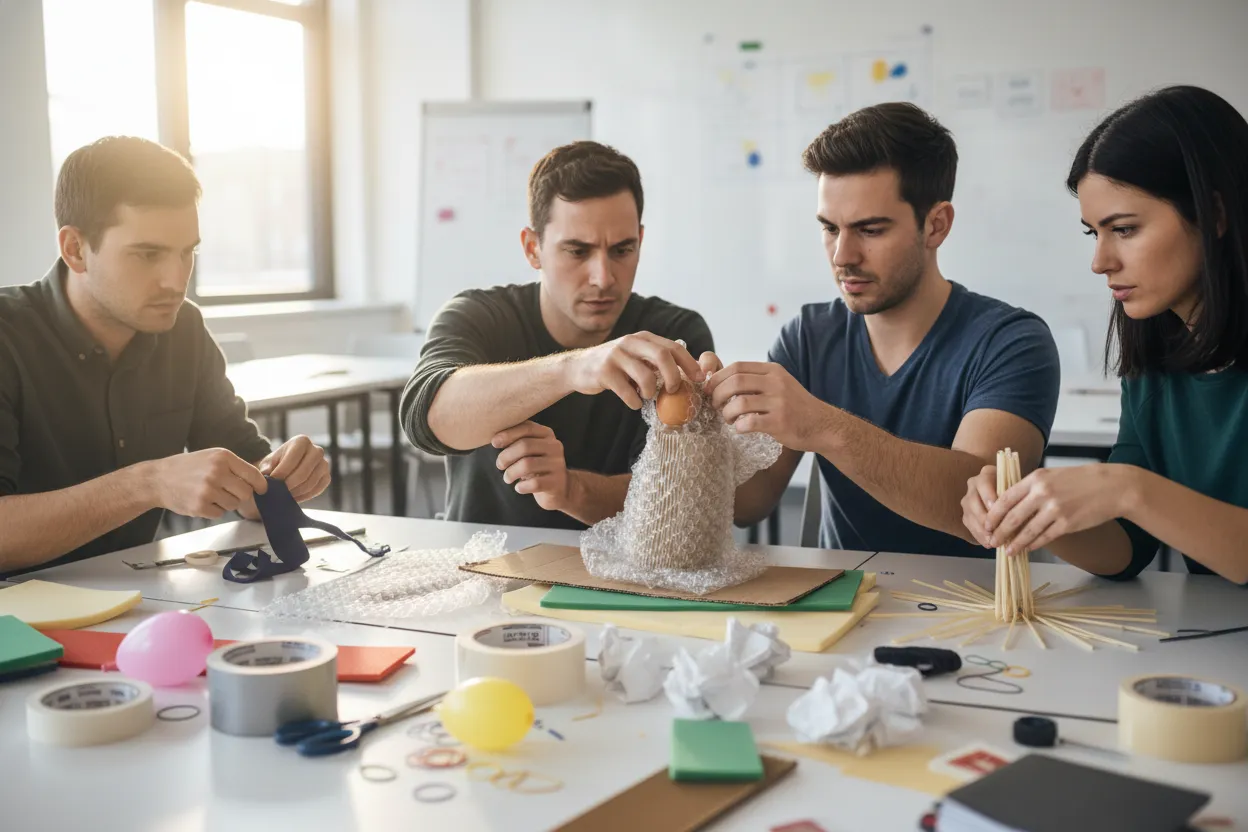
11. The Great Egg Drop
Teams design a structure to protect a raw egg from a drop, racing the clock to plan, build, and test while juggling collaboration and time pressure.
CollaborationPlanningCreativity
1 Interactive Guided Demo
1
2
3
4
5
6
7
8
Step 1 of 8
👆
🥚
🥚⬇️🛡️
📰🥚📎✂️🥤
📎
📋✨🎯🤝
✨✨
✂️✅🌟💡
🥤
🎯🤝📌💡
✨✨
💡🥚📰📎✂️
📋🎯🚀📌
🏆
🎉🌟✨🎊💫
Welcome to The Great Egg Drop
Protect the egg, beat the clock.
👆 Click anywhere to continue
2 Activity Details
🥚
Teams design a structure to protect a raw egg from a drop, racing the clock to plan, build, and test while juggling collaboration and time pressure.
Players
👥 8+ Players
Recommended
Time
⏱ 45 min
Activity + debrief
Format
Team Game
Facilitated
Skill
Collaboration
Primary outcome
What You'll Need
Prepare these items before the activity begins so the session runs smoothly.
🥚
Raw Eggs
Required for activity
📰
Newspaper
Required for activity
📎
Tape
Required for activity
✂️
Scissors
Required for activity
🥤
Straws
Required for activity
Step-by-Step Walkthrough
1
Set the Rules
Explain the objective, rules, and timing of the egg drop challenge.
5 min
2
Hand Out Kits
Provide each group with an egg and a varied set of building materials.
5 min
3
Plan and Build
Give teams 30 minutes to plan and build a structure that protects the egg on impact.
5 min
4
Drop Test
Drop each structure from the same height to test the designs head to head.
5 min
5
Observe Strategies
Observe planning, collaboration, and time management strategies across teams.
5 min
6
Reflect Together
Discuss what worked, what failed, and how time management shaped each design.
5 min
Ground Rules
✓ Do
Explain the goal and constraints before starting.
Give every participant a clear role or opportunity to contribute.
Keep the timer visible and the rules consistent.
Encourage teams to explain their reasoning.
Close with a structured debrief.
✕ Don't
Do not let one person dominate the activity.
Do not change the rules midway unless it is a planned variation.
Do not skip reflection after the activity.
Do not make the activity personal or uncomfortable.
Do not focus only on winning; focus on learning.
What Your Team Will Learn
These outcomes should be reinforced during the debrief.
🧠
Outcome
Collaboration
Participants practice this capability through the activity and reinforce it through discussion.
🛠️
Outcome
Planning
Participants practice this capability through the activity and reinforce it through discussion.
🤝
Outcome
Creativity
Participants practice this capability through the activity and reinforce it through discussion.
⏱
Outcome
Problem Solving
Participants practice this capability through the activity and reinforce it through discussion.
💡
Outcome
Time Pressure
Participants practice this capability through the activity and reinforce it through discussion.
📊
Outcome
Innovation
Participants practice this capability through the activity and reinforce it through discussion.
Ways to Mix It Up
🔁
Repeat Round
Run a second round after debrief to test improved thinking.
🤐
Silent Mode
Add a short no-speaking phase to test non-verbal coordination.
💰
Budget Mode
Assign costs or limits to resources to force prioritization.
🌐
Virtual Edition
Adapt the activity using breakout rooms and shared documents.
🏆
Scored Challenge
Award points for creativity, teamwork, and quality of reasoning.
Debrief Questions
Use these prompts to convert the activity into workplace learning.
What did your team do first during The Great Egg Drop?
Which assumption turned out to be wrong?
How did communication affect the result?
Where did the team lose time or clarity?
What workplace situation feels similar to this activity?
What would you change if you ran the activity again?
3 Tips for Facilitators
⏱
Time Box Clearly
Use a visible timer so participants feel the constraint and pace their decisions.
🧑🏫
Facilitate, Don't Solve
Guide with questions instead of giving answers.
📌
Capture Observations
Note communication patterns, decision points, and bottlenecks.
💬
Debrief Deeply
Reserve enough time to connect the activity to workplace behavior.
4 Real-World Applications
🎯
Quarterly Planning
Translate annual goals into focused, time-bound milestones.
📈
Performance Reviews
Anchor 1:1s to specific, measurable outcomes.
🤝
Team Alignment
Make individual work visible so the team can support each other.
🚀
Career Development
Turn reflection into structured, repeatable growth plans.
👤 Age 18+👥 5+ Players⏱ 20 min
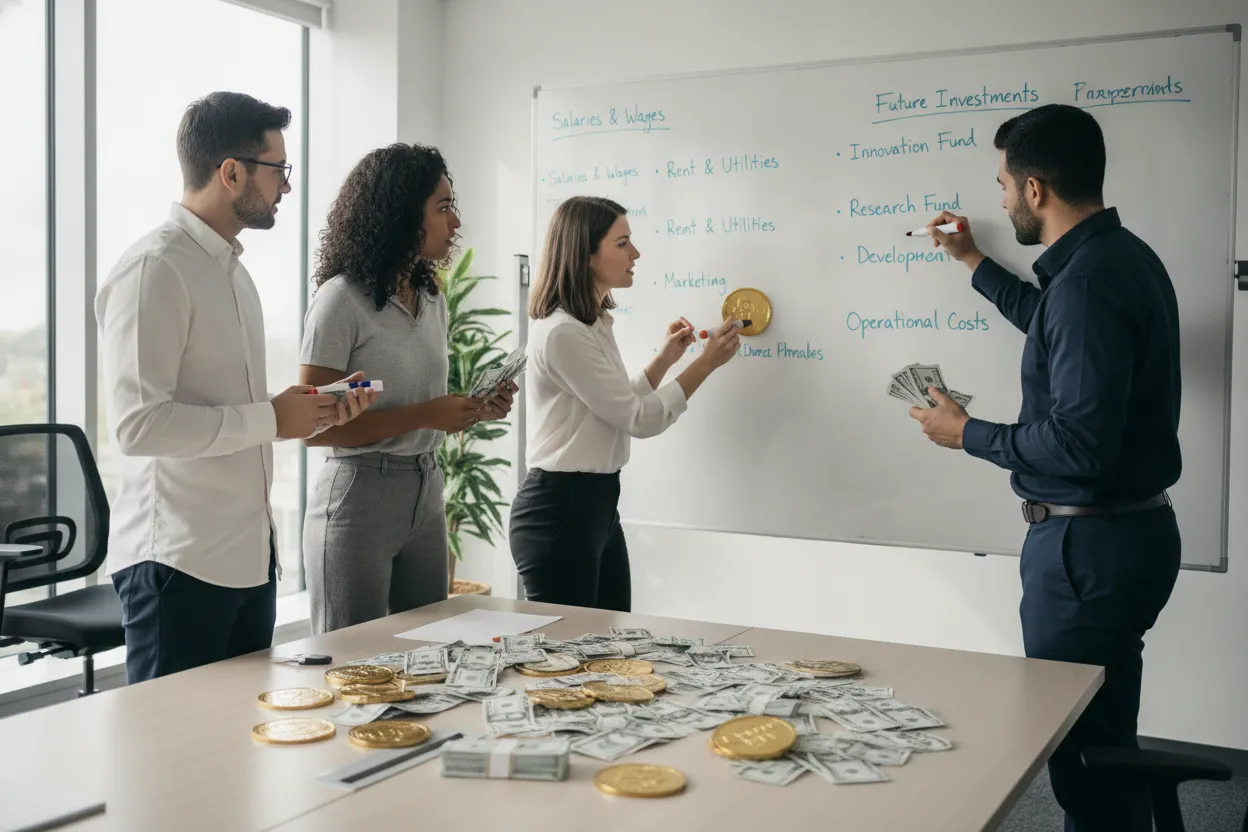
12. How Would You Spend $86,400?
Participants allocate play money equal to the seconds in a day across activities, exposing where they invest their time and where they leak it.
AwarenessBudgetingPriorities
1 Interactive Guided Demo
1
2
3
4
5
6
7
8
Step 1 of 8
👆
💰
💰⏱️💭
💵📋🖊️⏱️📋
📋
✨🎯🤝📌
✨✨
🖊️✅🌟💡
⏱️
🎯🤝📌💡
✨✨
💡💵📋🖊️⏱️
✨🎯🚀📌
🏆
🎉🌟✨🎊💫
Welcome to How Would You Spend $86,400?
Spend the seconds in a day on purpose.
👆 Click anywhere to continue
2 Activity Details
💰
Participants allocate play money equal to the seconds in a day across activities, exposing where they invest their time and where they leak it.
Players
👥 5+ Players
Recommended
Time
⏱ 20 min
Activity + debrief
Format
Team Game
Facilitated
Skill
Value Awareness
Primary outcome
What You'll Need
Prepare these items before the activity begins so the session runs smoothly.
💵
Play Money
Required for activity
📋
Allocation Sheets
Required for activity
🖊️
Pens
Required for activity
⏱️
Timer
Required for activity
Step-by-Step Walkthrough
1
Explain the Metaphor
Explain that 86,400 represents the seconds in a single day.
5 min
2
Hand Out Currency
Provide participants with play money totaling $86,400.
5 min
3
Allocate to Buckets
Participants allocate the money across the activities they plan for a typical day.
5 min
4
Quiet Allocation
Give 15 minutes of focused allocation time.
5 min
5
Compare Choices
Observe the choices participants make and where they invest the most.
5 min
6
Discuss Implications
Discuss the allocations and what they imply about real-life priorities.
5 min
Ground Rules
✓ Do
Explain the goal and constraints before starting.
Give every participant a clear role or opportunity to contribute.
Keep the timer visible and the rules consistent.
Encourage teams to explain their reasoning.
Close with a structured debrief.
✕ Don't
Do not let one person dominate the activity.
Do not change the rules midway unless it is a planned variation.
Do not skip reflection after the activity.
Do not make the activity personal or uncomfortable.
Do not focus only on winning; focus on learning.
What Your Team Will Learn
These outcomes should be reinforced during the debrief.
🧠
Outcome
Value Awareness
Participants practice this capability through the activity and reinforce it through discussion.
🛠️
Outcome
Prioritization
Participants practice this capability through the activity and reinforce it through discussion.
🤝
Outcome
Budgeting
Participants practice this capability through the activity and reinforce it through discussion.
⏱
Outcome
Reflection
Participants practice this capability through the activity and reinforce it through discussion.
💡
Outcome
Goal Setting
Participants practice this capability through the activity and reinforce it through discussion.
📊
Outcome
Discipline
Participants practice this capability through the activity and reinforce it through discussion.
Ways to Mix It Up
🔁
Repeat Round
Run a second round after debrief to test improved thinking.
🤐
Silent Mode
Add a short no-speaking phase to test non-verbal coordination.
💰
Budget Mode
Assign costs or limits to resources to force prioritization.
🌐
Virtual Edition
Adapt the activity using breakout rooms and shared documents.
🏆
Scored Challenge
Award points for creativity, teamwork, and quality of reasoning.
Debrief Questions
Use these prompts to convert the activity into workplace learning.
What did your team do first during How Would You Spend $86,400??
Which assumption turned out to be wrong?
How did communication affect the result?
Where did the team lose time or clarity?
What workplace situation feels similar to this activity?
What would you change if you ran the activity again?
3 Tips for Facilitators
⏱
Time Box Clearly
Use a visible timer so participants feel the constraint and pace their decisions.
🧑🏫
Facilitate, Don't Solve
Guide with questions instead of giving answers.
📌
Capture Observations
Note communication patterns, decision points, and bottlenecks.
💬
Debrief Deeply
Reserve enough time to connect the activity to workplace behavior.
4 Real-World Applications
🎯
Quarterly Planning
Translate annual goals into focused, time-bound milestones.
📈
Performance Reviews
Anchor 1:1s to specific, measurable outcomes.
🤝
Team Alignment
Make individual work visible so the team can support each other.
🚀
Career Development
Turn reflection into structured, repeatable growth plans.
👤 Age 18+👥 6+ Players⏱ 25 min
13. Paper Boat Factory
Teams operate as a factory and race to fold as many paper boats as possible in 15 minutes, exposing the trade-offs between speed, quality, and process design.
EfficiencyTeamworkProcess
1 Interactive Guided Demo
1
2
3
4
5
6
7
8
Step 1 of 8
👆
⛵
📄⛵🏭
📄✂️📎⏱️✂️
✂️
📋✨🎯🤝
✨✨
📎✅🌟💡
⏱️
🎯🤝📌💡
✨✨
💡📄✂️📎⏱️
📋🎯🚀📌
🏆
🎉🌟✨🎊💫
Welcome to Paper Boat Factory
Build a boat factory and beat the clock.
👆 Click anywhere to continue
2 Activity Details
⛵
Teams operate as a factory and race to fold as many paper boats as possible in 15 minutes, exposing the trade-offs between speed, quality, and process design.
Players
👥 6+ Players
Recommended
Time
⏱ 25 min
Activity + debrief
Format
Team Game
Facilitated
Skill
Efficiency
Primary outcome
What You'll Need
Prepare these items before the activity begins so the session runs smoothly.
📄
A4 Paper
Required for activity
✂️
Scissors
Required for activity
📎
Tape
Required for activity
⏱️
Timer
Required for activity
Step-by-Step Walkthrough
1
Set the Mission
Explain that the activity promotes teamwork and efficient process design.
5 min
2
Supply the Lines
Provide each group with paper, scissors, and tape to run their factory.
5 min
3
Run the Sprint
Teams build as many paper boats as possible in 15 minutes.
5 min
4
Time the Build
Let teams self-organize across the full 15 minute sprint.
5 min
5
Observe Tactics
Observe the strategies, role splits, and bottlenecks used by each team.
5 min
6
Count and Debrief
Count boats and debrief on the strategies that produced the best output.
5 min
Ground Rules
✓ Do
Explain the goal and constraints before starting.
Give every participant a clear role or opportunity to contribute.
Keep the timer visible and the rules consistent.
Encourage teams to explain their reasoning.
Close with a structured debrief.
✕ Don't
Do not let one person dominate the activity.
Do not change the rules midway unless it is a planned variation.
Do not skip reflection after the activity.
Do not make the activity personal or uncomfortable.
Do not focus only on winning; focus on learning.
What Your Team Will Learn
These outcomes should be reinforced during the debrief.
🧠
Outcome
Efficiency
Participants practice this capability through the activity and reinforce it through discussion.
🛠️
Outcome
Teamwork
Participants practice this capability through the activity and reinforce it through discussion.
🤝
Outcome
Process
Participants practice this capability through the activity and reinforce it through discussion.
⏱
Outcome
Speed
Participants practice this capability through the activity and reinforce it through discussion.
💡
Outcome
Quality
Participants practice this capability through the activity and reinforce it through discussion.
📊
Outcome
Coordination
Participants practice this capability through the activity and reinforce it through discussion.
Ways to Mix It Up
🔁
Repeat Round
Run a second round after debrief to test improved thinking.
🤐
Silent Mode
Add a short no-speaking phase to test non-verbal coordination.
💰
Budget Mode
Assign costs or limits to resources to force prioritization.
🌐
Virtual Edition
Adapt the activity using breakout rooms and shared documents.
🏆
Scored Challenge
Award points for creativity, teamwork, and quality of reasoning.
Debrief Questions
Use these prompts to convert the activity into workplace learning.
What did your team do first during Paper Boat Factory?
Which assumption turned out to be wrong?
How did communication affect the result?
Where did the team lose time or clarity?
What workplace situation feels similar to this activity?
What would you change if you ran the activity again?
3 Tips for Facilitators
⏱
Time Box Clearly
Use a visible timer so participants feel the constraint and pace their decisions.
🧑🏫
Facilitate, Don't Solve
Guide with questions instead of giving answers.
📌
Capture Observations
Note communication patterns, decision points, and bottlenecks.
💬
Debrief Deeply
Reserve enough time to connect the activity to workplace behavior.
4 Real-World Applications
🎯
Quarterly Planning
Translate annual goals into focused, time-bound milestones.
📈
Performance Reviews
Anchor 1:1s to specific, measurable outcomes.
🤝
Team Alignment
Make individual work visible so the team can support each other.
🚀
Career Development
Turn reflection into structured, repeatable growth plans.
👤 Age 18+👥 5+ Players⏱ 15 min
14. What Did You Do Yesterday
Participants list every task from the previous day, then sort each entry as productive or unproductive to expose hidden time leaks and patterns worth fixing.
ReflectionAuditAwareness
1 Interactive Guided Demo
1
2
3
4
5
6
7
8
Step 1 of 8
👆
📝
📅💭📝
📋🖊️⏱️📊🖊️
🖊️
📋✨🎯🤝
✨✨
⏱️✅🌟💡
📊
🎯🤝📌💡
✨✨
💡📋🖊️⏱️📊
✨🎯🚀📌
🏆
🎉🌟✨🎊💫
Welcome to What Did You Do Yesterday
Audit yesterday to reclaim today.
👆 Click anywhere to continue
2 Activity Details
📝
Participants list every task from the previous day, then sort each entry as productive or unproductive to expose hidden time leaks and patterns worth fixing.
Players
👥 5+ Players
Recommended
Time
⏱ 15 min
Activity + debrief
Format
Team Game
Facilitated
Skill
Reflection
Primary outcome
What You'll Need
Prepare these items before the activity begins so the session runs smoothly.
📋
Paper Sheets
Required for activity
🖊️
Pens
Required for activity
⏱️
Timer
Required for activity
📊
Whiteboard
Required for activity
Step-by-Step Walkthrough
1
Frame the Audit
Explain that the activity reveals how time was actually spent the previous day.
5 min
2
Hand Out Sheets
Give every participant a sheet of paper and a pen.
5 min
3
List Tasks
Participants list everything they did yesterday and label each item productive or unproductive.
5 min
4
Quiet Work Time
Allow ten minutes for participants to complete their lists.
5 min
5
Share Insights
Discuss findings and let participants share patterns they noticed.
5 min
6
Summarize Leaks
Summarize common time wasters and strategies to minimize them tomorrow.
5 min
Ground Rules
✓ Do
Explain the goal and constraints before starting.
Give every participant a clear role or opportunity to contribute.
Keep the timer visible and the rules consistent.
Encourage teams to explain their reasoning.
Close with a structured debrief.
✕ Don't
Do not let one person dominate the activity.
Do not change the rules midway unless it is a planned variation.
Do not skip reflection after the activity.
Do not make the activity personal or uncomfortable.
Do not focus only on winning; focus on learning.
What Your Team Will Learn
These outcomes should be reinforced during the debrief.
🧠
Outcome
Reflection
Participants practice this capability through the activity and reinforce it through discussion.
🛠️
Outcome
Self-Awareness
Participants practice this capability through the activity and reinforce it through discussion.
🤝
Outcome
Prioritization
Participants practice this capability through the activity and reinforce it through discussion.
⏱
Outcome
Discipline
Participants practice this capability through the activity and reinforce it through discussion.
💡
Outcome
Focus
Participants practice this capability through the activity and reinforce it through discussion.
📊
Outcome
Productivity
Participants practice this capability through the activity and reinforce it through discussion.
Ways to Mix It Up
🔁
Repeat Round
Run a second round after debrief to test improved thinking.
🤐
Silent Mode
Add a short no-speaking phase to test non-verbal coordination.
💰
Budget Mode
Assign costs or limits to resources to force prioritization.
🌐
Virtual Edition
Adapt the activity using breakout rooms and shared documents.
🏆
Scored Challenge
Award points for creativity, teamwork, and quality of reasoning.
Debrief Questions
Use these prompts to convert the activity into workplace learning.
What did your team do first during What Did You Do Yesterday?
Which assumption turned out to be wrong?
How did communication affect the result?
Where did the team lose time or clarity?
What workplace situation feels similar to this activity?
What would you change if you ran the activity again?
3 Tips for Facilitators
⏱
Time Box Clearly
Use a visible timer so participants feel the constraint and pace their decisions.
🧑🏫
Facilitate, Don't Solve
Guide with questions instead of giving answers.
📌
Capture Observations
Note communication patterns, decision points, and bottlenecks.
💬
Debrief Deeply
Reserve enough time to connect the activity to workplace behavior.
4 Real-World Applications
🎯
Quarterly Planning
Translate annual goals into focused, time-bound milestones.
📈
Performance Reviews
Anchor 1:1s to specific, measurable outcomes.
🤝
Team Alignment
Make individual work visible so the team can support each other.
🚀
Career Development
Turn reflection into structured, repeatable growth plans.
👤 Age 18+👥 6+ Players⏱ 20 min
15. Picking Up Blocks
Teams use coloured blocks to represent tasks of varying importance and must prioritize, sequence, and complete them under a tight clock.
PrioritizationPlanningDecision
1 Interactive Guided Demo
1
2
3
4
5
6
7
8
Step 1 of 8
👆
🧱
🧱📋🎯
🃏🧱⏱️📋🧱
⏱️
📋✨🎯🤝
✨✨
📋✅🌟💡
💡
🤝📌📋✨
✨✨
✨🧱🃏⏱️📋
🎯🚀📌🤝
🏆
🎉🌟✨🎊💫
Welcome to Picking Up Blocks
Stack the right blocks in the right order.
👆 Click anywhere to continue
2 Activity Details
🧱
Teams use coloured blocks to represent tasks of varying importance and must prioritize, sequence, and complete them under a tight clock.
Players
👥 6+ Players
Recommended
Time
⏱ 20 min
Activity + debrief
Format
Team Game
Facilitated
Skill
Prioritization
Primary outcome
What You'll Need
Prepare these items before the activity begins so the session runs smoothly.
🧱
Blocks
Required for activity
🃏
Task Cards
Required for activity
⏱️
Timer
Required for activity
📋
Scorecards
Required for activity
Step-by-Step Walkthrough
1
Explain the Stakes
Explain why prioritization beats raw effort when the clock is running.
5 min
2
Distribute Sets
Give each group a set of blocks and matching task cards.
5 min
3
Prioritize Tasks
Teams prioritize and complete tasks by sequencing the blocks correctly.
5 min
4
Work the Clock
Allow 15 minutes for teams to plan, sort, and finish their stacks.
5 min
5
Observe Choices
Observe how each team decides what to do first, next, and last.
5 min
6
Debrief Order
Discuss how prioritization changed throughput and outcomes.
5 min
Ground Rules
✓ Do
Explain the goal and constraints before starting.
Give every participant a clear role or opportunity to contribute.
Keep the timer visible and the rules consistent.
Encourage teams to explain their reasoning.
Close with a structured debrief.
✕ Don't
Do not let one person dominate the activity.
Do not change the rules midway unless it is a planned variation.
Do not skip reflection after the activity.
Do not make the activity personal or uncomfortable.
Do not focus only on winning; focus on learning.
What Your Team Will Learn
These outcomes should be reinforced during the debrief.
🧠
Outcome
Prioritization
Participants practice this capability through the activity and reinforce it through discussion.
🛠️
Outcome
Planning
Participants practice this capability through the activity and reinforce it through discussion.
🤝
Outcome
Decision Making
Participants practice this capability through the activity and reinforce it through discussion.
⏱
Outcome
Teamwork
Participants practice this capability through the activity and reinforce it through discussion.
💡
Outcome
Focus
Participants practice this capability through the activity and reinforce it through discussion.
📊
Outcome
Speed
Participants practice this capability through the activity and reinforce it through discussion.
Ways to Mix It Up
🔁
Repeat Round
Run a second round after debrief to test improved thinking.
🤐
Silent Mode
Add a short no-speaking phase to test non-verbal coordination.
💰
Budget Mode
Assign costs or limits to resources to force prioritization.
🌐
Virtual Edition
Adapt the activity using breakout rooms and shared documents.
🏆
Scored Challenge
Award points for creativity, teamwork, and quality of reasoning.
Debrief Questions
Use these prompts to convert the activity into workplace learning.
What did your team do first during Picking Up Blocks?
Which assumption turned out to be wrong?
How did communication affect the result?
Where did the team lose time or clarity?
What workplace situation feels similar to this activity?
What would you change if you ran the activity again?
3 Tips for Facilitators
⏱
Time Box Clearly
Use a visible timer so participants feel the constraint and pace their decisions.
🧑🏫
Facilitate, Don't Solve
Guide with questions instead of giving answers.
📌
Capture Observations
Note communication patterns, decision points, and bottlenecks.
💬
Debrief Deeply
Reserve enough time to connect the activity to workplace behavior.
4 Real-World Applications
🎯
Quarterly Planning
Translate annual goals into focused, time-bound milestones.
📈
Performance Reviews
Anchor 1:1s to specific, measurable outcomes.
🤝
Team Alignment
Make individual work visible so the team can support each other.
🚀
Career Development
Turn reflection into structured, repeatable growth plans.
👤 Age 18+👥 5+ Players⏱ 25 min
16. Circadian Rhythm
Participants map their personal energy peaks and dips across the day, then schedule deep work, meetings, and admin around their natural rhythm.
EnergyPlanningProductivity
1 Interactive Guided Demo
1
2
3
4
5
6
7
8
Step 1 of 8
👆
🌞
🌅🌙😴
📋🖊️🌞⏰🖊️
🖊️
📋✨🎯🤝
✨✨
⏰✅🌟💡
💡
🤝📌📋✨
✨✨
✨📋🖊️🌞⏰
🎯🚀📌🤝
🏆
🎉🌟✨🎊💫
Welcome to Circadian Rhythm
Plan deep work around your energy peaks.
👆 Click anywhere to continue
2 Activity Details
🌞
Participants map their personal energy peaks and dips across the day, then schedule deep work, meetings, and admin around their natural rhythm.
Players
👥 5+ Players
Recommended
Time
⏱ 25 min
Activity + debrief
Format
Team Game
Facilitated
Skill
Energy Planning
Primary outcome
What You'll Need
Prepare these items before the activity begins so the session runs smoothly.
📋
Planner Sheets
Required for activity
🖊️
Pens
Required for activity
🌞
Energy Chart
Required for activity
⏰
Clock
Required for activity
Step-by-Step Walkthrough
1
Teach the Concept
Explain circadian rhythms and how they shape productivity across the day.
5 min
2
Hand Out Planners
Give each participant a task planning sheet covering a full day.
5 min
3
Map Energy Peaks
Participants plan tasks around their personal peak productivity windows.
5 min
4
Build the Plan
Allow 20 minutes to draft a complete energy aligned schedule.
5 min
5
Review Plans
Review the schedules participants designed and call out smart choices.
5 min
6
Discuss Shifts
Discuss how aligning tasks with energy cycles boosts daily output.
5 min
Ground Rules
✓ Do
Explain the goal and constraints before starting.
Give every participant a clear role or opportunity to contribute.
Keep the timer visible and the rules consistent.
Encourage teams to explain their reasoning.
Close with a structured debrief.
✕ Don't
Do not let one person dominate the activity.
Do not change the rules midway unless it is a planned variation.
Do not skip reflection after the activity.
Do not make the activity personal or uncomfortable.
Do not focus only on winning; focus on learning.
What Your Team Will Learn
These outcomes should be reinforced during the debrief.
🧠
Outcome
Energy Planning
Participants practice this capability through the activity and reinforce it through discussion.
🛠️
Outcome
Productivity
Participants practice this capability through the activity and reinforce it through discussion.
🤝
Outcome
Self-Awareness
Participants practice this capability through the activity and reinforce it through discussion.
⏱
Outcome
Scheduling
Participants practice this capability through the activity and reinforce it through discussion.
💡
Outcome
Focus
Participants practice this capability through the activity and reinforce it through discussion.
📊
Outcome
Discipline
Participants practice this capability through the activity and reinforce it through discussion.
Ways to Mix It Up
🔁
Repeat Round
Run a second round after debrief to test improved thinking.
🤐
Silent Mode
Add a short no-speaking phase to test non-verbal coordination.
💰
Budget Mode
Assign costs or limits to resources to force prioritization.
🌐
Virtual Edition
Adapt the activity using breakout rooms and shared documents.
🏆
Scored Challenge
Award points for creativity, teamwork, and quality of reasoning.
Debrief Questions
Use these prompts to convert the activity into workplace learning.
What did your team do first during Circadian Rhythm?
Which assumption turned out to be wrong?
How did communication affect the result?
Where did the team lose time or clarity?
What workplace situation feels similar to this activity?
What would you change if you ran the activity again?
3 Tips for Facilitators
⏱
Time Box Clearly
Use a visible timer so participants feel the constraint and pace their decisions.
🧑🏫
Facilitate, Don't Solve
Guide with questions instead of giving answers.
📌
Capture Observations
Note communication patterns, decision points, and bottlenecks.
💬
Debrief Deeply
Reserve enough time to connect the activity to workplace behavior.
4 Real-World Applications
🎯
Quarterly Planning
Translate annual goals into focused, time-bound milestones.
📈
Performance Reviews
Anchor 1:1s to specific, measurable outcomes.
🤝
Team Alignment
Make individual work visible so the team can support each other.
🚀
Career Development
Turn reflection into structured, repeatable growth plans.
👤 Age 18+👥 6+ Players⏱ 30 min
17. Jigsaw Puzzles
Teams complete a jigsaw puzzle inside a fixed time window, forcing them to split roles, share information, and coordinate under steady pressure.
Problem SolvingTeamworkPatience
1 Interactive Guided Demo
1
2
3
4
5
6
7
8
Step 1 of 8
👆
🧩
🧩⏱️🎯
🪑🧩⏱️📋🧩
⏱️
📋✨🎯🤝
✨✨
📋✅🌟💡
💡
🤝📌📋✨
✨✨
✨🧩🪑⏱️📋
🎯🚀📌🤝
🏆
🎉🌟✨🎊💫
Welcome to Jigsaw Puzzles
Solve the puzzle together against the clock.
👆 Click anywhere to continue
2 Activity Details
🧩
Teams complete a jigsaw puzzle inside a fixed time window, forcing them to split roles, share information, and coordinate under steady pressure.
Players
👥 6+ Players
Recommended
Time
⏱ 30 min
Activity + debrief
Format
Team Game
Facilitated
Skill
Problem Solving
Primary outcome
What You'll Need
Prepare these items before the activity begins so the session runs smoothly.
🧩
Jigsaw Puzzle
Required for activity
🪑
Table Space
Required for activity
⏱️
Timer
Required for activity
📋
Score Sheet
Required for activity
Step-by-Step Walkthrough
1
Set Expectations
Explain the benefits of solving problems and building teamwork through puzzles.
5 min
2
Distribute Puzzles
Give each group one jigsaw puzzle and a clear workspace.
5 min
3
Race the Clock
Teams complete the puzzle inside the assigned time frame.
5 min
4
Work the Window
Allow the full 30 minutes for teams to work the puzzle together.
5 min
5
Observe Roles
Observe how teams divide work, share insights, and stay coordinated.
5 min
6
Discuss Tactics
Discuss the strategies used and the role of teamwork in completion.
5 min
Ground Rules
✓ Do
Explain the goal and constraints before starting.
Give every participant a clear role or opportunity to contribute.
Keep the timer visible and the rules consistent.
Encourage teams to explain their reasoning.
Close with a structured debrief.
✕ Don't
Do not let one person dominate the activity.
Do not change the rules midway unless it is a planned variation.
Do not skip reflection after the activity.
Do not make the activity personal or uncomfortable.
Do not focus only on winning; focus on learning.
What Your Team Will Learn
These outcomes should be reinforced during the debrief.
🧠
Outcome
Problem Solving
Participants practice this capability through the activity and reinforce it through discussion.
🛠️
Outcome
Teamwork
Participants practice this capability through the activity and reinforce it through discussion.
🤝
Outcome
Patience
Participants practice this capability through the activity and reinforce it through discussion.
⏱
Outcome
Coordination
Participants practice this capability through the activity and reinforce it through discussion.
💡
Outcome
Focus
Participants practice this capability through the activity and reinforce it through discussion.
📊
Outcome
Communication
Participants practice this capability through the activity and reinforce it through discussion.
Ways to Mix It Up
🔁
Repeat Round
Run a second round after debrief to test improved thinking.
🤐
Silent Mode
Add a short no-speaking phase to test non-verbal coordination.
💰
Budget Mode
Assign costs or limits to resources to force prioritization.
🌐
Virtual Edition
Adapt the activity using breakout rooms and shared documents.
🏆
Scored Challenge
Award points for creativity, teamwork, and quality of reasoning.
Debrief Questions
Use these prompts to convert the activity into workplace learning.
What did your team do first during Jigsaw Puzzles?
Which assumption turned out to be wrong?
How did communication affect the result?
Where did the team lose time or clarity?
What workplace situation feels similar to this activity?
What would you change if you ran the activity again?
3 Tips for Facilitators
⏱
Time Box Clearly
Use a visible timer so participants feel the constraint and pace their decisions.
🧑🏫
Facilitate, Don't Solve
Guide with questions instead of giving answers.
📌
Capture Observations
Note communication patterns, decision points, and bottlenecks.
💬
Debrief Deeply
Reserve enough time to connect the activity to workplace behavior.
4 Real-World Applications
🎯
Quarterly Planning
Translate annual goals into focused, time-bound milestones.
📈
Performance Reviews
Anchor 1:1s to specific, measurable outcomes.
🤝
Team Alignment
Make individual work visible so the team can support each other.
🚀
Career Development
Turn reflection into structured, repeatable growth plans.
"Time management is pain management. If you can't look at your calendar and know what to do with your time, you can't say you got distracted from anything."
Nir Eyal
Author, Indistractable & Beyond Belief · New York, USA
✔ Behavioral design expert specializing in focus, habit formation, productivity, and distraction management.
Pick the Right Activities for Your Team
Time management is not one skill; it is a stack of habits, and most teams are only weak in one or two specific layers. A blanket productivity workshop spreads attention thin and changes nothing. Pick the role under the most pressure right now, run the four activities below for that group over a month, then graduate to the next persona once the first cohort has a measurable win to point at.
Engineering, Design & Analyst Teams
If your makers cannot name a two-hour block of uninterrupted work in their week, focus is the bottleneck, not effort. Sprint commitments slip, design reviews push, and every shipped feature carries a quiet tax of context switches that nobody is measuring. The fix is structural protection of deep work, not motivation.
Run Pomodoro and Dealing With Distractions in the first two weeks to give the team a shared language for focus blocks and a shared script for refusing low-value interruptions. Add Circadian Rhythm to map peak hours against the calendar, then Sort the Cards to tighten estimation. Most engineering teams feel the difference in the second sprint, well before the workshop debrief.
Managers & Cross-Functional Leads
If recurring meetings run long, agendas drift, and last quarter's decisions keep getting re-litigated, the gap is meeting discipline plus priority clarity. Managers in this state look busy and feel busy, but the team cannot recite the top three goals of the quarter without checking a deck. Time is being spent; it is just not being directed.
Open with an Eisenhower Matrix Workshop on real backlog items so trade-offs become visible, not theoretical. Pair it with How Long is a Minute and Time Squared in a single half-day to recalibrate time estimation across the leadership group, then close the month with What Did You Do Yesterday as a weekly cadence. Manager calendars typically lose three to five hours of meeting bloat within thirty days.
Operations, Support & Agile Teams
When work in progress is invisible, hand-offs drop balls, and Friday's fire drill consumes Monday, the team does not have a productivity problem; it has a workflow problem. Adding more hours, more tools, or more standups will not fix it. The team needs to see its own work before it can manage it.
Start with Kanban so the queue, work in progress, and bottleneck are on a wall everyone can see. Layer Picking Up Blocks the following week to reinforce single-piece flow, then run Overcooked Simulation and Paper Boat Factory to practice coordination under pressure with real timing constraints. Done well, this sequence cuts duplicate work and surfaces the one or two roles that are silently absorbing every escalation.
New Hires & Self-Managed Roles
New joiners and individual contributors without a tight manager cadence usually run on inbox-driven days: whatever lands first wins, end-of-week reviews bring surprises, and quarterly goals quietly slip behind reactive work. The risk is not lack of effort; it is that early habits harden fast and are hard to retrain in year two.
Bake Time Audit Challenge into week one of onboarding so the new hire confronts the gap between intent and actual hours. Follow with Mayonnaise Jar and How Would You Spend $86,400? to install a prioritization metaphor that survives the first hectic month. Close with What Did You Do Yesterday as a weekly check-in with their manager. Done in the first thirty days, this sequence is the cheapest behavior change you will ever buy.
Hybrid & Remote Teams
Distributed teams pay a different time tax: time zones blur the boundary between deep work and meeting hours, afternoon slumps go unnoticed, and late-night work creeps into the next morning. Energy management, not raw time management, is the lever. People are working enough hours; they are working the wrong ones.
Run Circadian Rhythm first so each team member maps their own two peak-output windows and protects them on the shared calendar. Pomodoro and Dealing With Distractions translate cleanly to async week-long formats and reinforce the focus block. Close with How Long is a Minute to recalibrate how long meetings actually need to be in a video-first environment. Hybrid teams typically reclaim three to five high-quality hours per person per week.
Whichever persona you start with, keep the first cohort small (one team, four activities, thirty days) and measure one or two metrics before and after: focus hours, on-time delivery, meeting load, or a simple weekly self-rating. Once that cohort has a clear win, the second persona buys in without a sales pitch. For a manager-led companion curriculum, our time management training sits naturally alongside, and our instructor-led training services team can deliver the full sequence live, on-site or virtually.
Conclusion
Time management is not a soft skill; it is a business performance driver that touches every quarterly outcome. Teams that practice prioritization, deep work, and meeting discipline as group habits ship more, miss fewer deadlines, and protect their people from the slow grind of overload. Treating these 17 activities as a structured program rather than a one-off workshop is what turns the lift into a lasting cultural change.
Roll out by sequencing two to three activities each month, anchored to a real team challenge: a slipping deliverable, a meeting-heavy quarter, a new project kickoff. Pair the focus-and-prioritization activities with related work on stress and recovery, since the two reinforce each other; see our companion blog on stress management activities for a parallel set of exercises that protect the same team capacity from a different angle.
Edstellar partners with L&D teams to design and deliver these programs end-to-end, from facilitator scripts and materials to manager curricula and measurement. Combine these activities with our time management training course and our instructor-led training services to ship a 12-week productivity rollout your business actually feels.
Want all 17 activities run for your team?
Edstellar facilitators deliver every time-management workshop in this guide live, on-site or virtually, fully tailored to your team's roles, schedules, and specific focus challenges.
What are time management activities for employees?
Time management activities are short, facilitated exercises that help teams practice prioritization, deep work, estimation, meeting discipline, and energy management together rather than as a personal productivity hack. Each activity isolates a single behavior (sorting tasks into quadrants, running a focused sprint, auditing where the week went) so the team can rehearse it, debrief it, and commit to one change. They are most useful when run as a sequence over a quarter, not as standalone workshops, because time habits change through repetition.
Why use time management activities instead of e-learning videos?
Time management is behavioral, not informational. Most knowledge workers already know what the Eisenhower Matrix is; they just do not apply it under pressure. Activity-based learning forces people to use the technique with their own real tasks, alongside teammates, with immediate feedback. Videos and reading rarely translate into changed calendars; running an activity in a workshop almost always produces at least one concrete commitment that shows up in next week's schedule.
How do I choose the right activity for my team's biggest time problem?
Start from the symptom, not the activity. If the team cannot find focus time, run Pomodoro, Dealing With Distractions, and Circadian Rhythm. If priorities are unclear, run Eisenhower Matrix Workshop and Mayonnaise Jar. If estimates are routinely off, run Sort the Cards and Paper Boat Factory. The Skills Matrix above maps the most common symptoms to the activities that fix them, so you pick two to three matched activities instead of running a generic productivity workshop.
How long should a time management workshop session last?
A single activity plus debrief runs 25 to 45 minutes. A useful workshop usually pairs two activities, one short diagnostic (How Long is a Minute, Time Audit Challenge) and one longer behavioral practice (Eisenhower Matrix Workshop, Pomodoro), for a total of 75 to 90 minutes. Anything shorter risks skipping the debrief, which is where behavior change actually starts; anything longer past two hours produces diminishing returns and meeting fatigue.
What group size do these activities work for?
Most activities in this guide work for groups of 4 to 25. Smaller groups (4 to 8) give you the richest debriefs and individual coaching, which suits leadership cohorts. Mid-sized groups (10 to 16) work for intact teams and produce the best peer-pressure for commitments. Larger groups (20 to 25) require breakout rooms or sub-team formats; Kanban, Overcooked Simulation, and Eisenhower Matrix Workshop scale cleanly with small sub-teams running in parallel.
Do these activities work for remote and hybrid teams?
Yes, with adaptations. Pomodoro, Time Audit Challenge, What Did You Do Yesterday, Eisenhower Matrix Workshop, and Kanban all run cleanly on Miro or Mural plus a Zoom call. The physical-prop activities (Sort the Cards, Picking Up Blocks, The Great Egg Drop, Paper Boat Factory) need either an in-person session or a courier-delivered kit; the trade-off is worth it because tactile activities produce the strongest debriefs. For hybrid teams, the "one team, one experience" rule applies: run everyone remotely or everyone in person, not a mix.
What does it cost to run a time management program?
Internal facilitation is largely the time cost of one L&D lead plus 30 to 60 minutes per participant per activity. External facilitation, with materials, debrief frameworks, and a manager toolkit, typically runs in the low to mid four figures per workshop for a team of 15 to 25, scaling with customization. The bigger cost most teams ignore is the cost of not running it: a 20-person team that recovers two hours of weekly focus time per person is recovering 40 hours of capacity weekly, which dwarfs any workshop fee within a quarter.
Can these activities be customised for specific industries or roles?
Yes, and they should be. For engineering teams we re-skin Pomodoro and Kanban around sprint rhythms and pull requests. For customer support we adapt Time Squared and Dealing With Distractions to ticket queues. For sales we use How Would You Spend $86,400? to map prospect time investment to deal value. For healthcare and operations we lean into Overcooked Simulation and Paper Boat Factory because hand-off accuracy is the dominant variable. A 30-minute scoping call with an L&D partner is usually enough to swap in industry-specific tasks and metrics.
How do you get manager buy-in for time management training?
Lead with the manager's own pain: slipping deliverables, calendar overload, team burnout signals. Frame the program around throughput, not feelings. Show that a single afternoon spent running Eisenhower Matrix Workshop and Pomodoro routinely surfaces three to five recurring meetings the team can cancel or shorten, which recovers real hours the manager can point to in their own metrics. Invite the manager to facilitate one debrief themselves; ownership flips fast once they see commitments land on their team's board.
How do I measure success after a time management program?
Measure three layers. First, behavioral: count protected focus blocks on calendars, meeting hours per person per week, and Kanban work-in-progress before and after. Second, output: on-time delivery rate, sprint completion accuracy, ticket throughput. Third, sentiment: a short pulse on stress, overwhelm, and "I had time to do my most important work this week." Run the baseline before the first activity and re-measure at 4, 8, and 12 weeks. Most programs see meaningful movement in the calendar metrics by week 4 and in output metrics by week 8.
How does activity-based training compare to a time management app or course alone?
Apps and courses help individuals; activities change team norms. A Pomodoro app on one person's machine is easy to ignore in a meeting-heavy culture; a Pomodoro activity run by an entire team makes "focus blocks" a shared expectation, which is what makes them survive contact with reality. The right combination is usually a structured course (for the frameworks), an app or tool (for daily reinforcement), and quarterly team activities (to keep the norms alive). The activities are the glue.
Download the Time Management Activity Playbook
Get all 17 activities with facilitator scripts, debrief prompts, calendar audit templates, and focus-time trackers in one ready-to-run guide for L&D teams.
Subbaiah M.U. is the Learning and Development Head at Edstellar, bringing over 24 years of experience in driving organizational learning strategy and workforce transformation.
L&D Hub
Transform Your L&D Strategy Today
Unlock premium resources, tools, and frameworks designed for HR and learning professionals. Our L&D Hub gives you everything needed to elevate your organization's training approach.