Roles and Responsibilities of Chief Diversity Officer
Content
Table of Content
In today’s rapidly evolving corporate landscape, diversity, equity, and inclusion (DEI) have transitioned from optional initiatives to critical business imperatives. Organizations that prioritize DEI are 31% more likely to outperform their industry peers financially, with companies in the top quartile for ethnic diversity demonstrating 36% higher profitability. At the heart of this transformation stands the Chief Diversity Officer, a strategic leader responsible for driving meaningful change across organizational culture, policies, and practices.
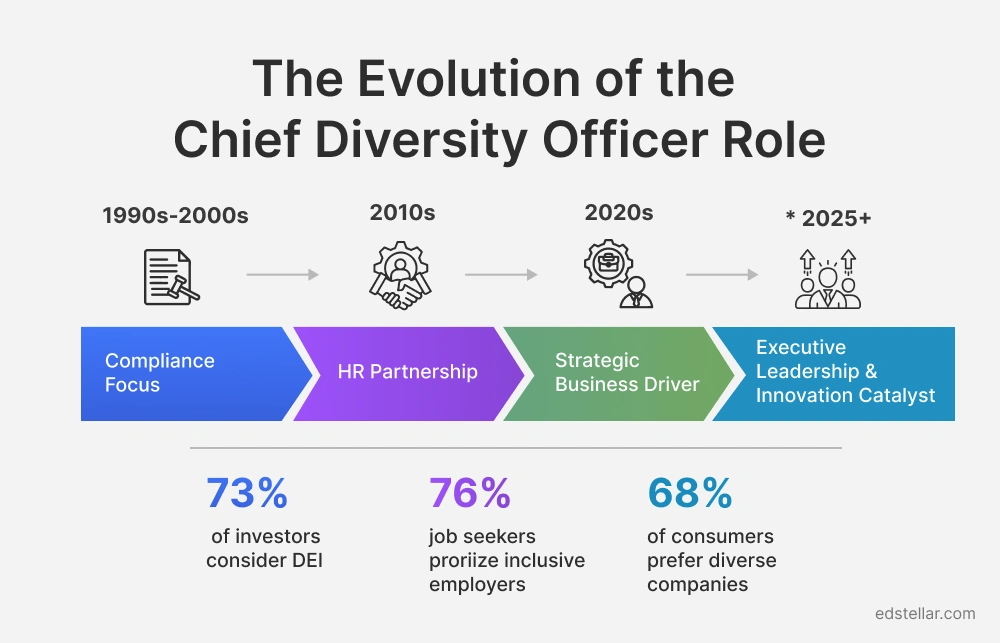
The chief diversity officer role has evolved dramatically over the past two decades. Once positioned primarily as a compliance figurehead, today’s chief diversity officer serves as a key business ally and vital driver of business strategy. With 51% of organizations now employing Chief Diversity Officers and nearly half of S&P 500 companies maintaining this position, the demand for skilled chief diversity officers has reached unprecedented levels. However, this surge comes with challenges: organizations must understand how to properly position, empower, and support chief diversity officer to ensure they can deliver measurable impact.
This comprehensive guide explores the multifaceted role of the chief diversity officer, examining their core responsibilities, essential competencies, strategic impact on business performance, and the challenges they navigate in transforming organizational culture. Whether you’re considering hiring a chief diversity officer, stepping into the role yourself, or seeking to understand how DEI leadership drives business success, this article provides actionable insights grounded in current research and industry best practices.
What is a Chief Diversity Officer?
A Chief Diversity Officer is a senior-level executive responsible for leading and overseeing an organization’s diversity, equity, and inclusion initiatives. The chief diversity officer serves as both a strategic architect and cultural change agent, developing comprehensive DEI strategies that align with business objectives while fostering an environment where all employees feel valued, respected, and empowered to contribute their unique perspectives.
Historical Context and Evolution
The chief diversity officer role emerged in the late 1990s and early 2000s, initially focused primarily on regulatory compliance and avoiding discrimination lawsuits. Organizations appointed chief diversity officers to ensure adherence to equal employment opportunity laws and manage the legal risks associated with workplace discrimination. This compliance-focused approach, while necessary, limited the chief diversity officers influence and strategic impact.
Over the past two decades, the role has undergone a remarkable transformation. Today’s chief diversity officer operates as a key business ally and vital driver of business strategy, driven by several factors:
Societal Demand: Heightened awareness around social justice and equity has increased expectations for corporate accountability
Business Case Recognition: Research demonstrating that diverse organizations outperform their peers has elevated DEI to a strategic priority
Competitive Advantage: Organizations recognize that inclusive cultures drive innovation, improve decision-making, and enhance market positioning
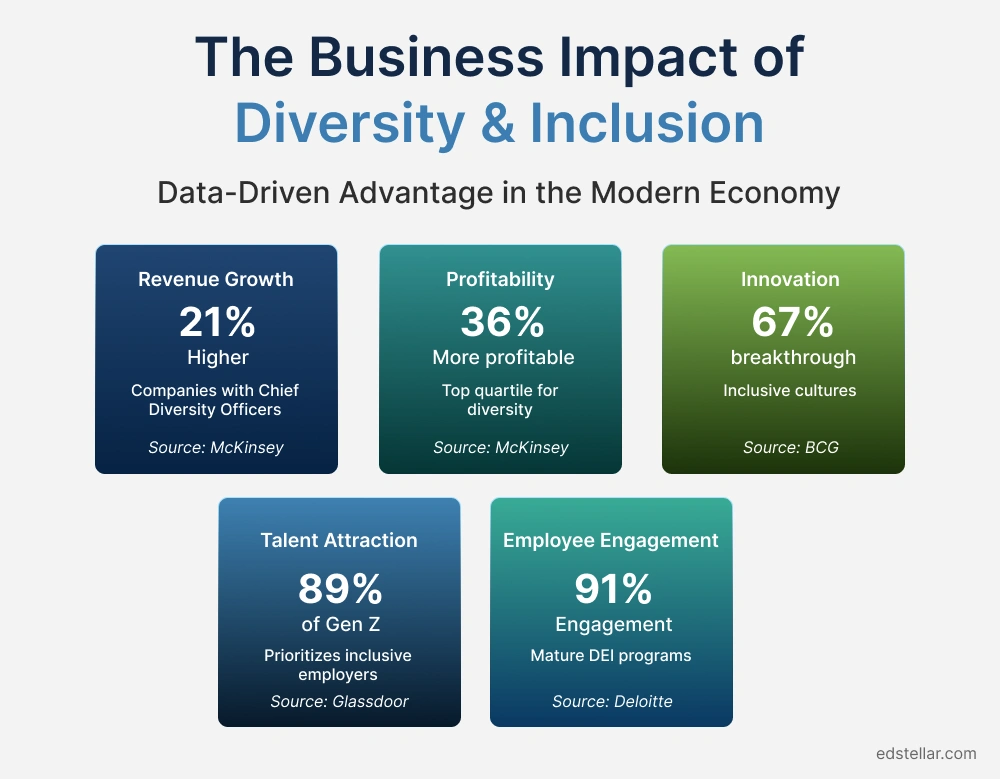
Talent Imperatives: With 89% of Gen Z prioritizing inclusive employers, DEI has become critical
According to LinkedIn data, DEI jobs have grown steadily across companies over the past five years, with nearly half of S&P 500 companies now employing a dedicated chief diversity officer. This expansion reflects organizations’ recognition that achieving meaningful diversity requires dedicated executive leadership with authority, resources, and strategic influence.
Current Relevance in the Industry
The chief diversity officers relevance has never been more pronounced. Organizations face mounting pressure from multiple stakeholders to demonstrate genuine commitment to diversity and inclusion:
Investors: 73% of institutional investors consider DEI performance when making investment decisions
Customers: 68% of consumers prefer to purchase from companies with strong diversity commitments
Regulators: Increasing requirements for diversity reporting and pay equity transparency
Companies that experience negative incidents involving equity and integrity issues face significant consequences, with an average 7% decline in market capitalization following such news. Conversely, organizations with mature DEI programs demonstrate 31% higher innovation rates, 67% better problem-solving capabilities, and 21% higher revenue growth compared to less diverse competitors.
Core Roles and Responsibilities of a Chief Diversity Officer
The Chief Diversity Officer’s role encompasses a broad spectrum of strategic and operational responsibilities that touch every aspect of organizational life. While specific duties vary based on organizational context, industry, and maturity level, several core responsibilities define the chief diversity officer function.
1. Strategic Planning and Vision Setting
Chief Diversity Officer serve as the architects of their organization’s DEI vision, developing comprehensive strategies that align diversity initiatives with overarching business objectives.
Key Activities:
Conducting organizational assessments to identify current DEI gaps and opportunities
Establishing clear, measurable diversity goals aligned with business strategy
Creating multi-year DEI roadmaps with specific milestones and success metrics
Securing executive buy-in and resources for DEI initiatives
Integrating DEI considerations into strategic planning processes
Chief Diversity Officers who excel in strategic planning typically report to the CEO or CHRO with direct access to the executive board, ensuring DEI considerations influence major business decisions. Organizations that integrate DEI into business strategy show 56% greater success in achieving diversity targets compared to those treating DEI as a siloed function.
2. Policy Development and Implementation
Creating equitable policies and procedures forms a cornerstone of the chief diversity officers responsibilities, ensuring systemic barriers are removed and inclusive practices become embedded in organizational operations.
Key Activities:
Developing and updating anti-discrimination and harassment policies
Designing inclusive hiring and promotion practices that reduce unconscious bias
Creating equitable compensation frameworks and conducting pay equity audits
Establishing accommodation policies for employees with diverse needs
Implementing supplier diversity programs to extend DEI commitments beyond internal operations
Effective chief diversity officers recognize that policies alone don’t drive change implementation and accountability mechanisms are equally critical. Organizations with comprehensive pay equity programs show 34% smaller gender pay gaps and 28% reduced racial pay disparities, demonstrating the tangible impact of well-designed and properly implemented policies.
3. Culture Transformation and Change Management
Perhaps the most challenging aspect of the chief diversity officer role involves transforming organizational culture to embrace diversity and foster genuine inclusion. This requires shifting mindsets, behaviors, and norms across all levels of the organization.
Key Activities:
Assessing organizational culture to identify inclusion strengths and barriers
Developing change management strategies that address resistance and build momentum
Creating employee resource groups (ERGs) and affinity networks
Fostering psychological safety so employees feel comfortable bringing their authentic selves to work
Celebrating diversity through events, communications, and recognition programs
Research shows that inclusive cultures generate 67% more breakthrough innovations and demonstrate 87% faster problem-solving compared to homogeneous environments. chief diversity officers drive this cultural transformation by making diversity visible, valued, and integral to how the organization operates.
4. Training and Education Programs
Education forms the foundation for sustainable DEI progress. chief diversity officers design and deliver training programs that build awareness, develop skills, and change behaviors across the organization.
Key Activities:
Developing unconscious bias training programs (74% adoption rate across organizations)
Designing onboarding programs that introduce new employees to organizational DEI values
Facilitating difficult conversations about race, gender, and other sensitive topics
Building cultural competence through education on different backgrounds and experiences
While training alone cannot solve systemic inequities, it plays a crucial role when combined with policy changes and accountability mechanisms. Organizations that pair unconscious bias training with structural interventions see 23% greater improvement in diversity outcomes compared to training-only approaches.
5. Talent Acquisition and Retention
Chief Diversity Officers play a pivotal role in attracting, developing, and retaining diverse talent across all organizational levels, particularly in leadership positions where representation gaps remain most pronounced.
Key Activities:
Partnering with recruitment teams to expand diverse candidate pipelines
Implementing structured interviews and assessment tools that reduce bias
Creating mentorship and sponsorship programs for underrepresented employees
Developing succession planning processes that prioritize diverse leadership development
Analyzing retention data to identify and address disparities in employee experience
Organizations with inclusive hiring practices demonstrate 8.4/10 effectiveness scores, the highest among all DEI initiatives. However, recruitment alone is insufficient retention requires ongoing attention to employee experience, career development, and workplace culture.
6. Data Analytics and Measurement
Effective chief diversity officers are data-driven, using metrics and analytics to assess progress, identify gaps, demonstrate impact, and guide decision-making.
Key Activities:
Establishing DEI dashboards that track representation, promotion rates, pay equity, and inclusion metrics
Conducting regular demographic analyses across all organizational levels
Implementing inclusion surveys to measure employee experience beyond representation numbers
Analyzing hiring, promotion, and turnover data to identify systemic inequities
Calculating ROI of DEI initiatives to demonstrate business value
Publishing transparent diversity reports for stakeholders
Currently, 87% of organizations track workforce diversity metrics, while 68% publish annual diversity reports. The most sophisticated organizations go beyond simple headcounts to measure inclusion climate, belonging, and the intersection of multiple identity dimensions.
7. Stakeholder Engagement and Communication
Chief Diversity Officers serve as chief communicators for DEI initiatives, engaging diverse stakeholders both inside and outside the organization.
Key Activities:
Presenting DEI progress and strategies to the board of directors
Communicating DEI commitments and initiatives to employees at all levels
Partnering with marketing and communications teams on external DEI messaging
Engaging with community organizations and advocacy groups
Representing the organization at industry DEI forums and conferences
Managing crisis communications related to DEI incidents or controversies
Communication prowess represents one of the six essential chief diversity officer competencies, as the ability to craft compelling visions and translate complex ideas into relatable messages directly impacts the chief diversity officers capacity to drive organizational change.
Essential Competencies for Chief Diversity Officers
Success as a Chief Diversity Officer requires a unique combination of competencies that blend technical expertise, business acumen, interpersonal skills, and cultural intelligence. Research analyzing chief diversity officer profiles across Fortune 500 companies identifies six essential competencies that distinguish highly effective chief diversity officers.
1. DEI Mastery: Deep Knowledge and Empathetic Understanding
At the core of every great chief diversity officer lies a profound grasp of DEI principles, benchmarks, and best practices. This competency extends beyond theoretical knowledge to include empathetic understanding of minority needs and experiences.
Core Elements:
Comprehensive understanding of systemic inequities and their organizational manifestations
Knowledge of current DEI trends, research, and evidence-based interventions
Awareness of legal and regulatory requirements related to workplace equity
Ability to recognize intersectionality and how multiple identities shape experiences
Genuine empathy and emotional intelligence when engaging with diverse employee populations
However, as noted in IMD research, “Appointing individuals with purely academic or activist backgrounds can lead to challenges in the corporate sphere, particularly when it comes to aligning their expertise with business imperatives.” DEI mastery, while essential, must be complemented by other competencies to drive meaningful organizational change.
2. Business Acumen: Translating DEI into Business Value
A business background represents a transformative competency for chief diversity officers, enabling them to align DEI initiatives with business strategy and demonstrate tangible value creation.
Core Elements:
Understanding of business operations, financial metrics, and strategic priorities
Ability to articulate the business case for diversity using language that resonates with executives
Skill in quantifying DEI impact through ROI analysis and performance metrics
Capacity to identify how DEI drives competitive advantage in specific business contexts
Talent for tailoring DEI messages across diverse cultures, business units, and geographical locations
Chief Diversity Officers with strong business acumen serve as “turbo boosters” for change management, accelerating DEI progress by authentically connecting diversity commitments to business performance. This unique blend lends credibility that resonates throughout the organization, particularly with leaders who might otherwise view DEI as disconnected from core business priorities.
3. HR Expertise: Understanding People Systems
While not the sole requirement, HR expertise provides a solid foundation for chief diversity officer effectiveness, bringing deep understanding of talent management processes and organizational dynamics.
Core Elements:
Expertise in talent acquisition, development, and retention strategies
Knowledge of HR policies, compensation systems, and performance management
Understanding of employee relations and workplace investigations
Familiarity with learning and development methodologies
Ability to interpret people data and translate statistics into compelling narratives
The real superpower of chief diversity officers with HR expertise lies in their capacity to weave compelling narratives from people data, transforming raw statistics into stories that resonate with both leadership and employees. This storytelling capability proves essential for building momentum and maintaining focus on DEI priorities.
4. Legal and Financial Savvy: Navigating Compliance and Resource Management
Understanding the legal and financial landscape represents a formidable advantage for chief diversity officers, enabling them to manage risk while driving meaningful change.
Core Elements:
Fluency in relevant legal and compliance requirements related to workplace equity
Knowledge of regulatory dialogue and evolving legal standards
Understanding of financial planning, budgeting, and resource allocation
Ability to assess legal risk while pushing for progressive change
Skill in integrating DEI metrics into vendor assessments and procurement decisions
This expertise proves particularly valuable when executing pivotal programs like Code of Conduct reviews, which demand a multifaceted approach to weave in every strand of DEI. Organizations allocate an average of $1,847 per employee to DEI initiatives, and chief diversity officers with financial savvy optimize this investment to maximize impact.
5. Communication Prowess: Moving Hearts and Minds
Communication skills can make or break a chief diversity officers impact. The most effective chief diversity officers craft compelling visions that resonate deeply within the organization, translating complex ideas into relatable messages that ignite momentum for change.
Core Elements:
Ability to craft and deliver compelling DEI narratives across diverse audiences
Skill in facilitating difficult conversations about sensitive topics
Talent for presenting data and insights in accessible, persuasive formats
Capacity to adapt messaging for different stakeholder groups (board, employees, external partners)
Expertise in crisis communication when DEI-related incidents occur
Whether the narrative pivots on compliance, the moral imperative of fairness, or the strategic necessity of talent attraction, the chief diversity officers superpower lies in weaving narratives that span all dimensions. They must be equally adept at addressing the board, rallying employees, and engaging external stakeholders.
Cultural transformation doesn’t happen by accident it requires methodical planning and execution. chief diversity officers with proven project management capability orchestrate complex, multi-faceted programs that drive real change.
Core Elements:
Ability to design and implement comprehensive DEI programs with multiple workstreams
Skill in benchmarking against competitors to understand the landscape
Capacity to identify internal business needs and craft tailored DEI interventions
Expertise in change management methodologies and stakeholder engagement
Talent for measuring progress transparently and adjusting strategies based on data
Organizations with dedicated DEI roles and structured programs show 43% better talent attraction and 52% stronger employer brand perception compared to those with ad-hoc approaches. Project management capabilities ensure initiatives are well-planned, executed efficiently, and measured effectively.
The Synergy of Six
These six competencies don’t exist in isolation they form a powerful synergy that defines an exceptional chief diversity officer. While it’s rare for one individual to excel in all areas, the most effective chief diversity officers recognize their strengths and weaknesses, building diverse teams that complement their skills and leveraging collective expertise to drive comprehensive DEI strategies.
Organizational Context
Top Priority Competencies
Secondary Priorities
Rationale
Early-stage startup
Business Acumen, Project Management
DEI Mastery, Communication Prowess
Startups need Chief Diversity Officers who can tie DEI directly to growth, runway, and product–market fit while building basic structures from scratch. Strong execution discipline matters more than sophistication, with DEI depth and storytelling layered in as foundations solidify.
Mature corporation
DEI Mastery, Business Acumen
Legal & Financial Savvy, HR Expertise
Large, complex organizations require deep DEI expertise that can be translated into enterprise-wide strategies grounded in business outcomes. Legal, financial, and HR fluency ensure initiatives integrate with existing systems, policies, and governance without becoming siloed.
Post-crisis recovery
Communication Prowess, Legal & Financial Savvy
DEI Mastery, Project Management
After a reputational or internal DEI crisis, the Chief Diversity Officer must rebuild trust through transparent, empathetic communication while carefully managing legal and compliance risk. DEI depth and disciplined program execution ensure that responses go beyond PR and lead to credible, sustained change.
Rapid growth phase
HR Expertise, Project Management
Business Acumen, Communication Prowess
Hyper-growth organizations need CDOs who can rapidly embed DEI into hiring, onboarding, performance, and culture-building mechanisms. Execution at scale and people-systems fluency are critical, supported by business alignment and clear communication that keeps employees engaged through constant change.
Global expansion
Communication Prowess, DEI Mastery
Business Acumen, HR Expertise
Operating across markets demands high cultural intelligence and nuanced communication tailored to different regions and identities. Strong DEI mastery ensures relevance across contexts, while business and HR capabilities help adapt policies, talent practices, and structures to diverse legal and cultural environments.
“Our commitment to drive accountability for DEI is embedded in our responsibility to living our values. We initially focused on metrics for culture and representation, but now aligning DEI goals to our business strategy allows us to not only hold executives accountable but ensures that every person in our company plays an active role in advancing diversity, equity, and inclusion."
Reginald J. Miller
VP, Chief Culture and Inclusion Officer at GE Vernova
Strategic Impact: How Chief Diversity Officers Drive Business Performance
The Chief Diversity Officer’s strategic influence extends far beyond compliance and representation metrics. When properly positioned and empowered, chief diversity officers drive measurable business outcomes across multiple performance dimensions, contributing directly to organizational competitiveness and long-term success.
Financial Performance and Profitability
Research consistently demonstrates strong correlations between diversity and financial outcomes, with chief diversity officer-led initiatives driving measurable improvements:
Revenue Growth: Companies in the top quartile for diversity show 21% higher revenue growth compared to less diverse peers
Profitability: Organizations with strong ethnic diversity demonstrate 36% greater profitability than industry medians
These outcomes result from chief diversity officers’ systematic work to build diverse leadership teams, create inclusive cultures where innovation thrives, and position organizations to serve increasingly diverse customer bases. Companies experiencing negative DEI incidents face an average 7% decline in market capitalization, underscoring the financial risk that effective chief diversity officers help mitigate.
Innovation and Problem-Solving Capacity
Diverse perspectives fuel innovation, and chief diversity officers create the conditions for this innovation to flourish:
Innovation Speed: Diverse teams solve problems 87% faster than homogeneous groups
Creative Solutions: Mixed-gender teams produce 41% more innovative solutions
Decision Quality: Ethnically diverse teams demonstrate 31% better decision-making
Chief Diversity Officers drive these outcomes by fostering psychological safety, implementing inclusive decision-making processes, and ensuring diverse voices contribute to strategic conversations. Organizations that prioritize cultural sensitivity and inclusive practices create environments where innovative ideas emerge and flourish.
Talent Attraction and Retention
In increasingly competitive talent markets, chief diversity officers provide strategic advantages in workforce management:
Employee Engagement: Organizations with mature DEI programs achieve 91% employee engagement
Retention Improvement: Inclusive cultures reduce turnover by 22% across all demographics
Leadership Pipeline: Companies with strong DEI commitments show 35% stronger succession planning outcomes
Employer Brand: Organizations recognized for DEI excellence receive 43% more applications from diverse candidates
With Gen Z (89% prioritize inclusive employers) and Millennials (67% will hold management roles by 2030) increasingly influencing workplace dynamics, chief diversity officers’ focus on creating inclusive environments becomes ever more critical to workforce sustainability.
Risk Management and Reputation Protection
Chief Diversity Officers serve essential risk management functions, protecting organizations from legal, financial, and reputational harm:
Legal Risk Reduction: Effective DEI programs reduce discrimination claims by 38%
Compliance Strength: Organizations with dedicated chief diversity officers show 52% better regulatory compliance
Crisis Preparedness: Companies with strong DEI leadership recover 45% faster from reputation incidents
Stakeholder Confidence: 73% of institutional investors consider DEI performance in investment decisions
Beyond avoiding negative outcomes, proactive chief diversity officer leadership builds positive reputation capital that creates competitive advantages in recruiting, customer relationships, and market positioning.
Customer and Market Insights
Chief Diversity Officers help organizations better understand and serve diverse customer bases:
Market Understanding: Diverse teams demonstrate 38% higher international market penetration
Market Reach: Organizations with strong DEI commitments access 32% broader customer segments
By ensuring internal diversity reflects external market diversity, chief diversity officers position organizations to identify unmet needs, develop relevant solutions, and build authentic connections with diverse customer populations.
Key Challenges Facing Chief Diversity Officers
While the chief diversity officer role offers tremendous opportunities to drive meaningful change, it also presents significant challenges. Understanding these obstacles enables organizations to better support their chief diversity officers and helps aspiring chief diversity officers prepare for the realities of the position.
1. Insufficient Authority and Resources
One of the most common challenges chief diversity officers face involves inadequate authority to drive change or insufficient resources to execute comprehensive strategies.
Common Manifestations:
Chief Diversity Officer reporting to mid-level management rather than CEO or CHRO
Limited budget allocations that constrain program scope and impact
Lack of decision-making authority over hiring, promotion, or policy changes
Insufficient staff support to execute initiatives across large organizations
Exclusion from strategic planning conversations where DEI should influence decisions
Solution Approaches:
Ensure chief diversity officer reports directly to CEO or CHRO with strategic link to top leadership
Grant delegated authority to make decisions and drive change effectively
Build adequate team structures with specialists in data analytics, program management, and communications
Integrate chief diversity officer into executive leadership team and strategic planning processes
Organizations that position chief diversity officers with appropriate authority and resources show 58% greater success in achieving diversity targets compared to those where chief diversity officers lack organizational power.
2. Measuring and Demonstrating ROI
Chief Diversity Officers frequently face pressure to demonstrate tangible returns on DEI investments, yet measuring ROI presents significant challenges.
Common Difficulties:
Isolating DEI’s specific contribution to business outcomes from other variables
Long time horizons between DEI interventions and measurable results
Difficulty quantifying intangible benefits like improved culture or employee experience
Lack of baseline data or consistent measurement frameworks
Resistance from stakeholders who question DEI business value
Solution Approaches:
Establish comprehensive DEI dashboards tracking both leading and lagging indicators
Use statistical methods to correlate DEI metrics with business performance
Document qualitative outcomes through case studies and testimonials
Benchmark against industry peers to demonstrate competitive positioning
Calculate cost avoidance from reduced turnover, improved retention, and decreased legal risk
Organizations that effectively measure and communicate DEI ROI secure 47% more leadership buy-in and 34% higher budget allocations for continued initiatives.
3. Resistance to Change and Unconscious Bias
Cultural transformation inevitably encounters resistance, with unconscious bias representing one of the biggest obstacles to progress.
Common Resistance Patterns:
Skepticism about the business value of diversity efforts
“Diversity fatigue” among majority employees who feel unfairly targeted
Passive resistance where leaders voice support but fail to take action
Active pushback against perceived “reverse discrimination”
Unconscious bias in decision-making that perpetuates existing inequities despite stated commitments
Solution Approaches:
Frame DEI as business imperative using data-driven business case
Engage majority employees in DEI conversations to address concerns and build ownership
Establish clear accountability mechanisms including manager performance metrics
Implement unconscious bias training paired with structural interventions
Create transparency around decisions to surface and address bias patterns
Research shows that combining training with structural changes (like blind resume reviews or structured interviews) generates 23% greater improvement in diversity outcomes compared to training alone.
4. Balancing Representation and Inclusion
Many organizations focus heavily on representation metrics while neglecting inclusion the degree to which diverse employees feel valued, respected, and able to contribute fully.
Common Pitfalls:
“Checking boxes” with surface-level diversity without culture change
High recruitment of diverse talent followed by high turnover due to poor inclusion
Tokenism where diverse employees face disproportionate pressure to represent their groups
Lack of psychological safety preventing diverse employees from speaking up
Representation at junior levels without corresponding leadership diversity
Solution Approaches:
Measure inclusion alongside representation using employee experience surveys
Implement stay interviews and exit interviews to understand diverse employee experiences
Create employee resource groups that provide community and voice
Foster inclusive leadership capabilities throughout management ranks
Address systemic barriers that prevent advancement of diverse talent into leadership
Organizations that prioritize measuring inclusion alongside diversity show 54% better retention of diverse employees and 42% higher belonging scores.
5. Navigating Political and Social Tensions
Chief Diversity Officers increasingly find themselves navigating polarized political and social landscapes, with DEI becoming a flashpoint in broader cultural debates.
Current Challenges:
Backlash against DEI initiatives in certain political contexts
Pressure from diverse stakeholder groups with sometimes conflicting expectations
Managing internal conflict when societal issues spill into workplace conversations
Responding to external events (social justice movements, political developments) that impact employee expectations
Balancing authentic DEI commitment with risk management in contentious environments
Solution Approaches:
Ground DEI strategy in core business values rather than political positions
Focus on universal themes like respect, fairness, and meritocracy that transcend political divides
Develop crisis communication protocols for responding to sensitive events
Create safe spaces for dialogue while maintaining professional boundaries
Build coalitions across the political spectrum by emphasizing shared interests
The most successful chief diversity officers maintain focus on business outcomes and organizational values rather than getting drawn into political debates, positioning DEI as fundamental to organizational excellence rather than partisan positions.
6. Sustaining Long-Term Commitment
DEI transformation requires sustained effort over years or decades, yet organizations often lose momentum when initial enthusiasm wanes or leadership changes.
Common Challenges:
Executive turnover disrupting DEI priorities and commitments
Budget cuts during economic downturns that disproportionately impact DEI
Shifting from crisis-driven urgency to sustained long-term focus
DEI fatigue where employees tire of ongoing conversations and initiatives
Lack of systemic integration causing DEI to remain a separate initiative rather than embedded practice
Solution Approaches:
Integrate DEI into core business strategy rather than treating as separate initiative
Establish governance structures that outlast individual executives
Tie DEI goals to long-term incentive structures and succession planning
Celebrate progress while maintaining focus on ongoing work
Embed inclusive practices into standard operating procedures rather than relying on standalone programs
Organizations that successfully integrate DEI into business-as-usual operations demonstrate 67% greater sustainability of improvements compared to those treating DEI as a separate, temporary initiative.
“Establishing the D&I leadership position has become a quick band-aid solution for many agencies. It is not the sole and complete answer. The D&I leader cannot be successful unless the full agency leadership – in most cases, not very diverse – is committed to real progress, considers the experiences of diverse employees, and breaks down conscious and unconscious bias at all levels."
Trisch Smith
Global Chief Diversity, Equity & Inclusion Officer, Edelman
Best Practices for Chief Diversity Officer Success
While every organization presents unique contexts and challenges, certain best practices consistently enable chief diversity officer effectiveness. These evidence-based strategies help chief diversity officers maximize their impact while building sustainable DEI transformation.
1. Secure Executive Sponsorship and Strategic Positioning
Best Practice Elements:
Report directly to CEO or CHRO with regular access to executive leadership team
Participate in strategic planning conversations where DEI implications can be addressed
Build strong relationships with other C-suite leaders to influence decision-making
Secure vocal and visible sponsorship from CEO and board of directors
Position DEI as business imperative rather than HR compliance function
Organizations where chief diversity officers report to senior executives show 58% greater progress toward diversity goals compared to those where chief diversity officers report to mid-level management. Executive sponsorship provides the authority, resources, and organizational credibility essential for driving systemic change.
2. Ground Strategy in Data and Business Case
Best Practice Elements:
Conduct comprehensive baseline assessment using quantitative and qualitative data
Establish clear metrics that connect DEI to business outcomes (innovation, retention, financial performance)
Use data analytics to identify specific barriers and opportunities
Build compelling business case that resonates with financially-focused stakeholders
Track progress transparently and adjust strategies based on evidence
The most effective chief diversity officers combine compelling moral arguments with rigorous business analysis, demonstrating that DEI drives competitive advantage. Organizations that effectively communicate DEI ROI secure 47% more leadership buy-in for continued investment.
3. Focus on Systemic Change Over Programmatic Initiatives
Best Practice Elements:
Address root causes and systemic barriers rather than symptoms
Integrate DEI considerations into core business processes (hiring, promotion, product development)
Redesign systems and structures that perpetuate inequity
Complement training with policy changes and accountability mechanisms
Embed inclusion into organizational DNA rather than maintaining separate initiatives
Research shows that structural interventions (like standardized interview processes or transparent promotion criteria) generate more sustainable impact than awareness-building alone. Organizations that pair training with systemic changes show 23% greater improvement in diversity outcomes.
4. Build Broad Coalitions and Distribute Ownership
Best Practice Elements:
Engage employees at all levels in DEI work rather than centralizing in chief diversity officer office
Create employee resource groups that provide voice and community
Develop inclusive leadership capabilities throughout management ranks
Establish DEI councils or task forces that spread responsibility across functions
Make DEI everyone’s responsibility rather than solely the chief diversity officer’s burden
The most common pitfall organizations make is hiring a chief diversity officer and assuming the individual alone will solve diversity challenges. As noted in IMD research, “It’s the daily decisions of managers that sculpt equity and fairness.” Successful chief diversity officers recognize this and work to embed DEI principles throughout the organization, making it a shared responsibility.
Include DEI metrics in performance evaluations for all people managers
Publish transparent diversity data internally and externally
Establish clear consequences for behavior that contradicts DEI values
Celebrate progress and recognize individuals and teams advancing inclusion
Accountability transforms DEI from aspirational values to operational expectations. Organizations that tie manager compensation to diversity goals show 34% greater progress in representation and 28% higher inclusion scores compared to those without accountability mechanisms.
6. Take a Long-Term, Iterative Approach
Best Practice Elements:
Set realistic timelines recognizing that culture change takes years
Establish both quick wins and long-term transformation goals
Regularly assess progress and adjust strategies based on learning
Maintain commitment through leadership transitions and economic cycles
Integrate DEI into long-term strategic planning and resource allocation
Organizations that maintain consistent DEI focus over multiple years show exponentially greater impact than those with episodic attention. The most successful chief diversity officers balance urgency with patience, driving immediate action while recognizing that sustainable transformation requires sustained effort.
7. Leverage Technology and Innovation
Best Practice Elements:
Use AI and analytics to detect bias patterns in talent processes
Implement technology platforms for managing DEI data and programs
Leverage virtual reality for immersive inclusion training experiences
Use sentiment analysis to monitor inclusion climate in real-time
Adopt predictive analytics to forecast diversity pipeline challenges
With 94% of organizations expected to use AI for bias detection by 2030 (up from 23% currently), forward-thinking chief diversity officers embrace technology as an enabler of DEI progress. Technology complements human judgment while bringing scale, consistency, and objectivity to DEI efforts.
Approach
Success Rate
Sustainability
Cost-Effectiveness
Best For
Training Only
4.2/10
Low
Moderate
Basic awareness-building interventions
Policy Changes Only
6.1/10
Moderate
High
Compliance-driven DEI focus
Training + Policy
7.8/10
Moderate–High
Moderate
Organizations at mid-stage DEI maturity
Systemic Integration
8.9/10
High
High (long-term)
Mature organizations embedding DEI in ops
Comprehensive (All of the Above)
9.3/10
Very High
Variable
Organizations committed to full transformation
Qualifications and Career Path to Becoming a Chief Diversity Officer
Aspiring Chief Diversity Officers benefit from understanding the typical qualifications, experiences, and career trajectories that prepare individuals for this demanding yet rewarding role.
Educational Requirements
Most chief diversity officer positions require advanced education, though specific requirements vary by organization:
Typical Requirements:
Minimum: Bachelor’s degree in Human Resources, Business Administration, Organizational Development, or related field
Preferred: Master’s degree in relevant disciplines such as:
Human Resources Management
Organizational Psychology or Industrial-Organizational Psychology
Business Administration (MBA)
Social Justice or Diversity Studies
Law (for understanding employment law and compliance)
Some organizations prioritize advanced degrees while others value extensive practical experience over educational credentials. Certifications in diversity and inclusion (such as those offered by professional associations) can complement formal education.
Essential Experience
Chief Diversity Officer roles typically require substantial professional experience:
Experience Requirements:
Years of Experience: Most positions require 10-15+ years of progressive professional experience
Leadership Experience: 5-7+ years in senior leadership roles with people management responsibility
DEI Experience: 5+ years of direct experience leading diversity, equity, and inclusion initiatives
Industry Knowledge: Understanding of specific industry context and challenges
Change Management: Demonstrated success leading organizational transformation efforts
The path to chief diversity officer varies considerably. Some leaders rise through HR functions, others transition from roles in organizational development, legal/compliance, or even from operational business roles. The common thread involves progressive leadership responsibility combined with passion for and commitment to equity and inclusion.
Key Skills and Competencies
Successful chief diversity officer candidates demonstrate the six essential competencies discussed earlier, with particular emphasis on:
Technical Skills:
Data analytics and metrics development
Program design and project management
Policy development and implementation
Training design and facilitation
Budget management and resource allocation
Interpersonal Skills:
Executive presence and influence
Stakeholder engagement and coalition building
Conflict resolution and difficult conversation facilitation
Cultural intelligence and sensitivity
Coaching and mentoring
Strategic Skills:
Strategic thinking and planning
Business acumen and financial literacy
Change management and organizational development
Systems thinking and problem-solving
Innovation and creative solution development
Typical Career Progression
While paths vary, common career trajectories toward chief diversity officer roles include:
HR Track:
HR Generalist or Specialist roles
HR Manager with DEI responsibilities
Director of Diversity and Inclusion
VP of Diversity and Inclusion
Chief Diversity Officer
Specialized DEI Track:
DEI Coordinator or Specialist
DEI Program Manager
Director of DEI
VP of DEI
Chief Diversity Officer
Organizational Development Track:
Organizational Development Specialist
OD Manager or Senior Consultant
Director of Organizational Development with DEI focus
VP of Talent Development or Culture
Chief Diversity Officer
Business Operations Track:
Business or functional roles building operational credibility
Organizations that tie chief diversity officer compensation to organizational DEI performance show 31% greater progress toward diversity goals compared to those with fixed compensation structures.
Building Your Chief Diversity Officer Capabilities
For professionals aspiring to chief diversity officer roles, several development strategies accelerate readiness:
Professional Development:
Pursue relevant certifications (SHRM-SCP, Cornell DEI Certificate, others)
Attend DEI conferences and join professional associations
Engage in continuous learning about evolving DEI research and best practices
Seek mentorship from experienced chief diversity officers or DEI leaders
Develop business acumen through MBA programs or business-focused training
Practical Experience:
Volunteer to lead DEI initiatives in current role
Join or lead employee resource groups
Seek cross-functional projects that build enterprise perspective
Develop data analytics capabilities
Build track record of measurable impact on diversity outcomes
Network Building:
Connect with chief diversity officer professionals through LinkedIn and professional associations
Attend DEI networking events and conferences
Participate in chief diversity officer roundtables and learning communities
Build relationships with executive recruiters specializing in DEI roles
Share thought leadership through articles, presentations, or speaking engagements
Organizations seeking to develop internal chief diversity officer talent benefit from creating development paths, providing stretch assignments, supporting relevant education, and offering executive coaching to high-potential DEI leaders.
The Future of the Chief Diversity Officer Role
As organizations, societies, and markets continue evolving, the Chief Diversity Officer role will transform to address emerging challenges and opportunities. Understanding these trends helps organizations prepare and positions aspiring Chief Diversity Officers to develop relevant capabilities.
Emerging Trends Shaping the Chief Diversity Officer Role
1. Technology Integration
Technology will increasingly enable and enhance chief diversity officer effectiveness:
AI-Powered Bias Detection: 94% of organizations expected to use AI for identifying bias patterns by 2030 (up from 23% currently)
Real-Time Inclusion Monitoring: Sentiment analysis and pulse surveys providing continuous feedback on inclusion climate
Predictive Analytics: Forecasting diversity pipeline challenges and intervention effectiveness
Virtual Reality Training: Immersive experiences building empathy and inclusive behaviors
Automated Reporting: Streamlined data collection and analysis reducing administrative burden
Chief Diversity Officers who embrace technology as an enabler of DEI progress will gain significant advantages in scale, consistency, and impact measurement.
2. Intersectional Approaches
Future chief diversity officer strategies will increasingly address the complexity of intersecting identities rather than treating demographic categories in isolation:
Moving Beyond Binary: Recognizing that individuals hold multiple identities that shape unique experiences
Customized Interventions: Designing solutions that address specific challenges faced by individuals at identity intersections
Sophisticated Data Analysis: Analyzing diversity data across multiple dimensions simultaneously
Nuanced Communication: Acknowledging and addressing complexity rather than oversimplifying
Organizations adopting intersectional approaches show 37% better inclusion outcomes compared to those focusing on single identity dimensions.
3. Neurodiversity and Disability Inclusion
Expanding focus beyond traditional diversity dimensions to embrace cognitive diversity:
Neurodiversity Hiring: 54% of organizations will actively recruit neurodiverse talent by 2030
Accommodation Innovation: Creating flexible work environments that support diverse cognitive styles
Strength-Based Approaches: Leveraging unique capabilities that neurodivergent individuals bring
Inclusive Design: Building products, services, and workplaces accessible to all
This expanding aperture recognizes that diversity of thought and cognitive approach drives innovation and problem-solving as powerfully as demographic diversity.
4. Global and Cultural Complexity
As organizations operate across increasingly diverse geographies and cultures, chief diversity officers will navigate greater complexity:
Culturally Adapted Strategies: Tailoring DEI approaches to respect cultural differences while maintaining core principles
Global Standards with Local Flexibility: Establishing organization-wide commitments while allowing regional adaptation
Cross-Cultural Competence: Building capabilities to work effectively across cultural contexts
Indigenous Representation: 75% of companies will prioritize indigenous representation by 2030
Chief Diversity Officers leading global organizations will need sophisticated cultural intelligence and ability to navigate tensions between universal principles and cultural specificity.
5. Integration into Business Operations
The most significant trend involves DEI moving from specialized function to integrated business practice:
Embedded Ownership: Moving from chief diversity officer-centric responsibility to distributed ownership across all leaders
Process Integration: Building DEI considerations into standard operating procedures rather than separate initiatives
Strategic Alignment: Treating DEI as core business strategy rather than support function
Systematic Measurement: Integrating DEI metrics into balanced scorecards alongside financial and operational measures
Organizations that successfully integrate DEI into business operations show 67% greater sustainability of improvements and 82% higher achievement of diversity goals.
The Evolving Chief Diversity Officer Profile
As the role evolves, the chief diversity officer profile will shift in several ways:
From Specialist to Business Leader:
Increasing expectation of broad business expertise alongside DEI specialization
Greater emphasis on P&L understanding and strategic business acumen
Growing pathways from chief diversity officer to other C-suite roles (COO, CEO)
Enhanced visibility and influence at board level
From Program Manager to Culture Architect:
Shifting focus from running programs to shaping organizational culture
Greater emphasis on long-term systemic change over short-term initiatives
Increasing responsibility for organizational transformation beyond DEI specifically
Growing role in shaping organizational values and purpose
From Internal Focus to External Engagement:
Expanding responsibility for external DEI communications and brand positioning
Greater involvement in community relations and social impact initiatives
Increasing role in representing organization to diverse stakeholder groups
Growing influence on corporate social responsibility and ESG strategies
Preparing for the Future
Organizations can prepare for the evolving chief diversity officer role by:
Strategic Positioning:
Elevating chief diversity officer role to true C-suite status with board interaction
Integrating chief diversity officer into all major strategic planning processes
Ensuring adequate resources and authority to drive systemic change
Creating pathways from chief diversity officer to other senior executive roles
Capability Development:
Investing in chief diversity officer professional development, particularly in business acumen and technology
Building strong DEI teams with diverse expertise
Creating learning communities for chief diversity officers to share challenges and innovations
Supporting chief diversity officer participation in executive leadership programs
Organizational Readiness:
Building DEI literacy throughout leadership ranks
Creating governance structures that outlast individual chief diversity officers
Developing succession planning for chief diversity officer roles
Integrating DEI into core business processes and systems
The future belongs to organizations that recognize DEI as fundamental to business excellence rather than a separate initiative and to chief diversity officers who can architect the cultural transformation required to realize this vision.
Conclusion
The Chief Diversity Officer role has evolved from compliance-focused figurehead to strategic business driver, reflecting organizations’ growing recognition that diversity, equity, and inclusion represent competitive imperatives rather than optional initiatives. Today’s chief diversity officers serve as architects of organizational culture, strategic advisors to executive leadership, and catalysts for transformation that drives innovation, financial performance, and sustainable competitive advantage.
Essential Competencies: Effective chief diversity officers combine DEI mastery with business acumen, HR expertise, legal/financial savvy, communication prowess, and project management capabilities
Systemic Approach: The most impactful chief diversity officers focus on changing systems and structures rather than relying solely on programs and awareness initiatives
Long-Term Commitment: Sustainable DEI transformation requires years of consistent effort, executive sponsorship, adequate resources, and integration into core business operations
Evolving Landscape: The chief diversity officer role continues evolving toward greater business integration, technology leverage, intersectional sophistication, and global complexity
The Path Forward
For Organizations:
Organizations seeking to maximize their chief diversity officers impact should focus on:
Strategic Positioning: Ensure your chief diversity officer reports to senior executive leadership with access to the board and integration into strategic planning
Resource Allocation: Provide adequate budget, staff, and authority proportional to DEI ambitions
Accountability Mechanisms: Tie manager performance and compensation to DEI outcomes
Long-Term Commitment: Maintain focus through leadership transitions and economic cycles
Systemic Integration: Embed DEI into core business processes rather than treating as separate initiative
Consider partnering with organizations like Edstellar to build the capabilities your leaders need to create and sustain inclusive cultures. Edstellar’s comprehensive leadership training programs equip executives and managers with the skills to lead diverse teams effectively, while specialized social impact training helps embed DEI principles throughout your organization.
For Aspiring Chief Diversity Officers:
Professionals aspiring to chief diversity officer roles should focus on:
Competency Development: Build the six essential competencies through education, experience, and focused development
Business Acumen: Develop deep understanding of business operations, financial metrics, and strategic planning
Track Record: Create demonstrable impact on diversity outcomes in current roles
Network Building: Connect with chief diversity officer professionals and stay current on evolving practices
Thought Leadership: Share insights through writing, speaking, and professional community participation
For Current Chief Diversity Officer:
Chief Diversity Officers seeking to enhance their effectiveness should consider:
Strategic Partnerships: Build coalitions with business leaders who can amplify DEI efforts
Data Sophistication: Strengthen analytics capabilities to demonstrate ROI and guide decision-making
Technology Adoption: Leverage emerging tools that enhance scale and impact
Self-Care: Prioritize sustainability in a demanding role with high emotional labor
Continuous Learning: Stay current on evolving research, practices, and tools
The Opportunity Ahead
We stand at a pivotal moment in the evolution of workplace diversity, equity, and inclusion. The opportunity is ripe to boost the chief diversity officer’s influence, cultivating inclusive cultures that span organizations worldwide. Organizations that embrace this opportunity positioning Chief Diversity Officers for success, providing necessary resources and authority, and integrating DEI into core business strategywill reap significant competitive advantages in innovation, talent, financial performance, and market positioning.
The Chief Diversity Officer role represents far more than a position on an organizational chart. It embodies an organization’s commitment to fairness, recognition of diversity’s strategic value, and willingness to undertake the challenging work of cultural transformation. As businesses continue recognizing the value of diversity and inclusion, the chief diversity officer’s role will only grow in importance, shaping the future of work and society at large.
The question is no longer whether organizations need Chief Diversity Officers the business case is clear. The question is whether organizations will position their chief diversity officers for success, providing the authority, resources, and sustained commitment required to realize diversity’s transformative potential.
Main Headline (Top):
Build the Leadership Muscle Behind Your DEI Strategy
Subheadline (Middle):
Corporate DEI training from Edstellar equips leaders, managers, and teams with the capabilities your chief diversity officer needs to succeed and sustain an inclusive culture.
Supporting Line (Small Text):
From executive alignment to manager-led inclusion, embed DEI into everyday decisions, not just policies.
What does a Chief Diversity Officer do on a daily basis?
Chief Diversity Officers engage in diverse daily activities including strategic planning sessions with executive leadership, analyzing diversity data and metrics, meeting with employee resource groups, developing and refining DEI policies, facilitating training programs, consulting with hiring managers on inclusive recruitment practices, and responding to DEI-related issues or concerns. The specific mix varies based on organizational priorities and current initiatives.
How is a Chief Diversity Officer different from an HR Director?
While both roles focus on people and organizational culture, Chief Diversity Officers specifically concentrate on diversity, equity, and inclusion strategy and implementation across the entire organization, often reporting to the CEO or CHRO. HR Directors manage broader people operations including recruitment, benefits, employee relations, and compliance. In organizations with both roles, Chief Diversity Officers typically partner closely with HR but maintain strategic focus on DEI transformation.
What qualifications are required to become a Chief Diversity Officer?
Most Chief Diversity Officer positions require a minimum of a bachelor’s degree (master’s degree preferred) in fields such as Human Resources, Business Administration, or Organizational Development, combined with 10-15+ years of progressive professional experience including 5+ years in leadership roles and significant DEI experience. Essential competencies include DEI mastery, business acumen, communication skills, project management, and demonstrated success driving organizational change.
How much does a Chief Diversity Officer earn?
Chief Diversity Officer compensation varies significantly based on organization size, industry, and geography. In the United States, average salaries range from $145,000 to $329,000, with entry-level/smaller organization positions around $95,000-$140,000 and senior-level/large organization roles reaching $250,000-$412,000+. Additional compensation may include bonuses (10-30% of base), long-term incentives, and comprehensive benefits packages.
What is the business impact of having a Chief Diversity Officer?
Organizations with effective Chief Diversity Officers demonstrate measurable business advantages including 21% higher revenue growth, 36% greater profitability, 31% higher innovation rates, and 22% better employee retention. Chief Diversity Officers also help mitigate significant risks, as companies experiencing negative DEI incidents face average 7% declines in market capitalization. The ROI extends beyond financials to include enhanced employer brand, better decision-making, and improved customer insights.
What are the biggest challenges Chief Diversity Officers face?
Common challenges include insufficient authority or resources to drive meaningful change, difficulty demonstrating ROI on DEI investments, resistance to change from employees or leaders, balancing representation with genuine inclusion, navigating polarized political and social tensions around DEI, and sustaining long-term organizational commitment through leadership transitions and economic cycles.
How do you measure the success of a Chief Diversity Officer?
Chief Diversity Officer success is measured through multiple metrics including representation improvements across all organizational levels (particularly leadership), inclusion scores from employee surveys, retention rates of diverse employees, pay equity progress, achievement of specific DEI goals, business outcomes correlated with diversity (innovation, financial performance), and qualitative indicators like cultural transformation and employee experience improvements.
Explore High-impact instructor-led training for your teams.
Unlock premium resources, tools, and frameworks designed for HR and learning professionals. Our L&D Hub gives you everything needed to elevate your organization's training approach.
.webp)
.svg "edstellar")








.svg)
.svg)
.svg)
.svg)

.svg)


.svg "Click Here to Follow on Medium")
.svg)


