10 Essential Skills Every HR Business Partner Must Master
.webp)
.svg "edstellar")

In today’s rapidly evolving business landscape, HR Business Partners have emerged as strategic powerhouses who bridge the gap between people management and business objectives. No longer confined to administrative tasks, modern HRBPs are expected to drive organizational success through data-driven insights, strategic thinking, and exceptional stakeholder management.
The transition from traditional HR roles to strategic business partnering demands a sophisticated skill set that combines business acumen, digital agility, and people advocacy.
This perception gap underscores the critical importance of developing the right competencies to elevate the HRBP role from operational support to strategic leadership.
Whether you’re an aspiring HRBP or a seasoned professional looking to enhance your impact, mastering these essential skills will position you as an indispensable strategic partner in your organization. Let’s explore the top must-have skills that separate exceptional HR Business Partners from the rest.
“HR doesn't need a new title; it needs a new mindset. The future belongs to HR professionals who can think like business leaders first and talent architects second. Anything less is just another version of the same broken model."


An HR Business Partner is a strategic liaison between Human Resources and the business who possesses a deep understanding of organizational operations and ensures that HR initiatives drive measurable business impact. Unlike traditional HR roles focused primarily on administration, HRBPs are typically aligned with specific departments, business units, or geographic locations, allowing them to develop intimate knowledge of team dynamics, challenges, and priorities.
HRBPs operate at the intersection of people strategy and business execution, playing four distinct roles as identified by Gartner research:
The most effective HRBPs transcend administrative functions to become true strategic advisors, using data-driven insights to inform business decisions and shape organizational culture during periods of growth, restructuring, or transformation.
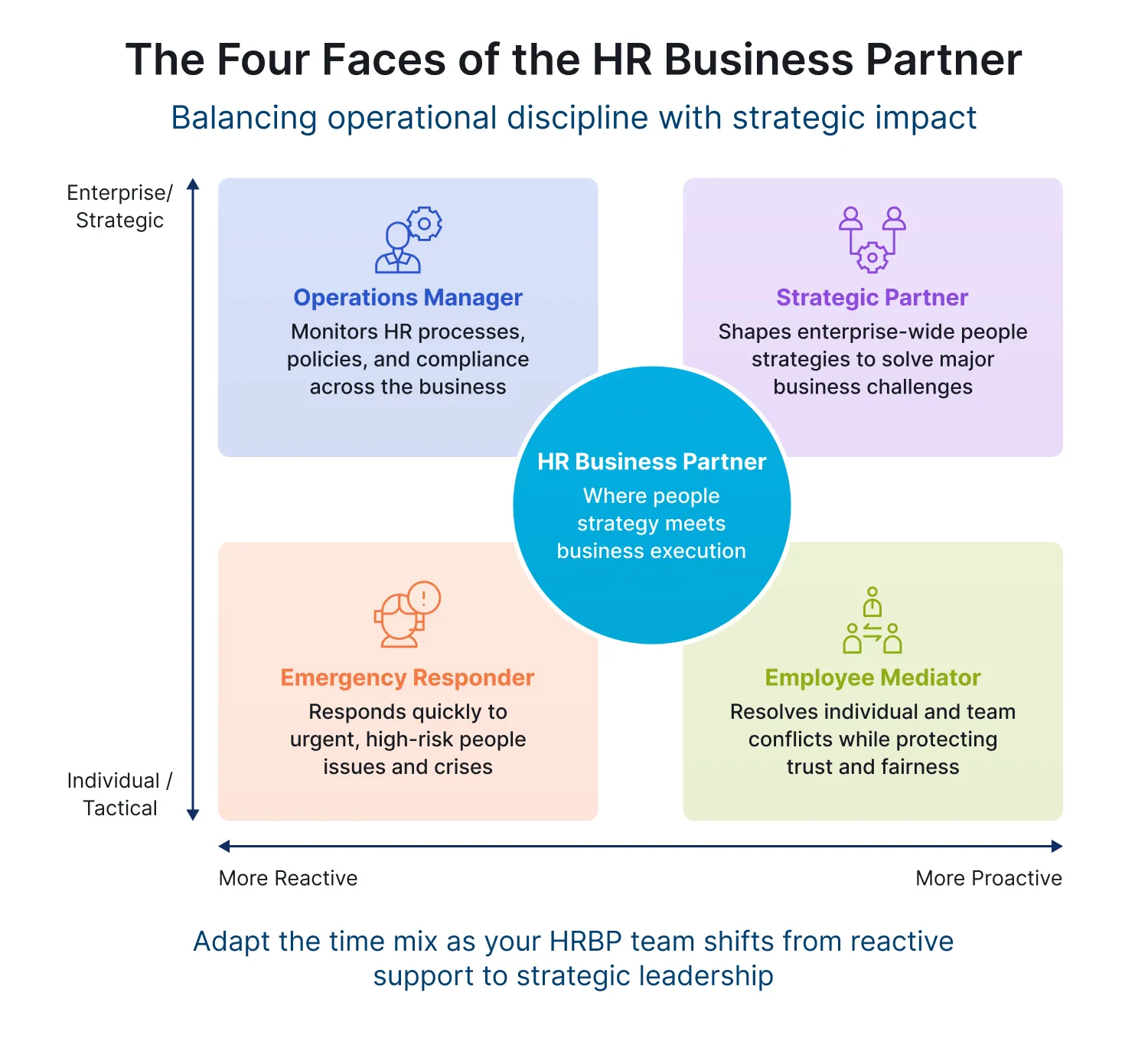
The HR Business Partner role has undergone a significant transformation over the past two decades. Originally conceived as a way to embed HR expertise closer to the business, the role has evolved from a primarily reactive, support-focused position to a proactive, strategy-driving function.
Traditional HR professionals focused on transactional activities: processing paperwork, managing compliance, and responding to employee issues. Today’s HRBPs are expected to anticipate business needs, identify talent gaps before they impact operations, and design people strategies that drive competitive advantage.
The Shift is Dramatic: while administrative HRBPs arrive at work asking “How can I help you today?” and simply record tasks, strategic HRBPs analyze data beforehand, identify performance patterns, and enter meetings with actionable, KPI-driven plans tailored to help managers succeed.
It’s essential to distinguish between HRBP as a job title and business partnering as a capability. While not everyone in HR holds the HRBP title, every HR professional should demonstrate business partnering capabilities, meaning they deeply understand the business context and shape HR policies to enable organizational success.
Why It Matters: Business acumen represents the keenness and quickness in understanding and dealing with business risks or opportunities in ways that lead to positive outcomes. For HRBPs, this isn’t just about understanding financial principles; it encompasses risk assessment, reward structures, competitive positioning, and business model comprehension.
Key Components:
Without strong business acumen, an HRBP cannot effectively align people strategies with organizational objectives. An HRBP supporting a manufacturing company, for example, needs industry-specific knowledge about production cycles, supply chain dynamics, and quality standards to make informed recommendations about workforce planning or training investments.
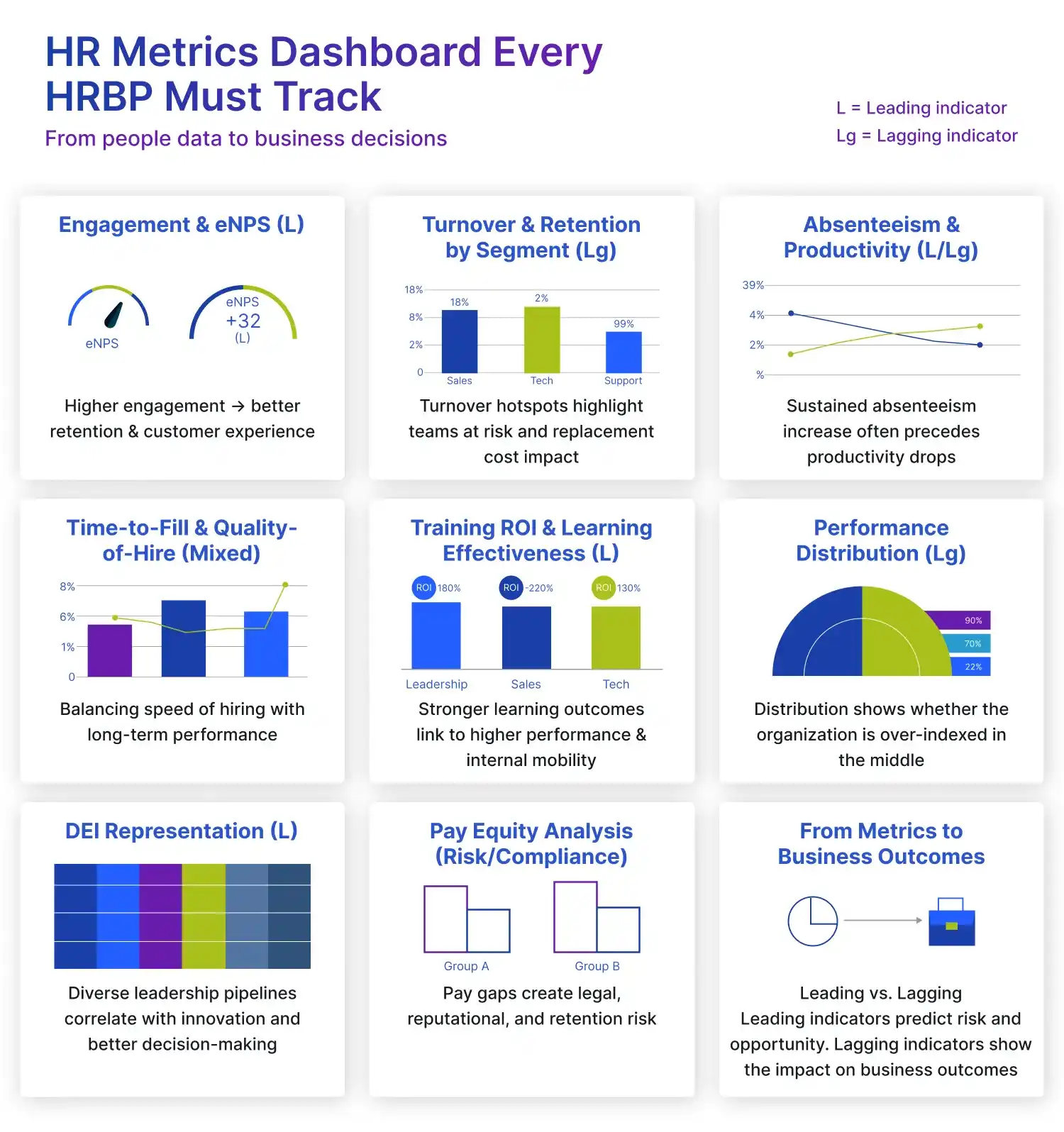
Why It Matters: In the era of digital transformation, HRBPs must be proficient in data collection, analysis, and interpretation. The days of making HR decisions based on intuition are over. Modern HRBPs need to read dashboards, interpret complex reports, and act on quantitative insights.
Essential HR Metrics Every HRBP Should Master:
Why It Matters: Strategic planning distinguishes HRBPs from HR generalists. It’s the ability to see the big picture, anticipate future needs, and align people initiatives with long-term organizational goals. Strategic HRBPs don’t just solve today’s problems; they prevent tomorrow’s crises.
Core Strategic Competencies:
Strategic HRBPs contribute to business conversations at the highest level, offering insights on how talent strategies can create competitive differentiation, accelerate growth, or enable new business models.
Why It Matters: HRBPs operate in politically complex environments, navigating relationships with employees, managers, senior leaders, and fellow HR professionals. Excellent stakeholder management means understanding organizational dynamics, building consensus, negotiating effectively, and managing expectations across diverse groups.
Key Influence Strategies:
Effective stakeholder management requires emotional intelligence, political savvy, and the ability to maintain trust even during difficult conversations. When there’s consensus on challenges, HR interventions receive stronger support and achieve better implementation.
Why It Matters: HRBPs must clearly articulate complex ideas, present data-driven recommendations to leadership, facilitate difficult conversations, and communicate policies across all organizational levels. Strong communication skills ensure alignment and facilitate effective decision-making.
Communication Dimensions for HRBPs:
The ability to present complex HR concepts in accessible business language separates influential HRBPs from those who struggle to gain traction with their initiatives.
Why It Matters: Organizations exist in a state of continuous change, restructurings, technology implementations, mergers, and cultural transformations. HRBPs serve as change agents who design transition strategies, address resistance, and ensure the successful implementation of organizational changes.
Change Management Essentials:
HRBPs who excel at change management understand that the technical aspects of change are often easier than the human dimensions. They focus on hearts and minds, not just processes and systems.
Why It Matters: Digital agility refers to an HRBP’s ability to leverage technology to increase efficiency and drive business results. This includes selecting appropriate HR technologies, understanding how digital tools enhance employee experience, and staying current with emerging technologies like AI and automation.
Technology Competencies:
According to industry experts, the HR tech ecosystem remains fragmented, creating both challenges and opportunities for HRBPs to drive integration and deliver value through thoughtful technology adoption.
Critical Consideration: Adopting the right technology improves digital employee experience, leading to increased engagement and communication. Conversely, implementing unsuitable technology or misusing it increases workloads, hinders productivity, and creates frustrated employees. HRBPs must be discerning technology consumers, not just early adopters.
Why It Matters: While HRBPs serve business objectives, they must also advocate for employees and balance workforce needs with organizational goals. Companies cannot succeed without talented people who are treated fairly and rewarded appropriately.
People Advocacy in Practice:
The best HRBPs navigate the tension between business pressure and employee needs, finding solutions that serve both stakeholders. They understand that long-term business success depends on sustainable people management practices.
Why It Matters: HRBPs must excel at identifying, developing, and strategically deploying talent to support organizational staffing needs. This includes workforce planning, succession planning for critical roles, leadership development, and creating talent pipelines aligned with business strategy.
Talent Management Capabilities:
Effective talent management ensures the organization has the right people in the right roles at the right time, preventing both talent shortages and expensive external recruitment.
Why It Matters: Rather than taking over all people-related responsibilities, HRBPs serve as coaches and consultants who empower organizational leaders to handle people matters effectively. This multiplies the HRBP’s impact across the entire leadership population.
Coaching and Consulting Skills:
The goal is to create an environment where leaders are equipped to handle most day-to-day workforce issues independently, allowing HRBPs to focus on strategic challenges and long-term people strategies.
“A good coach can make all the difference for an individual, a department, and an organization. It’s the thoughtful use of skills in the right place at the right time that will make the HR business partner successful in serving others."

Traditional HR Manager vs. Strategic HRBP Skills:
Before embarking on skill development, conduct an honest assessment of your current capabilities. Identify your strongest areas and those requiring growth. Consider seeking feedback from colleagues, managers, and business partners to gain an external perspective on your competencies.
Strategic Approaches:
Theory without practice produces limited results. Apply new skills in low-risk scenarios before tackling high-stakes situations. Volunteer for projects that stretch your capabilities while providing learning opportunities.
A Senior HR Business Partner at Public Health England (an executive agency of the UK Department of Health) supports the National Infection Service and Health Protection Directorate. The role involves partnering with senior scientific leaders on both strategic and operational HR issues.
Day-to-Day Responsibilities
Career Path & Skill Building
The HRBP started as an HR Graduate Trainee in the NHS (completing CIPD), then progressed through roles as HR Advisor, Assistant HR Business Partner, and HR Business Partner across different public sector organisations. These roles blended:
This broad exposure is cited as key to flexing advice and support to different business needs.
What This Illustrates About HRBP Excellence
The HRBP highlights that the most rewarding part of the role is working closely with divisions as a trusted advisor and critical friend, shaping plans and policies that affect people, supporting leaders through major change, and building deep, long-term relationships. It’s a real-world example of HRBP work that’s embedded in the business, not sitting on the sidelines.
Organizations seeking to develop HRBP capabilities across their HR teams can benefit from structured corporate training programs. Edstellar offers customized training solutions designed to build strategic HR competencies, including:
These programs can be tailored to your organization’s specific industry context, business challenges, and maturity level, ensuring relevant, actionable learning that translates directly to workplace performance.
The Issue: HRBPs frequently get dragged into day-to-day administrative work, answering benefits questions, processing paperwork, and resolving individual employee issues that prevent them from focusing on strategic priorities.
Solution: Establish clear role boundaries and ensure robust HR operations support. Work with HR generalists and HR operations teams to handle transactional activities. Educate business partners on when to escalate issues to you versus handling them through other channels. Block dedicated time for strategic work in your calendar.
The Issue: Business leaders may not view you as a strategic partner, instead seeing you primarily as an HR administrator or compliance officer.
Solution: Build credibility through deep business understanding and data-driven recommendations. Learn the business metrics that matter to your stakeholders. Speak in business language rather than HR jargon. Demonstrate impact by connecting HR initiatives to measurable business outcomes. Show up prepared with insights rather than just questions.
The Issue: HRBPs face constant tension between advocating for employees and supporting business decisions that may negatively impact the workforce, such as layoffs, reorganizations, or increased performance expectations.
Solution: View your role as finding solutions that serve both stakeholders. Challenge business decisions that create unnecessary harm while offering alternatives that achieve business objectives more sustainably. Build trust with both sides by demonstrating consistent ethical behavior and transparent communication. Sometimes, the best advocacy is helping employees understand business realities while ensuring leadership understands the people's implications.
The Issue: Many HRBPs lack confidence in data analysis or don’t have access to quality data and analytics tools.
Solution: Start with the data you have rather than waiting for perfect information. Build relationships with colleagues in finance, operations, or analytics who can mentor you in quantitative analysis. Invest in analytics training. Focus on asking good questions that data can answer rather than getting lost in technical complexity. Remember that even simple descriptive analytics (trends, patterns, distributions) can generate valuable insights.
The Issue: Different business leaders have competing priorities and expectations, making it difficult to allocate time and resources effectively.
Solution: Develop a clear framework for prioritization based on business impact, urgency, and strategic alignment. Communicate your priorities transparently with stakeholders so expectations are aligned. Learn to say no or “not now” diplomatically when requests don’t align with strategic priorities. Regularly reassess priorities as business conditions change.
“As an HR business partner sometimes it feels like line leaders think we’re just administrators, and even our own HR leaders will involve us in everything except what the Ulrich model actually calls for. We’re expected to ‘add value,’ but then we’re pulled into scheduling interviews, drafting letters, or chasing compliance data instead of being part of the business conversations that shape strategy, culture, and performance. Maybe it’s time we stop trying to prove our value and start demanding the space to deliver it."

The HRBP role continues evolving as workplace dynamics shift. Several emerging skill areas will become increasingly critical:
Perhaps the most critical future skill is the ability to learn continuously. The half-life of skills is shortening, meaning today’s expertise becomes outdated faster. HRBPs who cultivate learning agility, intellectual curiosity, and openness to new ideas will thrive regardless of how specific skill requirements evolve.
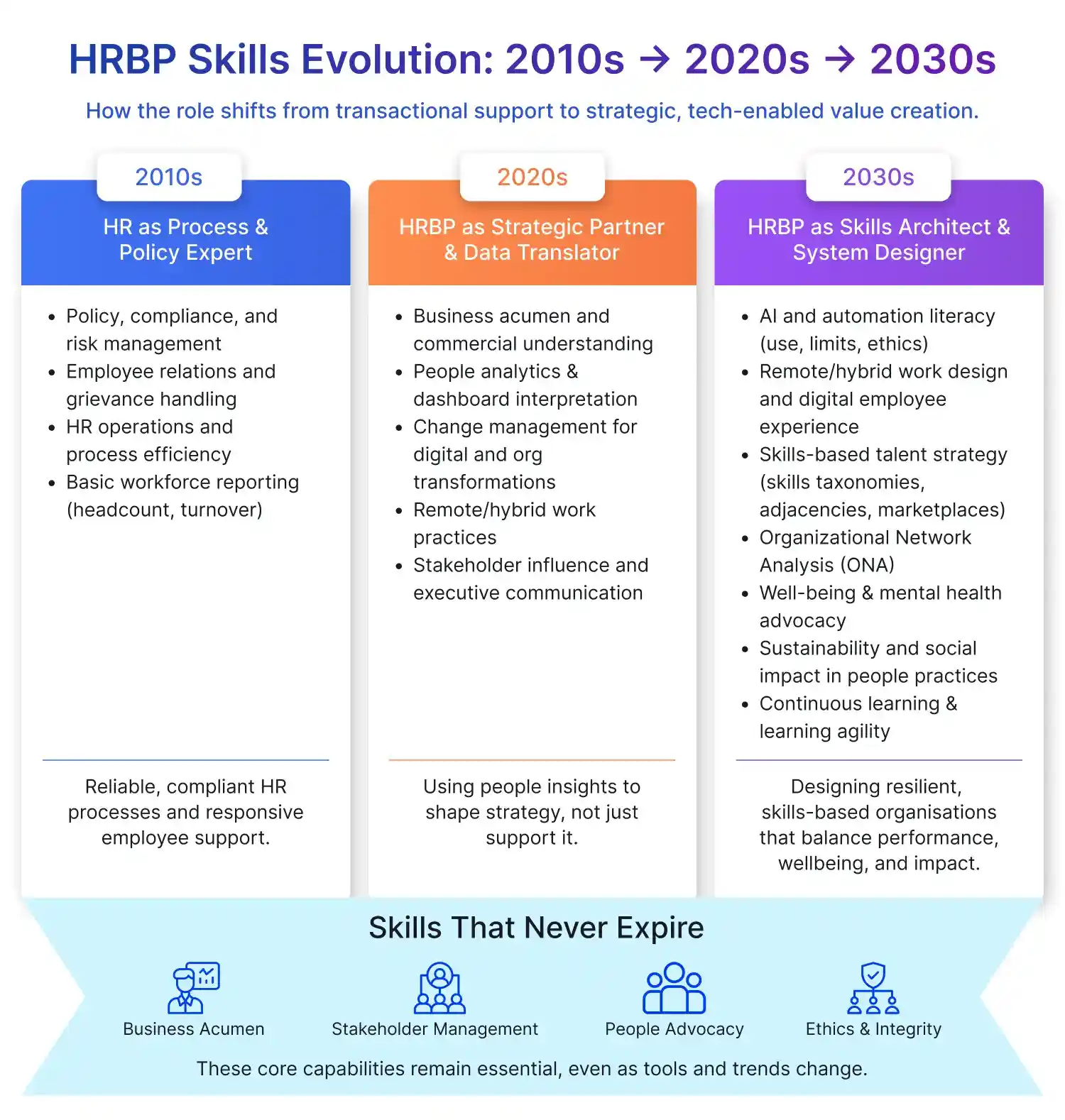
The HR Business Partner role represents one of the most dynamic and impactful positions in modern organizations. Success requires a sophisticated blend of business acumen, data literacy, strategic thinking, stakeholder management, communication excellence, change management, digital agility, people advocacy, talent management, and coaching capabilities.
Whether you’re aspiring to become an HRBP or looking to enhance your current capabilities, focused skill development combined with practical application will accelerate your progress. Consider these immediate next steps:
The journey to HRBP excellence is ongoing, challenging, and immensely rewarding. As you develop these capabilities, you’ll transform from an HR practitioner into a strategic business partner who drives organizational success through exceptional people leadership.
Edstellar offers corporate training programs designed to build strategic HR capabilities across your HR team:
Programs can be customized to your industry, business context, and HR maturity level, ensuring relevance and measurable impact.
Transform your HR team into strategic business partners. Contact Edstellar today to design a customized HRBP development program for your organization.
#On-site #Virtual #GroupTraining #Customized
Explore 2000+ industry ready instructor-led training programs.

Create dynamic leaders and cohesive teams. Learn more now!

Do a quick Skill gap analysis with Edstellar’s Free Skill Matrix tool

Unlock premium resources, tools, and frameworks designed for HR and learning professionals. Our L&D Hub gives you everything needed to elevate your organization's training approach.
Access L&D Hub Resources.svg)
.svg)
.svg)
.svg)

.svg)


.svg "Click Here to Follow on Medium")
.svg)


