10 Most In-Demand Skills in Australia for 2026
.webp)

.svg "edstellar")

Australia's labour market is experiencing its most significant transformation in decades. Jobs and Skills Australia's 2025 Occupation Shortage List reports that 29% of all assessed occupations are currently in shortage, with 139 occupations in persistent shortage since 2021. For corporate L&D leaders, HR managers, and workforce planners, these numbers represent both a challenge and an opportunity.
Meanwhile, the World Economic Forum's Future of Jobs Report 2025 projects that 39% of core skills across all jobs will change by 2030, and 85% of employers worldwide plan to prioritise upskilling their current workforce. In Australia specifically, this pressure is amplified by an ageing population, post-pandemic migration catch-up, and a $100 billion annual infrastructure pipeline that demands skilled workers faster than the market can produce them.
So, which skills are in demand in Australia right now? This guide breaks down the top 10 high demand skills in Australia across technology, trades, healthcare, and services. It draws on the latest government data, industry reports, and salary benchmarks to give you an evidence-based view of what skills are needed in Australia, whether you are planning corporate training, exploring the skilled occupation list for migration, or advising teams on career development.
Every ranking in this guide is backed by data from Australian government bodies, local industry authorities, and established hiring platforms. We weighted Australian-specific sources more heavily than global reports, because local data reflects what is actually happening on the ground. Here is where the numbers come from.
Spanning technology, mining, healthcare, construction, and emerging green sectors, the list reflects the diversity of Australia's 2026 economy. Each skill includes salary ranges, demand level, and learning time, making it easier for professionals and organisations to plan their next move with clarity.


AI Engineer now tops LinkedIn's 2026 Jobs on the Rise report for Australia, and the numbers behind that headline are staggering. Demand for AI-related skills has surged 245% since 2023, and 87% of Australian professionals already report using AI tools in their daily work. Far from a niche discipline, AI and machine learning have become foundational skills in demand in Australia across virtually every sector.
What makes this particularly urgent for Australian employers is the wage premium. ACS data shows a 56% wage premium for AI-specific roles compared to broader tech positions. This premium reflects genuine scarcity: Australia produces fewer AI graduates per capita than comparable economies, and competition from global tech firms drives salaries upward. Financial services firms in Sydney, government agencies in Canberra, and healthcare providers in Melbourne are all competing for the same limited talent pool.
The sub-skills driving this demand have matured rapidly. Prompt engineering, large language models (LLMs), and generative AI were curiosity items two years ago; today, they are line items on job descriptions. Natural language processing (NLP), ML engineering, and AI governance round out the most-requested capabilities. For organizations building internal AI capabilities, the priority is training existing employees to work alongside AI systems, not just hiring specialist engineers.
Technology, Financial Services, Healthcare, Government, Logistics

Australia faces a projected shortfall of 30,000 cybersecurity professionals by 2026, with 54% of security teams reporting being understaffed according to industry research. High-profile breaches at Optus, Medibank, and Latitude Financial have pushed cybersecurity from a back-office concern to a boardroom priority. This is one of the most critical skills in demand in Australia, with demand outstripping supply at every seniority level.
Salaries reflect the urgency. The Hays 2026 Jobs Report for Australia shows cybersecurity architects earning $187,000 on average, making it one of the highest-paying technical roles in the country. Government and defense agencies, banks, energy utilities, and telecommunications companies are the heaviest recruiters, but even mid-market retailers and healthcare providers now need dedicated security staff to meet regulatory obligations under the Security of Critical Infrastructure Act.
The sub-skills employers seek range from hands-on technical capabilities like penetration testing and incident response to strategic functions like security architecture, threat intelligence, and governance, risk, and compliance (GRC). The skill shortage list Australia publishes consistently features cybersecurity roles, and the occupation appears on the skilled occupation list for migration purposes, making it a strong pathway for skilled workers considering a skills in demand visa Australia route.
Government/Defense, Financial Services, Critical Infrastructure, Technology
"By 2030, we will need 1.3 million additional skills to effectively utilise the technologies reshaping the Australian workforce. Forecasts from Digital Pulse suggests Australia is not on track to achieve the growth in skills we need."



Data analytics roles in Australia are forecast to grow by 23.2% over the coming years, comfortably outpacing most other professional categories. Cloud data roles specifically have risen 25% year-over-year according to market research, driven by the fact that over 70% of Australian businesses now run analytics workloads on cloud platforms. If you are asking what skills are in demand in Australia across the broadest range of industries, data analytics sits near the very top.
What makes data skills uniquely valuable is their cross-sector applicability. Financial services firms use predictive analytics for risk modeling. Healthcare providers analyze patient outcomes to improve care delivery. Retailers optimize supply chains and personalize marketing. Mining companies use sensor data to improve extraction efficiency. Government agencies apply statistical modeling to policy design. Every one of these use cases requires skilled data analysts who can translate raw information into actionable insight.
The tools of the trade continue to evolve. SQL and Python remain foundational, but employers increasingly expect proficiency in modern BI platforms, data visualization tools, and cloud-native analytics services. Statistical modeling, predictive analytics, and the ability to communicate data stories to non-technical stakeholders are the differentiators that separate high-impact analysts from entry-level report builders.
Financial Services, Healthcare, Retail, Government, Mining
Explore Related Training:
Data Analytics & Visualization Data Visualization with Python All Data Analytics Programs"39% of core workforce skills will change by 2030, and 85% of employers plan to prioritise upskilling." - World Economic Forum, Future of Jobs Report 2025

With 80% of analytics workloads expected to migrate to cloud platforms according to industry forecasts and the Australian government's own cloud-first mandate driving public sector adoption, cloud computing and DevOps skills remain resilient, in-demand skills in Australia. Salaries for cloud engineers and architects typically range from $120,000 to $160,000 according to recruitment market data, reflecting persistent talent scarcity despite significant training investment from major cloud providers.
Australia's geography plays a role in this demand. With its distributed population and remote mining operations, cloud infrastructure is not a convenience; it is essential. AWS, Microsoft Azure, and Google Cloud Platform (GCP) have all expanded their Australian data center presence, and each generates demand for locally based engineers who understand sovereignty requirements, low-latency networking, and hybrid cloud architectures suited to Australian enterprise needs.
DevOps and Site Reliability Engineering (SRE) capabilities are tightly coupled with cloud adoption. Organizations that have migrated to the cloud now need teams skilled in Kubernetes orchestration, CI/CD pipeline management, and Infrastructure as Code (IaC) to operate those environments reliably. These skills appear consistently on the common skills gap examples that L&D leaders identify when auditing their technology teams.
Technology, Financial Services, Government, Healthcare, Telecom

Healthcare is the largest employment sector in Australia, and it is also the one with the most acute shortages. The country faces a projected shortfall of over 70,000 nurses by 2035, and approximately 290,000 new healthcare jobs will be created across the sector in the coming decade, according to workforce projections. Registered nursing appears on every iteration of the skill shortage list Australia publishes, and it is a priority occupation on the skilled occupation list for migration.
The shortage is not limited to major city hospitals. Aged care facilities in regional areas face critical staffing gaps, accelerated by an aging population and the workforce demands created by the Royal Commission into Aged Care Quality and Safety. Mental health services, already stretched before the pandemic, have seen demand climb further as awareness of psychological wellbeing has grown across the community and within workplace settings.
For employers in allied health, the challenge is retention as much as recruitment. Burnout rates in nursing remain high, and competition from international employers (particularly the UK and the Gulf states) draws Australian-trained nurses overseas. Investment in professional development, particularly in emerging areas such as telehealth delivery, digital health records, and interdisciplinary care coordination, is increasingly seen as a retention strategy as well as a capability-building exercise.
Hospitals, Aged Care, Primary Healthcare, Mental Health
Explore Related Training:
Healthcare Data Analysis with ML

Skilled trades have the lowest recruitment fill rate of any occupational category in Australia at just 54.3%, according to Jobs and Skills Australia's 2025 Occupation Shortage List. That means nearly half of all trade vacancies go unfilled. Between 32,000 and 42,000 additional electricians alone will be needed by 2030 according to industry workforce estimates to support housing construction, renewable energy installations, and infrastructure upgrades.
The financial incentive is significant. The Hays 2026 Jobs Report for Australia shows mining electricians earning between $175,000 and $200,000, often with FIFO (fly-in, fly-out) arrangements and accommodation included. Even metropolitan-based electricians, plumbers, and carpenters command strong wages and near-guaranteed employment. For skilled workers exploring the skills in demand visa Australia pathway, electrical and construction trades remain among the most straightforward occupations for visa approval.
The pipeline problem starts with apprenticeship completion rates. Australia's vocational education and training (VET) sector has struggled with funding, perception issues, and apprentice attrition. The federal government's Australian Skills Guarantee, which mandates that one in ten workers on major public projects must be apprentices, is designed to address this gap, but results will take years to materialize at scale.
Construction, Mining, Renewable Energy, Infrastructure, Manufacturing
Explore Related Training:
Renewable Energy and Sustainability"The biggest hurdle to digital transformation isn't always the technology itself, but the availability of skills to implement and sustain it. Organisations are recognising that success will come from a mix of hiring, upskilling, and leveraging external partners to ensure they have both the technical expertise and change management capabilities to deliver impact."

Australia's clean energy transition is one of the largest workforce mobilizations in the country's history. The Clean Energy Council's workforce report projects 450,000 clean energy jobs by 2030, accounting for roughly one-third of all job growth in Australia over that period. A further 129,600 ongoing maintenance jobs are expected between 2025 and 2050, creating a permanent new employment category.
The demand spans a remarkable range of skill levels and specializations. Engineers with expertise in solar, wind, hydrogen, and battery storage technologies are the most visible requirement, but the workforce also needs grid integration specialists, environmental compliance officers, project managers, and electricians trained in renewable energy systems. Many of these roles overlap with other high-demand skills in Australia listed in this guide, particularly skilled trades and project management.
For regions historically dependent on fossil fuel industries, particularly the Hunter Valley in New South Wales, the Latrobe Valley in Victoria, and central Queensland, the transition creates both displacement risk and reinvention opportunity. Government programs like the National Net Zero Authority are funding reskilling initiatives to help coal workers transition to clean energy roles. Employers who invest in sustainability skills now position themselves for advantages in contracts, compliance, and talent acquisition as the transition accelerates.
Energy Generation, Construction, Government, Mining Transition
Explore Related Training:
Environmental Sustainability, Planning and Policy All Environmental Sustainability Programs
Australia's infrastructure pipeline totals $242 billion over five years from 2024-29 according to Infrastructure Australia, and the construction, technology, and mining sectors face critical workforce shortages with demand projected to reach 521,000 workers by 2027. The sheer volume and complexity of projects underway, from the Inland Rail and Western Sydney Airport to state-level road, hospital, and school builds, have made project management one of the most sought-after skills in demand in Australia.
The skill requirements have evolved. Traditional waterfall project management remains essential for construction and infrastructure, but technology and financial services employers now expect Agile and Scrum proficiency as standard. Stakeholder management, risk assessment, and the ability to manage multi-vendor environments are differentiators at senior levels. Certifications like PMP and PRINCE2 remain valued, particularly for government contracts, where they are often mandatory.
What is particularly notable is the cross-sector transferability of project management skills. A PM with experience delivering technology transformations can transition to construction project oversight, and vice versa, provided they invest in domain-specific knowledge. For managers looking to broaden their career options or organizations seeking to build internal PM capability, this versatility makes project management training one of the highest-ROI investments available.
Construction, Technology, Mining, Government, Financial Services
Explore Related Training:
Construction Project Management Project Risk Management All Project Management Programs"Trades have the lowest fill rate of any occupational category in Australia at just 54.3%, meaning nearly half of all trades vacancies go unfilled." - Jobs and Skills Australia, 2025

Teacher shortages have been reported across every Australian state and territory since 2021, making education one of the longest-standing entries on the skill shortage list Australia publishes annually. The shortfall is particularly acute in STEM subjects (science, technology, engineering, and mathematics), rural and remote schools, and special education. Early childhood education faces its own distinct shortage as government-subsidized childcare expansion increases the demand for qualified educators.
The causes are well-documented: declining enrolments in teaching degrees, high attrition in the first five years of practice, and workload concerns that discourage career changers. The Australian Government's National Teacher Workforce Action Plan addresses several of these factors, including higher-education bursaries, mid-career entry pathways, and workload reduction initiatives. However, the structural gap will persist through at least the end of the decade.
For organizations involved in vocational education and training (VET), corporate training, or educational technology, the shortage creates opportunities alongside challenges. Digital pedagogy skills, EdTech proficiency, and the ability to design blended learning experiences are now as important as subject-matter expertise. A well-structured training needs analysis can help educational institutions and corporate L&D teams identify where their teaching and facilitation capabilities need strengthening.
Primary Education, Secondary Education, Early Childhood, VET, Special Education
Explore Related Training:
Guide to Training Needs Analysis
Australia's evolving accessibility regulations are creating a new wave of demand for UX designers and digital marketers who understand inclusive design principles. At the same time, AI fluency has become a non-negotiable requirement for marketing roles, as content generation, audience segmentation, and campaign optimisation increasingly rely on AI-powered tools. These converging forces make digital marketing and UX design high demand skills in Australia for 2025 and beyond.
The commercial driver is clear. Australian e-commerce revenue continues to grow at double-digit rates, according to retail sector data, and businesses that cannot deliver seamless digital experiences lose customers to competitors who can. UX research, UI/UX design, and conversion rate optimisation (CRO) are the disciplines that translate directly to revenue impact. On the marketing side, SEO/SEM expertise, content strategy, and marketing analytics remain in consistent demand as organisations compete for visibility in increasingly crowded digital channels.
What distinguishes today's digital marketing professionals from their predecessors is breadth. Employers expect marketers to understand data analytics, automation, and customer experience design alongside traditional campaign management. Similarly, UX designers need to combine visual design skills with research methodologies, accessibility standards, and an understanding of how AI-generated content fits into the user journey. Building an individual development plan that covers this breadth can help professionals stay competitive in a fast-moving field.
Technology, Retail/E-commerce, Financial Services, Government, Media
Australia's skills shortages vary significantly by region. This breakdown shows which skills are most critical in each state and territory.
Regional Strategy: NSW and Victoria produce more technology graduates than their markets absorb, while Queensland and Western Australia face persistent shortages in the same occupations. Internal mobility programs can address these imbalances more effectively than competing for scarce talent in shortage markets.
"Australia's most in-demand skills are no longer just technical; they are human. The future workforce needs professionals who combine technical capability with emotional intelligence, effective communication, self-awareness, critical thinking, adaptability, decision-making, collaboration, and a continuous learning mindset. These capabilities enable individuals to create value and drive meaningful outcomes in any workplace."

"We need to work now to build our skills base to ensure we make the most of the opportunities that artificial intelligence provides. This includes boosting management knowledge and capability, improving the skills of the existing workforce and looking to improve the capabilities of the emerging workforce."

#On-site #Virtual #GroupTraining #Customized
Explore 2000+ industry ready instructor-led training programs.

Create dynamic leaders and cohesive teams. Learn more now!

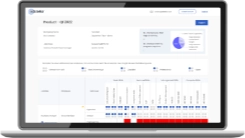
Do a quick Skill gap analysis with Edstellar’s Free Skill Matrix tool

Unlock premium resources, tools, and frameworks designed for HR and learning professionals. Our L&D Hub gives you everything needed to elevate your organization's training approach.
Access L&D Hub Resources.svg)
.svg)
.svg)
.svg)

.svg)


.svg "Click Here to Follow on Medium")
.svg)


