HR Risk Management in 2026: 5 Critical Threats Every Organization Must Address

.svg "edstellar")


At first glance, the global labor market appears steady. Unemployment rates are holding at around 5%, and hiring activity remains stable across many regions. Yet this apparent equilibrium conceals deeper structural vulnerabilities. Job quality is deteriorating, with a resurgence of informal work and working poverty to pre-pandemic levels. Youth unemployment remains more than twice the global average, and productivity gains remain elusive despite significant investments in AI and other technologies.
For HR leaders, these are not abstract economic figures; they represent a growing operational and reputational risk. Declining job quality fuels disengagement. Persistent youth unemployment constrains future talent pipelines. Stagnant productivity exposes skill mismatches that weaken adaptability. Left unchecked, these forces drive up turnover costs, particularly in specialist and leadership roles where replacement expenses are highest and erode organizational resilience.
Compounding the challenge, the employee voice now carries unprecedented reach.
Dissatisfaction can be amplified instantly through social media, while platforms such as Glassdoor and Indeed directly influence employer attractiveness. Negative narratives, once confined to internal corridors, now shape external perceptions in real time, further increasing the difficulty and cost of securing top talent.
Against this backdrop, HR is being pulled in two competing directions. Executive leadership demands accelerated digital transformation, greater workforce agility, and measurable productivity gains. Employees seek security, meaningful work–life balance, and authentic connection. Existing HR systems designed primarily for operational efficiency are ill-equipped to manage the combined strategic, cultural, and reputational pressures of this environment.
The result is a quiet but escalating crisis in HR risk management:
These breakdowns manifest as early attrition, quiet quitting, widening capability gaps, and eroding trust in leadership risks that are human, cultural, systemic, and increasingly public.
What is needed is not incremental adjustment but a fundamental redesign of the HR operating model, one that is agile, people-centric, and equipped to anticipate and mitigate organizational threats before they escalate.
In the following sections, we will examine how to rebuild HR for risk resilience from minimizing talent loss and navigating disruption to safeguarding culture through change, positioning HR as a proactive, strategic defense in a volatile world.
Human resource risk refers to the probability of unfavorable events or threats emerging from people-related decisions and actions. These risks are becoming increasingly significant in organizational operations, as human capital continues to influence core business outcomes more than ever before.
When such risks materialize, they can lead to the loss of confidential information, direct commercial and profit losses, and damage to the company's reputation or goodwill. Proactively reducing these risks not only minimizes potential damage but also improves the overall quality and reliability of the workforce.
Despite the growing importance of HR risk management, many organizations are struggling to meet the demands placed on a modern HR function. The expectation is clear: HR must anticipate people-related risks, protect culture, and enable business agility. The reality is that more fragmented capabilities, systems, and leadership alignment are often insufficient to deliver on that mandate.
One of HR’s cornerstone responsibilities, strengthening the employee experience, illustrates this gap. According to the HR Monitor report, around 36% of employees across Europe and the U.S. report dissatisfaction with their current employer. This isn’t just an engagement problem; it is a risk indicator, pointing to vulnerabilities in culture, leadership, and retention that can directly impact business continuity and talent pipelines.
The immediate need is sharper workforce intelligence. HR leaders require the ability to spot emerging risks early:
The gap lies in inconsistent data visibility, limited integration of workforce planning with business strategy, and underdeveloped manager capability to act on early warning signs. Without fixing these fundamentals, risk management remains reactive.
Technology can close part of this gap, but only when it builds on a strong operational base. Workforce analytics, automation, and generative AI can surface risk patterns in real time, enable tailored retention interventions, and accelerate decision-making, but these benefits depend on clean data, process discipline, and governance maturity.
The risk is clear: without aligning people practices and technology enablement, HR will remain in a reactive posture, addressing problems after they materialize rather than preventing them. Effective HR risk management demands both a workforce intelligence mindset that spots threats early and a fit-for-purpose technology stack that can act on them at speed.
As discussed earlier, HR risk isn’t limited to isolated compliance or conduct issues. It runs deeper, into how organizations plan, attract, develop, and retain talent in a rapidly shifting environment. According to findings from McKinsey’s HR Monitor 2025, five core risk areas stand out, each capable of undermining organizational performance if left unaddressed.

While 73% of organizations say they conduct operational workforce planning, McKinsey research shows that only 12% of HR leaders in the U.S. have a plan aligned to a three-year or longer horizon. This short-term focus leaves organizations vulnerable to emerging skill gaps, thin leadership pipelines, and unpreparedness for further disruptions.
The consequences are visible in the U.S. airline industry. During the pandemic, carriers rapidly downsized, letting go of pilots and flight crews without a plan for their timely return. When travel demand surged back, they lacked provisions for re-onboarding talent or scaling operations in sync with recovery. The result: scheduling chaos, lost revenue, and brand damage. This wasn’t just an operational issue; it was a workforce strategy failure rooted in short-term thinking.
Without embedding strategic planning with a long-term view into workforce strategies, HR leaders will stay in reactive mode, managing crises after they surface instead of shaping a talent ecosystem resilient to future disruption.
Despite signs of labor market easing, recruitment remains difficult. Offer acceptance rates stand at just 56%, and 18% of new hires leave during their probationary period. In Europe, overall hiring success is just 46%. These numbers point to inefficiencies not just in sourcing, but in employer branding, candidate experience, and onboarding. Without a more integrated approach, the cost of hiring failures and turnover can quickly snowball.
Employee development is critical, but often scattered across disconnected programs and departments. Only about one-third of critical roles are backed by succession plans. Some employees receive as little as six days of training annually, and 26% say they received no feedback at all in the past year. This disconnect between L&D, performance, and career growth introduces significant organizational risk, especially in fast-changing sectors where adaptability is key.
Roughly 1 in 5 employees express dissatisfaction with their employer, yet only 7% plan to leave, signaling a growing risk of quiet quitting. Job security, work–life balance, and peer relationships are now top drivers of retention, yet many HR teams continue to focus primarily on pay and hours. This misalignment weakens morale, productivity, and loyalty, turning employee experience into a hidden operational risk.
As cost pressures grow, 13% of organizations plan to reduce HR headcount by an average of 22%. Shared-services centers (SSCs) and generative AI offer ways to scale operations with leaner teams, but adoption is still low. Just 18% of large organizations use specialized SSCs in HR, and only 19% of core HR processes in Europe are enhanced by gen AI. Meanwhile, 32% of HR teams remain stuck in pilot phases. This limited modernization creates risk in terms of speed, accuracy, and the ability to meet evolving business demands.
Optimizing HR technology is a growing priority as organizations seek to streamline operations and enhance productivity. Yet 55% of HR leaders report their current technologies don’t meet evolving business needs, and 51% cannot measure the ROI of their technology investments. -SHRM State of the Workplace
HR leaders carry an intimate understanding of their people, their strengths, their struggles, and their aspirations. But in today’s high-stakes environment, that familiarity alone isn’t enough. C-suite leaders are chasing bold transformation goals while navigating economic shocks, talent scarcity, and the fast-moving tides of AI and automation.

Meanwhile, employee expectations are evolving just as rapidly, demanding stability, growth, and meaning at work. The once-reliable three-pillar HR model is no longer fit for this moment. With 87% of HR leaders calling for continuous transformation, it’s time to reimagine HR as a dynamic, risk-sensing function. One that doesn’t just observe change but helps the organization outpace it. What follows is a practical framework for risk management for human resources.
Talent-related risks, ranging from capability mismatches and high early turnover to misaligned role expectations, are some of the most foreseeable yet most overlooked risks organizations face. Investing in a talent ecosystem allows HR to connect long-term planning with hiring diagnostics, so emerging threats are caught early and managed effectively.
HR’s planning logic all too often stops at: “How many people do we need next quarter?” To genuinely anticipate risk, that must evolve into: “Do we have the right skills, in the right roles, to stay competitive over the next three years?”
AON’s Survey underscores why this matters, ranking failure to attract or retain top talent as the fourth biggest global risk, and one expected to stay that way through 2026.
How to Operationalize Future Risk:
Hiring shouldn’t just be about speed-to-fill; it must serve as a diagnostic tool to detect emerging risk.
Key Symptoms and how to Capture Them:
“Show business leaders examples of candidates who backed away because the company lacked remote or hybrid options. Track the number of candidates who ask about flex work. About one-third of candidates ask about the company's flex-work policy. We need to be vigilant in making sure that we're always tracking dropouts and declines and sharing that back.”


Talent risks like capability gaps, early attrition, and mismatched role expectations are rarely surprises. They’re visible months in advance, but only if HR connects the dots between long-term planning and hiring diagnostics. That connection is what a talent ecosystem delivers.
A talent ecosystem isn’t just a collection of HR processes; it’s a living network linking workforce planning, talent acquisition, development, mobility, and offboarding under one intelligence framework. When planning identifies an emerging skill gap and hiring data shows rising offer rejections or early exits, the ecosystem responds in real time, adjusting sourcing, re-skilling, or role design before the risk escalates.
This approach matters because today’s workforce is more complex than ever. Employees, gig workers, contractors, and alumni all contribute to business continuity. Without integrated visibility, organizations end up treating symptoms, replacing a departure rather than addressing root causes like career stagnation or cultural misalignment.
Evidence backs the impact: World Economic Forum pilots of integrated talent ecosystems in industrial settings achieved a 52% improvement in workforce stability, 34% financial uplift, and 28% boost in productivity.
Embedding planning and hiring in a shared ecosystem shifts HR from reactive to anticipatory. Then hiring becomes a risk sensor, spotting EVP gaps, cultural misfits, or unclear role expectations through candidate behaviors. Together, they create feedback loops that protect critical roles, strengthen succession, and sustain competitive advantage.
Ask most HR leaders, and they'll tell you they're doing performance reviews, running L&D programs, and maintaining a succession plan. But often, these three functions run on entirely separate tracks with different data, different priorities, and different owners.
The result? Critical signals go unnoticed, development feels generic, and succession plans are outdated the moment they're created. In a modern workplace, where talent risk is one of the major threats to business continuity, this fragmented model is no longer sustainable.
The real opportunity lies in integrating performance, learning, and succession into a single, dynamic flow, where insights from one inform the other.
DDI's 2025 research shows that only 20% of CHROs feel they have leaders ready to step into critical roles today. Even worse, many high-potential employees are unaware they're being considered, leading to trust erosion and premature exits.
Succession needs to be reimagined as a living, breathing pipeline fed continuously by performance trends, learning progress, and manager input. Not just a list of names, but a multi-layered map of future readiness.
This shift also aligns with what employees want. Korn Ferry's Workforce study found that 67% of employees would stay with a company that offered real opportunities to grow, even if they weren't fully satisfied with their current role. When employees see that feedback leads to development, and development leads to real advancement, the entire talent engine becomes self-reinforcing.
Connecting these three systems' performance, learning, and succession frees HRs from reactive firefighting and puts them in a proactive, capability-building position. It allows organizations to move faster, promote smarter, and retain better. And it sends a powerful message to the workforce: Your growth here is not an accident. It's by design.
The employee experience (EX) isn't just about keeping people happy; it's your frontline defense against hidden disengagement, absenteeism, and eventual attrition. And by the time HR notices a drop in morale or productivity, the damage is already in motion. That's why employee experience (EX) must be treated not as a branding initiative, but as a strategic listening tool, one that helps you spot friction before it becomes flight.
Recent insights from McKinsey's HR Monitor 2025 show that HR leaders and employees often cite the same core retention factors: job security, work-life balance, compensation, flexibility, and relationships, but rank them differently in terms of importance. This nuance matters. It reveals that while HR and employees are broadly aligned on what matters, there's a calibration gap in how much it matters.
Same Priorities, Different Order: What the Data Really Shows
Take a Closer Look at How HR and Employees Weigh These Factors:
The message to HR is clear: you're listening to the right stations, but it's time to fine-tune the dial.
Employee Experience Is Built on Meaning, Not Menus
This distinction also reveals a broader truth: EX is no longer about offering more perks or generic benefits. It's about how people feel in their day-to-day work, their sense of purpose, safety, and belonging. It's emotional. It's relational. And increasingly, it's personalized.
A training catalog won't re-engage someone quietly worried about job security. A salary hike won't retain someone craving a deeper team connection. To make EX effective, HR must shift from what we offer to how it's experienced and from assuming needs to actively sensing them.
Making EX Your Early Detection System
To truly turn EX into a proactive disengagement radar, HR must embed listening and action into everyday systems:
The good news is that HR teams are already focused on the right themes. But to turn EX into a powerful retention and performance enabler, it needs to evolve into a responsive system, one that listens deeply, adapts rapidly, and prioritizes what employees value most right now.
HR today faces a delicate balancing act. On one side, 75% of workers globally say they need greater stability at work in the future. On the other hand, 85% of business leaders admit their organizations must adopt more agile ways of organizing work to stay competitive.
According to LinkedIn's 2024 Workplace Learning Report, only 33% of organizations even have formal internal mobility programs, and just 1 in 5 employees feel confident about making internal moves. Clearly, the systems meant to enable agility are still lagging behind.
The pace of disruption today demands more than reactive HR; it calls for a function built to anticipate and adapt. This isn't about doing more with less; it's about redesigning how HR operates, partners, and delivers value across the business. When HR modernizes its operating model from operations to mobility, it stops reacting to risk and starts outrunning it.
The risks we’ve explored, including disengagement, talent loss, planning blind spots, and leadership gaps, aren’t distant threats. They’re here. Quiet, compounding, and undermining the very foundations HR is built on.
But this isn’t a crisis to fear. It’s an inflection point to lead from, with smarter, people-first HR risk management at the core.
At Edstellar, a global provider of corporate training and workforce transformation solutions, we partner with CHROs and HR leaders who are ready to stop firefighting and start building capability-driven, risk-resilient HR functions. Whether it’s aligning workforce strategy with future skills, closing learning gaps, redesigning job architecture, or building leadership pipelines that last, our services enable HR to become the engine of resilience in every organization.
Our Skill Matrix tool and L&D Strategy support aren’t just solutions; they’re enablers that guide your entire HR transformation journey, from identifying skill gaps to aligning learning with business continuity. We’ve helped progressive organizations spot capability gaps before they spiral into performance failures. We’ve guided HR teams in rewiring their L&D investments not just to upskill, but to safeguard continuity, accelerate transformation, and deliver impact.
Internal mobility becomes a reality when clear career pathways and succession strategies unlock retention, agility, and leadership depth. As HR leaders move from guesswork to evidence-based decision-making, they can de-risk workforce strategy with confidence.
If you’re ready to turn HR into your company’s strongest line of defense against disruption, not by moving faster, but by building smarter, we’re here to support you every step of the way.
#On-site #Virtual #GroupTraining #Customized

Turn Your Training Programs Into Revenue Drivers.
Schedule a ConsultationExplore 2000+ industry ready instructor-led training programs.

Create dynamic leaders and cohesive teams. Learn more now!

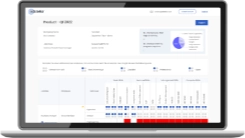
Do a quick Skill gap analysis with Edstellar’s Free Skill Matrix tool

Unlock premium resources, tools, and frameworks designed for HR and learning professionals. Our L&D Hub gives you everything needed to elevate your organization's training approach.
Access L&D Hub Resources.svg)
.svg)
.svg)
.svg)


.svg)
.svg "Click Here to Follow on Medium")
.svg)


