10 Most In-Demand Skills in Qatar for 2026

.svg "edstellar")

Qatar's economy is projected to accelerate from 2.4% growth in 2025 to an average of 6.5% during 2026–2027 according to the World Bank's Gulf Economic Update, driven by the phased start-up of the $45.75 billion North Field LNG expansion that will nearly double the country's gas production capacity. Yet 43% of commissioning roles for the North Field East project remained unfilled after six months of active search according to Gulf Talent data, the cybersecurity vacancy rate stands at 434 positions per 100,000 people (the second-highest in the Middle East), and a 2024 labour market report identified over 10,000 job openings in IT, software development, and cybersecurity alone. For corporate L&D leaders and HR managers operating in the world's wealthiest country per capita, these numbers translate directly into urgent training priorities.
Several structural forces are intensifying this demand simultaneously. The Qatar National Vision 2030 and the Third National Development Strategy (NDS3) launched in January 2024 target 4% compound annual growth in non-hydrocarbon GDP, with non-oil sectors already accounting for over 60% of GDP in 2024 led by tourism, logistics, and financial services.
The TASMU Smart Qatar programme has invested $2.47 billion in digital transformation, creating 13,000 new tech jobs by 2030, while the National Skilling Program aims to train 50,000 individuals in advanced digital skills. Qatar's workforce is 94% foreign, and the Qatarisation Law No. 12 of 2024 (effective April 2025) requires private businesses to prioritise Qatari nationals, creating a dual demand: building local talent capability while continuing to recruit international specialists for shortage occupations.
So which skills are truly driving Qatar's economy, and where should organisations invest their training budgets? This guide breaks down the top 10 skills in demand in Qatar, spanning energy engineering, artificial intelligence, cybersecurity, healthcare, and financial services. Drawing on Qatar Planning and Statistics Authority data, TASMU programme reports, KiTalent industry analysis, and Gulf Talent hiring benchmarks, it provides an evidence-based picture of what jobs are in demand in Qatar, whether you are planning corporate upskilling programmes, supporting Qatarisation compliance, or building workforce strategies for one of the Gulf's fastest-growing economies.
Every ranking in this guide is backed by data from Qatari government bodies, industry associations, and established hiring platforms.
Qatar's skills landscape in 2026 reflects the convergence of the world's largest LNG expansion programme, a $2.47 billion digital transformation initiative, a post-World Cup tourism infrastructure scaling effort, and Qatarisation requirements that are reshaping the private sector workforce. The 10 skills below span energy, technology, healthcare, construction, and financial services, mirroring the sectors where government investment, employer demand, and salary premiums are highest. Each ranking draws on the policy signals, job market data, and industry investments outlined in the sources above.
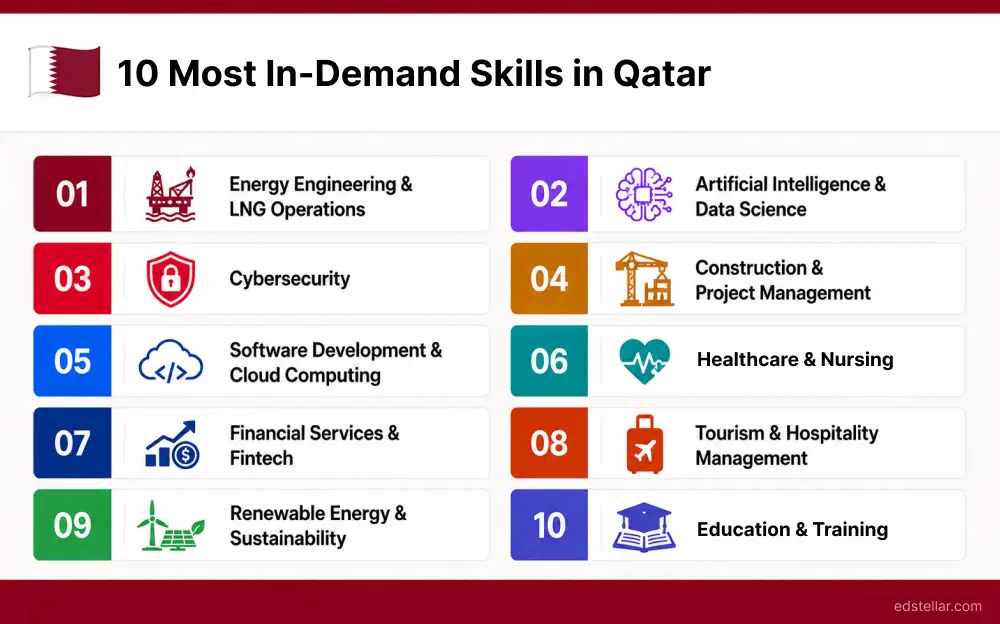

The North Field East and North Field West expansions, worth a combined $45.75 billion, will raise Qatar's LNG output from 77 million tonnes per annum to approximately 142 MTPA by 2030. The North Field East project reached 85% completion by end-2024 with first production scheduled for mid-2026, adding four liquefaction trains, while North Field West adds two more mega-trains. Peak onsite workforce is set at 45,000 workers, yet 43% of commissioning roles remained unfilled after six months of active search, and senior LNG commissioning engineers with 15+ years of experience show vacancy durations exceeding 180 days.
Qatar supplies 20% of the world's LNG, and the expansion programme will cement its position as one of the top three global exporters alongside the United States and Australia. QatarEnergy, the state energy company, is recruiting across project management, engineering, procurement, construction, QA/QC, HSE, commissioning, and operations and maintenance. Baker Hughes secured a major contract for the North Field West project covering six gas turbines, 12 centrifugal compressors, and integrated power systems, each requiring specialised engineers and technicians for installation and operation.
The talent shortage is concentrated in the most experienced tiers. Process engineers, LNG train operators, rotating equipment specialists, and instrumentation and control engineers with deep commissioning experience are in critically short supply globally, not just in Qatar. Compensation reflects this scarcity: energy sector salaries in Qatar are among the highest in the world, supplemented by tax-free income, housing allowances, and project completion bonuses. The scale of the expansion means that demand will persist through at least 2031 as each train is sequentially commissioned and ramped to full production.
LNG Production & Export, Oil & Gas Upstream, Petrochemicals, Energy Services & EPC

According to industry analysis, Qatar's $2.47 billion investment in digital transformation under the TASMU Smart Qatar programme is creating 13,000 new tech jobs by 2030, with AI, data science, and machine learning among the most actively recruited categories. Data science and analytics roles lead the demand with salaries between QAR 120,000 and QAR 240,000 annually, while Cloud Solutions Architects earn up to QAR 45,000 monthly. The TASMU Digital Valley connects students, startups, and corporates, offering workshops on AI, IoT, and smart infrastructure development, and pilot zones at Lusail Smart City, Msheireb Downtown Doha, and Qatar Foundation host real-world AI deployment projects.
The National Skilling Program targets training 50,000 individuals in advanced digital skills, though the shortage of IT professionals remains significant. Smart city projects like Lusail, expected to house 200,000 residents and create 170,000 jobs, require AI systems for traffic management, energy optimisation, building automation, and public safety. Qatar was the first country globally to roll out a nationwide 5G network, creating the infrastructure backbone that AI and IoT applications require.
Machine Learning Engineers at junior level earn QAR 14,000–20,000 monthly, rising to QAR 25,000–30,000+ for mid-to-senior professionals, particularly within government-funded innovation hubs or multinationals with AI R&D presence. Major employers include QatarEnergy (for AI in energy operations), Qatar Airways (for AI in logistics and customer experience), Qatar National Bank (for AI in financial services), and government agencies implementing TASMU solutions. All salaries are tax-free, with benefits packages adding housing allowances, education allowances, and annual flights.
Government & Smart City, Energy & Petrochemicals, Financial Services, Aviation & Logistics
Explore Related Training:
Machine Learning with Python Data Science with Python All AI Training Programs
According to cybersecurity market analysis, Qatar has the second-highest cybersecurity vacancy rate in the Middle East at 434.09 positions per 100,000 population, with over 1,034 available positions representing a 40.34% increase in cybersecurity roles. The cybersecurity market has hit $1 billion and is growing at 12.6% annually through 2026. A 57% skills shortage across the GCC region means Qatar is competing with the UAE and Saudi Arabia for the same limited pool of qualified professionals, creating a regional talent war for experienced security specialists.
Entry-level analysts start at QAR 120,000+ annually, while experienced professionals earn over QAR 500,000 per year. Mid-level professionals can expect monthly salaries of QAR 20,000–35,000, and senior roles command up to QAR 80,000 monthly. Qatar's digital infrastructure, including the nationwide 5G network, TASMU smart city platforms, the Qatar Financial Centre, and critical energy systems at Ras Laffan, creates an attack surface that demands constant vigilance and a growing cybersecurity workforce. The concentration of LNG infrastructure and sovereign wealth at Ras Laffan makes OT/ICS security a particularly high-demand specialisation, and cybersecurity engineers who can protect both operational technology in energy facilities and IT systems in financial institutions are among the most valued professionals in Qatar.
Major employers include QatarEnergy, Qatar Airways, IBM Qatar, the Ministry of Interior, the Qatar Central Bank, and telecommunications companies Ooredoo and Vodafone Qatar. The concentration of LNG infrastructure makes OT/ICS security for energy facilities a particularly high-demand specialisation. CISSP, CISM, and CEH certifications carry significant salary premiums. For international cybersecurity professionals, Qatar offers tax-free compensation with comprehensive benefits packages that make total remuneration highly competitive globally.
Energy & Petrochemicals, Financial Services, Government & Defence, Telecommunications
"Digital innovation constitutes a central pillar in the country's efforts to develop a knowledge-based digital economy, in line with the foundations of the Digital Agenda 2030, which aims to contribute QR 40 billion to the non-oil economy and generate 26,000 jobs."



Qatar's construction market was valued at $52.34 billion in 2025 and is projected to reach $66.74 billion by 2031 at a 4.14% CAGR. The North Field expansion alone requires a peak workforce of 45,000, while parallel infrastructure projects, including Lusail Smart City development, Hamad International Airport expansion, and metro system extensions, create sustained demand across the construction sector. Labour shortages are driving salaries upward, with MEED reporting that the talent crunch is the primary factor behind rising construction compensation across the emirate.
The FIFA World Cup legacy infrastructure, including stadiums, hotels, and transport systems, is being repurposed for ongoing national development, creating demand for facility managers, renovation engineers, and adaptive reuse specialists alongside traditional construction roles. Project managers, structural engineers, MEP coordinators, quantity surveyors, and HSE professionals remain consistently in short supply. BIM expertise, digital project management, and modular construction knowledge command premiums above traditional construction compensation.
Major employers include QatarEnergy's EPC contractors (Saipem, Samsung Engineering, Technip Energies), real estate developers (Lusail Real Estate Development Company, Qatari Diar, Barwa), and infrastructure authorities. For international construction professionals, Qatar offers some of the most financially attractive packages in the global market, with tax-free salaries, housing provided by employers, and project completion bonuses. The construction pipeline through 2031 provides long-term employment security uncommon in the project-based industry.
Energy Infrastructure (LNG Plants), Real Estate & Smart City Development, Transport & Utilities, Hospitality Construction
Explore Related Training:
Construction Project Management Agile Leadership All Project Management Programs
A 2024 labour market report showed over 10,000 job openings in IT, software development, and cybersecurity, reflecting Qatar's push towards a digital workforce. The TASMU programme's $2.47 billion investment is creating demand for developers who can build smart city platforms, e-government services, and enterprise digital solutions. Cloud Solutions Architects earn up to QAR 45,000 monthly, making it one of the highest-paying technology roles in the emirate, while DevOps engineers and full-stack developers also command premium compensation.
Qatar's status as the first country to deploy a nationwide 5G network creates a platform for cloud-native applications, IoT services, and edge computing that requires engineering talent to design, build, and maintain. AWS, Microsoft Azure, and Google Cloud are all expanding their Middle East presence, and Qatari enterprises across energy, financial services, and government are migrating to cloud infrastructure at accelerating pace. Cloud engineers with expertise in hybrid deployments, multi-cloud governance, and government compliance frameworks are among the most sought-after professionals in the Qatari market. The smart city platforms at Lusail and Msheireb Downtown Doha require continuous software development and cloud engineering support.
Major employers include QatarEnergy (for digital energy platforms), Qatar Airways (for aviation technology), Ooredoo and Vodafone Qatar (for telecommunications), Qatar National Bank (for digital banking), and government agencies implementing TASMU solutions. For international developers, Qatar offers tax-free salaries with housing and education allowances. Python, JavaScript, Java, and cloud-native frameworks lead skill requirements, with AI integration and Kubernetes expertise carrying the highest premiums.
Government Digital Services, Energy & Petrochemicals, Telecommunications, Financial Services

The health, finance, and energy sectors will create 26,000 new jobs through 2030 according to PwC analysis, with healthcare among the largest contributors. Qatar has developed a Nursing and Midwifery Strategy for 2022–2026 aimed at building a sustainable, future-ready workforce with reduced reliance on expatriate nurses and improved retention of Qatari nationals. The demand for skilled healthcare professionals continues to exceed supply, with high staff turnover driven by burnout and competitive opportunities in neighbouring GCC countries.
Qatarisation targets in healthcare require increasing the proportion of Qatari staff through sponsored medical education programmes and preferential hiring. The Emirati workforce within healthcare remains relatively small, and recruitment campaigns are actively targeting young Qataris to enter nursing and allied health professions. Meanwhile, international nurses from the Philippines, India, Egypt, Jordan, and other countries continue to fill the majority of clinical positions across Hamad Medical Corporation (Qatar's public healthcare system), Sidra Medicine (women's and children's hospital), and private facilities.
Qatar's healthcare system is expanding to serve a growing population and address the demands of medical tourism. New hospitals, clinics, and specialised centres under construction or recently completed are driving hiring demand for specialist nurses, physicians, physiotherapists, pharmacists, and laboratory technicians. Qatar's investment in digital health, including electronic health records, telemedicine platforms, and AI-assisted diagnostics, is creating hybrid roles where clinical expertise and technology skills intersect.
Hamad Medical Corporation, Sidra Medicine, Primary Health Care Corporation, Private Healthcare Groups

Qatar's financial sector is expanding as the country diversifies beyond hydrocarbons, with the Qatar Financial Centre (QFC) providing a platform for international financial institutions and fintech companies to operate under common-law regulatory frameworks. The government is investing in fintech development and digital public services, creating thousands of new roles in digital accounting, compliance technology, and digital financial services. The NDS3's target of 4% non-hydrocarbon GDP growth is driving financial sector modernisation across banking, insurance, and capital markets.
Accountants, financial analysts, auditors, compliance officers, tax consultants, and investment analysts will remain in demand as Qatar's financial sector continues to expand, with the country's growing banking industry, fintech sector, and multinational presence creating a strong need for skilled finance professionals. Qatar National Bank, Commercial Bank of Qatar, Qatar Islamic Bank, and Masraf Al Rayan are the largest domestic employers, alongside international firms operating through the QFC.
Qatari banks are positioning themselves to finance major energy projects, support diversification goals, and manage liquidity, creating demand for project finance specialists, Islamic finance experts, and trade finance professionals. The regulatory environment is evolving, with increasing demand for AML compliance, risk management, and regulatory technology expertise. For finance professionals, the combination of tax-free income, QFC regulatory clarity, and access to Gulf capital flows makes Qatar an attractive financial career destination.
Banking & Financial Holdings, Qatar Financial Centre, Insurance & Takaful, Capital Markets & Asset Management
Explore Related Training:
AI for Financial Services Industry Financial Risk Management All Finance & Accounting Programs
Qatar's FIFA World Cup 2022 legacy infrastructure, including world-class stadiums, hotels, and transport systems, has been repurposed to support a sustained tourism growth strategy under Qatar National Vision 2030. The 2025 FIFA Arab Cup demonstrated the country's ongoing hosting capability, and Qatar continues to attract global sporting events, conferences, and cultural tourism. Tourism's share of GDP is growing as part of the broader diversification strategy, creating demand for hospitality professionals who can deliver international-standard service.
Lusail, expected to house 200,000 residents and host approximately 80,000 visitors annually, is emerging as a new hospitality and entertainment destination requiring hotel managers, event coordinators, guest experience specialists, and food and beverage professionals. International hotel groups including Marriott, Hilton, Accor, Katara Hospitality, and Souq Waqif boutique hotels are all active in the Qatari market. The cultural tourism offer, anchored by the Museum of Islamic Art, National Museum of Qatar, and Qatar National Library, requires specialised heritage and museum management professionals.
For international hospitality professionals, Qatar offers tax-free compensation with employer-provided accommodation, making total remuneration packages competitive with established tourism destinations. The post-World Cup infrastructure provides modern facilities and venues, reducing the investment required for new tourism development while creating ongoing operational and management roles. Qatarisation targets in hospitality are encouraging the development of local talent alongside international recruitment.
Hotels & Hospitality, Sports & Events, Cultural Tourism & Museums, Airlines & Aviation
Despite Qatar's dominance in fossil fuels, the share of renewables in the local energy matrix is set to grow from 5% to 18% by 2030. The inauguration of Ras Laffan and Mesaieed solar PV plants with a combined 875 MW capacity more than doubled the country's solar production to 1,675 MW, accelerating diversification of the power mix. The Qatar National Vision 2030 includes environmental development as one of its four pillars, and the NDS3 targets sustainable development alongside economic growth.
Solar engineering, energy efficiency, carbon management, and sustainability reporting are the most in-demand renewable energy skills. The Ras Laffan solar plant, located alongside the world's largest LNG facility, symbolises Qatar's dual approach: expanding hydrocarbon production while simultaneously investing in clean energy. ESG reporting, carbon accounting, and climate risk assessment skills are in growing demand as Qatar positions itself for mandatory sustainability disclosures aligned with international standards.
For professionals in energy, engineering, or environmental science, Qatar offers a unique career environment where traditional hydrocarbon expertise and clean energy development coexist within the same organisations. QatarEnergy itself is investing in renewable energy alongside its LNG expansion, and companies like Qatar Solar Technologies and Nebras Power are building dedicated clean energy capabilities. The convergence of traditional energy engineering with sustainability credentials creates career pathways that are distinctive to Qatar's economic model.
Solar Energy, QatarEnergy (Sustainability Division), Utilities & Power, Government & Policy
Explore Related Training:
Renewable Energy and Sustainability Energy Transition and Innovation All Environmental Sustainability Programs
Qatar's Human Development pillar under the National Vision 2030 places education at the centre of the country's transformation strategy. Education City, home to branch campuses of Carnegie Mellon, Georgetown, Northwestern, Texas A&M, and other leading universities, requires international academic staff across STEM, business, and liberal arts disciplines. The National Skilling Program's goal to train 50,000 individuals in digital skills by 2025, and the TASMU Digital Valley's workshops on AI, IoT, and smart infrastructure, both require qualified trainers and curriculum developers.
Qatarisation in education is advancing, with the government investing in developing Qatari educators and academic leaders. However, the reliance on international teaching talent remains high, particularly in higher education, STEM subjects, and English-language instruction. K–12 schools, both public (Ministry of Education) and private (serving the large expatriate community), recruit teachers from the UK, Australia, North America, and other English-speaking countries, with competitive tax-free salary packages.
Corporate training is also a growth area as organisations invest in workforce development to meet both Qatarisation requirements and technical upskilling needs. The TASMU programme's 14 projects for digital skills development, combined with sector-specific training needs across energy, healthcare, and financial services, create demand for L&D professionals, instructional designers, and corporate trainers who can deliver high-impact programmes aligned with Qatar's development priorities.
Universities & Education City, K–12 Schools (Public & Private), Corporate Training, Government Training Institutes
Explore Related Training:
Advanced Leadership Communication Strategies All Leadership Communication Programs"The manufacturing sector in Qatar is a priority sector under the National Vision 2030 programme and a key contributor to the government's economic diversification agenda. However, growth of the sector is dependent on the availability of appropriate skills and competencies."
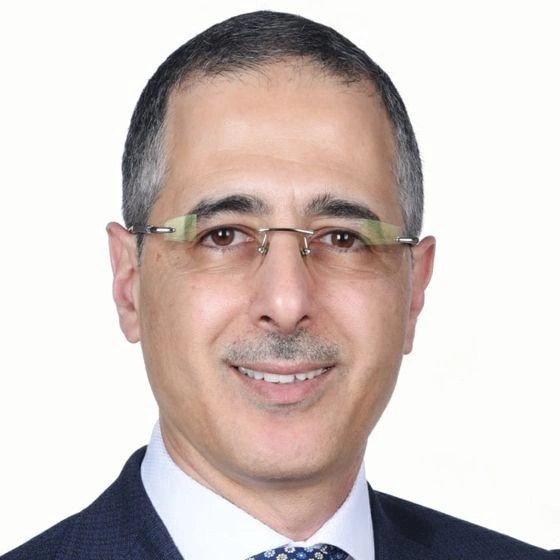

From Gas Giants to Hyperscale: Qatar Economic Forum panel on how LNG expansion and data centre investment are reshaping the workforce and creating new career pathways.
Qatar's compact geography means skills demand is best understood by sector rather than region, with Doha, Lusail, and the industrial cities of Ras Laffan and Mesaieed as the primary employment centres. Understanding these sector-level patterns helps corporate L&D teams and HR managers target training investments where they will have the greatest impact.
The energy sector, centred on Ras Laffan Industrial City and driven by the North Field expansion, accounts for the most acute and highest-paying talent shortages. Technology and digital skills are in demand across all sectors, with the TASMU programme serving as the centralised driver. Financial services is concentrated in the Qatar Financial Centre in Doha, while healthcare demand spans Hamad Medical Corporation's network of hospitals across the country. For organisations planning workforce strategies, aligning training programmes with these sector-level demand patterns ensures that upskilling investments deliver maximum return.
Pete Ford is a corporate training specialist with over 15 years of experience in training methodologies, employee engagement, and performance improvement. He has a proven track record of developing and implementing effective training programs that enhance employee skills and productivity.
#On-site #Virtual #GroupTraining #Customized
Explore 2000+ industry ready instructor-led training programs.

Create dynamic leaders and cohesive teams. Learn more now!


Do a quick Skill gap analysis with Edstellar’s Free Skill Matrix tool

Unlock premium resources, tools, and frameworks designed for HR and learning professionals. Our L&D Hub gives you everything needed to elevate your organization's training approach.
Access L&D Hub Resources.svg)
.svg)
.svg)
.svg)

.svg)


.svg "Click Here to Follow on Medium")
.svg)


